Can Puffer Fish Live with Bettas
The short answer is no, puffer fish and bettas should not be housed together. While both are fascinating and popular freshwater fish, their natural behaviors are fundamentally incompatible. Bettas are famously territorial and aggressive, especially towards fish with long, flowing fins. Many puffer species are notorious fin-nippers with powerful beak-like teeth designed to crush shells. Combining these two almost always leads to stress, injury, or death for one or both fish. Successful cohabitation is extremely rare and requires an expert-level, heavily planted, oversized tank with perfect conditions and a very specific, peaceful puffer species—a scenario not recommended for beginners or even most intermediate aquarists.
Key Takeaways
- Incompatible Temperaments: Bettas are solitary, territorial fighters; most puffers are active, curious, and prone to fin-nipping, creating a recipe for conflict.
- Fin-Nipping is a Guaranteed Risk: A puffer’s beak is built to damage fins. A betta’s long, flowing fins are an irresistible target, leading to rapid and severe injury.
- Both Require Specialized, Often Different, Water Conditions: Some puffers need brackish (slightly salty) water, while bettas are strictly freshwater, making shared water parameters impossible.
- Aggression is Mutual and Intense: A betta will flare and attack a puffer’s inquisitive nature, while the puffer will relentlessly bite and harass the betta, causing immense stress.
- Tank Size is Insufficient Mitigation: Even in large aquariums (75+ gallons), their behavioral instincts will drive them to interact negatively; space alone cannot override genetics.
- Only One Exception Exists: The Dwarf Pea Puffer (Carinotetraodon travancoricus) is the only potential candidate, but it still requires a species-only tank or a very carefully chosen community, and is not guaranteed safe with a betta.
- Prioritize Separate Housing: The only truly safe and ethical approach is to keep these species in fully separate, species-appropriate setups to ensure their health and wellbeing.
📑 Table of Contents
- The Alluring but Dangerous Idea
- Understanding the Betta: The Siamese Fighting Fish
- Understanding the Puffer Fish: Nature’s Little Crusher
- The Direct Conflict: Why These Two Are a Toxic Mix
- Tank Setup: A Fool’s Errand?
- Species-Specific Considerations: Is There Any Hope?
- The Ethical and Practical Alternatives
- Conclusion: A Hard “No” for a Reason
The Alluring but Dangerous Idea
So, you’ve got a beautiful, flowing-finned betta in a tank, and you’re captivated by the charming, puppy-dog-eyed face of a puffer fish. You think, “They’re both so personality-filled! Maybe they could be friends?” It’s a common daydream in the aquarium hobby, born from a desire to create a vibrant, interactive community tank. The idea of housing these two iconic, character-rich fish together is undeniably appealing. After all, both are known for their intelligence and distinct behaviors. However, this pairing is one of the most notoriously bad ideas in fishkeeping. It’s not just a matter of “maybe they won’t get along.” For the vast majority of puffer and betta combinations, cohabitation is a guaranteed path to disaster, stress, and potentially fatal injury. This article will dive deep into the biological, behavioral, and practical reasons why puffer fish live with bettas is a combination you should actively avoid, exploring the few rare exceptions and the far superior alternatives for a thriving aquarium.
Understanding the Betta: The Siamese Fighting Fish
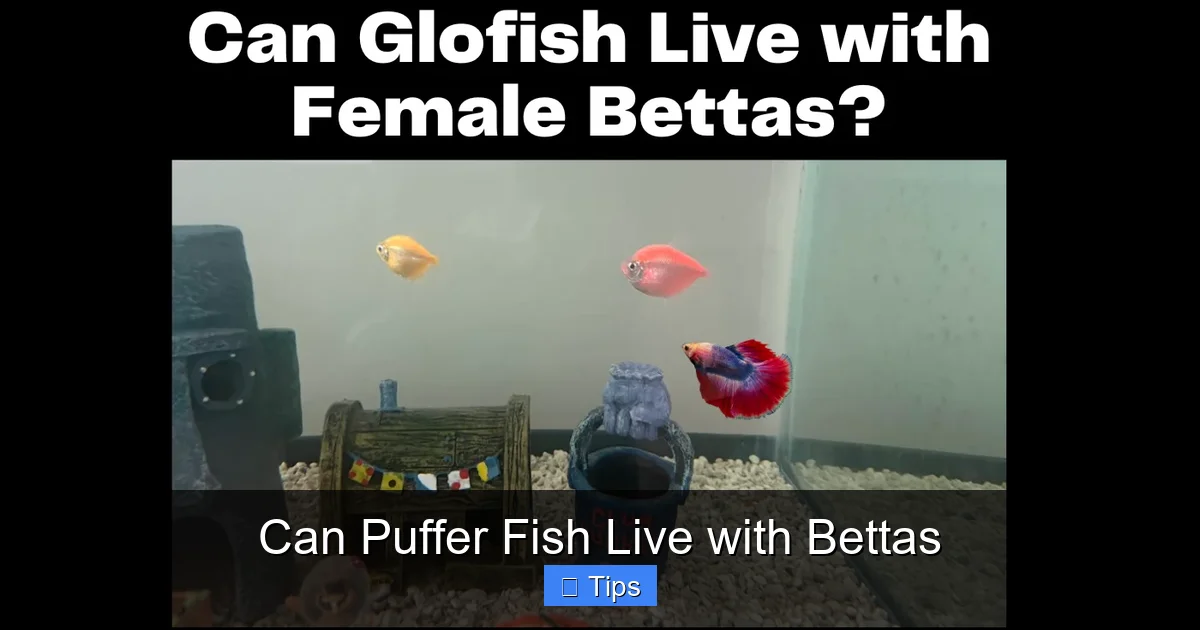
To comprehend why a betta is a terrible tankmate for a puffer, we must first understand the betta’s fundamental nature. The betta, or Betta splendens, is a product of centuries of selective breeding for aggression. Its common name, Siamese Fighting Fish, is not a misnomer. In the wild, male bettas are solitary, defending small territories from other males. They are labyrinth fish, capable of breathing atmospheric air, which allows them to survive in warm, stagnant, oxygen-poor waters—their native habitat in Thailand’s rice paddies and shallow streams.
Visual guide about Can Puffer Fish Live with Bettas
Image source: petpad.net
The Betta’s Aggressive Instincts
That beautiful, flowing tail? It’s a double-edged sword. In the wild, short-finned bettas are more agile and less conspicuous to predators. The long, elaborate fins of modern domestic varieties are purely for human admiration and, ironically, make them bigger targets. A betta’s aggression is primarily directed towards anything it perceives as a rival—another male betta, or any fish with long, flowing fins that it might mistake for a competitor. This is why tankmates for bettas must be chosen with extreme care. They need to be non-territorial, fast-moving (to evade a sudden flare), and crucially, not have flowing fins. A puffer fish, as we’ll see, fails this last criterion spectacularly.
Environmental Needs of a Betta
Bettas require warm, stable water (78-80°F or 25.5-26.5°C), a gentle filter (they are not strong swimmers and their long fins are easily damaged by strong currents), and pristine water quality. They are highly susceptible to fin rot and bacterial infections if stressed or kept in poor conditions. A well-planted tank with hiding spots is ideal, providing security and breaking lines of sight. They are jumpers, so a secure lid is mandatory. Their diet is carnivorous—high-quality pellets, frozen or live foods like brine shrimp and daphnia.
Understanding the Puffer Fish: Nature’s Little Crusher
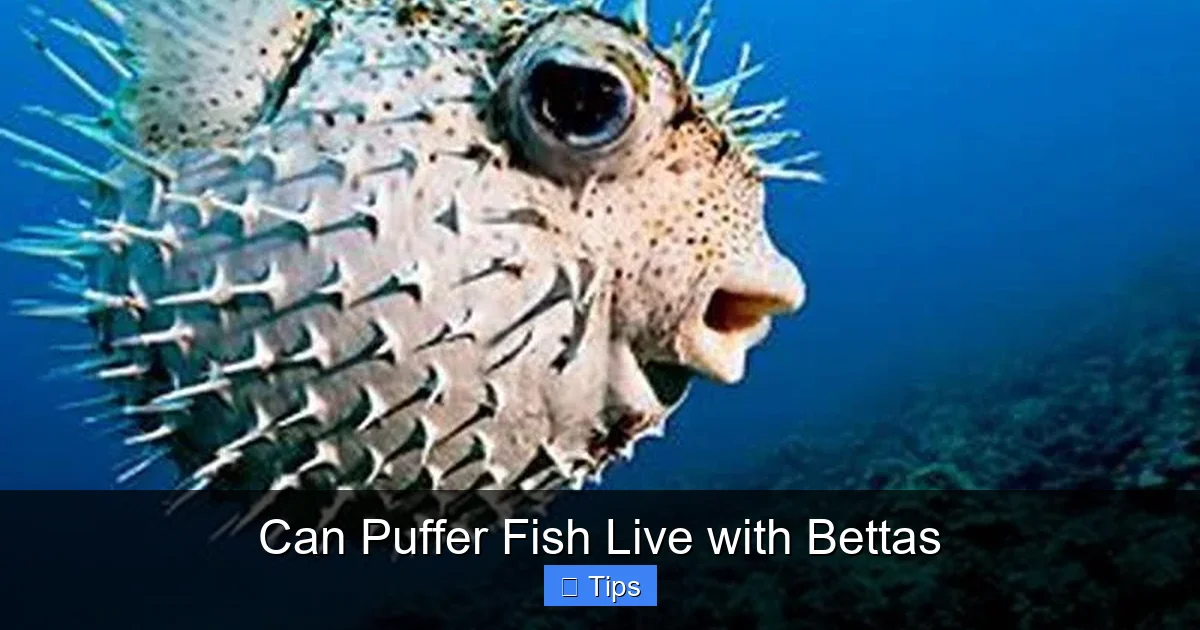
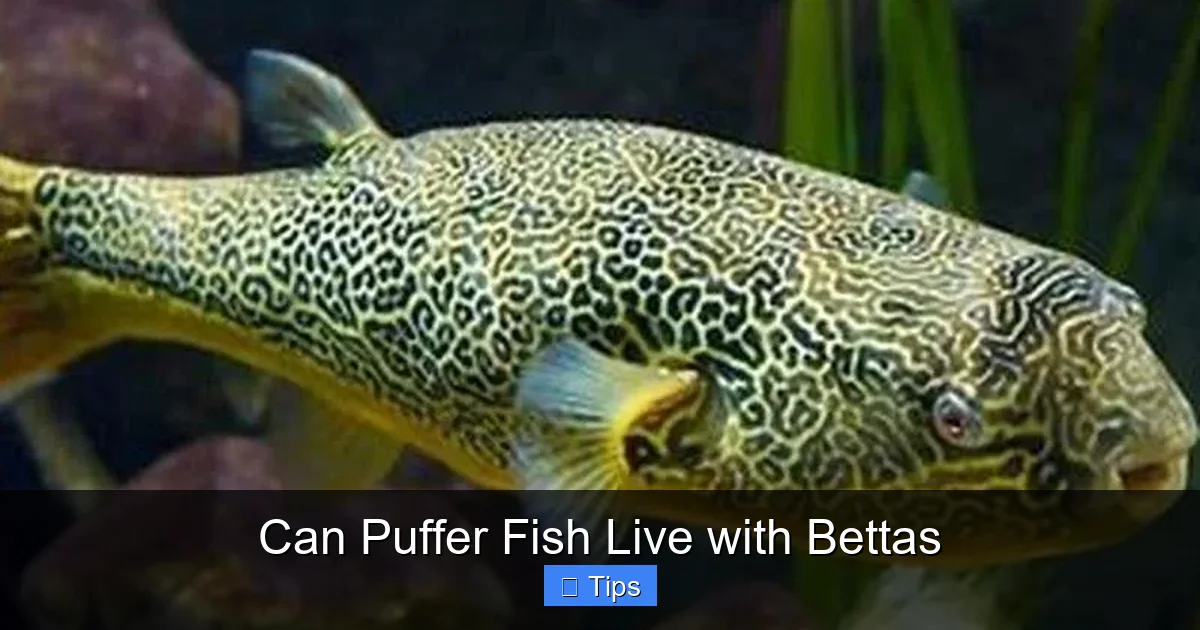
Puffer fish, from the family Tetraodontidae, are a diverse group with over 190 species. Their most defining feature is their ability to inflate with water or air when threatened—a spectacular defense mechanism. However, their most relevant feature for this discussion is their beak. Their four teeth are fused into a powerful, parrot-like beak used in the wild to crush the hard shells of snails, crustaceans, and mollusks. This beak is not discriminatory; it will investigate and often nibble on anything in its environment, including the fins and scales of other fish. This behavior is not always “aggressive” in the predatory sense; it’s often a combination of curiosity, foraging instinct, and a tendency to “taste test” objects.
Visual guide about Can Puffer Fish Live with Bettas
Image source: fishtankexpert.com
Variety Among Puffers: It’s Not One-Size-Fits-All
It’s critical to understand that “puffer fish” is a broad category. Their size, temperament, and water parameter needs vary wildly:
- Freshwater Puffers: Like the Dwarf Pea Puffer (the smallest, ~1″) or the larger Target Group (Figure 8, Congo, etc., up to 4-5″). These are the species sometimes (incorrectly) considered for a betta tank.
- Brackish Water Puffers: Species like the Green Spotted Puffer (GSP) or the South American Puffer (SAP) require significant salt in their water (specific gravity 1.005-1.010). They are active, intelligent, and notoriously destructive fin-nippers. They also grow much larger (4-6+ inches) and are completely incompatible with a betta’s freshwater needs.
- Marine Puffers: These are saltwater species and are immediately out of the question for a freshwater betta tank.
The beak is a universal constant. It is a tool of destruction for slow-moving, long-finned fish like bettas.
The Puffer’s Environmental Needs
Puffers are messy eaters and produce a lot of waste, requiring excellent filtration and frequent water changes. They are intelligent and need environmental enrichment—hard, crunchy foods (like snails, clams, mussels) are essential to wear down their ever-growing beak. Without proper diet, their beak can overgrow, preventing them from eating. Many puffers are also known to be “personality fish,” often recognizing their keeper and begging for food, which adds to their appeal but also to their problematic curiosity.
The Direct Conflict: Why These Two Are a Toxic Mix
Now, let’s put these two behavioral blueprints together. It’s not a case of one being a bully and the other a victim. This is a perfect storm of mutual incompatibility.
Visual guide about Can Puffer Fish Live with Bettas
Image source: diyseattle.com
1. The Betta’s Flare vs. The Puffer’s Investigation
When a betta sees its reflection or a perceived rival, it flares—spreading its gills and fins to appear larger. A puffer fish, with its poor eyesight but intense curiosity, will see this flaring, moving object and immediately investigate. It will swim up and use its beak to taste the flowing fins. To the betta, this is an unprovoked attack. It will flare more intensely and may try to bite back. The puffer, now perhaps mildly annoyed or simply continuing its exploration, will bite again. This cycle escalates rapidly.
2. Fin-Nipping: The Inevitable Outcome
A puffer’s beak is not a gentle tool. A single, curious nip from a pea puffer can take a chunk out of a betta’s delicate tail fin. Larger puffers can sever fins entirely. The result is a shredded, ragged betta tail—a condition known as fin rot that can quickly become systemic and fatal. The puffer, having discovered that these “worms” (the flowing fin filaments) are edible, will often become fixated, relentlessly chasing and nipping at the betta. The betta, stressed and injured, will become lethargic, hide constantly, lose its color, and its immune system will crash.
3. Mutual Stress and a Toxic Environment
Even if physical injury is avoided initially (unlikely), the psychological toll is severe. The betta will be in a constant state of high alert, flaring at the inquisitive puffer that never leaves it alone. The puffer will be frustrated by the betta’s flares and may increase its harassing behavior. Stress hormones flood both systems, suppressing immune function. In a confined tank, there is no escape. The betta cannot outswim a determined puffer. The puffer cannot be reasoned with. The tank becomes a prison of anxiety, leading to disease outbreaks like ich, velvet, or fungal infections that a healthy fish could easily fight off.
Tank Setup: A Fool’s Errand?
Proponents of this pairing often suggest elaborate tank setups to “make it work.” Let’s examine these proposed solutions and why they ultimately fail.
The “Massive Tank” Fallacy
The idea is that in a 75, 100, or 125-gallon tank, the fish can avoid each other. While space is always beneficial, it does not change instinct. A puffer’s natural behavior is to cruise the mid and lower levels, investigating everything. A betta claims the top and mid-levels as its territory. Their paths will cross. The puffer’s curiosity will drive it to explore the betta’s “space.” The betta will see the puffer as an intruder. In a large tank, you might delay the initial conflict by a few days or weeks, but it is inevitable. The sheer volume also makes it harder to monitor for the first signs of nipping, which can happen in seconds when you’re not looking.
The “Heavily Planted Tank” Myth
Dense planting, driftwood, and rock formations are excellent for breaking lines of sight in a community tank. However, a determined puffer will investigate every plant, every decoration. It will find the betta’s hiding spot. Furthermore, puffers are notorious for uprooting or chewing on live plants. The very structure meant to provide refuge becomes a tool for the puffer’s exploration. A betta hiding is also not a healthy betta—it’s a stressed one.
Water Parameter Impossibility
This is the most absolute deal-breaker. As mentioned, many popular puffers (GSPs, SAPs, even some others) are **brackish** fish. They require a salinity of at least 1.005 specific gravity (about 1-2 tablespoons of marine salt per gallon) to remain healthy long-term. Bettas are strictly **freshwater** fish. Their physiology cannot handle salt. Putting a betta in brackish water will cause its gills and kidneys to fail, leading to a slow, painful death. Conversely, a brackish puffer in pure freshwater will slowly deteriorate, its organs failing, its beak overgrowing without the proper mineral-rich diet and water chemistry. You cannot compromise on salinity. It’s an either/or condition. Therefore, any brackish puffer is 100% incompatible with a betta.
Species-Specific Considerations: Is There Any Hope?
If we ignore the brackish issue and focus only on freshwater puffers, is there a single species that might work? The answer is still a firm “almost certainly not,” but one name always comes up.
The Dwarf Pea Puffer (Carinotetraodon travancoricus)
This tiny puffer, maxing out at about 1 inch, is the only one ever suggested. It is a true freshwater species from India. It is adorable, intelligent, and has a big personality. It is also a known, voracious fin-nipper. While its small size means the damage might be less severe than from a 4-inch GSP, it is still a puffer. Its beak is designed to bite. Its instinct is to investigate and nip at long, flowing fins. There are countless anecdotal reports of pea puffers shredding guppy fins, attacking angelfish, and harassing other slow-moving species. A betta’s fin is a massive, tempting target. Furthermore, pea puffers are best kept in species-only tanks or with very fast, small, non-finned fish like certain danios or rasboras in a large, heavily planted setup. They can be territorial and aggressive with their own kind. The risk to a betta is still extremely high. There is no reliable, documented evidence of a successful, long-term pea puffer and betta community. Any claim otherwise is likely an exception that proves the rule and ignores the immense stress involved.
All Other Freshwater Puffers
Target Group puffers (Figure 8, Congo, etc.) grow to 4-5 inches. They are powerful, active, and relentless. Their beaks can easily remove a betta’s fin with one snap. They are also known to be more aggressive and territorial than pea puffers. The idea of housing one with a betta is unthinkable and would be considered animal cruelty by most experienced hobbyists.
The Ethical and Practical Alternatives
If you love both bettas and puffers, the only ethical path is to celebrate them separately. This is not a compromise; it’s a commitment to their wellbeing.
Create a Spectacular Betta Tank
Dedicate a beautiful 5-10 gallon (or larger) planted tank to your betta. Choose appropriate, fast-moving tankmates with no long fins: a school of 6+ neon tetras or harlequin rasboras (in a 15+ gallon), a few corydoras catfish, or a single mystery snail. Focus on creating a lush, secure environment with plants like java fern, anubias, and floating species like frogbit. Your betta will be the stunning centerpiece, healthy and displaying its full personality without stress.
Create a Dedicated Puffer Tank
This is non-negotiable for puffers. Research your specific species thoroughly.
- For a Dwarf Pea Puffer: A heavily planted 10-gallon tank (though 15 is better) with a sand substrate, lots of moss, and a species-only setup or a carefully selected group of fast, small fish like chili rasboras. Provide ramshorn snails as a staple food.
- For a Target Group (Figure 8) Puffer: A minimum of a 30-gallon long tank (40+ is better) with a sand substrate, robust filtration, and a species-only setup. They can sometimes be kept with other fast, robust fish like large mollies or some gobies, but extensive research is needed. The focus must be on providing a constant supply of hard-shelled foods.
A dedicated puffer tank allows you to meet their unique dietary and environmental needs perfectly and observe their fascinating, beak-using behaviors without harming another fish.
Consider a Split Tank (With Extreme Caution)
For the most advanced hobbyist with a very large tank (125+ gallons), a solid, waterproof divider can physically separate a betta and a puffer within the same water system. This allows for identical water parameters (if both are freshwater) and a single filtration system. However, it requires flawless installation to prevent leaks, and the fish will still be able to see and sense each other through the divider, likely causing constant flaring and stress. It is a complex, risky solution that rarely reduces stress enough to be worthwhile. Separate tanks are always superior.
Conclusion: A Hard “No” for a Reason
The question “Can puffer fish live with bettas?” is one where the definitive answer is a resounding no. It is not a matter of opinion or anecdotal luck; it is a matter of fundamental biology and ethology (animal behavior). The betta’s territorial aggression, combined with its magnificent but vulnerable fins, meets the puffer’s innate curiosity and destructive beak. This is a direct, predictable conflict. The added complications of differing water chemistry needs (especially the salinity divide) make it impossible even on a technical level.
Choosing to house these two together is not a bold experiment in community tank-keeping; it is a decision that prioritizes the keeper’s desire for an interesting tank over the animals’ right to a safe, stress-free life. The inevitable result is injured fish, chronic stress, disease, and likely death. The joy of keeping aquariums comes from watching healthy, thriving fish exhibit natural behaviors in environments designed for their specific needs. You can absolutely enjoy the fiery personality of a betta and the comical, intelligent nature of a puffer fish. Just give each the dedicated, species-appropriate home they deserve. Their beauty and character will shine all the brighter for it.
Frequently Asked Questions
Could a very large tank with tons of plants and hiding spots work?
No. While a larger, planted tank is always better for fish welfare, it does not override instinct. A puffer’s curiosity and fin-nipping drive will lead it to seek out and investigate the betta, regardless of the number of plants. The betta will still perceive the puffer as an intruder in its territory. Space delays the conflict but does not prevent it.
What about a Dwarf Pea Puffer? They’re so small and cute.
The Dwarf Pea Puffer is the only freshwater puffer sometimes mentioned, but it is still a strong no. Despite its size, it has the same beak and fin-nipping instincts as its larger cousins. There are many reports of pea puffers attacking and nipping the fins of fish much larger than themselves, including bettas. The risk of severe injury or chronic stress to the betta is extremely high.
Is there any puffer that doesn’t nip fins?
No. All puffer fish possess a beak designed for crushing and have a natural tendency to investigate and “taste” objects in their environment, including the fins of other fish. This is an unchangeable, species-wide trait. You cannot train it out of them. Any claim of a non-nipping puffer is simply a fish that hasn’t been given the opportunity or stimulus to exhibit the behavior yet.
What if I get a female betta? They’re less aggressive, right?
Female bettas are generally less intensely territorial than males, but they can still be aggressive, especially towards fish with long fins or those that invade their space. More importantly, this does nothing to change the puffer’s behavior. The puffer will still be a curious fin-nipper. You are reducing one source of conflict (betta aggression) but leaving the primary, physical threat (puffer nipping) completely intact.
Could I use a tank divider to keep them in the same system?
A solid, waterproof divider in a very large tank (125+ gallons) is the only technical way to house them in the same water volume. However, they will still see and sense each other, causing the betta to flare constantly and the puffer to investigate the barrier. This creates persistent stress for both animals. It is a complex, imperfect solution that is far less ideal than simply having two separate, properly set up tanks.
What are the best tankmates for a betta instead?
Ideal betta tankmates are fast-moving, schooling fish that occupy different tank levels and have short fins. Good options include: schools of 6+ neon tetras, ember tetras, harlequin rasboras, or black skirt tetras (note: tetras may nip fins back if kept in too small a school). Bottom-dwellers like corydoras catfish or kuhli loaches are excellent. A single mystery snail or a group of ghost shrimp can also work well. Always introduce tankmates to a well-cycled, spacious betta tank and monitor closely for aggression.