Will a Betta Fish Jump Out of the Tank
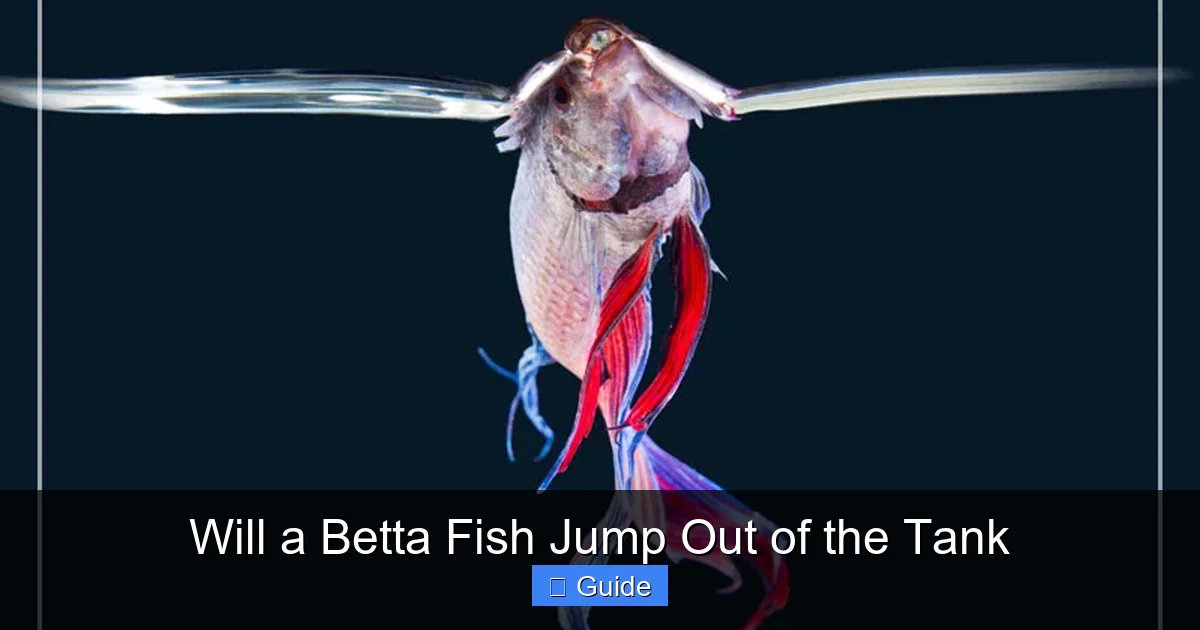
Yes, betta fish are notorious jumpers and will absolutely leap from an uncovered or poorly secured tank. This instinctual behavior stems from their wild ancestry, where they jump between shallow puddles, and is often triggered by poor water quality, stress, or hunting instincts. Prevention is 100% possible and crucial by always using a secure, tight-fitting lid, maintaining pristine water conditions, and providing a stimulating, stress-free environment with appropriate tank mates and hiding spots. Never underestimate a betta’s ability to find a tiny gap.
Key Takeaways
- Betta fish are natural jumpers: Their anatomy and wild instincts make them capable of surprising leaps, so an uncovered tank is a major risk.
- Poor water quality is a primary trigger: High ammonia/nitrite, incorrect temperature, or dirty water causes extreme stress, driving them to escape.
- A secure lid is non-negotiable: No gaps, even tiny ones. Use mesh, glass, or acrylic lids that fit snugly; avoid plastic wrap or loose screens.
- Stress and boredom are key motivators: Inadequate space, aggressive tank mates, lack of plants/hiding spots, or sudden changes can provoke jumping.
- They may be “hunting” reflections or insects: A betta might leap at its own reflection or a flying insect near the water’s surface, mistaking it for prey.
- Immediate action is required after a jump: Gently return the fish to tank water, monitor for injury, and immediately test and correct water parameters to address the cause.
- Prevention is multi-layered: Combine a perfect lid with optimal water care, appropriate tank size (minimum 5 gallons), and environmental enrichment for a safe, happy betta.
📑 Table of Contents
- The Short Answer: Yes, They Absolutely Can and Will
- Betta Fish 101: Anatomy and Instinct Behind the Leap
- The Top Triggers: Why Your Betta Is Thinking of Escape
- Tank Setup: Your First and Best Line of Defense
- What to Do If Your Betta Jumps: Emergency Response
- Debunking Myths: “My Betta Can’t Jump Because…”
- Conclusion: Security is an Act of Love
The Short Answer: Yes, They Absolutely Can and Will
Let’s cut to the chase. If you’re asking, “will a betta fish jump out of the tank?” the unequivocal, experience-backed answer is yes. Betta fish, with their flowing fins and curious eyes, are among the most frequent escape artists in the freshwater aquarium hobby. It’s not a matter of if they are capable, but a matter of when the right (or wrong) conditions will trigger that leap. Many new betta owners are shocked to find their fish on the floor, a scenario that is almost always fatal due to suffocation or physical trauma. This behavior isn’t a sign of a “bad” fish; it’s a deep-seated instinct combined with a response to its immediate environment. Understanding why they jump is the first and most critical step in ensuring your betta’s tank is a permanent, safe home, not a potential prison from which it will try to flee.
The misconception that bettas are slow, ornamental fish that lounge lazily among plants is a dangerous one. In reality, they are active, intelligent, and highly perceptive hunters from the shallow, often stagnant waters of Thailand’s rice paddies and floodplains. Their world is one of survival, where a quick jump might mean moving to a new, better-watered puddle or snagging an insect hovering just above the surface. That instinct doesn’t vanish in captivity; it merely waits for a catalyst. Your job as a caretaker is to remove every possible catalyst. This guide will walk you through every facet of betta jumping—from the biological “how” to the practical “how to stop it”—so you can sleep soundly knowing your fish is secure.
Betta Fish 101: Anatomy and Instinct Behind the Leap
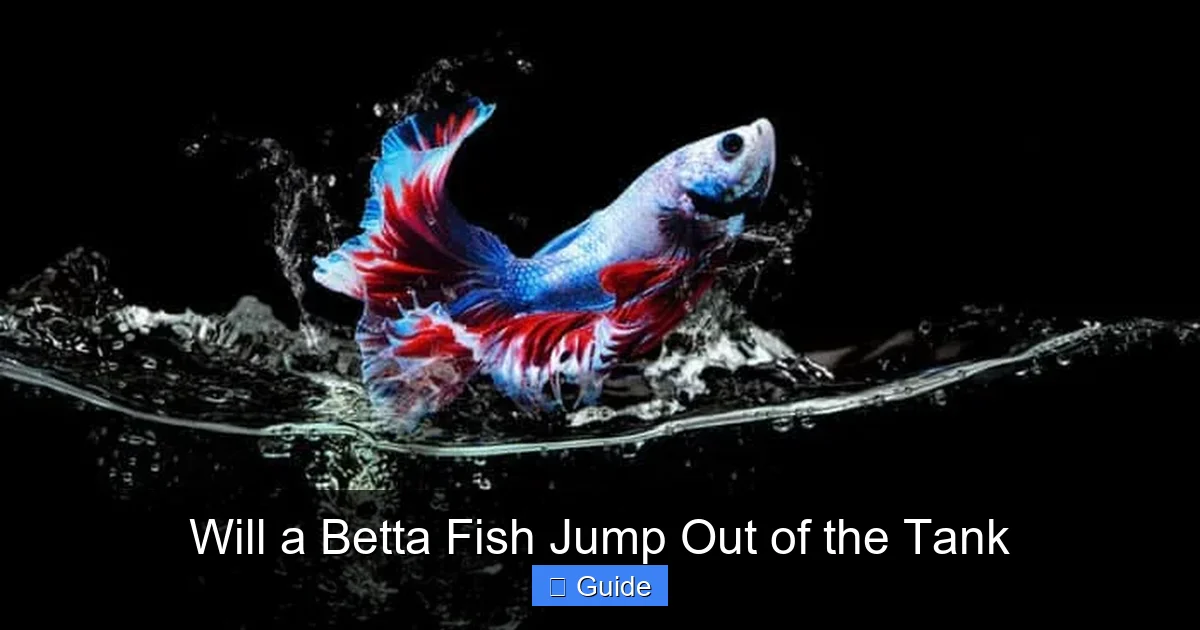
To truly grasp why a betta might attempt a Houdini-like escape, we need to look at its physical design and evolutionary history. Bettas are members of the Osphronemidae family, famed for their labyrinth organ. This is a specialized structure that allows them to breathe atmospheric air directly. Unlike most fish that rely solely on dissolved oxygen in water, bettas must gulp air from the surface regularly. This adaptation for survival in oxygen-poor, warm waters has a direct side effect: it brings them constantly to the very top of the water column, the launchpad for any jump.
Visual guide about Will a Betta Fish Jump Out of the Tank
Image source: aquariumsphere.com
The Labyrinth Organ: A Double-Edged Sword
This organ is a marvel of evolution. It’s a folded, vascularized piece of tissue that acts like a primitive lung. While it lets bettas thrive in conditions that would suffocate other fish, it also physically anchors them to the air-water interface. Their routine of surfacing every few minutes to take a gulp of air makes them hyper-aware of everything happening just above the waterline—a shadow, a movement, a potential threat or meal. This constant positioning at the tank’s edge is the first prerequisite for a jump. They aren’t lurking at the bottom; they’re right where a leap is easiest.
Wild Instincts in a Glass Box
In the wild, Betta splendens inhabit shallow, vegetated waters where the surface is often interrupted by floating leaves, stems, and debris. Their natural behavior includes short, explosive bursts of movement—to capture insects landing on the water, to evade predators, or to move between isolated pools during the rainy season. That powerful, sudden thrust from a standing start is precisely what propels them out of an open aquarium. The reflective glass side of your tank might even mimic the surface of a new, adjacent puddle in their mind, triggering that exploratory leap. It’s not malice; it’s hardwired curiosity and survival drive meeting an unnatural, open environment.
The Top Triggers: Why Your Betta Is Thinking of Escape
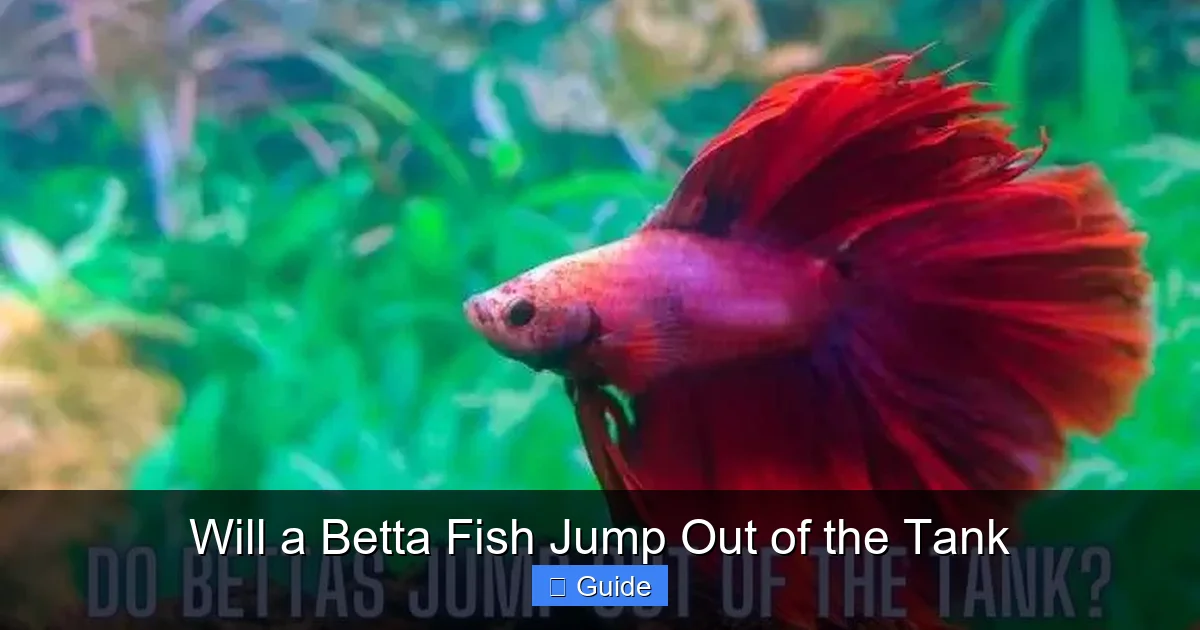
Knowing a betta can jump is only half the story. The more important question is, “What is making my specific betta want to jump?” The motivations are usually clear to an observant owner, as they are almost always tied to a problem in the tank’s environment or the fish’s well-being. Jumping is a symptom, a desperate action taken to alleviate a stressor or pursue an instinct. Here are the most common and critical triggers.
Visual guide about Will a Betta Fish Jump Out of the Tank
Image source: i0.wp.com
1. Abysmal Water Quality (The #1 Culprit)
This cannot be overstated. Dirty, chemically imbalanced water is the single biggest reason bettas attempt escape. Their labyrinth organ makes them particularly sensitive to poor water conditions because they are constantly taking in air from above a potentially toxic water surface. High levels of ammonia or nitrite burn their gills and skin, creating a burning sensation they instinctually seek to flee. A betta in water with a pH swing, high nitrate, or elevated carbon dioxide will feel acute distress. The tank isn’t just a home; it’s a source of pain. Jumping is a last-ditch effort to get out of a poisonous environment. Regular, partial water changes (25-50% weekly) and a functioning nitrogen cycle are absolute necessities.
2. Stress and Inadequate Environment
Stress manifests in many forms. A tank that is too small (anything under 5 gallons is a severe stressor for a single betta) confines them and offers no room to establish a territory. A lack of plants, caves, or other decorations leaves them feeling exposed and vulnerable—in the wild, they hide among dense vegetation. Aggressive or overly active tank mates (like certain tetras or barbs) can bully a betta, making the top of the tank feel like the only safe zone, which then becomes an escape route. Even constant loud noises, vibrations from a nearby appliance, or sudden movements outside the tank can spike stress hormones. A stressed betta will often pace the glass (“glass surfing”) and may make repeated, frantic attempts to get out.
3. Hunting Instincts and Visual Triggers
Betta fish are micro-predators. Their world is one of spotting movement and striking. A small insect, a spider, or even a speck of dust that lands on the water’s surface can become a target. If your tank is near a window or an open door, flying insects are a real possibility. The betta will track it, prepare to strike, and in a flash, launch itself out of the water in pursuit. Similarly, their own reflection in the glass can be perceived as a rival betta—a constant, taunting enemy at the water’s edge. This “mirror aggression” can lead to repeated charging and jumping attempts at the side of the tank as they try to confront the “intruder.”
4. Water Level and Surface Tension
Filling a betta tank to the very brim is a setup for failure. There is zero margin for error. The higher the water level, the shorter the distance the fish has to travel to clear the rim, and the less time it has to abort its jump. A betta can generate enough speed in just a few inches of water to launch itself several inches into the air. Furthermore, in very clean water with high surface tension, a jumping betta might actually “skip” off the water’s surface like a stone, gaining extra altitude. Keeping the water level 2-4 inches below the top of the tank creates a crucial buffer zone and breaks the surface tension, making a jump less likely to succeed even if attempted.
Tank Setup: Your First and Best Line of Defense
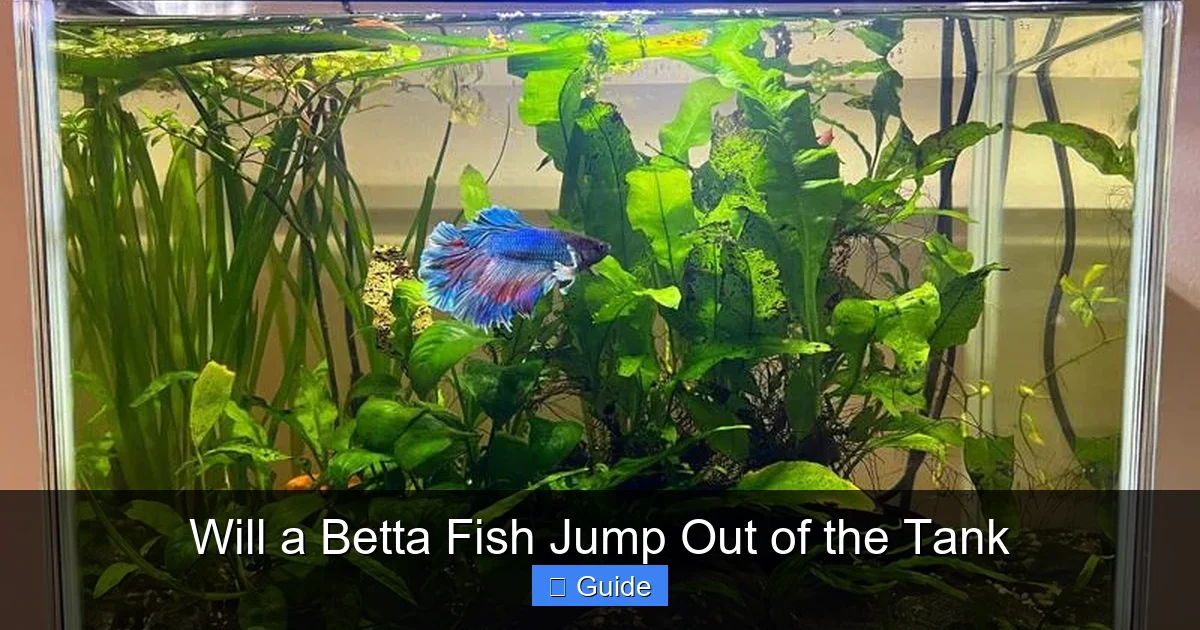
Prevention is infinitely better than cure. A properly set up betta tank is a fortress against escape. This means focusing on three pillars: an unbreachable lid, optimal water conditions, and an enriching environment that satisfies their natural instincts.
Visual guide about Will a Betta Fish Jump Out of the Tank
Image source: acaquarium.com
The Unbreakable (and Unclimbable) Lid
This is your most important piece of equipment. No betta should ever be kept in an open-top tank. Full stop. The lid must meet several criteria:
- Tight-Fitting: There should be no gaps whatsoever around the edges, not even a millimeter. Measure and buy a lid specifically designed for your tank model, or use a custom-cut acrylic/glass sheet with weighted edges.
- Smooth, Non-Climbable Surface: Avoid lids with large gaps for filter cords (use bulkheads) or textured surfaces a betta could grip. A smooth piece of glass or fine mesh (with openings smaller than the betta’s body) is ideal. Some bettas will attempt to “climb” a textured plastic lid using their gill covers and fins.
- Secure: The lid should have clips or a locking mechanism to prevent it from being pushed up by a determined leaper or during cleaning.
- Ventilation: Ensure the lid has adequate ventilation holes or is made of mesh to allow for gas exchange. A completely sealed glass lid can trap humidity and reduce oxygen levels.
Never use plastic wrap, mesh screen with large holes, or a loosely placed piece of cardboard. A determined betta will find a way.
Water Level and Surface Management
As mentioned, keep the water level at least 2-4 inches below the top of the tank. This creates a “no-fly zone” that even a powerful jump can’t clear. Additionally, break the surface tension to make any potential launch less effective. This is easily done by:
- Adding a surface-floating plant, like Salvinia or Duckweed. These form a physical mat that blocks direct access to the glass and absorbs nutrients, improving water quality.
- Using a sponge filter or an air stone set to a gentle bubble stream. The rising bubbles agitate the surface, breaking tension and providing the air-breathing betta with easier access to atmospheric oxygen without needing to rocket to the top.
These measures also make the tank more natural and reduce stress.
Environmental Enrichment: A Happy Betta Doesn’t Want to Leave
A bored, stressed betta is an escape-risk betta. Mimic their natural habitat:
- Live or Silk Plants: Provide dense foliage, especially tall plants that reach the surface. This offers security, reduces stress, and blocks lines of sight to the outside world (which can be triggering). Betta fins are delicate, so avoid sharp plastic plants.
- Caves and Hiding Spots: Use terracotta pots (holes plugged), resin caves, or bundles of Indian almond leaves to create dark, private areas.
- Appropriate Tank Mates (if any): For a single betta, no tank mates are often the safest. If you add companions, choose peaceful, fast, non-flaring species like ember tetras or harlequin rasboras in a heavily planted 10+ gallon tank. Never add fin-nippers or other gouramis.
- Consistent Routine: Bettas thrive on predictability. Feed at the same times daily, keep the tank in a low-traffic area away from direct sunlight and drafts, and perform water changes on a schedule.
What to Do If Your Betta Jumps: Emergency Response
Despite your best efforts, accidents can happen. If you discover your betta on the floor or carpet, time is critical. Follow these steps immediately:
Step 1: Locate and Gently Rescue
Check the area around the tank meticulously. Bettas can jump surprisingly far and may be under furniture or in a corner. Use a soft, damp net or your clean, wet hands to gently scoop them up. Do not grab them by the body or fins, as this can cause physical damage. If they are stuck (e.g., on a rough surface), moisten the area with a few drops of water to help them loosen.
Step 2: The Return and Initial Assessment
Place the betta directly into its tank. Do not net it again or move it between containers unless the tank water is severely compromised. Observe it immediately. Is it breathing? Does it float belly-up or sink? Is there visible damage to fins or scales? A betta that has been out of water for more than a minute or two is in critical condition, but quick action can sometimes save them.
Step 3: The Critical Water Test and Fix
This is the most important step. The jump was likely caused by something wrong in the tank. Use a liquid test kit (not strips) to check ammonia, nitrite, nitrate, and pH immediately. If any parameters are off (ammonia or nitrite > 0 ppm is an emergency), perform an immediate 50% water change with dechlorinated water at the same temperature. Add a water conditioner that detoxifies ammonia and nitrite if available. The goal is to remove the toxic stimuli that caused the escape attempt in the first place. If the jump was purely due to a lid failure, you still need to check parameters—the stress from the jump itself can harm them, and poor water may have weakened them beforehand.
Step 4: Post-Jump Care and Monitoring
For the next 24-48 hours, monitor your betta closely in a quiet room. Reduce feeding to avoid adding ammonia to the already-stressed system. Consider adding an ammonia detoxifier like Seachem Prime to the water. Watch for signs of recovery: active swimming, normal eating, flaring fins. Watch for signs of decline: lethargy, clamped fins, loss of equilibrium, fungal growth on injuries. If the fish appears injured or does not recover, consult a veterinarian experienced with fish. Do not be surprised if it seems fine for a day and then declines—jump-related internal damage or subsequent infection can take time to manifest.
Debunking Myths: “My Betta Can’t Jump Because…”
Several persistent myths lead owners into a false sense of security. Let’s dismantle them.
Myth 1: “Bettas in Tanks Don’t Have the Room to Build Up Speed”
This is completely false. Bettas do not need a running start. They are explosive, muscular fish that can generate tremendous thrust from a stationary position using their caudal fin. In just a few inches of water, they can propel their entire body several inches into the air. A betta in a 5-gallon tank with only 4 inches of water depth can still easily clear a rim if motivated.
Myth 2: “My Betta Is Too Old/Sick/Lazy to Jump”
While a severely ill or very old betta may have reduced mobility, a healthy betta of any age retains its jumping ability. In fact, a sick betta might be more likely to jump if it is in pain from poor water quality. Never assume a betta won’t jump based on its usual demeanor.
Myth 3: “Floating Plants Are Enough of a Barrier”
Floating plants are an excellent deterrent and should be used, but they are not a foolproof barrier. A determined betta will push through or go around a sparse layer of plants. They are a supplement to a lid, not a replacement for one.
Myth 4: “I Only Need a Lid If My Betta Is a Known Jumper”
You cannot predict which individual betta will jump. It’s a species-wide potential. Waiting until after a jump to get a lid is like waiting until after a house fire to buy smoke detectors. The risk is inherent and present from day one. Always use a lid.
Conclusion: Security is an Act of Love
The question “will a betta fish jump out of the tank?” should now be answered with a resounding understanding of the why and the how to prevent. Your betta’s tendency to leap is not a quirky personality flaw; it is a direct line to its wild ancestry and a clear communication about its current state of well-being. By providing a secure, lid-covered environment, maintaining impeccable water quality, and enriching its world with plants, hiding spots, and stability, you are not just preventing an escape—you are fulfilling the fundamental requirements of its care. You are building a habitat where the instinct to jump is overridden by the comfort of home. A betta that is healthy, stress-free, and mentally stimulated has no reason to seek an exit. The ultimate goal is to make its tank so perfect that the thought of leaving never crosses its tiny, labyrinth-breathing mind. Start with the lid, master the water chemistry, and watch your betta thrive safely within view, a living jewel in a glass world you have made truly secure.
Frequently Asked Questions
Can all betta fish jump out of the tank?
Yes, all betta fish Betta splendens have the physical capability to jump. While individual personality plays a role—some may be more skittish or motivated than others—the species-wide instinct and anatomy make every betta a potential jumper. Therefore, a secure lid is mandatory for every single betta, regardless of observed behavior.
What are the clear signs my betta is going to jump?
Watch for frantic pacing at the water’s surface (“glass surfing”), repeated charging at the lid or tank walls, and rapid, jerky swimming near the top. Stress signs like clamped fins, faded colors, and loss of appetite often precede jumping. If you see your betta intently tracking something outside the tank (like an insect or its reflection) while positioned at the surface, it is in a pre-strike, pre-leap posture.
What is the absolute best type of lid for a betta tank?
The best lid is one that is completely secure, gap-free, and has a smooth, non-climbable surface. A custom-cut piece of acrylic or glass that fits the tank’s exact dimensions with silicone or weighted edging is ideal. Pre-made plastic hoods with built-in lighting often have gaps around filter cords; these must be sealed with aquarium-safe silicone. Fine mesh (like a microscope slide cover) can work if it’s taut and securely attached, but ensure openings are smaller than 1/4 inch.
Does the water depth really matter if I have a lid?
Absolutely. While a lid is the primary barrier, keeping the water level 2-4 inches below the top is a crucial secondary safety measure. It creates a physical buffer that makes a successful jump less likely even if the lid is briefly opened during maintenance or fails. It also helps break surface tension and provides space for floating plants, which further deter jumping.
Can I keep my betta in a tank without a lid if I use a lot of floating plants?
No. Floating plants are a fantastic deterrent and improve water quality, but they are not a guaranteed physical barrier. A motivated betta will push through or leap over them. A tank without a lid is an unacceptable risk. Floating plants should be used in addition to a secure lid, not instead of one.
My betta jumped once but survived. Does that mean it won’t happen again?
No. A single jump is a major red flag that something in the tank is wrong—most likely water quality or stress. The fact that it jumped once means it is capable and motivated to do so again until the underlying cause is fixed. You must immediately test and correct water parameters, ensure the lid is 100% secure, and evaluate the tank’s environment for stressors. It will almost certainly try again if conditions remain poor.