Can I Use Tap Water for a Betta Fish
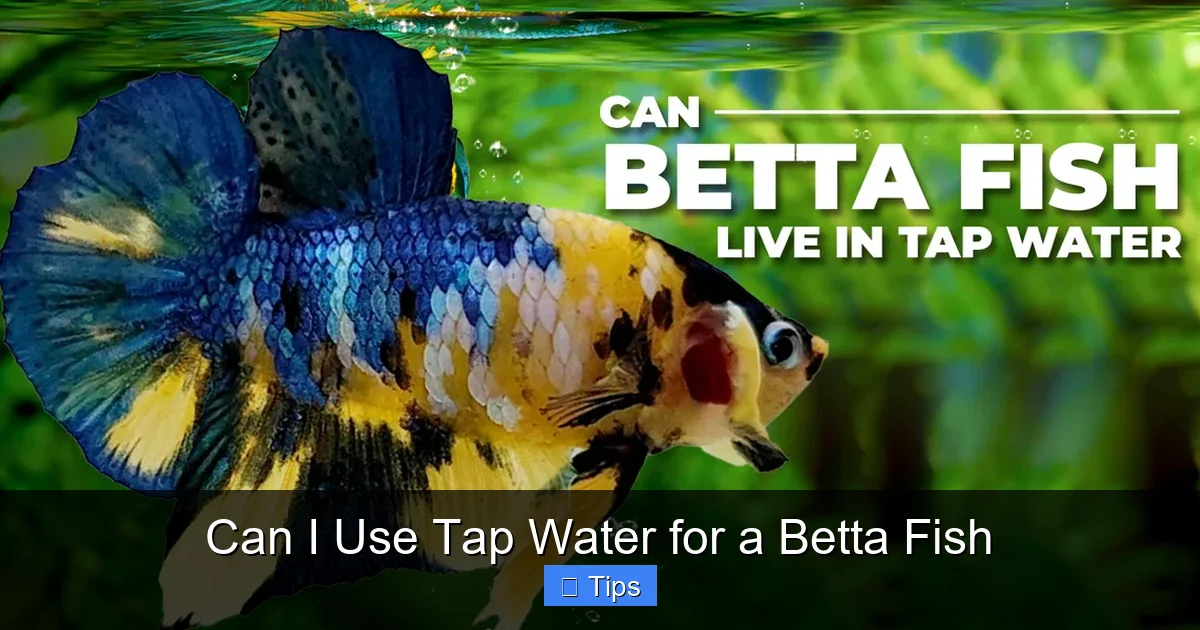
Yes, you can use tap water for a betta fish, but you almost always must treat it first. Untreated tap water contains chlorine, chloramines, and heavy metals that are lethal to bettas. It also often has incorrect pH and hardness levels. The key is using a reliable water conditioner to neutralize toxins and, if necessary, adjusting parameters to match the betta’s natural tropical habitat. Never assume your tap water is safe without testing and treating it properly.
You’ve just brought home a beautiful, flowing-finned betta fish. You’ve picked out the perfect small tank or vase, some colorful gravel, and maybe a silk plant or two. You’re ready to fill it up and introduce your new pet to its home. You reach for the tap, but then a crucial question stops you: Can I use tap water for a betta fish? It’s the most common question for new betta owners, and the answer is both simple and profoundly important.
The short answer is: yes, you can and almost certainly will use tap water for your betta. The vast majority of betta keepers around the world use water from their kitchen or bathroom sink. However, the critical follow-up is: you must treat it. Pouring straight-from-the-tap water into your betta’s tank is one of the fastest ways to cause a catastrophic health failure. Your tap water is a complex chemical cocktail designed for human consumption and plumbing, not for the delicate, labyrinth-breathing betta splendens.
This guide will walk you through everything you need to know. We’ll demystify what’s in your tap water, why it’s a threat, and exactly what products and steps you need to take to transform that ordinary tap water into a pristine, life-supporting environment for your aquatic companion. Think of it as the ultimate “water safety” manual for your betta.
Key Takeaways
- Untreated tap water is dangerous: Chlorine and chloramines in municipal water are designed to kill living organisms and will harm or kill your betta.
- Always use a water conditioner: A quality dechlorinator is non-negotiable. It instantly neutralizes chlorine, chloramines, and detoxifies heavy metals.
- Test your water parameters: Betta fish thrive in specific conditions. Use a liquid test kit to check pH (6.5-7.5), ammonia (0), nitrite (0), and nitrate (<20 ppm).
- Temperature is critical: Betta are tropical fish. Their water must be a stable 78-80°F (25.5-26.5°C). Tap water is rarely at this temperature.
- Match the water hardness: Bettas prefer softer water. If your tap water is very hard (high in minerals), you may need to dilute it with reverse osmosis (RO) water.
- Acclimate your betta properly: When introducing a betta to new tap water (even treated), you must slowly acclimate it using the drip or floating bag method to avoid shock.
- Consistent water changes are mandatory: Even with perfect initial setup, regular partial water changes (25-50% weekly) with properly treated tap water are essential for long-term health.
📑 Table of Contents
- The Truth About Tap Water and Betta Fish
- The Dangers of Untreated Tap Water
- How to Make Tap Water Safe for Your Betta
- Alternative Water Sources: When Tap Water Isn’t Enough
- Step-by-Step: Setting Up Your Betta’s Tank with Tap Water
- Common Mistakes and How to Avoid Them
- Long-Term Maintenance: Keeping Your Water Pristine
The Truth About Tap Water and Betta Fish
To understand why we can’t just use tap water as-is, we need to look at what’s actually in it. Your local water treatment plant adds substances to protect the public water system and ensure the water is safe for people to drink. Unfortunately, these same substances are toxic to fish.
What’s Hiding in Your Tap Water?
The primary villains are chlorine and chloramines. Chlorine has been used for over a century to disinfect water. Many municipalities now use chloramines, a more stable compound of chlorine and ammonia, because it lasts longer in the pipes. Both are lethal to fish. They damage gill tissue, causing respiratory distress and death. You cannot simply let tap water sit out for 24 hours to “gas off” chlorine if chloramines are present—they do not evaporate. Your water conditioner must specifically state it removes both.
Beyond disinfectants, tap water can contain:
- Heavy Metals: Trace amounts of copper, lead, or zinc from pipes can accumulate and poison your fish.
- Fluoride: Added for dental health in humans, but its effect on fish is debated; best to remove it.
- Variable pH: Tap water pH can range from acidic to highly alkaline. Bettas prefer a slightly acidic to neutral range (6.5-7.5).
- Hardness (GH/KH): This measures dissolved minerals like calcium and magnesium. Bettas originate from soft, acidic rice paddies in Thailand. Very hard water can stress them over time, affecting their slime coat and potentially leading to health issues.
Practical Example: Your tap water tests at a pH of 8.2 and a General Hardness (GH) of 15 dGH (very hard). This is common in areas with limestone bedrock. A betta in this water long-term may become stressed, more susceptible to diseases like dropsy, and its colors may not be as vibrant. We’ll address how to fix this later.
The Dangers of Untreated Tap Water
Using untreated tap water isn’t just a minor risk; it’s a direct assault on your betta’s physiology. The effects can be immediate or simmer over time.

Visual guide about Can I Use Tap Water for a Betta Fish
Image source: petshun.com
Acute Toxicity: The One-Time Disaster
The most common and heartbreaking scenario is the new owner who fills a tank with untreated tap water and adds their betta. Within minutes to hours, the fish will show signs of severe distress: gasping for air at the surface (gill damage), frantic swimming, lethargy, and clamped fins. This is often mistaken for “shock,” but it’s chemical poisoning. Without immediate intervention—a 100% water change with treated water—the outcome is usually fatal. There is no safe “dose” of chlorine or chloramines for a betta.
Chronic Stress: The Slow Killer
Even if you use a conditioner that removes chlorine but don’t address other parameters, your betta can suffer from chronic stress. A pH that is too high or water that is too hard weakens their immune system. A stressed betta is a betta prone to:
- Fin Rot: A bacterial infection that causes fins to fray and melt away.
- Ich (White Spot Disease): A parasitic outbreak that appears as tiny white dots.
- Loss of Appetite and Color: A dull, inactive fish is a sign something is wrong with its environment.
- Swim Bladder Issues: While often diet-related, poor water quality is a significant contributing factor.
Expert Tip: Think of your tap water parameters as the foundation of your betta’s health. You wouldn’t build a house on a cracked foundation. Similarly, you shouldn’t expect a vibrant, healthy betta in suboptimal water. Prevention through proper water treatment is infinitely easier and more humane than treating a sick fish.
How to Make Tap Water Safe for Your Betta
This is the most critical section. Transforming your tap water involves a simple, non-negotiable three-step process: Condition, Test, and Adjust.
Visual guide about Can I Use Tap Water for a Betta Fish
Image source: ouraquariumlife.com
Step 1: Condition – The Non-Negotiable First Action
The single most important product you will buy for your betta is a reliable water conditioner/dechlorinator. Do not skip this. Do not use generic or “natural” alternatives unless they explicitly state they neutralize both chlorine and chloramines. Popular, trusted brands include Seachem Prime, API Stress Coat+, and Tetra AquaSafe. These products work instantly.
How to use it: For every gallon (or liter) of new tap water you are adding to your tank (during a water change or initial setup), add the correct dosage of conditioner directly to the water before it touches your fish or tank. If you are filling a bucket, add the conditioner to the bucket. If you are using a Python or similar gravel cleaner that adds water directly, you must add conditioner to the stream or, safer yet, pre-condition the water in a bucket. Seachem Prime is concentrated; a single bottle lasts a very long time for a single betta tank.
What it does: It breaks the chemical bond of chlorine and chloramines, rendering them harmless. It also typically detoxifies any ammonia, nitrite, or nitrate that might be in your tap water (from source or cycling) and binds heavy metals. This gives you a crucial safety net.
Step 2: Test – Knowledge is Power
You cannot manage what you do not measure. A liquid drop test kit (like the API Master Test Kit) is far more accurate than test strips and is worth every penny. Test your tap water directly from the faucet to know your baseline. Then, test your tank water regularly. You need to monitor:
- Ammonia (NH3/NH4+): Must be 0 ppm. Toxic at any level.
- Nitrite (NO2-): Must be 0 ppm. Highly toxic.
- Nitrate (NO3-): Should be <20 ppm for a betta. Acceptable up to 40 ppm, but lower is better.
- pH: Aim for 6.5-7.5. Stability is more important than a perfect number. A stable 7.8 is better than a wildly fluctuating 6.8.
- GH (General Hardness): Measures calcium/magnesium. Bettas prefer 3-8 dGH (50-140 ppm).
- KH (Carbonate Hardness): Measures buffering capacity (pH stability). A KH of 3-5 dKH (50-90 ppm) is good.
Step 3: Adjust – Fine-Tuning for Betta Perfection
If your tests show your treated tap water is outside the ideal ranges, you may need to adjust. For most keepers with stable tap water, conditioning alone is sufficient. But if your tap water is very hard or alkaline:
- To Lower pH/Hardness: Use natural methods. Adding Indian Almond (Catappa) leaves or driftwood slowly leaches tannins, lowering pH and softening water slightly. Using a reverse osmosis (RO) water system is the most effective method. You can mix RO water with your tap water to dilute hardness and minerals to a target level. This is common practice for betta breeders.
- To Raise pH/Hardness: This is less common, but can be done with crushed coral in the filter or mineral additives. Bettas tolerate harder water better than very soft water if it’s stable.
- Never use pH-altering chemicals as a first resort. They cause dangerous swings. Adjust slowly over days/weeks.
Real-World Scenario: Your tap water has a pH of 8.0 and GH of 18 dGH. You buy a betta from a store where they use soft, acidic water. The shock of the change can be severe. Solution: Start mixing 50% of your treated tap water with 50% RO water (which has 0 GH/KH). This brings your parameters into a safer range. Test after mixing to confirm.
Alternative Water Sources: When Tap Water Isn’t Enough
While treated tap water is the standard, some situations call for alternatives. Understanding them helps you make an informed choice.
Visual guide about Can I Use Tap Water for a Betta Fish
Image source: fishkeepingsecrets.com
Reverse Osmosis (RO) / Deionized (DI) Water
RO/DI water is virtually pure H2O with all minerals removed. It is completely safe of toxins but also lacks any buffering capacity or minerals. You cannot use 100% RO/DI water for a betta. It is “hungry” water and will leach minerals from the fish’s body, causing osmotic shock. Its use is for mixing. You blend RO water with your treated tap water to precisely control hardness and pH. It’s the gold standard for serious breeders and keepers in areas with terrible tap water. You must also add a remineralizer (like Seachem Equilibrium) if using a high percentage of RO water to restore essential minerals.
Bottled Spring Water
This is a tricky one. Some brands are acceptable, but many are not. You must check the label:
- Avoid distilled water (same problem as RO/DI – no minerals).
- Avoid purified water (often just filtered tap, may still have chloramines).
- Look for natural spring water with a listed mineral content (pH, TDS). Brands like Fiji or Evian have specific profiles. You still must condition it as it can still contain chlorine or chloramines. The cost is prohibitive for regular water changes. It’s an emergency backup only.
Rainwater Collection
Not recommended for urban areas due to atmospheric pollutants. If collected in a clean, remote area, it is very soft and acidic. It would require extensive testing and conditioning (likely needing mineral addition) and is not a practical primary source.
Bottom Line: For 95% of betta keepers, treated tap water is the best, most economical, and most reliable choice. Invest in a good conditioner and test kit. Only explore alternatives if your tap water parameters are irredeemably bad (e.g., pH over 9.0, GH over 25 dGH) and mixing with RO water is your solution.
Step-by-Step: Setting Up Your Betta’s Tank with Tap Water
Let’s put it all together. Here is the definitive process for a new tank or a water change.
For a New Tank Setup (First Fill)
- Clean the tank, gravel, and decorations with warm water only. Never use soap or chemicals.
- Add clean gravel and décor.
- Fill the tank with tap water. As it fills, you can add the correct dose of water conditioner to the entire tank volume. (If your tap water is very hard/alkaline, consider mixing with RO water now).
- Install and start your filter and heater. Set the heater to 78-80°F (25.5-26.5°C).
- Let the tank run for at least 24-48 hours. This allows the water temperature to stabilize and the conditioner to fully diffuse. This is NOT the nitrogen cycle. A cycled tank is ideal, but for a single betta in a filtered tank, you can do a “fish-in cycle” with careful monitoring and frequent water changes.
- Acclimate your betta. Float the sealed bag in the tank for 15-20 minutes to equalize temperature. Then, open the bag and add a small cup of tank water to it every 5 minutes for 20-30 minutes. Finally, net your betta and place it in the tank. Discard the bag water.
For a Routine Water Change (Weekly 25-50%)
- Prepare fresh tap water in a clean bucket. Match the temperature of the new water to your tank water as closely as possible (within 1-2°F). This is crucial to prevent temperature shock.
- Add water conditioner to the bucket of new water at the correct dosage for the amount you will be adding.
- Turn off the filter and heater (optional but makes cleaning easier).
- Use a gravel vacuum/siphon to remove 25-50% of the tank water, gently stirring the gravel to remove waste/uneaten food. Do not disturb your betta.
- Slowly pour the conditioned, temperature-matched new water back into the tank. Pour it against the glass or use a cup to avoid disturbing the substrate and stressing your fish.
- Restart the filter and heater. Check that the filter is flowing properly after re-priming if needed.
Pro Tip: Always have a dedicated, clean bucket for aquarium use only. Never use a bucket that has held cleaning chemicals.
Common Mistakes and How to Avoid Them
Even with the best intentions, mistakes happen. Here are the most frequent pitfalls and their fixes.
Mistake 1: “I Forgot to Condition the Water!”
This is an emergency. If you realize it within minutes, immediately perform a 50% water change with properly conditioned water. If you suspect your betta is showing distress (gasping, lethargy), do a 100% water change with conditioned, temperature-matched water. Be gentle with the fish during the netting. In the future, make conditioning part of your ritual—put the conditioner in the bucket before you even start the siphon.
Mistake 2: Using Hot Tap Water to Speed Things Up
Never use hot tap water from the heater. Hot water tanks are breeding grounds for bacteria and leach metals from pipes. It also can be dangerously hot. Always use cold or room-temperature tap water and adjust the temperature with your aquarium heater.
Mistake 3: Inconsistent Water Changes
Skipping weekly water changes is the #1 cause of deteriorating water quality. Even with a filter, nitrates build up. Set a calendar reminder. A 25% change weekly is far better than a 50% change every other week. Consistency is key.
Mistake 4: Over-Cleaning the Filter
When you service your filter during a water change, never rinse the filter media in untreated tap water. The chlorine will kill the beneficial bacteria living there, crashing your cycle. Instead, rinse the sponge/cartridge in the bucket of old tank water you just removed during the water change. This preserves the bacteria.
Mistake 5: Assuming All Tap Water is the Same
Water chemistry varies wildly by city, and even by season. Your tap water in summer (from a reservoir) may be very different from your tap water in winter (from a groundwater source). Test your water at least once a season to stay aware of changes.
Long-Term Maintenance: Keeping Your Water Pristine
Your job isn’t done after the initial setup. Maintaining excellent tap water quality is an ongoing commitment that directly translates to your betta’s lifespan and vibrancy.
Establish a Testing Routine
Test your tank water weekly, at the same time you do your water change. Record your results (pH, ammonia, nitrite, nitrate) in a notebook or app. This log is invaluable. It will tell you if your cycle is stable, if your water changes are sufficient, and if anything is slowly drifting out of range.
Observe Your Fish Daily
Your betta is the best indicator of water quality. Is it active? Flaring? Swimming gracefully? Eating readily? Or is it hiding, clamped, pale, or flashing (rubbing against objects)? Behavioral changes are often the first sign of a water quality issue, sometimes before tests register a problem.
Upgrade Your Filtration
A single betta in a 5-gallon tank can survive with minimal filtration, but a good filter (sponge or hang-on-back) makes water quality management vastly easier. It provides mechanical filtration (removes debris) and a surface for beneficial bacteria to colonize (biological filtration). A filter also creates gentle water movement and surface agitation, which is crucial for gas exchange (oxygen).
Consider Live Plants
While not necessary, a few hardy, low-light plants like Anubias, Java Fern, or Marimo Moss Balls can help absorb nitrates as a natural nutrient export. They also provide enrichment and reduce algae. They do not replace water changes, but they are a helpful supplement.
Final Word: Using tap water for your betta is not only possible but practical. The secret is respect and treatment. Respect the chemistry of your tap water by understanding its composition. Treat it with a quality dechlorinator. Test it regularly. Adjust it if needed. By mastering your tap water, you master the single most important factor in your betta’s health. You are not just providing water; you are engineering a stable, toxin-free ecosystem. Your betta, with its flowing fins and curious personality, will thrive as a direct result of your diligence. That beautiful fish in your tank is a testament to the fact that yes, you absolutely can use tap water—you just have to do it right.
Frequently Asked Questions
Can I just let tap water sit out for 24 hours before using it for my betta?
No. This only removes chlorine, not chloramines, which are present in most municipal water and do not evaporate. You must use a water conditioner that specifically neutralizes both chlorine and chloramines to be safe.
Is bottled water safe for my betta fish?
It depends. Distilled or purified water lacks minerals and can harm your betta. Some natural spring waters are acceptable, but you must still condition them for chlorine/chloramines. Bottled water is expensive and inconsistent, making treated tap water a far better primary source.
How often should I change the water in my betta’s tank?
You should perform a 25-50% water change with properly conditioned tap water every week, without fail. This dilutes toxins like nitrates and removes waste. Never change 100% of the water at once unless it’s an emergency, as this can disrupt the beneficial bacteria cycle.
My tap water has a strong chlorine smell. Is it still safe after conditioning?
A strong chlorine smell often indicates a higher level of chloramines. A quality water conditioner like Seachem Prime is designed to handle even high levels of chloramines. Use the correct dosage as directed on the bottle for your water volume. The smell should disappear after conditioning.
Do I need to adjust the pH of my tap water for my betta?
Stability is more important than a perfect number. If your tap water’s pH is consistently between 6.5 and 7.5 after conditioning, no adjustment is needed. If it’s very high (above 8.0) or very low (below 6.0), consider mixing with RO water or using natural methods like Indian Almond leaves to gently lower it over time.
Can I use the same tap water conditioner for my betta tank and my other freshwater community tank?
Yes. A standard water conditioner that removes chlorine, chloramines, and detoxifies ammonia/nitrates is safe and effective for all freshwater aquariums, including those with bettas, tetras, guppies, and Corydoras catfish. Always follow the dosage instructions based on your tank’s volume.