Can You Train Betta Fish
Yes, you can absolutely train betta fish! Despite their reputation as simple pets, bettas are intelligent, curious creatures capable of learning simple tricks through patient, positive reinforcement. Training strengthens your bond, provides crucial mental stimulation, and enhances your betta’s overall well-being. Success hinges on short, rewarding sessions and understanding your fish’s unique personality. This guide provides everything you need to start teaching your betta today.
Key Takeaways
- Bettas are trainable: Their intelligence and memory (up to 5 months) allow them to learn simple associations and behaviors through consistent, positive methods.
- Positive reinforcement is essential: Use tiny, immediate food rewards (like frozen brine shrimp) to mark and reward desired behaviors; never punish.
- Start with target training: Teaching your betta to touch a colored stick or your finger is the foundational skill for all other tricks.
- Sessions must be short and positive: 2-5 minutes, once or twice daily, ending on a success to keep your betta eager and stress-free.
- Patience and consistency are non-negotiable: Progress can take days or weeks; every betta learns at its own pace, so adjust your expectations.
- Training enriches their environment: It combats boredom, reduces stress, and can even improve health by encouraging activity and appetite.
- Know your betta’s limits: Training is for mental engagement, not physical exertion. Always prioritize your fish’s health and comfort above any trick.
📑 Table of Contents
- Introduction: Busting the Betta Brain Myth
- The Betta Brain: Understanding Your Student
- The Foundation: Setting Up for Training Success
- Step-by-Step: Your First Training Session (Target Training)
- Beyond the Target: Fun Tricks You Can Teach
- Common Pitfalls and How to Avoid Them
- The Real Rewards: Benefits Beyond the Trick
- Conclusion: Your Journey Starts Today
Introduction: Busting the Betta Brain Myth
For decades, the betta fish, or Siamese fighting fish, has been unfairly labeled as a dim, solitary creature fit only for a tiny, decorative bowl. This myth does a huge disservice to one of the most personality-driven and intelligent fish available to hobbyists. The burning question “Can you train betta fish?” deserves a resounding, enthusiastic yes. Training a betta isn’t about performing circus acts; it’s about communication, enrichment, and building a unique interspecies bond.
These vibrant little thinkers possess remarkable memories, distinct personalities, and a keen awareness of their environment. They recognize their caregivers, can learn from experience, and, most importantly, they can be motivated. By shifting our perspective from “owner” to “teacher” and using science-backed methods like operant conditioning, we can unlock a betta’s potential. This guide will walk you through every step, from setting the stage to teaching your first trick, ensuring you and your betta enjoy the process. Get ready to see your aquatic companion in a whole new light.
The Betta Brain: Understanding Your Student
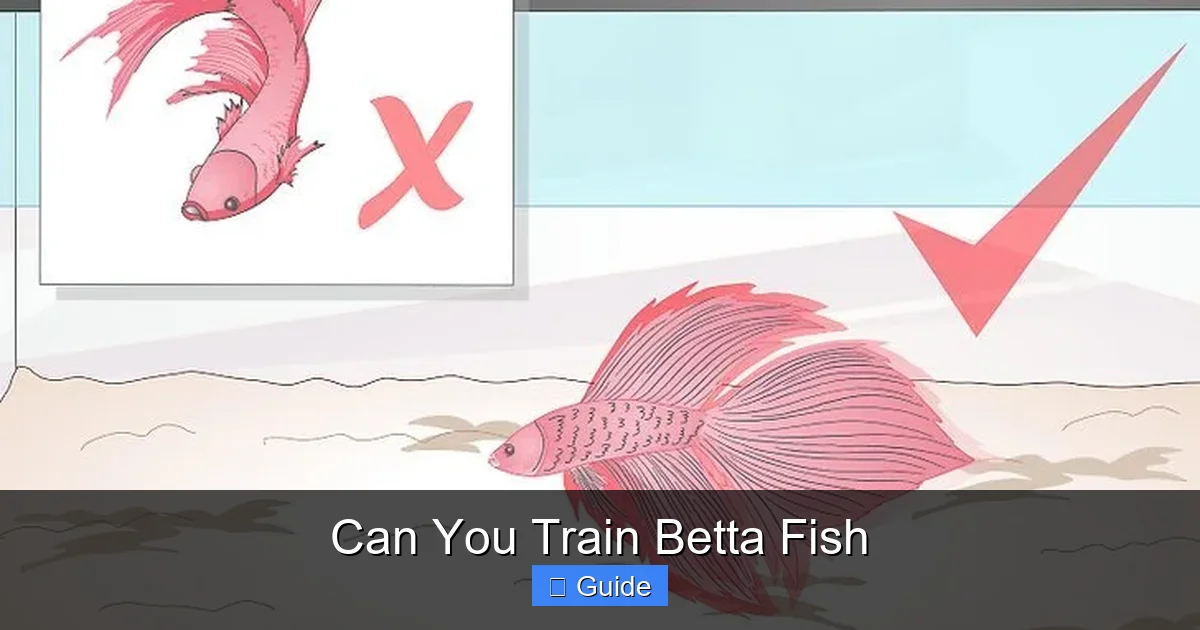
Before you can effectively teach, you must understand your student. Bettas (Betta splendens) are far more complex than their “dumb fish” reputation suggests. Their wild ancestors are intelligent predators from the shallow, complex waters of Southeast Asia, constantly problem-solving for food and territory. This innate curiosity and intelligence has been preserved in domestication.
Visual guide about Can You Train Betta Fish
Image source: wikihow.com
Memory and Cognition
Studies have shown bettas can retain learned associations for at least five months. They remember feeding schedules, recognize individual humans (differentiating between you and a stranger), and can learn to associate specific colors or shapes with food rewards. This long-term memory is the bedrock of training. It means if you consistently use the same target stick and reward, your betta will remember the connection.
The Power of Association
Bettas learn primarily through association. They don’t understand language, but they excel at linking a stimulus (a red stick, your finger tapping the glass) with a consequence (a tasty treat). This is the core of operant conditioning. Your goal is to make the desired behavior (touching the target) the most rewarding and predictable event in their tank.
Personality Matters
No two bettas are identical. Some are bold, curious “explorers” who will investigate a new object immediately. Others are shy, cautious, and need weeks to even approach a target. Your training pace must be dictated by your individual fish’s comfort level. Observe their body language: flaring gills is a sign of agitation, while calm, curious swimming indicates engagement.
The Foundation: Setting Up for Training Success
You wouldn’t try to teach a child in a noisy, distracting amusement park. Similarly, your betta needs an optimal environment to focus. Proper setup is 80% of the battle.
Visual guide about Can You Train Betta Fish
Image source: wikihow.com
The Training Arena: Your Tank
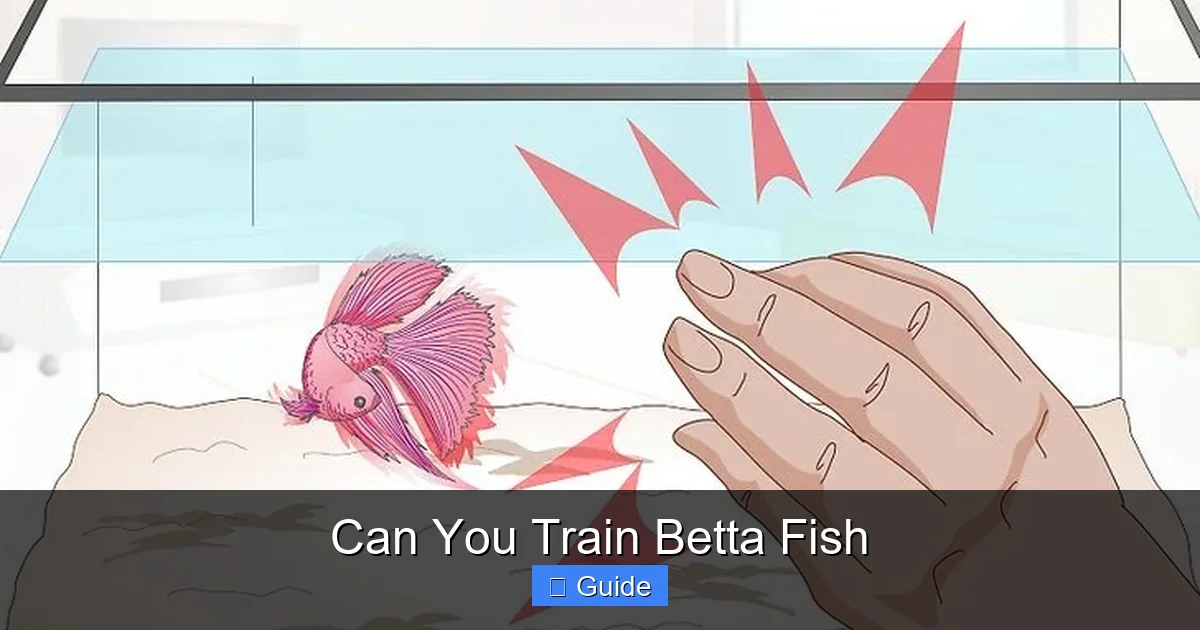
You can train in your betta’s permanent home if it’s a suitably sized, filtered, heated aquarium (minimum 5 gallons). However, many experts recommend a dedicated, bare “training tank.” This is a small, clean tank (1-2 gallons) with nothing but conditioned water and a heater. It eliminates distractions from plants, décor, or tank mates and makes the target the only interesting object. If using the main tank, conduct sessions during a quiet time of day and remove any aggressive tank mates.
Tools of the Trade
You need very little, but the right tools are critical.
- The Target: A small, colorful stick. A dowel with a bright red or blue plastic tip works perfectly. The color should contrast sharply with your tank background. You can also use your clean, unpolished fingertip.
- The Reward: This is the most important component. Use a high-value food that your betta loves but doesn’t get regularly. Excellent choices are frozen or live foods: daphnia, brine shrimp, or bloodworms. These are small, nutritious, and highly motivating. Pellets are often too large and less exciting. Have your reward ready on a spoon or in a pipette before you start.
- A Net (Optional): A small, soft net can be used to gently corral a hesitant betta back toward the target, but use this sparingly to avoid stress.
The Prime State: Timing is Everything
Train when your betta is naturally active and alert, usually during daylight hours. A slightly hungry betta is more motivated, but never train a fish that is lethargic, visibly stressed, or sick. A healthy, curious betta is a trainable betta. Ensure water parameters are pristine (ammonia/nitrite = 0) before any session, as poor water quality causes lethargy.
Step-by-Step: Your First Training Session (Target Training)
Target training is the gateway trick. It teaches your betta that touching a specific object on command results in a reward. Here is the meticulous, patient process.
Visual guide about Can You Train Betta Fish
Image source: wikihow.com
Phase 1: Introduction & Positive Association (Days 1-3)
Place your target stick in the tank, resting it against the glass or on a suction cup. Do nothing else. Let your betta investigate it. The goal is for the target to become a neutral, non-threatening object in the environment. If your betta flares at it, remove it and try again later. If it swims near it, immediately drop a single piece of food near the target (not necessarily touching it). This creates a “target = food appears nearby” association.
Phase 2: Shaping the Behavior (Days 4-10+)
Now, we shape the exact behavior we want: a touch.
- Hold the target just outside the water line, or rest it in the tank.
- When your betta swims near it, the moment it touches the target with its mouth, head, or body, immediately (within 1 second) release a food reward directly at the point of contact.
- If your betta ignores it, try gently wiggling the tip to create movement, which triggers their predatory instinct. Reward any interaction.
- If your betta is very cautious, you may need to reward successive approximations: first reward for looking at it, then for swimming within an inch, then for brushing it, and finally for a deliberate touch.
Phase 3: Adding the Cue
Once your betta reliably swims over and touches the target for a food reward (this may take 10+ consistent touches), you add a signal. The moment before you present the target, say a consistent word like “Touch” or “Target.” The sequence becomes: Cue (“Touch”) -> Present Target -> Touch -> Reward. After several sessions, your betta will associate the word with the action.
Beyond the Target: Fun Tricks You Can Teach
Once the target is mastered, it’s your key to a world of tricks. The principle is always the same: use the target to guide or mark the behavior.
Following Your Finger
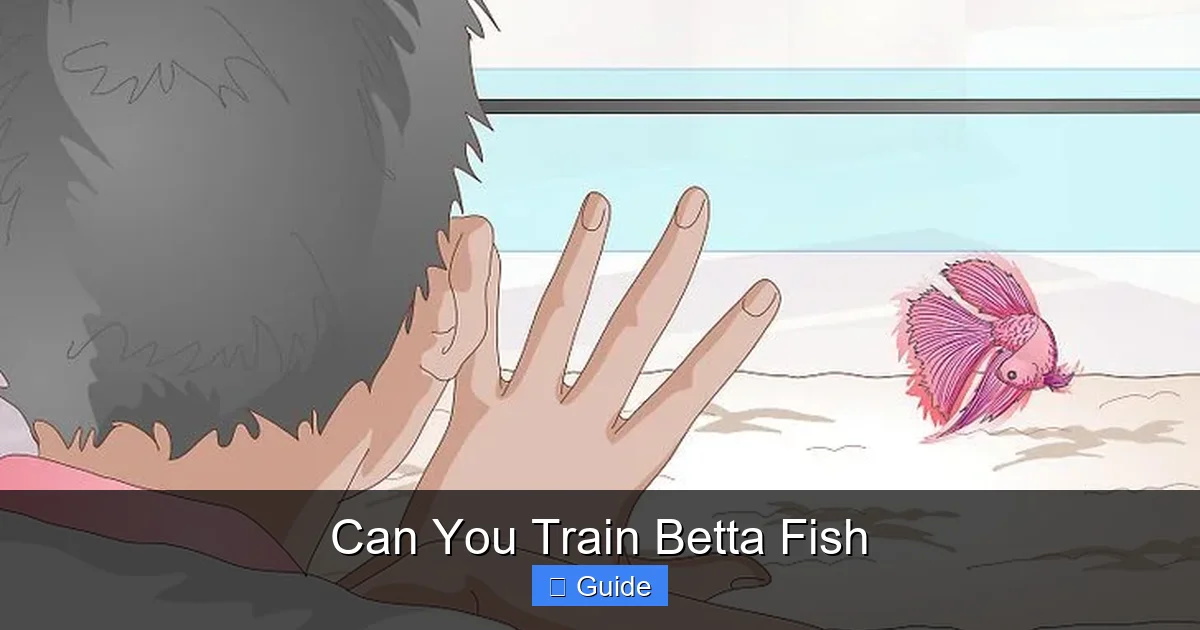
This is a natural progression. Instead of a stick, use your clean fingertip as the target. After your betta reliably touches your finger, slowly move your finger along the glass. Reward your betta for following it. You can guide them around the tank, through hoops (see below), or to different locations. This creates a powerful, direct line of communication.
Jumping Through a Hoop
Create a hoop from a pipe cleaner or a small, smooth plastic ring. Suspend it in the water column using a clamp on the tank edge or a suction cup. Start with the hoop low and wide. Use your target stick to guide your betta through it. Mark and reward the moment they pass through. Gradually raise and narrow the hoop as they succeed. This trick showcases their agility.
Fetching a Small Object
Choose a small, smooth, non-toxic object that your betta can easily carry, like a tiny plastic gem or a specially made “betta ball.” Place it on the substrate. Use your target to encourage your betta to nudge or bite it. Reward any interaction. Over time, you can shape the behavior of them picking it up and bringing it back toward you/the target. This is more advanced and requires a very motivated fish.
Swimming Through a Tunnel or Tube
A clean, wide-diameter plastic tube (like from a fabric softener sheet, thoroughly rinsed) makes an excellent tunnel. Place it in the tank. Use your target to lure your betta into one end and out the other, rewarding at the exit. This builds confidence with obstacles.
Common Pitfalls and How to Avoid Them
Even with the best intentions, mistakes can derail training. Here’s what to watch for.
Punishment: The #1 Training Killer
Bettas do not understand punishment. Flaring, tapping the glass, or netting them to “correct” them only creates fear and stress, destroying trust and making them associate you (and training) with negativity. All training must be 100% positive. If your betta flares or hides, you’ve moved too fast. End the session and try again later with a simpler step.
Inconsistency and Confusion
Using different targets, different cues, or different rewards from session to session confuses your fish. Stick to one target stick, one cue word (“Touch”), and one type of reward until the behavior is solid. Inconsistency means your betta never makes a clear connection.
Overtraining and Boredom
More is not better. Sessions longer than 5 minutes will lead to frustration and loss of focus. Always end on a high note—after 2-3 successful touches, give a jackpot reward (2-3 treats) and stop. This leaves your betta wanting more and eager for the next session. If your betta starts to ignore the target, the session is over.
Ignoring Health and Stress Signals
A training session is not worth compromising your fish’s health. Never train a betta with clamped fins, faded colors, rapid gill movement, or lethargy. These are signs of stress or illness. Ensure water quality is impeccable, temperature is stable (78-80°F/25.5-26.5°C), and your betta is well-fed with a staple diet outside of training treats.
The Real Rewards: Benefits Beyond the Trick
Why go through this effort? The benefits extend far than just having a fish that can jump through a hoop.
Deepening the Human-Animal Bond
Training transforms you from a passive food-dropper to an active, engaging participant in your betta’s life. You learn to read their subtle cues, and they learn to recognize you as the source of fun and rewards. That excited swim to the front of the tank when you approach? That’s a bond built through positive interaction.
Critical Mental Stimulation
In a small tank, a betta’s world is limited. Training provides vital cognitive exercise. It challenges their problem-solving abilities, keeps their mind active, and is a powerful tool against boredom and the associated stress behaviors like glass surfing or repetitive swimming patterns.
Health and Observation
During training, you are inches from your betta, observing them closely. This daily, focused interaction makes you the best health monitor. You’ll notice the first sign of a torn fin, a tiny spot of fungus, or a change in swimming behavior immediately, allowing for early intervention. The increased activity from training also promotes better muscle tone and appetite.
Conclusion: Your Journey Starts Today
So, can you train betta fish? Not only can you, but you should. Training is one of the most rewarding aspects of betta ownership, shattering the myth of the “dumb fish” and revealing the intelligent, engaging personality within those flowing fins. It requires patience, observation, and a commitment to positive, gentle methods. There is no such thing as a “stupid” betta; there are only methods that haven’t yet connected with that individual fish.
Start today with a simple target and a single piece of frozen brine shrimp. Celebrate the tiny victory of a curious glance, then a touch. Build from there. Whether your betta learns to follow your finger or simply becomes more engaged and interactive, you have succeeded. You’ve provided enrichment, strengthened your bond, and given your aquatic companion a richer, more stimulating life. Now, go find that target stick—your betta is waiting to learn.
Frequently Asked Questions
Is it safe to train my betta fish?
Yes, training is completely safe when done correctly. It uses positive reinforcement with food rewards and never involves stress, punishment, or physical coercion. The key is to keep sessions short, positive, and to always prioritize your fish’s comfort and health signals over the trick.
How long does it take to train a betta fish?
There is no set timeline, as every betta is an individual. Some bold fish may learn to touch a target in 3-5 days of short sessions. Shy or cautious bettas may take 2-3 weeks to make the first deliberate touch. Consistency with 2-5 minute sessions once or twice daily is more important than rushing the process.
Can all betta fish be trained, or only certain ones?
Virtually all healthy bettas have the capacity to learn, but their willingness and speed vary greatly based on personality. A naturally curious, active betta will learn faster than a timid, stress-prone one. The training method works for all, but you must adjust the pace and expectations to match your specific fish’s temperament.
What’s the best age to start training a betta?
You can start training a betta of any age, from a young adult (4-6 months old) to a senior. Young bettas are often more energetic and curious, while older bettas may be more deliberate. The most important factor is health and vitality, not age. A healthy, alert betta of any age can benefit from and enjoy training.
Do I need special equipment to train my betta?
No special equipment is needed. The essentials are: a target (a colored stick or your clean finger), high-value food rewards (frozen daphnia or brine shrimp are ideal), and a quiet environment. A dedicated training tank can help but is not mandatory if your main tank is peaceful.
What if my betta doesn’t seem interested in training?
First, rule out health issues or poor water quality. If your betta is healthy, the issue is likely motivation or environment. Try a more exciting reward (switch from brine shrimp to bloodworms). Ensure sessions are in a quiet room with no sudden movements or vibrations. Start even more slowly—just reward them for simply being near the target for a few days. Patience and finding the right motivator are key.