How to Care for a Betta Fish Video
Watching a how to care for a betta fish video is one of the best ways to learn proper betta fish care at home. This guide covers everything from tank setup and water quality to feeding schedules and common health issues. You will walk away with clear, actionable steps to keep your betta fish happy and healthy for years to come.
Learning how to care for a betta fish through video content has never been more accessible. Whether you are a complete beginner or someone looking to improve your current setup, video guides bring complex topics to life in a way that text alone simply cannot match. You get to see exactly what proper betta fish care looks like in real time.
A how to care for a betta fish video covers essential topics like tank setup, water preparation, feeding routines, and health monitoring. These visual guides help you avoid common mistakes that new fish owners often make. Instead of guessing what went wrong, you can follow along step by step and build confidence with every watch.
Betta fish are beautiful, colorful creatures that bring life to any room. They are also surprisingly resilient when given the right environment. However, they still need proper attention to thrive. This guide breaks down everything you need to know, inspired by the best practices shown in video tutorials. We will walk you through each area of betta fish care so you feel fully prepared.
Key Takeaways
- Video guides simplify learning: Watching a how to care for a betta fish video helps beginners understand complex topics visually.
- Tank setup matters most: A properly sized tank with the right equipment sets the foundation for healthy betta fish care.
- Water quality is critical: Regular testing and water changes keep your betta fish safe from harmful toxins.
- Feeding correctly prevents health issues: A balanced diet and proper feeding schedule support long-term betta fish health.
- Watch for warning signs: Early detection of stress and disease saves lives and reduces treatment effort.
- Consistency wins: Daily and weekly maintenance routines make aquarium care simple and enjoyable.
📑 Table of Contents
- How to Care for a Betta Fish Video — Why It Works So Well
- Setting Up the Perfect Betta Fish Tank
- Water Quality and Temperature Management
- Feeding and Nutrition for Your Betta Fish
- Common Betta Fish Health Issues
- Maintaining a Healthy Betta Fish Habitat
- Final Thoughts on Learning Betta Fish Care Through Video
How to Care for a Betta Fish Video — Why It Works So Well
Not everyone learns the same way. Some people read instructions and understand them immediately. Others need to see a process in action before it clicks. That is where a how to care for a betta fish video becomes incredibly valuable.
Video content lets you observe real aquarium setups, actual water changes, and proper feeding techniques. You can pause, rewind, and rewatch sections as many times as you need. This hands-on visual approach accelerates learning and reduces the frustration that comes with trial and error.
Many experienced aquarists create detailed video content specifically for betta fish owners. These creators often share personal stories, real mistakes, and proven solutions. The result is a rich learning experience that builds your confidence quickly. Watching a well-made video on betta fish care can save you weeks of guesswork.
What to Look for in a Quality Betta Fish Care Video
Not all videos are created equal. When searching for reliable betta fish care content, look for a few key signs. First, check the creator’s credentials. Do they have experience keeping bettas? Second, look for videos that cover multiple topics rather than just one narrow tip. Third, pay attention to production quality. Clear visuals and good audio make a big difference in understanding.
Also, watch for videos that show real-world examples. A how to care for a betta fish video that demonstrates actual tank setups, water testing, and feeding gives you practical knowledge you can apply right away. Avoid videos that make unrealistic claims or promise overnight results.
Setting Up the Perfect Betta Fish Tank
The foundation of great betta fish care starts with the right tank setup. Many beginners make the mistake of keeping their betta in too small a container. While bettas can survive in small spaces, they truly thrive in a well-designed environment that gives them room to explore.
A proper tank setup includes several essential components. Each one plays a specific role in maintaining a healthy habitat for your fish. Let us break down what you need.
Choosing the Right Tank Size
Many people believe bettas only need a tiny bowl. This is a common myth that leads to poor fish health. In reality, a tank size of at least 5 gallons is recommended for a single betta fish. Larger tanks, such as 10 gallons, provide even more stability and room for enrichment.
A bigger tank also makes maintaining water quality easier. Fluctuations in temperature and chemical levels happen more slowly in larger volumes of water. This means less stress for your betta and less work for you. If you watched a how to care for a betta fish video recently, you likely noticed most experts recommend a 5-gallon minimum.
| Tank Size | Stability | Maintenance Level | Best For |
|---|---|---|---|
| 3 Gallons | Low | Frequent | Temporary housing only |
| 5 Gallons | Medium | Moderate | Single betta, ideal minimum |
| 10 Gallons | High | Easy | Single betta with plants |
| 20 Gallons | Very High | Easy | Betta with compatible tank mates |
Essential Tank Equipment
Your betta fish tank needs a few key pieces of equipment to function properly. Here is what you should have ready before bringing your fish home:
- Heater: Bettas are tropical fish and need consistent warmth. A heater keeps the water temperature between 76 and 82 degrees Fahrenheit.
- Filter: A gentle filter maintains clean water without creating too much current. Bettas prefer slow-moving water.
- Thermometer: This helps you monitor the temperature daily and catch any issues early.
- Lighting: Standard aquarium lights work well. Avoid lights that are too bright, as bettas prefer a natural day-night cycle.
- Substrate: Soft gravel or sand creates a natural look and supports healthy tank conditions.
Setting up your tank at least one day before adding your betta gives the system time to stabilize. This is especially important for the fish tank cycling process, which establishes beneficial bacteria that break down harmful toxins.
Water Quality and Temperature Management
Clean, properly conditioned water is the single most important factor in betta fish care. Bettas are sensitive to poor water conditions, and even small changes in water parameters can cause stress and illness.
Testing Your Water Parameters
Before adding your betta to a new tank, you need to test the water. Key parameters to monitor include ammonia, nitrite, nitrate, and pH levels. Ammonia and nitrite should always read zero, while nitrates should stay below 20 parts per million.
A simple liquid test kit gives you accurate readings. Test strips work in a pinch but are less precise. Regular testing, at least once a week, helps you catch problems before they affect your fish. Watching a how to care for a betta fish video that covers water testing can give you confidence in this process.
Preparing Water for Your Betta
Tap water contains chlorine and chloramine that are harmful to betta fish. You must treat your water before adding it to the tank. A good water conditioner neutralizes these chemicals instantly and makes tap water safe for your fish.
When performing a water change, always match the temperature of the new water to the existing tank water. Sudden temperature drops or spikes stress your betta and can lead to serious health problems. Use a bucket dedicated only to aquarium use to avoid contamination.
If you want to learn the proper technique in detail, check out our guide on how to prepare water for a betta fish. It walks you through every step with clear instructions that complement what you see in video tutorials.
Ideal Water Temperature Range
Bettas thrive in warm, stable water. The ideal water temperature range is between 76 and 82 degrees Fahrenheit. Anything below 74 degrees can cause your betta to become sluggish and more susceptible to illness. Above 84 degrees can stress the fish and reduce oxygen levels in the water.
Use a reliable aquarium thermometer to check the temperature daily. Place it in a visible spot so you can glance at it during routine care. Maintaining consistent temperature is one of the simplest yet most impactful aspects of betta fish care.
Feeding and Nutrition for Your Betta Fish
Proper nutrition plays a huge role in your betta’s overall health and lifespan. Bettas are carnivorous by nature, which means they need a protein-rich diet. Understanding what and how to feed your betta is essential for long-term betta fish care.
Best Foods for Betta Fish
The best betta fish diet includes a variety of high-quality foods. Here are the top options you should consider:
- Betta Pellets: Specially formulated pellets provide balanced nutrition and are easy to portion.
- Frozen or Live Brine Shrimp: These make excellent treats and mimic what bettas eat in the wild.
- Bloodworms: A protein-rich treat that most bettas love, but should be given in moderation.
- Daphnia: A natural food source that aids digestion and provides variety.
Avoid feeding your betta only flakes meant for tropical community fish. These lack the protein levels bettas need. Also, avoid overfeeding, which is one of the most common mistakes in betta fish care. Excess food rots in the tank and degrades water quality quickly.
Feeding Schedule and Portions
A consistent feeding schedule keeps your betta healthy and makes tank maintenance easier. Feed your betta two small meals per day, about 4 to 6 pellets per meal. Watch your fish eat and remove any uneaten food after five minutes.
Many experienced owners also practice one fasting day per week. This helps prevent bloating and digestive issues, which are common problems in captive bettas. A how to care for a betta fish video often demonstrates proper portion sizes and feeding techniques that you can follow along with at home.
| Food Type | Protein Level | Best Use | Frequency |
|---|---|---|---|
| Betta Pellets | 30-40% | Daily staple | 2 times per day |
| Frozen Brine Shrimp | 60-70% | Protein boost and treats | 2-3 times per week |
| Bloodworms | 50-60% | Occasional treat | 1-2 times per week |
| Daphnia | 30-45% | Digestive health | 1-2 times per week |
Common Betta Fish Health Issues
Even with the best care, betta fish can sometimes face health challenges. Knowing what to look for helps you catch problems early and respond quickly. Prevention through proper betta fish care is always better than treatment.
Recognizing Signs of Stress
Stressed bettas show clear behavioral and physical signs. Watch for these common indicators:
- Clamped fins: Fins held close to the body signal discomfort or stress.
- Loss of color: A dull or faded appearance often means something is wrong.
- Erratic swimming: Darting, rubbing against objects, or swimming sideways are warning signs.
- Loss of appetite: Refusing food for more than a day warrants attention.
- Lethargy: Spending most of the time at the bottom or hiding excessively.
If you notice any of these signs, test your water parameters immediately. Poor water quality is the leading cause of stress in betta fish. A how to care for a betta fish video can help you visually compare your fish’s behavior against healthy examples.
Preventing and Treating Common Diseases
The most common betta fish diseases include ich, fin rot, and velvet. Each has distinct symptoms and requires specific treatment. Ich appears as white spots on the body and fins. Fin rot causes ragged, discolored fins that gradually worsen. Velvet presents as a gold or rust-colored dusting on the skin.
Prevention starts with excellent water quality and a stress-free environment. Regular water changes, proper feeding, and stable temperatures all strengthen your betta’s immune system. If disease does occur, isolate the affected fish and treat accordingly. For detailed guidance on handling sick fish, visit our article on how to care for sick betta fish, which provides step-by-step treatment methods.
Maintaining a Healthy Betta Fish Habitat
Daily and weekly maintenance routines keep your betta’s environment clean and thriving. Consistent care prevents problems before they start and makes the entire experience more enjoyable.
Tank Cleaning and Water Changes
A regular maintenance schedule is the backbone of good betta fish care. Here is a simple routine to follow:
- Daily: Check the temperature, feed your betta, and observe behavior for any changes.
- Weekly: Perform a 25 percent water change using a gravel vacuum to remove debris from the substrate.
- Monthly: Clean the filter media in removed tank water (never tap water) to preserve beneficial bacteria.
- As needed: Wipe algae from the glass and trim any live plants if applicable.
For a detailed walkthrough on performing safe water changes, check out our guide on how to do a water change for betta fish. This resource pairs perfectly with video tutorials and gives you the confidence to handle water changes like a pro.
Adding Plants and Decorations
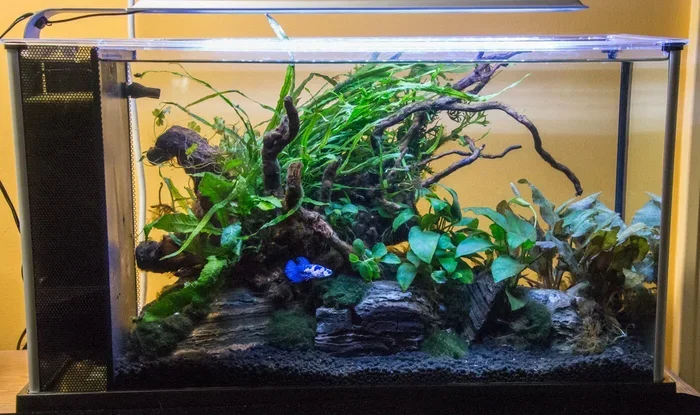
Bettas love environments with plenty of places to explore and rest. Adding tank decorations and live plants creates a stimulating habitat that supports natural betta fish behavior. Live plants like java fern, anubias, and amazon sword work especially well because they improve water quality by absorbing nitrates.
When choosing decorations, avoid sharp or rough objects that can tear your betta’s delicate fins. Smooth rocks, driftwood, and silk plants are safe choices. The goal is to create a visually appealing environment that also serves a functional purpose in your betta fish care routine.
Understanding Betta Fish Behavior
Observing your betta’s daily behavior is one of the most rewarding parts of fish keeping. Bettas are curious and interactive creatures. They will often swim to the front of the tank when they see you, build bubble nests at the surface, and explore every corner of their environment.
Understanding normal betta fish behavior helps you quickly spot when something is off. A healthy betta is active, has vibrant colors, and eats eagerly. Any sudden change in behavior is your first clue that something needs attention. This is why many owners watch how to care for a betta fish video content regularly to sharpen their observation skills.
Final Thoughts on Learning Betta Fish Care Through Video
Using a how to care for a betta fish video as part of your learning journey is one of the smartest decisions you can make. Video content brings abstract concepts to life and gives you a visual reference point for every aspect of betta fish care.
Combine video learning with hands-on practice and reliable written resources. Test your water regularly, follow a consistent feeding schedule, and keep your tank clean. Over time, you will develop the confidence and skills to provide an excellent home for your betta fish.
Remember that every tank is different, and your betta will show you what works best through its behavior. Stay patient, stay curious, and enjoy the journey. Proper betta fish care is not complicated when you have the right knowledge and tools at your fingertips.
Frequently Asked Questions
Can I keep my betta fish in a bowl instead of a tank?
While bettas can survive in bowls, they thrive much better in a properly set up tank of at least 5 gallons. A bowl limits water stability, makes maintenance harder, and restricts your fish’s movement. If you want to give your betta the best life, invest in a small tank with a heater and filter.
How often should I change the water in my betta fish tank?
A weekly 25 percent water change is the standard recommendation for most betta setups. This removes waste buildup and keeps water quality stable. Larger tanks may need less frequent changes, while smaller tanks might require more regular maintenance.
What is the best water temperature for a betta fish?
The ideal water temperature for a betta fish ranges from 76 to 82 degrees Fahrenheit. Staying within this range supports your fish’s immune system, digestion, and overall energy levels. Use a reliable aquarium thermometer to monitor the temperature daily.
Can betta fish live with other fish?
Bettas are known for their territorial nature, which makes tank mate selection tricky. Some peaceful community fish can coexist with bettas in larger tanks, but many aquarists choose to keep bettas solo. Always research compatibility before introducing new fish to your setup.
How do I know if my betta fish is happy and healthy?
A happy betta shows vibrant colors, active swimming, a good appetite, and builds bubble nests. Regular observation and consistent betta fish care routines help you maintain a thriving environment. If your fish displays these behaviors daily, you are doing a great job.
Where can I find reliable betta fish care videos online?
Look for videos from experienced aquarists and reputable aquarium channels. Focus on content that covers multiple aspects of betta fish care rather than single quick tips. Videos that show real tank setups, water testing, and feeding demonstrations provide the most practical and trustworthy guidance.
=== CONCLUSION ===
Learning how to care for a betta fish video style gives you a powerful advantage as a fish owner. You get to see proper techniques in action, avoid common pitfalls, and build your skills with confidence. From tank setup and water quality to feeding and health monitoring, every aspect of betta fish care benefits from visual instruction.
Start with the basics, stay consistent with your maintenance routine, and never stop learning. Your betta fish will reward you with vibrant colors, active behavior, and years of companionship. Apply what you have learned here, combine it with quality video resources, and enjoy the rewarding world of betta fish keeping.