Where to Betta Fish Come From

Betta fish, or Siamese fighting fish, originate from the shallow, warm waters of Southeast Asia. Wild bettas are native to countries like Thailand, Cambodia, and Vietnam, where they inhabit rice paddies and slow-moving streams. Centuries of selective breeding in Thailand created the vibrant, long-finned varieties we see today, now mass-produced worldwide. Understanding their natural history is key to providing proper care for these intelligent, territorial fish in captivity.
Key Takeaways
- Wild Origins: All betta fish (Betta splendens) are native to the Chao Phraya and Mekong river basins of Southeast Asia, primarily in Thailand, Cambodia, and Vietnam.
- Natural Habitat: In the wild, they live in shallow, vegetated, warm, and often low-oxygen waters like rice paddies, floodplains, and slow-moving streams.
- Ancient Domestication: Thais domesticated bettas over 1,000 years ago, initially for fighting matches due to their aggressive “plakat” nature.
- Selective Breeding: From the 1800s onward, breeders focused on fin length, color, and shape, creating the diverse, ornamental varieties popular globally.
- Modern Mass Production: Today, the vast majority of pet bettas are commercially farmed in large-scale operations, primarily in Southeast Asia, with some in Eastern Europe and the U.S.
- Ethical Considerations: The industry faces scrutiny over inbreeding, poor shipping conditions, and small cup housing, making breeder and store selection critical.
- Care Connection: Knowing a betta’s wild roots explains their labyrinth organ (for breathing air), preference for warm water, and need for hiding places and surface access.
📑 Table of Contents
- Wild Origins: The Cradle of the Betta
- The Natural Habitat: Life in the Rice Paddies
- From Warriors to Showstoppers: The History of Domestication
- The Modern Betta Industry: Where Your Fish Was Likely Born
- Ethical Implications and Responsible Sourcing
- Connecting Origins to Care: Why History Matters
- Conclusion: A Fish Steeped in Story
Wild Origins: The Cradle of the Betta
To truly understand the betta fish—that dazzling, fluttering presence in a small vase on a desk—you must travel back to its source. The story doesn’t begin in a pet store cup or a breeding farm warehouse. It begins in the hot, humid, muddy lowlands of Southeast Asia. The wild betta, Betta splendens, is a native son of the Chao Phraya and Mekong river basins. This region, encompassing central Thailand, parts of Cambodia, and southern Vietnam, is the undisputed birthplace of the species. Here, in the cradle of its evolution, the betta developed the remarkable adaptations that would later captivate the world.
The historical evidence points strongly to Thailand (formerly Siam) as the epicenter of early human interaction with these fish. Ancient Thai manuscripts and folklore reference fish fights, suggesting a domestication timeline that could stretch back over a millennium. These early “fighting fish” were not the flowing, velvet-finned beauties of today. They were plakats—short-finned, muscular, and intensely aggressive males, bred for their willingness to battle. The name “Betta” itself is believed to derive from “ikan bettah,” a Malay term for a warrior fish, or possibly from the ancient Thai fighting fish breed “plakat bettah.” Their original purpose was starkly practical: a form of gambling and entertainment where matches would continue until one fish submitted, not to the death, but to exhaustion.
The Specific Geographic Heartland
If you were to pinpoint the exact wild heartland, you’d look to the central plains of Thailand. The Thachin River (a major tributary of the Chao Phraya) and the vast, seasonal floodplains it nourishes are classic betta territory. In Cambodia, the Tonle Sap lake and its connecting rivers provide similar habitats. The key environmental factors are consistent: shallow water (often just a few inches deep), abundant aquatic plants, warm temperatures (75-85°F or 24-29°C year-round), and soft, acidic water with a low oxygen content. It is this last factor—the oxygen-poor water—that drove the evolution of their most famous feature: the labyrinth organ.
The Natural Habitat: Life in the Rice Paddies
Imagining a wild betta’s home is crucial to understanding the fish in your aquarium. Forget crystal-clear streams with rocky bottoms. The wild betta’s kingdom is the murky, tea-colored, plant-choked shallows. Their primary real estate is the rice paddy. During the rainy season, these flooded agricultural fields become vast, interconnected networks of shallow water, perfect for a small, air-breathing fish. They also thrive in ditches, swamps, and the slow-moving margins of larger rivers where dense vegetation like Vallisneria, Ceratopteris (water sprite), and duckweed create a complex, shaded world.

Visual guide about Where to Betta Fish Come From
Image source: modestfish.com
This environment explains so much of a betta’s instinctual behavior. The thick vegetation provides essential cover from aerial predators like herons and kingfishers. It’s also the stage for their most famous behavior: the betta bubble nest. Male bettas instinctively build these floating collections of air bubbles, coated with saliva, at the water’s surface among plant roots or leaves. This is not a random act; it’s a direct adaptation to their habitat. The vegetation stabilizes the nest in the often-still water and provides protection for the eggs and fry once they hatch. The labyrinth organ allows them to gulp atmospheric air directly from the surface, a non-negotiable requirement that stems from living in oxygen-depleted waters where gill respiration alone would fail.
Seasonal Changes and Survival
The wild betta’s life is not static. It is governed by the monsoon cycle. During the wet season, the floodplains expand, and bettas disperse widely, foraging for insects, zooplankton, and small crustaceans. As the dry season approaches and waters shrink, populations become isolated in shrinking pools. This natural fragmentation has contributed to genetic diversity in the wild. A betta’s ability to survive in these deteriorating conditions—by breathing air and eating a varied diet—is a testament to its hardy, opportunistic nature. This is the origin of their reputation for toughness, though it’s a toughness forged for specific, variable conditions, not the stagnant, unheated cup they are often sold in.
From Warriors to Showstoppers: The History of Domestication
The transformation of the betta from a fighting gladiator to an ornamental aquarium superstar is one of the most dramatic in the fish-keeping world. This shift began in earnest in the late 19th and early 20th centuries. As Westerners, notably French and German aquarists, became fascinated with exotic fish, they imported wild-caught bettas from Siam. Initially, they were prized for their fighting ability, with matches organized in Paris and Berlin. However, a parallel development was happening in Siam itself.
Visual guide about Where to Betta Fish Come From
Image source: tankofish.com
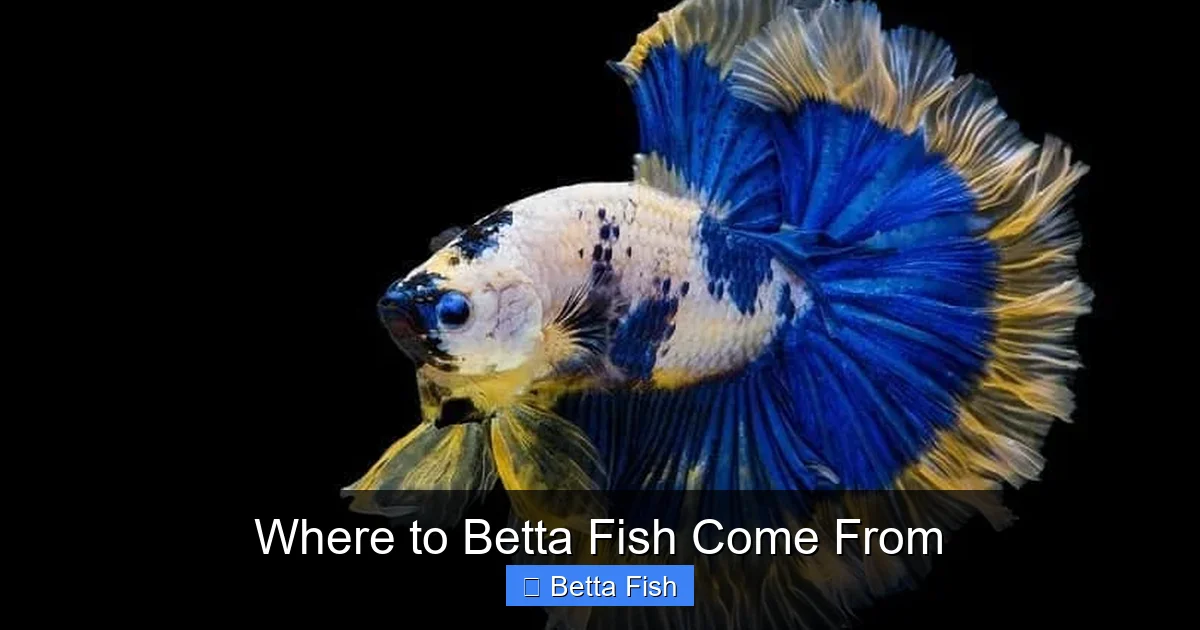
Thai breeders, particularly in the Bangkok area, began selecting for traits beyond aggression. They noticed natural mutations: longer fins, different colors like the metallic blue and green that shimmer in the wild, and varied tail shapes. The halfmoon tail—where the caudal fin spreads a full 180 degrees—was a monumental breakthrough achieved through meticulous, generational line breeding in the mid-20th century. This was not a single event but a slow, patient process of identifying a fish with a slightly fuller tail, breeding it, and repeating for decades. The “crown tail” with its spiky, ray-like extensions and the “veil tail” with its long, flowing, drooping fins followed. By the 1960s and 70s, the International Betta Congress (IBC) was formed in the U.S. to standardize varieties and promote ethical breeding, cementing the betta’s new identity as a show fish.
The Role of Mutation and Line Breeding
Understanding this history explains the modern betta’s fragility. Many spectacular fin types—the massive, heavy fins of a “halfmoon plakat” or the dense, ruffled “rose tail”—are the result of concentrating rare genetic mutations. This inbreeding to fix these traits can come at a cost: weaker immune systems, bent spines, and difficulty swimming. A wild betta is a streamlined, efficient swimmer. A modern show betta, while breathtaking, is often a product of form over function. This historical context is why a responsible owner prioritizes water quality and a gentle filter; their ornate betta may not be as hardy as its wild ancestor.
The Modern Betta Industry: Where Your Fish Was Likely Born
Here is the stark, contemporary reality: unless you purchased your betta from a dedicated, small-scale breeder (a rarity for most consumers), your fish almost certainly came from a commercial farming operation. The global epicenter of betta production is still Southeast Asia, with Thailand being the largest exporter. However, significant facilities also exist in other countries with warm climates and lower labor costs, such as Vietnam, Malaysia, Indonesia, and more recently, Eastern European nations like Poland and the Czech Republic.

Visual guide about Where to Betta Fish Come From
Image source: tankofish.com
These operations function on an assembly-line model. Fry (baby bettas) are raised in thousands in small, communal tanks or jars. They are fed a diet of finely crushed brine shrimp, microworms, and commercial fry food. At a few weeks old, males are separated from each other (and from females) due to their emerging aggression. They are then graded—only the fish with perfect fins, vibrant color, and the desired tail type are kept for the show or premium pet market. The rest, often called “culls,” may be sold as cheaper pets, used for breeding, or, in worst-case scenarios, disposed of. This grading process begins early and is the first filter determining a betta’s destiny.
The Journey from Farm to Your Home
The journey is a logistical marvel of stress. After grading, selected bettas are packed individually in small,heated (or sometimes unheated) bags with just enough water to keep them moist and a shot of pure oxygen. These bags are packed in insulated boxes and shipped via air cargo across the globe—from Bangkok to Los Angeles, from Warsaw to London. This transit can take 24-72 hours. Upon arrival at a distribution center or large pet store chain warehouse, the fish are often held for a “quarantine” period before being shipped to individual retail stores. Finally, they are placed in those infamous tiny plastic cups on the shelf, where they may sit for days or weeks, surviving on minimal water changes. This entire chain, from farm to cup, is the origin story for the overwhelming majority of bettas in the world today.
Ethical Implications and Responsible Sourcing
Understanding this supply chain is not just an academic exercise; it’s a call to conscious consumerism. The commercial betta industry has well-documented welfare issues. The combination of inbreeding for aesthetics, long and stressful shipping, and the standard retail practice of keeping them in tiny, heated cups (often without filtration) leads to high mortality rates and chronic suffering for survivors. A betta arriving from this pipeline is frequently stressed, immunocompromised, and sometimes already sick with velvet, fin rot, or dropsy.
So, what can a prospective owner do? The first step is to reject the cup. Never buy a betta that is being displayed in a small, unheated container with dirty water. Instead, seek out:
- Local Betta Breeders: Hobbyist breeders who keep their fish in proper heated tanks and can tell you about the parentage and health history of their stock. They often sell locally to avoid the shipping stress.
- Specialized Fish Stores: Not large chains, but independent aquarium shops where the staff are knowledgeable and the bettas are housed in filtered, heated community tanks or larger, individual systems.
- Reputable Online Breeders: These breeders ship directly from their controlled, high-quality setups, often using specialized shipping methods that minimize stress. They provide detailed lineage and health guarantees.
Paying more for a betta from these sources is an investment in the fish’s initial health and a vote against the worst practices of the mass-production industry. It also supports genetic diversity and healthier breeding lines.
Connecting Origins to Care: Why History Matters
All this talk of wild rice paddies and Thai breeding farms isn’t just trivia. It directly informs the non-negotiable elements of proper betta care. When you know where a betta comes from, you understand why it needs what it needs.
First, the labyrinth organ. This is the single most misunderstood aspect. Because they breathe air, they must have access to the water’s surface. A tight-fitting lid is dangerous; a lack of surface space is fatal. They cannot survive solely on oxygen dissolved in the water. This organ also means they are prone to jumping—they are native to waters where escape into a connected ditch is possible. A secure lid is a must.
Second, the warm, stable climate of Southeast Asia explains their need for a heater. They are tropical fish, not “room temperature” fish. Consistent temperatures between 78-80°F (25.5-26.5°C) are ideal for their immune system and metabolism. The slow-moving, plant-filled wild habitat explains their preference for calm water—no strong currents from filters—and their need for hiding spots like live plants, caves, and driftwood. In the wild, a betta is both predator and prey; a lack of cover causes chronic stress.
Third, their origin as an opportunistic insectivore in nutrient-poor waters means their diet should be primarily animal-based protein. In the wild, they eat mosquito larvae, Daphnia, small insects that fall on the water’s surface. A diet of solely plant matter or generic “betta pellets” with fillers is inadequate. High-quality frozen or live foods (brine shrimp, daphnia, bloodworms) should be regular supplements.
Finally, their solitary, territorial nature is a direct legacy of the wild male’s need to defend a small, resource-rich patch of water (his bubble nest site) from rivals. This is why male bettas cannot be housed together and why careful, supervised tank mates must be chosen. They are not community fish by nature; they are solitary guardians of a specific space.
Conclusion: A Fish Steeped in Story
The betta fish in your care is a living artifact, a small, breathing bridge between a muddy Thai rice paddy and your living room. Its journey spans over a thousand years—from the fighting pits of Siam, through the selective artistry of Thai breeders, to the global commercial farms of today. That shimmer on its fins is not just pigment; it is the result of generations of human fascination and intervention. The aggressive flare it displays is not mere petulance, but the echo of a territorial instinct that ensured survival in a crowded, seasonal world.
Knowing where betta fish come from transforms ownership. It shifts the perspective from seeing a “decorative cup fish” to appreciating a complex creature with specific, deep-rooted needs. It makes the heater, the filter, the live plants, and the spacious tank not optional luxuries, but the bare minimum required to replicate, in microcosm, the warm, vegetated, oxygen-variable world that shaped this remarkable fish. Your betta’s history is a story of resilience, beauty, and conflict. By honoring that history with proper care, you do more than keep a pet—you become a steward of a thousand-year legacy, one peaceful, flowing fin at a time.
Frequently Asked Questions
Are betta fish originally from Thailand?
Yes, the wild species Betta splendens is native to the central river basins of Thailand, as well as parts of Cambodia and Vietnam. Thailand is considered the primary center of its origin and early domestication.
What was the original purpose of keeping betta fish?
Bettas were originally domesticated in Thailand over 1,000 years ago for fighting. Their innate aggression toward other males was exploited in betting matches, similar to cockfighting. They were valued for their bravery and persistence, not their fins or color.
Do pet store bettas come from the wild?
Almost never. Virtually all bettas sold in pet stores are captive-bred, often in large-scale commercial farms in Southeast Asia or Eastern Europe. Truly wild-caught bettas are extremely rare and typically only acquired by serious researchers or specialized breeders.
Why are betta fish so aggressive?
Their aggression is an evolved territorial instinct from the wild, where males defend small, resource-rich patches of water (like a rice paddy section) to attract females and protect nests. This instinct remains strong in domestic males, making them solitary fish.
How long do betta fish live in the wild versus in captivity?
In the challenging wild, with predators and variable conditions, a betta’s lifespan is typically 2-3 years. In a properly cared-for aquarium—with clean, warm water, a good diet, and low stress—they commonly live 3-5 years, with some reaching 7 or more.
Can I keep a wild betta instead of a pet store betta?
For the average hobbyist, no. Wild bettas are not domesticated, can be exceptionally aggressive even by betta standards, have specific water parameter needs, and their collection can impact fragile wild populations. They are best left in the wild or kept only by advanced breeders and researchers.