Where Is a Betta Fish Anus

The betta fish anus, more accurately called the vent, is a single, small opening located on the underside of the fish, just in front of the caudal (tail) fin and behind the anal fin. It serves as the exit point for both digestive waste and reproductive fluids. Knowing its precise location is crucial for proper health monitoring, identifying gender, and ensuring clean tank conditions. This small but vital opening is a key indicator of a betta’s overall well-being.
Key Takeaways
- The “anus” is the vent: Betta fish, like most fish, have a single multi-purpose opening called the vent, which functions as both an anus and a urogenital opening.
- Location is consistent: It is always found on the ventral (belly) side, positioned between the anal fin and the caudal peduncle (the narrow base of the tail).
- It’s a health window: Changes in the vent’s appearance—such as swelling, redness, or protruding tissue—are primary visual signs of digestive issues, infections, or parasites.
- Gender identification aid: While not a sole identifier, a male’s vent is often slightly more pointed, while a female’s may appear rounder, especially when gravid (egg-bearing).
- Hygiene is critical: Because waste exits here, maintaining pristine water quality is essential to prevent bacterial or fungal infections at this sensitive site.
- Breeding connection: During spawning, the male’s vent (gonopodium) becomes more visible as he wraps around the female to transfer sperm, and the female releases eggs from this same opening.
📑 Table of Contents
- Introduction: Why Knowing This Matters
- Betta Fish Anatomy 101: Setting the Stage
- Pinpoint Precision: Exact Location of the Betta Vent
- The Vital Functions of the Vent
- Gender Differences and the Breeding Vent
- Health Watch: What Your Betta’s Vent Is Telling You
- Hygiene and Tank Maintenance: Protecting the Vent
- Conclusion: The Power of Anatomical Awareness
Introduction: Why Knowing This Matters
So, you’ve got a beautiful betta fish, with its flowing fins and vibrant colors, swimming gracefully in its tank. You’ve mastered the basics of feeding and water changes. But have you ever paused to wonder about the finer points of betta anatomy? Specifically, where is a betta fish anus? It’s not just a quirky question for trivia night. Understanding the precise location and function of this small opening—technically called the vent—is a cornerstone of responsible betta ownership. It’s your direct line to assessing their digestive health, identifying potential diseases, and even determining their gender. This knowledge transforms you from a casual keeper into a proactive caretaker, able to spot subtle issues before they become life-threatening. Let’s dive deep into the belly of the betta, literally, to uncover everything you need to know about this vital anatomical feature.
Betta Fish Anatomy 101: Setting the Stage
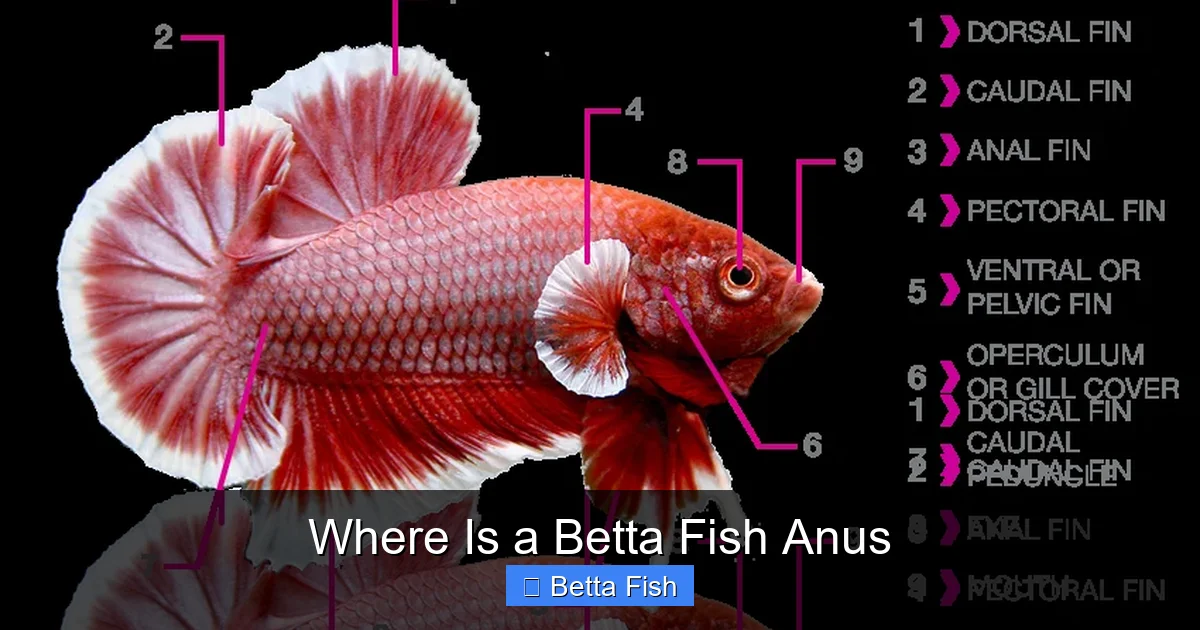
Before we pinpoint the vent, we need a basic map of a betta’s body. A betta fish, like all ray-finned fish, has a streamlined body plan. The top is the dorsal side, the bottom is the ventral side. Key fins provide locomotion and stability: the dorsal fin on top, the caudal (tail) fin at the rear, the pectoral fins on the sides near the head, the pelvic fins (often large and ornate in males) further back on the belly, and the anal fin running along the ventral rear, just before the tail.

Visual guide about Where Is a Betta Fish Anus
Image source: infoanimales.net
The Vent: A Multi-Purpose Portal
Fish do not have separate openings for urine, feces, and reproduction like mammals do. Instead, they have a single cloacal opening, simply called the vent. This is the final exit for the digestive tract (anus function) and the reproductive tract. It’s a small, often subtle, circular or slightly oval opening. In bettas, its location is fixed and predictable, making it a reliable landmark.
Pinpoint Precision: Exact Location of the Betta Vent
Now, for the main event. To find the vent on your betta, you need to look at the fish’s underside. Position yourself so you’re looking up at the belly. Follow this visual guide:

Visual guide about Where Is a Betta Fish Anus
Image source: buildyouraquarium.com
- Start at the Pelvic Fins: These are the two fins that hang down on the belly, often looking like long, flowing ribbons in a male Halfmoon. They are located just behind the pectoral fins.
- Move Rearward: Behind and slightly below the pelvic fins, you will find the anal fin. This is a single, elongated fin that runs along the belly for a short distance.
- The Landmark: The vent is located immediately behind (posterior to) the anal fin. It sits on the ventral surface at the very end of the fish’s body cavity, right where the body begins to narrow into the caudal peduncle—the slender stalk that connects the main body to the caudal (tail) fin.
In simple terms: Pelvic fins → Anal fin → Vent → Caudal Peduncle → Tail Fin. If you trace a line along the belly from the pelvic fins toward the tail, the vent is the first distinct small hole you’ll encounter after the anal fin ends. It’s often so small and flush with the body that it can be hard to see without close inspection, especially on dark-colored fish.
Visual Aids and Practical Exercise
The best way to learn is to observe your own betta. During a calm moment, gently net your fish (if necessary) and place it in a small, clear container with a little tank water for a quick look. Tilt the container slightly to get a clear view of the underside. Use a magnifying glass if needed. You’re looking for a tiny, neat opening. In a healthy betta, it will be a clean, dark, or flesh-colored dot with no swelling, redness, or stringy protrusions. Practice this a few times. Once you’ve found it, you’ll never forget where it is.
The Vital Functions of the Vent
Knowing where it is only half the story. Understanding what happens at this site is critical for interpreting what you see.
Visual guide about Where Is a Betta Fish Anus
Image source: nippyfish.net
1. Digestive Waste Elimination
This is its primary “anus” function. After food is digested and nutrients absorbed in the intestine, the remaining waste (feces) is expelled through the vent. The consistency and color of betta poop are important health indicators. Normal waste is usually a small, dark pellet or a short, segmented string that quickly disperses. Constipation (seen as long, pale, stringy feces trailing from the vent) or diarrhea (excessive, clear/white waste) are common issues originating here. A blocked vent from constipation can be fatal if not treated promptly with fasting and possibly a cooked pea.
2. Reproductive and Urinary Output
This is the “cloacal” function. The vent is also the exit for:
- Sperm: In males, sperm is released from the testes and exits through the vent during spawning.
- Eggs: In females, mature eggs are released from the ovaries and exit through the vent. A gravid female will have a more pronounced, often white or pale, swollen vent area as eggs develop.
- Urine: Fish kidneys filter waste from the blood, and this liquid urine (ammonia-rich) is also excreted through the vent. This is a major reason why water quality must be immaculate; urine directly enters the tank from this point.
Gender Differences and the Breeding Vent
While the vent’s location is identical in males and females, there are subtle differences in appearance and dramatic differences in function during breeding.
Subtle Visual Cues
A trained eye can sometimes guess gender by the vent area, but it’s not foolproof.
- Males: The vent opening may appear slightly more elongated or pointed. The male’s beard (the membrane under the gill plate) is the primary gender marker, but a closer look at the vent can support your guess.
- Females: The vent often appears rounder and smaller when not gravid. When carrying eggs (gravid), the entire underside behind the vent becomes visibly swollen and distended, sometimes with a small, pale “egg spot” (ovipositor) just in front of the vent. This is the most reliable visual sign of a female ready to spawn.
The Breeding Process: A Vent-Centric Event
Betta breeding is a precise dance centered on these openings. The male builds a bubble nest at the surface. He then performs a courtship display to entice a female. The critical moment is the “embrace.” The male wraps his body around the female, aligning his vent with hers. He applies gentle pressure, which stimulates the female to release a few eggs. Simultaneously, he releases sperm (milt) from his vent to fertilize the eggs externally. The male then carefully retrieves the fertilized eggs and places them into his bubble nest. If the alignment is off, or if the female is not ready, the spawn fails. Observing this vent-to-vent contact is key to successful breeding.
Health Watch: What Your Betta’s Vent Is Telling You
This is the most practical application of your knowledge. The vent is a health dashboard. Check it during your regular observations.
Common Vent-Related Issues
- Swelling/Protrusion (Vent Prolapse): This is a severe emergency. A red, swollen, or tissue-like protrusion from the vent indicates a possible internal bacterial infection, severe constipation, or parasitic infestation (like internal worms). The fish is in immense distress and needs immediate treatment with appropriate antibiotics (like Maracyn II) in a hospital tank. Do not attempt to push anything back in.
- Redness/Inflammation: A pinkish or inflamed vent often points to poor water quality (ammonia/nitrite burns), bacterial infection (Aeromonas, Pseudomonas), or physical injury from tank décor.
- White, Cotton-Like Growth: This is classic fungal infection, often secondary to a bacterial infection or an open wound at the vent site. It looks like tufts of cotton.
- Stringy, Pale Feces (Constipation): As mentioned, this is a digestive issue. The feces dangles from the vent. Treatment involves fasting for 3-5 days, then feeding a small piece of deshelled, cooked green pea (a natural laxative).
- No Waste Production: If you see a healthy betta not pooping for several days, it could be constipated, stressed, or have a complete intestinal blockage. Monitor closely and consider the pea treatment.
Prevention Through Observation and Water Quality
The best treatment is prevention. Your daily 5-minute observation session should include a clear view of the vent area. Is it clean? Is there any waste stuck to it? Is the area around it clear and smooth? Coupled with this, maintaining pristine water parameters (ammonia and nitrite at 0 ppm, nitrates below 20 ppm) through weekly 25-50% water changes and a good filter is your number one defense against vent-related infections. Uneaten food and fish waste decay into ammonia, which burns the fish’s skin and gills, including the sensitive vent area.
Hygiene and Tank Maintenance: Protecting the Vent
Given that waste exits here, the vent is constantly exposed to the tank environment. A clean tank is a healthy vent.
Water Changes Are Non-Negotiable
Regular, partial water changes dilute the ammonia and other waste products that accumulate from urine and feces expelled via the vent. A filter helps, but it cannot replace the dilution achieved by water changes. Use a gravel vacuum during changes to suck up detritus from the substrate where waste settles. This removes the food source for harmful bacteria before it breaks down into toxins.
Substrate and Décor Considerations
Avoid sharp gravel or rough decorations that a betta could rub against, potentially injuring the vent area. Smooth sand or rounded gravel is ideal. Plants (live or silk) provide hiding places and reduce stress, which boosts the immune system. A stressed fish is more susceptible to disease.
What to Do If You See Debris Stuck
Sometimes a long piece of feces can get stuck to the vent. Do not try to pull it off with your fingers or tweezers; you could severely damage the tissue. The best course is to perform a small, immediate water change (25%) with clean, temperature-matched water. The improved water quality often stimulates the fish to move more and the debris will dislodge on its own. If it persists for more than a day, you may be dealing with constipation or a more serious issue requiring the pea treatment or medication.
Conclusion: The Power of Anatomical Awareness
As we’ve seen, the question “where is a betta fish anus?” opens the door to a much deeper understanding of your aquatic pet. That tiny vent is a nexus of critical biological functions—waste elimination, reproduction, and osmoregulation. Its location, fixed between the anal fin and the tail base, is a permanent landmark you can rely on. By routinely checking this area, you become an active participant in your betta’s health, capable of spotting swelling, redness, or abnormal waste that signals trouble. This knowledge directly informs better tank hygiene, more effective feeding practices, and even successful breeding attempts. You’re no longer just watching a pretty fish swim; you’re monitoring a complex biological system. So, take a moment, get a good look at your betta’s vent. Familiarity with this small detail is one of the most impactful steps you can take toward ensuring a long, vibrant, and healthy life for your finned friend.
Frequently Asked Questions
Is a betta fish’s anus always visible?
No, it is often very small and flush with the body, making it difficult to see on dark-colored or heavily-finned bettas without close, deliberate inspection. It appears as a tiny, neat dot or slit on the underside.
How is the betta vent different from the anus in mammals?
>It is a single multi-purpose opening called a cloaca, serving as the exit for the digestive tract (feces), urinary tract (urine), and reproductive tract (eggs/sperm). Mammals have separate openings for these functions.
What does it mean if my betta has a red or swollen vent?
This is a serious sign of poor water quality, a bacterial or parasitic infection, or severe constipation. It requires immediate action: test water parameters, perform a large water change, and consider medication like antibiotics in a separate hospital tank.
How often should I check my betta’s vent for problems?
Incorporate it into your daily 5-minute health check. Look for cleanliness, any swelling, redness, or protruding tissue, and observe the consistency of any feces. Early detection is key to treating most issues.
Can I see the vent more easily during breeding?
Yes. During the spawning embrace, the male’s vent becomes more apparent as he wraps around the female. A gravid (egg-bearing) female will have a visibly swollen, often white or pale, vent area due to the eggs developing inside.
When should I be concerned enough to consult a vet about my betta’s vent?
Consult an aquatic veterinarian or experienced forum immediately if you see a protruding red mass (vent prolapse), persistent white cotton-like growth (fungus), or if swelling/redness does not improve within 24-48 hours of improving water conditions and starting treatment.