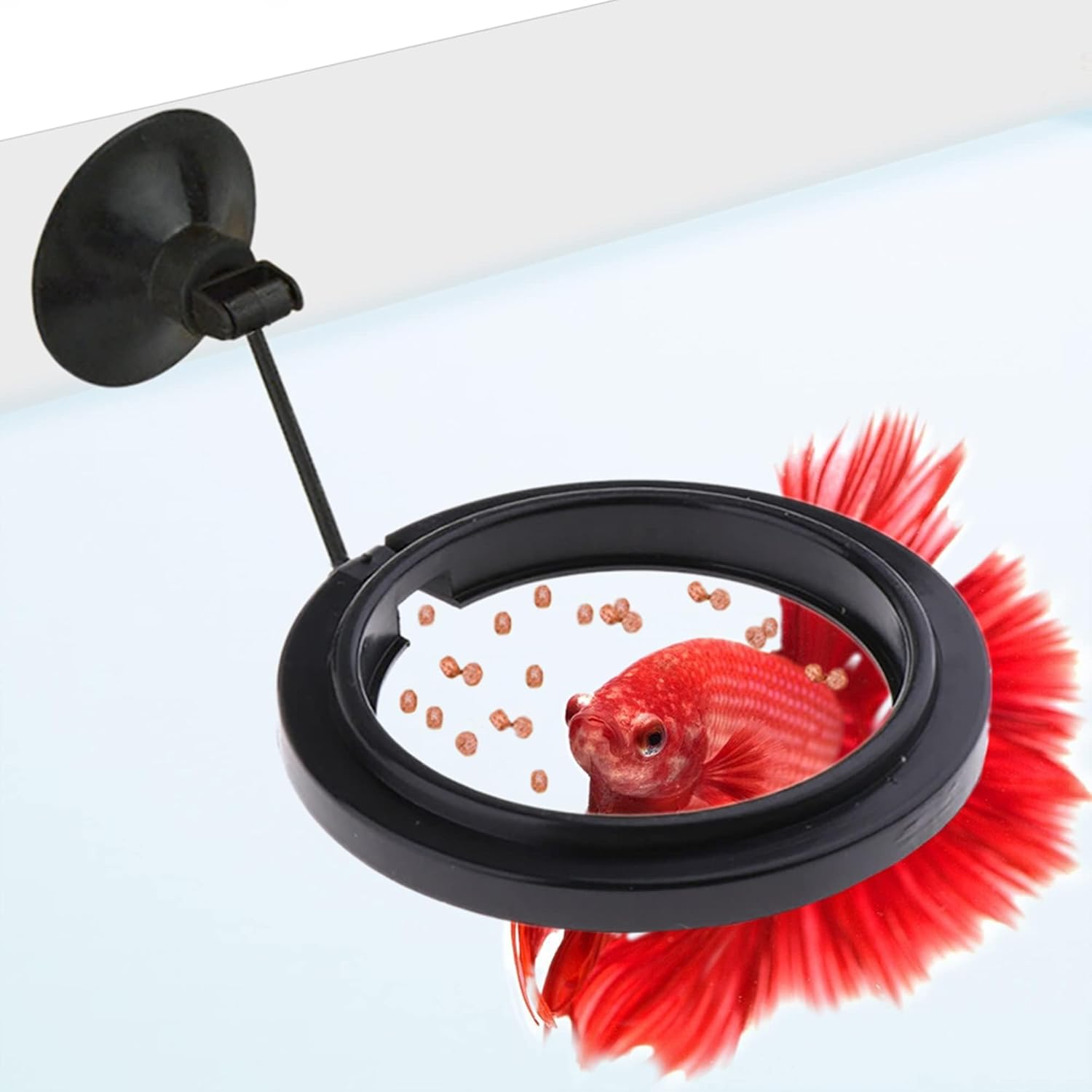
When Do You Feed Betta Fish
Feeding your betta fish correctly is crucial for its health and longevity. The general rule is to feed adult bettas 2-3 times daily, offering only what they can consume in 2-3 minutes. Portion size is tiny—about the size of their eye. Consistency in timing and avoiding overfeeding are the most important factors to prevent constipation, swim bladder issues, and poor water quality. A varied diet of high-quality pellets with occasional treats like frozen or live foods ensures complete nutrition.
Key Takeaways
- Feed adult bettas 2-3 times per day: This frequency supports a fast metabolism without overburdening their digestive system.
- Portion size is critical: A meal should be no larger than the size of your betta’s eye, roughly 2-3 pellets or a small pinch of food.
- Implement a weekly fast: Skipping one full day per week aids digestion, mimics natural feeding patterns, and helps prevent constipation.
- Primary diet should be high-quality pellets: Formulated betta pellets provide balanced nutrition. Use frozen, live, or gel foods as occasional supplements.
- Observe and adjust: Watch your betta eat. If food remains after 3 minutes, you’ve overfed. Remove all uneaten food immediately.
- Timing matters less than consistency: Feed at similar times each day to establish a routine, but the exact hour is less important than the daily schedule itself.
- Young bettas (fry) need more frequent feedings: Hatchlings and juveniles require 3-4 small meals daily to support rapid growth.
📑 Table of Contents
- Why Timing Matters for Your Betta’s Health
- Decoding the Ideal Feeding Frequency
- The Science of Portion Sizing: It’s Smaller Than You Think
- Building the Perfect Betta Diet: Food Choices Matter
- The Power of the Fast: Why Skipping a Day is Beneficial
- Common Feeding Mistakes and How to Avoid Them
- Conclusion: The Simple, Sustainable Routine
Why Timing Matters for Your Betta’s Health
You’ve just brought home a stunning betta fish, with its flowing fins and vibrant colors. You’ve set up a beautiful aquarium, but now you face the most common and critical question for any new betta owner: when do you feed betta fish? It seems simple, but the answer is layered with nuance that directly impacts your fish’s health, colors, and lifespan. Getting the feeding schedule wrong is the single most common cause of health problems in captive bettas, from fatal swim bladder disease to chronic constipation and severe water pollution.
Betta splendens, the scientific name for the Siamese fighting fish, has a reputation for being hardy. This can be misleading. Their hardy nature often comes from their ability to survive in poor conditions, not thrive in them. In the wild, a betta’s diet consists of insects, larvae, and zooplankton that it hunts near the water’s surface. This makes them predominantly carnivorous surface feeders. Their digestive tracts are short and simple, designed for protein-rich meals that are not eaten every single day. Understanding this natural biology is the first step to mastering their feeding schedule. It’s not just about *when* you feed, but about *how much*, *what*, and the crucial practice of *when not to feed*.
The Myth of the “Big Meal”
Many new owners, wanting to care for their pet, make the fatal mistake of overfeeding. This is often driven by the misconception that a fish should have a “full” meal like a dog or cat. A betta’s stomach is roughly the size of its eye. That’s not a poetic expression; it’s a biological fact. Overfilling this tiny stomach leads to immediate problems: constipation, which can escalate to a life-threatening swim bladder disorder where the fish can no longer control its buoyancy and floats upside down or sinks to the bottom. Furthermore, any uneaten food immediately begins to decay, releasing ammonia and fouling the water. Poor water quality is a silent killer, stressing the fish and weakening its immune system. So, the cornerstone of answering “when do you feed betta fish?” is first understanding that the answer must always be paired with “and only this tiny amount.”
Decoding the Ideal Feeding Frequency
Now, to the core of your question. For a healthy adult betta (over 6 months old), the widely accepted and scientifically sound guideline is to feed 2 to 3 times per day. This schedule provides consistent energy without overwhelming their digestive system. The key word here is “consistent.” Bettas are creatures of habit. Feeding at roughly the same times each day—say, once in the morning and once in the evening for a 2x schedule, or adding a midday feeding for a 3x schedule—helps reduce stress and establishes a predictable routine.
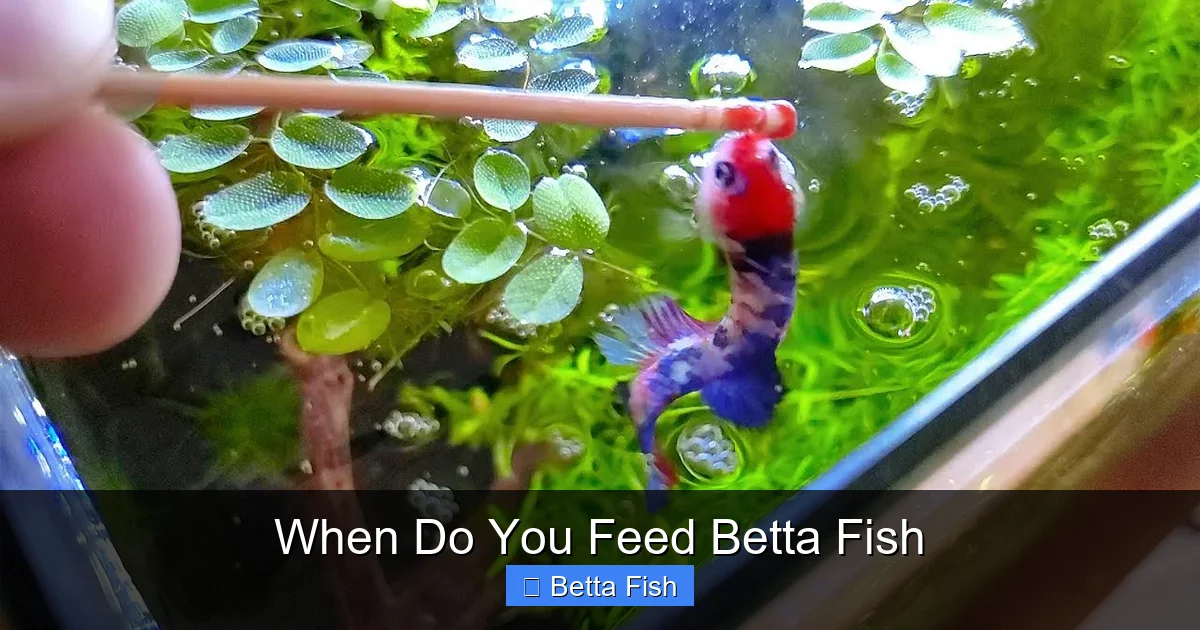
Visual guide about When Do You Feed Betta Fish
Image source: i.ytimg.com
The 2-3 Minute Rule: Your Portion Control Lifeline
Frequency is only half the equation. The other half is the 2-3 minute rule. Once you release the food into the tank, you have 2-3 minutes to observe. Your betta should actively eat everything you’ve offered within this window. If food is still floating or sinking after 3 minutes, you have given too much. Using a net or a turkey baster, immediately remove all uneaten pellets or food particles. This practice is non-negotiable for maintaining pristine water quality. It’s better to underfeed by a tiny amount for a day than to overfeed even once. A slightly hungry betta will be more active and alert at the next feeding, while an overfed betta becomes lethargic and unhealthy.
Special Considerations: Fry and Juveniles
The “2-3 times daily” rule applies to adult bettas. If you are raising betta fry (newly hatched babies) or have a young juvenile, their needs are different. These tiny fish are growing at an explosive rate and have even faster metabolisms. Fry require 3-4 feedings per day of appropriately sized foods, such as infusoria, microworms, or newly hatched brine shrimp. As they grow into juveniles (a few weeks old), you can gradually transition them to finely crushed high-quality pellets and reduce feedings to 3 times daily, inching toward the adult schedule as they mature. The principle of offering only what they can consume in a few minutes remains absolutely critical at every life stage.
The Science of Portion Sizing: It’s Smaller Than You Think
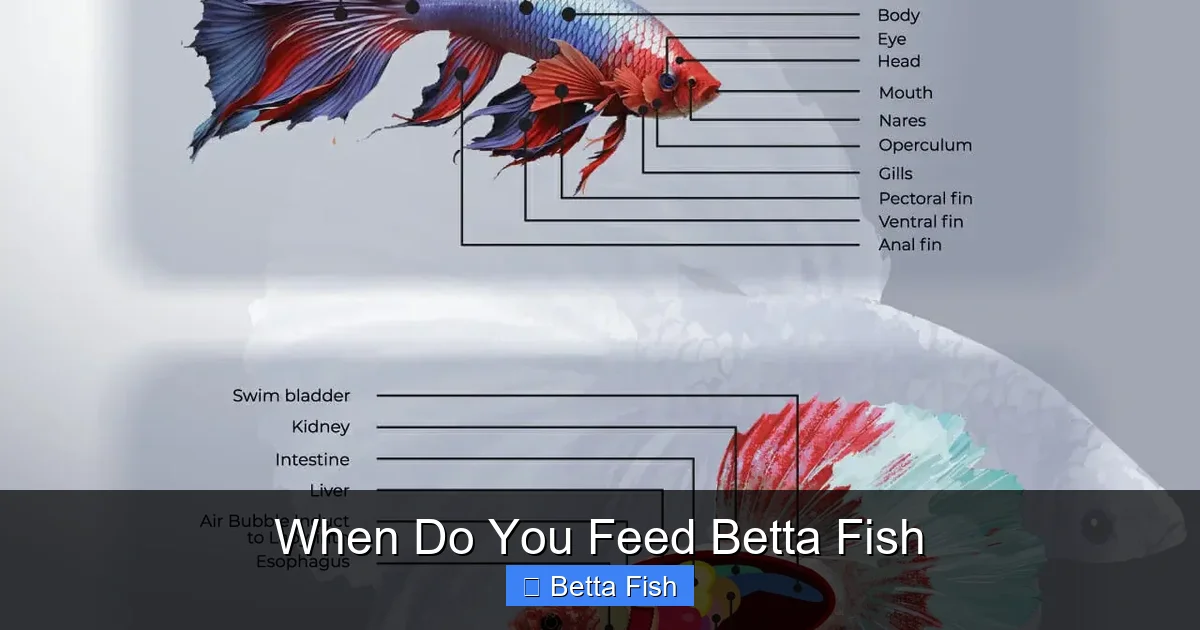
We’ve established frequency and the 2-3 minute rule. Now, let’s quantify “how much.” The universal, foolproof method for portion sizing is the “eyeball method.” A betta’s stomach is approximately the size of its eyeball. Therefore, a single meal should be no larger than that. For most commercial betta pellets, this translates to 2-3 pellets per feeding for an adult betta. If you are using other foods like frozen bloodworms or daphnia, the portion should be a tiny pinch—no more than the size of a small pea—thawed and rinsed first.
Visual guide about When Do You Feed Betta Fish
Image source: tankarium.com
Why Your “Pinch” is Probably Too Big
Human perception is terrible at judging small volumes. What feels like a “pinch” to you is likely a feast for a betta. The best practice is to physically measure out your portion once. Scoop 2-3 pellets into your palm. Look at them. Commit that visual to memory. That is a meal. Repeat for the second feeding if you’re doing 3x a day. This visual calibration is the single most effective tool to combat overfeeding. Remember, in the wild, a betta might not catch an insect every single day. Their bodies are adapted for intermittent feeding, not constant grazing.
Adjusting for Activity and Temperature
Your betta’s metabolism is influenced by water temperature. Bettas are tropical fish, thriving in water between 76°F and 82°F (24°C – 28°C). In cooler water (below 75°F), their metabolism slows dramatically. In this case, you should reduce feeding to once daily or even every other day, as they will digest food very slowly and are at high risk for constipation and bloat. Conversely, a very active betta in a warm, well-maintained tank might benefit from the upper end of the feeding range (3 times daily), but the portion size per meal must never increase. Always prioritize the 2-3 minute rule over a set number of pellets. If your betta is less active, simply offer fewer pellets at each scheduled feeding time.
Building the Perfect Betta Diet: Food Choices Matter
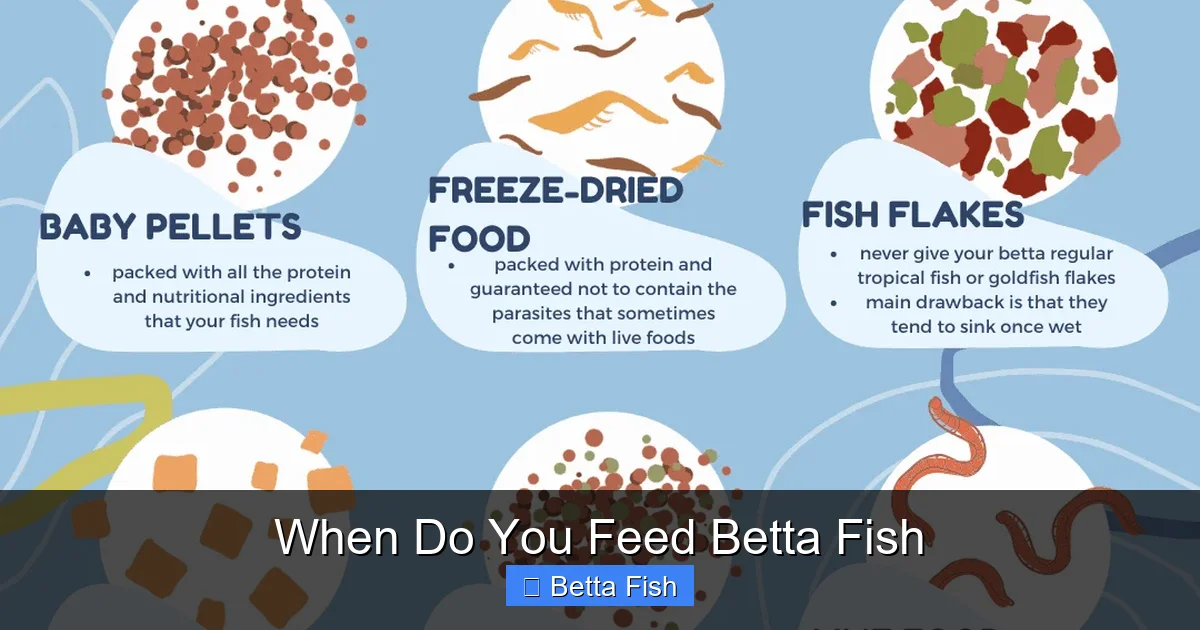
Knowing when to feed is useless if you’re feeding the wrong things. A proper diet is the foundation of health. The staple of your betta’s diet should be a high-quality betta-specific pellet. These are formulated with the high protein content (35-50%) that bettas require, along with essential vitamins and minerals. Look for pellets where the first few ingredients are whole fish or fish meal, not fillers like wheat or soy. Avoid generic “tropical fish” flakes; they are often nutritionally inadequate and can cause digestive issues.
Visual guide about When Do You Feed Betta Fish
Image source: ekk4j69ebaa.exactdn.com
Pellets: The Staple Food
Soak pellets in a small cup of tank water for a minute before feeding. This softens them and makes them easier to digest, reducing the risk of impaction. Feed the soaked pellets as per your 2-3 minute schedule. Good pellets will sink slowly, allowing your betta to feed at the surface where it feels safe. Some bettas are picky; if your betta ignores pellets, try different brands or gently crush them into a finer powder initially.
Variety is the Spice of Life: Treats and Supplements
While pellets should be 80-90% of the diet, variety is important for enrichment and providing a broader nutrient profile. Think of these as occasional treats, not daily meals:
- Frozen Foods: Frozen bloodworms, brine shrimp, or daphnia are excellent. Thaw a small cube in a dish, rinse with a drop of tank water, and offer a tiny pinch 1-2 times per week. They are safer than live food as they are parasite-free.
- Live Foods: The ultimate enrichment. Small live daphnia or microworms are great. However, live foods carry a risk of introducing parasites or bacteria to your tank. Source them from a reputable supplier and use sparingly.
- Gel Foods: These are a great, mess-free alternative. They can be stored in the fridge and offer good nutrition.
The rule of thumb is to provide a “treat” meal no more than once or twice a week, replacing one of the regular pellet feedings. This prevents nutritional imbalances and keeps your betta interested in food.
The Power of the Fast: Why Skipping a Day is Beneficial
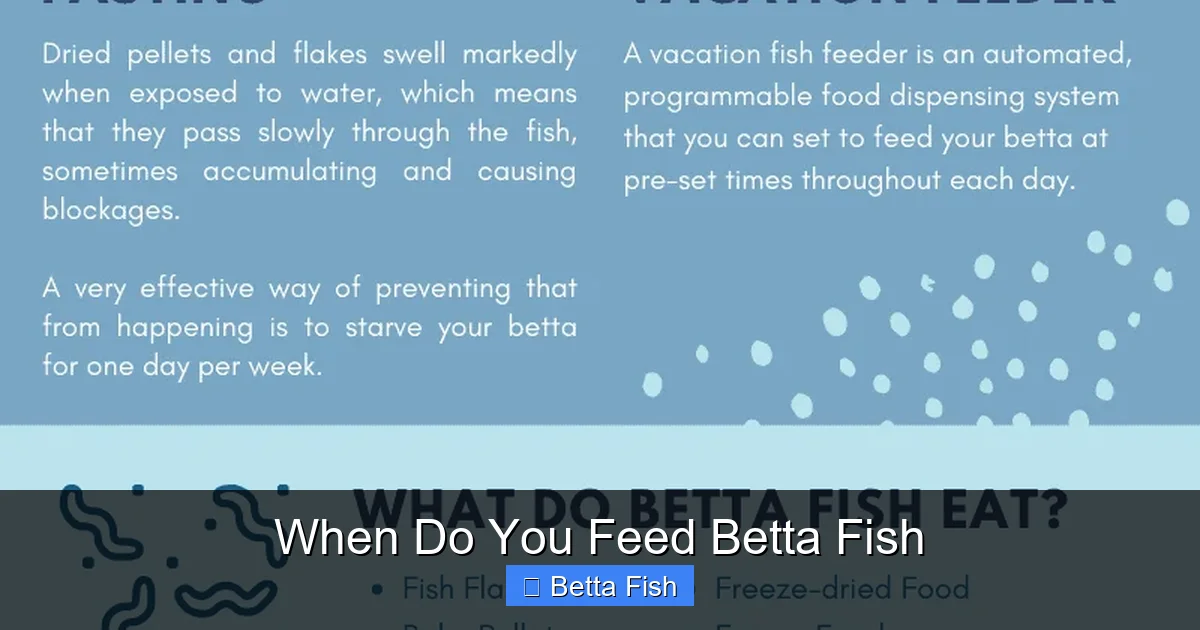
This is the most counter-intuitive yet vital part of answering “when do you feed betta fish?” The answer includes: sometimes, you don’t. Implementing a weekly fast day is one of the best things you can do for your betta’s long-term health. Choose one day per week—often a convenient day like Sunday—where you provide no food at all.
Digestive Rest and Natural Mimicry
In the wild, a betta does not eat a guaranteed meal every single day. A fast day allows its entire digestive system to fully empty and rest. This “reset” is powerful. It helps clear out any minor blockages, stimulates the metabolism, and can even improve color vibrancy as the body utilizes stored nutrients more efficiently. For a fish prone to constipation or mild swim bladder issues, a weekly fast is often more effective than any medication. It’s a simple, preventive health measure that aligns with their natural evolutionary history.
How to Implement a Fast
The process is simple: on your chosen fast day, do not feed your betta at all. Resist the urge to give a “tiny snack.” Provide normal lighting and tank conditions. Your betta will be fine. Fish can easily go 7-10 days without food without any ill effects. In fact, they often become more active and curious on fast days as they “forage” for non-existent food, exhibiting more natural behavior. The next day, resume your normal 2-3 times daily feeding schedule with the appropriate tiny portions. Your betta will likely greet you with extra enthusiasm at the first post-fast meal.
Common Feeding Mistakes and How to Avoid Them
Even with the best intentions, betta owners fall into predictable traps. Recognizing these mistakes is key to correcting your routine.
Mistake 1: The “Just in Case” Extra Pellet
You feed 2 pellets, your betta eats them quickly, and looks up at you begging for more. The tiny, expressive face is hard to resist. This is the moment of truth. Do not give in. That begging is a learned behavior, often rooted in a natural hunting instinct, not a sign of starvation. Your betta’s digestive system is already processing the first meal. Giving in leads directly to overfeeding and its associated problems. Stick to your pre-determined portion. If you feel compelled to do something, interact with your betta using a finger or a clean decoration to play instead of feeding.
Mistake 2: Using a Food Container as a “Guide”
Never scoop food directly from the container into the tank with the same scoop you use for other fish. This contaminates your entire food supply with bacteria and parasites from the tank water. Always use a dedicated, clean spoon or your clean fingers to portion out food. Better yet, pre-portion your weekly pellets into a small, dry container on your desk. This eliminates guesswork and ensures you use the correct amount every single time.
Mistake 3: Ignoring the “Leftovers”
This cannot be stressed enough: any food not eaten within 3 minutes must be removed. Letting it decompose in the tank is a direct path to ammonia spikes, cloudy water, and stress. Make it part of your feeding ritual: feed, watch for 3 minutes, then net out any leftovers. This single habit will do more for your betta’s water quality and health than almost any other. A clean tank is a healthy tank, and uneaten food is the primary pollutant in a small, filtered betta aquarium.
Mistake 4: Inconsistent Feeding Times
Feeding at 8 AM one day, 11 AM the next, and 4 PM the next confuses your betta. It can lead to increased stress, as the fish never knows when to expect food. Stress suppresses the immune system. Aim for the same general window each day. If you have a erratic schedule, an automatic fish feeder (set to dispense 1-2 pellets at a time) can be a lifesaver for consistency. Just ensure it’s calibrated correctly and you still remove any uneaten food from the manual feedings.
Conclusion: The Simple, Sustainable Routine
So, when do you feed betta fish? The complete answer is this: Feed your adult betta 2-3 times daily, at consistent times, offering only 2-3 high-quality pellets (or a pea-sized amount of other food) per meal. Remove all uneaten food after 3 minutes. Implement one weekly fast day. For young bettas, feed 3-4 times daily with appropriately sized foods. This routine respects their carnivorous biology, prevents the vast majority of dietary health issues, and maintains excellent water quality.
Ultimately, successful betta keeping is an exercise in moderation and observation. Your betta is not a hamster; it does not need a full belly. A slightly thin, active, and vibrant betta is infinitely healthier than a bloated, constipated, and lethargic one. By moving beyond the simple question of “when” and embracing the full context of “how much,” “what,” and “when not to,” you provide the foundation for your betta to display its magnificent colors and personality for years to come. You become not just a feeder, but a mindful caretaker who understands the delicate balance of life in a glass box.
Frequently Asked Questions
How do I know if I’m overfeeding my betta?
The most obvious sign is uneaten food remaining in the tank after 3 minutes. Other signs include bloating, constipation (stringy feces), lethargy, and cloudy water. If your betta looks like a pinecone when viewed from above, this is severe bloat and requires immediate fasting and potential treatment.
Is it okay to skip a day of feeding?
Yes, and it’s highly recommended! Implementing a weekly fast day is one of the healthiest practices for your betta. It aids digestion, prevents constipation, and mimics their natural irregular feeding patterns in the wild. A healthy adult betta can easily go a week without food.
Can I feed my betta only pellets?
Yes, if they are high-quality betta-specific pellets. This should be the staple of their diet (80-90%). However, offering variety with frozen or live foods 1-2 times per week provides enrichment and additional nutrients, making for a healthier, more stimulated fish.
What’s better: frozen or live food?
Frozen food is generally safer and more practical for most owners. It’s parasite-free, convenient to store, and nutrient-rich. Live food offers great enrichment but carries a risk of introducing diseases or parasites to your aquarium. If using live food, source it from a reputable supplier.
Why is my betta spitting out its pellets?
This is common and usually not a sign of illness. Bettas may spit out food that is too large, too hard, or simply because they are picky. Try soaking pellets in tank water for 60 seconds to soften them. Also, ensure pellets are specifically sized for bettas (small or micro pellets).
My betta is a picky eater and ignores pellets. What should I do?
First, ensure you are using a high-quality, small-sized betta pellet. Try different brands. You can also try gently crushing pellets into a finer powder. To encourage eating, you might need to offer a small amount of a tempting frozen food like bloodworms for a few days to stimulate appetite, then gradually reintroduce pellets by mixing a tiny bit of the new food with the preferred treat. Never resort to feeding only fatty treats like brine shrimp long-term.