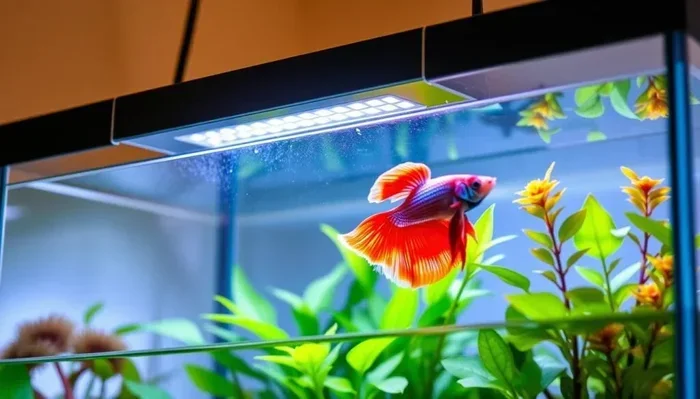
When Does Betta Fish Sleep

Betta fish do sleep, but not like humans. They lack eyelids, so their “sleep” is a period of reduced activity where they remain semi-aware. Bettas are crepuscular, resting most during dawn and dusk, but can nap anytime. Understanding their unique sleep behaviors—like resting on plants or the tank bottom—is crucial for recognizing normal rest versus potential health issues. Providing a stable, stress-free environment with proper lighting cycles supports their natural rhythms.
Key Takeaways
- Betta fish do sleep, but without closing their eyes. They enter a state of rest characterized by reduced movement and metabolism, remaining alert to threats.
- Bettas are primarily crepuscular. Their peak rest periods are at dawn and dusk, though they take frequent short naps throughout the day and night.
- Sleep positions are varied and telling. Common positions include resting on the substrate, leaning on plants/decoration, or floating mid-water. Each can indicate comfort level or potential issues.
- Environmental factors dictate sleep quality. Consistent light/dark cycles, water temperature, tank mates, and water quality directly impact how and when your betta rests.
- Distinguishing sleep from illness is critical. A sleeping betta is still responsive to gentle stimuli. Lethargy combined with other symptoms like clamped fins or loss of appetite signals sickness.
- You must provide secure resting spots. Live or silk plants, smooth caves, and broad leaves near the water surface give bettas safe places to rest and reduce stress.
- Inconsistent lighting disrupts their natural rhythm. Using a timer for 8-10 hours of light daily mimics a natural day and prevents chronic stress from constant illumination or unexpected darkness.
📑 Table of Contents
- Understanding the Mysterious World of Betta Fish Sleep
- The Physiology of Betta Rest: Why They Don’t Close Their Eyes
- When Do Betta Fish Sleep? Decoding Their Daily Rhythm
- The Art of the Betta Siesta: Common Sleep Positions and Their Meanings
- Environmental Factors That Disrupt (or Support) Healthy Sleep
- How to Tell if Your Betta is Sleeping or Sick: A Critical Skill
- Creating the Perfect Sleep Sanctuary for Your Betta
- Conclusion: Rest is a Cornerstone of Betta Health
Understanding the Mysterious World of Betta Fish Sleep
If you’ve ever stared at your beautiful betta fish, marveling at its flowing fins and vibrant colors, you might have wondered: When does a betta fish sleep? It’s a fascinating question because, at first glance, it seems like your betta is always on the move—patrolling its territory, flaring at its reflection, or gracefully gliding through the water. The truth is, betta fish do sleep, but their sleep is radically different from ours. They don’t have eyelids, so they can’t close their eyes. They don’t experience a deep, unconscious state like we do. Instead, they enter periods of profound rest that are essential for their health and wellbeing. Understanding these patterns is one of the most important keys to being a responsible and insightful betta keeper. It helps you reduce stress for your fish, spot early signs of disease, and create an environment where your aquatic companion can truly thrive.
The confusion around betta sleep stems from their unique biology and wild instincts. In the shallow, often murky rice paddies and slow-moving streams of Southeast Asia where they originate, bettas face constant threats from predators. Sleeping with your eyes open, or rather, sleeping while remaining partially alert, is a crucial survival adaptation. This means their rest is a light, vigilant state. They might become almost motionless, but their brain is still processing sensory information. This guide will dive deep into the “when,” “how,” and “why” of betta fish sleep, debunking myths and providing you with practical knowledge to better care for your finned friend.
The Physiology of Betta Rest: Why They Don’t Close Their Eyes
To understand when betta fish sleep, we must first grasp how they physically rest. The most striking fact is that bettas, like all fish, lack eyelids. This isn’t a flaw; it’s an evolutionary feature. In their natural habitat, being able to maintain some level of environmental awareness at all times is a matter of life and death. A predator could attack at any moment. Therefore, their sleep is not a binary “on/off” switch but a dimming of their activity level and metabolic processes.

Visual guide about When Does Betta Fish Sleep
Image source: aquariumbuddies.com
What Does “Sleep” Look Like for a Betta?
During a rest period, a betta’s body slows down. Its movements become minimal or cease entirely. It may find a single spot and remain there for several minutes to a few hours. Its breathing (gill movement) slows, and its color might even appear slightly duller as blood flow redirects. However, their brain remains partially active. They are still sensing vibrations, changes in light, and movement in the water. This is why you might see your betta suddenly dart away if you quickly approach the tank during what you thought was “sleep.” It wasn’t fully asleep—it was resting with one eye (metaphorically) open.
This semi-aware state is technically called “unihemispheric sleep” in some fish species, where one half of the brain rests while the other stays alert. While the exact brain activity in bettas during rest isn’t fully mapped, their behavior clearly shows a sleep-like state that is fundamentally different from mammalian sleep. They do not experience REM sleep cycles in the same way. Their rest is more about conservation of energy and recovery from daily activities, all while maintaining a baseline of vigilance.
When Do Betta Fish Sleep? Decoding Their Daily Rhythm
Now, to the core question: when does a betta fish sleep? The answer isn’t as simple as “at night.” Bettas are what scientists call crepuscular. This means they are most active during the twilight hours of dawn and dusk. These are the times in the wild when light levels are low, predators are less effective, and food (insects, larvae) is abundant. Consequently, their primary, deepest rest periods often occur during the brightest part of the day (after the morning activity) and during the darkest part of the night.

Visual guide about When Does Betta Fish Sleep
Image source: aquariumnexus.com
The Daytime Nap: A Betta’s Prime Rest Time
In a home aquarium with artificial lighting, you’ll frequently observe your betta becoming quite still during the afternoon. After their morning patrol and display session, they often seek out a favorite leaf or cave and remain there, sometimes for hours. This is their main restorative rest period. The bright light of the day, which isn’t natural in their shaded wild habitats, can be draining. They conserve energy by settling down. If your betta is constantly active and never seems to rest during the day, it could be a sign of stress, poor water conditions, or inappropriate tank mates causing it to feel threatened.
The Nighttime Rest: A Light Slumber
When the tank lights go off, bettas typically become less active. They will find a resting spot and remain still. However, because they are light-sensitive and their “night” is still not truly dark in the wild (moonlight, starlight penetrates the canopy), their nighttime rest is also a light, vigilant state. They may shift positions occasionally. You should not expect them to be completely inert until morning. A healthy betta will resume its morning routine soon after the tank lights turn on.
Practical Tip: Use an automatic timer for your aquarium light. A consistent cycle of 8-10 hours of light followed by 14-16 hours of darkness is ideal. This predictable routine helps regulate your betta’s internal clock (circadian rhythm), ensuring it gets proper rest during the dark period and knows when to be active. erratic lighting schedules are a major source of chronic stress for bettas.
The Art of the Betta Siesta: Common Sleep Positions and Their Meanings
How your betta chooses to rest is a window into its comfort and health. Watching these positions is one of the most engaging parts of betta ownership. Here are the most common betta fish sleep positions and what they typically indicate:
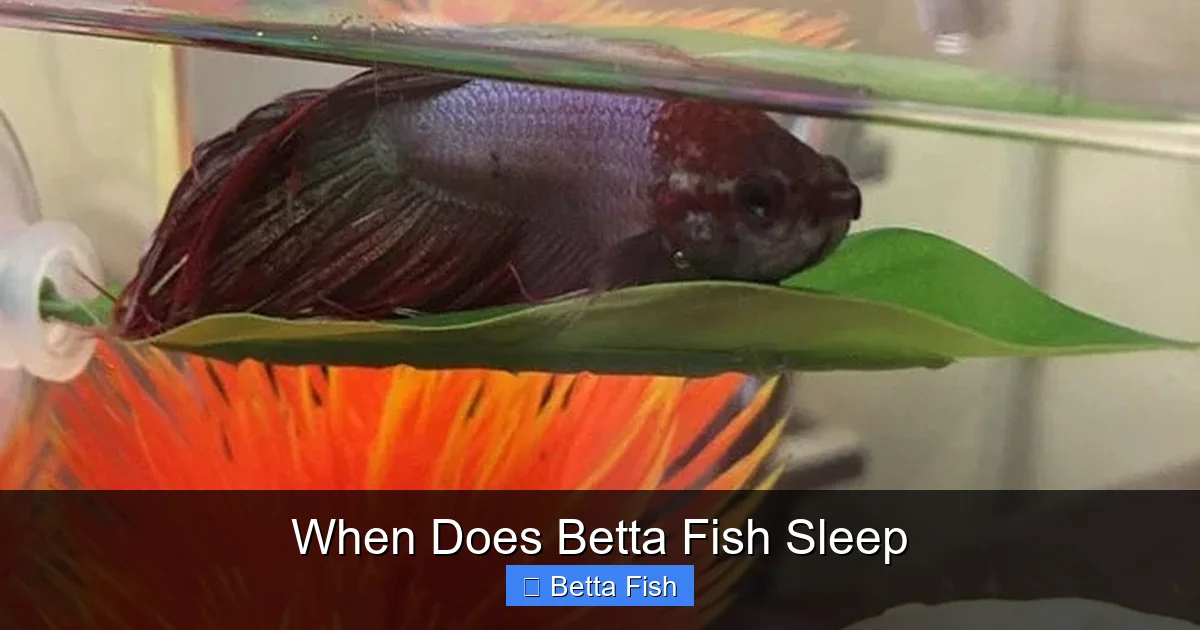
Visual guide about When Does Betta Fish Sleep
Image source: memfish.net
- The “Ladder” Position: The betta rests vertically against a plant leaf, decoration, or the tank glass, with its head pointing up. This is extremely common and is often seen near the water surface where they can easily gulp air from the labyrinth organ (a specialized breathing organ all bettas possess). This is a sign of a relaxed, confident fish that has found a secure perch.
- The “Bottom Napper”: The betta lies on the substrate, either on its side or resting on its pectoral fins. This can be normal, especially after a particularly active day or if the betta is older. However, if the betta is consistently lethargic and spending excessive time on the bottom, it warrants investigation for issues like swim bladder disorder, constipation, or water parameter problems.
- The “Floater”: The betta becomes motionless in the mid-water column, often near the top. It may appear to be floating upside down or at a strange angle. This is almost always a red flag. This is not a normal sleep position and is a classic symptom of swim bladder disease or severe buoyancy issues. Immediate action is needed.
- The “Hider”: The betta tucks itself into the back of a cave, behind dense foliage, or into a corner. This is a natural instinct for security. Providing ample hiding spots encourages this behavior, which reduces stress. A betta that never hides might be overly stressed or territorial, while one that is perpetually hidden might be overly timid or frightened by tank activity.
The Importance of Resting Platforms
Because bettas often rest just below the water surface (to access their labyrinth organ), providing broad-leaved plants or flat decorations near the top is crucial. A betta leaf hammock or a smooth piece of slate can be a favorite perch. These spots give them a sense of security and a designated place to relax, fulfilling a deep instinctual need. Without such spots, they may become frustrated and stressed, which can manifest in lethargy or erratic behavior.
Environmental Factors That Disrupt (or Support) Healthy Sleep
Your betta’s sleep schedule is not just an internal clock; it’s a direct response to its environment. Multiple factors in a home aquarium can either promote restful periods or cause chronic sleep deprivation and stress.
Lighting: The Master Regulator
We’ve touched on this, but it bears repeating. Light is the primary cue for circadian rhythms. In the wild, bettas experience a gradual shift from light to dark. Abrupt, blinding aquarium lights can shock their system. A sudden blackout at night can be equally disorienting. Always use a timer. Consider the intensity of your light; if the tank is in a very bright room, the betta may seek darker corners to rest during the day, indicating the light is too harsh.
Water Temperature and Quality
Bettas are tropical fish, thriving in 76-82°F (24-28°C). If the water is too cold (below 75°F), their metabolism slows dramatically, leading to excessive lethargy and a constant “resting” state that is actually a sign of distress and compromised immunity. Conversely, water that is too warm can increase metabolic rate and stress, making it harder to settle down. Poor water quality—high ammonia or nitrite—causes gill irritation and constant stress, preventing any deep rest. A betta in pristine, correctly heated water will display natural activity and rest cycles.
Tank Mates and Reflections
A betta in a community tank with fast-moving, boisterous fish may never feel safe enough to truly rest. The constant chase and flare responses are exhausting. Similarly, if your betta is housed alone but sees its reflection constantly (in a curved tank glass or a mirror), it will be in a perpetual state of territorial aggression, burning energy and unable to relax. You may need to carefully tape the outside of the tank to eliminate reflections or adjust tank decor to break up the line of sight.
How to Tell if Your Betta is Sleeping or Sick: A Critical Skill
This is the most important practical application of understanding betta sleep. Misinterpreting a sick betta as a “sleeping” one can have fatal consequences. Here is your diagnostic checklist:
The Responsiveness Test: Gently tap on the glass (not too hard) or wave your hand near the fish. A sleeping or resting betta will show at least a flicker of recognition—its fins may twitch, it might turn its head slightly, or it may slowly swim away. A seriously ill betta will show no response whatsoever, remaining completely limp and unresponsive.
Check for Breathing: Watch the gill covers (operculum). A sleeping betta will have slow, steady gill movement. A sick betta may have very rapid, labored breathing, or gill movement may be so weak it’s hard to see.
Observe Color and Fin Condition: A resting betta’s color may be slightly muted but should return to vibrancy upon waking. Its fins should be in good condition—not clamped tightly against the body, torn, or rotting. Clamped fins are a universal sign of severe stress or illness.
Look for Other Symptoms: Is there visible bloating? White spots (ich)? Fuzz (fungus)? Red streaks (hemorrhaging)? These are not related to sleep and indicate specific diseases. A betta that is simply sleeping will not exhibit these external signs.
When in Doubt, Test Your Water: The first and most common cause of lethargy that mimics sleep is poor water quality. Perform a full water test for ammonia, nitrite, nitrate, and pH. A partial water change with properly conditioned water is often the first and best step if you suspect your betta is unwell but can’t identify a specific disease.
Creating the Perfect Sleep Sanctuary for Your Betta
Armed with this knowledge, you can now actively design your betta’s environment to support its natural sleep-wake cycle. This is a cornerstone of proactive, preventive healthcare.
Design and Décor for Rest
Stock your tank with a variety of resting options. Include:
- Broad-leaved plants: Live plants like Anubias, Java Fern, or Marimo moss balls are ideal. Silk plants are a good alternative. Place them at mid-level and near the surface.
- Caves and Tubes: Provide smooth, enclosed spaces (ceramic or plastic) where your betta can retreat completely.
- Flat Surfaces: A smooth, flat stone or a piece of driftwood just below the surface makes a perfect “bed.”
- Gentle Filtration: A filter that creates a strong current will prevent your betta from resting comfortably. Use a sponge filter or adjust the outflow of a hang-on-back filter with a spray bar to create a calm environment. Betas are not strong swimmers and need areas of zero current.
The Role of a Consistent Routine
Fish thrive on predictability. Feed your betta at the same times each day. Keep the light on a strict timer. Avoid sudden, loud noises or vibrations near the tank. If you need to perform tank maintenance, try to do it during their active periods (morning or early evening) rather than during their typical rest times in the afternoon or night. This respect for their internal schedule significantly lowers stress hormones and promotes overall health, vibrant color, and a stronger immune system.
Conclusion: Rest is a Cornerstone of Betta Health
So, when does a betta fish sleep? The most accurate answer is: frequently, lightly, and at unpredictable times, with a tendency for longer rest periods at dawn, dusk, and during the afternoon. Their sleep is a delicate balance of conservation and vigilance, a direct legacy of their wild ancestry. By learning to recognize the subtle signs of a resting betta—the gentle hover by a leaf, the still form on the substrate, the quiet moment in a cave—you gain a deeper connection to your pet. More importantly, you empower yourself to be a better caretaker.
Providing the conditions for quality rest—consistent lighting, pristine warm water, security through decor, and freedom from harassment—is not a luxury; it is a fundamental requirement. A well-rested betta is a more active, colorful, and interactive companion. It has a stronger immune system and a longer lifespan. The next time you see your betta seemingly “zoned out” on a leaf, you’ll know it’s not just being lazy. It’s engaging in a vital, ancient biological process. It’s recharging its batteries in the only way it knows how, with one eye always open to the beautiful, carefully curated world you’ve built for it.
Frequently Asked Questions
Do betta fish sleep with their eyes open?
Yes, betta fish always sleep with their eyes open because they lack eyelids. They enter a state of rest where they become still but remain partially alert to their surroundings. Their “sleep” is a period of reduced activity, not a closed-eye state like humans experience.
Is it normal for my betta to sleep on the bottom of the tank?
It can be normal for a betta to rest on the bottom occasionally, especially if it’s older or after a busy day. However, if your betta is spending excessive, prolonged periods lethargically on the substrate, it is often a sign of poor water quality, incorrect temperature, or illness like swim bladder disease or constipation.
How many hours a day does a betta fish sleep?
Betta fish take numerous short naps throughout a 24-hour period rather than one long sleep. They are most active at dawn and dusk (crepuscular) and rest more during the afternoon and night. In total, they may rest or sleep for 12-16 hours in fragmented periods, depending on environmental factors and individual personality.
How can I tell if my betta is sleeping or dying?
A sleeping betta will show slow, steady gill movement and may respond to gentle taps on the glass or a shadow by twitching a fin or slowly moving. A dying or severely ill betta will be completely unresponsive, have labored or absent breathing, be covered in fuzz, spots, or sores, and often have fins clamped tightly. When uncertain, test your water parameters immediately.
Do betta fish need darkness to sleep?
Yes, betta fish require a consistent dark period to rest properly. In their natural habitat, they experience a cycle of light and dark. A reliable 8-10 hours of light followed by 14-16 hours of total darkness (using an automatic timer) is crucial for regulating their circadian rhythm and ensuring they get quality rest. Constant light causes significant stress.
Why is my betta fish sleeping so much all of a sudden?
>A sudden increase in sleep or lethargy is a major red flag. The most common cause is poor water quality. First, test your water for ammonia, nitrite, and nitrate. Check that your heater is maintaining the correct temperature (76-82°F). Other causes can include illness (like velvet or dropsy), old age, or being overfed. A water change and close observation are the first steps.