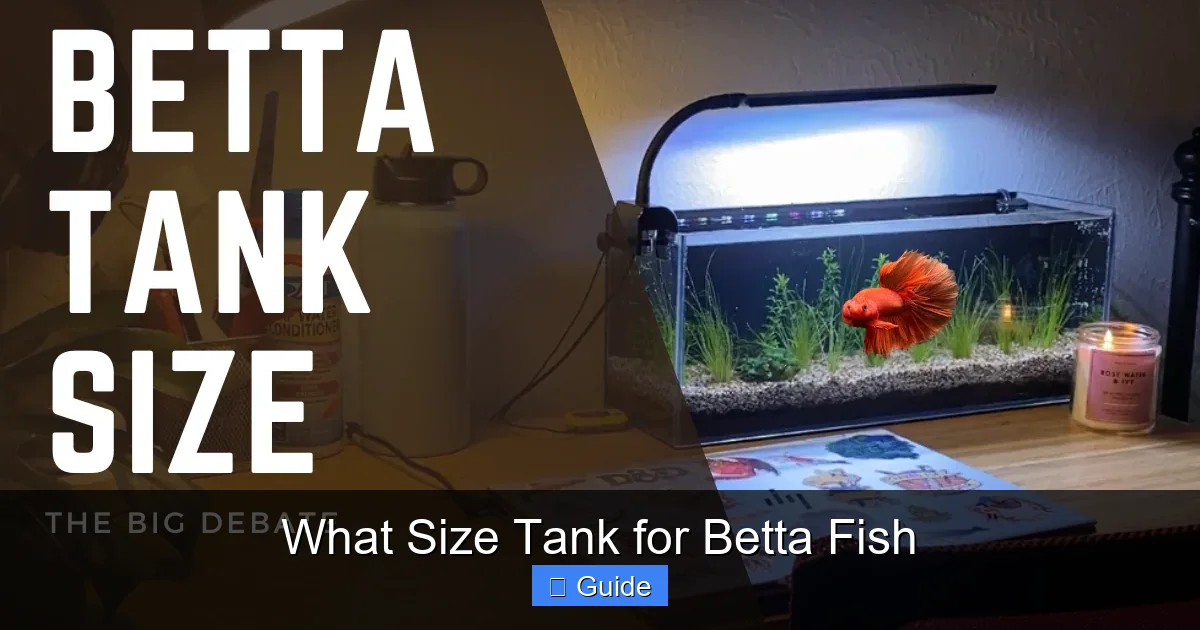
What Size Tank for Betta Fish
Contrary to popular belief, betta fish require far more space than a small vase or bowl. The absolute minimum recommended tank size is 5 gallons, but a 10-gallon or larger tank is strongly advised for their long-term health, stability, and your enjoyment. A properly sized, cycled, and heated tank is non-negotiable for a happy, active betta that can live for 5+ years.
Key Takeaways
- Minimum is 5 Gallons: Anything smaller (like a 1-gallon bowl) is cruel and leads to rapid health decline. 5 gallons is the absolute bare minimum for stable water conditions.
- 10 Gallons is the Gold Standard: A 10-gallon tank provides crucial swimming space, dilutes toxins more effectively, and allows for a proper heater and filter, drastically improving your betta’s quality of life.
- Stable Water is Everything: Larger water volume means slower, more manageable changes in temperature, pH, and ammonia/nitrite levels, preventing toxic spikes that kill fish.
- Heater & Filter are Mandatory: Bettas are tropical fish needing consistent 78-80°F (25.5-26.5°C) water. A gentle filter is essential to cycle the tank and remove waste; a bowl cannot support this cycle.
- Tank Mates Require More Space: If considering peaceful companions (like snails or certain rasboras), you must upgrade to at least a 15-20 gallon heavily planted tank to provide territory and reduce stress.
- It’s About Enrichment: A larger tank isn’t just about water volume; it’s about providing plants, hiding spots, and exploration opportunities that prevent boredom and stress-related behaviors like lethargy or flaring.
📑 Table of Contents
- Debunking the Bowl Myth: Why Your Betta Deserves Better
- The Absolute Minimum: Why 5 Gallons is the Starting Line
- The Sweet Spot: Why 10 Gallons is the Ideal Betta Home
- Tank Setup Essentials: From Empty Box to Betta Home
- The Cycle: Patience is the Most Important Tool
- Maintenance: The Simple Routine for a Thriving Tank
- What About Tank Mates? Space Requirements Multiply
Debunking the Bowl Myth: Why Your Betta Deserves Better
Walk into any pet store, and you’ll see them: vibrant betta fish, often called Siamese fighting fish, displayed in tiny cups or plastic vase-like containers. This pervasive marketing has cemented a dangerous myth: that bettas are low-maintenance pets perfectly suited for life in a minuscule bowl. This is one of the most harmful misconceptions in the aquarium hobby. The question “what size tank for betta fish?” has a clear, science-backed answer that directly contradicts this imagery.
Bettas are not naturally found in puddles or hoof prints, as the myth suggests. In the wild, they inhabit the shallow, slow-moving waters of rice paddies, swamps, and streams in Thailand and Southeast Asia. These are vast, vegetated ecosystems with complex chemistry. While these waters can be shallow, they span acres, not cups. The water is warm, soft, and teeming with microorganisms that help process waste. A tiny, stagnant bowl is the absolute antithesis of this environment. It lacks filtration, heating, and the biological capacity to dilute the fish’s waste. Ammonia from their gills and feces builds up within hours, poisoning them and causing fin rot, dropsy, and a slow, painful death. The goal of this guide is to replace that harmful myth with actionable, compassionate truth. Your betta’s lifespan, health, and vibrancy depend entirely on you providing the correct environment, starting with the fundamental element: tank size.
The Absolute Minimum: Why 5 Gallons is the Starting Line
So, what is the smallest acceptable tank for a betta? Reputable aquariums, veterinarians, and advanced hobbyists agree: 5 gallons (19 liters) is the absolute bare minimum. This isn’t an arbitrary number pulled from thin air; it’s a calculation based on basic aquatic chemistry and fish physiology. Let’s break down why anything less is a death sentence in slow motion.
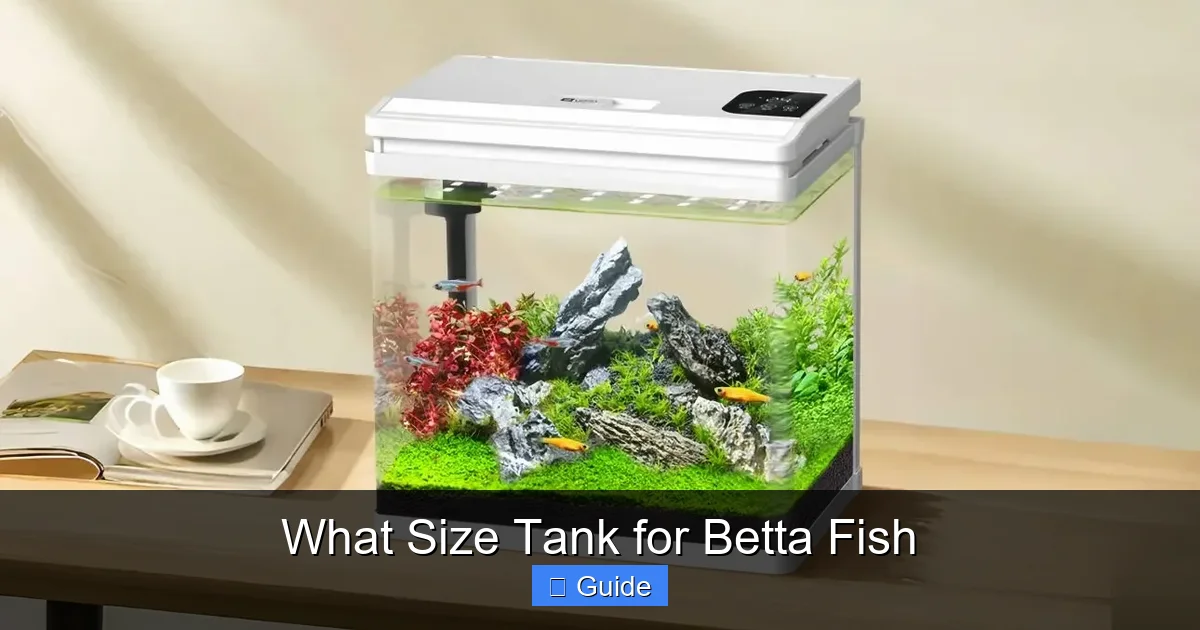
Visual guide about What Size Tank for Betta Fish
Image source: yeeaquarium.com
The Nitrogen Cycle: Your Invisible Lifeline
The single most important concept in fishkeeping is the nitrogen cycle. In a nutshell, your betta produces ammonia (NH3/NH4+) as waste. Beneficial bacteria (Nitrosomonas) convert this toxic ammonia into nitrite (NO2-), which is also toxic. A second set of bacteria (Nitrospira) then converts nitrite into nitrate (NO3-), which is much less harmful and can be removed via water changes. This colony of bacteria lives on surfaces—filter media, gravel, plants, and tank walls.
In a 1-gallon bowl, there is almost no surface area for these bacteria to colonize. Any waste produced immediately spikes ammonia and nitrite levels to lethal concentrations. The water becomes a toxic soup. A 5-gallon tank provides a drastically larger surface area and water volume, allowing a stable bacterial colony to establish. This process, called “cycling the tank,” must be completed before the betta is added. A cycled 5-gallon tank can process a betta’s waste much more effectively, keeping ammonia and nitrite at 0 ppm, with only nitrate needing weekly dilution via water changes.
Temperature Stability: No More “Betta Bowl Shivers”
Bettas are tropical fish, native to waters consistently between 75°F and 80°F (24°C and 27°C). Room temperature is rarely this warm or stable. In a tiny bowl, the water temperature fluctuates wildly with room air temperature, especially at night. This chronic stress weakens their immune system, slows metabolism, and makes them susceptible to diseases like velvet or ich. A 5-gallon tank, paired with a submersible aquarium heater (25-50 watts), can maintain a perfectly stable temperature. The larger volume of water heats more evenly and retains heat longer when the room cools, creating the stable tropical environment your betta’s body is designed for.
Swimming Space is Not a Luxury, It’s a Necessity
Think of a betta in a bowl versus a betta in a 5-gallon tank. In the bowl, the fish can turn around and that’s it. There is no exploration, no exercise, no ability to establish a sense of territory. This leads to severe stress, boredom, and lethargy. Bettas are intelligent, curious fish. In a 5-gallon tank, they can patrol a perimeter, explore the mid-water column, and exhibit natural behaviors like brief bouts of active swimming, bubble nest building (males), and flaring at their reflection. This mental and physical stimulation is critical for their long-term well-being and can add years to their life.
The Sweet Spot: Why 10 Gallons is the Ideal Betta Home
While 5 gallons is the minimum, a 10-gallon (38-liter) tank is the universally recommended ideal size for a single betta. This isn’t just about giving your pet “more room”; it’s about creating a resilient, stable, and enriching ecosystem that is exponentially easier to manage and provides a dramatically higher quality of life.
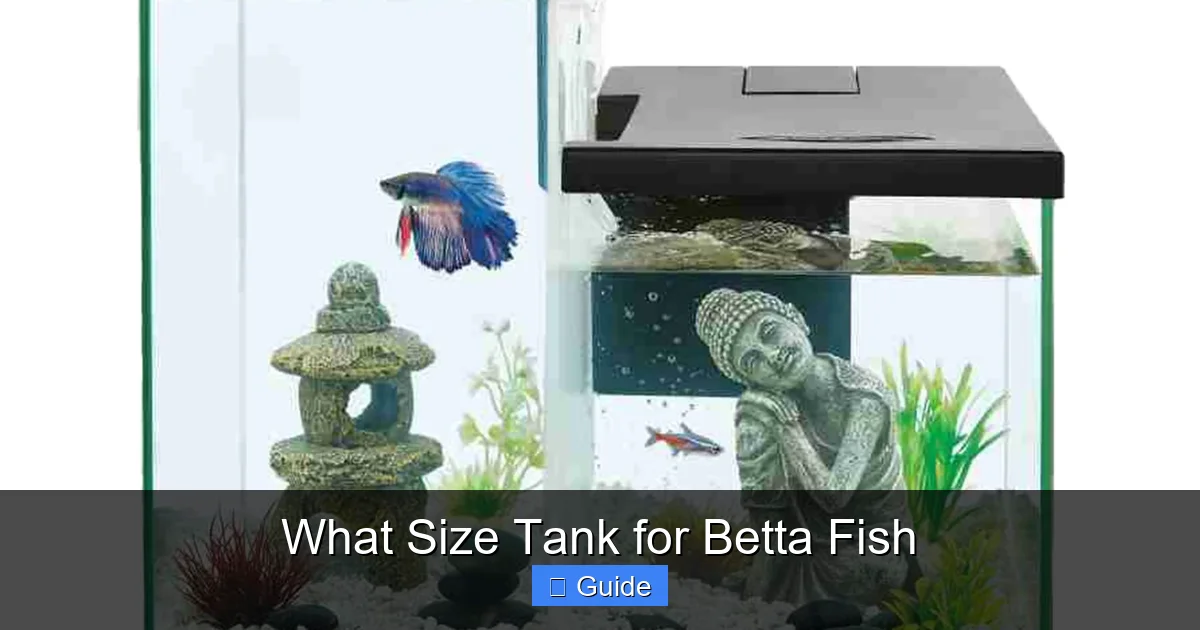
Visual guide about What Size Tank for Betta Fish
Image source: i.pinimg.com
The Dilution Effect: Your Secret Weapon for Clean Water
Water changes become less frequent and less stressful for the fish in a larger tank. In a 5-gallon tank, you might need to change 25-30% of the water weekly to keep nitrate levels in check. In a 10-gallon tank, that same weekly 25% change removes the same amount of nitrate from a much larger total volume. The daily accumulation of waste is diluted across double the water. This means ammonia or nitrite spikes from a missed water change or an overfeeding are far less likely to reach toxic levels. The tank’s ecosystem is more “forgiving” and stable, acting as a buffer against minor owner errors. This stability is the cornerstone of disease prevention.
Equipment Becomes Effective and Safe
Finding equipment for a 5-gallon tank can be a compromise. Filters might be too strong and create a current that exhausts your betta, requiring baffling. Heaters might be too large for the small footprint. In a 10-gallon tank, you have a vast selection of appropriately sized, efficient hang-on-back (HOB) filters or sponge filters, and heaters that fit without crowding the space. You can install a thermometer easily to monitor temperature. This allows you to set up a system that provides optimal filtration and heating without constant modification or worry.
Landscaping and Enrichment Possibilities Explode
This is where the 10-gallon tank truly shines. You can create a true biotope. Imagine a base of fine sand or smooth gravel, dotted with smooth river stones. You can plant a foreground of Dwarf Hairgrass or Monte Carlo, a midground of Anubias or Java Fern attached to driftwood, and a background of tall, leafy plants like Amazon Swords or Vallisneria. Floating plants like Salvinia or Duckweed diffuse light and give your betta a sense of security under the surface. Add ceramic caves, PVC pipe hides, and smooth, non-sharp ornaments. This complex environment provides visual barriers, reduces stress by breaking up line-of-sight, and gives your betta endless opportunities to explore, rest, and claim favorite spots. A bored betta in a bare 5-gallon tank may pace or flare constantly. An enriched betta in a 10-gallon tank is curious, active, and displays stunning, healthy fins.
Tank Setup Essentials: From Empty Box to Betta Home
Once you’ve chosen your 10-gallon (or larger) tank, proper setup is critical. Rushing this process is the #1 reason new bettas die. You must create a cycled, heated, filtered ecosystem before your fish enters the picture.
Substrate: More Than Just Dirt
Gravel or sand? For bettas, it’s mostly about aesthetics and plant needs. Smooth, rounded gravel is easiest to clean and safe for their delicate fins. Fine sand mimics their natural habitat and is great for rooting plants, but can compact and trap gas if not stirred occasionally. Avoid sharp, jagged gravel. A substrate depth of 1-2 inches is sufficient. If you want live plants (highly recommended), consider a dedicated plant substrate layer or root tabs for heavy feeders like Amazon Swords.
Filtration: Gentle but Effective
Bettas have long, flowing fins and are not strong swimmers. A filter with a gentle flow is essential. Sponge filters are a fantastic, quiet, and betta-safe option, providing excellent biological filtration and aeration. Hang-on-back (HOB) filters are also great if you can adjust the flow to a trickle. Use filter media that provides maximum surface area for bacteria: ceramic rings, bio-balls, and sponge. The mechanical filter (sponge or floss) removes debris. Never run a filter without water—it will kill the bacteria.
Heating: The Non-Negotiable
Purchase a reliable, adjustable submersible aquarium heater with a thermostat. For a 10-gallon tank, a 50-watt heater is a good standard. Always use a separate aquarium thermometer to verify the heater’s accuracy. Set it to 78-80°F (25.5-26.5°C). Place it near the water flow from the filter to distribute heat evenly. Never allow the water level to drop below the heater’s minimum line.
Lighting & Plants: Function and Beauty
If you want live plants, research their light needs. A simple LED full-spectrum aquarium light is sufficient for low to medium-light plants like Anubias, Java Fern, and Cryptocorynes. These plants don’t require substrate planting; you can glue or tie them to wood and rocks. Floating plants are incredibly easy and provide cover. Live plants are natural filters, absorbing nitrates and producing oxygen. Silk plants are a safe, zero-maintenance alternative if live plants seem daunting. Avoid plastic plants with sharp edges.
The Cycle: Patience is the Most Important Tool
You have your 10-gallon tank filled with dechlorinated water, heater humming, filter running. Now, you must wait. This is the cycling process, and it typically takes 4-6 weeks. You are growing a colony of beneficial bacteria. Here’s how to do it:
- Add an Ammonia Source: You need to feed the bacteria. Use pure ammonia (no surfactants), a piece of frozen shrimp, or a few flakes of fish food. The goal is to get a measurable ammonia reading (1-2 ppm) in the water.
- Test Daily: Use a liquid test kit (like API Master Test Kit). You will first see ammonia spike, then drop as nitrite appears. Nitrite will spike, then drop as nitrate appears. The cycle is complete when you can add ammonia and 24 hours later have 0 ppm ammonia, 0 ppm nitrite, and some nitrate (NO3-).
- Perform Water Changes: During the cycle, if nitrite gets too high (>1 ppm), perform a 25% water change to protect the bacteria you’re trying to grow.
- Never Add Your Betta Until Cycled: Adding a betta to an uncycled tank exposes it to lethal ammonia and nitrite. You will be performing daily emergency water changes to save it—a stressful and often failing endeavor. Cycle first. It is the single most important step for long-term success.
Maintenance: The Simple Routine for a Thriving Tank
Once your tank is cycled and your betta is home, maintenance is straightforward but must be consistent. A 10-gallon tank makes this easy.
Weekly Water Changes
This is your primary tool for controlling nitrate, removing any debris, and refreshing trace minerals. Every week, use a gravel vacuum to siphon 25-30% of the tank’s water out. Pay special attention to the betta’s favorite resting spots (often near the heater or a plant) where waste collects. Refill with dechlorinated water that matches the tank’s temperature (within 1-2°F). Never remove more than 50% at once, as this shocks the cycle and the fish.
Filter Maintenance
Once a month, rinse your filter media (sponge, ceramic rings) in the bucket of old tank water you just removed during the water change. Never use tap water, as the chlorine will kill your beneficial bacteria. Just squeeze and swish it around to remove solid debris. Replace mechanical filter media (floss) as needed. Do not replace all your media at once.
Observe Your Betta Daily
Spend 5 minutes each day watching your betta. Is he active? Are his fins held nicely? Is he eating? Is there any signs of clumped fins, white spots, fuzzy growth, or lethargy? Daily observation is the best early warning system for disease. Check the water temperature. Ensure the filter is flowing and the heater is on.
What About Tank Mates? Space Requirements Multiply
A common follow-up question is, “Can I put other fish with my betta?” The answer is: maybe, but only in a significantly larger tank with extreme caution. Bettas are called fighting fish for a reason—males are highly territorial and will attack other fish with long, flowing fins (like guppies) or brightly colored bodies. Female bettas can sometimes be kept in sororities in very large, heavily planted tanks (40+ gallons), but this is advanced and risky.
For a single male betta, the only truly safe “tank mates” are invertebrates like nerite snails, ghost shrimp, or amano shrimp. These creatures have different biologies and don’t trigger the betta’s territorial aggression as much. However, even shrimp need hiding places. If you want a true community, you must start with a minimum of 15-20 gallons. This provides enough horizontal space for the betta to establish a territory and for other fish to have their own areas. Suitable tank mates for a large, planted tank include small, schooling, non-flashy fish like ember tetras, harlequin rasboras, or corydoras catfish. Always have a backup plan (a separate tank) to remove any fish that are being bullied or are bullying the betta.
Frequently Asked Questions
Can I keep a betta in a vase or bowl without a filter?
No. A vase or bowl is far too small to establish a biological filter cycle, leading to rapid ammonia poisoning. It also cannot maintain a stable tropical temperature. This setup is widely condemned by aquatic veterinarians and humane societies as inadequate and cruel.
Do bettas really need a heater if my room is warm?
Almost certainly yes. Room temperature fluctuates, especially at night. Bettas require a consistent 78-80°F (25.5-26.5°C). A drop of even a few degrees can suppress their immune system and lead to disease. A small, reliable aquarium heater with a thermostat is essential for their long-term health.
How often should I do water changes in a 10-gallon betta tank?
With a properly cycled filter, perform a 25-30% water change once a week. Use a gravel vacuum to clean the substrate. Never change 100% of the water, as this removes beneficial bacteria and shocks the fish. Always treat new water with a dechlorinator before adding it.
What are good tank mates for a betta in a 10-gallon tank?
In a 10-gallon tank, it’s safest to keep your betta alone or with very peaceful invertebrates like a nerite snail or a few ghost shrimp. Adding other fish in a 10-gallon is risky due to limited space. For a peaceful community, you would need to upgrade to a 15-20 gallon heavily planted tank and choose small, non-flashy, non-long-finned schooling fish.
Is a sponge filter or hang-on-back filter better for a betta?
Both can be excellent. Sponge filters are very gentle, provide superb biological filtration, and are nearly silent. They are a top choice for bettas. Hang-on-back (HOB) filters offer more mechanical filtration power and are easier to adjust. The key is to ensure the flow is very gentle—you should barely see a ripple on the water surface. You may need to baffle a HOB filter with a pre-filter sponge or cut the flow.
Can I use tap water for my betta tank?
Yes, but it must be treated. Tap water contains chlorine and chloramines, which are lethal to fish and beneficial bacteria. Always use a reliable water conditioner/dechlorinator (like Seachem Prime) to neutralize these chemicals before adding tap water to your tank. Test your tap water’s parameters (GH, KH, pH) to understand your baseline.