What Ph for Betta Fish
The ideal pH for Betta fish is a stable range between 6.5 and 7.5. While they can tolerate slightly outside this window, sudden swings are far more dangerous than a consistent, slightly “off” number. Success hinges on reliable testing, slow adjustments using natural methods, and prioritizing a steady environment over chasing a perfect, fluctuating number. Your Betta’s health depends on consistency.
Key Takeaways
- Ideal Range & Stability: Aim for a stable pH between 6.5 and 7.5. A consistent 7.2 is far better than a constantly shifting 6.8. Stress from fluctuation causes illness.
- Test, Don’t Guess: Use a liquid test kit (API, Salifert) for accuracy. Test strips are notoriously unreliable. Test weekly and during any water changes.
- Adjust SLOWLY: Never use chemical pH adjusters in a tank with fish. Adjustments must take place over 3-7 days in a separate bucket before adding water to the tank.
- Natural is Best: Use natural buffers like Indian Almond Leaves, driftwood, or peat moss to gently lower pH. For raising, use crushed coral or limestone in a filter media bag.
- Source Water Matters: Your tap water’s baseline pH and KH (carbonate hardness) dictate how easy or difficult it will be to maintain a stable Betta-friendly pH. Know your water parameters first.
- Bettas Are Resilient, Not Invincible: Their labyrinth organ allows tolerance of poor water, but this does not mean they thrive there. A proper pH is a cornerstone of long-term health and vibrancy.
📑 Table of Contents
- Introduction: The Hidden Key to a Thriving Betta
- What Exactly IS pH? (And Why Your Betta Cares)
- The Golden Rule: What pH for Betta Fish Is Ideal?
- How to Accurately Test Your Betta’s pH (And Why Cheap Strips Fail)
- How to Adjust pH Safely: Natural Methods Over Chemicals
- The KH Factor: The Invisible Guardian of pH Stability
- Common pH Mistakes That Harm Your Betta
- Conclusion: Peace of Mind Through Stability
Introduction: The Hidden Key to a Thriving Betta
You’ve done the research. You’ve picked out the perfect, flowing fins. You’ve set up a stunning planted tank with a gentle filter and a cozy hideaway. Your Betta fish, with its jewel-like colors, seems like the picture of health. But is it? Beneath the surface of that beautiful aquarium lies a chemical story that determines everything: the story of pH. Understanding what pH for Betta fish is ideal isn’t just a technical detail for aquarium experts—it’s the single most important water parameter you can master to ensure your Siamese fighting fish lives a long, vibrant, and disease-free life. Think of pH as the comfort zone for your Betta’s entire body. If the air you breathe was suddenly too acidic or too alkaline, you’d feel stressed and unwell. It’s the exact same for your fish. This guide will demystify pH, moving beyond confusing numbers to give you a clear, actionable plan for creating a stable, healthy home for your aquatic companion.
What Exactly IS pH? (And Why Your Betta Cares)
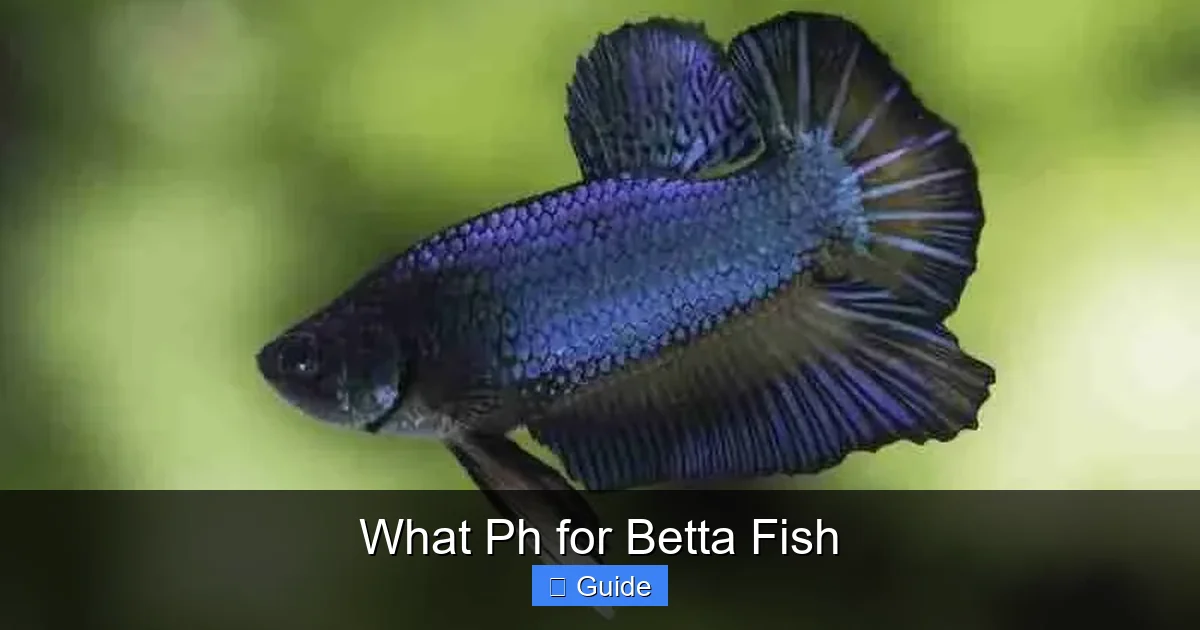
Let’s break it down to the basics. pH is a measurement of how acidic or alkaline (basic) a solution is. The scale runs from 0 (highly acidic) to 14 (highly alkaline), with 7 being perfectly neutral, like pure water. For your Betta’s tank, we’re almost always dealing with a number between 6.0 and 8.0.
Visual guide about What Ph for Betta Fish
Image source: fishkeepingwisdom.com
The Chemistry Inside Your Fish
So why does this number matter to a little fish? It matters because pH affects virtually every internal process in your Betta’s body. It controls the efficiency of its gills to absorb oxygen. It influences the function of its kidneys and liver, which filter toxins. It even affects the balance of electrolytes in its blood and the health of its slime coat—its primary defense against disease and parasites. When the pH is outside a tolerable range, these systems have to work overtime, sapping your Betta’s energy, suppressing its immune system, and making it susceptible to illnesses like fin rot, velvet, or dropsy. The goal is to provide a pH where none of these systems are under stress.
The Golden Rule: What pH for Betta Fish Is Ideal?
Here is the direct answer you’ve been looking for: the optimal and safest pH range for Betta fish is between 6.5 and 7.5. This range is slightly acidic to neutral, mimicking the slow-moving, vegetation-rich waters of Thailand’s rice paddies and shallow streams where they originate. Within this window, a Betta’s biological processes function smoothly.
Visual guide about What Ph for Betta Fish
Image source: smartaquariumguide.com
Understanding Tolerance vs. Preference
It’s crucial to distinguish between what a Betta can survive in and what it should live in. Bettas are famously hardy due to their labyrinth organ, which allows them to breathe atmospheric air. This adaptation lets them survive in poor, stagnant, often acidic water in the wild. However, survival is not the same as thriving. A Betta can live for months in a pH of 8.0 or 6.0, but it will be chronically stressed, its colors may dull, its appetite will decrease, and its lifespan will be significantly shortened. Always aim for that 6.5-7.5 sweet spot.
The Myth of the “Perfect” Number
You might see forums or videos claiming the only good pH for a Betta is 7.0. This is an oversimplification. Your goal is not to hit an exact decimal every single day. Your goal is stability within the ideal range. A tank with a perfectly stable pH of 6.8 is a thousand times better than a tank where you fight daily to keep it at exactly 7.0, causing it to swing up and down. Consistency is the king of all water parameters.
How to Accurately Test Your Betta’s pH (And Why Cheap Strips Fail)
Guessing your pH is a recipe for disaster. You must test it. But not all tests are created equal.
Visual guide about What Ph for Betta Fish
Image source: housedpet.com
The Liquid Test Kit: Your Essential Tool
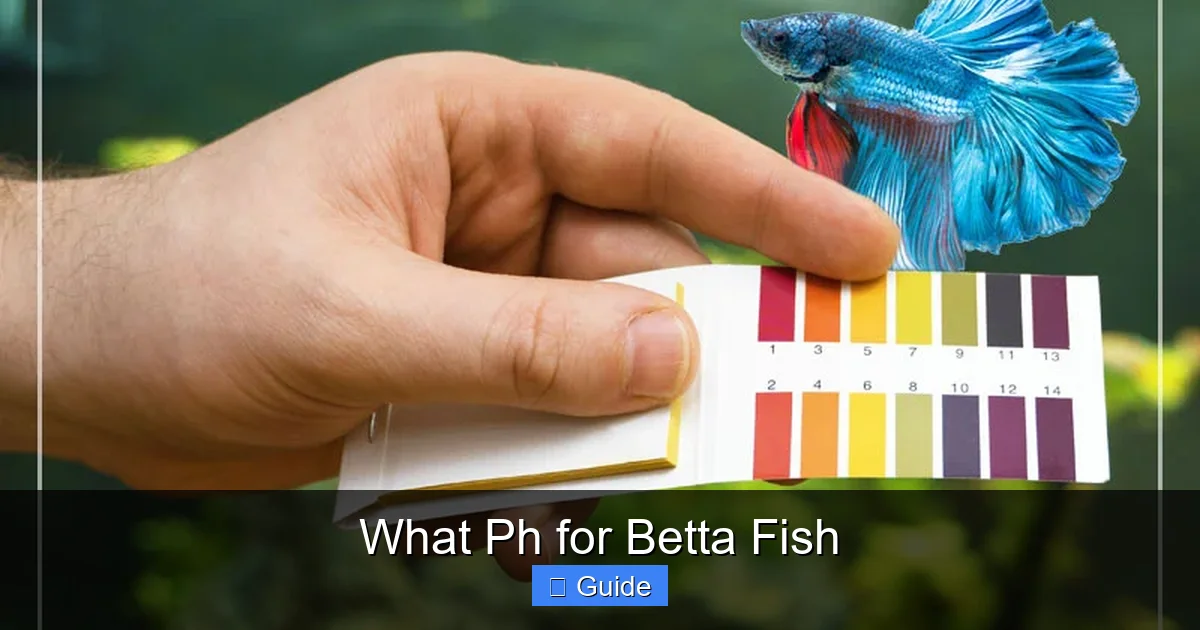
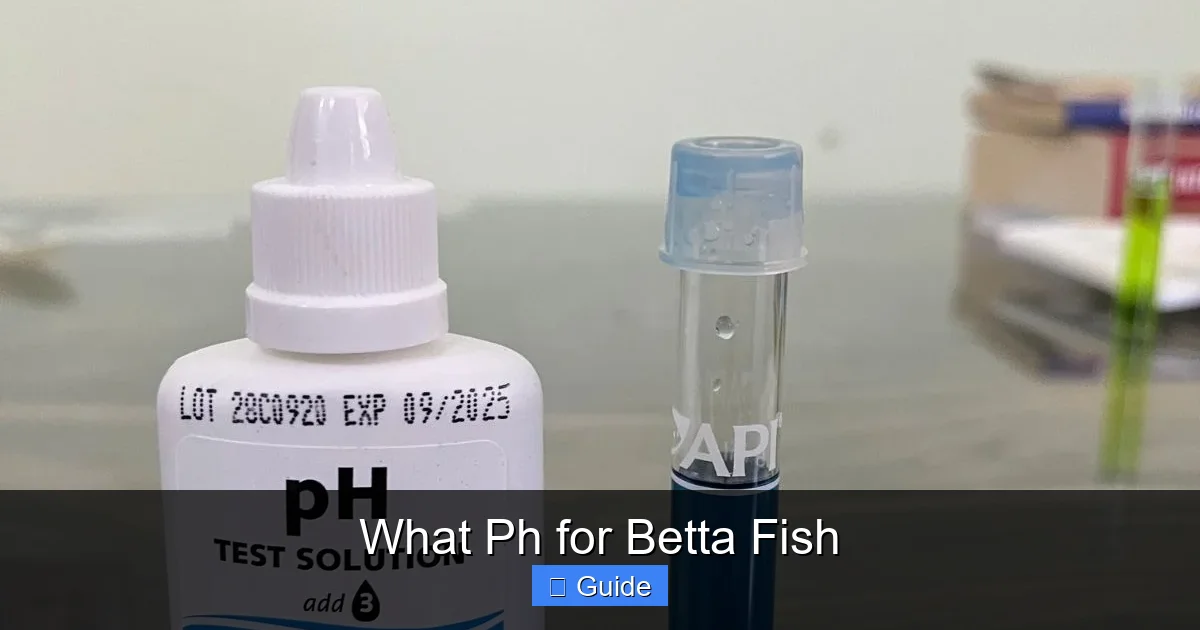
Forget the colorful test strips you might have used for a pool. They are wildly inaccurate for aquarium use, often reading 0.5-1.0 pH points off. The industry standard for accuracy is the liquid test kit, like those from API (the “Master Test Kit”) or Salifert. These use chemical reagents that react with the water sample to give a precise color match. They cost a bit more upfront but are worth every penny for the reliability they provide. Follow the instructions exactly: use the exact number of drops, swirl the vial, and compare the color in good lighting against the provided chart.
Establishing a Baseline
Before you do anything else, test your tap water straight from the faucet. This is your starting point. Then, test your tank water 24 hours after a water change. This tells you how your decor, substrate, and any driftwood or leaves are influencing the pH. Keep a log for a few weeks. You’re looking for patterns. Does your tap water naturally sit at 7.8? That’s high for a Betta. Does it drop to 6.2 in the tank? That might be too low and unstable. This data is your roadmap for any necessary adjustments.
How to Adjust pH Safely: Natural Methods Over Chemicals
If your stable tap water baseline is outside the 6.5-7.5 range, you will need to adjust it. Never, ever use liquid chemical pH adjusters in a tank with fish. They cause violent, instantaneous swings that can kill your Betta within hours. Adjustments must be done slowly and, ideally, outside the main display tank.
Lowering pH (Making it More Acidic)
If your tap water is too alkaline (e.g., 8.0+), use natural, slow-release methods:
- Indian Almond Leaves (Catappa Leaves): The gold standard for Betta keepers. A single leaf in a 5-10 gallon tank will slowly release tannins, gently lowering pH and providing beneficial antibacterial properties. It also mimics the blackwater environment Bettas love.
- Driftwood: Mopani or Malaysian driftwood leaches tannins over time, lowering pH. It must be fully aquarium-safe and pre-soaked to prevent floating.
- Peat Moss: Placed in a filter media bag in your filter or hang-on-back, peat moss is a powerful natural acidifier. It can discolor water brown (tannins), which is harmless and actually beneficial for Bettas.
Process: Add your chosen item to a bucket of your tap water. Let it steep for 24-48 hours. Test the water. If it’s in the target range, use this pre-treated water for your next 25-50% water change. Repeat, slowly replacing your tank’s water with the adjusted water over a week.
Raising pH (Making it More Alkaline)
This is less common but necessary if you have very soft, acidic tap water (<6.5).
- Crushed Coral or Aragonite: Place a small amount in a filter media bag in your filter. It slowly dissolves, releasing minerals that buffer the water upward. It’s self-regulating to an extent.
- Limestone Chips: Similar to crushed coral.
- Baking Soda (Sodium Bicarbonate): This is a chemical, but when used with extreme caution (1/8 tsp per 5 gallons, pre-dissolved in old tank water), it can raise pH and KH. Must be added to a separate bucket first and tested. Use only if natural methods fail and with extreme care.
The same slow, bucket-pre-treatment method applies. Never dump crushed coral directly into your tank; it will raise pH too quickly.
The KH Factor: The Invisible Guardian of pH Stability
Here is the secret most beginners miss: your pH is directly controlled by your KH, or carbonate hardness. KH is the measurement of the dissolved carbonates and bicarbonates in your water. Think of KH as the pH buffer or pH stabilizer. High KH means your water has a strong resistance to pH swings. Low KH (soft water) means your pH can plummet dramatically from something as simple as adding a piece of driftwood or even the fish’s own waste.
Testing KH is Non-Negotiable
You must test your KH alongside your pH. A good KH for Bettas is between 3-5 dKH (50-90 ppm). If your KH is 1 or 2, your pH is on a rollercoaster. To raise KH (and thus stabilize pH), use the crushed coral method mentioned above. To lower KH (if your pH is too high), you can use peat moss or do more frequent, smaller water changes with low-KH water. Understanding and managing your KH is the advanced key to mastering what pH for Betta fish truly means: it’s about creating a stable system, not just a number on a test tube.
Common pH Mistakes That Harm Your Betta
Even with the best intentions, aquarists make critical errors.
Chasing a Number with Chemicals
The #1 mistake. Using pH-Up or pH-Down products in the tank. These are not for use with livestock. They cause osmotic shock and can kill instantly. If you must use them, it is only in a separate, fishless holding tank with intense aeration and constant monitoring, and even then, it’s risky.
Ignoring the Source Water
You can’t fix a problem you don’t understand. If your tap water is at a rock-solid 8.4 with high KH, no amount of driftwood will sustainably lower it. You may need to consider using reverse osmosis (RO) water, which is a blank slate, and then reconstituting it with minerals to your exact target. This is the professional solution for difficult source water.
Overcorrecting After Water Changes
You test, see the pH is 7.8, and immediately add a bunch of almond leaves. The next day, pH is 6.2. You’ve overcompensated. Adjustments must be tiny and incremental. Add one leaf, wait a week, test again.
Not Accounting for Substrate and Decor
Some substrates (like certain gravels) and rocks (like limestone) will leach minerals and raise pH. If your tank is full of lava rock (which is inert) vs. coral sand (which raises pH), you’ll have very different starting points. Factor this into your baseline testing.
Conclusion: Peace of Mind Through Stability
So, what pH for Betta fish is the final answer? It’s a stable 6.5 to 7.5. But more than that, it’s the understanding that your Betta doesn’t need a laboratory-perfect environment. It needs a peaceful, consistent one. The journey to providing that starts with a simple liquid test kit and a logbook. It continues with the patient use of natural buffers like Indian Almond Leaves, which not only help regulate pH but also provide a healthful, natural environment. It culminates in the knowledge that you’ve controlled the controllable—the water chemistry—so you can simply enjoy the mesmerizing beauty and personality of your Betta without worrying about invisible stressors. A stable pH is the foundation of a stress-free aquarium. Build that foundation well, and your Betta will reward you with years of flaring, bubble-nesting, and graceful swimming.
Frequently Asked Questions
What pH is too high or too low for a Betta fish?
Consistently above 7.8 or below 6.4 is dangerous and stressful. While they can briefly survive outside the 6.5-7.5 ideal range, long-term exposure suppresses their immune system and can lead to disease.
Can I use vinegar to lower my Betta tank’s pH?
No. Vinegar causes a drastic, immediate pH crash that is fatal to fish. It also lacks buffering capacity, so the pH will rebound wildly. Always use natural, slow-release methods like Indian Almond Leaves or peat moss.
How often should I test my Betta tank’s pH?
Test weekly as part of your routine. Also test 24 hours after any water change and whenever you add new decor or substrate. If you are actively adjusting pH, test every 2-3 days until stable.
My tap water is at pH 8.2. Can I keep a Betta?
Yes, but you must stabilize it. Use natural acidifiers like Indian Almond Leaves or peat moss in a filter to slowly lower and buffer the water. You must also test and manage your KH, as high KH (common with high pH tap water) resists change. RO/DI water mixed with minerals is the most reliable long-term solution.
Is bottled spring water good for Bettas?
It’s a mixed bag. Some spring waters have perfect pH and mineral content. Others have high pH or unpredictable mineral levels. You must test every bottle brand you consider. It’s often more expensive and less reliable than treating your own tap water properly.
My Betta’s pH is perfect, but he’s still sick. Why?
pH is just one parameter. Ammonia, nitrite, and nitrate must all be at 0 (ammonia/nitrite) and low (nitrate < 20 ppm). Temperature, diet, and tank mates are also critical. A "perfect" pH cannot compensate for toxic ammonia spikes or chronic high nitrates. Test all parameters.