What Snails Can Live with Betta Fish
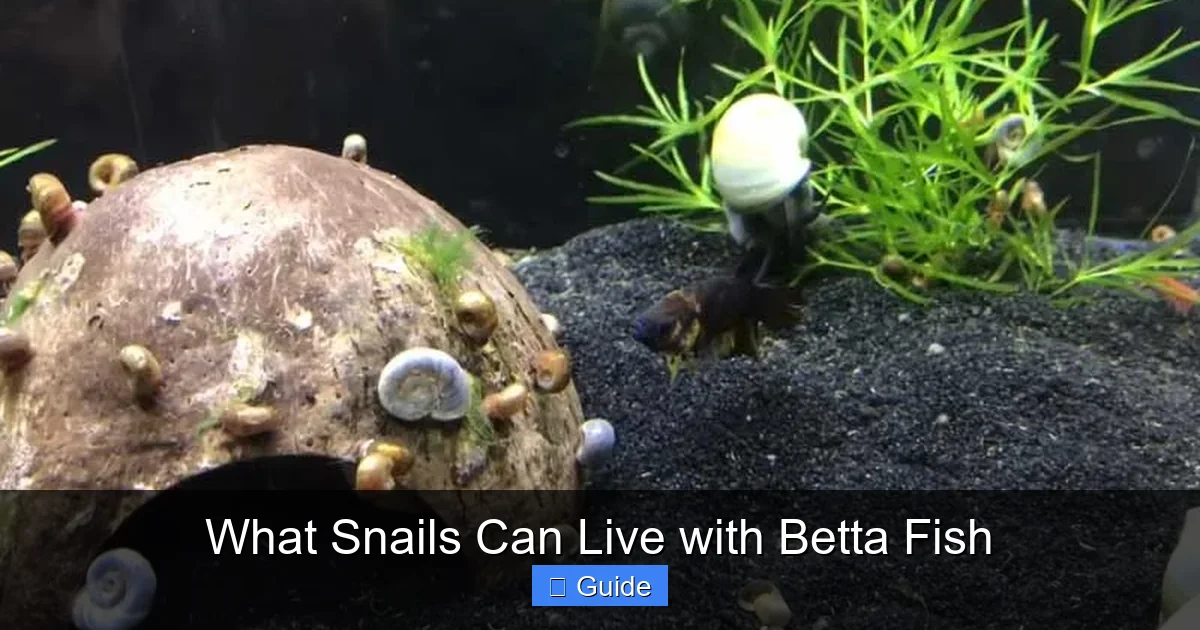
Not all snails are safe companions for betta fish. Species like Nerite, Mystery, and Ramshorn snails are often excellent choices due to their hard shells and peaceful nature. They help maintain tank cleanliness by consuming algae and detritus, creating a more stable ecosystem. However, success depends on proper tank size, water parameters, and careful observation of your betta’s individual temperament. Always avoid snails with delicate shells or those that reproduce explosively.
So, you’ve got a beautiful, flaring betta fish in a tank, and you’re thinking about adding some low-maintenance cleanup crew. Snails seem like the perfect solution—they’re quiet, interesting to watch, and can help with algae. But here’s the burning question every betta owner asks: what snails can live with betta fish without becoming a snack or causing stress? It’s a fantastic question because the answer isn’t just a simple list; it’s about understanding your betta’s personality, creating the right environment, and choosing the right shelled friend. Pairing the wrong snail can lead to a tragic snack time or a stressed-out betta. But get it right, and you’ll have a serene, balanced mini-ecosystem. This guide will walk you through everything you need to know, from the best snail candidates to the exact tank setup that gives both your betta and its new roommate the best chance at peaceful coexistence.
Key Takeaways
- Betta temperament varies: Some bettas are highly aggressive and may attack or eat snails, while others are more tolerant. Always introduce snails cautiously and observe.
- Top compatible species: Nerite, Mystery (Apple), and Ramshorn snails are the most recommended due to their robust shells, low bioload, and algae-eating habits.
- Tank size is critical: A minimum of 5 gallons is essential; larger volumes (10+ gallons) dilute aggression and provide more space for both betta and snail to coexist peacefully.
- Water parameters must match: Snails require stable, clean water with specific parameters (temperature, pH, hardness) that align with betta needs. Poor water quality harms both.
- Avoid certain snails: Steer clear of snails with thin, fragile shells (e.g., some pond snails), prolific breeders like bladder snails, or carnivorous species that might harm your betta.
- Snails are helpers, not janitors: They assist with algae and detritus but do not replace regular tank maintenance, water changes, or a proper filter.
- Observation is non-negotiable: Monitor interactions for the first 48-72 hours. Be prepared to remove the snail if the betta shows persistent aggression or if the snail appears stressed.
📑 Table of Contents
Understanding Your Betta: The Key to Snail Success
Before we even talk about snails, we must talk about the star of the show: your betta. Betta splendens, with their flowing fins and bold personalities, are famously territorial. Their aggression isn’t just a myth; it’s a hardwired instinct from centuries of selective breeding for fighting. This means what snails can live with betta fish is 50% about the snail and 50% about your specific betta’s disposition. A calm, older betta in a spacious, well-planted tank might ignore a slow-moving snail. A young, vibrant male in a bare 2.5-gallon tank? He might see a ramshorn snail as a moving piece of food or a rival to harass.
Reading Betta Body Language
You need to become a betta behavior detective. Key signs of a relaxed betta include: gentle swimming, fins held loosely (not flared), and ignoring tankmates. Signs of aggression or stress include: constant flaring (gills and fins extended), chasing, nipping at the snail’s shell, and “barbering” the snail’s tentacles. The first 24-48 hours after introducing a snail are the most critical. If your betta is obsessively chasing the snail to the point of exhaustion, it’s not going to work. A few curious flares are normal; a relentless, violent pursuit is not.
The Importance of Tank Size and Environment
This cannot be overstated. A betta in a 5-gallon tank has a vastly different experience than one in a 2.5-gallon tank. In a larger volume, a betta’s territory is bigger, and the presence of another creature is less of an intrusion. A spacious tank (10+ gallons is ideal for a community) allows the snail to easily escape by retreating into its shell and finding hiding spots behind plants or decor. In a tiny tank, there’s nowhere to hide, and the betta will encounter the snail constantly, fueling his territorial instincts. Think of it like sharing a studio apartment versus a mansion with a roommate.
The Top Contenders: Best Snails for Betta Tanks
Now for the fun part! Let’s meet the shelled candidates that have the best track record with bettas. The common thread among the best snails that can live with betta fish is a combination of a hard, durable shell, a peaceful and slow-moving nature, and a low bioload (they don’t produce tons of waste).
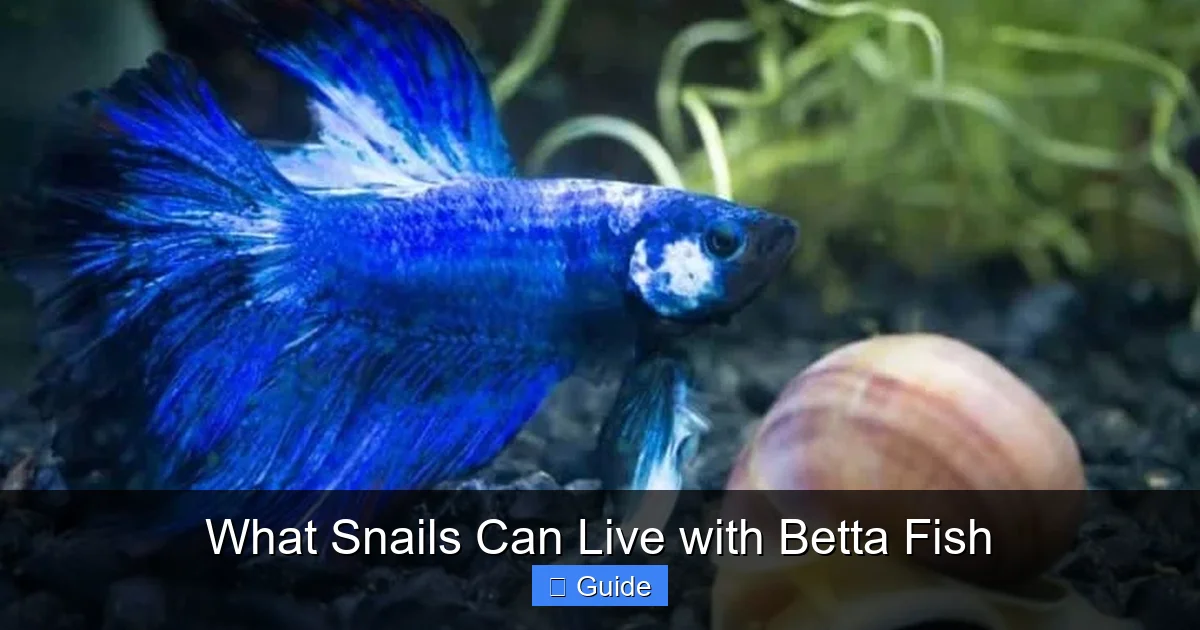
Visual guide about What Snails Can Live with Betta Fish
Image source: memfish.net
Nerite Snails: The Algae-Eating All-Stars
Nerite snails are arguably the #1 recommendation for betta tanks. They come in stunning varieties—zebra, tiger, olive, horned—with beautiful patterned shells. Why are they so perfect? First, they have an incredibly hard, ridged shell that is very difficult for even a determined betta to crack. Second, and most importantly, they are voracious algae eaters. They will meticulously clean diatoms, green spot algae, and even some hair algae off your glass, decorations, and plant leaves without eating your live plants. Third, they have a very low bioload. They are also unique because they require brackish (slightly salty) water to reproduce, meaning you won’t have a population explosion in your freshwater betta tank. They are a dedicated, one-snail cleanup crew. Their only downside is they can sometimes be a bit skittish and may retreat into their shell if startled, but they will resume grazing once confident.
Mystery Snails (Apple Snails): The Gentle Giants
These are the big, charismatic snails you often see in pet stores. They are larger (up to 2 inches), have a smooth, round, attractive shell (often in gold, blue, or ivory), and are incredibly peaceful. Mystery snails are excellent scavengers, happily munching on leftover food, decaying plant matter, and biofilm. They are also quite active and entertaining to watch as they glide around the tank, occasionally coming to the surface to breathe air with a little snorkel-like siphon. Their shell is thick and robust, offering good protection. However, they have a higher bioload than nerites due to their size, so you must be more vigilant with water changes and ensure your filter can handle the extra waste. They also require calcium in their diet for healthy shell growth. A key point: they are freshwater snails that can reproduce in freshwater, laying large clutches of eggs above the waterline. If you don’t want hundreds of babies, you’ll need to remove the egg clutches regularly.
Ramshorn Snails: The Hardy, Controversial Cleaners
Ramshorn snails are a classic. They have a distinctive, flat, coiled shell that resembles a ram’s horn. They are incredibly hardy, tolerant of a wide range of water conditions, and are excellent at cleaning algae and detritus. They are small and fast-moving for a snail, which can sometimes trigger a betta’s chase instinct. Their shell is moderately strong but not as formidable as a nerite’s. The biggest issue with ramshorns is their reproductive rate. They are livebearers and can quickly go from 1 to 20 snails in a well-fed tank. Many aquarists consider them pests. However, in a betta tank where you are meticulously controlling food and have a betta that might eat a few, a small, managed population can be a great asset. They are a “high risk, high reward” choice best for experienced betta keepers who don’t mind culling the population occasionally.
Tank Setup: Creating a Peaceful Coexistence
Choosing the snail is only step one. The environment you provide is the make-or-break factor for what snails can live with betta fish. You are designing a habitat where the snail can thrive and, crucially, where the betta doesn’t feel the need to constantly patrol and attack.
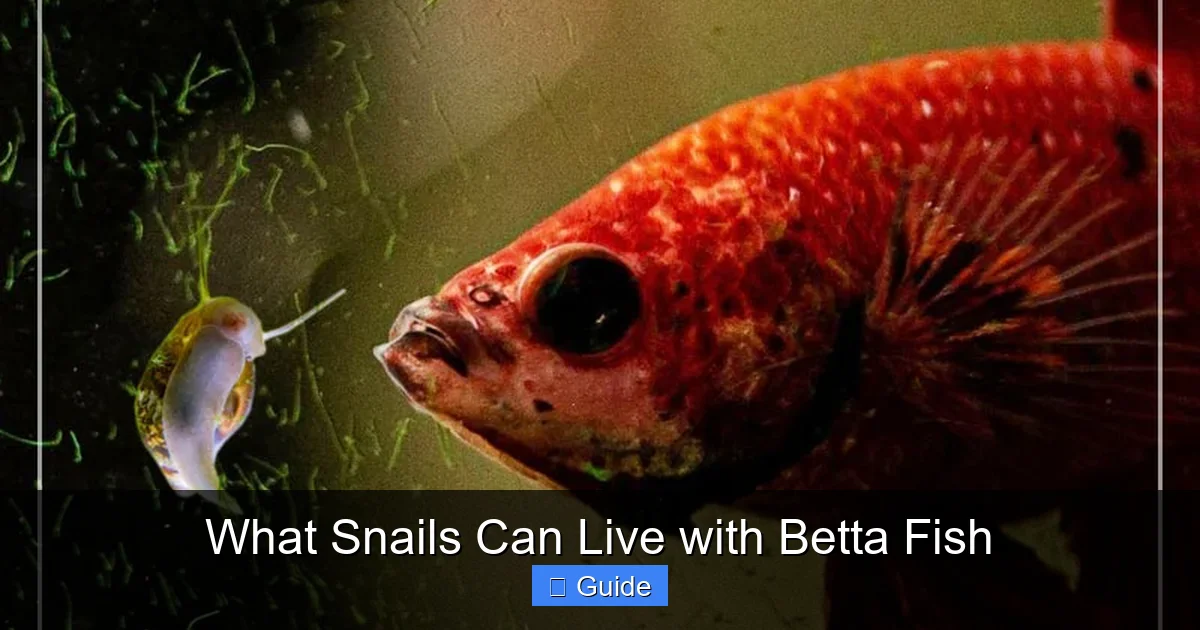
Visual guide about What Snails Can Live with Betta Fish
Image source: smartaquariumguide.com
The Absolute Minimum: Size and Space
Let’s be clear: a betta should never be in a tank smaller than 5 gallons. Period. For a successful snail companion, we strongly recommend starting at 10 gallons. This volume provides enough space for distinct territories. Your betta will claim the mid-to-upper water column and a few favorite plants. The snail will inhabit the bottom and glass surfaces. In a 10-gallon, a chased snail can easily find a hiding spot behind a driftwood root or a dense stand of Anubias. In a 5-gallon, the chase never really ends. The extra water volume also dilutes any ammonia spikes from the snail’s waste, protecting your betta’s sensitive labyrinth organ.
The Power of Plants and Hiding Spots
Live plants are your best friend here. They are not just decoration; they are essential security. Dense, hardy plants like Java Fern, Anubias, Amazon Swords, and Cryptocorynes provide visual barriers and physical hiding places. A snail can tuck itself behind a broad leaf or into a thicket of moss (like Java Moss or Marimo Moss Balls). Decor is equally important. Provide plenty of smooth rocks, pieces of driftwood (like Mopani or Manzanita), and ceramic or resin caves. The goal is to break up the line of sight so the betta doesn’t see the snail as a single, constant target. Floating plants like Frogbit or Salvinia also create a shaded, secure upper layer that many bettas love, reducing overall stress.
Water Parameters: The Non-Negotiable Foundation
Snails are invertebrates, meaning they lack the internal systems fish have to regulate water balance. They are extremely sensitive to water quality and chemistry. Your betta’s parameters must be stable and within the safe range for both. Here is the target range for a successful betta/snail tank:
- Temperature: 76-80°F (24-27°C). This is the ideal range for bettas and most common freshwater snails. Avoid drastic swings.
- pH: 7.0-7.5. Snails need a slightly alkaline pH to build and maintain their calcium carbonate shells. Acidic water (below 6.5) will slowly dissolve their shells.
- GH (General Hardness): 8-12 dGH. This measures the total dissolved minerals, primarily calcium and magnesium. Adequate GH is crucial for strong shell development. You can use a liquid calcium supplement (like Seachem Equilibrium) if your tap water is very soft.
- KH (Carbonate Hardness): 4-8 dKH. This measures the water’s buffering capacity, helping to stabilize pH. Fluctuating pH is a major stressor.
- Ammonia & Nitrite: MUST be 0 ppm. Even trace amounts are deadly to snails and highly toxic to bettas.
- Nitrate: Below 20 ppm. While less toxic, high nitrates stress invertebrates and promote algae growth. Regular water changes (25-50% weekly) are essential.
A high-quality filter is mandatory. A sponge filter is often a great choice for betta tanks as it provides gentle flow and biological filtration without creating a strong current that stresses the betta or blows the snail around.
Common Pitfalls and How to Avoid Them
Even with the best intentions, things can go wrong. Knowing these pitfalls will help you prevent disaster when figuring out what snails can live with betta fish.
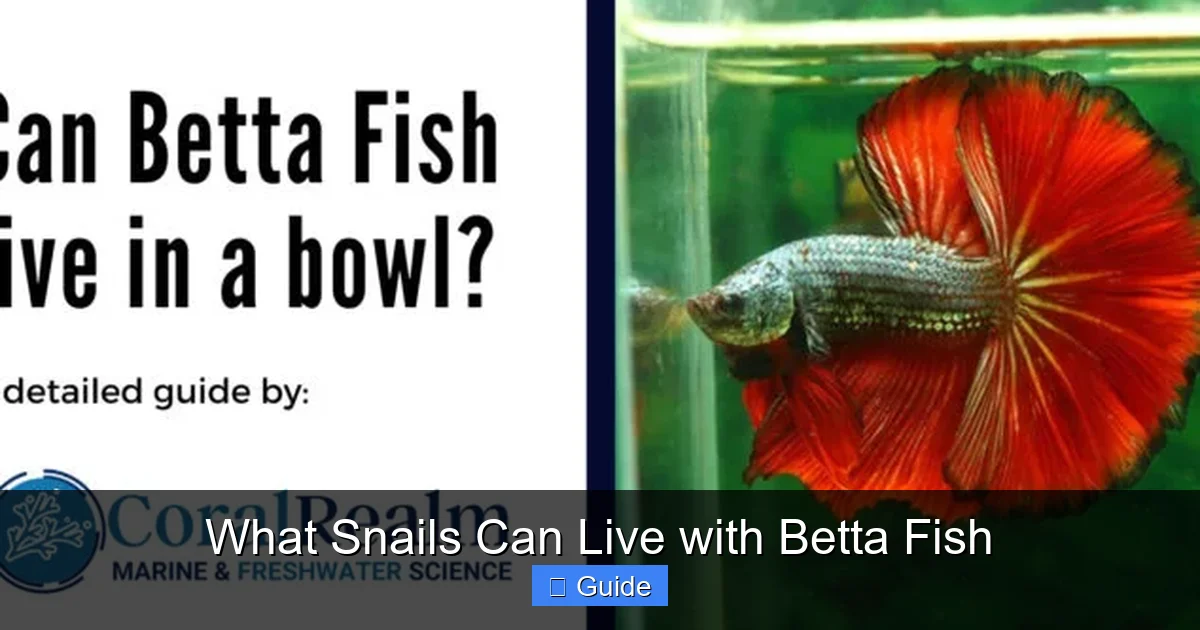
Visual guide about What Snails Can Live with Betta Fish
Image source: coralrealm.com
Introducing the Snail Incorrectly
Never just drop the snail in the tank. The water in its bag or container may have different parameters. Always acclimate the snail using the drip acclimation method over 1-2 hours to slowly equalize temperature, pH, and hardness. This prevents shock, which can kill the snail and release decaying matter into your tank, fouling the water. Also, before adding the snail, inspect it closely under a light. Make sure its shell is intact (no cracks or holes), its operculum (the little trapdoor) is present and functional, and it is actively moving or retracting when touched. A snail with a damaged shell or a foul odor is dead or dying and should be discarded.
Feeding Conflicts and Overfeeding
There’s a misconception that snails will “clean” your tank of all leftover food. They will eat some, but excess food will rot, polluting the water and causing a population boom (if the snail species reproduces). The rule is: feed your betta only what it can consume in 2-3 minutes, once or twice a day. Any uneaten pellets should be siphoned out. Snails need supplemental calcium and vegetable matter. Blanched zucchini, spinach, cucumber, or algae wafers are perfect. Place these on a small dish or clip them to the glass to monitor consumption. This targeted feeding prevents overfeeding and keeps both pets healthy.
Choosing the Wrong Species
We’ve covered the good ones, but let’s explicitly list the snails to avoid:
- Pond Snails (Lymnaea stagnalis): Extremely small, fragile shells, and reproduce like rabbits. They are a primary food source for many bettas and will be devoured quickly. If they survive, they’ll take over the tank.
- Bladder Snails (Physa acuta): Similar to pond snails—small, thin-shelled, and prolific. They are a “pest” species for a reason.
- Assassin Snails: As the name implies, they are carnivorous and hunt other snails. They are not a cleanup crew; they are a snail disposal unit. They might also harass a small or sick betta.
- Rabbit Snails: While peaceful and interesting, they have a very delicate, elongated shell and are slow. They are often an easy target for curious bettas.
- Any snail from a “feeder” bin: These are often wild-caught and can carry parasites or diseases that can infect your betta. Always buy from a reputable aquarium store.
The Role of Snails in Aquarium Health: Beyond Algae
Why go through all this trouble? Because the right snail is more than just a pet; it’s a functional part of a balanced aquarium ecosystem. They are what we call a “cleanup crew,” but their job description is broader than just algae.
Biofilm and Detritus Removal
Biofilm is that slimy, microbial layer that grows on every surface in an aquarium. It’s a natural part of the ecosystem, but excessive buildup is unsightly and can indicate poor water quality. Snails are relentless biofilm grazers. They use their radula (a tongue-like, toothed organ) to scrape this layer off glass, plant leaves, and hardscape. They also excel at consuming detritus—decaying plant matter, dead fish food, and other organic debris that settles on the substrate. This constant grazing helps keep surfaces clean and reduces the organic load that your filter has to process.
Nutrient Cycling
By consuming biofilm and detritus, snails are actively participating in the nitrogen cycle. They break down solid organic waste into ammonia, which is then converted by beneficial bacteria. Their own waste (ammonia) is then processed by the same bacteria. In a well-balanced tank, a small number of snails represent a stable, additional nutrient pathway. They help prevent large pockets of decaying matter from accumulating in the substrate, which can cause dangerous anaerobic gas pockets.
A Natural Indicator of Tank Health
Healthy snails are a great sign. If your nerite is actively crawling all over the tank day and night, it’s a sign there is algae for it to eat and water quality is good. If snails are constantly retracted and not moving, it’s a red flag. It could mean poor water quality (high ammonia/nitrate), incorrect pH or hardness, or that they are being constantly harassed by your betta. A dead or dying snail will quickly decompose and cause an ammonia spike, so their behavior is an early warning system for you.
Long-Term Care, Monitoring, and When to Intervene
So you’ve got a betta and a snail coexisting. Now what? Long-term success is about diligence and knowing when to step in.
The 72-Hour Observation Period
The first three days are the most important. Set up a separate “hospital” or observation tank (even a 1-gallon jar with a heater and sponge filter). Have it ready. Place the snail in the main tank and watch closely. If your betta flares, chases, and nips at the snail continuously for more than a few minutes at a time over this period, the stress is too high. The snail will eventually die of stress or be eaten. You must remove the snail to the hospital tank to save its life. This isn’t failure; it’s responsible pet ownership. Try again later with a different snail species or in a larger, more heavily planted tank.
Molting and Shell Health
Snails grow by adding to the opening of their shell. They periodically need to shed the old, outermost layer of shell material in a process called molting. You might find a thin, white, flaky “ghost shell” in the tank. This is normal. Ensure your snail has access to calcium. Cuttlebone (from the bird aisle) placed in the tank is an excellent, slow-release calcium source. A crumbling piece of eggshell (boiled to sterilize) works too. Watch for shell damage: pits, holes, or a thin, brittle shell are signs of calcium deficiency or poor water quality (acidic water dissolves shells). Correct the water parameters and diet immediately.
Population Control
If you chose a snail that reproduces (Mystery, Ramshorn), you must manage the population. Mystery snails lay large, rectangular egg clutches above the waterline. Simply scrape them off and dispose of them (don’t flush live snails!). Ramshorns give birth to live young. You will see tiny snails on the glass. You can manually remove them with a pipette or let your betta enjoy a few as snacks (a natural form of control). Remember, more snails mean more waste. Your tank’s bioload increases significantly with each generation.
When Things Go Wrong: Emergency Steps
If you see your betta has successfully cracked a snail’s shell and is eating it, intervene immediately. Remove the snail (if alive) to a hospital tank. A cracked shell is a death sentence for the snail due to infection and loss of bodily fluids. You must also assess why your betta did this. Was the snail already weak? Was the betta simply hungry and opportunistic? You may need to increase your betta’s feeding of high-quality pellets and frozen foods (like daphnia or brine shrimp) to satisfy its predatory instincts. If aggression is persistent, the snail must be rehomed.
Frequently Asked Questions
Will my betta definitely try to eat any snail I put in the tank?
Not definitely, but it’s a strong possibility. Betta temperament varies widely. Some will ignore a large, tough-shelled snail, while others will relentlessly attack anything that moves. You must observe your specific betta’s behavior. Starting with a hardy species like a Nerite in a large, planted tank gives you the best odds.
Do snails actually clean my betta tank, or is it a myth?
They do help, but they are not a replacement for your maintenance. Snails are excellent at grazing on algae, biofilm, and some detritus. They will keep glass and leaves cleaner. However, they do not eat fish poop, uneaten pellets quickly, or replace the need for regular water changes and filter media cleaning. Think of them as helpful assistants, not the primary janitor.
How many snails can I put with my betta?
Start with one. Always. Introduce a single snail and monitor for at least a week. If there is zero aggression and the tank is large (10+ gallons), you can cautiously consider a second of a similar species. Overstocking snails leads to too much waste, poor water quality, and stress for your betta. For a 5-gallon tank, one small snail is the absolute maximum. For a 10-gallon, two might be okay. For 20+, you have more flexibility but still practice moderation.
My Mystery snail laid eggs above the water. What do I do?
If you do not want hundreds of baby snails, you should remove the egg clutch. Use a credit card or a razor blade (carefully) to scrape the entire gelatinous clutch off the glass or decor and dispose of it. The eggs need moisture to hatch, so leaving them out of water will kill them. This is the most effective way to control Mystery snail reproduction in a freshwater tank.
What is the average lifespan of a snail in a betta tank?
It varies by species. Nerite snails typically live 1-2 years. Mystery snails live about 1 year, sometimes a bit longer with excellent care. Ramshorns can live up to a year. Their lifespan is highly dependent on water quality, diet (especially calcium), and freedom from stress (like betta harassment). A snail living in pristine, stable water with a peaceful betta will live the longest.
How can I tell if my snail is stressed or sick?
Key signs include: retracted inside its shell and not moving for more than a day or two (some retraction at night is normal), a gaping operculum (the trapdoor is not sealed shut), a foul or rotten smell (it’s dead), visible cracks or holes in the shell, or a shell that appears white and chalky (eroding from acidic water). If you see these signs, immediately test your water parameters for ammonia, nitrite, nitrate, pH, and hardness. Correct any issues and consider moving the snail to a hospital tank for recovery.