What’s Better Krill or Fish Oil
Both krill oil and fish oil are excellent sources of omega-3 fatty acids (EPA and DHA), but they differ significantly in their molecular structure, additional nutrients, cost, and sustainability profiles. Krill oil’s omega-3s are bound to phospholipids, which may enhance absorption, and it naturally contains the antioxidant astaxanthin. Fish oil’s omega-3s are bound to triglycerides and typically offers a higher concentration of EPA and DHA per serving at a lower cost. The “better” choice depends entirely on your individual health goals, budget, and dietary preferences.
So, you’ve decided to add an omega-3 supplement to your routine. Great choice! These essential fats support everything from your heart and brain to your joints and inflammation levels. But then you stand in the supplement aisle, faced with a new dilemma: krill oil or fish oil? It’s a common question, and the marketing on both sides can be confusing. One bottle screams “pure Antarctic source!” while another boasts “high potency!” Which one truly deserves a spot in your daily regimen? Let’s cut through the noise. This isn’t about declaring a universal winner. It’s about understanding the fundamental differences so you can make the smartest choice for your unique body and budget.
Key Takeaways
- Molecular Structure Matters: Krill oil delivers omega-3s in phospholipid form, while fish oil uses triglycerides or ethyl esters. This may influence how your body absorbs and utilizes the fats.
- Krill Has a Built-In Antioxidant: Krill oil naturally contains astaxanthin, a powerful antioxidant that protects the oil from oxidation and may offer additional health benefits.
- Concentration & Cost: Standard fish oil supplements generally provide significantly more EPA and DHA per capsule and at a much lower cost than krill oil.
- Sustainability is Complex: Krill harvesting is tightly regulated but ecologically sensitive. Fish oil sustainability varies wildly by species and fishing practice—look for MSC or other certifications.
- Absorption Claims are Promising but Not Conclusive: Early research suggests phospholipid-bound omega-3s from krill may be more bioavailable, but more robust human studies are needed for definitive proof.
- Dietary Preferences & Side Effects: Krill is not vegan/vegetarian. Both can cause fishy aftertaste or mild digestive issues, though krill is often reported to cause less.
- Consult a Professional: Always discuss with your doctor before starting, especially if you are on blood thinners, have a seafood allergy, or are pregnant/nursing.
📑 Table of Contents
- Understanding the Star Player: Omega-3 Fatty Acids
- Krill Oil Deep Dive: The Antarctic Contender
- Fish Oil Deep Dive: The Established Powerhouse
- Head-to-Head: Krill Oil vs. Fish Oil Comparison
- Who Should Choose Krill Oil?
- Who Should Choose Fish Oil?
- Practical Tips for Choosing & Using Either Supplement
- The Final Verdict: It’s About Your “Why”
Understanding the Star Player: Omega-3 Fatty Acids
Before we dive into the vehicles (krill vs. fish), we must understand the cargo: EPA (eicosapentaenoic acid) and DHA (docosahexaenoic acid). These are the two most important long-chain omega-3s for human health. Your body can’t make them efficiently, so you must get them from your diet—primarily from fatty fish like salmon, mackerel, and sardines. When we talk about fish oil and krill oil supplements, we’re talking about concentrated sources of these two fats.
The key difference between the two oils starts at the molecular level. Think of it like this: EPA and DHA need a “carrier” to be transported effectively in your body and into your cells.
The Carrier Difference: Phospholipids vs. Triglycerides
Fish oil typically delivers omega-3s bound to triglycerides. This is the same form found in most dietary fats and is how your body stores fat. Your digestive system needs to break these down before absorption.
Krill oil delivers omega-3s bound to phospholipids. This is a crucial distinction. Phospholipids are a major building block of your cell membranes. The theory is that because your cell walls are made of phospholipids, krill oil’s omega-3s might be more readily incorporated and absorbed. This is the primary scientific argument for krill oil’s potential superiority in bioavailability. Some studies, though not all, have shown that phospholipid-bound omega-3s can lead to higher blood levels of EPA and DHA compared to an equivalent dose of triglyceride-bound forms.
Krill Oil Deep Dive: The Antarctic Contender
Krill are tiny, shrimp-like crustaceans abundant in the cold Antarctic waters. Krill oil is extracted from these small creatures. Its profile is distinct from fish oil in a few key ways.
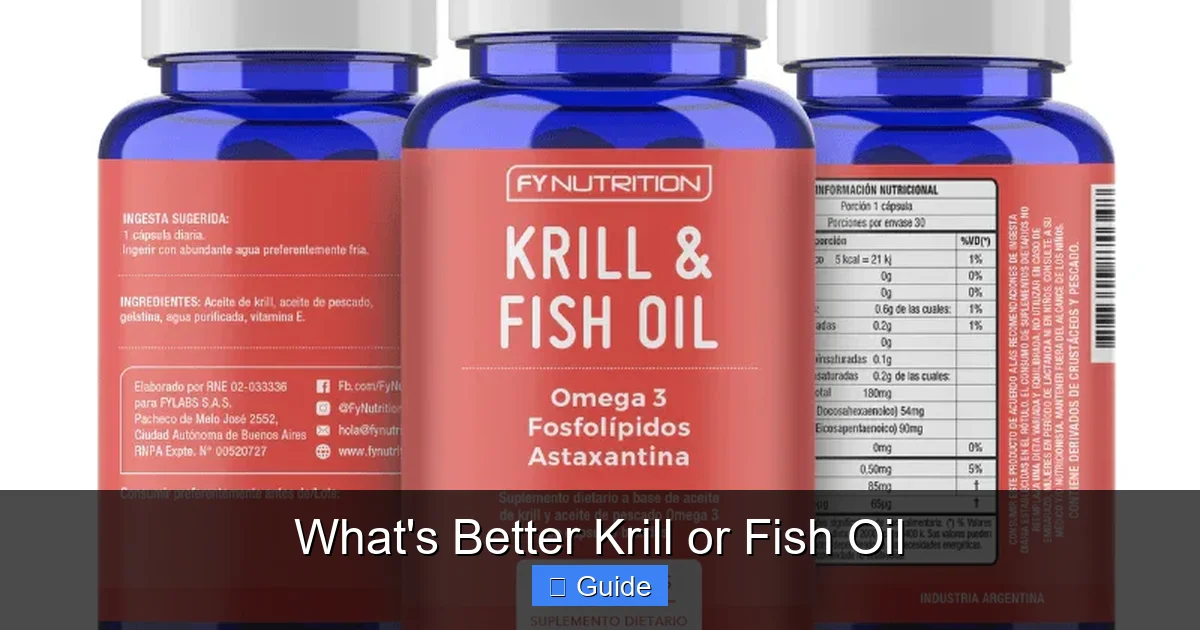
Visual guide about What’s Better Krill or Fish Oil
Image source: fynutrition.com
The Astaxanthin Advantage
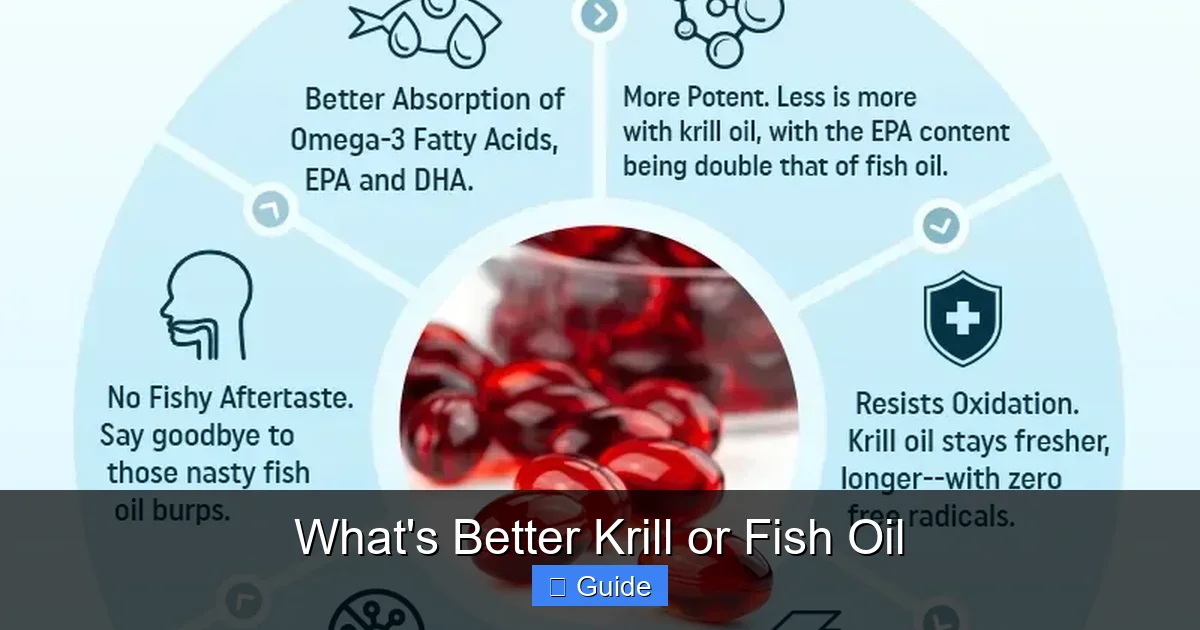
Krill oil’s secret weapon is astaxanthin. This is a potent, fat-soluble carotenoid antioxidant that gives krill (and flamingos, and salmon) their reddish-pink color. It’s not added; it’s naturally present in significant amounts. Why does this matter? Omega-3 fats are highly susceptible to oxidation (going rancid). Astaxanthin acts as a natural preservative within the krill oil capsule, protecting the delicate EPA and DHA from oxidative damage. This means krill oil is often more stable and less likely to develop a fishy smell or taste, even without synthetic antioxidants. For you, this potentially means a fresher product and the added bonus of astaxanthin’s own health benefits, which include supporting eye health, skin health, and providing powerful anti-inflammatory and antioxidant effects.
Typical Dosage & Concentration
Here’s where krill oil takes a practical hit. A standard krill oil softgel (usually 500mg) typically contains about 50-150 mg of combined EPA and DHA. That’s a relatively low dose. To reach a common therapeutic target of 500-1000 mg of EPA/DHA daily, you’d need to take 4-10 krill oil capsules. Fish oil softgels commonly contain 300-500 mg of EPA/DHA each. This stark difference in concentration is the main reason krill oil is significantly more expensive per milligram of active omega-3s.
Sustainability & Environmental Concerns
Krill fishing is managed by the Commission for the Conservation of Antarctic Marine Living Resources (CCAMLR), which sets strict catch limits (currently around 5-6% of the estimated total biomass). Proponents argue this is one of the best-managed fisheries in the world. However, critics warn that krill are the foundational food source for Antarctic ecosystems—penguins, seals, whales, and fish all depend on them. Increasing commercial harvests could disrupt this fragile food web. If sustainability is your top priority, you must research the specific brand’s certification (look for Friends of the Sea or sustainable krill harvest certifications) and be comfortable with the ecological debate.
Fish Oil Deep Dive: The Established Powerhouse
Fish oil is the OG of omega-3 supplements. It’s derived from the tissues of various oily fish, often from species like anchovies, sardines, and mackerel that are lower on the food chain and generally more sustainable than large predatory fish.
Visual guide about What’s Better Krill or Fish Oil
Image source: cdn.builder.io
Forms: Triglyceride vs. Ethyl Ester
Not all fish oil is created equal in form. Natural Triglyceride Form: This is the natural state of oil in fish. It’s generally considered more bioavailable than the alternative. Ethyl Ester Form: This is a processed, concentrated form where the omega-3s are separated from the glycerol backbone. It’s cheaper to produce and allows for higher concentrations in a smaller pill, but some studies suggest it’s not absorbed as well as natural triglycerides. Always check the label. The best fish oils will specify “natural triglyceride form” or “re-esterified triglyceride form” (a processed version that mimics the natural structure).
Concentration, Purity, and Cost
This is fish oil’s biggest advantage. You can easily find fish oil softgels providing 500-1000 mg of EPA/DHA per capsule. “Concentrated” or “high potency” versions push this even higher. This means you get your therapeutic dose in 1-2 capsules daily. Furthermore, due to massive scale production, the cost per milligram of EPA/DHA is typically 1/3rd to 1/2 the cost of krill oil. Purity is critical. Reputable brands will use molecular distillation to remove mercury, PCBs, and other ocean pollutants and will provide a “Certificate of Analysis” (COA) from a third-party lab verifying purity and potency. Look for third-party seals from IFOS, USP, or GOED.
Sustainability Spectrum
Fish oil sustainability is a mixed bag. It depends entirely on the source fish. Small, short-lived species like anchovies and sardines (often used in “whole fish” oils) are generally considered sustainable and have lower contaminant risks. Oils from larger fish like cod or salmon can be less sustainable and may carry higher toxin loads. The Marine Stewardship Council (MSC) certification is the gold standard for sustainable fishing. Always investigate the source.
Head-to-Head: Krill Oil vs. Fish Oil Comparison
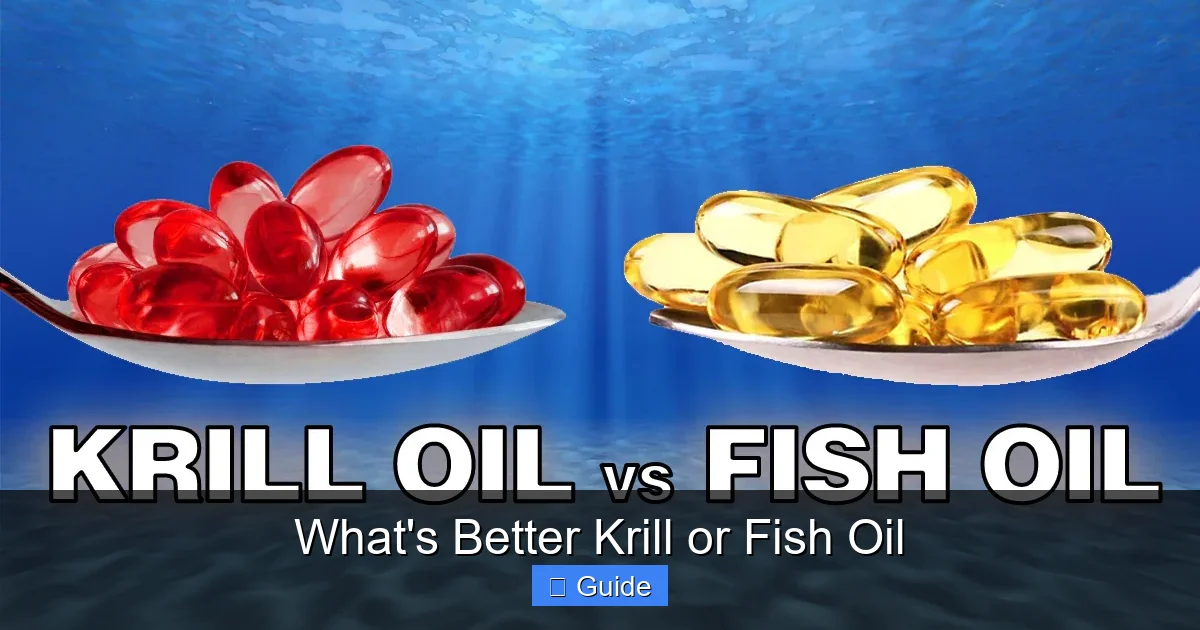
Let’s line them up and see how they stack up on the key factors that matter to you.
Visual guide about What’s Better Krill or Fish Oil
Image source: ultimatesupsg.com
Absorption & Bioavailability
The Claim: Krill oil’s phospholipid structure leads to better absorption and higher tissue levels of EPA/DHA. The Reality: The evidence is intriguing but not yet definitive. Several smaller human studies have shown that, milligram-for-milligram, krill oil can raise blood levels of EPA and DHA as effectively or slightly more effectively than fish oil. However, because krill oil capsules contain so much less actual EPA/DHA to begin with, you would need to take many more capsules to match the total omega-3 intake from a standard fish oil regimen. The practical absorption advantage may disappear when you account for real-world dosing. More large-scale, long-term studies are needed.
Potency & Dosage Convenience
Winner: Fish Oil (Decisively). This is no contest. To get 1000 mg of EPA/DHA, you might take 2 fish oil capsules. With a typical krill oil, you’d need to swallow 10-20 capsules. That’s a huge pill burden, cost difference, and caloric intake from the oil itself. For anyone wanting a meaningful dose without a pill organizer the size of a toolbox, fish oil is the clear practical choice.
Antioxidant Protection & Stability
Winner: Krill Oil. The natural presence of astaxanthin is a unique and valuable feature. It protects the oil inside the capsule from oxidizing. Fish oils, especially ethyl ester forms, are more prone to oxidation and often require added antioxidants (like vitamin E) and must be stored meticulously (refrigerated, away from light). A rancid fish oil is not only unpleasant (fishy burps) but potentially harmful. Krill oil’s built-in protection gives it an edge in stability and freshness.
Purity & Contaminant Risk
Winner: Likely a Tie (with caveats). Both can be exceptionally pure. Krill, being at the bottom of the Antarctic food chain, are less likely to bioaccumulate heavy metals like mercury and persistent organic pollutants (POPs) like PCBs. Fish oil from small, short-lived fish (anchovies, sardines) also has very low contaminant risk. The real risk comes from poorly refined fish oils from larger, predatory fish. The key is any supplement’s purity, not its type. Choose brands that are third-party tested and certified for purity (IFOS is the most rigorous).
Cost & Value
Winner: Fish Oil (by a mile). You are paying a massive premium for the krill oil format. When you calculate the cost per 100 mg of EPA/DHA, krill oil is almost always dramatically more expensive. Unless you are specifically seeking the phospholipid form and astaxanthin and can afford the pill burden, fish oil offers far better value for money for omega-3 intake.
Side Effects & Palatability
Both can cause “fish burps,” heartburn, or mild digestive upset. However, many users report that krill oil causes fewer digestive issues and less frequent fishy aftertaste, likely due to its phospholipid structure and the stabilizing effect of astaxanthin. Enteric-coated capsules can help with this for either type.
Who Should Choose Krill Oil?
Krill oil isn’t the wrong choice; it’s a specific choice. It might be worth the extra cost and pill burden if:
- You are highly sensitive to fish burps and digestive issues and have found even high-quality fish oils problematic.
- You specifically want the combination of omega-3s and astaxanthin for its antioxidant properties, particularly for skin or eye health.
- You are taking a very low dose (e.g., 250-500 mg EPA/DHA) for general wellness and prioritize the potential phospholipid absorption advantage over sheer potency.
- You have done your research and are comfortable with the specific brand’s sustainability practices for Antarctic krill.
- Budget and pill count are secondary concerns.
Who Should Choose Fish Oil?
Fish oil is the pragmatic, evidence-backed workhorse. It’s likely the better choice for you if:
- Your primary goal is to significantly increase your EPA/DHA intake for a specific health reason—supporting triglyceride levels, joint comfort, or cognitive health—where doses of 1000-2000 mg+ daily are often recommended.
- You are cost-conscious. You want to get the most omega-3s for your money.
- You dislike swallowing many pills. Achieving a therapeutic dose with 1-2 capsules is far more sustainable long-term.
- You want maximum flexibility. You can easily find fish oil in liquid form for mixing into smoothies, and in a wide range of concentrations.
- You are vegetarian/vegan. (Note: Neither krill nor fish oil is plant-based. For a vegan DHA/EPA source, you must look to algal oil).
- You prioritize third-party verified purity and potency from a well-established, transparent brand.
Practical Tips for Choosing & Using Either Supplement
Regardless of which you choose, follow these rules of thumb:
Read the Label Like a Pro
Don’t just look at the “Fish Oil 1000 mg” or “Krill Oil 500 mg” headline. Flip the bottle over and find the “Supplement Facts” panel. Look for the exact amounts of EPA and DHA. This is the only number that matters. A “1000 mg” fish oil softgel might only contain 180 mg EPA and 120 mg DHA—a total of 300 mg of active omega-3s. A “300 mg EPA / 200 mg DHA” listing is what you’re paying for. Compare these numbers across brands to get true value.
Prioritize Freshness & Stability
Smell the capsule when you open the bottle. It should have a clean, slightly ocean-like scent, never a strong, pungent, rancid fish odor. Store all oils in a cool, dark place (the refrigerator is ideal after opening). If a product isn’t sealed well or is stored on a hot shelf, it’s already degrading.
Start Low, Go Slow
If you’re new to supplements, start with the lowest recommended dose for a week to assess tolerance. You can always increase. Taking a large dose immediately can sometimes cause digestive upset.
Pair with Food
Take your omega-3 supplement with a meal that contains fat. This stimulates bile production, which significantly improves the absorption of these fat-soluble nutrients.
Consider Your Health Context
If you are on blood-thinning medication (warfarin, clopidogrel, aspirin), have a bleeding disorder, or are scheduled for surgery, consult your doctor immediately. Omega-3s can have a mild blood-thinning effect. Also, those with a seafood or shellfish allergy should exercise caution and seek medical advice.
The Final Verdict: It’s About Your “Why”
So, what’s better? For the vast majority of people seeking the proven cardiovascular, cognitive, and anti-inflammatory benefits of omega-3s, high-quality, high-potency fish oil in natural triglyceride form is the smarter, more economical, and more practical choice. You get more of the active ingredients per dollar, per capsule, and per day. The evidence for its benefits is vast and long-standing.
Krill oil occupies a premium niche. It is a potentially superior vehicle for a relatively small cargo. If you have the budget, don’t mind taking multiple capsules, have had bad reactions to fish oil, and are drawn to the natural antioxidant synergy of astaxanthin, then krill oil is a perfectly valid—if expensive—option. It’s not necessarily “better” in terms of delivering more EPA/DHA to your system, but it is “different” in ways that appeal to a specific segment of consumers.
The best supplement is the one you will take consistently, that fits your budget, and that comes from a source you trust. Whether you choose the Antarctic krill or the deep-sea fish, making an informed, label-literate decision is the first and most important step toward reaping the incredible benefits of omega-3 fatty acids.
Frequently Asked Questions
Can I take both krill oil and fish oil together?
Technically yes, but it’s usually unnecessary and expensive. You would be doubling up on EPA and DHA, which could increase the risk of side effects like blood thinning. It’s better to choose one high-quality source and stick with it unless directed by a healthcare provider for a specific therapeutic reason.
Is krill oil vegan or vegetarian?
No. Krill are crustaceans, which are animals. Krill oil is not suitable for vegans or vegetarians. For a plant-based omega-3 source that provides DHA and EPA, look for algal oil supplements.
Which one has less of a fishy aftertaste?
Most anecdotal reports and some studies suggest krill oil causes fewer fishy burps and aftertaste compared to standard fish oil. This is likely due to its phospholipid structure and the stabilizing antioxidant astaxanthin. However, high-quality, fresh, enteric-coated fish oils can also be very well-tolerated.
How do I know if my fish oil is rancid?
Rancid oil will have a strong, sharp, unpleasant fishy or “old paint” smell when you open the bottle. It may also cause increased digestive discomfort or a bad aftertaste. If you suspect rancidity, stop taking it. Always buy from reputable brands that use nitrogen flushing and antioxidants, and store your oil in the refrigerator.
What dosage of EPA/DHA should I aim for?
It depends on your goal. For general health maintenance, 250-500 mg of combined EPA and DHA daily is a common recommendation. For specific concerns like high triglycerides, joint support, or cognitive benefits, doses of 1000-2000 mg or more are often used in studies. Always consult with your doctor to determine the right dose for your personal health situation.
Is krill oil sustainable?
The sustainability of krill fishing is a nuanced topic. The Antarctic fishery is managed by CCAMLR with strict catch limits, and many certifications exist. However, environmental groups express concern about the impact on the Antarctic ecosystem, as krill are a keystone species. If this is a priority, research the specific brand’s certification (e.g., Friends of the Sea) and their transparency about harvest practices. Fish oil sustainability varies widely by source species and fishing method—look for MSC certification for the most reliable guarantee.