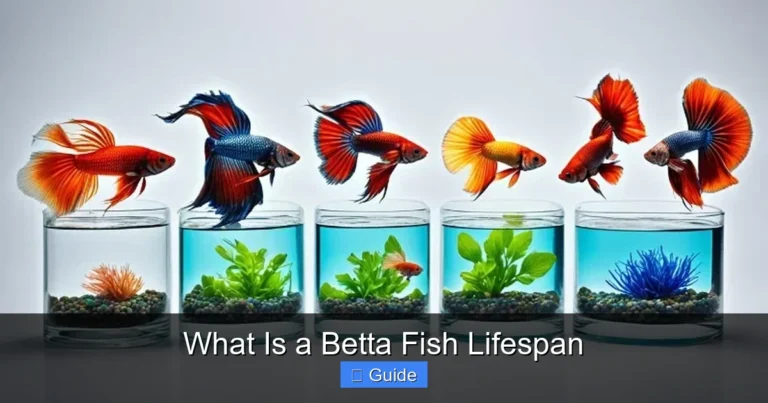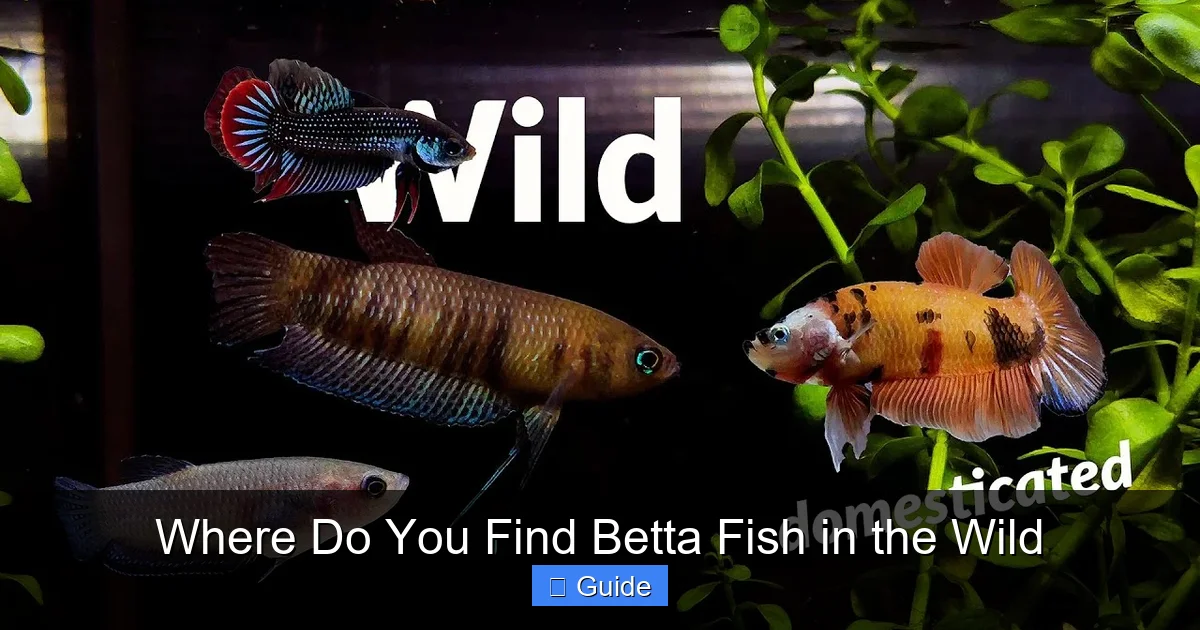
Where Do You Find Betta Fish in the Wild
Betta fish, or Siamese fighting fish, are not native to pet stores but to the shallow, warm waters of Southeast Asia. In the wild, they inhabit rice paddies, slow-moving streams, and stagnant ponds across Thailand, Cambodia, Vietnam, and Malaysia. Their famous aggression is a survival trait for territorial disputes in these cramped, resource-scarce environments. Understanding their true wild origins is crucial for appreciating their needs and the urgent conservation efforts required to protect them.
Key Takeaways
- Native Range: Wild bettas (Betta splendens) are indigenous exclusively to the Chao Phraya and Mekong river basins of Thailand, with smaller native populations in Cambodia, Vietnam, and peninsular Malaysia.
- Habitat Type: They thrive in shallow, warm (24-30°C/75-86°F), slow-moving or stagnant bodies of water like rice paddies, drainage ditches, marshes, and temporary forest pools with dense vegetation.
- Adaptation to Harsh Conditions: Wild bettas possess a labyrinth organ, allowing them to breathe atmospheric air, and can survive in low-oxygen, warm, and even slightly polluted water that would kill many other fish.
- Seasonal Migrators: During the monsoon season, they spread into newly flooded forests and fields; in the dry season, they retreat to deeper pools and moist leaf litter, often surviving out of water for short periods.
- Threatened in the Wild: Their natural populations are declining due to habitat destruction (palm oil plantations, urban development), pollution from agriculture, and over-collection for the international pet trade.
- Behavioral Context: The infamous aggression is primarily male-male territorial combat in confined natural spaces; in vast, vegetated habitats, they are generally shy, solitary, and more focused on foraging.
- Conservation Status: While not yet IUCN-listed as endangered, wild betta populations are under significant pressure, with some local subspecies like Betta splendens facing imminent threat of extinction in parts of their range.
📑 Table of Contents
- The Iconic Fish from a Distant Shore
- The Geographic Heartland: Rivers of Thailand and Beyond
- A Menu of Habitats: From Rice Paddies to Peat Swamps
- Seasons of Life: The Monsoon’s Dictatorship
- Built for the Wild: Anatomy of a Survivor
- Peril in Paradise: Threats to Wild Populations
- Conservation and the Future: Protecting a National Treasure
- Conclusion: A Window into a Vanishing World
The Iconic Fish from a Distant Shore
Picture a betta fish. The vibrant, flowing fins of a male, a kaleidoscope of crimson and sapphire, hovering regally in a small, solitary vase on a quiet desk. This is the global image, a symbol of serene beauty and fierce pride. But this image is a world away from reality. To answer the question “Where do you find betta fish in the wild?” is to embark on a journey to the steaming, muddy, vibrant backwaters of Southeast Asia. It is a story not of solitary vases, but of crowded, life-filled swamps; not of still elegance, but of explosive, survival-driven adaptation. The true wild betta is a tougher, subtler, and more ecologically integral creature than its captive-bred descendants. Understanding its native home is the first step toward respecting its legacy and securing its future.
This guide will dive deep into the specific ecosystems, geographic range, and seasonal rhythms that define the life of Betta splendens in the wild. We will move beyond the common misconception that they live in tiny puddles and explore the complex, interconnected habitats that support them. You’ll learn why they look and behave the way they do, the grave threats encroaching on their homes, and what it means for their conservation. So, leave the glass vase behind and wade with us into the murky, beautiful waters where the real betta fish lives.
The Geographic Heartland: Rivers of Thailand and Beyond
If you want to see a wild betta in its natural setting, you need to book a ticket to Southeast Asia. Their native range is surprisingly specific, a testament to millions of years of evolution in a particular biogeographic zone.
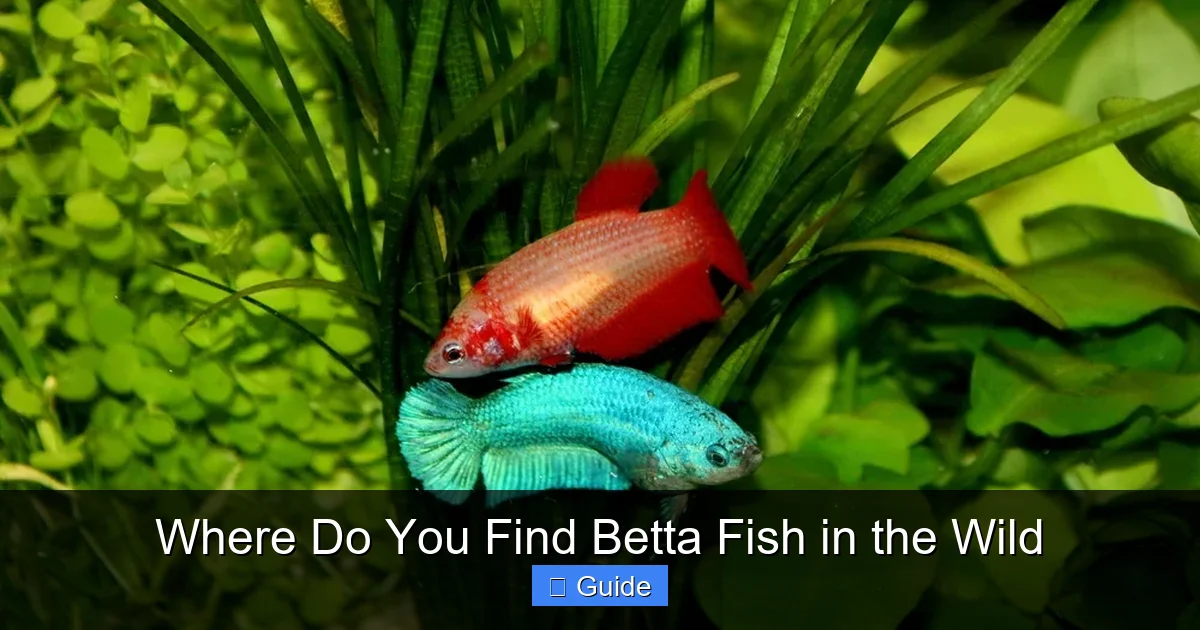
Visual guide about Where Do You Find Betta Fish in the Wild
Image source: fishlab.com
The Chao Phraya and Mekong Basins: The Core Kingdom
The undisputed homeland of the wild Siamese fighting fish is central Thailand. They are native to the lowland basins of the Chao Phraya River, which flows through Bangkok, and the Mekong River, which forms Thailand’s eastern border. Within these vast drainage systems, bettas occupy the slow-moving tributaries, the floodplains, and the myriad of water bodies created by the annual monsoon cycle. The type specimen that gave the species its name, Betta splendens, was collected from the Chao Phraya basin. This region, with its tropical climate and distinct wet/dry seasons, is the evolutionary cradle for the fish that would conquer the world’s aquariums.
Neighboring Nations: A Patchy but Native Presence
While Thailand is the heartland, the betta’s native range extends into neighboring countries. In Cambodia, they are found in the Mekong floodplains and associated wetlands of the Tonle Sap region. In southern Vietnam, populations exist in the Mekong Delta. Further south, on the Malay Peninsula, native populations of Betta splendens are found in parts of peninsular Malaysia, though some sources debate the exact southern limit, often separating them from closely related species like Betta imbellis. It is critical to note that outside of this specific Southeast Asian belt, any betta found in the wild is an invasive species, released from captivity, and poses an ecological threat to native fauna.
A Menu of Habitats: From Rice Paddies to Peat Swamps
Asking where you find a wild betta is like asking where you find a human—they adapt to a surprising variety of settings, but all share common threads. Their habitats are defined by warmth, stillness, and vegetation. Forget crystal-clear mountain streams; think warm, tea-colored, and full of life at the surface.
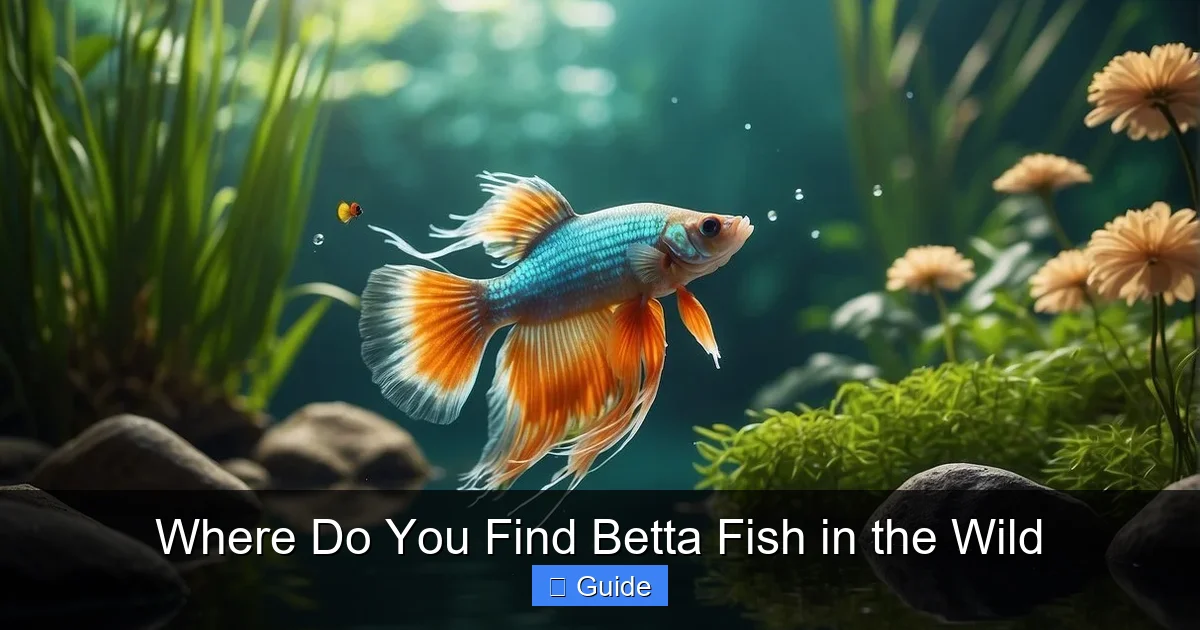
Visual guide about Where Do You Find Betta Fish in the Wild
Image source: koala.sh
The Agricultural Matrix: Rice Paddies and Irrigation Canals
Perhaps the most iconic “wild” habitat for bettas is the rice paddy. During the growing season, these flooded fields are perfect betta territories: shallow (often less than 30 cm deep), warm from the sun, still, and choked with emergent grasses and algae. The dense plant cover provides nesting sites for males (they build bubble nests among stems) and hiding places from predators like herons and snakes. The accompanying irrigation ditches and drainage canals that connect these fields are essentially linear betta highways, allowing them to move between habitats. These man-made ecosystems have become a significant part of their modern range, a result of both natural adaptation to floodplains and human-altered landscapes.
Natural Wetlands: Peat Swamps and Forest Pools
Before rice cultivation, bettas thrived in peat swamp forests and blackwater ecosystems. These are among the most fascinating habitats. The water is stained dark brown by tannins from decaying leaves, acidic, and incredibly low in minerals. The substrate is soft mud and centuries of leaf litter. Here, visibility is near zero, and the betta’S brilliant colors are less about show and more about signaling in the gloom. They also inhabit temporary rain-filled pools in the forest floor. These ephemeral ponds, which may dry completely, are evolutionary pressure cookers. They force bettas to develop extreme survival traits, like the ability to absorb moisture from the humid leaf litter or even crawl short distances to new water sources.
The Edge of the World: Slow Streams and Marshes
At the boundaries of their range, you’ll find bettas in the slowest stretches of lowland streams and marginal marshes along larger rivers. Here, the current is negligible, and aquatic plants like Ceratophyllum (hornwort) and Vallisneria (eelgrass) form dense underwater forests. The water is often clearer than in peat swamps but still tea-colored. These habitats offer a slightly different prey base, with more insect larvae and small crustaceans. The key unifying feature across all these habitats is the dense, floating, or emergent vegetation at the water’s surface. This is non-negotiable for a wild betta. It provides oxygen, anchor points for bubble nests, security from aerial predators, and hunting grounds for insects that land on the water.
Seasons of Life: The Monsoon’s Dictatorship
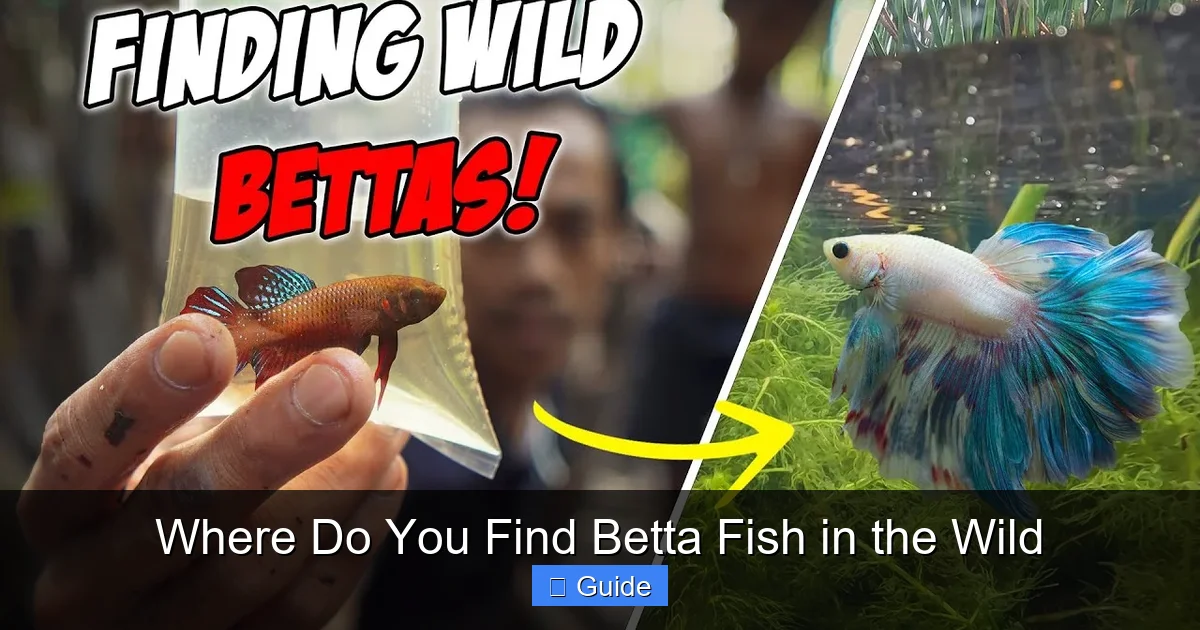
Life for a wild betta is not a constant state. It is a rhythmic dance dictated by the monsoon cycle, a pattern of flooding and drying that shapes every aspect of their existence, from reproduction to diet to survival.
Visual guide about Where Do You Find Betta Fish in the Wild
Image source: i.ytimg.com
The Flood: Expansion and Abundance
From roughly May to October, the monsoon rains deluge the region. Rivers overflow, and low-lying forests and fields become a single, vast, interconnected lake. This is the betta’s golden age. The fish, previously confined to shrinking pools, spread explosively into the new frontiers of flooded rice fields, forest floors, and grasslands. Food is abundant: insects washed into the water, mosquito larvae exploding in the warm, still water, and plankton blooms. Males build bubble nests on the underside of overhanging leaves or among dense surface plants. Females, released from the constraints of small territories, can choose mates more freely. The population density spikes, and the landscape teems with life.
The Dry: Contraction and Survival
From November to April, the rains cease. The sun beats down, and the vast aquatic landscape evaporates and drains into the deepening rivers. This is the survival test. The bettas’ world fractures into a mosaic of isolated, shrinking pools—oxbow lakes, deep holes in streambeds, and moist depressions. Competition for space and food becomes fierce, triggering the intense territorial aggression the species is famous for. But their adaptations kick in. The labyrinth organ allows them to gulp air directly from the atmosphere, a crucial advantage as oxygen levels plummet in the warm, stagnant water. Some populations will burrow into the damp mud or leaf litter at the bottom of a drying pool, entering a state of estivation, surviving for weeks until the rains return. They may even crawl overland on their pectoral fins to reach a remaining water source.
Built for the Wild: Anatomy of a Survivor
The betta’s famous flamboyance in captivity is often a product of selective breeding. In the wild, every physical trait serves a direct survival purpose. Their anatomy is a toolkit for thriving in a challenging environment.
The Labyrinth Organ: Breathing Air
This is the betta’s superpower and the key to its habitat. Located in a chamber above the gills, the labyrinth organ is a folded, vascularized structure that allows for the extraction of oxygen from atmospheric air. A wild betta is essentially an air-breather. You will frequently see it rise to the surface to take a gulp of air, a behavior that looks frantic in a well-oxygenated aquarium but is perfectly normal in its warm, hypoxic home. This adaptation lets them live in water so degraded that even tough fish like carp would struggle. It’s why you sometimes hear they can live in a “bowl”—they can survive in poor conditions longer than most, but they absolutely do not thrive there.
Body Shape and Fins: Built for Ambush
The wild betta’s body is streamlined and muscular, built for short, explosive bursts to ambush prey (insects, larvae) or evade a predator. Its large, outward-facing eyes are positioned for a wide field of view to spot food above the water surface. The famous flowing fins of the aquarium male? In the wild, they are much shorter and more robust. Long, delicate fins are a liability in dense vegetation and make swimming energetically costly. Females, which are often stouter-bodied, are the primary foragers, while males guard nests. The “flaring” behavior—gills and opercula expanding to appear larger—is a potent territorial and courtship display used in close-quarters combat and intimidation.
Peril in Paradise: Threats to Wild Populations
The very habitats that nurture the wild betta are under unprecedented assault. While still locally common in parts of Thailand, the long-term outlook is concerning due to multiple, synergistic threats.
Habitat Loss: The Plow and The Palm
The single greatest threat is the direct destruction of wetland habitat. Vast areas of peat swamp forest are being drained and burned to make way for palm oil plantations and other agriculture. Rice paddies themselves are being converted to more intensive, pesticide-heavy farming or urban development. The intricate network of slow-moving waterways is being straightened, dredged, and polluted, eliminating the complex, vegetated edges bettas need. As the wetlands disappear, so does the betta’s home.
Pollution and Degradation
Agricultural runoff is a silent killer. Pesticides and fertilizers wash into the waterways, poisoning fish directly and causing algal blooms that deplete oxygen. Sediment from deforestation clouds the water, smothering plants and gills. In urbanizing areas, domestic and industrial wastewater flows untreated into drainage canals. Wild bettas are remarkably tolerant, but there is a limit. pollution degrades their habitat, reduces their insect prey, and can cause developmental abnormalities.
The Pet Trade: A Double-Edged Sword
The global popularity of the betta has created a massive breeding industry. However, a small but persistent portion of this trade still relies on wild-caught specimens, particularly rare color morphs or specific localities. Over-collection from accessible, shrinking habitats can deplete local populations. More insidiously, the widespread release of captive bettas into local waterways (well-intentioned but misguided “rescue” attempts) introduces diseases and hybridizes with wild gene pools, potentially weakening the genetic fitness of truly wild stocks. The trade fuels both direct removal and indirect habitat pressure.
Conservation and the Future: Protecting a National Treasure
Hope is not lost. The betta is a charismatic flagship species for Southeast Asian wetland conservation. Efforts are underway, often led by Thai researchers and enthusiasts, to secure its future.
In-Situ Protection: Safeguarding the Wild Home
The most effective strategy is protecting and restoring habitat. This includes designating protected areas that encompass critical betta wetlands, such as certain peat swamp forest reserves. It also involves working with farmers on sustainable rice cultivation practices that maintain field margins and reduce chemical runoff. Re-wetting drained peatlands is a massive but crucial climate and biodiversity initiative that would also benefit bettas. The challenge is integrating conservation with the economic realities of one of the world’s most populous agricultural regions.
Ex-Situ Programs and Responsible Ownership
Captive breeding programs, while primarily for the aquarium trade, can serve as genetic arks. Serious breeders are working to preserve and promote healthy, behaviorally sound lines. For the hobbyist, this means choosing captive-bred bettas from reputable sources and never releasing them into the wild. Supporting organizations that fund wetland conservation in Southeast Asia is another direct way to help. Finally, spreading awareness—as this article aims to do—shifts the narrative from seeing bettas as disposable desk ornaments to understanding them as wild animals with specific ecological needs and a threatened home. They are not just a fish; they are a living connection to a vanishing world of tropical wetlands.
Conclusion: A Window into a Vanishing World
To find a betta fish in the wild is to find a reflection of a unique and threatened ecosystem. It is not in a vase, but in the dappled sunlight filtering through the leaves of a Thai rice paddy, in the tannin-stained stillness of a peat swamp, or in the fleeting pools of a monsoon-soaked forest floor. The betta’s story is one of incredible adaptation to extreme conditions—air-breathing, estivation, and explosive seasonal reproduction. Yet, this survivor is now facing threats it cannot adapt to: the relentless conversion of its wetland home and the pollution of its waters. The next time you see a betta, whether in a tank or on a logo, remember its true story. Remember the muddy, vibrant, seasonal world it comes from. By supporting habitat conservation, choosing captive-bred pets, and spreading this knowledge, we can help ensure that the question “Where do you find betta fish in the wild?” continues to have a rich, life-filled answer for generations to come.
Frequently Asked Questions
Can you find wild betta fish in the United States or Europe?
No. Wild bettas are native only to Southeast Asia. Any found in the wild in the US or Europe are unwanted pets that have been released. These invasive populations can harm local ecosystems by competing with native species and spreading diseases.
Are wild bettas more aggressive than pet store bettas?
Not necessarily. The extreme aggression often seen in captive males is amplified by breeding and confinement. In their vast, vegetated wild habitats, wild bettas are generally shy and solitary. Male-male aggression is primarily territorial and occurs when space is limited, such as in a small pool during the dry season.
What is the best time of year to see wild bettas in their natural habitat?
3>The peak time is during the rainy monsoon season (roughly May-October). The flooding expands their habitat dramatically, making them more widespread and active as they breed and forage in newly inundated areas. During the dry season, they are concentrated in fewer, deeper pools.
Do wild bettas live in the same tiny spaces people keep them in?
No. While they can survive in poor conditions due to their labyrinth organ, they naturally inhabit much larger, complex environments. A single male’s territory in the wild can span several square meters of densely planted water. A small, barren container is a severe deprivation of their natural needs.
How can I help protect wild betta habitats?
You can support conservation organizations focused on Southeast Asian wetlands, such as those protecting peat swamp forests. Most importantly, if you keep a betta as a pet, ensure it is captive-bred, never release it into the wild, and provide an enriched tank that mimics aspects of its natural habitat.
Are wild bettas endangered?
While Betta splendens is not currently listed as endangered on the IUCN Red List, its wild populations are in significant decline due to habitat loss and pollution. Many local populations, especially in areas with severe habitat destruction, are threatened with extinction in the wild. Their long-term status is a major conservation concern.