Do Betta Fish Need Air
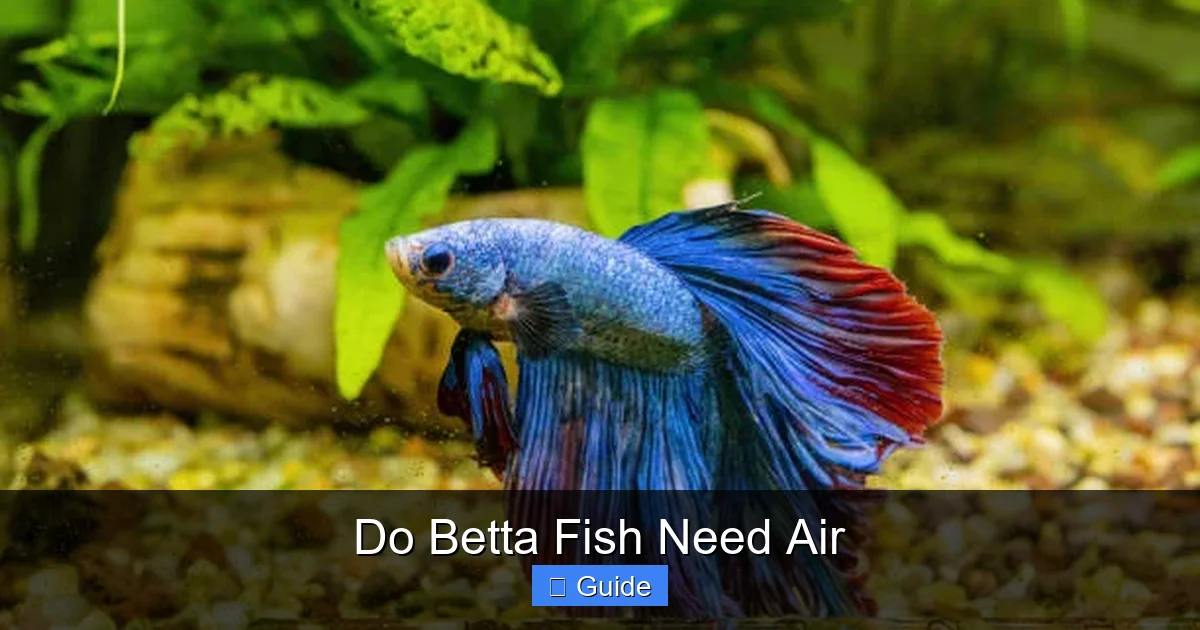
Yes, betta fish absolutely need access to air. Unlike most fish, they possess a special “labyrinth organ” that allows them to breathe atmospheric oxygen directly. While they can extract some oxygen from water through their gills, this organ is critical for their survival, especially in warm, low-oxygen water. This means they must have consistent, unimpeded access to the water’s surface. A small, unfiltered bowl is a death sentence; they require a properly sized, filtered, and heated tank with calm surface water to thrive. Understanding this unique biology is the first step to providing proper care.
Key Takeaways
- Bettas have a labyrinth organ: This specialized structure allows them to gulp and breathe atmospheric air, a necessity for their survival.
- Surface access is non-negotiable: The water’s surface must be calm and completely accessible; any cover (like tight lids or excessive plants) can suffocate them.
- Water quality is still paramount: They still use their gills and are highly sensitive to ammonia and nitrites from poor water conditions.
- Tank size and filtration matter: A minimum of 5 gallons with a gentle filter is essential to maintain stable water parameters and oxygen levels.
- Warm water holds less oxygen: Their tropical requirement (78-80°F) means the water naturally holds less dissolved oxygen, increasing their reliance on the labyrinth organ.
- Gasping at the surface is a red flag: Frequent, frantic trips to the surface indicate poor water quality, high temperature, or insufficient oxygen.
- Bubbles/air stones are not a substitute: While they can help oxygenate water, they do not replace the betta’s need to physically gulp air from the surface.
📑 Table of Contents
- The Great Betta Debate: Air Breathers or Not?
- The Miraculous Labyrinth Organ: Nature’s Built-in Snorkel
- Oxygen in Water vs. Air: The Critical Difference
- The Perfect Tank: Engineering a Breathable Home
- Signs of Oxygen & Air Access Problems
- Myth Busting: Bubbles, Air Stones, and Other Shortcuts
- Advanced Considerations: Oxygen, Stress, and Long-Term Health
- Conclusion: It’s All About Respecting the Biology
The Great Betta Debate: Air Breathers or Not?
Walk into any pet store, and you’ll likely see them: a solitary betta fish, often in a tiny, crystal-clear cup or a decorative vase with a plant on top. The common, and dangerously incorrect, assumption is that because they can survive in such small spaces, they don’t need much oxygen. This myth has led to the widespread mistreatment of one of the aquarium world’s most charismatic creatures. So, let’s settle the question once and for all: do betta fish need air? The answer is a resounding, critical yes. Not only do they need oxygen, but their entire physiology is built around a unique method of obtaining it that makes their care requirements very specific. Understanding this is the absolute foundation of responsible betta ownership.
This isn’t just academic trivia; it’s a matter of life and death. The beautiful, flowing fins of a betta are not just for show; they are adaptations for a life in slow-moving, often oxygen-poor waters of Southeast Asia. But the domestic betta, bred for centuries for vibrant color and aggression, is even more dependent on the conditions we provide. Ignoring their need for atmospheric air is a direct path to a stressed, sick, and short-lived pet. Let’s dive deep into the biology, the practical needs, and the common mistakes that doom so many of these fish.
The Miraculous Labyrinth Organ: Nature’s Built-in Snorkel
To understand why betta fish need air, we must first meet their most important anatomical feature: the labyrinth organ. This is what sets them and their close relatives (like gouramis) apart from the vast majority of fish in the world. It’s a complex, folded structure located in a chamber above the gills. Think of it as a primitive lung.
Visual guide about Do Betta Fish Need Air
Image source: acuariopets.com
How It Works: A Two-Part Respiratory System
A betta’s breathing is a dual operation. First, like all fish, they use their gills to extract dissolved oxygen from the water as it flows over them. This is their primary method when water quality is excellent and oxygen levels are high. However, the labyrinth organ is their backup system and, in many cases, their primary system. When a betta swims to the surface, it takes a gulp of air. This air travels down into the labyrinth chamber, where a rich network of blood vessels absorbs the oxygen. The now-spent air is then expelled. This ability allows them to survive in conditions that would suffocate other fish—stagnant puddles, warm rice paddies, and slow-moving streams where oxygen diffusion is minimal.
This adaptation is a double-edged sword for keepers. On one hand, it makes them incredibly hardy in terms of surviving poor water conditions temporarily. On the other hand, it makes them utterly dependent on physical access to that surface air. If you block that access, they have no alternative. Their gills alone cannot sustain them in the warm water they require. This is the core reason a betta in a vase with a narrow neck or under a lid with no gap is in extreme danger.
Oxygen in Water vs. Air: The Critical Difference
It’s easy to think, “If there’s water, there must be oxygen.” But the amount of oxygen dissolved in water (measured as DO, or dissolved oxygen) is shockingly low compared to the air we breathe. Air is about 21% oxygen. Even well-oxygenated aquarium water might only hold 6-8 parts per million (ppm) of oxygen. For a fish relying solely on gills, this is a constant, strenuous process. Water temperature is the biggest killer of dissolved oxygen. Warm water holds far less gas than cold water. Since bettas require tropical temperatures of 78-80°F (25.5-26.5°C), their water is inherently lower in dissolved oxygen than a coldwater tank. This is precisely why their labyrinth organ is not a luxury—it’s a necessity for their preferred habitat.
Furthermore, oxygen enters the water at the surface through a process called diffusion and is massively boosted by surface agitation from filters, bubblers, or waterfalls. A completely still surface, like in a small, unfiltered bowl, will have very low oxygen exchange. The betta’s instinct to gulp air is a direct response to this deficit. They are not “going for a breath” out of preference; they are supplementing their gill respiration because the water alone cannot provide enough. This is why a still, warm bowl is a torture chamber: low oxygen + no surface access = slow suffocation.
The Perfect Tank: Engineering a Breathable Home
Knowing the betta needs air is one thing; providing the right environment is another. The goal is to create a system where the water is so clean and well-oxygenated that the betta uses its labyrinth organ as a supplement, not a desperate lifeline. This starts with rejecting the bowl.
Visual guide about Do Betta Fish Need Air
Image source: buildyouraquarium.com
Tank Size: The Absolute Minimum
The “5-gallon minimum” rule is not arbitrary. A larger volume of water is more stable. It dilutes toxins (ammonia, nitrite) that damage gills and reduce oxygen-carrying capacity. It allows for proper filtration without creating torrid currents that stress the betta. In a 2.5-gallon tank, a single fish’s waste can quickly spike toxins, making its gills less efficient and forcing more reliance on the labyrinth organ. A 5-gallon or larger tank provides a crucial buffer. It gives beneficial bacteria space to colonize, making the nitrogen cycle—the process that converts toxic fish waste—stable and effective. Stable water equals healthier gills, which means less stressful air-gulping.
Filtration: Gentle but Effective
A filter is non-negotiable. It does three vital jobs: 1) It houses the bacteria that process waste. 2) It physically removes debris. 3) Most importantly for our question, it creates surface agitation, which is the primary way oxygen enters the water. However, bettas have long, delicate fins and come from still waters. A powerful filter current can exhaust them, forcing them to hide and potentially reducing their willingness to swim to the surface. The solution is a filter with an adjustable flow rate, or one designed for bettas/small tanks (like a sponge filter or a hang-on-back filter with a spray bar or diffuser). The goal is a gentle ripple on the surface, not a crashing wave.
Surface Access: The Golden Rule
This cannot be stressed enough. The entire surface of the water must be open and accessible. This means:
- NO tight-fitting lids: If you must have a lid (to prevent jumps), it must have a significant, unobstructed gap all around, or a dedicated opening directly above the main swimming area.
- NO floating plants that cover the surface: While bettas love plants to rest on, a dense mat of duckweed or frogbit that completely carpets the surface can trap air and make it hard for the betta to break through. Keep the surface mostly open, or use individual plants like water lettuce with roots dangling.
- NO decorations that block the top: Avoid tall, broad ornaments that prevent the betta from easily swimming to the air-water interface.
Imagine trying to breathe through a thin blanket—that’s what a covered surface is like for a betta.
Signs of Oxygen & Air Access Problems
Your betta will tell you if something is wrong. Recognizing the signs of poor oxygenation or blocked surface access is key to preventing tragedy.
Visual guide about Do Betta Fish Need Air
Image source: ouraquariumlife.com
The Classic Gasp: A Red Flag
The most obvious sign is frequent, frantic trips to the surface to gulp air. A healthy betta will occasionally take a gulp, but it’s usually a slow, deliberate motion. A betta in distress will dart to the top, gasp, and return, repeating this cycle rapidly. This is not always due to low oxygen in the water; it can also be caused by:
- High Ammonia/Nitrite: These toxins burn and damage gill filaments, making them ineffective. The betta is forced to rely 100% on its labyrinth organ, so it gulps constantly.
- High Temperature: As water warms, its oxygen capacity plummets. A tank over 82°F is dangerous.
- Swim Bladder Disorder: Sometimes a betta with buoyancy issues will float to the top and be unable to descend, which can look like gasping. Observe if it can swim down normally after gulping.
Other Subtle Clues
Look for lethargy, loss of appetite, clamped fins, and paling color. These are general stress signs that often accompany poor water conditions and respiratory distress. If you see these, the first things to check are your water parameters (ammonia, nitrite, nitrate, pH) and your water temperature. A simple test kit is an essential tool for any betta keeper.
Myth Busting: Bubbles, Air Stones, and Other Shortcuts
This is a crucial section. Many new owners think they can solve the “air” problem with gadgets. They cannot.
An Air Stone is NOT a Replacement for Surface Access
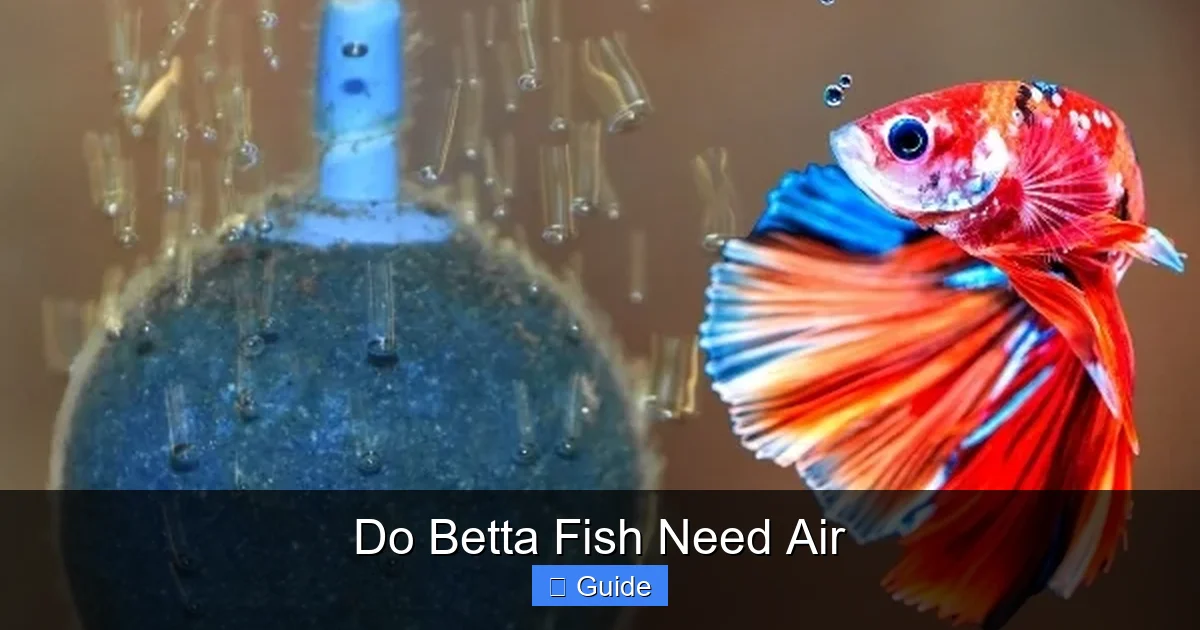
An air stone or bubble wall oxygenates the water by creating surface turbulence and tiny bubbles that exchange gases. This is fantastic for overall water health and should be used in conjunction with a filter. However, it does not change the fact that a betta must physically gulp atmospheric air from the surface. If you have a perfectly oxygenated tank but you have a solid lid or a thick layer of floating plants blocking the surface, your betta will still suffocate. The labyrinth organ requires a direct interface with the air, not just oxygen-rich water. Think of it like this: an air stone improves the water’s “breathability,” but the betta still needs to come up for its “snorkel breath.”
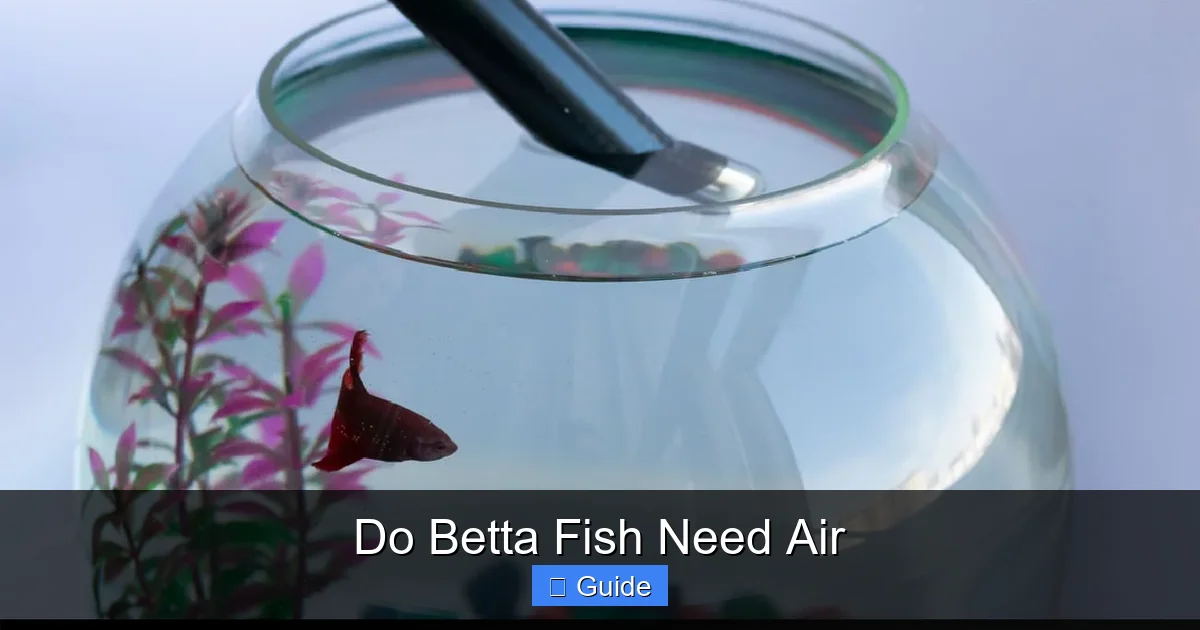
The “Betta Bowl” is Inherently Flawed
The classic decorative betta bowl has multiple fatal flaws:
- It’s too small to cycle, leading to toxic ammonia/nitrite spikes that destroy gill function.
- It has almost no surface agitation, so minimal oxygen enters the water.
- The opening is often narrow, making surface access difficult and stressful.
- It’s impossible to heat properly and maintain stable temperature.
- There is no room for a filter.
Even if you change the water daily, you are not solving the core issues of stability, oxygenation, and surface access. It is a slow death, not a suitable home.
Advanced Considerations: Oxygen, Stress, and Long-Term Health
Chronic, mild oxygen stress or the constant struggle to breathe air has profound effects on a betta’s immune system and longevity. A fish that is perpetually compensating for poor gill function is a fish with weakened defenses. It becomes far more susceptible to common diseases like fin rot, ich, and velvet. Providing optimal conditions—clean, warm, well-oxygenated water with free surface access—allows the betta to use its labyrinth organ efficiently and keep its gills healthy. This translates to brighter colors, longer, more flowing fins, active exploration, and a lifespan that can reach 3-5 years instead of a few miserable months.
Furthermore, tank mates can play a role. While bettas are often kept alone (and for good reason, given their aggression), if you do add peaceful, top-dwelling fish like certain tetras or danios, you must ensure they are not competing aggressively for surface space. The betta’s territory should always include a calm, clear patch of surface it can claim as its own breathing zone.
Conclusion: It’s All About Respecting the Biology
The question “do betta fish need air?” is the gateway question to understanding everything about their care. The answer, rooted in their fascinating labyrinth organ, dictates every major decision: the rejection of the bowl, the insistence on a filtered and heated tank of adequate size, and the absolute mandate for unimpeded surface access. A betta is not a low-maintenance decoration; it is a living, breathing animal with specific physiological needs derived from its wild ancestry. By providing an environment that respects its need to breathe atmospheric air—while also maintaining pristine water quality—you move from being a pet owner to a caregiver. You give that betta not just life, but the opportunity for a vibrant, active, and beautiful existence. That starts with ensuring it can always take that simple, vital gulp of air from the surface.
Frequently Asked Questions
Do betta fish need an air stone or bubbler?
An air stone is highly beneficial as it oxygenates the water and creates surface agitation, but it is not a substitute for the betta’s need to gulp air directly from the surface. You must still provide free, open surface access. The air stone improves overall water health, which supports gill function.
Can a betta fish drown?
No, betta fish cannot “drown” in the way humans do because they have gills and a labyrinth organ to extract oxygen from water and air. However, they can suffocate if they are unable to reach the water’s surface to gulp atmospheric air (e.g., under a sealed lid or thick surface cover) or if their gills are severely damaged by poor water quality (high ammonia/nitrite).
Why is my betta fish gasping at the surface so much?
>Frequent, frantic gasping is a sign of severe distress. The primary causes are: 1) **Poor water quality** (high ammonia/nitrite poisoning gills), 2) **Water that is too warm** (holds less oxygen), or 3) **Blocked surface access**. Immediately test your water parameters, check your temperature, and ensure the entire surface is open.
Is it okay to keep a betta in a vase with a plant on top?
Absolutely not. This is a fatal setup. The narrow neck restricts surface access, making it nearly impossible for the betta to gulp air comfortably. The vase is too small to cycle, leading to toxic water. The plant roots do not clean the water sufficiently. This setup guarantees a slow, stressful death from suffocation and poisoning.
Does a filter remove oxygen from the water?
A properly functioning filter adds oxygen to the water by creating surface agitation, which is where gas exchange happens. The only concern is if the filter’s flow is too strong, creating a stressful current for the betta. The solution is to adjust the flow or add a spray bar/diffuser to soften the output while maintaining surface movement.
My betta tank has a lid. How can I ensure it gets air?
If your tank has a lid (often necessary to prevent jumps), you must create a permanent, unobstructed gap. Leave the front or side sections of the lid completely off, or cut a slot that runs the length of the tank above the water surface. Ensure no cords, heaters, or decorations are blocking this breathing gap. The betta must be able to swim to any part of the surface and gulp air freely.