What Can Go in a Tank with a Betta Fish
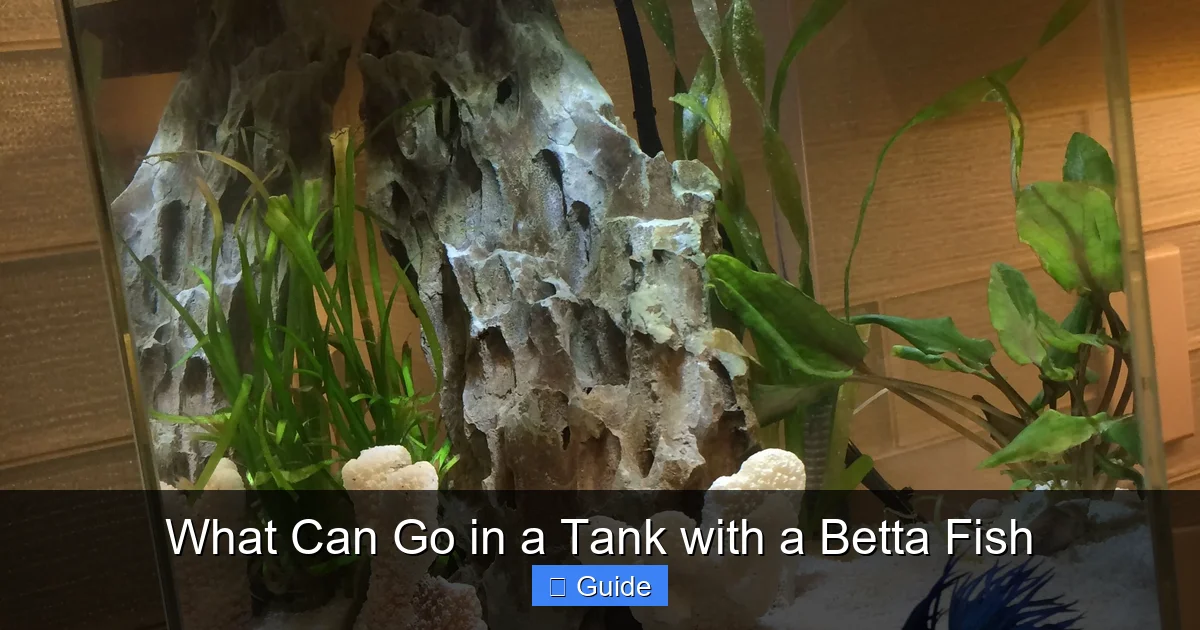
Betta fish, often mistakenly kept alone in tiny bowls, can actually thrive in a properly planted community tank with the right companions. Success depends entirely on understanding your betta’s individual personality, providing a tank of at least 5 gallons with abundant hiding spots, and selecting peaceful, slow-moving species that won’t nip at your betta’s flowing fins. Thorough research, proper tank cycling, and careful observation are non-negotiable steps to creating a safe and stimulating environment for your betta and its potential tank mates.
So, you’ve got that stunning betta fish, with its flowing fins and bold personality, swimming proudly in its new home. Maybe it’s in a beautifully decorated 5-gallon tank, or perhaps—and this is a common starting point—it’s still in a small, lonely bowl on your desk. Wherever your betta currently resides, a question inevitably bubbles up: what can go in a tank with a betta fish? Can it have friends? Will it kill everything else? The answer, like most things in the fish-keeping world, is a wonderfully nuanced “it depends.” This guide will dive deep into the fascinating (and sometimes risky) world of betta tank mates. We’ll bust the myth that bettas must live in isolation, explore the perfect tank setup that makes community living possible, meet a cast of compatible creatures, and sternly warn against the species that could turn your peaceful aquarium into a war zone. By the end, you’ll know exactly how to build a thriving, harmonious underwater world for your betta.
First, let’s understand our star. The betta fish, or Betta splendens, earned the nickname “Siamese fighting fish” for a reason. Male bettas were historically bred for aggression, pitted against one another in matches that often ended in death. This legacy haunts their reputation today. However, in the wild, bettas are relatively solitary creatures that command a small territory of plants and debris, only aggressively defending it from other male bettas. They are curious, intelligent, and can become bored and listless without stimulation. Keeping a betta in a bare, tiny tank is not just cruel; it’s a wasted opportunity to see its personality flourish. The key to successful tank mates lies in respecting that territorial instinct while providing an environment so rich with space and hiding places that aggression has no reason to ignite.
Key Takeaways
- Tank Size is Paramount: A minimum of 5 gallons is essential for any community tank with a betta; larger is always better for reducing territorial aggression.
- Water Parameters Must Be Stable: Bettas require warm (78-80°F), clean water with a neutral pH. Any tank mates must thrive in these same tropical conditions.
- Hiding Spots Are Mandatory: Dense plants, caves, and decorations provide critical escape routes for both the betta and its tank mates, breaking line-of-sight and reducing stress.
- Choose Peaceful, Non-Fin-Nipping Species: Ideal tank mates are slow-moving, have short fins, and occupy different tank levels (e.g., bottom-dwelling Corydoras, mid-level small rasboras).
- Invertebrates Can Be Great Companions: Shrimp (like Ghost or Amano) and snails (Nerite, Mystery) are often excellent additions, though some bettas may see them as food.
- Introduce Tank Mates AFTER the Betta: Always establish the betta’s territory first, then add companions later to prevent the betta from claiming the entire tank.
- Be Prepared to Separate: Have a backup plan (a “hospital” tank) ready. If aggression persists after a week, you must rehome one of the fish for their safety.
📑 Table of Contents
- Understanding the Betta: Temperament, Territory, and True Needs
- The Foundation: Tank Setup Essentials for a Community
- Suitable Tank Mates: The Peaceful Community Cast
- Plants, Decor, and Hiding Spots: The Architecture of Harmony
- Species to Avoid: The Dangerous and the Deadly
- Maintenance and Monitoring: The Ongoing Commitment
- Conclusion: Patience, Observation, and the Reward of a Thriving Ecosystem
Understanding the Betta: Temperament, Territory, and True Needs
Before we even think about other fish, we must become betta behavior experts. Your betta is not a generic “aggressive fish.” It’s an individual with its own mood, history, and personality. One betta might ignore a school of neon tetras, while another might relentlessly chase them. Your job is to read the signs and set the stage for success.
The Myth of the Solitary Betta
The pervasive idea that bettas must live alone comes from a misunderstanding of their aggression. Their aggression is primarily directed at other male bettas and, to a lesser extent, fish that resemble them—long, flowing fins and bright colors can trigger a territorial response. They are not inherently “mean” towards all other species. In fact, many bettas live happily in well-planned community tanks for years. The solitary tank is a safe default, but it is not the only path. A stimulating community can reduce boredom, encourage natural foraging behaviors, and even make your betta more active and colorful as it patrols its enriched domain.
Reading Betta Body Language: The Key to Harmony
Your betta is constantly communicating. Learning this language is the most important skill you’ll develop. A relaxed betta holds its fins open but not flared, swims calmly, and may even curiously investigate a new tank mate. Warning signs include: flaring gills (making its head look larger), fin flaring (especially the operculum, the bony flap covering the gills), chasing another fish at high speed, ramming into other fish, and laying in wait hidden near a plant, ready to ambush. Occasional flaring at its own reflection is normal and not necessarily aggression towards tank mates. Consistent, targeted flaring and chasing, however, is a red flag that the tank mate is in danger and needs to be removed.
The Foundation: Tank Setup Essentials for a Community
You cannot put a compatible tank mate into a hostile environment and expect peace. The tank itself is your first and most powerful tool for preventing conflict. A poorly set up tank guarantees stress and aggression, regardless of the species you choose.
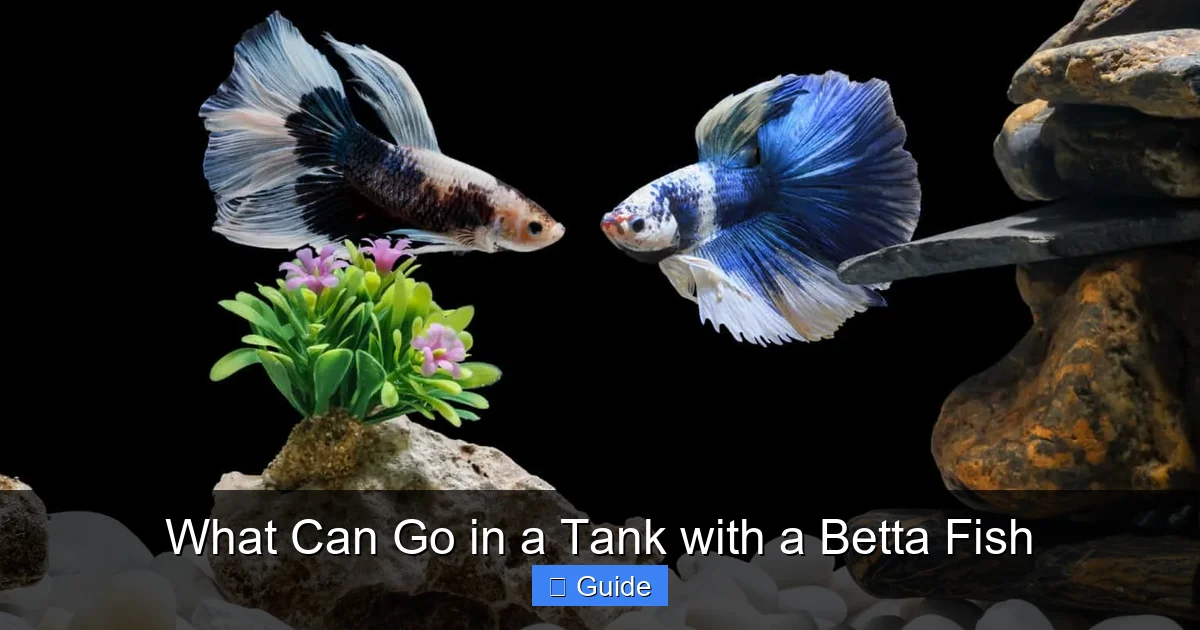
Visual guide about What Can Go in a Tank with a Betta Fish
Image source: bettasource.com
Tank Size: The Non-Negotiable Rule
Let’s be crystal clear: a betta should never be kept in a bowl or a vase. The absolute minimum for any betta, alone or with companions, is a 5-gallon (20-liter) tank. This is not generous; it’s the bare baseline for a healthy, stable cycle and adequate swimming space. For a community, bigger is exponentially better. A 10-gallon (40-liter) tank provides a much larger territory to divide, making it easier for a betta to feel it has its own space and for other fish to avoid it. In a 5-gallon, you might successfully keep your betta with a small snail or shrimp. In a 10-20 gallon, you open up a world of peaceful small fish options. The volume dilutes aggression and provides more horizontal and vertical space to create distinct zones.
Water Parameters: The Unseen Peacekeeper
Stable water conditions are the bedrock of fish health and temperament. A stressed betta from poor water quality is a grumpy, aggressive betta. Bettas are tropical fish, requiring:
- Temperature: 78-80°F (25.5-26.5°C). Use a reliable aquarium heater. Cold water slows metabolism and suppresses the immune system, making fish irritable.
- pH: 7.0-7.5 is ideal, though they can tolerate slightly outside this range if stable.
- Ammonia & Nitrite: Must be 0 ppm. Any detectable ammonia is toxic and will cause aggression and illness.
- Nitrate: Should be kept below 20 ppm with regular water changes.
Any tank mate you consider must have identical temperature and pH requirements. You cannot mix tropical bettas with cold-water goldfish or mountain minnows. The tank must be fully cycled (established nitrogen cycle) for at least 4-6 weeks before adding any fish. This process establishes beneficial bacteria that process toxic fish waste. Adding fish to an uncycled tank is a recipe for disaster, commonly called “new tank syndrome,” and will almost certainly lead to death and/or extreme aggression from toxic water stress.
Filtration, Heating, and the Importance of Flow
Bettas originate from shallow, stagnant rice paddies. They are not strong swimmers and hate strong currents. A filter is essential for biological filtration (the cycle) and mechanical cleaning, but you must choose one with an adjustable, gentle flow. Sponge filters are a fantastic, quiet option that provides excellent biological filtration with virtually no current. If using a hang-on-back (HOB) or canister filter, baffle the output with a spray bar, sponge, or by directing it towards the tank glass. The water should be still enough that your betta can rest at the surface without being pushed around. A heater with an external thermostat is a must for maintaining that crucial tropical temperature.
Creating a Complex Landscape: The Art of Aquascaping for Peace
This is where you win the territorial game. Your goal is to break the tank into a series of small, interconnected territories. If a betta can’t see another fish from across the tank, it can’t chase it. Use a combination of:
- Dense Planting: Live plants are best (Java Fern, Anubias, Cryptocorynes, floating plants like Frogbit or Dwarf Water Lettuce). They provide oxygen, absorb nitrates, and create a natural, complex environment. If using silk or plastic plants, ensure they have no sharp edges that can tear delicate betta fins.
- Hardscape: Driftwood, lava rock, and smooth river stones create caves, overhangs, and tunnels.
- Vertical Layers: Use tall plants in the back, medium plants in the middle, and foreground carpets. This creates distinct zones—top, middle, and bottom—allowing different species to occupy different “floors” of the apartment building.
- Multiple Hiding Spots: Provide at least one cave or dense thicket for every fish in the tank, plus extras. A betta needs a place to retreat. So do its tank mates.
A well-aquascaped tank is a peaceful tank. A bare tank with a single betta and a few other fish is a stress factory.
Suitable Tank Mates: The Peaceful Community Cast
Now for the fun part. With the perfect stage set, we can introduce actors. The golden rules for selection are: tropical, peaceful, small, and non-finning-nipping. The fish should be too busy with its own business to bother the betta, and its body type shouldn’t trigger the betta’s instinct to attack a rival. Here are the most reliable and successful categories of tank mates, from the safest to the slightly more conditional.
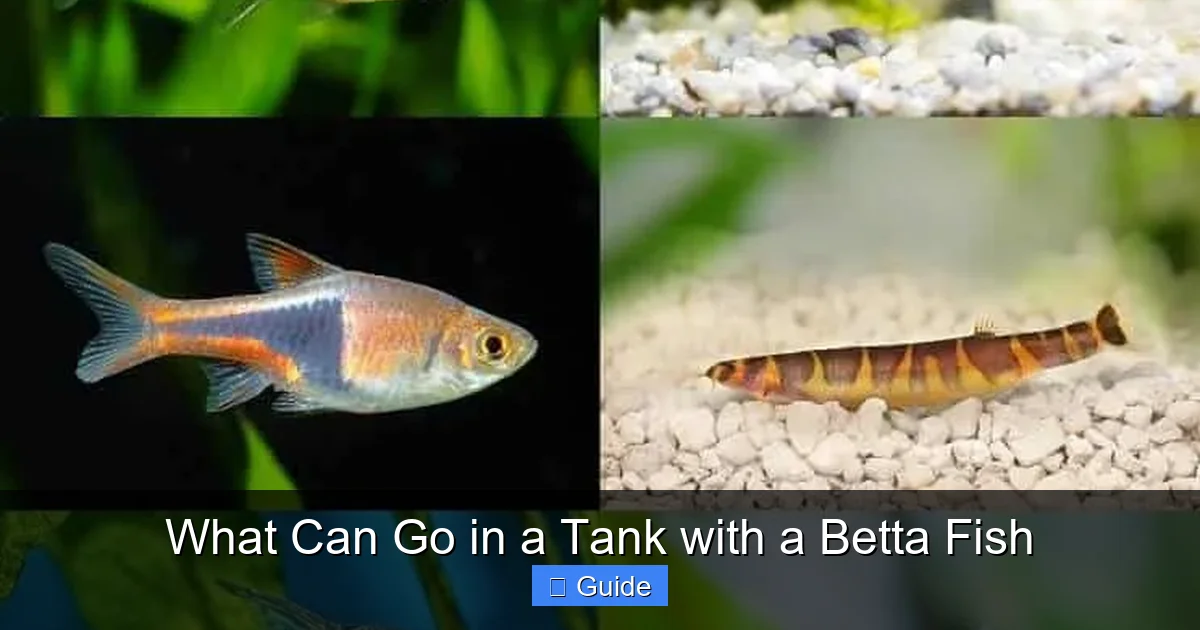
Visual guide about What Can Go in a Tank with a Betta Fish
Image source: fishkeepingworld.com
1. The Invertebrate All-Stars: Shrimp and Snails
Invertebrates are often the safest and easiest first tank mates for a betta. They occupy a different biological niche, move differently, and are generally ignored—though this is not a guarantee.
- Ghost Shrimp, Amano Shrimp, Bamboo Shrimp: These are excellent choices. Ghost shrimp are transparent, small, and prolific breeders. Amano shrimp are larger, great algae eaters, and are less likely to be seen as food due to their size and quick movements. Bamboo shrimp are filter feeders with a unique appearance. Important: A very curious or hungry betta may still try to eat a small shrimp, especially a juvenile. Start with larger shrimp and observe closely.
- Nerite Snails, Ramshorn Snails, Mystery (Apple) Snails: Snails are fantastic algae controllers and utterly harmless to bettas. Nerite snails are the best choice as they do not breed in freshwater (no snail explosion). Mystery snails are large, peaceful, and have fascinating behavior. Their only drawback is they produce a lot of waste, so ensure your filtration is adequate. Bettas may peck at a snail’s antennae out of curiosity, but the shell provides perfect protection.
2. The Peaceful Schoolers: Small, Short-Finned Tetras and Rasboras
This is where we add fish. The key is choosing species that are active, schooling fish that are not brightly colored and have short fins. They should be kept in groups of 6-10 to feel secure and disperse the betta’s attention.
- Neon Tetras & Cardinal Tetras: A classic community fish. Their blue/red stripe is vibrant, but their tiny, slim bodies and rapid, mid-level swimming usually make them uninteresting to bettas. They must be in a proper school. Avoid in a very small (5-gallon) tank.
- Ember Tetras: Perfect for a betta tank. They are tiny (under 1 inch), orange-red (a color that often doesn’t trigger bettas as much as blue/green), and form tight, active schools in the mid-to-top levels.
- Harlequin Rasboras & Lambchop Rasboras: These are superb choices. They are hardy, peaceful, have a triangular shape (not betta-like), and prefer the upper half of the tank. Their orange/pink coloration is often acceptable to bettas.
- Black Neon Tetras: Their dark, striped pattern makes them less of a visual target for a betta than a bright neon. They are active, hardy schoolers.
Critical Tip: Always add the school of tetras/rasboras before the betta, or at the very least, on the same day. If the betta is introduced first and claims the entire tank as its territory, it will see the new school as an invading army. Adding the school first allows them to establish their own territory and group cohesion, making them more confident and less likely to be bullied.
3. The Bottom Dwellers: Corydoras Catfish and Kuhli Loaches
These fish occupy the completely different bottom zone of the tank, a perfect spatial division. They are social, peaceful, and have armored plates, making them unappealing targets.
- Corydoras Catfish (“Cories”): The quintessential community bottom feeder. They are adorable, social, and must be kept in groups of 5 or more. They sift through sand or gravel for food. Species like the Pygmy Cory (for smaller tanks), Bronze Cory, or Peppered Cory are all great. Their whiskered, armored appearance does not resemble a betta.
- Kuhli Loaches: These eel-like, peaceful loaches are fascinating to watch as they slither through the substrate and decor. They are nocturnal but will come out during feedings. They need a soft substrate and plenty of hiding places. They are an excellent, unique addition to a larger betta community.
4. The Special Case: The Betta Sorority
A common question is: “Can I keep multiple female bettas together?” The answer is yes, but with extreme caution and specific conditions. This is called a betta sorority. It is not for beginners and should only be attempted by experienced aquarists in a large, heavily planted tank.
- Tank Size: Minimum 20 gallons (75 liters), but 30+ gallons is strongly recommended.
- Group Size: Start with a group of 5-7 young females. Keeping a small odd number (3, 5) often leads to bullying of the minority. A larger group helps disperse aggression.
- Setup: Must be EXTREMELY heavily planted with dozens of hiding spots and visual barriers. Every female needs multiple escape routes.
- Process: All females should be introduced simultaneously to a fully cycled, mature tank. Observe them constantly for the first 48 hours. Minor squabbles and establishing a pecking order are normal, but persistent chasing, fin-nipping, or hiding that leads to one fish being barred from food is a sign of failure. Have a backup plan to separate individuals immediately.
Given the complexity and risk, a sorority is generally not recommended for someone asking “what can go in a tank with a betta fish.” It’s a specialized project in itself.
Plants, Decor, and Hiding Spots: The Architecture of Harmony
We’ve touched on this, but it bears its own section. Your aquascape is not just decoration; it’s the behavioral infrastructure of your tank. It directly determines whether your betta and its companions can coexist.
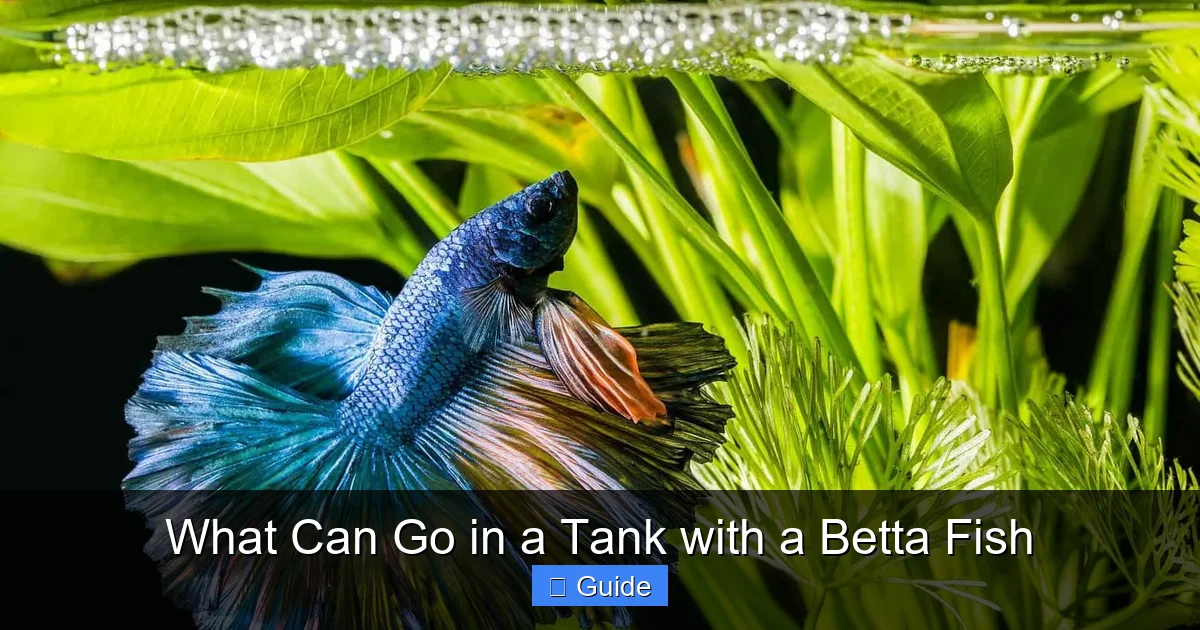
Visual guide about What Can Go in a Tank with a Betta Fish
Image source: fishkeepingworld.com
Live Plants vs. Artificial: The Clear Winner
While high-quality silk plants are acceptable, live plants are superior for a community betta tank. They improve water quality by absorbing ammonia, nitrates, and phosphates. They produce oxygen during photosynthesis. They provide a more natural texture and complexity. Their growth is unpredictable, creating ever-changing hiding spots. For beginners, start with nearly indestructible plants: Java Fern, Anubias, Java Moss, and Marimo Moss Balls. These can be tied to driftwood or rocks. Floating plants like Salvinia or Duckweed (use sparingly) are fantastic for creating a canopy at the water’s surface, a zone bettas and many other fish love. They diffuse light and provide immense security.
Safe Decor: Smooth Edges Only
Bettas have long, delicate fins that can be easily shredded by rough textures. Any decor you add—rocks, driftwood, ornaments—must be smoothed. Run your finger over every surface. There should be no sharp points, rough edges, or protruding screw heads. Aquarium-safe silicone sealant can be used to file down sharp spots on rocks. Avoid plastic decorations with intricate, thin parts that can trap fins. Natural driftwood (soaked to leach tannins, which are actually beneficial) and smooth river stones are excellent. Provide dedicated betta “hammocks” or resting spots near the surface—broad leaves of Anubias or a specially designed suction-cup leaf.
Creating Vertical and Horizontal Layers
Think of your tank in 3D. The top 2 inches are the betta’s breathing and resting zone (they have a labyrinth organ to take in air). The middle is the swimming zone for most community fish. The bottom is for bottom dwellers. Use this to your advantage. Tall, stem plants (like Rotala or Ludwigia) reach the top. Mid-height plants (Cryptocorynes) fill the middle. A carpet of Dwarf Hairgrass or Monte Carlo covers the foreground. This creates distinct “neighborhoods.” Place a large, smooth rock or piece of driftwood in the center to act as a visual barrier. The goal is to make it impossible for the betta to see a clear path from one side of the tank to the other without obstruction.
Species to Avoid: The Dangerous and the Deadly
Just as important as knowing who can stay is knowing who must never enter the tank. These species are guaranteed to cause stress, injury, or death.
Aggressive and Territorial Fish
These fish will fight the betta for dominance or simply bully it relentlessly.
- Other Bettas: Never house two male bettas together. Female sororities are a high-risk exception, not the rule.
- Other Anabantoids: Fish like Gouramis (Dwarf, Pearl, Kissing) are closely related to bettas and have similar territorial, labyrinthine behaviors. They are a terrible match and will almost certainly fight.
- Some Cichlids: While some dwarf cichlids (like Apistogramma) can work in very large, complex setups with a placid betta, most cichlids are far too aggressive and will either kill the betta or be killed by it. Avoid entirely unless you are an expert.
The Fin-Nippers: A Betta’s Worst Nightmare
These fish have a genetic instinct to bite at long, flowing fins. They will turn your beautiful betta into a ragged, stressed, and susceptible-to-infection nightmare in a matter of hours.
- Tiger Barbs: The classic fin-nipper. Their reputation is well-earned. Never.
- Serpae Tetras: Another notorious nipper, often called “serpae tetras of death” in betta forums for a reason.
- Some Rasboras: While many are safe, species like the Harlequin Rasbora are usually fine, but the larger Scissortail Rasbora can be boisterous and nippy.
- Some Danios: Zebra Danios and especially Leopard Danios are fast, active, and known to harass slower fish with long fins.
A good rule of thumb: if the fish is known as a “fin-nipper” in any community tank context, it is 100% incompatible with a betta.
Large, Boisterous, or Fast-Moving Fish
Even if not aggressive, these fish can stress a betta through sheer activity or by outcompeting it for food.
- Goldfish: The ultimate mismatch. Goldfish are cold-water fish (thrive at 68-74°F), produce massive amounts of waste, and will grow huge. They are also messy, slow-moving nippers that will outcompete a tropical betta for food and foul the water. Completely incompatible.
- Most “Large” Tetras: Like Silver Tips or Buenos Aires Tetras. They grow larger, are more boisterous, and can intimidate a betta.
- Fast Swimmers: Some rasboras and danios (mentioned above) are so fast and active they can stress a more laid-back betta just by their constant motion, making the betta feel perpetually chased.
Maintenance and Monitoring: The Ongoing Commitment
You’ve chosen your tank, your betta, and its companions. You’ve aquascaped a paradise. The work is not over. A community tank requires diligent, consistent care to maintain the delicate balance you’ve worked so hard to achieve.
The Unwavering Water Change Routine
Test your water parameters weekly with a liquid test kit (API Freshwater Master Test Kit is the gold standard). Perform regular water changes of 25-50% weekly. This dilutes nitrates, removes waste, and replenishes minerals. Use a gravel vacuum to clean the substrate, especially in areas with heavy feeding or waste accumulation. In a community tank, the bioload is higher than a solo betta, so water changes are even more critical. Never skip them. Clean, stable water is the single biggest factor in fish health and peaceful behavior.
The Daily and Weekly Observation Ritual
Spend 10-15 minutes each day just watching your tank. First thing in the morning, before feeding, is a great time. Watch how the fish interact. Is your betta flaring at a specific shrimp? Is a tetra constantly hiding? Is a corydoras being pushed away from the food? Early detection of minor issues allows you to intervene before it becomes a major problem. Note any physical changes: torn fins, white spots, lethargy, or loss of appetite. These are early warning signs of disease or stress that need immediate attention.
The Quarantine Protocol: Your Secret Weapon
NEVER add a new fish or invertebrate directly from the pet store to your main display tank. Always use a separate quarantine tank (a simple 10-gallon setup with a filter and heater). Observe all new arrivals for 2-4 weeks for signs of disease (ich, velvet, dropsy, etc.). Many diseases have an incubation period and will only show up under the stress of a new environment. Treating a disease in a quarantine tank is infinitely easier and cheaper than trying to save an entire community tank from an outbreak. This step separates experienced, successful aquarists from the constantly-firefighting hobbyist.
Feeding: A Peaceful Meal Strategy
In a community, feeding time can be a chaotic race. Bettas are surface feeders and can be slow, deliberate eaters. Faster mid-level swimmers might snatch all the food before the betta gets any. Use these strategies:
- Target Feed: Use a turkey baster or pipette to squirt food directly in front of your betta’s face.
- Multiple Locations: sprinkle food in different zones of the tank—some flakes on top for the betta, some sinking pellets for the cories, some algae wafers for the shrimp.
- Betta-Specific Food First: Feed your betta its high-quality pellet or frozen food first, before adding general community food. This ensures it gets its fill.
- Observe: Make sure every creature is eating. A betta that is consistently outcompeted will become weak, stressed, and more aggressive.
Conclusion: Patience, Observation, and the Reward of a Thriving Ecosystem
The question “what can go in a tank with a betta fish” does not have a single, simple list answer. The true answer is a process: a process of research, of proper setup, of careful selection, and of vigilant observation. A betta is not a disposable ornament; it is a sentient being with a complex personality. By providing a spacious, heavily planted, and stable tropical environment, you unlock the potential for your betta to be the majestic, curious centerpiece of a vibrant community. Start small—perhaps just a snail or a few shrimp in a 5-gallon. If that goes well for a month, consider adding a school of Ember Tetras to a 10-gallon. Move at the pace of your specific betta. The reward is a dynamic, living piece of art where your betta patrols its jungle domain, schools of tiny tetras flash through the mid-water, and busy shrimp clean the leaves—all coexisting in a balance you carefully cultivated. That is the true joy of the aquarist. Now, armed with this knowledge, you can build not just a tank, but a thriving underwater world.
Frequently Asked Questions
Can I keep two male bettas together?
No. Two male bettas will almost certainly fight to the death. They are fiercely territorial towards their own species. A “betta sorority” (group of females) is possible in a very large, heavily planted tank, but it is a high-risk project for advanced hobbyists only, not a beginner option.
My betta flares at its new tank mate constantly. What should I do?
Constant flaring and chasing is a sign of severe stress and aggression. First, ensure your tank is large enough (5+ gallons) and has abundant hiding spots and visual barriers. If the behavior persists for more than 24-48 hours after introduction, you must separate the fish. Have a backup “hospital” tank ready. Forcing them to live together will lead to injury, stress, and likely death for the tank mate.
Can bettas live with goldfish?
Absolutely not. This is a dangerous and incompatible pairing. Goldfish are cold-water fish (thrive in 68-74°F) while bettas need tropical temperatures (78-80°F). Goldfish produce massive amounts of waste, quickly polluting the water and creating toxic ammonia that will kill a betta. Goldfish are also slow-moving fin-nippers. They belong in completely different tank setups.
Are shrimp always safe with bettas?
Shrimp are the safest bet, but not a 100% guarantee. Most bettas will ignore adult shrimp like Amano or Ghost shrimp, seeing them as tank cleaners. However, a very curious, predatory, or hungry betta may eat smaller shrimp, like Cherry shrimp, especially if they are young or molting (soft-shelled). Always introduce shrimp to a well-fed, established betta in a heavily planted tank and monitor closely for the first few days.
How many tank mates can I put with my betta?
The number depends entirely on your tank size and the species. In a 5-gallon tank, you might only add a small group of 3-4 Pygmy Corydoras or a few snails/shrimp. In a 10-gallon, you could have a school of 6-8 Ember Tetras + a small group of 3-4 Pygmy Corys. The golden rule is to never overcrowd. Use an online aquarium stocking calculator as a starting guide, but always prioritize space, filtration, and hiding spots over maximum numbers.
Can I keep a betta alone forever?
Yes. A single betta in a properly sized (5+ gallon), heated, filtered, and enriched tank with plants and decorations is a perfectly acceptable and humane setup. Many bettas are too aggressive for any tank mate. The key is providing mental and physical stimulation through a complex environment, not necessarily other fish. A lone betta with a rich habitat can be a happy, healthy, and interactive pet.