What Can You Put in a Betta Fish Tank
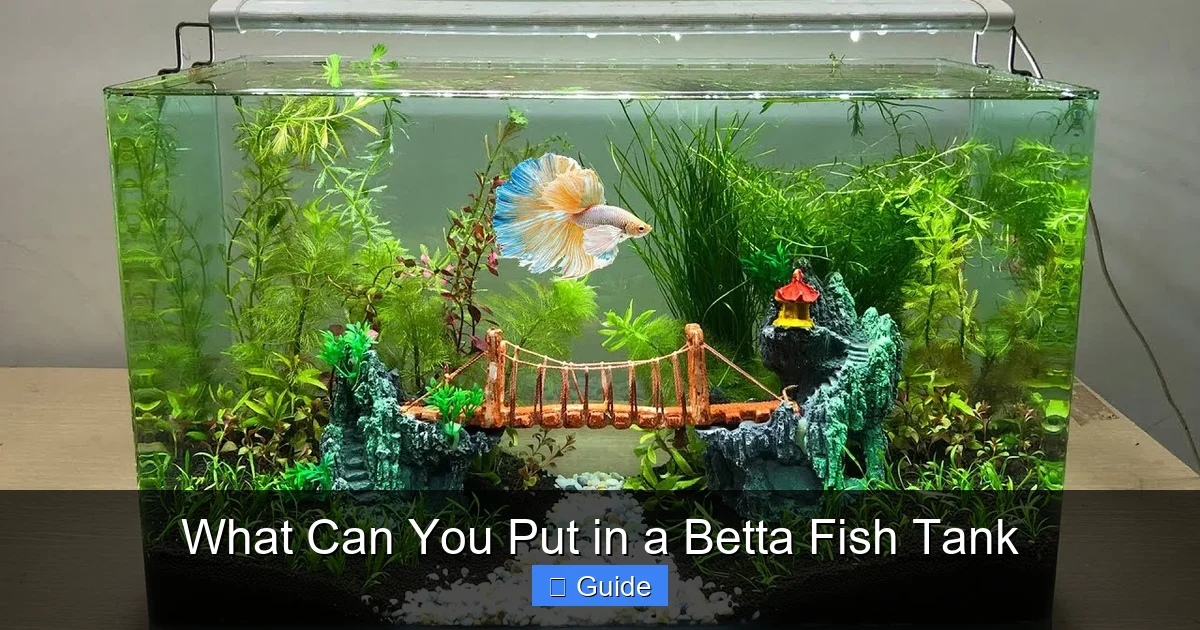
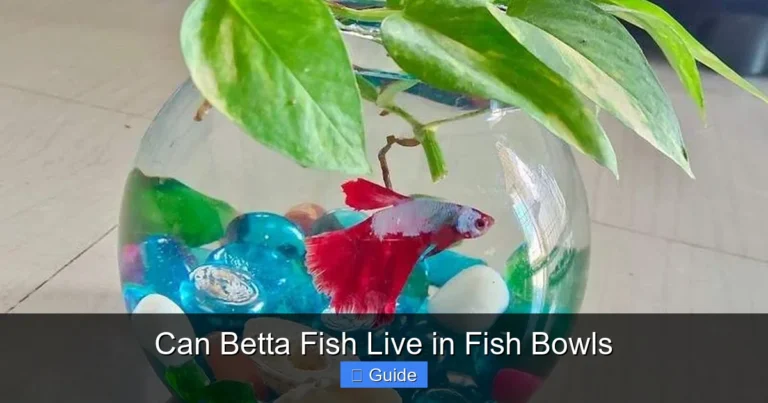
Contrary to popular belief, a Betta fish needs more than a small vase. To create a thriving environment, you must provide a properly sized heated tank (minimum 5 gallons), a soft substrate, and plenty of hiding spots using live or silk plants and smooth decorations. Avoid sharp edges, harmful materials, and incompatible tank mates. The right setup reduces stress, prevents injury, and allows your Betta’s vibrant personality to truly shine.
Key Takeaways
- Tank Size is Non-Negotiable: A minimum of 5 gallons is essential for a single Betta’s health, stability, and mental well-being. Smaller volumes lead to rapid water quality decline and chronic stress.
- Substrate Matters: Use soft, fine-grained sand or smooth, rounded gravel. Avoid sharp, jagged gravel that can tear a Betta’s delicate fins and barbels.
- Plants are Essential, Not Decorative: Live or silk plants provide crucial hiding spots, reduce stress, and mimic a natural environment. Avoid plastic plants with stiff, sharp edges.
- Decorations Must be Smooth: All ornaments, caves, and driftwood must have no rough spots, sharp tips, or small holes a Betta could get stuck in. Sand down any rough edges.
- Water Parameters & Equipment are Foundational: A gentle filter and a reliable heater (maintaining 78-80°F/25.5-26.5°C) are mandatory. A water test kit is as important as the tank itself.
- Beware of the “Naked Tank”:strong> An empty tank causes boredom and stress. Always provide visual barriers, floating plants, and a variety of levels for your Betta to explore.
- Compatibility is Complex: Most “tank mates” are risky. If you must add others, choose peaceful, tropical, non-fin-nipping species in a properly sized, heavily planted community tank.
📑 Table of Contents
- Introduction: Moving Beyond the “Betta in a Bowl” Myth
- Section 1: The Foundational Canvas – Tank, Water, and Equipment
- Section 2: The Ground Beneath – Choosing the Right Substrate
- Section 3: Vital Vegetation – Live vs. Silk vs. Plastic Plants
- Section 4: Architecture & Hideaways – Safe Decorations and Structures
- Section 5: The Inhabitants – Can You Add Tank Mates?
- Section 6: The Finishing Touches – Lighting, Cover, and Maintenance Tools
- Conclusion: Building a Home, Not Just a Tank
Introduction: Moving Beyond the “Betta in a Bowl” Myth
For decades, the image of a lonely Betta fish, or Siamese fighting fish, trapped in a tiny glass bowl or vase has been a tragic symbol of misunderstood pet care. The reality is profoundly different. The Betta splendens is a highly intelligent, curious, and territorial fish with complex needs. Creating a proper home for it isn’t about filling a container with random objects; it’s about thoughtfully curating an ecosystem that supports its physical health and stimulates its active mind. So, what can you put in a Betta fish tank? The answer is a carefully selected combination of equipment, substrate, decor, and life that transforms a simple aquarium into a thriving biome. This guide will walk you through every single item you should consider, why it matters, and how to choose the safest, most beneficial options for your aquatic companion.
Section 1: The Foundational Canvas – Tank, Water, and Equipment
Before you add a single pebble or plant, you must establish the stable, healthy environment that makes everything else possible. This is the “foundational canvas” of your Betta tank. The items in this section aren’t decorative; they are the literal life-support system.
Visual guide about What Can You Put in a Betta Fish Tank
Image source: sharksinfo.com
The Tank Itself: Size and Shape
The single most important “thing” you put in your Betta’s world is the water it lives in, and the container holding that water dictates everything. The long-held myth that Bettas can live in small, unfiltered bowls stems from their native habitat—shallow, stagnant rice paddies in Thailand. This is a critical misunderstanding. In the wild, these paddies are part of a vast, interconnected ecosystem with countless plants, hiding spots, and water volume that dilutes waste. A 1-gallon bowl is the equivalent of sealing a person in a bathroom with a flushing toilet.
- Minimum Size: The absolute, bare minimum for a healthy, stable Betta tank is 5 gallons (19 liters). This provides enough water volume to dilute ammonia and nitrites, creating a more stable environment where temperature and water chemistry fluctuate less dramatically. A 10-gallon (38 liters) tank is significantly better and is considered the sweet spot by most experienced Betta keepers.
- Tank Shape: Choose a standard rectangular tank over a tall, narrow one. Bettas are labyrinth fish that frequently swim to the surface to gulp air. A long tank provides more horizontal swimming space at all levels, which is more important than vertical height.
The Heater: Warmth is Not Optional
Bettas are tropical fish. Their immune system, metabolism, and digestion are all optimized for warm water. The ideal temperature range is 78-80°F (25.5-26.5°C). Anything below 76°F (24.4°C) for an extended period weakens their immune system, making them susceptible to diseases like dropsy and fin rot. An adjustable aquarium heater is not a luxury; it is a requirement. Use a small, submersible heater rated for your tank size (e.g., a 25-watt heater for a 5-gallon tank) and always use a separate thermometer to verify the temperature.
The Filter: Gentle but Effective
A filter is essential for cycling the tank (establishing beneficial bacteria that process waste) and keeping the water clear. However, Bettas have long, flowing fins and are not strong swimmers. A powerful filter current will exhaust them, stress them, and can even damage their fins. You need a filter with an adjustable flow rate that can be turned down to a gentle trickle.
- Sponge Filters: Excellent for Betta tanks. They provide superb biological filtration, create a very gentle flow (or none if the air pump is weak), and are affordable.
- Hang-On-Back (HOB) Filters: Many come with flow adjusters. Look for models with a “spray bar” or diffuser option that breaks the water flow into a gentle shower.
- Internal Power Filters: Can work if they have a low-flow setting and you can direct the output toward the tank glass or a plant to diffuse it.
Water Test Kit & Water Conditioner
You cannot see ammonia, nitrite, or nitrate. A liquid API Freshwater Master Test Kit is the only way to know your water is safe. Test weekly. Water conditioner (like Seachem Prime) is a non-negotiable additive for every water change. It instantly detoxifies chlorine, chloramines, and heavy metals found in tap water, which are fatal to fish.
Section 2: The Ground Beneath – Choosing the Right Substrate
The substrate (the material on the tank bottom) is more than just a visual base. It affects water chemistry, provides a rooting medium for plants, and must be safe for your Betta to rest on and explore. Betta fins and sensitive barbels (whiskers) can easily be snagged or torn on rough surfaces.
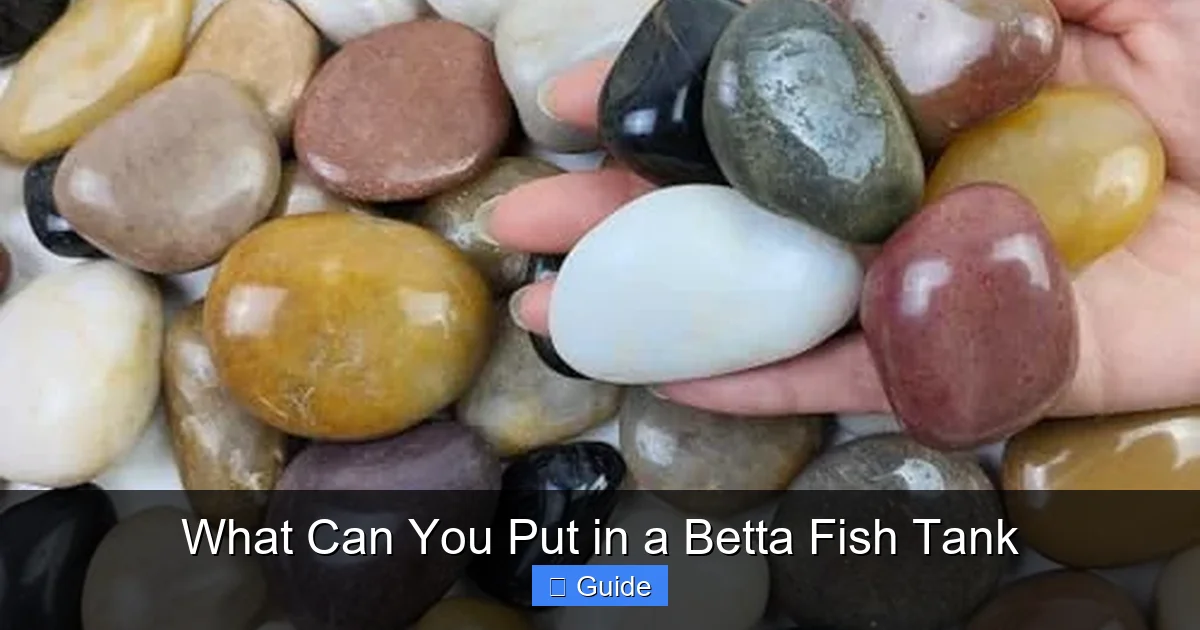
Visual guide about What Can You Put in a Betta Fish Tank
Image source: m.media-amazon.com
The Best Choices: Sand and Fine, Rounded Gravel
Sand: The ideal choice for many Betta keepers. Play sand (washed thoroughly) or aquarium-specific sand is soft, smooth, and easy to clean. It mimics the natural sandy bottoms of some Betta habitats. It can compact over time, so occasionally stir it gently during water changes.
Fine, Rounded Gravel: If you prefer gravel, choose a grade where the individual pieces are no larger than 2-3mm and have completely smooth, rounded edges. Run your fingers through it—it should feel like pebbles, not rough grit. Avoid any gravel marketed for “African Cichlids” or “freshwater community tanks” that is sharp and jagged.
What to AVOID:
- Sharp, Pointed Gravel: This is the #1 cause of fin snags and tears. It looks like small, angular stones.
- Large River Rocks: Unless perfectly smooth and rounded, they can create dangerous ledges and sharp edges. They also create huge open spaces underneath where waste can accumulate.
- Shells, Crushed Coral, or Aragonite: These substrates buffer the water, raising the pH and hardness. Bettas prefer slightly acidic to neutral water (pH 6.5-7.5). These substrates can make the water too alkaline and hard.
- Colored “Aquarium Gravel” from Big Box Stores: Often very sharp. If you must use it, thoroughly wash it and inspect every piece for sharp edges.
Section 3: Vital Vegetation – Live vs. Silk vs. Plastic Plants
Plants are the single most important decorative element for a Betta tank. They provide security, reduce stress, improve water quality, and break up sight lines to prevent boredom. The type of plant you choose is critical.
Live Plants: The Gold Standard
Live plants are the best choice. They absorb nitrates, produce oxygen, and offer complex, natural textures. For a Betta tank, focus on plants with broad leaves (Bettas like to rest on them) and fine, wispy foliage.
- Easy, Low-Light Plants: Anubias, Java Fern, Java Moss, Marimo Moss Balls, Amazon Swords (need root tabs), Cryptocorynes.
- Floating Plants: Frogbit, Water Sprite, Duckweed. These are fantastic. They diffuse light, provide a canopy for the Betta to swim under (making it feel secure), and their dangling roots are perfect for a Betta to build a bubble nest among.
- Important: Most easy plants don’t need substrate. Anubias and Java Fern should be attached to driftwood or rocks with fishing line or super glue gel (cyanoacrylate). Their rhizomes must be above the substrate or they will rot.
Silk Plants: The Safe Artificial Alternative
High-quality silk plants are an excellent, low-maintenance option. The leaves are soft and flexible, moving with the water current. Look for plants with broad leaves (like silk Amazon swords or Anubias replicas) and fine, wispy strands. The stems should be plastic-coated wire, not stiff plastic. Avoid any silk plant where the leaves feel stiff or brittle.
Plastic Plants: A Risky Choice
Most cheap plastic plants have stiff, sharp leaves and edges. They are notorious for causing fin rips and tears, especially on long-finned Betta varieties like Halfmoons. If you must use plastic, run a fresh pair of nylon stockings over every leaf. If it snags or tears the stocking, it will snag and tear your Betta’s fins. Avoid them entirely if possible.
Section 4: Architecture & Hideaways – Safe Decorations and Structures
Decorations provide visual interest, territorial markers, and essential hiding spots. A Betta without a place to retreat will be constantly stressed. The rule here is smoothness above all else.
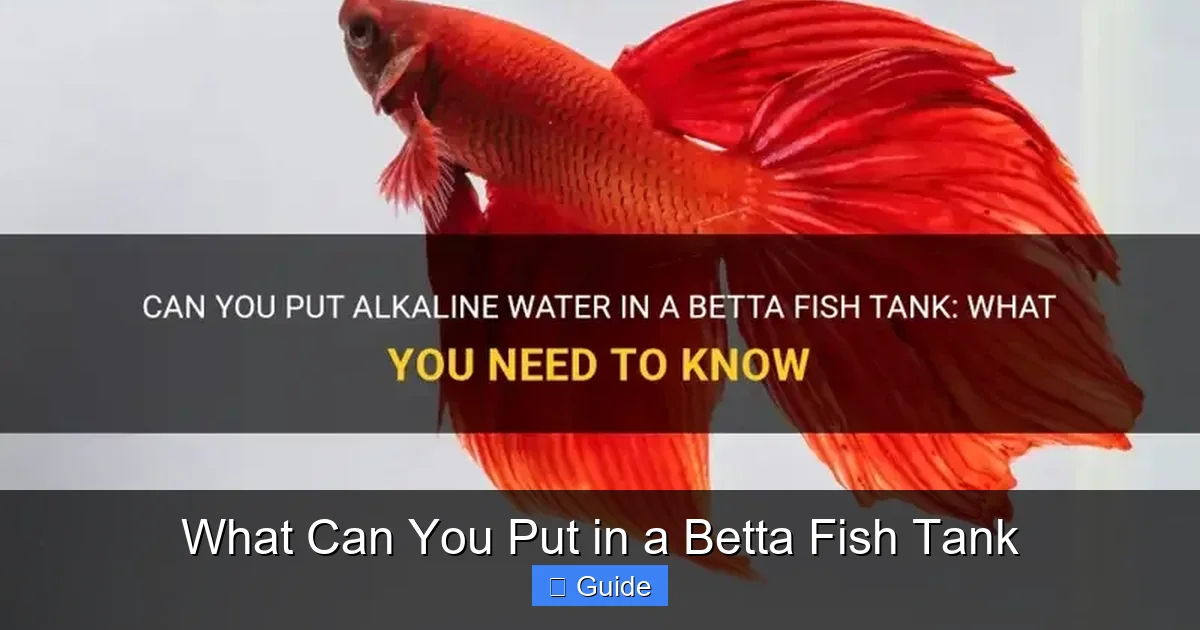
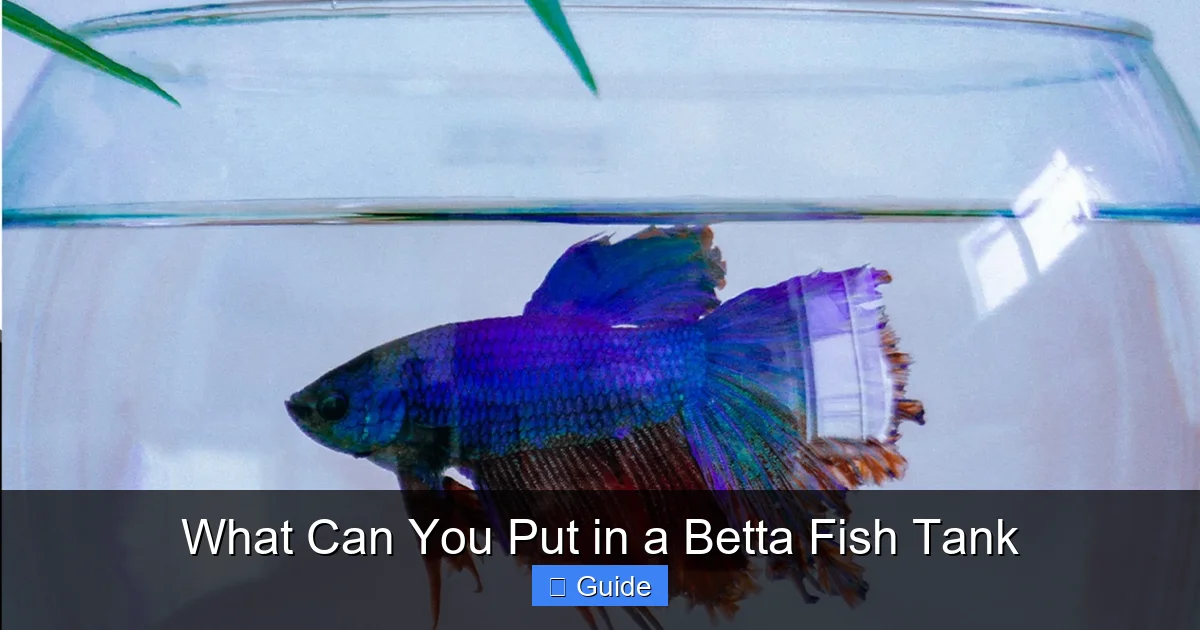
Visual guide about What Can You Put in a Betta Fish Tank
Image source: petshun.com
Natural & Safe Options
- Driftwood (Mopani, Malaysian, Spider Wood): Provides stunning natural architecture. Always pre-soak it (in a bucket of water for 1-4 weeks) to remove tannins that will darken the water. Inspect every surface for sharp points. Sand them down with coarse sandpaper if needed.
- Rocks (Lava Rock, Slate, River Rocks): Choose only rocks that are completely smooth. Test by rubbing them together—they should make a soft “clack,” not a gritty scrape. Avoid any rock that looks porous or crystalline (like quartz). Never use rocks from outdoors, as they may contain harmful minerals or alter pH.
- Ceramic and Resin Ornaments: Purchase only from reputable aquarium brands. Inspect inside caves and under overhangs for rough casting marks or sharp seams. Soak new items in water to ensure no dyes or toxins leach out.
- Coconut Shells: A fantastic, natural hide. Ensure they are clean, have no sharp edges from cutting, and have been properly prepared (soaked, boiled).
Essential Safety Checks for ANY Decoration
Before placing any item in the tank, perform this test:
- Visual Inspection: Use a bright light. Look for any sharp points, jagged edges, or rough textures from every angle.
- The Finger Test: Run your fingertips firmly over every surface. If it feels anything but completely smooth, sand it down.
- The Nylon Test: Take a piece of old, fine nylon stocking (like pantyhose). Gently rub it over all surfaces. If it snags or tears, the decoration is dangerous.
- The Hole Test: Ensure any cave or tunnel is large enough for your Betta to easily swim in and out of without getting stuck. A Betta can squeeze through surprisingly small spaces, but it should never be a tight fit.
Section 5: The Inhabitants – Can You Add Tank Mates?
This is the most debated topic. The short answer: a single Betta in a properly sized, planted tank is the ideal, lowest-stress setup. Adding other fish is a significant risk that requires extreme caution and a much larger tank.
The “Community Tank” Requirements (If You Must Try)
If you are determined to try a community, you must meet these prerequisites:
- Tank Size: Minimum 20 gallons, heavily planted.
- Tankmates MUST Be: Tropical (same temperature), non-aggressive, and most importantly, non-fin-nippers. Avoid all other Anabantoids (Gouramis, Paradise Fish).
- Introduce the Betta LAST. This allows it to claim territory without feeling it’s being invaded.
- Have a Backup Plan. Be prepared to remove the Betta or the other fish immediately at the first sign of stress, aggression, or nipped fins.
Possible (But Not Guaranteed) Tank Mates
These are species often mentioned, but success depends entirely on the individual Betta’s personality.
- Neon/Cardinal Tetras: Fast, schooling fish that stay in the upper levels. Need to be in a proper school (6+). Risk: some Bettas will chase them.
- Harlequin Rasboras: Similar to tetras, peaceful, and fast.
- Corydoras Catfish: Excellent bottom-dwellers. They are peaceful, social, and occupy a different tank layer. Need to be in a group (6+).
- Kuhli Loaches: Great, eel-like bottom dwellers that are very shy and peaceful.
- Snails: Nerite, Mystery, and Ramshorn snails are generally safe. They are slow and have shells. However, some Bettas will relentlessly harass them.
- Shrimp: A huge gamble. Cherry Shrimp are often seen as food. Larger Amano Shrimp have a better chance, but it’s not guaranteed.
Absolutely Never Compatible
Other Bettas (unless for breeding under controlled conditions), Guppies (long fins trigger aggression), Tiger Barbs (fin-nippers), and most other “colorful” community fish. Male Bettas will also often flare at and attack tank mates that resemble them—other brightly colored fish with long fins.
Section 6: The Finishing Touches – Lighting, Cover, and Maintenance Tools
The final layers that complete the environment and ensure its long-term health.
Lighting: Less is Often More
If you have live plants, you need appropriate lighting. For low-light plants (Anubias, Java Fern), a standard aquarium LED light on a 6-8 hour photoperiod is fine. Avoid intense lighting, which promotes algae growth and can stress the Betta, which prefers dimmer conditions in the wild. If you have no live plants, a simple day/night cycle LED light or even ambient room light is sufficient. Never place the tank in direct, unfiltered sunlight—this causes dangerous temperature spikes and massive algae blooms.
Tank Cover/Lid
Use a lid. Bettas are notorious jumpers. A secure lid with ventilation gaps is essential for safety. It also helps maintain humidity and temperature, and prevents dust or other pets from entering the tank.
Maintenance Tools
You will need dedicated tools: a gravel vacuum/siphon for water changes, an algae scraper (a magnetic cleaner is great for glass), a dedicated bucket for aquarium water (never use a bucket that held soap or chemicals), and a dedicated net. A water test kit, as mentioned, is your most important diagnostic tool.
Conclusion: Building a Home, Not Just a Tank
What you put in your Betta fish tank defines the quality of its life. It’s a holistic system where the 5-gallon heated tank with a gentle filter is the unshakable foundation. Upon that, a soft substrate and abundant, safe vegetation (live or silk) create a secure, stimulating landscape. Smooth decorations and natural structures like driftwood provide territory and intrigue. Careful, if any, consideration of tank mates is the final, high-stakes layer. Every item, from the heater to the tiniest moss ball, should be chosen with one question in mind: “Is this safe, and does this improve my Betta’s well-being?” By moving beyond the myth of the disposable bowl and embracing the role of a conscientious ecosystem architect, you provide your Betta with an environment where it can display its breathtaking colors, build its bubble nest, and live a long, healthy, and enriched life. The investment in the right setup pays dividends in the form of a vibrant, active, and fascinating pet that will captivate you for years to come.
Frequently Asked Questions
Can I use marbles or glass beads as substrate for my Betta?
No. Marbles and large glass beads have large gaps between them where uneaten food and feces can fall and rot, creating deadly ammonia spikes. They are also very hard and sharp. If a Betta lands on them from a height, it can cause injury. Always use a solid, fine-grained substrate.
Do Betta fish need a bubble nest? Can I put something in to help them build one?
A bubble nest is a natural breeding behavior for males, but even non-breeding Bettas may build small ones. You don’t need to put anything in specifically for it. However, providing a calm water surface with floating plants (like Frogbit or Water Sprite) gives them ideal anchor points for their bubbles. The nest itself is not required for health, but its presence often indicates a content, healthy male.
Is it safe to put seashells or coral in my Betta tank?
Generally, no. Seashells and coral are made of calcium carbonate, which acts as a buffer and will raise the pH and hardness of your water. Bettas prefer slightly acidic to neutral, soft water. These items can create an unsuitable chemical environment. They also can have sharp edges.
Can I put a mirror in the tank for my Betta to flare at?
This is not recommended. While Bettas will flare at their reflection, this is a intense stress response. Chronic flaring is extremely stressful and can weaken their immune system. It’s better to provide enrichment through plants, caves, and occasional safe interactions outside the tank.
What are the safest decorations to buy from a pet store?
Look for decorations labeled specifically for aquariums from reputable brands. Items made of untreated, smooth natural materials like certain driftwoods and rocks are great. For resin/ceramic ornaments, brands like Marina, API, and Fluval are generally safe. Always inspect and sand any rough spots yourself, regardless of the brand.
My Betta’s fins are getting torn. Is it my decorations?
Almost certainly, yes. This is the most common cause of fin damage in Bettas. Immediately remove any plastic plants and inspect all decorations. Perform the nylon stocking test on everything in the tank. Replace sharp plastic plants with silk or live plants. Ensure the filter intake is covered with a sponge to prevent fins from being sucked in.