Are Betta Fish Mean

So, are betta fish mean? The short answer is no — but they can certainly act that way. Betta fish have strong instincts that make them appear aggressive, especially males. Understanding betta fish behavior helps you create a happier, healthier home for your colorful friend.
You have probably heard the phrase “betta fish are mean” more than once. Maybe someone told you that bettas are pure aggression machines. Or perhaps your own betta has given you a few nips and left you wondering what went wrong. The truth about betta fish aggression is far more nuanced than most people realize. These beautiful fish have a reputation that does not always match reality. Understanding why bettas behave the way they do changes everything about how you care for them.
Let us dive into the world of betta fish temperament. We will explore what makes them act mean, how to spot aggression, and what you can do about it. By the end, you will have a clear picture of what it really takes to keep a happy, healthy betta.
## What Does It Mean When People Say Betta Fish Are Mean?
When people call betta fish mean, they usually mean one of a few things. The fish flares at its own reflection. It nips at fingers during tank cleaning. It chases other fish around the tank. Sometimes it refuses to eat or hides in corners. All of these behaviors can make a betta seem unfriendly.
But calling a betta “mean” is like calling a dog “mean” for barking at strangers. It is a natural response, not a personality flaw. Bettas are siamese fighting fish, bred for centuries for their fighting spirit. That heritage shapes how they react to certain situations. The good news is that most aggressive behavior can be managed with the right approach.
A betta fish that flares at everything is not evil. It is simply doing what its instincts tell it to do. Once you understand this, you can start working with your fish instead of against it.
## Why Are Betta Fish Mean? Understanding the Root Causes
The real question behind “are betta fish mean” is what triggers that behavior. Bettas do not wake up in a bad mood. Something in their environment or biology drives their aggression. Let us look at the biggest reasons.
### Their Natural Instincts
Betta fish evolved in the warm, shallow waters of Southeast Asia. In the wild, they live in rice paddies, flood plains, and slow-moving streams. These environments are crowded and competitive. Every betta must fight for territory, food, and mates. Over thousands of years, this created a fish hardwired to be territorial.
Male bettas especially carry this instinct. In the wild, two male bettas will fight to the death over a small patch of territory. This is not meanness. It is survival. Even in a cozy home tank, those instincts do not disappear. Your betta does not know the glass walls are there to protect other fish. It only sees a rival in its space.
### Poor Living Conditions
One of the biggest reasons bettas act mean is bad living conditions. A tiny bowl with no filtration and no heating creates a stressed fish. Stressed bettas become reactive. They flare at shadows, nip at fingers, and snap at anything that moves.
A betta fish tank should be at least five gallons. It needs a heater set to 78-80 degrees Fahrenheit. It needs a gentle filter that does not create strong currents. When these basics are missing, your betta’s behavior suffers. The fish is not mean — it is miserable.
### Stress and Territory
Bettas are very sensitive to their surroundings. A tank placed in a high-traffic area of your home can cause constant stress. Loud noises, bright lights, and tapping on the glass all add up. Even seeing another fish through the glass can trigger territorial responses.
Stress also comes from boredom. A bare tank with nothing to explore leaves a betta feeling exposed. Adding plants, caves, and hiding spots gives your fish a sense of security. When a betta feels safe, it is far less likely to act aggressive.
## Signs Your Betta Fish Is Being Aggressive
How do you know if your betta is being mean or just being a betta? There are clear signs of betta fish aggression that every owner should recognize. Spotting these early helps you fix the problem before it gets worse.
### Flaring and Fin Display
Flaring is when a betta spreads its gills and fins wide. It makes the fish look much bigger than it is. Males do this when they see another male betta, a reflection, or even their own shadow. Occasional flaring is normal. Constant flaring means your fish is stressed or feeling threatened.
If your betta flares at you during feeding time, that is usually fine. If it flares nonstop at its own reflection, something needs to change. Moving the tank to a quieter spot or adding a background to the glass can help reduce unnecessary flaring.
### Nipping and Biting
A betta that bites your fingers or other fish is showing clear aggression. Nipping during feeding is common and usually not a problem. But if your betta bites you outside of feeding time, it may be feeling territorial or threatened.
Some bettas also bite their own fins. This is called fin-nipping, and it is different from aggression toward others. Fin biting often signals stress, boredom, or poor water quality. Check your water parameters and add more enrichment to the tank.
### Chasing Tank Mates
If your betta chases other fish around the tank, that is a red flag. Some chasing is normal, especially during feeding. But constant, relentless chasing means your betta sees the other fish as a threat. This can lead to injuries and extreme stress for both your betta and its tank mates.
## How to Deal With a Mean Betta Fish
Dealing with an aggressive betta does not require magic. A few smart changes to the tank and routine can transform a mean betta into a calm, curious companion. Here is what works.
### Adjusting the Tank Setup
Start with the basics. Make sure the tank is at least five gallons. Add plenty of plants and decorations to break up sightlines. This helps your betta feel like it has territory without feeling constantly threatened.
Avoid placing the tank near windows where your betta can see its reflection all day. If you cannot move the tank, add a background to the outside glass. This simple change reduces unnecessary flaring dramatically.
Consider adding a betta log or cave. These give your fish a dedicated hiding spot and territory of its own. Many bettas become calmer once they have a place to call their own.
### Feeding Habits
Feeding plays a bigger role in behavior than most people realize. A well-fed betta is a calmer betta. Feed your fish high-quality pellets twice a day in small amounts. Skip one day of feeding each week to mimic natural patterns.
Avoid overfeeding. Uneaten food pollutes the water and raises ammonia levels, which increases stress. If your betta refuses to eat, that could signal illness or stress rather than a bad attitude.
### When to Separate Fish
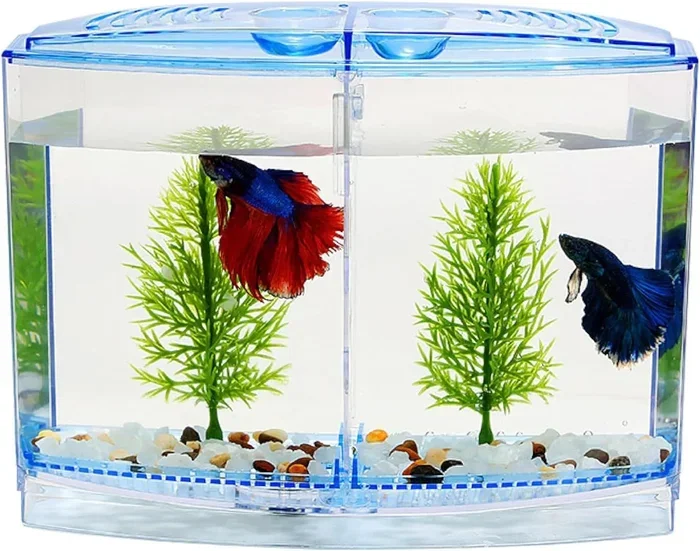
Sometimes the best solution is simply to separate your betta from other fish. If your betta relentlessly chases tank mates and causes injuries, a divider or a solo tank is the kindest option. Not every betta can live in a community setup.
For bettas that do well alone, a solo tank with plenty of enrichment is perfect. Add silk plants, a gentle filter, and a heater. Your betta will have everything it needs without the stress of sharing space.
## Can You Keep Betta Fish With Other Fish?
This is one of the most common questions betta owners ask. The answer is: it depends. Some bettas live peacefully with other fish. Others cannot tolerate any tank mates at all.
### Good Tank Mates for Bettas
Peaceful, small fish that stay in the upper and middle levels of the tank work best. Neon tetras, corydoras catfish, and kuhli loaches are popular choices. Snails like mystery snails and nerite snails also make great companions. They mind their own business and rarely bother a betta.
If you want to try keeping bettas with other fish, start with a tank of at least ten gallons. Add plenty of plants and hiding spots. Monitor your betta closely for the first few weeks. Look for signs of stress or aggression on either side.
### Fish to Avoid
Avoid keeping your betta with fish that have long, flowing fins. Guppies and angelfish can trigger territorial responses because they look similar to bettas. Brightly colored fish also tend to provoke aggression. Bottom-dwellers like plecos can work but may take up too much space in smaller tanks.
Always research any potential tank mate before adding it to the betta tank. Every fish has a different personality, and what works for one betta may not work for another.
## Do All Betta Fish Have the Same Temperament?
Absolutely not. Just like dogs and cats, every betta has its own unique personality. Some bettas are naturally calm and curious. Others are feisty and bold no matter what you do.
### Male vs Female Betta Behavior
Male bettas are generally more aggressive than females. Males flare more, fight more, and need more space. Female bettas can live in groups called sororities, though even they can have their share of drama.
Female bettas still have territorial instincts, but they are usually less intense. A group of females with plenty of space and hiding spots often does better than a single male in a small tank.
### Different Betta Personalities
Some bettas are shy and hide behind plants all day. Others are bold and come to the front of the tank to greet you. A shy betta might seem “mean” when it actually just feels scared. A bold betta might flare at everything but still be healthy and happy.
Understanding your individual fish is the key to good care. Watch your betta’s behavior over time. Learn what triggers its reactions and adjust accordingly. Patience and observation go a long way.
## Final Thoughts on Betta Fish Temperament
So, are betta fish mean? The honest answer is that they are not mean — they are misunderstood. Their aggression comes from instincts, environment, and individual personality. With the right tank setup, proper feeding, and careful tank mate choices, most bettas become calm and fascinating pets.
The next time your betta flares or nips, try to see it from the fish’s perspective. It is not trying to be mean. It is just being a betta. And with your help, it can thrive in its home.
Take what you have learned here and put it into practice. Your betta will thank you with vibrant colors, curious behavior, and a healthy appetite. A well-cared-for betta is a joy to watch and a rewarding companion.
## Frequently Asked Questions
Are betta fish mean by nature?
Betta fish are not mean by nature. They are territorial by instinct, which can look like aggression. Their behavior comes from their environment and genetics, not from a desire to be unkind.
Why does my betta fish flare at me?
Your betta may flare because it sees your reflection or mistakes your hand for a threat. Flaring is a natural defense response. Moving the tank away from bright windows can reduce unnecessary flaring.
Can a mean betta fish become friendly?
Yes, many bettas become calmer over time with proper care. A well-set-up tank, consistent feeding, and gentle handling help reduce aggression. Some bettas are naturally more docile than others.
Are there betta fish that don’t fight?
Yes, some bettas are naturally less aggressive. Female bettas and certain color varieties tend to be calmer. Choosing the right tank setup also reduces fighting behavior significantly.
What should I do if my betta fish bites me?
Biting usually happens during feeding or when the fish feels threatened. Wash your hands before reaching into the tank. Feed your betta at regular times so it associates your hand with food rather than a threat.
Can betta fish live with other fish peacefully?
Some bettas can live with peaceful tank mates like tetras, corydoras, and snails. However, not every betta tolerates companions. Always monitor behavior closely and be ready to separate fish if aggression continues.
Key Takeaways
- Betta fish are not naturally mean: Their aggression comes from instincts and environment, not a bad attitude.
- Territory drives most aggression: Bettas defend their space, especially in small tanks.
- Signs of aggression are easy to spot: Flaring, nipping, and chasing are clear signals.
- Tank setup matters a lot: Proper decorations and space reduce mean behavior significantly.
- Not all bettas are the same: Personality varies, and some are naturally calmer than others.
- Tank mates require careful planning: Choosing the right companions prevents fights and stress.
Frequently Asked Questions
What is are betta fish mean?
are betta fish mean is an important topic with many practical applications.