What Animals Can I Put with My Betta Fish
Finding the right animals to share a tank with your betta fish can feel tricky, but it is totally doable with the right guidance. This guide covers the best betta fish tank mates for snails, shrimp, and peaceful community fish. You will learn exactly which species work, which ones to avoid, and how to set up a compatible tank mates for betta environment that keeps everyone happy and healthy.
So you have a beautiful betta fish swimming around your tank, and you are wondering, what animals can i put with my betta fish? This is one of the most common questions new betta owners ask, and for good reason. Adding the wrong tank mate can lead to fights, stress, and even serious health issues for your fish.
The good news is that plenty of animals make great betta fish tank mates. The trick is knowing which ones are safe and how to introduce them properly. In this guide, we will walk you through the best options, the ones to avoid, and practical tips that make your betta community tank a success.
Key Takeaways
- Snails and shrimp are among the safest betta fish companions because they mind their own business.
- Peaceful fish like guppies can work as tropical fish tank mates in a properly sized tank.
- Avoid goldfish and aggressive species because they create stress and health problems for bettas.
- Tank size matters a lot — a 10-gallon tank or larger gives everyone room to thrive.
- Watch for aggression signs and always have a backup plan if a pairing does not work out.
- Hiding spots and plants help reduce stress and make betta community tank setups successful.
📑 Table of Contents
- Why Tank Mates Matter for Your Betta Fish
- Best Animals to Put With Your Betta Fish
- Animals to Avoid Putting With Your Betta
- How to Successfully Introduce New Tank Mates
- Quick Tips for a Happy Betta Community Tank
- Common Mistakes People Make With Betta Tank Mates
- Expert Insights: What the Pros Say About Betta Tank Mates
- Conclusion
Why Tank Mates Matter for Your Betta Fish
Betta fish are often called “Siamese fighting fish” for a reason. They have a betta fish personality that ranges from curious and peaceful to territorial and aggressive. Every betta is different, so choosing the right aquarium compatibility partners is not a one-size-fits-all decision.
When you add animals to your betta’s tank, you need to think about three main things:
- Temperament: Will the new animal trigger your betta’s aggressive side?
- Tank size: Does the tank have enough space for everyone to live comfortably?
- Water needs: Do the animals share the same water parameters for betta and other species?
Getting these three things right makes a huge difference. A well-planned setup keeps your betta happy and your other animals safe.
Best Animals to Put With Your Betta Fish
Now let us get into the fun part. Here are the safest and most popular betta fish companions you can consider adding to your tank.
1. Snails
Snails are hands-down some of the best peaceful fish for betta companions. They do not bother your betta at all, and they help clean up algae and leftover food. Most bettas ignore snails completely because snails move slowly and stay out of the way.
Great snail options include:
- Nerite snails — small, hard workers, and cannot reproduce in freshwater
- Mystery snails — larger, colorful, and fun to watch
- Ramshorn snails — small and great at eating algae
If you want to learn more about snail companions specifically, check out our guide on Can I Put Snails In With My Betta Fish.
2. Shrimp
Shrimp are another excellent choice for compatible tank mates for betta. They stay small, keep to themselves, and add a lot of movement and color to your tank. The most popular shrimp for betta tanks are:
- Cherry shrimp — bright red, hardy, and easy to care for
- Ghost shrimp — transparent, cheap, and great at cleaning
- Amano shrimp — larger and excellent algae eaters
One thing to keep in mind: some bettas may try to chase or nip at shrimp. This is more common with very territorial bettas. If you notice this behavior, it is best to remove the shrimp and try a different betta fish companion.
For a deeper dive into shrimp pairings, read our article on Can I Put My Betta Fish With Cherry Shrimp.
3. Small Peaceful Fish
If you want to add fish that swim around and add energy to your tank, small peaceful species are the way to go. But you need to pick carefully. Not every fish gets along with bettas.
Some good options include:
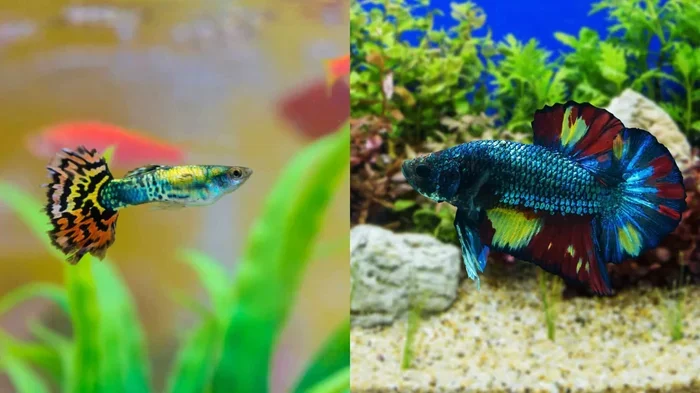
- Guppies — colorful, active, and generally peaceful
- Corydoras catfish — bottom dwellers that stay out of your betta’s way
- Ember tetras — small, calm, and add a nice splash of color
- Harlequin rasboras — schooling fish that keep to themselves
Guppies are a popular choice, and many betta owners successfully keep them together. You can read more about this pairing in our guide on Can I Put My Betta Fish With Guppies.
Animals to Avoid Putting With Your Betta
Just as important as knowing what works is knowing what does not. Some animals are a bad match for bettas and can cause serious problems.
Goldfish
Goldfish and bettas have very different water parameters for betta needs. Goldfish produce a lot of waste, need cooler water, and grow much larger than most people expect. Putting a goldfish with a betta is a recipe for disaster. Both animals will suffer in the long run.
Other Aggressive Fish
Fish like cichlids, angelfish, and tiger barbs are too aggressive for a betta. They will stress your betta out, bully them, and may even cause physical injuries. Always research any fish before adding it to a betta community tank.
Large or Fast-Swimming Fish
Big fish can intimidate bettas, and fast swimmers can stress them out by chasing them around the tank. Stick to small, calm species that share similar needs.
If you are unsure whether a specific fish will work, check out our article on Can I Put Any Other Fish With My Betta for more guidance.
How to Successfully Introduce New Tank Mates
Adding a new animal to your betta’s tank is not something you should do on a whim. A slow and careful introduction process helps everyone adjust without unnecessary stress.
Here is a simple step-by-step approach:
- Set up the tank first. Make sure your tank is at least 10 gallons, has a filter, and stable water conditions. A tank size for betta of 10 gallons or more gives everyone room to establish their own space.
- Add the new animal to a quarantine tank first. This lets you observe them for any diseases or parasites before they meet your betta.
- Use a divider for the first few days. Let your betta and the new animal see each other without direct contact. This reduces initial aggression.
- Monitor closely after removing the divider. Watch for flaring, chasing, or hiding. Some mild chasing is normal, but persistent aggression means you need to separate them.
- Have a backup plan. Keep a spare tank ready in case the pairing does not work out.
Following these steps dramatically increases your chances of a successful betta fish tank mates setup.
Quick Tips for a Happy Betta Community Tank
Making your betta community tank work comes down to a few simple habits. Here are some quick tips that make a big difference:
- Add plenty of plants and hiding spots. Plants like java fern, anubias, and moss give shy animals a place to retreat. This reduces stress for both your betta and new tank mates.
- Feed your betta first. A well-fed betta is less likely to see other animals as competition for food.
- Keep the tank clean. Regular water changes and proper filtration keep water parameters stable, which benefits every animal in the tank.
- Watch your betta’s behavior daily. If you notice fin nipping, flaring, or loss of color, something is wrong and needs attention.
- Do not overcrowd the tank. Even if all the animals are peaceful, too many creatures in a small space creates tension and poor water quality.
Common Mistakes People Make With Betta Tank Mates
Even experienced fish keepers sometimes make mistakes when setting up a betta community tank. Here are the most common ones to avoid:
- Skipping the tank size requirement. A tiny bowl is not suitable for any tank mate. Your betta needs at least a 5-gallon tank, and 10 gallons or more is ideal when adding companions.
- Ignoring water temperature. Bettas need warm water between 76 and 82 degrees Fahrenheit. Make sure any new animals share this temperature range.
- Adding too many new animals at once. Introduce one new animal at a time. This lets you monitor how your betta reacts before adding more.
- Assuming all bettas are the same. Some bettas are very docile, while others are extremely aggressive. Your individual betta’s personality should guide your choices.
- Forgetting to research the new animal’s needs. Every species has different care requirements. Do your homework before making any purchase.
Avoiding these mistakes saves you time, money, and heartbreak. Your betta fish companions deserve a safe and comfortable home.
Expert Insights: What the Pros Say About Betta Tank Mates
Experienced aquarists agree that the key to a successful betta community tank comes down to three things: preparation, observation, and patience.
Veterinary fish specialists often emphasize that bettas are individuals. “No two bettas behave the same way,” says Dr. Jessie Sanders, a certified aquatic veterinarian. “Some will tolerate tank mates perfectly, while others prefer to live alone. Always respect your fish’s personality.”
Experienced breeders also recommend starting with invertebrates like snails and shrimp before moving on to fish. These creatures are lower risk and give you a good sense of how your betta reacts to sharing its space. Once you feel confident, you can experiment with small peaceful fish species.
The bottom line is this: what animals can i put with my betta fish has a wide range of answers. The right choice depends on your betta’s personality, your tank setup, and your willingness to monitor and adjust as needed.
Conclusion
Finding the right animals to put with your betta fish does not have to be overwhelming. Snails, shrimp, and small peaceful fish are your safest bets for a compatible tank mates for betta setup. Avoid goldfish and aggressive species, always introduce new animals slowly, and keep a close eye on how everyone interacts.
The most important thing to remember is that every betta is unique. What works for one betta may not work for another. Pay attention to your fish’s behavior, make adjustments when needed, and enjoy the process of building a thriving betta community tank.
When you get the pairing right, there is nothing more rewarding than watching your betta and its tank mates coexist peacefully. Take your time, do your research, and most importantly — have fun with it.
Frequently Asked Questions
Can I put a snail with my betta fish?
Yes, snails are one of the best tank mates for bettas. They are peaceful, do not compete for territory, and help keep the tank clean. Nerite snails and mystery snails are especially popular choices among betta owners.
What fish can live safely with a betta?
Small peaceful fish like guppies, corydoras catfish, ember tetras, and harlequin rasboras tend to do well with bettas. The key is choosing species that are non-aggressive and share similar water temperature and parameter needs.
Can betta fish live with shrimp?
Yes, bettas can live with shrimp like cherry shrimp, ghost shrimp, and amano shrimp. However, some bettas may try to chase or nip at shrimp, so you should monitor their behavior closely after introducing them to the same tank.
Why can’t I put goldfish with my betta?
Goldfish and bettas have very different water temperature and quality needs. Goldfish prefer cooler water and produce a lot of waste, which can quickly make the tank unhealthy for a betta. They also grow much larger and can become aggressive.
How big should my tank be if I want to add tank mates to my betta?
A minimum of 10 gallons is recommended when adding tank mates to a betta. A larger tank gives all the animals enough space to establish their own territories, which significantly reduces stress and aggression.
What should I do if my betta is aggressive toward a new tank mate?
If your betta shows persistent aggression like flaring, chasing, or fin nipping, separate the animals immediately. Some mild chasing is normal at first, but ongoing aggression means the pairing is not a good match. Have a backup tank ready for the new animal.