Is Fish Oil or Krill Oil Better

Choosing between fish oil and krill oil isn’t about a universal “better” option—it’s about your personal health goals, budget, and values. Both provide essential omega-3s (EPA and DHA), but they differ in molecular structure, bioavailability, purity potential, environmental impact, and cost. Krill oil’s phospholipid form may offer better absorption for some, while fish oil typically provides higher concentrations of EPA/DHA per serving at a lower cost. Consider your specific needs: for heart health or high-dose therapeutic needs, conventional fish oil is often the practical choice. For general wellness, joint comfort, or if you have digestive sensitivities, krill oil’s unique properties might be worth the premium. Always prioritize reputable brands that guarantee purity and sustainability.
Key Takeaways
- Both are effective omega-3 sources: Fish oil and krill oil both deliver the essential fatty acids EPA and DHA, crucial for heart, brain, and overall health.
- Structure dictates absorption: Krill oil’s omega-3s are bound to phospholipids (like our cell membranes), while fish oil’s are bound to triglycerides. Some research suggests phospholipids may be more readily absorbed, especially in individuals with digestive issues.
- Concentration vs. Cost: Fish oil supplements generally provide much higher concentrations of EPA and DHA per softgel and at a significantly lower cost per milligram of active omega-3s.
- Purity is paramount: Both can be contaminated with heavy metals and PCBs. Choose brands that use molecular distillation and provide third-party testing certificates (e.g., IFOS, GOED) for guaranteed purity.
- Sustainability differs: Fish oil stocks vary; look for certifications from the MSC (Marine Stewardship Council). Krill oil harvesting in Antarctica is tightly regulated by the CCAMLR, but concerns about ecosystem impact remain for some conservationists.
- Antioxidant content: Krill oil naturally contains astaxanthin, a powerful antioxidant that helps prevent the oil from oxidizing and may offer additional anti-inflammatory benefits.
- Personal factors decide: Your budget, digestive health, specific wellness goals (e.g., high triglycerides vs. general support), and ethical views on marine sustainability are key to making the right choice for you.
📑 Table of Contents
- Is Fish Oil or Krill Oil Better? A Friend-to-Friend Breakdown
- Understanding the Source: Fish vs. Krill
- The Bioavailability Debate: How Well Do You Absorb It?
- Purity, Sustainability, and the “Fishy” Factor
- Head-to-Head: Health Benefits & Specific Uses
- The Practical Considerations: Taste, Cost, and Convenience
- Making Your Choice: A Simple Decision Framework
- Your Action Plan: What to Buy Right Now
- Conclusion: It’s Not a Battle, It’s a Choice
Is Fish Oil or Krill Oil Better? A Friend-to-Friend Breakdown
Let’s be honest: walking into the supplement aisle can feel like entering a foreign land. You’re there for one thing—omega-3s—and you’re met with a wall of bottles shouting “Fish Oil!” “Krill Oil!” “Concentrated!” “Enteric-Coated!” It’s enough to make you want to grab the nearest one and run. But what if you picked the wrong one? What if you’re not getting what you paid for, or worse, what if it doesn’t agree with your stomach? The question “is fish oil or krill oil better” is one of the most common we hear, and the answer, like most good things in life, is: it depends. This isn’t about finding a single winner in a fight. It’s about understanding two different tools, each with its own strengths, and figuring out which one fits the job you need to do. So, take a breath. We’re going to break this down, plain and simple, so you can walk out of that store with confidence.
First, a quick reminder of why we’re even here. Omega-3 fatty acids, specifically EPA (eicosapentaenoic acid) and DHA (docosahexaenoic acid), are non-negotiable for human health. Our bodies can’t make them efficiently, so we must get them from food (fatty fish like salmon, mackerel, sardines) or supplements. They are the building blocks of our cell membranes, critical for brain function, reducing inflammation, supporting a healthy heart rhythm, and even mood regulation. The typical Western diet is shockingly low in these good fats and high in inflammatory omega-6s. Supplementing is a smart move for most people. But should that supplement come from a humble school of fish or a tiny, shrimp-like crustacean? Let’s dive in.
Understanding the Source: Fish vs. Krill
Before we talk pills, let’s talk about the animals themselves. This isn’t just trivia; it explains so much about the final product.
Visual guide about Is Fish Oil or Krill Oil Better
Image source: cdn.builder.io
The World of Fish Oil
When you see “fish oil,” it’s usually a blend from several species of cold-water, fatty fish—anchovies, sardines, mackerel, and sometimes salmon. These fish don’t produce omega-3s themselves; they accumulate them by eating smaller algae or plankton. So, the oil is essentially a concentrated storage form of the omega-3s from the entire food chain below them. This process means the EPA and DHA in fish oil are bound to a molecule called a triglyceride. It’s the same form we store fat in our own bodies. The industry is massive and well-established, which has its pros (refined processes, consistent supply) and cons (potential for overfishing if not managed responsibly).
The Tiny Powerhouse: Krill
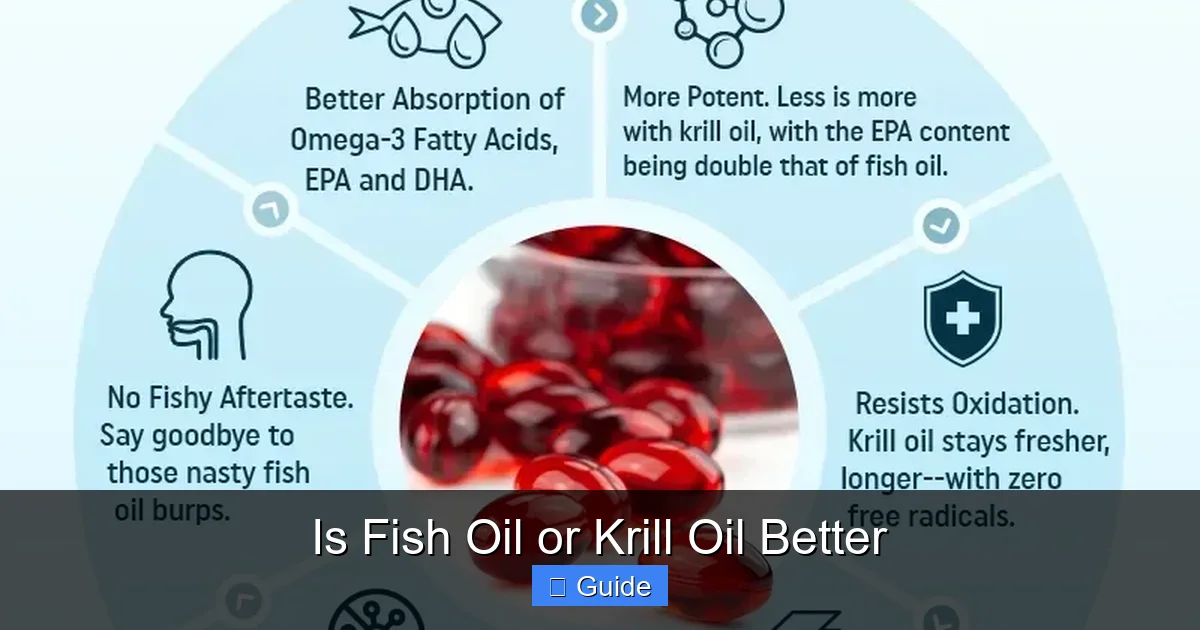
Krill are small, shrimp-like crustaceans that thrive in the cold Antarctic waters. They are a keystone species, meaning the entire Antarctic ecosystem—from penguins to whales—depends on them. Krill eat algae directly, which is where the omega-3s originate. This is a shorter food chain. But here’s the crucial chemical difference: in krill, the EPA and DHA are attached to phospholipids. Phospholipids are a fundamental component of all our cell membranes. Think of it like this: triglycerides are like a storage tank of fat, while phospholipids are like structural bricks. This structural similarity is the core reason many believe krill oil is more “recognizable” and easier for our bodies to incorporate.
The Bioavailability Debate: How Well Do You Absorb It?
This is the million-dollar question, and the one with the most scientific back-and-forth. Bioavailability simply means how much of a nutrient you actually absorb and use. The argument for krill oil hinges entirely on its phospholipid structure.

Visual guide about Is Fish Oil or Krill Oil Better
Image source: cdn.shopify.com
The Phospholipid Advantage
Studies, including some human trials, have shown that the omega-3s in krill oil (in phospholipid form) may be incorporated into our blood lipids (like cholesterol particles) more efficiently than the triglyceride form from fish oil. One prominent theory is that because phospholipids are water-soluble, they can be directly absorbed into the bloodstream without needing to be broken down by digestive enzymes first. Triglycerides require emulsification by bile salts and enzymatic breakdown. This could mean that for people with compromised digestion—such as those with pancreatic insufficiency, the elderly, or anyone on a very low-fat diet—krill oil might offer a more reliable delivery system. Some research also suggests that krill oil’s EPA and DHA may preferentially accumulate in important organs like the liver and brain more effectively.
Fish Oil’s High-Concentration Edge
But hold on. Before you write off fish oil, remember its greatest strength: sheer power. A standard fish oil softgel might contain 300-500mg of combined EPA/DHA. A typical krill oil softgel might contain 50-150mg. You read that right. To get the same 1000mg of EPA/DHA you might get from two high-potency fish oil capsules, you might need to take five or six krill oil capsules. That’s a lot of pills, a lot of cost, and a lot of unnecessary filler (like the krill shell). Modern, concentrated fish oil (often labeled “concentrated” or “high-potency”) has closed this gap somewhat, but krill oil’s natural concentration is inherently lower. So, while the *percentage* of what you take from krill might be absorbed well, the *absolute amount* of active ingredient per serving is usually far less. For conditions like very high triglycerides that require therapeutic doses of 2-4 grams of EPA/DHA daily, fish oil is the only practical choice.
What the Research Really Says
Meta-analyses of the available studies show that while krill oil often results in higher blood levels of EPA and DHA *per milligram consumed*, the total daily intake is so much lower that the net effect on blood omega-3 index (the best measure of your omega-3 status) can be similar or even lower than with a comparable daily dose of high-quality fish oil. A 2017 study in the journal Lipids in Health and Disease found that when doses were matched for EPA+DHA content, both oils increased the omega-3 index similarly. The takeaway? If you take enough fish oil to match the EPA/DHA of a standard krill oil dose, the absorption advantage largely disappears. But if you’re comparing one krill softgel to one standard fish oil softgel, the krill might give you more “bang for your buck” in terms of absorption percentage, just not in total omega-3 milligrams.
Purity, Sustainability, and the “Fishy” Factor
Now, let’s talk about the stuff you might not want in your supplement and the impact on our planet.
Visual guide about Is Fish Oil or Krill Oil Better
Image source: abcoindia.net
The Contaminant Concern (and How to Avoid It)
Here’s a universal truth: all marine oils can contain contaminants. Heavy metals (like mercury), PCBs, and dioxins are environmental pollutants that accumulate up the food chain. Because krill are so low on the food chain (they eat algae), they accumulate far fewer of these fat-soluble toxins than large, predatory fish like tuna or swordfish used in some fish oils. This is a genuine point in krill’s favor. However, this does not mean krill oil is automatically “pure.” It can still contain trace levels. The real hero here is the refining process. The best fish oil manufacturers use molecular distillation—a vacuum steam purification process—that can remove virtually all contaminants to levels far below international safety standards. This is why third-party testing is non-negotiable, regardless of your choice. Look for seals from organizations like IFOS (International Fish Oil Standards Program), GOED (Global Organization for EPA and DHA Omega-3s), or USP (United States Pharmacopeia). These programs test for potency, purity, and freshness. A cheap, untested fish oil from an unknown source is a bigger risk than a well-refined, tested one.
The Freshness Factor: Rancidity Rules
Omega-3 oils are highly perishable. Rancid oil smells “fishy” (a sharp, pungent odor) and tastes awful. More importantly, oxidized (rancid) oils are pro-inflammatory and may be harmful, potentially increasing LDL (“bad”) cholesterol. Krill oil has a natural antioxidant, astaxanthin, which gives it a reddish hue and helps protect it from oxidation. This is a nice built-in benefit. However, fish oil can be just as fresh if it’s properly manufactured, stored in dark, airtight containers, and kept refrigerated after opening. Always smell and taste your fish oil (a small amount on a spoon). It should smell mildly of the ocean, not rank. If it tastes bitter or harsh, it’s rancid—return it. This is a sign of poor manufacturing or storage, not an inherent flaw in fish oil.
Sustainability: A Complex Ocean Issue
This is where ethics and ecology come in. The sustainability of fish oil depends entirely on the source fishery. Look for the MSC (Marine Stewardship Council) blue fish eco-label. The MSC certifies fisheries that are well-managed and sustainable. Some fish stocks are overfished; others are perfectly healthy. You must do a little homework on the brand. Krill oil harvesting is a different story. The Antarctic krill fishery is managed by the Commission for the Conservation of Antarctic Marine Living Resources (CCAMLR), which sets a very conservative catch limit (currently around 1% of the estimated biomass). Many scientists consider this precautionary approach successful. However, environmental groups like Greenpeace have raised concerns that even this small catch could impact krill-dependent predators (whales, penguins, seals) in a warming climate where krill populations are already stressed by sea ice loss. The debate is nuanced. If you prioritize a single-species, tightly regulated fishery in a remote area, you might lean krill. If you want a certified sustainable fishery with a long track record, a MSC-certified fish oil is a safe bet. There is no perfectly “clean” choice here, only more or less responsible ones.
Head-to-Head: Health Benefits & Specific Uses
Both oils are studied for a vast array of benefits. Let’s see where they truly shine, and where the differences matter.
Heart Health & Triglycerides
This is the most proven use for omega-3s. High doses (2-4 grams of EPA/DHA daily) are clinically proven to lower high triglyceride levels. For this specific goal, fish oil is the undisputed champion. The sheer volume of EPA/DHA you can practically and affordably consume with fish oil makes it the only viable therapeutic option. Studies on krill oil for high triglycerides are small and use doses that are financially impractical for most people. For general cardiovascular support—maintaining healthy cholesterol ratios, supporting arterial function, and reducing inflammation—both oils are effective when taken at adequate doses.
Brain Function & Mood
DHA is a primary structural fat in the brain. Both oils support cognitive health. The phospholipid form in krill oil is intriguing here because brain cell membranes are also made of phospholipids. Some preliminary research and anecdotal reports suggest krill oil may be particularly effective for “brain fog” and focus. However, robust, large-scale human trials directly comparing the two for cognitive outcomes are lacking. For now, ensuring you get an adequate dose of DHA (at least 200-500mg daily) from either source is the key takeaway. If you’re sensitive to fishy burps or have digestive issues that might impair absorption, krill’s potential bioavailability edge could be relevant here.
Joint Comfort & Inflammation
Omega-3s are natural anti-inflammatories. Many people take them for osteoarthritis, rheumatoid arthritis, and general post-workout soreness. The anti-inflammatory effects are primarily due to EPA. Again, dose is king. The astaxanthin in krill oil is a potent antioxidant that may offer synergistic anti-inflammatory support. This combination might make krill oil feel particularly effective for joint stiffness and exercise recovery for some users. But a high-dose, high-quality fish oil will also reduce inflammation markers. If you have a diagnosed inflammatory condition, consult your doctor about the appropriate dose, which will likely point you toward concentrated fish oil.
The Practical Considerations: Taste, Cost, and Convenience
Let’s get real. You have to take this stuff every day. If you hate it, you won’t.
Digestive Tolerance & “Fish Burps”
This is a major reason people switch brands or quit altogether. Fish oil is notorious for causing reflux, burps, and a lingering fishy taste. This is often due to low-quality oil, rancidity, or taking it on an empty stomach. Solutions: Take fish oil with a meal containing fat (which stimulates bile, aiding digestion), choose enteric-coated capsules (designed to dissolve past the stomach), or freeze the capsules before taking (slows digestion). Krill oil, due to its phospholipid structure, is generally reported to cause fewer digestive issues and less fishy aftertaste. Many users find it much gentler. If you’ve had bad experiences with fish oil, krill is absolutely worth a try.
The Price Per Milligram Reality
This is the starkest difference. At the time of writing, a bottle of 60 standard krill oil softgels (each with ~100mg EPA/DHA) might cost $25-$40. A bottle of 60 high-potency fish oil softgels (each with 500mg+ EPA/DHA) might cost $15-$25. To get 1000mg of EPA/DHA from krill oil, you might spend $0.70-$1.00 per day. To get the same from fish oil, you might spend $0.25-$0.50 per day. Krill oil is typically 2-3 times more expensive per milligram of active omega-3s. For a long-term, daily supplement, this difference adds up significantly. You are paying a premium for the phospholipid form, the astaxanthin, and the perceived purity/sustainability.
Storage & Smell
Both oils should be stored in a cool, dark place. Refrigeration after opening is highly recommended for fish oil to prevent oxidation. Krill oil, thanks to astaxanthin, is somewhat more stable but still benefits from cool storage. Krill oil has a distinctive reddish color and a very mild, neutral smell and taste. Fish oil, if fresh and high-quality, should have almost no smell or taste. A strong fish odor is a red flag.
Making Your Choice: A Simple Decision Framework
Okay, enough data. How do you actually decide? Here’s a no-nonsense flowchart in words.
Choose FISH OIL if:
- Your primary goal is therapeutic: lowering very high triglycerides, or you need a high daily dose of EPA/DHA (1000mg+).
- Budget is a significant concern and you want the most EPA/DHA for your dollar.
- You’re already taking a high-quality, third-party tested fish oil with no digestive issues.
- You find a MSC-certified brand that aligns with your sustainability values.
Choose KRILL OIL if:
- You’re new to supplements or have had bad “fish burps” with standard fish oil.
- Your goal is general wellness, mood support, or mild joint comfort, and you prefer a lower-dose, gentler product.
- You value the potential (though not guaranteed) absorption advantage of phospholipids, especially if you have digestive sensitivities.
- You are drawn to the natural antioxidant (astaxanthin) content and the idea of a shorter food chain.
- Cost is less of a primary factor, and you are willing to pay a premium for the specific form.
And remember: The best supplement is the one you take consistently. If you buy a $100 bottle of krill oil and only take it for a week because it’s too expensive to continue, you’ve gained nothing. A $20 bottle of fish oil you use every day for a year will do you worlds more good.
Your Action Plan: What to Buy Right Now
Scrolling back to the top, here is your final checklist. Don’t leave the store or close the browser without verifying these:
- Potency: Check the label. How many milligrams of combined EPA and DHA per serving? This is the only number that matters. Ignore the total “fish oil” or “krill oil” weight.
- Purity: Look for a third-party seal. IFOS is the gold standard. GOED, USP, or a clear statement of molecular distillation and testing for heavy metals/PCBs is essential. If they don’t proudly display this, skip it.
- Freshness: For fish oil, look for “molecularly distilled” and “antioxidant added (e.g., vitamin E).” Smell it if you can. It should not smell fishy.
- Sustainability: For fish oil, seek the MSC blue fish label. For krill oil, reputable brands will mention they are certified by Friend of the Sea or adhere to CCAMLR regulations. Transparency is key.
- Form: Consider enteric-coated capsules if you have reflux issues. Softgels are standard. Liquid oils are an option but can be harder to dose and taste worse.
Start with a reputable brand that meets these criteria. Begin with the recommended dose on the bottle. For general health, 500-1000mg of combined EPA/DHA daily is a great starting point. Take it with your largest meal. Give it 8-12 weeks to truly assess its effects—omega-3s build up in your cell membranes over time. And for heaven’s sake, don’t buy based on the cheapest price alone. Your health is worth the investment in a quality product.
Conclusion: It’s Not a Battle, It’s a Choice
So, is fish oil or krill oil better? The honest answer is that for the vast majority of people seeking general health support, a high-quality, high-potency fish oil is the most sensible, cost-effective, and research-backed choice. It delivers the essential nutrients in a proven form at a dose that matters. However, if you have a sensitive stomach, are willing to pay more for a potentially more absorbable form with built-in antioxidants, and are drawn to the unique sourcing story of Antarctic krill, then krill oil is a perfectly valid and effective option for you.
The “better” oil is the one that fits seamlessly into your life, aligns with your budget and ethics, and most importantly, one you will take every single day without gastrointestinal regret. Don’t overcomplicate it. Use the framework above, check those labels for potency and purity, and make a choice. Then, take it consistently. Your future, healthier self will thank you, whether that self is fueled by fish or krill.
Frequently Asked Questions
Can I take both fish oil and krill oil together?
Yes, you can take both, but it’s usually unnecessary and increases cost. They provide the same core omega-3s (EPA/DHA). It’s more effective to choose one high-quality source and ensure you’re getting your target daily dose of EPA and DHA from it.
Which is better for high triglycerides?
Fish oil is the clear winner for lowering high triglycerides. Therapeutic doses require 2-4 grams of EPA/DHA daily, which is only practical and affordable with concentrated fish oil. Krill oil’s lower concentration makes it unsuitable for this specific medical goal.
Is krill oil safe for people with shellfish allergies?
This is a common concern. Krill are crustaceans, not mollusks (the typical shellfish allergens like shrimp, crab, lobster). However, they are still in the broader shellfish family. People with severe, anaphylactic shellfish allergies should exercise caution and consult their allergist before trying krill oil, as cross-reactivity is possible.
Why does my fish oil give me burps but krill oil doesn’t?
This is often due to the phospholipid structure of krill oil, which may be easier to digest and less likely to reflux. It can also be a sign of lower-quality, oxidized fish oil. Always choose a reputable, third-party tested brand, take fish oil with food, or try an enteric-coated or frozen capsule to minimize this issue.
Do I need to refrigerate my omega-3 supplements?
Yes, after opening, both fish oil and krill oil should be refrigerated to slow oxidation and maintain freshness. Unopened bottles can be stored in a cool, dark pantry. Always check the manufacturer’s label for specific storage instructions.
Is krill oil more sustainable than fish oil?
It’s complex. Krill fishing in Antarctica is tightly regulated with a very low catch limit, but concerns exist about ecosystem impacts. Fish oil sustainability depends entirely on the source fishery; MSC certification is the best indicator of a well-managed, sustainable fishery. There is no absolute “more sustainable” choice—research the specific brand’s sourcing and certifications.