Can a Betta Fish Live in a Half Gallon Tank
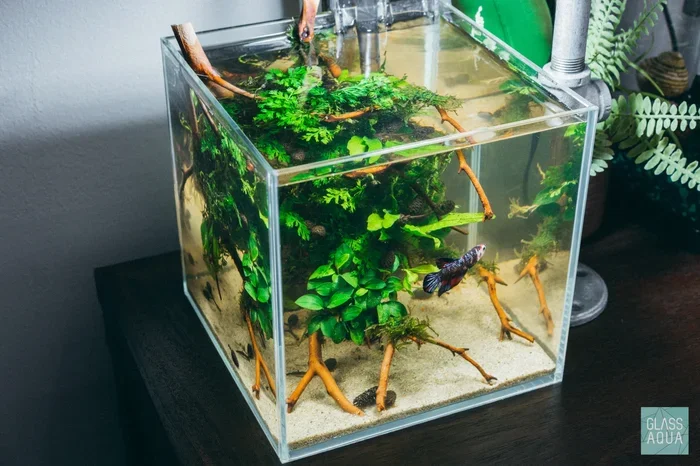
A half gallon tank is not ideal for a betta fish, but it can work with extra care. Bettas need space, clean water, and proper heating to thrive. A half gallon tank makes maintaining water quality much harder than larger setups. Keep reading to learn what it takes to keep a betta healthy in a small container.
Many new fish keepers wonder if a betta fish can live in a half gallon tank. The short answer is yes, but it comes with serious challenges. A half gallon is one of the smallest containers you can keep a betta in. While bettas are resilient fish, they still need space, clean water, and warmth to truly thrive.
If you are considering a half gallon tank for your betta, this guide is for you. We will cover everything you need to know. From the risks to the best setup tips, you will find practical advice here. Let us dive in and talk about what it really takes to keep a betta in a tiny aquarium.
Key Takeaways
- A half gallon tank is too small for most betta fish: Bettas need at least 2-5 gallons to stay healthy long-term.
- Water quality drops fast in tiny tanks: Ammonia and nitrate spikes happen quickly in a half gallon setup.
- You must do frequent water changes: A half gallon tank needs partial water changes every few days.
- A heater and filter are still essential: Even in a small tank, stable temperature and clean water matter.
- Bettas live longer in bigger tanks: A 5-gallon tank can double or triple your betta’s lifespan compared to a half gallon.
- A half gallon can work temporarily: It is okay for quarantine or short-term housing, not permanent living.
📑 Table of Contents
- What Is a Half Gallon Tank?
- Can a Betta Fish Survive in a Half Gallon Tank?
- How to Set Up a Half Gallon Tank for a Betta
- How Often Should You Do Water Changes?
- Half Gallon Tank vs. Larger Tanks
- Common Mistakes People Make with Half Gallon Tanks
- When Is a Half Gallon Tank Okay for a Betta?
- How to Upgrade from a Half Gallon Tank
- Final Thoughts
What Is a Half Gallon Tank?
A half gallon tank holds about 1.9 liters of water. That is roughly 2 quarts. These small containers are often sold as decorative fish bowls or desktop aquariums. They look cute on a desk or shelf. But looks can be deceiving when it comes to fish health.
A half gallon tank is extremely limited in several ways:
- Very little water volume: Even small changes in water chemistry are amplified.
- No room for equipment: Most filters and heaters will not fit.
- Limited swimming space: A betta needs room to move around.
- Temperature swings: Small volumes of water heat up and cool down fast.
- Rapid waste buildup: Ammonia spikes happen quickly in tiny tanks.
Because of these limitations, a half gallon tank is not the best long-term home for a betta. But with the right approach, you can still keep your fish safe and comfortable.
Can a Betta Fish Survive in a Half Gallon Tank?
The Short Answer
A betta fish can survive in a half gallon tank. But surviving is not the same as thriving. In the wild, bettas live in warm, slow-moving rice paddies and shallow ponds. Even in those natural habitats, the water is spread over a large area. A half gallon tank does not replicate that environment well.
Why Small Tanks Are Risky
Fish waste, uneaten food, and decaying plants all release ammonia into the water. In a small tank for betta, ammonia levels can become toxic within hours. A larger tank dilutes waste and gives beneficial bacteria more surface area to break down toxins.
Here are the main risks of keeping a betta in a half gallon tank:
- Ammonia poisoning: This is the biggest danger. Even low levels of ammonia burn a betta’s gills and fins.
- Temperature instability: Bettas need water between 76 and 82 degrees Fahrenheit. A tiny tank swings outside that range easily.
- Low oxygen levels: Warm water holds less oxygen. Without proper surface agitation, your betta may struggle to breathe.
- Stress and disease: Stressed fish get sick more often. A cramped space causes chronic stress in bettas.
- Shortened lifespan: A well-cared-for betta in a proper tank can live 5 to 7 years. In a half gallon, that number drops significantly.
If you already have a half gallon tank, do not panic. You can still give your betta a good life. It just requires more effort and attention on your part.
How to Set Up a Half Gallon Tank for a Betta
If you have decided to use a half gallon tank for your betta, you need to do it right. Here is a step-by-step setup guide that covers the essentials.
Step 1: Choose the Right Container
Not all half gallon containers are the same. Look for a tank with a wide surface area. A wider tank allows more gas exchange at the surface, which helps with oxygen levels. Avoid tall, narrow bowls. They have less surface area and trap carbon dioxide under the water.
If possible, choose a tank with a clear lid that has small ventilation holes. This prevents your betta from jumping out while still allowing air flow.
Step 2: Add a Heater
Many people skip a heater for small tanks. This is a mistake. A betta fish needs warm water to stay healthy. Without a heater, room temperature water is almost always too cold.
Look for a small submersible heater rated for 1 to 5 gallons. Set it to 78 degrees Fahrenheit. A heater keeps the temperature stable, which reduces stress and supports your betta’s immune system.
Step 3: Filtration Options
Filters can be tricky in a half gallon tank. Most standard filters are too strong and create too much flow. A betta is a slow swimmer and does not like being pushed around by currents.
Here are your options:
- Sponge filter: A small sponge filter provides gentle mechanical and biological filtration. It is the best choice for tiny tanks.
- No filter: You can skip a filter if you do frequent water changes. But this means more work for you.
- Airline-driven sponge: A tiny sponge filter attached to an air pump works well and is affordable.
If you choose not to use a filter, you must be extra diligent about water changes. Learn more about whether betta fish can live in a tank without a filter to decide what works best for you.
Step 4: Decorations and Plants
A half gallon tank needs some decorations, but not too many. Live or silk plants give your betta places to hide and rest. Bettas love floating plants like frogbit or water lettuce. These also help shade the water and reduce stress.
Avoid sharp plastic decorations. Betta fins are long and delicate, and they can tear easily on rough surfaces. Use smooth gravel or leave the bottom bare for easier cleaning.
Step 5: Cycling the Tank
Even a tiny tank needs to be cycled. Cycling means growing beneficial bacteria that break down ammonia and nitrite. You can cycle a half gallon tank using a few drops of pure ammonia or by adding a small source of fish food.
Test the water with a liquid test kit before adding your betta. You want ammonia and nitrite at zero, and nitrate below 20 ppm. This step is often skipped with small tanks, but it makes a huge difference in fish health.
How Often Should You Do Water Changes?
This is the most important question for anyone keeping a betta in a half gallon tank. The answer is: very often. In a larger tank, you can get away with weekly water changes. In a half gallon, you need to do partial water changes every two to three days.
Here is a simple schedule:
- Every 2 to 3 days: Remove 50% of the water using a turkey baster or small siphon.
- Replace with dechlorinated water: Always use water conditioner to remove chlorine and chloramine.
- Match the temperature: New water should be the same temperature as the tank water.
- Clean the substrate: Use the turkey baster to suck up debris from the bottom.
Skipping water changes in a half gallon tank is the fastest way to make your betta sick. The water quality drops fast in such a small volume. If you are not willing to do frequent maintenance, a bigger tank is a better choice.
Pro Tip: Use a Turkey Baster
A turkey baster is your best friend in a small tank. It lets you remove debris and old water without disturbing your betta too much. You can buy a cheap turkey baster at any grocery store. Keep it dedicated to fish tank use only.
Half Gallon Tank vs. Larger Tanks
To really understand the difference, let us compare a half gallon tank to other common sizes. This table shows the key differences:
- Half gallon (1.9L): Needs water changes every 2-3 days. Very hard to stable. High risk of ammonia spikes. Best for temporary use only.
- 1 gallon (3.8L): Slightly more stable. Still needs frequent water changes. A good step up from a half gallon.
- 2.5 gallons (9.5L): Much more stable. Can hold a small sponge filter. A good minimum for long-term betta care.
- 5 gallons (19L): The sweet spot for bettas. Stable parameters, room for a heater and filter. A betta can truly thrive here.
- 10 gallons (38L): Excellent stability. Room for plants, caves, and gentle tank mates. A great long-term option.
If you want your betta to live a long and happy life, aim for at least a 2.5 or 5-gallon tank. A half gallon tank should only be used for quarantine, temporary housing, or as a last resort. Learn more about how long bettas live in a 5 gallon tank compared to smaller setups.
Common Mistakes People Make with Half Gallon Tanks
Even well-meaning fish keepers make mistakes with small tanks. Here are the most common ones to avoid:
Overfeeding
It is easy to overfeed a betta in a small tank. Uneaten food decays quickly and pollutes the water. Feed your betta 2 to 3 small pellets once or twice a day. Remove any uneaten food after 2 minutes.
Skipping Water Changes
Some people think a small tank is “self-sustaining.” It is not. A half gallon tank needs water changes more often than any other size. Skipping them leads to toxic water conditions and a sick or dead fish.
Using Tap Water Without Conditioner
Tap water contains chlorine and chloramine, which are harmful to fish. Always use a water conditioner before adding new water to the tank. This is a small step that makes a big difference.
Placing the Tank in Direct Sunlight
Sunlight heats a small tank unevenly and promotes algae growth. Place your half gallon tank in a spot with indirect light and a stable room temperature.
Keeping Too Many Items in the Tank
A half gallon tank has very little space. Too many decorations, plants, or accessories take away from swimming room. Keep it simple and open for your betta to move freely.
When Is a Half Gallon Tank Okay for a Betta?
There are a few situations where a half gallon tank makes sense:
- Quarantine: If you need to isolate a sick or injured betta, a half gallon works well for short-term use.
- Temporary housing: While you clean or cycle a larger tank, a half gallon can serve as a holding space.
- Breeding: Some betta breeders use small containers for short periods during the breeding process.
- Emergency situations: If your main tank breaks and you need a quick solution, a half gallon is better than nothing.
In all other cases, a larger tank is strongly recommended. A betta fish living in a small tank long-term faces health risks that can be avoided with a simple upgrade.
How to Upgrade from a Half Gallon Tank
If you are ready to give your betta a better home, upgrading is easier than you think. A 5-gallon tank is the standard recommendation for a single betta. Here is how to make the switch:
- Cycle the new tank first: Set up the 5-gallon tank and let it run for 2 to 4 weeks before adding your betta.
- Transfer your betta gently: Use a small container to move your fish. Avoid pouring tank water directly into the new setup if it is not cycled.
- Keep water parameters similar: Match the temperature and pH of the old tank as closely as possible.
- Give your betta time to adjust: Some bettas may be shy for a day or two after a move. That is normal.
Upgrading to a bigger tank improves water stability, gives your betta more room to explore, and can add years to its life. Many owners find that their bettas become more active and colorful once moved to a proper setup.
Final Thoughts
A half gallon tank is not the best home for a betta fish, but it is not impossible either. The key is understanding the extra effort required and committing to regular maintenance. Frequent water changes, stable temperature, and clean water are non-negotiable in a small tank.
If you have the option, always choose a larger tank. Your betta will be healthier, happier, and live longer. A half gallon tank can work for temporary needs, but a 5-gallon tank is the true sweet spot for betta care. Whether you start small or upgrade now, what matters most is that you give your betta the best life possible.
Remember, a betta fish living in a half gallon tank needs your attention and dedication. With the right setup and consistent care, your little fish can thrive even in a small space. Start with what you have, and grow from there as you learn more about betta fish care and aquarium keeping.
Frequently Asked Questions
Can a betta fish live in a half gallon tank long-term?
A betta can survive in a half gallon tank long-term, but it is not ideal. The water quality drops fast in such a small volume, which puts stress on your fish. You will need to do water changes every 2 to 3 days and monitor parameters closely. For the best results, upgrade to at least a 2.5 or 5-gallon tank.
How often do you need to change water in a half gallon tank?
You should do a 50% water change every 2 to 3 days in a half gallon tank. Because the water volume is so small, waste and toxins build up quickly. Use a turkey baster to remove old water and replace it with dechlorinated, temperature-matched water.
Do you need a filter in a half gallon tank?
A filter is not strictly required in a half gallon tank, but it helps. A small sponge filter provides biological filtration without creating too much flow. If you skip the filter, you must be extra diligent with water changes to keep the water clean and safe for your betta.
Can two betta fish live in a half gallon tank together?
No. Two betta fish should never share a half gallon tank or any small tank. Bettas are territorial and need their own space. Even in a larger tank, two male bettas should not be housed together. A half gallon tank is far too small for more than one betta.
What temperature should a half gallon tank be set to?
Keep the water temperature between 76 and 82 degrees Fahrenheit. Use a small submersible heater designed for 1 to 5 gallons. Temperature stability is critical in a small tank because the water can change temperature quickly without a heater.
Is a half gallon tank better than a bowl for a betta?
Yes, a half gallon tank is better than a traditional bowl. A tank has more surface area for gas exchange and is easier to clean. Bowls are even more prone to temperature swings and waste buildup. But ideally, you should go even bigger than a half gallon for long-term betta health.