How to Transfer a New Betta Fish to a Tank
Transferring a new betta fish to a tank requires careful preparation and patience. You need to acclimate your betta properly, check water parameters, and create a safe environment. This guide walks you through every step to ensure a smooth and stress-free transition for your new fish.
Bringing home a new betta fish is exciting. But the moment you walk through the door with your little fighter, the real work begins. How to transfer a new betta fish to a tank is a question every betta owner should understand before making the journey home.
A bad transfer can stress your fish out. Stress leads to illness. And illness can be hard to reverse. That is why you need a solid plan. This guide gives you exactly what you need. You will learn the best methods, common mistakes, and pro tips to make the move as easy as possible for your betta.
The process is not complicated. But it does require attention to detail. From setting up the tank to choosing the right acclimation method, every step matters. Let us walk through it together.
Key Takeaways
- Acclimate slowly: The drip method or floating bag method helps your betta adjust to new water conditions gradually.
- Prepare the tank first: A cycled, clean tank with proper temperature and parameters is essential before your betta arrives.
- Quarantine when possible: Keeping your new betta separate for a few days helps prevent disease spread.
- Watch for stress signs: Clamped fins, loss of color, and hiding are signs your betta needs help adjusting.
- Be patient: Rushing the transfer process is the #1 mistake new fish owners make.
📑 Table of Contents
- Why Proper Transfer Matters for Your Betta Fish
- Preparing the Tank Before the Transfer
- Choosing the Right Transfer Method
- Transferring Your Betta Fish Step by Step
- Common Mistakes to Avoid During Transfer
- After the Transfer: Helping Your Betta Settle In
- When to Consider Quarantining Your New Betta
- Quick Tips for a Successful Betta Transfer
- Final Thoughts on Transferring Your New Betta Fish
Why Proper Transfer Matters for Your Betta Fish
Betta fish are sensitive creatures. They react strongly to changes in their environment. When you transfer a new betta fish to a tank, you are asking them to adapt to something completely unfamiliar. The water chemistry, temperature, and surroundings are all different.
If you just dump your betta into a new tank, you risk shock. Temperature shock is very real and very dangerous. Sudden changes in pH or ammonia levels can harm your fish within minutes. A proper transfer gives your betta time to adjust. It protects their immune system. And it sets them up for a long, healthy life.
Think of it this way. Imagine moving to a new country where everything is different. You would want a slow, gentle transition, right? Your betta feels the same way.
The Science Behind Betta Fish Stress During Transfer
When a betta fish experiences stress, its body releases cortisol. This hormone weakens the immune system over time. A stressed betta becomes more vulnerable to diseases like ich, fin rot, and fungal infections. The transfer process is one of the most stressful events in a betta’s life.
That is why how you handle the move matters so much. A calm, methodical approach reduces cortisol levels. It keeps your fish healthy. It also helps them settle into their new home faster.
Preparing the Tank Before the Transfer
Before you even bring your betta home, the tank needs to be ready. A prepared tank makes the entire process smoother. It also reduces the time your fish spends in a stressful container.
Step 1: Make Sure the Tank Is Cycled
A cycled tank has beneficial bacteria that break down harmful waste. These bacteria convert ammonia into nitrite and then into nitrate. Without a cycled tank, ammonia can build up quickly and harm your betta.
You can cycle a fish tank for betta fish before the transfer. This process takes about 4 to 6 weeks. Use a liquid test kit to check your water parameters. You want ammonia and nitrite at zero. Nitrate should be below 20 ppm.
If your tank is not yet cycled, consider using a betta fish tank divider to keep your new fish separate in a temporary cycled container until the main tank is ready.
Step 2: Clean the Tank Thoroughly
Give your tank a good clean before the transfer. Remove any algae buildup. Rinse decorations with warm water (no soap). Wipe down the glass. A clean environment helps your betta feel safe.
If you are reusing an old tank, make sure to clean out a betta fish tank properly. Residue from old water or previous fish can cause problems. A fresh start is always best.
Step 3: Set the Right Water Parameters
Betta fish thrive in specific water conditions. Here is what you need to target:
- Temperature: 78-80°F (25-27°C)
- pH: 6.5-7.5
- Ammonia: 0 ppm
- Nitrite: 0 ppm
- Nitrate: Below 20 ppm
- Hardness: 3-4 dKH
Use a water conditioner to remove chlorine and chloramine from tap water. Let the water sit for at least 15 minutes after adding conditioner. This ensures it is safe for your betta.
Choosing the Right Transfer Method
There are two main ways to transfer a new betta fish to a tank. Both methods work well. The key is to go slowly and let your fish adjust.
The Floating Bag Method
This is the most popular method. Here is how it works:
- Place the sealed bag with your betta in the tank. Let it float for 15-20 minutes.
- This lets the water temperature in the bag match the tank temperature.
- After 15-20 minutes, open the bag and add a small cup of tank water.
- Wait another 10 minutes.
- Repeat the process 3-4 times over 30-45 minutes.
- Use a net to gently scoop your betta into the tank.
- Do not pour the bag water into the tank.
The floating bag method is simple and effective. It works well for most betta transfers. The main downside is that you cannot control the pH adjustment as precisely.
The Drip Acclimation Method
The drip method gives you more control. It is the preferred method for many experienced fish keepers. Here is how to do it:
- Put your betta and its bag water into a clean bucket or container.
- Use an airline tube to create a slow drip from the tank into the bucket.
- Adjust the drip to about 2-4 drops per second.
- Let the water double in volume. This takes about 30-45 minutes.
- Use a net to transfer your betta into the tank.
- Discard the bucket water.
The drip method adjusts both temperature and water chemistry at the same time. It gives your betta the gentlest possible transition. If you want the best results, use this method.
Which Method Should You Choose?
Both methods are great. The floating bag method is faster and easier. The drip method is slower but more precise. If your new betta came from a very different water source, the drip method is the safer choice.
| Feature | Floating Bag Method | Drip Acclimation Method |
|---|---|---|
| Time Required | 30-45 minutes | 45-60 minutes |
| Temperature Adjustment | Yes | Yes |
| pH Adjustment | Limited | Excellent |
| Difficulty Level | Easy | Moderate |
| Best For | Quick transfers | Sensitive fish or big water differences |
Transferring Your Betta Fish Step by Step
Now that your tank is ready and you have chosen a method, it is time to make the move. Follow these steps carefully for the best results.
Step 1: Dim the Lights
Before you start, dim the lights in the room or turn them off. Bright lights can scare your betta. A calm environment helps them stay relaxed during the transfer.
Step 2: Float or Drip
Follow the acclimation method you chose. Whether you float the bag or set up a drip, take your time. Do not rush this process. Patience is the most important tool you have.
Step 3: Net Your Betta Gently
When the acclimation is complete, use a soft fish net to transfer your betta. Avoid touching your fish with your hands. A fine-mesh net works best for bettas. Move slowly and gently. Do not splash or create sudden movements.
Step 4: Release Into the Tank
Lower the net into the tank and let your betta swim out on its own. Do not force the fish out of the net. Give it a moment to explore its new surroundings.
Step 5: Observe Your Betta
After the transfer, watch your betta closely. A healthy betta will explore and look curious. Some hiding in the first few hours is normal. But if your fish stays hidden for more than a day, check the water parameters.
Common Mistakes to Avoid During Transfer
Even experienced fish keepers make mistakes during transfer. Here are the most common errors and how to avoid them.
Mistake 1: Skipping Acclimation Entirely
This is the biggest mistake. Some people just pour the bag water and fish right into the tank. This exposes your betta to sudden changes in temperature, pH, and chemical levels. Always acclimate your fish, no matter how tempted you are to skip it.
Mistake 2: Pouring Bag Water Into the Tank
The water in the transport bag may contain bacteria or parasites. Pouring it into your tank can introduce diseases. Always use a net to transfer your betta and discard the bag water.
Mistake 3: Transferring Into an Uncycled Tank
An uncycled tank has dangerous ammonia levels. Your betta can get sick or die within hours. Always make sure your tank is fully cycled before introducing any new fish. If you need help, check our guide on how to cycle a fish tank for betta fish before starting the transfer process.
Mistake 4: Not Matching the Water Temperature
Betta fish are tropical fish. They need warm, stable water. If the tank water is too cold or too hot, your fish will go into shock. Use a reliable aquarium thermometer to check the temperature before and during the transfer.
Mistake 5: Overcrowding the Tank
Betta fish need space. A cramped tank causes stress and aggression. Make sure your tank is at least 5 gallons before transferring a new betta. If you already have fish in the tank, consider using a betta fish tank divider to give your new fish its own safe space.
After the Transfer: Helping Your Betta Settle In
The transfer is not over once your betta is in the tank. The first few days are critical. Your fish needs time to adjust to its new home.
Feed Lightly for the First 24 Hours
Do not feed your betta right away. Wait at least 2-3 hours after the transfer. Then offer a small amount of food. A couple of pellets or a few flakes are enough. Overfeeding in a new environment can cause digestive problems and dirty the water.
Monitor Water Quality Daily
Check your water parameters every day for the first week. Use a test kit to measure ammonia, nitrite, and nitrate. If anything looks off, do a partial water change. Clean water helps your betta recover from the stress of the move.
You can also learn more about maintaining water quality in our guide on how to clean a betta fish tank properly.
Watch for Signs of Stress or Illness
Keep an eye on your betta during the first week. Look for these warning signs:
- Clamped fins held close to the body
- Loss of color or faded appearance
- Refusing to eat
- Staying hidden for long periods
- Rapid breathing or gasping at the surface
- White spots on the body (sign of ich)
If you notice any of these signs, test the water immediately. Poor water quality is the most common cause of post-transfer illness. Make adjustments as needed.
Create a Comfortable Environment
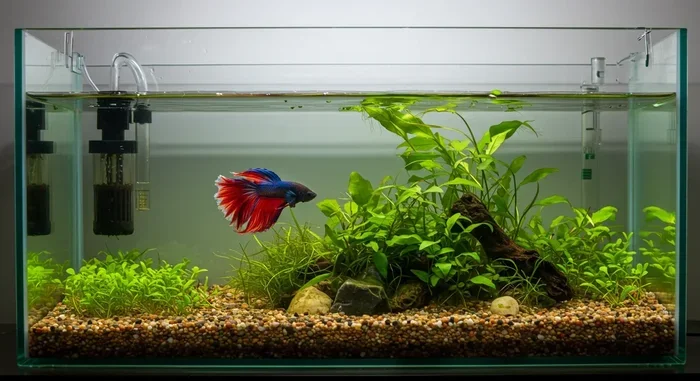
Add some plants and hiding spots to help your betta feel safe. Live plants are great because they also help keep the water clean. You can find tips on decorating a betta fish tank in our guide.
A well-decorated tank reduces stress. It gives your betta places to explore and hide. This is especially important during the first few days after a transfer.
When to Consider Quarantining Your New Betta
Quarantine means keeping your new betta in a separate tank for a few days before adding it to your main tank. This practice has many benefits.
First, it lets you observe your betta for signs of illness without putting other fish at risk. Second, it gives your fish time to recover from the stress of transport. Third, it allows you to treat any health issues in isolation.
Set up a small quarantine tank with a heater and a simple filter. Keep the water parameters stable. Feed your betta normally and watch its behavior. After 5-7 days, if your fish looks healthy and active, you can transfer it to the main tank using the same acclimation methods described above.
If you need guidance on setting up a proper tank, check out our article on how to set up a fish tank for betta fish for detailed instructions.
Quick Tips for a Successful Betta Transfer
- Always acclimate your betta using either the floating bag or drip method.
- Turn off the tank lights during and after the transfer to reduce stress.
- Do not feed your betta for the first 2-3 hours after transfer.
- Test the water before and after the transfer to ensure safe parameters.
- Be patient and give your betta time to explore its new home.
- Keep the room quiet and avoid sudden movements near the tank.
- Wash your hands before handling any tank equipment to prevent contamination.
Final Thoughts on Transferring Your New Betta Fish
Transferring a new betta fish to a tank is a process that deserves your full attention. It is not something to rush. Every step you take plays a role in your fish’s health and happiness. From preparing the tank to choosing the right acclimation method, each decision counts.
Remember that how to transfer a new betta fish to a tank is really about creating a safe, welcoming environment. Your betta has just experienced a big change. It traveled in a bag, heard new sounds, and saw new surroundings. Give it the gentle, patient care it deserves.
Follow the steps in this guide. Avoid the common mistakes. And most importantly, enjoy the process. Watching your betta settle into its new home is one of the most rewarding parts of fish keeping. Your little fighter will thank you with vibrant colors, playful behavior, and a long, healthy life.
Take your time. Do it right. And enjoy every moment with your new betta fish.
Frequently Asked Questions
How long does it take to transfer a new betta fish to a tank?
The entire acclimation process takes between 30 minutes and one hour. The floating bag method is faster, while the drip method takes a bit longer. After the transfer, give your betta 24-48 hours to settle in before feeding normally.
Patience is the key to a successful transfer. Rushing the process can cause unnecessary stress and health problems for your fish.
Can I transfer my betta directly from the store bag to the tank?
You should never pour the bag water directly into your tank. The bag water may contain contaminants, bacteria, or parasites. Always use the floating bag or drip method to acclimate your betta. Use a net to transfer the fish and discard the bag water safely.
This simple step protects your tank’s water quality and keeps your existing fish safe.
What temperature should the tank water be when transferring a betta?
The ideal tank temperature for a betta transfer is between 78-80°F (25-27°C). Use an aquarium thermometer to verify the temperature before starting the process. Matching the temperature as closely as possible prevents thermal shock.
If the temperatures differ significantly, extend the acclimation time to give your betta more adjustment time.
Should I quarantine my new betta before adding it to the main tank?
Yes, quarantining is highly recommended. A separate quarantine tank lets you observe your betta for signs of illness for 5-7 days. It also reduces stress by giving your fish a calm space to recover from the move. This practice protects all the fish in your main tank.
Even if you do not plan to add other fish, quarantine gives you peace of mind about your new betta’s health.
Why is my betta hiding after being transferred to a new tank?
Hiding is a normal stress response for betta fish. Your fish needs time to explore and feel safe in its new environment. Give it 24-48 hours. Make sure the water parameters are stable and the tank is not too bright. If hiding continues beyond two days, check for signs of illness or poor water quality.
Adding plants and decorations gives your betta more hiding spots and helps it feel secure faster.
How often should I do a water change after transferring a new betta?
Do a 25% water change 2-3 days after the transfer. This helps remove any waste or contaminants from the acclimation process. After the first week, return to your regular maintenance schedule of weekly 20-25% water changes. Always use a water conditioner when adding new water to the tank.
Clean water is essential for helping your betta recover and thrive in its new home.