How to Tell the Gender of My Betta Fish
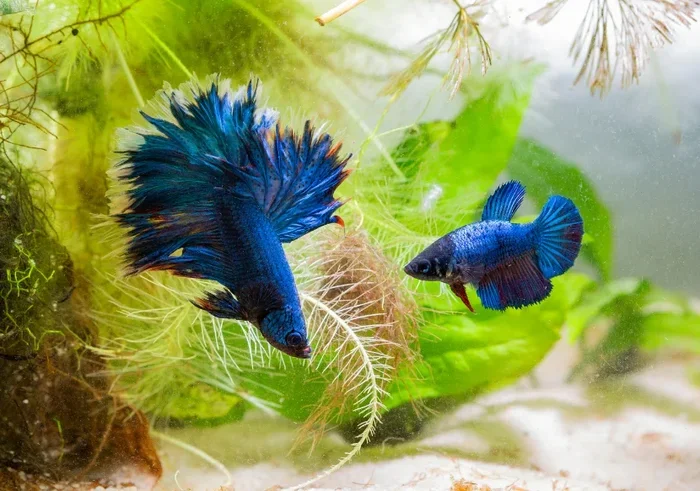
Figuring out how to tell the gender of my betta fish is easier than most people think. Male and female bettas show clear differences in color, fin length, body shape, and behavior. This guide walks you through every sign you need to look for, from the famous beard and egg spot to behavioral clues that give away your fish’s sex.
Key Takeaways
- Color and fin length: Males typically have brighter colors and longer, flowing fins compared to females.
- Body shape differences: Females tend to have a rounder, wider body, especially when carrying eggs.
- The beard and egg spot: Males display a visible beard during flaring, and females have a white egg spot on their underside.
- Behavioral clues: Males are more aggressive and prone to flaring, while females can also show territorial behavior.
- Age matters: Young bettas under 2-3 months may not show clear gender differences yet.
- Know when to seek help: If you are unsure, comparing your fish with trusted guides or consulting an expert can clear things up.
📑 Table of Contents
- Why Knowing the Gender of Your Betta Fish Matters
- Physical Differences Between Male and Female Betta Fish
- Behavioral Clues to Identify Betta Fish Gender
- How Age Affects Gender Identification
- The Egg Spot and Beard: Two Key Gender Markers
- Common Mistakes When Identifying Betta Fish Gender
- Quick Tips for Accurate Gender Identification
- What to Do After You Identify Your Betta Fish’s Gender
- Conclusion
Why Knowing the Gender of Your Betta Fish Matters
You have a beautiful betta fish swimming around your tank. But here is the thing — knowing how to tell the gender of my betta fish opens up a whole new level of understanding. It helps you make better care decisions. It helps you avoid fights in a community tank. And if you ever want to breed bettas, getting the gender right is absolutely essential.
Many new fish owners assume all bettas look the same. But male and female bettas are quite different. These differences go beyond just looks. They affect behavior, tank setup, feeding habits, and even lifespan. When you know what to look for, you become a much better betta parent.
Learning betta fish identification does not have to be hard. You do not need a microscope or a degree in marine biology. You just need to know what signs to watch for. This guide breaks it all down in simple, easy-to-follow steps. Whether your fish is a baby or a full adult, you will find the clues you need right here.
So let us dive in and explore the world of betta fish sexing. By the end of this article, you will feel confident about identifying your fish’s gender on your own.
Physical Differences Between Male and Female Betta Fish
The easiest way to start identifying betta fish gender is by looking at physical traits. Both males and females are gorgeous, but nature gave them different features. Let us break down the main physical differences you should know about.
Color Differences
Male bettas are famous for their vibrant, intense colors. Think deep blues, rich reds, and stunning greens. This is not an accident. Males have evolved to show off their colors to attract mates and warn off rivals. When you enhance the color of betta fish, you are usually working with a male specimen.
Females, on the other hand, tend to have more muted tones. Their colors are still beautiful, but they are softer and less intense. Some females do develop bright colors, especially when they are ready to breed. But in general, the brighter your fish, the more likely it is a male.
Fin Length and Shape
This is probably the most obvious difference. Male betta fish have long, flowing fins that drag behind them as they swim. The tail fin, dorsal fin, and anal fin all stretch out beautifully. Some males have fins so long they almost look like ribbons in the water.
Females have much shorter fins. Their fins are still elegant, but they sit closer to the body. This difference makes it fairly easy to tell the two apart once your fish reaches full maturity. If you are unsure, compare your fish with photos of male and female betta fish side by side.
Body Shape and Size
Females tend to have a rounder, thicker body than males. This is especially true when a female is carrying eggs. You might notice a white line or dot on her underside, which is called the egg spot or ovipositor. More on that in a moment.
Males usually have a more streamlined, slender body shape. They also tend to be slightly larger overall. But do not rely on size alone. Body shape combined with other signs gives you a much clearer picture of your fish’s gender.
| Feature | Male Betta | Female Betta |
|---|---|---|
| Color Intensity | Bright and vivid | Muted and softer |
| Fin Length | Long and flowing | Short and close to body |
| Body Shape | Streamlined and slender | Round and wider |
| Egg Spot | Rare or absent | Present as a white dot |
| Beard (Branchiostegal Membrane) | Visible when flaring | Less visible or absent |
| Overall Size | Slightly larger | Slightly smaller |
Behavioral Clues to Identify Betta Fish Gender
Physical traits are your first clue. But behavior tells you a lot too. Watching how your fish acts can help you confirm what you already suspect about its gender.
Flaring and Aggression
Males are the kings of flaring. They spread their gills, puff up their bodies, and look absolutely magnificent when they feel threatened. This is called betta fish aggression, and it is mostly a male trait. Males flare at other males, at their own reflection, and sometimes even at their owner.
Females can flare too, but they do it less often and less dramatically. A female betta may show some aggression, especially in a sorority tank. But she is generally less confrontational than a male. If your fish flares constantly, you are probably looking at a male.
Nesting Behavior
Male bettas are the ones that build bubble nests. You might notice small bubbles clustered together at the surface of the water. This is a sign that your male feels safe and ready to breed. Females do not build bubble nests.
If you see a bubble nest, that is a strong indicator of a male fish. It is one of the most fun things to observe as a betta owner and a great clue for betta fish gender identification.
Courtship and Breeding Behavior
When a male and female are ready to breed, you will notice distinct behaviors. The male will wrap his body around the female to encourage her to release eggs. The female will become more plump as she produces eggs. This breeding behavior is impossible to miss once you know what to look for.
Understanding these behaviors also helps you provide better betta fish care. If you keep a male and female together for breeding purposes, you need to monitor them closely. The male can become aggressive toward the female after spawning.
How Age Affects Gender Identification
Here is something many people do not realize — age plays a big role in how to tell the gender of a betta fish. Baby bettas and young juveniles can be extremely difficult to sex. The differences simply are not visible yet.
Young Betta Fish (Under 2 Months)
When bettas are very young, they look almost identical regardless of gender. Both males and females have similar colors, fin lengths, and body shapes. At this stage, you really cannot tell them apart with any confidence. Most experts recommend waiting until your fish is at least 2 to 3 months old before trying to determine its gender.
Adolescent Betta Fish (2-4 Months)
Between 2 and 4 months, differences start to show. Males begin developing longer fins and more intense colors. The beard becomes more visible during flaring. Females start to show a rounder body shape. This is the best window for determining betta fish gender if your fish is still young.
Adult Betta Fish (4 Months and Older)
By the time your betta reaches 4 months or older, all the gender signs should be clearly visible. The colors are fully developed, the fins are at their full length, and the body shape differences are obvious. This is when betta fish sexing becomes the easiest and most reliable.
If you are trying to figure out the age of your fish, you might also want to check out our guide on how to tell the age of a betta fish. Knowing the age helps you interpret gender signs more accurately.
The Egg Spot and Beard: Two Key Gender Markers
Let us talk about two of the most important markers for identifying betta fish gender. These two features alone can answer most of your questions.
The Egg Spot (Ovipositor)
The egg spot is a small white dot located on the underside of the female betta, near the vent area. It is where eggs pass through during spawning. Not every female has a clearly visible egg spot, but most do. Males rarely show this marking.
If you see a white dot on the underside of your fish, there is a good chance you have a female. However, be careful not to confuse this with other markings on the fish’s body. Look for it near the anal fin, and make sure your fish is calm and well-lit for a clear view.
The Beard (Branchiostegal Membrane)
The beard is a flap of membrane that sits behind the gills of male bettas. When a male flares, this beard becomes visible and looks like a small collar around the neck area. Females also have this membrane, but it is much less prominent and rarely visible even during flaring.
The beard is one of the most reliable gender markers for betta fish identification. If your fish flares and you see a pronounced beard, you are almost certainly looking at a male. If there is no visible beard, your fish is likely female.
Common Mistakes When Identifying Betta Fish Gender
Even experienced fish keepers sometimes make mistakes when determining the sex of a betta fish. Here are the most common errors to avoid.
Relying on Only One Trait
Do not base your conclusion on a single trait. A female betta with unusually bright colors might fool you. A young male with short fins might look female. Always combine multiple clues — color, fins, body shape, behavior, egg spot, and beard — before making a final call.
Comparing Your Fish to the Wrong Age Group
If your fish is still young, do not expect clear gender differences. Comparing a 1-month-old betta to adult photos will only confuse you. Wait until your fish reaches at least 2 to 3 months of age. You can also read more about telling the age of a female betta fish to help narrow things down.
Assuming All Females Are Dull
Some females do develop bright colors, especially breeding-age females. Do not assume a colorful fish is automatically male. Always check for the egg spot and body shape to confirm.
Ignoring Behavior
Many people focus only on physical traits and forget about behavior. Flaring frequency, bubble nest building, and breeding behavior all provide valuable clues. If you ignore these signs, you might miss important information about your fish’s gender.
Not Knowing When to Ask for Help
If you have tried everything and still cannot tell the gender, that is okay. Sometimes it helps to get a second opinion. You can compare your fish with images online, ask in fish-keeping forums, or visit a local fish store. If your fish seems unwell and you are not sure whether the symptoms are gender-related or health-related, check out our article on how to tell if my betta fish is sick to rule out health issues first.
Quick Tips for Accurate Gender Identification
- Look in good lighting. Dim lighting makes it hard to see colors and markings clearly.
- Be patient. Wait until your fish is at least 2 to 3 months old for reliable results.
- Watch for flaring. A mirror or reflection can trigger a flare, making the beard and fin length more visible.
- Use multiple clues. Never rely on just one trait. Combine color, fins, body shape, and behavior for the most accurate identification.
- Take photos. Pictures let you compare your fish with reference images and track changes over time.
- Know your breed. Different betta breeds may show slightly different gender traits. Research your specific variety for the best results.
What to Do After You Identify Your Betta Fish’s Gender
Once you know whether your betta is male or female, you can adjust your care routine accordingly. Male and female bettas have slightly different needs, and understanding these differences helps your fish live a longer, healthier life.
If you have a male betta fish, you will want to set up a tank that accommodates his longer fins and more active swimming style. Males also need careful monitoring if kept with other fish, since they tend to be more territorial. Check out our guide on how to take care of a betta male fish for detailed tips on male-specific care.
If you have a female betta, you might consider a sorority tank with multiple females. Females can live together more peacefully than males, but you still need to provide enough space and hiding spots. Proper betta fish water quality and tank setup apply to both genders equally.
Whether your fish is male or female, the basics of proper betta fish care remain the same. Keep the water warm, maintain good filtration, feed a balanced diet, and watch for signs of illness. Knowing your fish’s gender simply helps you tailor the care to its specific needs.
Conclusion
How to tell the gender of my betta fish comes down to a combination of physical traits, behavior, and age. Males are brighter, have longer fins, flare more aggressively, and build bubble nests. Females are rounder, have shorter fins, and carry an egg spot. By combining all these clues, you can confidently identify your betta’s gender.
Remember that patience is key. Young fish may not show clear differences right away. And some individuals may not fit the typical patterns perfectly. That is completely normal. The more you observe your fish, the easier it becomes to tell male from female.
Use this knowledge to provide better care, choose compatible tank mates, or even plan for breeding. Your betta fish will thank you with vibrant colors and healthy, happy swimming. Now that you know the secrets of betta fish gender identification, you are well on your way to becoming a true betta expert.
Frequently Asked Questions
Can I tell the gender of my betta fish when it is still a baby?
It is very difficult to sex a baby betta. Gender differences are not visible until the fish is at least 2 to 3 months old. Young bettas look almost identical regardless of gender, so patience is essential. Wait until your fish matures before trying to determine its sex.
What is the fastest way to tell if my betta fish is male or female?
The fastest method is to look at fin length and color. Males have longer, more flowing fins and brighter colors. If you can see your fish flare, check for a visible beard. These two traits give you a quick and reliable answer in most cases.
Do female betta fish flare?
Yes, females can flare, but they do it less often and less dramatically than males. A female flare is usually shorter and less intense. If your fish flares frequently and aggressively, it is most likely a male.
What does the egg spot look like on a female betta fish?
The egg spot is a small white dot on the underside of the female, near the anal fin area. It looks like a tiny grain of salt. Not all females show a clearly visible egg spot, but most breeding-age females do. This spot is where eggs exit the body during spawning.
Can two male betta fish live together?
No, two male bettas should never be housed together. They will fight aggressively and can seriously injure or kill each other. Each male needs his own separate tank. If you want multiple bettas, consider keeping one male with several females in a carefully set up sorority tank.
Does the gender of a betta fish affect its lifespan?
Not significantly. Both male and female bettas live similar lifespans of 2 to 5 years with proper care. However, males may face more stress from territorial behavior, which can slightly impact their health. Providing a calm, well-maintained tank benefits both genders equally.