Where Is Betta Fish From
Betta fish, also known as Siamese fighting fish, are native to the shallow, warm waters of Southeast Asia, specifically Thailand (formerly Siam), Cambodia, Vietnam, and Malaysia. Their infamous aggression stems from centuries of selective breeding for combat in their native region. While wild bettas are typically greenish-brown with shorter fins, the dazzling colors and flowing fins of pet store bettas are a result of intensive captive breeding. Understanding their natural origins is key to providing proper care, as they thrive in warm, slow-moving waters resembling their native rice paddies and floodplains.
Key Takeaways
- Native Region: Wild betta fish (Betta splendens) originate from the continental shelf of Southeast Asia, primarily in Thailand, but also naturally in Cambodia, Vietnam, and parts of Malaysia.
- Natural Habitat: They inhabit shallow, slow-moving or stagnant bodies of water like rice paddies, swamps, ditches, and floodplain pools, which are often warm, vegetated, and have low oxygen levels.
- Historical Context: The name “Siamese fighting fish” comes from their historical use in gambling matches in Siam (Thailand), where they were selectively bred for aggression and combat prowess.
- Domestication & Breeding: The brilliant colors and elaborate fins of modern bettas are entirely a product of over a century of selective captive breeding, starting in the late 19th century when they were first exported to Europe.
- Labyrinth Organ: A key adaptation to their native environment is their labyrinth organ, a specialized structure that allows them to breathe atmospheric air, enabling survival in oxygen-poor, stagnant waters.
- Conservation Status: While the captive-bred pet trade is massive, wild betta populations face threats from habitat loss, pollution, and hybridization with released pet fish, leading to a “Vulnerable” IUCN status in some localities.
- Care Implications: Knowing their origin explains why bettas need warm water (24-28°C / 75-82°F), a filter (though gentle), and why they can survive in small containers only briefly—it mimics their natural, temporary puddle habitats but is not ideal long-term welfare.
📑 Table of Contents
- Introduction: More Than Just a Pretty Face in a Small Bowl
- The Native Realm: Southeast Asia’s Shallow Kingdoms
- From Warrior to Wonder: The Siamese Fighting Tradition
- The Great Journey West: From Siam to the World Stage
- Modern Marvels: The Explosion of Captive Varieties
- Back to the Wild: Conservation and the True Nature of Betta Splendens
- Conclusion: A Living Connection to Southeast Asia
Introduction: More Than Just a Pretty Face in a Small Bowl
You’ve seen them everywhere: in tiny cups at the grocery store, in elegant single-specimen tanks, or flaring their gills at their own reflection. The betta fish, with its flowing silk-like fins and jewel-toned scales, is one of the world’s most popular aquarium inhabitants. But have you ever stopped to wonder, where is the betta fish from? The story of this captivating creature is a journey from the muddy, crowded rice fields of Southeast Asia to the pristine glass tanks of millions of homes worldwide. It’s a tale of natural adaptation, human intervention, and a surprising twist of history that turned a fierce local warrior into a global symbol of aquatic beauty.
The answer to “where is betta fish from” is deeply rooted in the tropical landscapes of a specific region. Understanding this origin isn’t just an interesting trivia point; it’s the foundational key to unlocking proper betta care. Their native environment shaped every aspect of their biology—from how they breathe to how they behave. By tracing their footsteps back to the wild, we can better appreciate the creature in our care and move beyond the persistent, harmful myths about their needs. So, let’s dive in and explore the true homeland of the magnificent betta.
The Native Realm: Southeast Asia’s Shallow Kingdoms
A Geographic Heartland: The Basin of the Chao Phraya and Mekong
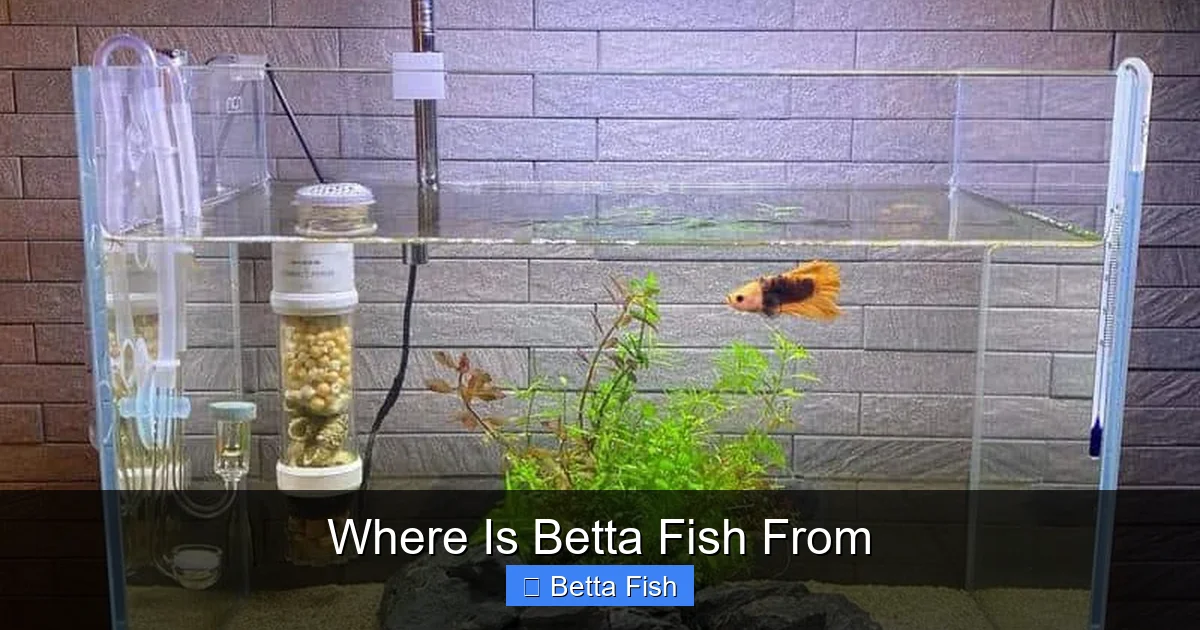
To answer where is betta fish from with precision, we must point to the continental shelf of Southeast Asia. The definitive native range centers around the Chao Phraya River basin in central Thailand, which is considered the heartland of the species Betta splendens. From there, their natural distribution naturally extends into neighboring countries. Historical records and biological surveys confirm wild populations exist in the Mekong River basin of Cambodia and Vietnam, and in the southern reaches of Malaysia, particularly in the states of Pahang and Perak. Some sources also include parts of Myanmar and Indonesia for related Betta species, but for the specific Siamese fighting fish (Betta splendens), Thailand is the undisputed cradle.

Visual guide about Where Is Betta Fish From
Image source: buildyouraquarium.com
This region is characterized by a tropical monsoon climate. There is a stark contrast between the scorching, dry season and the torrential, flooding wet season. It is within this dynamic cycle that the betta evolved. During the rainy season, massive flooding transforms the landscape, connecting isolated ponds, ditches, and rice paddies into vast, shallow networks of slow-moving or stagnant water. As the waters recede, these connections break, leaving bettas trapped in isolated, often shrinking pools—a scenario that has profoundly influenced their behavior and physiology.
The Wild Habitat: Rice Paddies, Swamps, and Shallow Pools
Imagine a scene: a vast, green expanse of flooded rice fields under a blazing sun. The water is shallow, barely a foot deep in places, choked with aquatic plants like water hyacinth and duckweed. The water is warm, often exceeding 30°C (86°F), and can become quite low in dissolved oxygen, especially at night when plant respiration consumes it. This is the quintessential wild betta habitat.
They are not found in fast-flowing rivers or deep, clear lakes. Their niche is the marginal, ephemeral water body. Ditches alongside roads, murky backwater pools, seasonally flooded forest floors, and the irrigation canals of rice farms are their natural kingdoms. The water is typically soft to moderately hard, slightly acidic to neutral, and often tinted brown from tannins released by decaying vegetation. Vegetation is abundant, providing crucial hiding spots from predators like birds, snakes, and larger fish, as well as sites for building their iconic bubble nests.
Why These Waters? The Labyrinth Organ Advantage
The defining feature that allows bettas to thrive in such challenging conditions is their labyrinth organ. This is a specialized, folded respiratory structure located in a chamber above the gills. It’s a highly efficient adaptation for breathing atmospheric air. A wild betta will frequently dart to the surface to gulp a bubble of air, which is then absorbed through the labyrinth organ. This ability is a direct evolutionary response to the oxygen-poor, stagnant waters of their native habitat. It’s why you often see your pet betta taking a quick sip from the surface—it’s not just a habit; it’s a biological necessity inherited from its ancestors in the Thai rice paddies. This organ also means they are obligate air-breathers; they must have access to the water’s surface to survive.
From Warrior to Wonder: The Siamese Fighting Tradition
Pla Kat: The “Biting Fish” of Siam
The name “betta” is derived from “ikan bettah,” a term from the Malay language meaning “a kind of fighting fish.” In their native Thailand, they were traditionally known as “Pla Kat,” which translates to “fighting fish” or “biting fish.” This moniker wasn’t given for their beauty, but for their ferocious territorial and combative nature, especially among males. Historical accounts from the 19th century describe matches where two males were placed in a small vessel or ring to fight. These bouts were not usually to the death but would continue until one fish retreats, shows submission, or is too exhausted to continue. The fights were intense, with fins flared, gills expanded, and dramatic nipping and locking of jaws.
Visual guide about Where Is Betta Fish From
Image source: aquariadise.com
Selective Breeding for Aggression: An Early Form of Aquaculture
Long before they were bred for flowing fins and rainbow colors, bettas were subject to one of the earliest forms of selective breeding for behavior. Local villagers and royalty in Siam would pit their best fighters against each other, often tied to wagers. The most aggressive, tenacious, and resilient males were kept as breeders. Over generations, this artificial selection amplified innate aggressive and territorial traits. This is the critical historical context for where is betta fish from—they come from a legacy of combat. It explains the modern male betta’s solitary nature and why they flare at their own reflection or any intruder. This history is not a myth; it is a documented practice that shaped the species’ temperament long before Western breeders ever saw one.
The Great Journey West: From Siam to the World Stage
The First Export: A Gift and a Curiosity
The betta’s journey from a local Southeast Asian phenomenon to a global pet began in the late 19th century. The first recorded export to the West is widely credited to Dr. Theodore Cantor, a Danish physician and naturalist working in the Bengal Medical Service who was stationed in Singapore. In 1840, he sent specimens back to Europe. However, the pivotal moment came in 1893 at the World’s Columbian Exposition in Chicago. It is said that a Siamese (Thai) diplomat or trader, perhaps a member of Prince Damrong Rajanubhab’s delegation, gifted some fighting fish to an American official or exhibitor. These fish caused a sensation, captivating fairgoers with their vivid colors and dramatic flaring displays. They were soon dubbed “Siamese fighting fish” and began appearing in the catalogues of pioneering aquarium suppliers like Paul Matte in Germany and later in the United States.

Visual guide about Where Is Betta Fish From
Image source: coloringpagesonly.com
Early Western Breeding and the Shift to Ornamentals
Early European and American breeders were fascinated by the betta’s aggression. They held their own clandestine fights, mirroring the Siamese tradition. But a profound shift occurred in the early 20th century. Breeders, particularly in France and Germany, began to selectively breed not for aggression, but for extreme fin length, symmetry, and color. The first long-finned varieties, known as “veiltails,” appeared. The goal transformed from creating a better fighter to creating a living work of art. By the 1920s and 1930s, the focus on ornamental traits was in full swing. The creation of the halfmoon tail type—where the tail spreads a full 180 degrees like a Greek letter theta—in the 1960s in the United States marked the pinnacle of this ornamental revolution. The betta had completed its metamorphosis from a warrior to a wonder, its original aggression now often seen as a undesirable trait to be managed rather than celebrated.
Modern Marvels: The Explosion of Captive Varieties
A Spectrum of Color and Form
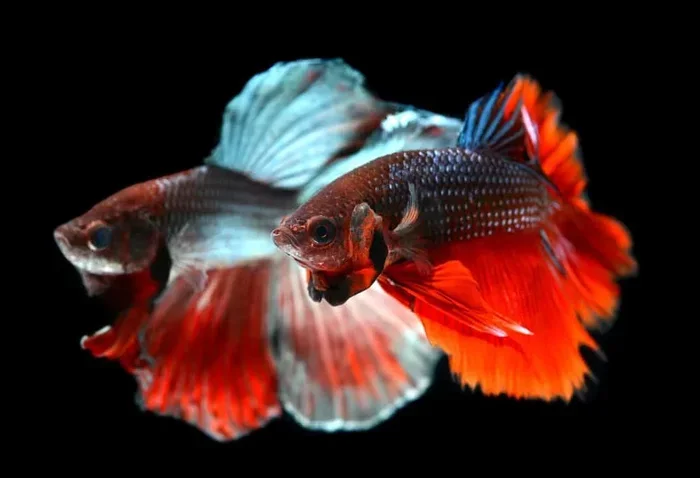
Step into any modern betta store, and you’ll see a dazzling array that has zero equivalent in the wild. Wild bettas are typically a subdued, camouflaged greenish-brown or greyish-blue with short, rounded fins. The captive-bred betta is a testament to what selective breeding can achieve. Colors now span the entire visible spectrum: vibrant reds, royal blues, metallic coppers, solid yellows, pure whites, and intricate patterns like marbles, koi, and butterflies. Fin types have exploded beyond the classic veil tail: the grand halfmoon, the spiky and dramatic crowntail, the fluffy and rounded delta tail, the elegant and flowing rosetail, and the unique “dumbo” ears (enlarged pectoral fins).
Genetics and the “Marble” Phenomenon
This variety is a result of manipulating complex genetic pathways. Betta color is controlled by layers of pigment cells (chromatophores): melanin (black/brown), xanthophores (yellow), erythrophores (red), and iridophores (blue/iridescent). Breeders have learned to select for the expression, suppression, and layering of these cells. A famous example is the “marble” pattern, where the fish’s color changes over its lifetime. This is often linked to a transposable element—a “jumping gene”—that can turn color genes on or off unpredictably, creating a living canvas that evolves. The practical tip for potential owners? This genetic diversity means a betta’s adult color can be very different from its juvenile appearance, and “marble” bettas are known to change throughout their lives.
Back to the Wild: Conservation and the True Nature of Betta Splendens
Threats to the Native Population
Despite the billions of captive bettas, the status of wild Betta splendens is a growing concern. The International Union for Conservation of Nature (IUCN) has listed the species as “Vulnerable” in Thailand due to several anthropogenic threats. The primary danger is habitat destruction. The conversion of natural swamps and floodplains into intensive agriculture (especially palm oil plantations), urban development, and infrastructure projects has drastically reduced and fragmented their native shallow water habitats. Pollution from agricultural runoff (pesticides, fertilizers) and untreated sewage degrades the water quality of the remaining habitats. Furthermore, the release of non-native captive bettas into the wild poses a significant threat. These released fish, often hybrids with unknown genetics, can interbreed with pure wild stocks, leading to genetic dilution. They also compete with and may introduce diseases to native populations.
The Ethical Imperative of Responsible Ownership
This wild context reframes the betta’s presence in our homes. That beautiful cup from the store represents a species with a rich ecological and cultural history. Understanding where betta fish are from directly translates into better care. They need warm water because their native tropics are warm. They need a filter not just for cleanliness, but to mimic the gentle water movement and biological processes of their natural ecosystem. They need hiding places (plants, caves) because their wild world was dense with vegetation for security. The “myth of the hardy betta” that can live in a dirty vase is a gross misunderstanding of their biology; it’s a survival mechanism in the wild that becomes a slow, stressful death in captivity. Respecting their origin means providing a tank of at least 5 gallons (19 liters) with a heater, a gentle filter, and regular water changes—the bare minimum to approximate a fraction of their natural, albeit challenging, home.
Conclusion: A Living Connection to Southeast Asia
So, where is the betta fish from? The answer paints a vivid picture: the sun-drenched, flooded rice paddies of Thailand; the tannin-stained, plant-choked ditches of Cambodia; the warm, ephemeral pools of the Mekong floodplain. From these humble and demanding beginnings, a fish with a labyrinth organ for breathing air and a fierce territorial spirit was shaped by millennia of natural selection and centuries of human cultural practice. Its journey from the gambling rings of Siam to the global aquarium trade is a story of transformation, where selective pressure shifted from aggression to aesthetics.
Today, the betta in your home is a domesticated marvel, a product of intense human-guided evolution. Yet, its needs and instincts are a direct echo of its Southeast Asian origins. By remembering its roots—the warm, still, vegetated waters, the need to surface for air, the solitary and territorial nature—we move from simply owning a pet to becoming a steward for a creature with a profound history. The next time you watch your betta flare at its reflection or build a bubble nest at the water’s surface, you’re witnessing a behavior honed over thousands of years in the wilds of Thailand. Providing care that honors that origin is the highest form of appreciation for this extraordinary fish.
Frequently Asked Questions
What country are betta fish originally from?
Betta fish (Betta splendens) are originally from Southeast Asia, with their core native range centered in Thailand (formerly Siam). Wild populations are also native to parts of Cambodia, Vietnam, and Malaysia. The name “Siamese fighting fish” directly references their origins in Siam.
What is the difference between a wild betta and a pet store betta?
Wild bettas are typically smaller (2-3 inches), have short, rounded fins, and display camouflaged colors like green, brown, or grey with iridescent hints. Pet store bettas are the result of over a century of selective breeding for long, flowing fins and vibrant, solid colors like red, blue, and white that do not exist in the wild. Their temperament is also similar, but wild bettas are generally less intensely aggressive due to not being bred for combat.
How long do betta fish live in the wild vs. in captivity?
In the challenging wild environment, with predators, pollution, and habitat instability, the average lifespan of a betta is typically 2-3 years. In a properly maintained captive environment with stable water parameters, a high-quality diet, and no predators, bettas can live 3-5 years, and sometimes even longer. Their lifespan is heavily dependent on the quality of care, directly linked to replicating conditions from their native habitat.
Why are betta fish so aggressive?
The aggression, especially in males, is largely a result of centuries of selective breeding for combat in their native Thailand. In the wild, males are territorial and will flare and fight to defend a small patch of water, a behavior that was amplified for gambling matches. This innate aggression means they should almost always be kept alone, as they will attack other male bettas and often fin-nip slower, more peaceful tankmates.
Are betta fish hard to take care of?
They are often mislabeled as “easy” or “beginner” fish due to their ability to survive in poor conditions, but this is a myth of survival, not welfare. Providing proper, ethical care requires a filtered, heated tank (at least 5 gallons), regular water changes, and a varied diet. Meeting these needs, which mimic their tropical wild habitat, is straightforward for a committed owner but more demanding than keeping them in a small, unheated bowl.
Are wild betta fish endangered?
The wild species Betta splendens is currently listed as “Vulnerable” on the IUCN Red List, primarily in Thailand. Their native swamp and rice paddy habitats are being lost to agriculture and development. Pollution and the release of captive-bred hybrids also threaten the genetic purity of remaining wild populations. While not yet critically endangered, their wild status is a significant conservation concern.