How to Tell the Age of a Betta Fish
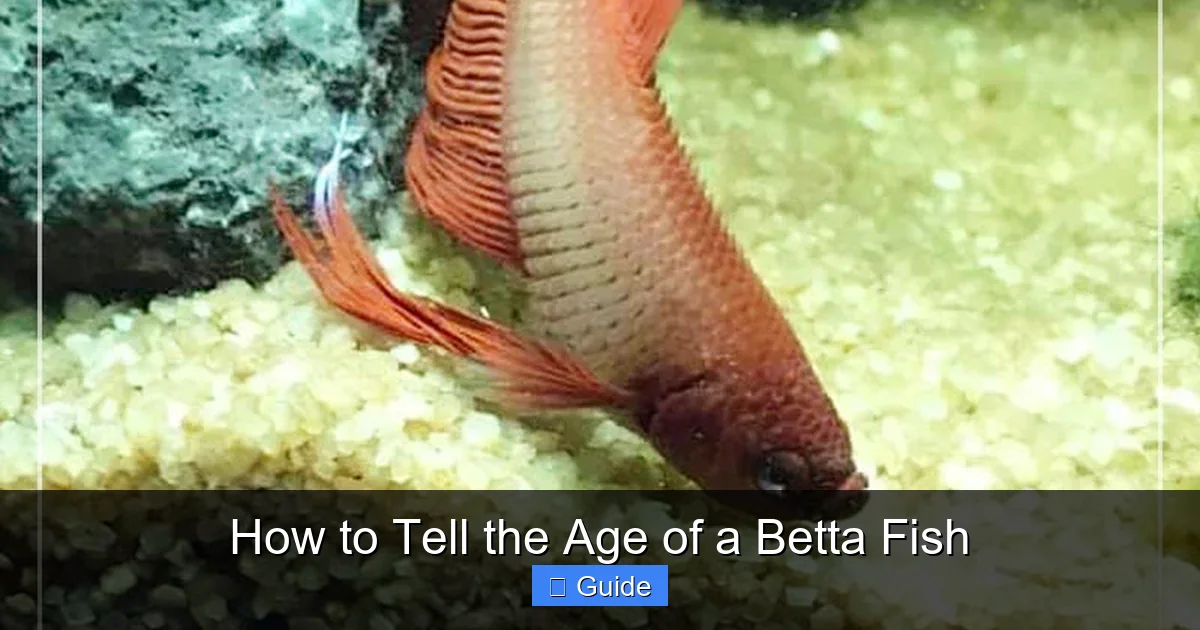
Determining the exact age of a betta fish is often impossible without breeder records, but you can make a reliable estimate by observing key physical and behavioral traits. By examining fin length and shape, body size and shape, color vibrancy and patterns, and activity levels, you can categorize your betta as a juvenile, young adult, mature adult, or senior. This guide breaks down each indicator with clear examples and photos, helping you understand your fish’s life stage and provide age-appropriate care.
Key Takeaways
- Fin Development is a Primary Clue: Juvenile bettas have short, “baby” fins that grow dramatically in the first 6-12 months. Long, flowing, fully developed fins indicate a fish at least 6-12 months old.
- Body Shape Changes with Age: Young bettas are slender and torpedo-shaped. As they mature (around 1 year), they fill out, becoming deeper-bodied and more robust. Older fish may become thinner or develop a slight “hump.”
- Color Can Fade or Intensify: Bright, rich, and consistent coloration is a sign of a healthy, mature adult (6 months to 2 years). Fading, dull colors, or uneven patches often point to a younger fish or an older fish in decline.
- Behavior Shifts Over Time: Energetic, curious, and frequent flaring is typical of adolescents and young adults. Mature adults are more territorial but steady. Seniors (3+ years) may be less active, rest more, and flare less often.
- Size is a Rough Estimate: A fully grown adult betta typically reaches 2.5 to 3 inches (6-7.5 cm) from tail tip to snout. Fish significantly smaller than this are likely under 6 months old.
- There is No Single “Age Test”: You must combine multiple indicators—fins, body, color, and behavior—to form a confident estimate. One trait alone can be misleading.
- The Most Accurate Record is a Purchase Date: If you bought your betta from a reputable store or breeder, the date of purchase is the most reliable starting point for calculating age.
📑 Table of Contents
- Introduction: The Mystery of Your Betta’s Birthday
- Chapter 1: The Fin Code – Reading the Most Obvious Signal
- Chapter 2: Body Building – Shape, Size, and Substance
- Chapter 3: The Color Chronicle – Vibrancy, Patterns, and Patches
- Chapter 4: The Behavior Blueprint – Energy, Flare, and Personality
- Chapter 5: Putting It All Together – A Practical Age Estimation Guide
- Chapter 6: The Limits of Observation – When You Just Can’t Know
- Conclusion: Becoming an Expert Observer
Introduction: The Mystery of Your Betta’s Birthday
You’ve welcomed a beautiful betta fish into your home. Maybe it was a stunning rescue with torn fins, maybe a vibrant little fish from the local store, or perhaps a majestic show fish with flowing robes. You watch it daily, you care for it meticulously, but one question nags at you: how old is my betta fish? Unlike a dog or a cat, your aquatic companion doesn’t come with a birth certificate. The pet store tag said “male betta,” not “male betta, approximately 8 months old.”
This isn’t just curiosity for its own sake. Understanding your betta’s approximate life stage is a cornerstone of providing optimal, tailored care. The needs of a frisky juvenile are different from those of a majestic mature adult or a gentle senior. A young betta might need a larger tank to accommodate explosive growth, while an older fish may require warmer, softer water to ease joint stiffness. By learning to read the subtle and not-so-subtle signs etched on your fish’s body and reflected in its behavior, you unlock a deeper understanding of its health and history. This guide will walk you through every observable clue, combining them into a practical framework for estimating your betta’s age. Think of it as becoming a betta detective, gathering evidence to solve the case of the unknown birthday.
Chapter 1: The Fin Code – Reading the Most Obvious Signal
If there’s one feature that defines a betta fish, it’s its magnificent fins. These are not just for show; they are living documents of the fish’s growth history. Fin development is arguably the single most reliable and visible age indicator for a betta.
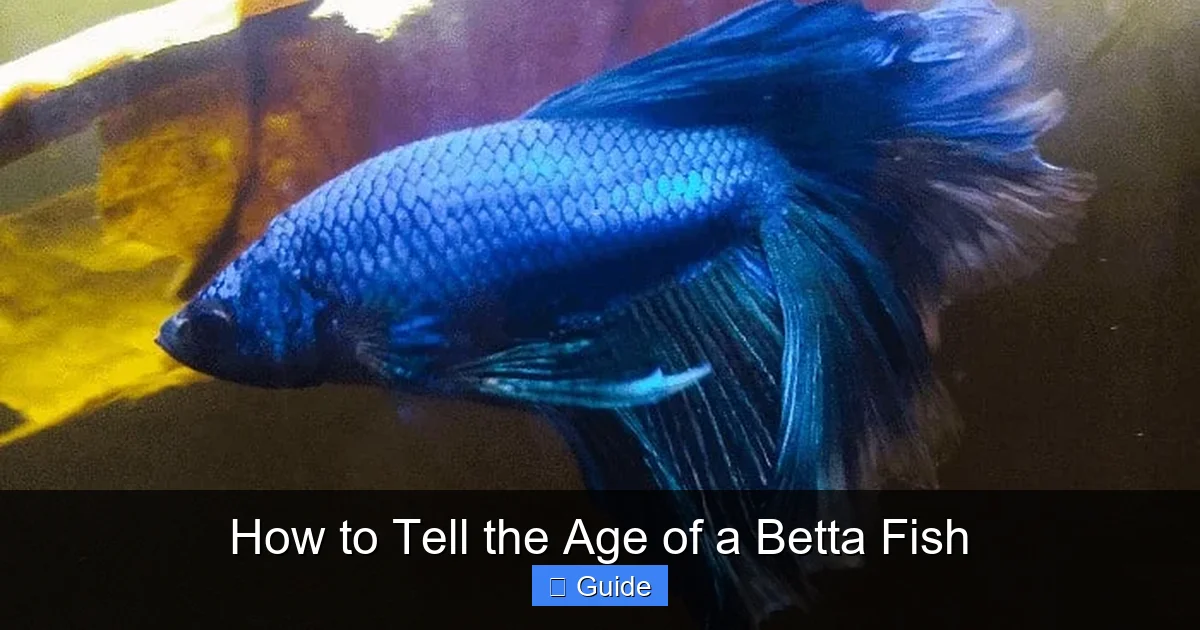
Visual guide about How to Tell the Age of a Betta Fish
Image source: aquariumsphere.com
The Juvenile Fin: Short, Stubby, and Functional
When betta fry (babies) first become free-swimming, their fins are barely there. As they grow into what we’d recognize as a “baby” or juvenile betta (roughly 1 to 4 months old), their fins are still relatively short, often described as “stubby” or “baby fins.” The caudal (tail) fin might be only slightly longer than the body, and the dorsal, anal, and pelvic fins are small and underdeveloped. The edges are usually straight or only mildly rounded, lacking the dramatic curves, points, or extensive filamentation seen in adults. If you see a betta with noticeably short fins that seem proportional to a small body, you are almost certainly looking at a fish under 6 months of age.
The Transformation: The 6 to 12 Month Growth Spurt
This is the magic window. Between approximately 6 and 12 months of age, a betta undergoes its most dramatic fin transformation. The fins begin to lengthen rapidly. The caudal fin starts to develop its characteristic shape—whether it’s a half-moon (180-degree spread), a veil tail (long and flowing with a gentle curve), a crown tail (spiky rays extending beyond the main web), or another variety. The dorsal fin becomes more prominent on the back, and the anal fin (the long fin on the belly) grows significantly. The pelvic fins also become longer and more elegant. By about 12 months, a betta should have its adult fin length and basic form. A betta with long, full fins but a still-slightly-slender body is likely in this 6-12 month young adult phase.
Mature Adult Fins: Full, Flowing, and Characteristic
Once a betta reaches full maturity (1 to 2 years old), its fins are at their maximum genetic potential for that specific variety. They are long, well-formed, and display the full, intended beauty of the strain. For example, a half-moon male should have a tail that opens to a perfect 180-degree semicircle. A plakat (short-finned) betta will have its characteristic sturdy, short fins, but even these are fully developed by this age. The fin rays are strong, and the fin membranes are healthy and undamaged (assuming good health). The fins of a 2-year-old are not necessarily longer than those of a 1-year-old; they are simply fully grown.
The Senior’s Fins: Signs of Wear and Tear
As bettas enter their senior years (typically 3+ years, though some live to 5), the magnificent fins can begin to show age. You might notice:
- Fin Rot or Damage: Older fish are more susceptible to fin rot, which causes ragged, blackened, or decaying edges. This is a health issue, not just age, but it’s more common in seniors.
- Reduced Flare: When a senior betta flares (spreads its gills and fins to appear larger), the fin spread may not be as full or as high as it once was. There’s a certain stiffness or lack of “oomph.”
- Simple Wear: Like an old flag, years of fluid movement can lead to slight fraying or a less pristine appearance compared to a younger fish in prime condition.
Practical Tip: Take clear, well-lit side-view photos of your betta every few months. Compare them over time. The gradual lengthening of fins is the most undeniable proof of a growing fish. A betta that looks the same size fin-wise for over a year is likely fully grown, pointing to an age of at least 12 months.
Chapter 2: Body Building – Shape, Size, and Substance
While fins are the most obvious, the betta’s core body tells its own story. A betta is not just a set of fins; it’s a living organism that changes shape as it matures and ages.
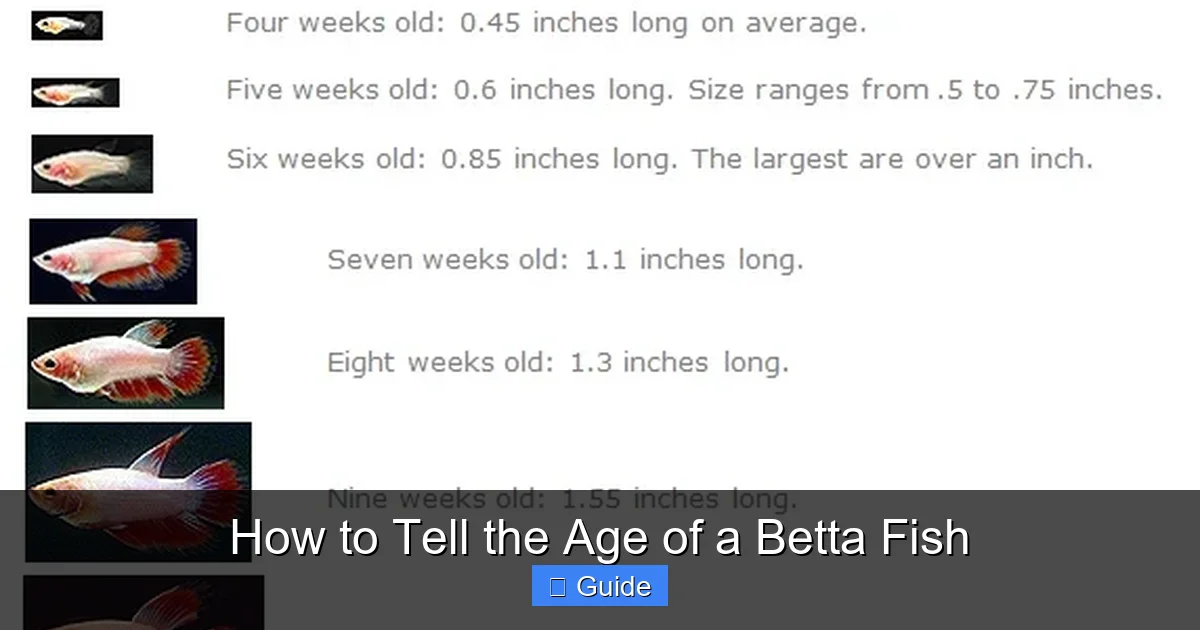
Visual guide about How to Tell the Age of a Betta Fish
Image source: nippyfish.net
The Slender Juvenile: All Potential, No Bulk
Young bettas, even those with decent fin length, often have a distinctly slender, almost torpedo-shaped body. This is the physique of a growing animal—lean, efficient, and built for speed (or at least quick darting). There is little depth or “cheek” to the body. When viewed from above, the body is narrow. From the side, it’s a streamlined tube. This shape is typical of bettas under 8-10 months old. They are still putting their energy into growing length and fins, not into filling out.
The Prime Adult: Depth and Presence
As a betta approaches and passes its first birthday, a wonderful transformation occurs: it “fills out.” The body becomes deeper, thicker, and more robust. You’ll see a noticeable increase in girth just behind the gill plates and before the dorsal fin. This gives the fish a more powerful, substantial look. A mature adult male, in particular, should have a body that looks strong and healthy, not skinny. This increased body mass is a clear sign of a fish that has reached its full grown size, which typically happens between 10 and 14 months. A betta with long fins AND a deep, thick body is very likely over 1 year old and in its prime.
The Senior Slenderization: A Red Flag or Normal Aging?
Here’s where observation becomes critical. As bettas age, their metabolism can slow. It’s common for senior bettas (3+ years) to become slightly slimmer, even if their appetite is good. This is a natural part of aging. However, significant weight loss, a pronounced concave belly, or a spine that looks visibly curved or “humped” are not normal signs of aging. They are primary indicators of serious internal disease, such as swim bladder disorder, tuberculosis, or severe parasitic infection. A healthy senior betta should still have a good, firm body condition; it may just be less “bulky” than a 2-year-old in peak condition. Always rule out illness first when you see a thinning older fish.
Sex Matters: Comparing Males and Females
It’s important to note that females naturally have a slightly rounder, fuller body shape than males, even when young, due to their reproductive biology. A young female might look “chubbier” than a same-age male. When assessing body shape for age, compare your fish to standard images of its sex. A male betta that is as deep-bodied as a female is certainly a mature adult.
Chapter 3: The Color Chronicle – Vibrancy, Patterns, and Patches
Color is a fascinating and sometimes tricky age indicator. Betta color genetics are incredibly complex, and environment plays a huge role. However, general trends exist.
Juvenile Colors: Often Dull, Often Changing
Many bettas, especially those from chain stores, are sold as “baby” or “young” fish. At this stage, their color is often not their final, show-quality hue. You might see:
- Muted or Washed-Out Tones: Bright reds might be orangey, blues might be grayish.
- Iridescence Over Solid Color: The shiny, blue-green metallic sheen (iridescence) often appears before the deep, solid underlying color (red, blue, yellow) fully develops.
- Marble or Changing Patterns: Some bettas have the “marbling” gene, which can cause their color patterns to shift dramatically throughout their life. A juvenile with large, vague patches may develop sharper, more defined markings as it ages.
A betta with consistently dull, uncertain color is likely under 6 months old and still developing its adult palette.
Prime Adult Color: The Peak of Brilliance
This is what we all imagine when we think of a betta: a fish glowing with saturated, rich, and consistent color. A healthy betta in its prime (1 to 2.5 years) should display:
- High Saturation: Deep, dark reds; vibrant, royal blues; sunny yellows; rich blacks.
- Consistent Toning: The color should be even across the body and fins, without large patches of faded or different color (unless it’s a deliberate multi-color pattern like a butterfly).
- Strong Iridescence: The metallic sheen should be bright and prominent, especially on the gill plates and head.
This peak vibrancy corresponds with peak physical condition and hormonal maturity. It’s the betta in its full glory.
The Fading Senior: A Natural Process
Just as humans may gray, bettas often experience color fading as they age. This is usually a gradual process starting around 3 years old. You might notice:
- Overall Dulling: Bright reds become rust-colored; deep blues become slate gray.
- Loss of Iridescence: The shiny blue/green sheen diminishes or disappears.
- Uneven Patches: Areas of faded color, sometimes looking “washed out,” may appear, particularly on the body.
Crucial Distinction: Sudden, rapid color loss is almost always a sign of severe stress or illness (like velvet disease, chronic ammonia poisoning, or extreme stress). The slow, steady fading associated with aging is subtle and occurs over many months or years. Always assess water parameters and health first if color fades quickly.
Chapter 4: The Behavior Blueprint – Energy, Flare, and Personality
A betta’s behavior is a dynamic window into its life stage. While personality varies wildly, general energy trends are reliable.
The Hyperactive Juvenile: Constant Motion
Young bettas, especially those under 6 months, are often little rockets. They are curious, darting around the tank constantly, investigating every leaf and corner. They may flare at their reflection, a passing finger, or even a piece of food with exaggerated enthusiasm. This boundless energy is the hallmark of youth. They are still learning their environment and have the metabolism to support constant activity. If your betta is a non-stop swimmer, zipping from one end of the tank to the other, it’s very likely a juvenile or young adult.
The Confident Adult: Territorial but Steady
As bettas mature (1 to 2.5 years), their behavior stabilizes. They become more territorial. You’ll see them establish a favorite spot (a leaf, a cave, a corner) and patrol it. Flaring becomes more purposeful—a true display of dominance against a perceived rival (another betta, a male guppy), not just random excitement. Their swimming is more deliberate and graceful. They still have good energy but are not frantically hyperactive. They will come to the front of the tank for food and may follow your finger, but they also spend time resting on a leaf or the substrate. This is the classic “betta personality” most owners know and love.
The Leisurely Senior: Conservation of Energy
In a senior betta (3+ years), you’ll notice a definite slowing down. This is not the same as being sick or lethargic. A healthy senior will:
- Swim with less urgency, often taking the “scenic route.”
- Spend more time resting in one spot, sometimes on the bottom (though prolonged bottom-sitting can indicate illness).
- Flare less frequently and with less intensity. The dramatic, full-fin display may be shorter or less impressive.
- Still show interest in food and may be a eager eater, but might not chase food pellets with the same vigor.
This is a natural reduction in metabolic rate. It’s the difference between a 25-year-old human and a 70-year-old human. The spark is still there, but the engine runs a bit slower.
Chapter 5: Putting It All Together – A Practical Age Estimation Guide
Now that we’ve isolated the individual clues, let’s synthesize them into a practical framework. No single sign is perfect, but a combination creates a clear picture.
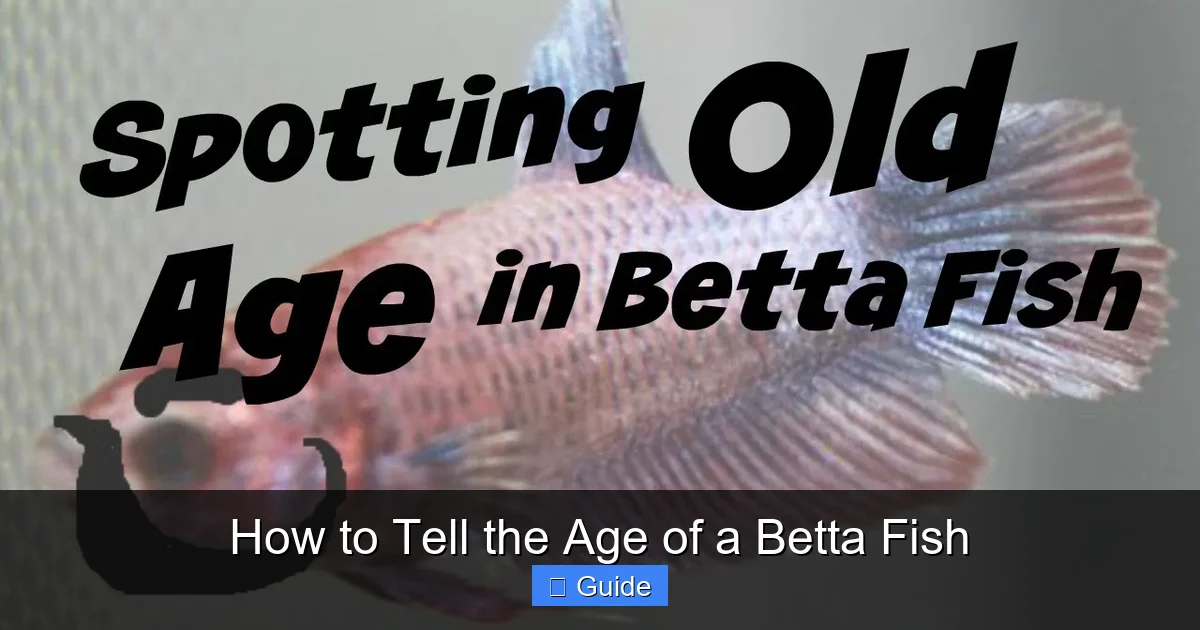
Visual guide about How to Tell the Age of a Betta Fish
Image source: i.ytimg.com
The Age Stage Checklist
Use this table to mentally score your betta. Which description fits best overall?
- Juvenile (Under 6 months):
- Fins: Short, stubby, undeveloped.
- Body: Very slender, torpedo-shaped, little depth.
- Color: Often dull, washed-out, or developing; may be changing.
- Behavior: Hyperactive, constant darting, frequent random flaring.
- Size: Significantly less than 2.5 inches (6 cm).
- Young Adult (6 to 12 months):
- Fins: Growing rapidly, becoming long but may not be fully shaped.
- Body: Becoming deeper, filling out from the juvenile slender look.
- Color: Improving in vibrancy, becoming more consistent.
- Behavior: Energetic but with more purposeful swimming; establishing territory.
- Size: Near or at full adult length (2.5-3 inches).
- Mature Adult (1 to 2.5 years):
- Fins: Full adult length and shape for its variety; in prime condition.
- Body: Deep, robust, thick-looking. This is the “peak” body condition.
- Color: At its most vibrant, saturated, and consistent.
- Behavior: Confident, territorial, steady flaring. The classic betta demeanor.
- Senior (3+ years):
- Fins: May show slight wear; flare spread may be reduced.
- Body: May slenderize slightly; should still have good condition but less “bulk” than a prime adult.
- Color: Gradual fading, loss of some iridescence.
- Behavior: Slower, more resting, less frequent/intense flaring. Still responsive.
Common Pitfalls and How to Avoid Them
Pitfall 1: The “Small Fish” Assumption. A small betta isn’t always young. It could be a stunted fish from poor early care, a naturally small female, or a Plakat variety. Always consider fin type and body shape alongside size.
Pitfall 2: The “Dull Color” Assumption. A dull betta isn’t always young. It could be an older fish fading, or—more likely—a fish suffering from stress, poor water, or illness. Always check water parameters first. A healthy young betta should show at least some promise of color, even if muted.
Pitfall 3: The “Inactive” Assumption. A resting betta isn’t necessarily old or sick. Bettas, especially adults, love to lounge on a broad leaf or a hammock. Judge activity levels over a full day, not in a single 5-minute observation. Is it *lethargic* (not moving even when fed, gasping) or just *resting* (alert, moves when stimulated)?
Pitfall 4: Ignoring the Source. If you bought your betta from a big-box store, it’s almost certainly a juvenile. These fish are sold very young, often at 3-4 months old. If you bought a premium show betta from a specialist breeder, it was likely sold at or near maturity (8-12 months). The purchase context provides a vital anchor point.
Chapter 6: The Limits of Observation – When You Just Can’t Know
Despite our best detective work, there are hard limits to what the eye can see.
The Record-Keeping Gold Standard
The only way to know a betta’s exact age is to have been present for its birth or to have precise breeder records. Reputable betta breeders meticulously track spawn dates and will often provide an estimated hatch date for their fish. If you acquire a betta with this information, you have the definitive answer. This is why purchasing from a knowledgeable breeder is valuable beyond just genetics; it comes with history.
Why Store-Bought Records Are Useless
Chain pet stores do not track fish age. Their supply chains involve multiple distributors and holding facilities. A betta labeled “male half-moon” could be 3 months old or 9 months old. There is no regulatory requirement or industry standard for age disclosure on ornamental fish. The “date received” on a store’s stock sheet is meaningless to you, as you don’t know how long the fish was in transit or at the distributor. Therefore, for most hobbyists, visual estimation is the only tool available.
Health Can Mask or Mimic Age
A betta that has endured chronic illness, poor water, or malnutrition during its formative months may never reach its full genetic potential in terms of fin length, body size, or color. Such a fish may look like a juvenile even at 2 years old. Conversely, a betta raised in pristine conditions with optimal nutrition may develop its adult features slightly earlier or more robustly than a stressed counterpart. Always prioritize assessing current health over pinning down a precise number.
The Ethical Takeaway: Care for the Life Stage, Not the Number
The ultimate goal of age estimation is not to proudly announce, “My betta is 2 years and 3 months!” It’s to provide appropriate care. A fish with senior indicators—slower movement, slight color fade—may benefit from:
- Slightly warmer water (78-80°F / 25.5-26.5°C) to ease circulation.
- Softer, leafier plants to rest on instead of demanding vigorous swimming.
- High-quality, easily digestible foods.
- Extra vigilance for signs of disease, as the immune system is weaker.
Instead of obsessing over the calendar, observe your fish daily. Its current needs are written in its current behavior and appearance, regardless of the actual number of birthdays it has seen.
Conclusion: Becoming an Expert Observer
Learning how to tell the age of a betta fish is not about achieving perfect precision. It’s about developing a nuanced understanding of your pet’s life journey. By learning to read the story told by its fins—the lengthening tales of growth—its body—the deepening narrative of maturity—and its color and behavior—the vibrant chapters of prime and the quieter, mellower pages of seniority—you connect with your betta on a deeper level.
You move from simply “having a fish” to truly “knowing your fish.” You learn that the short-finned, hyperactive little fish is a teenager with big potential. You recognize that the deep-bodied, brilliantly colored, confident floater is in its prime, the ambassador of its species. You understand that the slower, slightly faded, gentle companion has earned its rest and deserves senior care.
This observational skill is the mark of an attentive and responsible betta keeper. It helps you tailor the environment, diet, and interaction to your specific fish’s needs. It allows you to spot subtle health changes against the stable baseline of its life stage. Most importantly, it enriches the bond you share. You’re not just guessing at a number; you’re interpreting the biography written on a living, breathing, beautiful creature. So look closely, take those monthly photos, and enjoy the process of truly getting to know the age and story of your betta fish.
Frequently Asked Questions
Can I determine the exact age of my betta fish?
No, without precise breeder records, determining the exact age in years and months is impossible. However, you can reliably estimate its life stage—juvenile, young adult, mature adult, or senior—by consistently observing its fins, body shape, color, and behavior over time.
Do male and female bettas age differently?
They share a similar lifespan (3-5 years on average), but physical aging signs differ. Females naturally have rounder bodies and may show less dramatic fin development. Color fading and activity reduction occur in both sexes, but you must compare your fish to standards for its specific sex when assessing body shape and fin length.
Can poor water quality make my betta look older?
Absolutely. Chronic stress from bad water parameters (high ammonia/nitrite, incorrect temperature, poor pH) can cause fin rot, color fading, lethargy, and poor growth. These are signs of illness, not aging. Always rule out water quality issues first when your betta appears aged.
What is the most reliable single indicator of a betta’s age?
Fin development is the most visually obvious and reliable indicator. The transition from short “baby” fins to full adult-length fins happens between 6 and 12 months of age. A betta with fully developed fins is at least 1 year old, while one with very short fins is almost certainly under 6 months.
My betta is small but has long fins. Is it old or young?
This is a tricky scenario. Long fins indicate it’s at least 6-12 months old, but small size suggests it could be stunted from poor early growth, a naturally small female, or a Plakat variety (which stays small). You must look at body depth—a stunted fish will be slender, while a healthy female/Plakat will have appropriate body shape for its size.
At what age do bettas start to slow down?
Most bettas begin to show a gradual reduction in hyperactive energy between 2.5 and 3.5 years of age. This senior stage is characterized by more resting, less frantic swimming, and slightly reduced flaring intensity. This is a normal part of aging if the fish otherwise appears healthy and eats well.