How Often Do You Change a Betta Fish’s Water

You should do a 20-30% partial water change every one to two weeks for a healthy betta tank. The exact frequency depends on tank size, filtration, and feeding habits. Regular water changes keep ammonia low and your betta fish happy and active.
Keeping your betta fish healthy starts with one simple habit: regular water changes. If you own a betta, you already know these colorful fish bring joy to any room. But did you know that water quality is the single biggest factor in how long and how well your betta lives?
Many new fish owners overlook this. They feed their betta well and keep the tank clean on the surface. But underneath, harmful chemicals build up fast. The answer? A solid water change schedule that fits your setup.
In this guide, we will walk you through exactly how often to change your betta fish water. We cover partial changes, full changes, tank size, filtration, and all the small details that make a big difference. By the end, you will feel confident keeping your betta’s home fresh and safe.
If you want to learn more about general betta care, check out our guide on how do you care for a betta fish for even more tips.
Key Takeaways
- Partial water changes: Do a 20-30% change every 1-2 weeks for most setups.
- Full water changes: Only needed in emergencies or unfiltered bowls, and should be done carefully.
- Tank size matters: Larger tanks need less frequent changes because water stays stable longer.
- Watch your water parameters: Test ammonia and nitrite levels to know when a change is needed.
- Use treated water: Always add water conditioner to remove chlorine and chloramine.
- Avoid common mistakes: Never vacuum the gravel too deep, and match the water temperature.
- Consistency is key: Stick to a regular schedule for the best betta fish care results.
📑 Table of Contents
- Why Water Changes Matter for Your Betta Fish
- What Affects How Often You Need to Change Water?
- How to Do a Water Change the Right Way
- Common Mistakes to Avoid During Water Changes
- How to Test Your Water Quality
- Signs Your Betta Needs a Water Change Sooner
- Setting Up a Weekly Tank Maintenance Routine
- Conclusion
Why Water Changes Matter for Your Betta Fish
Betta fish live in small enclosed environments. Unlike fish in the wild, they cannot swim into a fresh stream to clean themselves. Everything they produce stays in the same water. That includes waste, leftover food, and even the gases they breathe out.
Over time, these things break down into toxic compounds. The three most dangerous are ammonia, nitrite, and nitrate. Here is a quick look at what each one does:
- Ammonia: Comes from fish waste and uneaten food. It burns the gills and skin even at low levels.
- Nitrite: Forms when ammonia breaks down. It stops blood from carrying oxygen properly.
- Nitrate: The least toxic of the three. But it still builds up and causes stress over time.
A good water change removes these toxins before they reach dangerous levels. Think of it like changing the oil in a car. You do it regularly so the engine stays healthy. Your betta tank works the same way.
How Often Should You Do a Partial Water Change?
For most betta tanks, a partial water change is the best approach. This means you remove a portion of the old water and replace it with fresh, treated water. The standard recommendation is:
- Every 1 to 2 weeks: Remove 20-30% of the tank water.
- Larger tanks (10 gallons or more): You can stretch to every 2 weeks.
- Smaller tanks (under 5 gallons): Aim for every 5-7 days.
The frequency depends on several factors. A tank with a strong filter and few fish stays cleaner longer. A bowl with no filter needs more frequent attention. Feeding habits also play a role. If you feed your betta twice a day, more waste builds up faster.
If you want a deeper dive into the exact schedule, our article on how often to change a betta fish water covers different scenarios in detail.
When Should You Do a Full Water Change?
A full water change means removing all the water and replacing it. This is a more drastic step and should not be done regularly. Here are the situations where it makes sense:
- No filter or sponge: Unfiltered bowls accumulate toxins fast. A full change may be needed weekly.
- Emergency ammonia spike: If your test kit shows high ammonia, a full change can save your fish.
- Tank is very dirty: Algae blooms, cloudy water, or foul smells signal a deep clean is needed.
Be careful with full changes. You remove all the beneficial bacteria that live in the substrate and filter media. These good bacteria help break down waste. A full change resets your tank cycle, which can stress your betta.
What Affects How Often You Need to Change Water?
Not every betta tank is the same. Several factors change how quickly your water gets dirty. Understanding these helps you build a schedule that works for your specific setup.
Tank Size
Smaller tanks have less water volume. That means toxins concentrate faster. A 3-gallon bowl needs more frequent changes than a 10-gallon tank. Here is a simple comparison:
- 1-3 gallons: Partial change every 5-7 days.
- 5 gallons: Partial change every 7-10 days.
- 10+ gallons: Partial change every 10-14 days.
Larger tanks also hold more stable water parameters. Temperature and pH fluctuate less in bigger volumes. This creates a healthier environment for your betta.
Filtration System
A good filter does a lot of the heavy lifting. It traps debris and hosts beneficial bacteria that process waste. If your tank has a sponge filter or hang-on-back filter, you can stretch the time between water changes.
But filters need maintenance too. A clogged filter loses its effectiveness. Rinse your filter media in old tank water once a month. Never use tap water, because chlorine will kill the good bacteria you worked hard to grow.
Feeding Amount and Frequency
Overfeeding is one of the biggest causes of dirty water. Betta fish have small stomachs. They only need a few pellets or flakes per feeding. If you drop too much food in, the extra food rots and spikes ammonia.
Most experts recommend feeding your betta once or twice a day. If you feed less, your water stays cleaner longer. For more on feeding schedules, read our guide on how often do you feed a betta fish.
Number of Fish in the Tank
Betta fish are solitary creatures. They do best alone. But some owners keep snails or shrimp in the same tank. More inhabitants means more waste. If you have tank mates, plan for slightly more frequent water changes.
How to Do a Water Change the Right Way
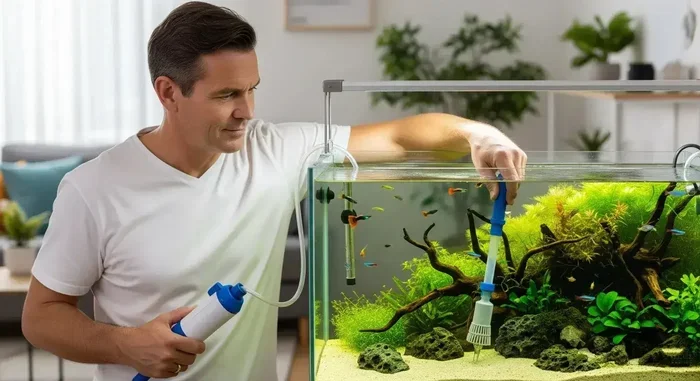
Doing a water change correctly matters just as much as doing it on schedule. A sloppy water change can stress your betta or even harm it. Follow these steps for a safe and effective change.
Step-by-Step Water Change Process
- Gather your supplies: You need a bucket, a gravel vacuum, a thermometer, and water conditioner.
- Turn off the heater and filter: This protects both the equipment and your fish from sudden changes.
- Remove 20-30% of the water: Use a gravel vacuum to suck up debris from the substrate at the same time.
- Prepare fresh water: Fill a bucket with tap water. Add the proper dose of water conditioner to remove chlorine and chloramine.
- Match the temperature: Use your thermometer to ensure the new water matches the tank temperature. Bettas prefer water between 76-82°F.
- Add the new water slowly: Pour it gently over a plate or bowl to avoid disturbing the substrate.
- Turn the heater and filter back on: Give your betta a few minutes to adjust before you walk away.
For a visual walkthrough, you might also enjoy our detailed piece on how to do a water change for betta fish.
Quick Tips for a Smoother Water Change
- Always use a water conditioner: Tap water contains chlorine and chloramine that are deadly to bettas.
- Never use distilled water: It lacks essential minerals your betta needs.
- Don’t change all the water at once: A full swap shocks your fish and resets your tank cycle.
- Clean the glass while you work: Use an algae pad to remove buildup on the tank walls.
- Wash your hands before you start: Soap residue can be harmful to your fish.
Common Mistakes to Avoid During Water Changes
Even experienced fish keepers make mistakes. Here are the most common errors and how to avoid them.
Using Untreated Tap Water
This is the number one mistake. Tap water contains chlorine and chloramine added by water treatment plants. These chemicals are safe for humans but toxic to fish. Always use a dechlorinator or water conditioner before adding water to your tank.
If you are unsure about your tap water quality, you can also test it. Some areas have very high chlorine levels that even a conditioner may struggle with. In those cases, letting the water sit out overnight can help, but a conditioner is still the safest choice.
Vacuuming Too Deep Into the Gravel
A gravel vacuum is a great tool, but use it gently. Going too deep can pull up beneficial bacteria colonies and disturb the substrate. Aim to clean the surface debris without digging into the lower layers.
Changing Water Too Often
More is not always better. Changing water too frequently strips out essential minerals and disrupts the beneficial bacteria colony. Stick to your schedule and resist the urge to do extra changes unless water tests show a problem.
Ignoring Water Temperature
Bettas are tropical fish. They need warm, stable water. Adding cold water during a change can cause temperature shock. Always check the temperature with a thermometer before mixing new water into the tank.
Forgetting to Treat New Water
It is easy to forget this step when you are in a rush. But skipping the water conditioner even once can cause gill damage. Make it a habit to treat every bucket of water before it goes into the tank.
How to Test Your Water Quality
Water tests are the best way to know if your tank needs attention. You do not have to guess. A simple test kit tells you exactly what is happening in your water.
Look for a liquid test kit rather than test strips. Liquid kits are more accurate and last longer. You want to test for four key parameters:
- Ammonia: Should be 0 ppm. Anything above 0.25 ppm is dangerous.
- Nitrite: Should be 0 ppm. Even low levels cause stress and illness.
- Nitrate: Should be under 20 ppm. Higher levels mean it is time for a water change.
- pH: Bettas do best in a pH range of 6.5 to 7.5. Sudden swings are more dangerous than a slightly off number.
Test your water once a week. This gives you a clear picture of how your tank is cycling. If you see ammonia or nitrite creeping up, do a water change right away. Waiting too long can put your betta at serious risk.
Signs Your Betta Needs a Water Change Sooner
Sometimes your betta will tell you the water is bad before your test kit does. Watch for these warning signs:
- Clamped fins: Your betta holds its fins close to its body. This is a classic stress signal.
- Lethargy: Your normally active fish spends most of the time resting at the bottom.
- Loss of color: A vibrant betta fading to dull or pale indicates poor water quality.
- Heavy breathing: Gasping at the surface or rapid gill movement means the water has low oxygen or high toxins.
- Cloudy water: This often signals a bacterial bloom caused by excess waste.
- Algae bloom: Green water or thick algae on surfaces means excess nutrients are building up.
If you notice any of these signs, test your water and do a partial change immediately. Acting fast can prevent a minor issue from becoming a serious health crisis.
Setting Up a Weekly Tank Maintenance Routine
Consistency is the secret to a healthy betta tank. When you make water changes part of your weekly routine, it becomes second nature. Here is a simple maintenance plan you can follow:
- Monday: Test water parameters with your liquid test kit.
- Tuesday: Do a 20-30% partial water change. Vacuum the gravel gently.
- Wednesday: Rinse filter media in old tank water. Wipe down the glass.
- Thursday: Feed your betta normally and remove any uneaten food after 5 minutes.
- Friday: Check the heater and filter are working properly.
- Weekend: Observe your betta for any signs of stress or illness.
This routine takes less than 30 minutes per week. Once you get into the habit, it feels like second nature. Your betta will reward you with bright colors, active swimming, and a long, healthy life.
Conclusion
Changing your betta fish water regularly is one of the most important things you can do for your pet. A partial water change every one to two weeks keeps toxins low and your tank environment stable. The exact frequency depends on your tank size, filter, feeding schedule, and how many fish share the space.
Always use treated water, match the temperature, and avoid common mistakes like vacuuming too deep or changing all the water at once. Test your water weekly and watch your betta for signs of stress. With a consistent routine, your betta will thrive in a clean, healthy home.
If you want to go deeper into betta care, explore our guides on how often do you feed a betta fish and how do you change betta fish water for more practical tips.
Frequently Asked Questions
How often should I change my betta fish water in a 5-gallon tank?
For a 5-gallon tank with a filter, do a 20-30% partial water change every 7-10 days. If your tank has no filter, you may need to change it every 5-7 days. Test your water weekly to confirm your schedule is working.
Can I use tap water for my betta fish water change?
Yes, but you must treat it first. Tap water contains chlorine and chloramine that are harmful to bettas. Use a water conditioner or dechlorinator to make it safe before adding it to your tank.
What happens if I don’t change my betta’s water often enough?
Toxins like ammonia and nitrite build up in the water. This causes stress, burns the gills, weakens the immune system, and can eventually lead to illness or death. Regular water changes prevent this buildup.
Is a full water change better than a partial one?
No. Partial water changes are safer and more effective for routine maintenance. Full water changes remove beneficial bacteria and shock your fish. Reserve full changes for emergencies or unfiltered bowls only.
How do I know if my betta needs a water change right now?
Look for signs like clamped fins, lethargy, loss of color, or gasping at the surface. Cloudy water and strong odors are also clear signals. Test your water parameters if you suspect a problem.
Should I change the water more often if I feed my betta twice a day?
Yes, feeding more often means more waste. If you feed twice daily, consider doing a partial water change every 5-7 days instead of every 10-14 days. Adjust based on your water test results.