How Long Can Betta Fish Live in Cup

how long can betta fish live in cup is an essential topic that provides valuable insights.
Key Takeaways
- Understanding how long can betta fish live in cup: Provides essential knowledge
📑 Table of Contents
- Understanding Betta Fish Lifespan in Cup Conditions
- Key Factors That Affect Betta Survival in Cups
- Can You Keep Betta Fish in a Cup Long Term?
- Better Alternatives to Keeping Betta Fish in Cups
- Quick Tips for Cup Care (If You Must)
- Common Mistakes People Make with Cup Housing
- Expert Insights on Betta Fish Health in Small Containers
- Key Takeaways
- Conclusion
Understanding Betta Fish Lifespan in Cup Conditions
The average betta fish lifespan in a cup is much shorter than in a proper tank. In the wild, bettas can live up to 5 years. In a well-set 5-gallon tank, they often reach 3 to 5 years. But in a cup? That number drops significantly. Let us break down why.
Why Cups Are Problematic for Bettas
A cup offers almost none of the things a betta needs. These fish need room to swim, stable water parameters, and mental stimulation. A cup provides none of that. Here is what goes wrong:
- Limited space causes stress and stunts growth
- Poor water quality builds up ammonia quickly in small volumes
- No filtration means toxins accumulate fast
- Temperature swings stress the fish and weaken their immune system
- Lack of enrichment leads to boredom and behavioral issues
When you ask how long can betta fish live in cup setups, the answer depends heavily on how well you maintain the water. A cup with fresh, clean, warm water and daily changes might sustain a betta for a few weeks or months. But long-term survival? That is very unlikely.
Key Factors That Affect Betta Survival in Cups
Several factors determine how long a betta can survive in a cup. Understanding these helps you make better decisions for your fish.
Water Quality
Water quality is the single biggest factor. In a cup, waste builds up fast. Ammonia and nitrite levels spike quickly, which damages the fish’s gills and organs. Even a small cup needs regular water changes. Betta water quality in a cup requires daily or every-other-day changes to keep toxins low.
Temperature Stability
Bettas are tropical fish. They need water between 76 and 82 degrees Fahrenheit. A cup sitting on a desk near a window can swing from cold to hot within hours. Temperature stability is nearly impossible to maintain in a cup without a heater. Cold water slows the fish’s metabolism, and hot water reduces oxygen levels.
Oxygen Levels
Bettas breathe surface air, but they still need dissolved oxygen in the water. A shallow cup with a small surface area has less gas exchange. Oxygen levels drop faster in warm, stagnant water. This is one reason betta fish live in stimulating water matters — movement and surface area help oxygen dissolve.
Can You Keep Betta Fish in a Cup Long Term?
The short answer is no. Can I keep my betta fish in a cup long term? Not without serious health consequences. While some people claim their bettas survived in cups for months, these fish often show signs of chronic stress. They may lose color, stop eating, or develop fin rot.
If you need temporary fish housing, a cup can work for a day or two. For example, transporting your betta to a new tank or treating illness might require a cup. But this should be the exception, not the norm. Always aim for at least a 5-gallon tank as a permanent home.
For comparison, how long do betta fish live in a tank with proper setup? The answer is 3 to 5 years on average. That is a massive difference from cup conditions. Investing in even a small tank dramatically improves your betta’s quality of life and lifespan.
Signs Your Betta Is Struggling in a Cup
Watch for these warning signs if your betta is living in a cup:
- Clamped fins — the fish holds its fins close to its body
- Loss of color — fading or dulling of vibrant scales
- Refusing food — skipping more than one or two meals
- Rapid breathing — gasping at the surface more than usual
- Lethargy — staying at the bottom or not moving much
- White spots or patches — signs of ich or fungal infection
If you notice any of these, move your betta to a larger, cycled tank immediately. Early action can save your fish’s life.
Better Alternatives to Keeping Betta Fish in Cups
If you cannot use a cup long term, what should you do? Fortunately, there are affordable and practical alternatives that give your betta the space it needs.
Small Bowls and Vases
Some people use small bowls or vases instead of cups. While still not ideal, a 1- to 2-gallon bowl is better than a cup. It gives the fish more room to swim and dilutes toxins more effectively. Just remember that betta fish live in small bowls only with frequent water changes and a heater.
5-Gallon Tanks
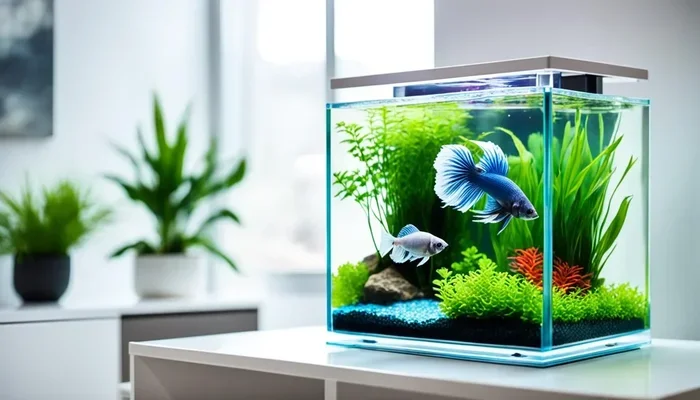
A 5-gallon tank is the gold standard for a single betta. It is affordable, easy to maintain, and gives your fish enough room to thrive. You can add a small filter, a heater, and a few plants. This setup closely mimics the betta fish habitat they would find in the wild.
Larger Community Tanks
If you want to keep more than one fish, consider a larger tank. Many owners ask can other species of fish live in a betta aquarium, and the answer is yes — with the right tank mates. A 10- to 20-gallon tank gives you room for peaceful species like corydoras or shrimp alongside your betta.
Quick Tips for Cup Care (If You Must)
If you absolutely need to keep your betta in a cup for a short time, follow these tips to improve their chances:
- Change the water daily with dechlorinated water at the right temperature
- Keep the cup away from direct sunlight to prevent temperature swings
- Cover the cup to prevent the fish from jumping out
- Add a few live plants if space allows, to improve oxygen and provide comfort
- Feed small amounts once a day to avoid fouling the water
- Move the betta to a larger container as soon as possible
Common Mistakes People Make with Cup Housing
Many well-meaning fish owners make mistakes that shorten their betta’s life. Here are the most common ones to avoid:
- Never changing the water — this is the fastest way to poison your fish
- Using cold tap water — bettas need warm, treated water
- Overfeeding — excess food rots and spikes ammonia fast
- Placing the cup near electronics — heat and vibrations stress the fish
- Ignoring signs of illness — early treatment saves lives
- Thinking a cup is enough because bettas sold in cups — pet stores prioritize display over welfare
Avoiding these mistakes makes a huge difference, even in temporary housing situations.
Expert Insights on Betta Fish Health in Small Containers
Aquarium experts agree that betta fish health depends on environment. Dr. Jessie Sanders, a certified aquatic veterinarian, often emphasizes that small containers increase stress hormones in fish. Chronic stress weakens the immune system and makes bettas vulnerable to disease.
The concept of fish living conditions matters more than most people realize. A cup is not just a smaller version of a tank. It is a completely different environment with its own set of challenges. Water chemistry changes faster, oxygen depletes sooner, and waste concentrates rapidly.
Even experienced fish keepers sometimes start with a cup. The key is to upgrade as soon as possible. Think of a cup as a waiting room, not a permanent home.
Key Takeaways
- Betta fish lifespan in cup conditions is significantly shorter than in tanks — often by years
- Water quality is the most critical factor; daily changes are essential if using a cup
- Temperature stability near 78°F is vital for betta health in any container
- Cups should only be used for temporary housing, not long-term living
- A 5-gallon tank is the minimum recommended permanent home for a single betta
- Signs of stress like clamped fins and loss of color mean you need to act fast
- Better alternatives like small bowls or tanks dramatically improve your betta’s quality of life
Conclusion
So, how long can betta fish live in cup conditions? The honest answer is not very long without serious effort and frequent maintenance. A cup can serve as a short-term solution for transport or quarantine, but it is not a suitable permanent home. Your betta deserves space, clean water, stable temperature, and enrichment — all things a cup cannot provide.
If you care about your betta, take the next step and upgrade to a proper tank. Even a small 5-gallon setup makes a world of difference. Your fish will be healthier, more colorful, and more active. And you will enjoy watching them thrive instead of just surviving.
The choice is yours. Give your betta the home they deserve, and you will be rewarded with a happy, healthy companion for years to come.
Frequently Asked Questions
How long can a betta fish survive in a cup?
A betta fish can survive in a cup for a few weeks to a few months if the water is changed daily and kept clean. However, long-term survival is unlikely because cups lack proper filtration, space, and stable conditions. For permanent housing, always use a tank of at least 5 gallons.
Is it safe to keep betta fish in a cup overnight?
Keeping a betta in a cup overnight is generally safe if the water is fresh and the cup is covered to prevent jumping. But cups should not be used for overnight housing regularly. For more details, check out our guide on can betta fish stay in his cup overnight.
What size cup is okay for a betta fish?
No cup size is truly safe for long-term betta housing. Even a large cup lacks filtration and stable water parameters. If you must use a cup, keep it for no more than a day or two and maintain excellent water quality. Always transition your betta to a proper tank as soon as possible.
Can betta fish live in a cup with a filter?
Adding a tiny filter to a cup can help, but it is still not ideal. The space is too small for stable water chemistry, and most miniature filters are not powerful enough to keep up with waste. A betta needs at least a 5-gallon cycled tank with proper filtration to truly thrive.
Why do pet stores keep bettas in cups?
Pet stores keep bettas in cups for display and space reasons. It is not because cups are healthy for the fish. In fact, betta fish care standards recommend much larger spaces. If you see a betta in a cup at a store, consider adopting them and giving them a better home.
How can I improve my betta’s life if I only have a cup?
If you currently only have a cup, change the water every day, keep it warm (around 78°F), and feed small amounts once daily. Cover the cup to prevent escapes. But treat the cup as a temporary solution and plan to upgrade to a small tank as soon as you can.