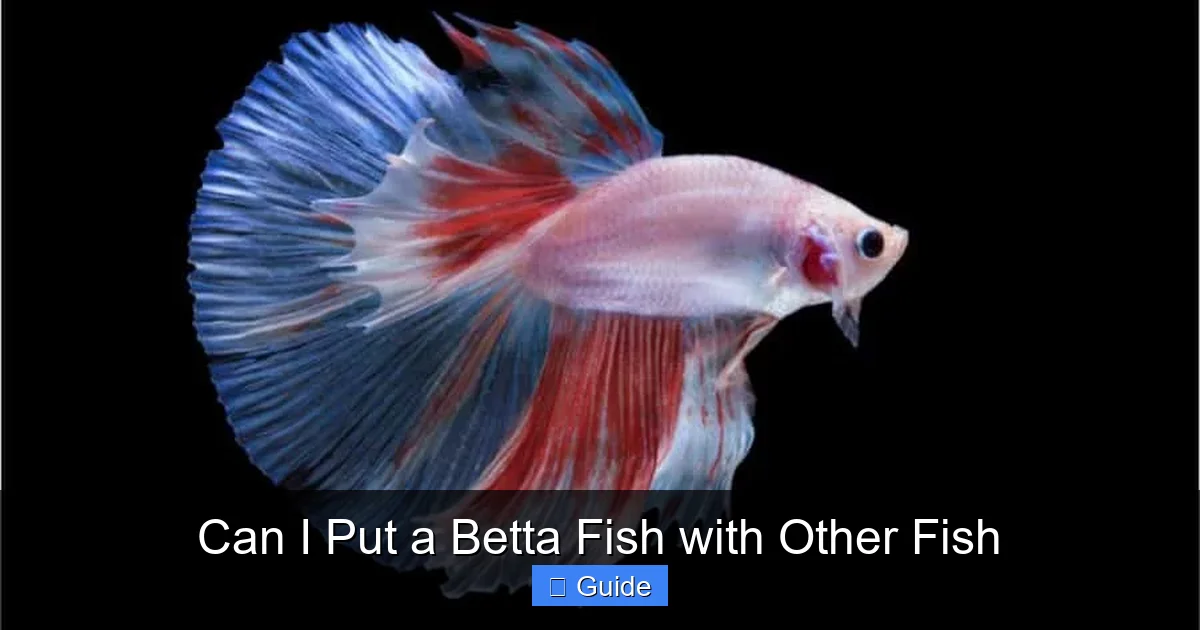
Can I Put a Betta Fish with Other Fish
Male Betta fish are famously aggressive and should almost never be housed with other male Bettas or fish with long, flowing fins. However, it is possible to create a successful community tank by selecting peaceful, fast-swimming tank mates like neon tetras or corydoras catfish in a spacious, heavily planted aquarium of at least 20 gallons. Success depends entirely on the individual Betta’s temperament, requiring careful observation and a backup plan to separate fish if aggression occurs.
Key Takeaways
- Male Bettas are solitary: Never house two male bettas together.
- Tank size is critical: Use a minimum 20-gallon tank for any community.
- Choose peaceful, fast tankmates: Avoid fin-nippers and brightly colored fish.
- Observe individual temperament: Some bettas are more aggressive than others.
- Provide ample hiding spaces: Use plants and decorations to break line of sight.
- Feed strategically to prevent competition: Target-feed the betta to ensure it eats.
- Always have a backup plan: Keep a separate tank ready to separate fish if needed.
📑 Table of Contents
- Can I Put a Betta Fish with Other Fish?
- Debunking the Myth: The Solitary Betta
- The Non-Negotiable Foundation: Perfect Tank Setup
- Top Contenders: Fish That Can Coexist with a Betta
- High-Risk & Absolutely Incompatible Fish
- The Community Tank Approach: A Careful Introduction
- Decision Time: Is a Tankmate Right for YOUR Betta?
- Conclusion: The Betta-Centric Philosophy
Can I Put a Betta Fish with Other Fish?
So, you’ve got that stunning betta fish, with its flowing fins and bold personality, swimming gracefully in its own tank. It’s beautiful, but maybe a little lonely. You look at it and think, “Can I put a betta fish with other fish?” It’s one of the most common questions in the aquarium hobby, and the answer isn’t a simple yes or no. It’s a big, shimmering “It depends.”
I’ve been there. I brought home a brilliant blue betta I named Zeus, and after a week, I felt like he was just… watching me. The desire to give him friends is totally understandable. But bettas, also known as Siamese fighting fish, have a reputation for a reason. Their beauty comes with a fiery temperament. The journey to answering “can a betta live with other fish” is less about finding a magic list and more about understanding your specific betta’s personality, providing the perfect environment, and making incredibly careful choices. Let’s dive in and unpack everything you need to know to make an informed, safe decision for your aquatic family.
Debunking the Myth: The Solitary Betta
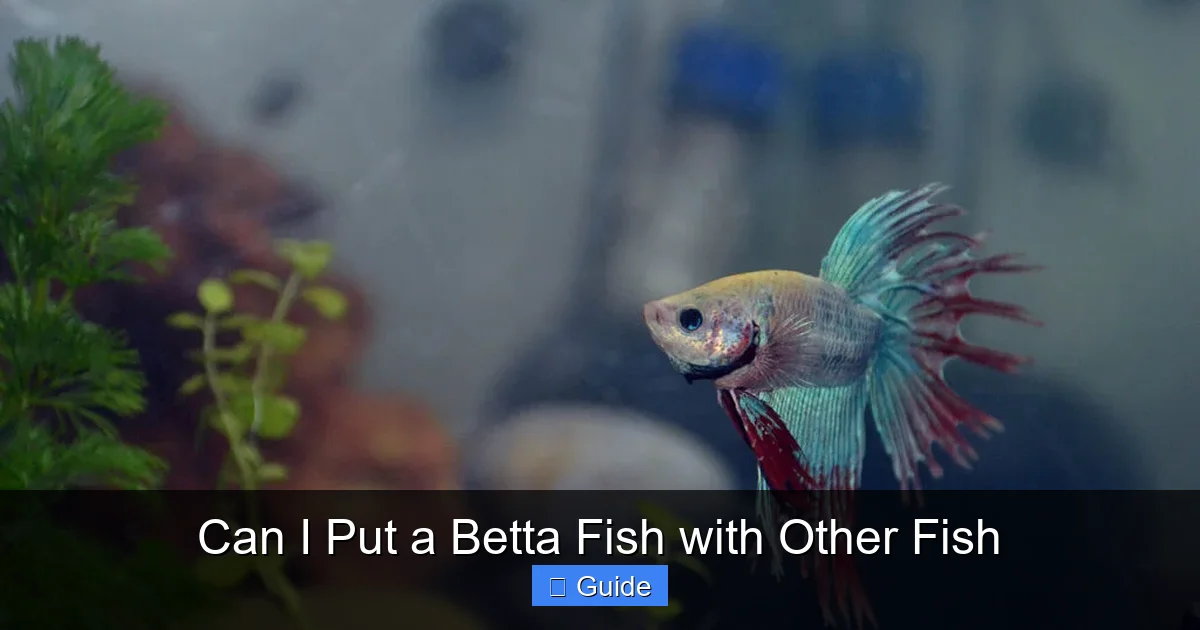
For decades, the common advice was to keep bettas alone. Period. This came from their Latin name, Betta splendens, and their history of being bred for aggressive fighting. While that aggression is real, it’s not the whole story. The wild betta is actually a relatively shy fish that lives in shallow, slow-moving waters with plenty of plants to hide in. The solitary tank is a product of their aggressive reputation in captivity, but it’s not a biological necessity for happiness.
Visual guide about Can I Put a Betta Fish with Other Fish
Image source: fishkeepingadvice.com
The Truth About Betta Temperament
Betta temperament exists on a spectrum. Some are indeed relentless, flaring at their own reflection and trying to attack anything that moves. Others are mellow, curious, and barely notice tankmates. Your betta’s personality is influenced by:
- Genetics & Breeding: Some lines have been selectively bred for aggression (often the more dramatic, long-finned varieties), while others for milder temperaments.
- Individual Personality: Just like people, bettas have unique dispositions. One might be a grump; another might be a social butterfly.
- Environment: A stressed betta—from poor water quality, a too-small tank, or constant disturbances—is far more likely to be aggressive.
- Past Experiences: A betta that has previously lived peacefully with tankmates may be more tolerant than one that has always been alone.
So, the first step is to truly know your betta. Observe it for a week or two in its own tank. Does it flare at you when you move near the glass? Does it constantly patrol and chase its reflection? Or does it mostly rest on plants and only react when directly provoked? This is your baseline.
The Non-Negotiable Foundation: Perfect Tank Setup
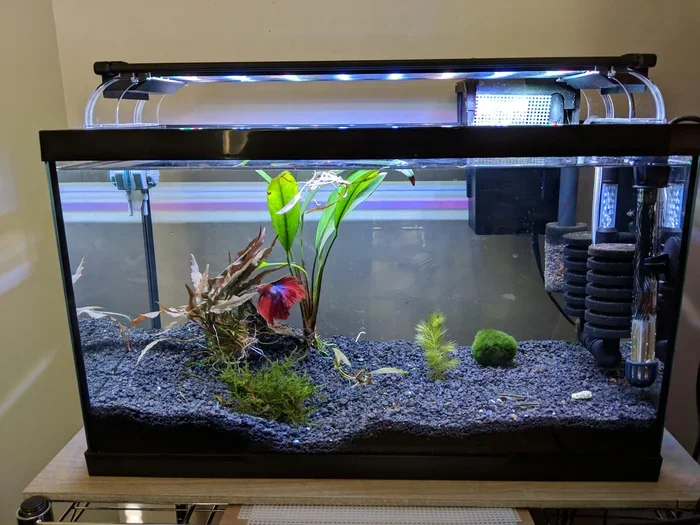
Before you even think about a roommate for your betta, the tank itself must be perfect. A bad environment guarantees failure. The biggest mistake is trying to put a betta in a small, bare “bowl” with a companion. That’s a recipe for disaster and stress.
Visual guide about Can I Put a Betta Fish with Other Fish
Image source: i.ytimg.com
Tank Size: Bigger is Always Better
The absolute minimum for a betta with tankmates is 10 gallons. A 5-gallon tank is the bare minimum for a *solo* betta. Why? Space is the ultimate stress-reducer and conflict-diffuser. In a small tank, there’s nowhere for the betta or its potential roommate to escape. A larger volume dilutes the betta’s territory and gives other fish room to avoid notice. For a peaceful community, aim for 20 gallons or more if possible. It provides stability, better water quality, and more layout options.
Aquascaping: Creating Hiding Spots and Sight Barriers
Your tank must be a jungle gym of hiding places. The goal is to break the line of sight so the betta can’t constantly see and target other fish. Use:
- Dense Plants: Live plants like java fern, anubias, and cryptocoryne are fantastic. Silk or floating plants (like frogbit) also work great and give bettas a comfort zone at the surface.
- Wood and Rock: Driftwood, caves, and rock piles create territories and hideouts.
- PVC Pipes or Ceramic Pots: Simple, cheap, and effective hiding tubes.
A well-planted tank doesn’t just benefit the other fish; it makes your betta feel secure, which can dramatically reduce aggression.
Water Parameters & Filtration
Bettas are tropical fish from warm, still waters. They need:
- Temperature: 76-82°F (24-28°C).
- pH: 6.5-7.5.
- Ammonia & Nitrite: Must be 0 ppm.
- Nitrate: Below 20 ppm.
A gentle filter is crucial for a community tank. Bettas hate strong currents (their long fins tire easily). Use a sponge filter or adjust the output of a hang-on-back filter with a spray bar or sponge. A stable, clean cycle is non-negotiable. A stressed betta in dirty water is a violent betta.
Top Contenders: Fish That Can Coexist with a Betta
Assuming your tank is set up correctly, we can talk about candidates. The ideal betta tankmate is:
Visual guide about Can I Put a Betta Fish with Other Fish
Image source: ouraquariumlife.com
- Non-Tropical: From cooler water (so temperature isn’t a fight).
- Non-Fin-Nippers: Won’t be tempted by the betta’s flowing fins.
- Non-Territorial: Won’t claim the same cave or plant as the betta.
- Fast & Evasive: Can dart away if the betta gets curious.
- Schooling: Should be kept in groups of 6+ to diffuse attention.
Here are some of the most successful, time-tested companions for a peaceful betta.
1. The Reliable Corydoras Catfish
These little armored catfish are arguably the best first choice for a betta tankmate. They are:
- Bottom-feeders: They occupy a completely different tank layer, cleaning up scraps.
- Peaceful & Social: They must be kept in groups of at least 6. Their constant, cute scurrying is fascinating and non-threatening.
- Hardy: They tolerate a range of water conditions.
- Temperature Match: They thrive in the same warm water as bettas.
Example: A school of 6-8 Corydoras pygmaeus (Pygmy Cory) in a 10+ gallon planted tank with a calm betta is a classic, beautiful setup.
2. The Harlequin Rasbora
These are another excellent, active schooling fish.
- Mid-Tank Swimmers: They form a shimmering, active school in the middle of the tank, usually ignoring the betta at the top or bottom.
- Peaceful: Very mild-mannered and get along with almost everything.
- Temperature Match: Perfect for a betta’s tropical warmth.
Tip: Keep them in a group of 8-10 for the best effect and to minimize any individual attention from the betta.
3. The Kuhli Loach
If you want something truly unique and a great bottom-dweller, the Kuhli loach is a fantastic choice.
- Nocturnal & Elusive: They look like tiny eels and spend much of the day burrowed in the substrate or hiding in decorations. They’re rarely seen, so they’re out of the betta’s way.
- Peaceful: Completely non-aggressive.
- Substrate Sifters: They help keep the sand clean.
Note: They need a soft, sandy substrate and lots of hiding places. Keep them in groups of 3+.
4. The Snail Squad
Don’t forget invertebrates! Snails are fantastic, low-maintenance tankmates.
- Nerite Snails: Excellent algae eaters, come in beautiful patterns, and do not reproduce in freshwater (a huge plus). They have a hard shell, so a curious betta can’t harm them.
- Mystery/Apple Snails: Larger, peaceful, and also have a tough shell. They can be messy eaters, so watch your water quality.
- Ramshorn Snails: Smaller, prolific breeders (so be prepared for a snail population boom).
Snails are a great “test” before adding fish. If your betta relentlessly harasses a snail, it’s a sign it’s probably not ready for fish tankmates.
High-Risk & Absolutely Incompatible Fish
Now for the critical “don’t” list. These fish are either guaranteed to be attacked by your betta or will attack your betta.
1. Any Fish with Long, Flowing Fins
This is the cardinal rule. Bettas are attracted to movement and may see long fins as a rival male betta. This includes:
- Fancy Guppies (especially males)
- Male Siamese Fighting Fish (obviously—never ever)
- Some varieties of Angelfish or Goldfish (with long fins)
Even if the other fish isn’t aggressive, the betta will likely nip at its fins, causing infection and stress.
2. Brightly Colored, Active Fish
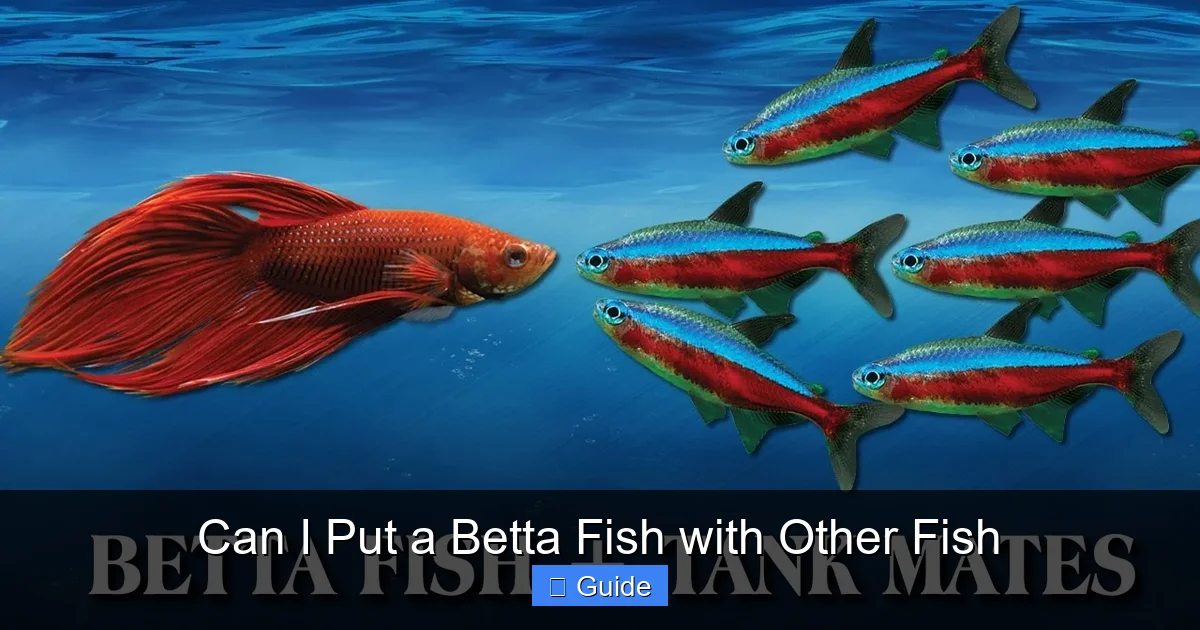
Fish that are brightly colored (especially reds and blues, which bettas see best) and highly active can trigger a betta’s territorial instinct. They look like rivals. This includes:
- Male Guppies (again)
- Some Tetras (like Cardinal Tetras, which are very red)
- Male Swordtails or Platies (with bright colors and sword tails)
3. Aggressive or Semi-Aggressive Fish
Fish that will stand their ground or nip fins back are a terrible match. This includes:
- Other Anabantoids (like Gouramis—Dwarf Gouramis can sometimes work in very large, heavily planted tanks, but it’s risky)
- Tiger Barbs ( notorious fin-nippers)
- Some Cichlids (like Convicts or Jack Dempseys—far too aggressive and different water needs)
- Betta fish are slow and have delicate fins. A faster, nippy fish will shred them.
The Community Tank Approach: A Careful Introduction
Okay, you’ve chosen a peaceful betta and a compatible species. Now what? The introduction is everything. Rushing this is the #1 reason community tanks with bettas fail.
Step 1: The Betta Gets House Privileges
Establish the betta in its tank first. Let it claim its territory for at least 2-4 weeks. The tank should be fully cycled, planted, and stable. This reduces stress and gives the betta a “home base” feeling.
Step 2: The Tankmate Arrives
Quarantine your new fish in a separate tank for 2-4 weeks to prevent disease introduction. Then, when you’re ready, do not just drop the new fish in.
Step 3: The Rearrangement Trick
This is a pro tip. Before adding the new fish, do a major tank rearrangement. Move all the plants, rocks, and decorations. This disrupts the betta’s established territory and makes the tank feel “new” to everyone. It reduces the betta’s instinct to defend a specific spot against the newcomer.
Step 4: The Acclimation & Observation
Acclimate the new fish normally (drip acclimation is best). Then, watch constantly for the first 24-48 hours. Have a net ready to separate fish if needed. Look for:
- Chasing (a few curious chases are normal; relentless pursuit is not)
- Flaring (gills puffed out)
- Fin nipping
- The betta cornering another fish
If serious aggression happens, you need a backup plan—a second tank to rehome the other fish.
Step 5: Patience and Monitoring
It can take a week or two for a pecking order to establish. Some initial squabbles are normal as roles are set. The key is that no one is getting physically harmed or hiding 24/7. Be prepared that it might not work, and that’s okay. The betta’s well-being comes first.
Decision Time: Is a Tankmate Right for YOUR Betta?
Let’s be real. Sometimes, the best and kindest choice is to keep your betta solo. Here’s a quick reference table to help you decide.
| Scenario | Likely Outcome | Recommendation |
|---|---|---|
| 10+ gallon heavily planted tank Calm, curious betta School of 8+ Pygmy Corydoras |
High Success Rate. Different tank layers, peaceful fish. | Go for it! Excellent, low-risk community. |
| 5 gallon bare tank Aggressive, flaring betta Trying to add a Guppy |
Guaranteed Failure. No space, wrong species, aggressive betta. | Do not attempt. Keep betta solo. Improve tank first. |
| 20 gallon planted tank Mild betta School of Harlequin Rasboras |
Good Chance. Active, mid-level fish that usually ignore bettas. | Worth a careful try. Follow introduction protocol. |
| Any tank size Any betta Another male betta |
Absolute Failure. Will fight to the death. | Never ever. Absolute rule. |
| 10 gallon with a few hiding spots Unknown betta temperament Single mystery snail |
Low-Risk Test. Snails are safe. Observe betta’s reaction for a week. | Great first step. If betta ignores snail, you can consider fish later. |
Final Verdict on Community Tanks: They are possible, rewarding, and can create a stunning aquarium. But they are a luxury, not a right. They require more space, more planning, more observation, and a willingness to have a backup plan. Your betta’s safety and stress levels are the priority.
Conclusion: The Betta-Centric Philosophy
So, can you put a betta fish with other fish? Yes, but only under a very specific set of circumstances that prioritize your betta’s individual needs. It starts with a spacious, heavily planted tank. It requires choosing the right, peaceful, non-threatening companions like corydoras or harlequin rasboras. And it demands a patient, careful introduction and constant monitoring.
My betta Zeus? After months of observing his relatively calm demeanor in his 20-gallon planted kingdom, I introduced a small school of ember tetras (a slightly riskier, but very small and schooling fish). I did the tank rearrangement trick and watched like a hawk for 72 hours. The first hour was tense—Zeus would investigate, the tetras would dart. But by the next day, he largely ignored them. Now, they coexist beautifully. The tetras school in the middle, Zeus flits among the plants at the top, and the corydoras clean the bottom. It’s a serene, balanced ecosystem.
But I also have a friend whose beautiful, aggressive delta-tail betta attacked and killed a snail within minutes. For him, a solo betta is the only ethical choice.
Your goal is to become a betta detective. Know your fish. Provide a palace, not a prison. If you have even a shred of doubt about your betta’s reaction, the safest and most compassionate answer is to enjoy its company as a solo star. A happy, stress-free betta—whether alone or with carefully chosen friends—is the ultimate measure of success. Your beautiful fish deserves nothing less.
Frequently Asked Questions
Can betta fish live with other fish?
Yes, it is possible for a betta fish to live with other fish, but it requires careful planning. Betta fish, especially males, are famously territorial and aggressive, so success depends on selecting the right tank mates and providing ample space.
What are the best tank mates for a betta fish?
The best tank mates for a betta fish are peaceful, non-territorial species that prefer different swimming levels. Good options include small schooling fish like neon tetras or harlequin rasboras (in a large enough group), as well as bottom-dwellers like corydoras catfish or kuhli loaches.
How do I safely introduce a betta fish to other fish?
Always introduce tank mates to a betta’s aquarium *before* adding the betta itself. This allows the other fish to establish their territory first, reducing the betta’s instinct to defend a new space. Use a divider or acclimation box for the initial observation period to monitor for aggression.
What tank size do I need for a betta fish with other fish?
You need a significantly larger tank than for a betta alone. A minimum of 20 gallons is strongly recommended, with 29 gallons or more being ideal. More space provides territories for all fish, dilutes the betta’s aggression, and allows stressed fish to escape.
What fish should I avoid putting with a betta?
Avoid any fish with bright colors or long, flowing fins, as the betta may see them as a rival male (e.g., guppies, fancy goldfish). Also, avoid fin-nippers like tiger barbs or serpae tetras, and aggressive or large fish that could bully or eat the betta.
Can I put a betta fish with shrimp or snails?
Yes, many bettas can coexist with certain invertebrates. Small, fast-moving shrimp like cherry shrimp are at risk of being eaten, while larger, hard-shelled species like amano shrimp or nerite snails often fare better. A well-planted tank provides crucial hiding spots for invertebrates.