Will Betta Fish Kill Each Other

Yes, betta fish can and will kill each other under the wrong conditions. Their infamous aggression is primarily driven by intense territoriality, not random violence. A single male betta in a properly sized, enriched tank is often peaceful, but cohabitation—especially with other males—requires meticulous planning, ample space, and constant monitoring to prevent fatal altercations. Understanding their natural behavior is the first step to preventing tragedy.
Key Takeaways
- Territory is everything: Betta aggression is almost always about defending a perceived territory, not inherent “meanness.”
- Tank size is non-negotiable: The single biggest factor in preventing aggression is providing a sufficiently large environment (5+ gallons for a single male, 20+ for a sorority).
- Male bettas are typically solitary: Housing two male bettas together (“fighting”) is extremely high-risk and almost always leads to severe injury or death without massive, expert-level setups.
- Female sororities are possible but complex: Groups of 4-6 females can coexist in a very large, heavily planted tank, but it requires careful observation and is not for beginners.
- Stress is the catalyst: Poor water quality, incorrect temperature, lack of hiding spots, and inadequate space dramatically increase aggression and lower the threshold for fighting.
- Not all tank mates are safe: Avoid fish with long, flowing fins (like guppies) or bright colors that resemble a rival betta. Choose peaceful, fast-moving, short-finned species from the bottom or top levels.
- Signs of aggression must be acted upon immediately: Flaring, chasing, and fin-nipping are warnings. If you see them, separate the fish immediately to prevent escalation to lethal attacks.
📑 Table of Contents
- Understanding the Reputation: Why the Question Matters
- The Male Betta’s Domain: A Solitary King
- Female Bettas: The Sorority Possibility
- Tank Setup & Environment: The Foundation of Peace
- Recognizing the Warning Signs: From Flare to Fatal
- Choosing Compatible Tank Mates: A Delicate Balance
- The Hard Truth: When Prevention Fails
- Conclusion: Respect the Instinct, Master the Environment
Understanding the Reputation: Why the Question Matters
If you’ve ever wondered, will betta fish kill each other? you’re asking one of the most critical questions a potential betta owner can ask. These fish, with their spectacular flowing fins and vibrant colors, carry a centuries-old reputation as “Siamese Fighting Fish.” This nickname isn’t just for show; it stems from a history of being bred for aggression in staged fights. But does that mean your beautiful, pet-store betta is a guaranteed killer? The answer is a nuanced and crucial it depends.
The instinct to fight is absolutely real and deeply ingrained. However, it is not an uncontrollable, constant urge. Betta aggression is overwhelmingly territorial. In the wild, a male betta claims a small patch of reeds, plants, or shallow water, fiercely defending it from intruders to protect his nest and potential mates. This same instinct plays out in your aquarium. The question transforms from “will they kill?” to “under what conditions is killing likely, and how can I create conditions where it is not?” Understanding this distinction is the foundation of responsible betta ownership and the key to a peaceful, thriving aquarium.
The Male Betta’s Domain: A Solitary King
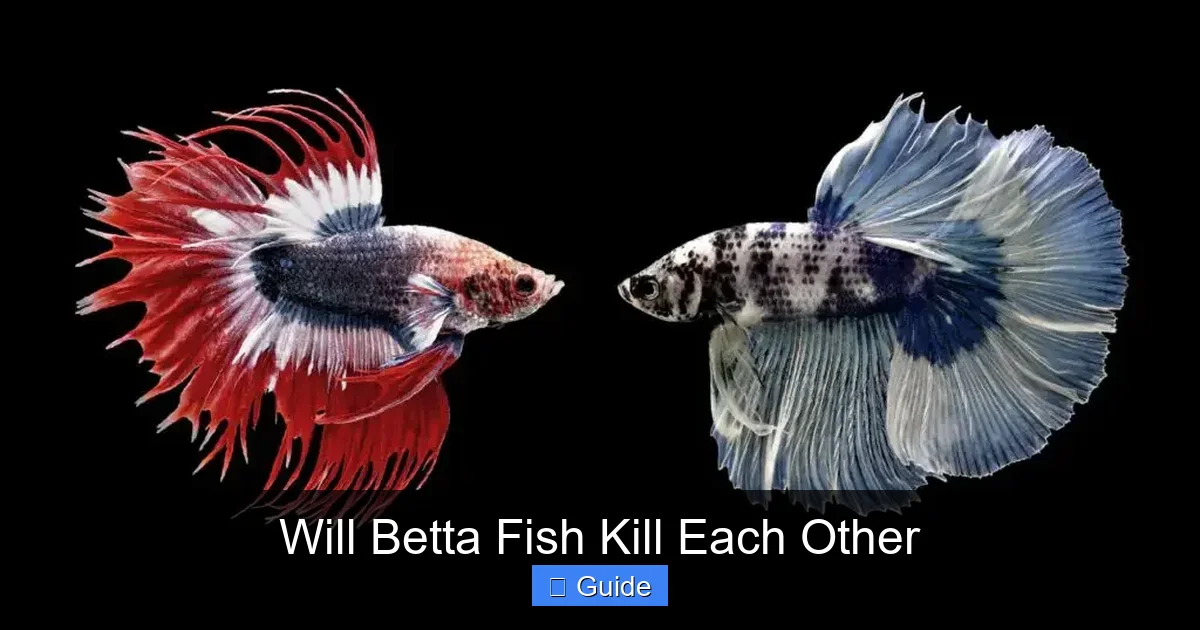
When people picture a betta, they often picture a male. The males are the show-stoppers with their long, dramatic fins. Their territorial nature is also the most pronounced. In the context of will betta fish kill each other, the male-male scenario is the most clear-cut and dangerous.
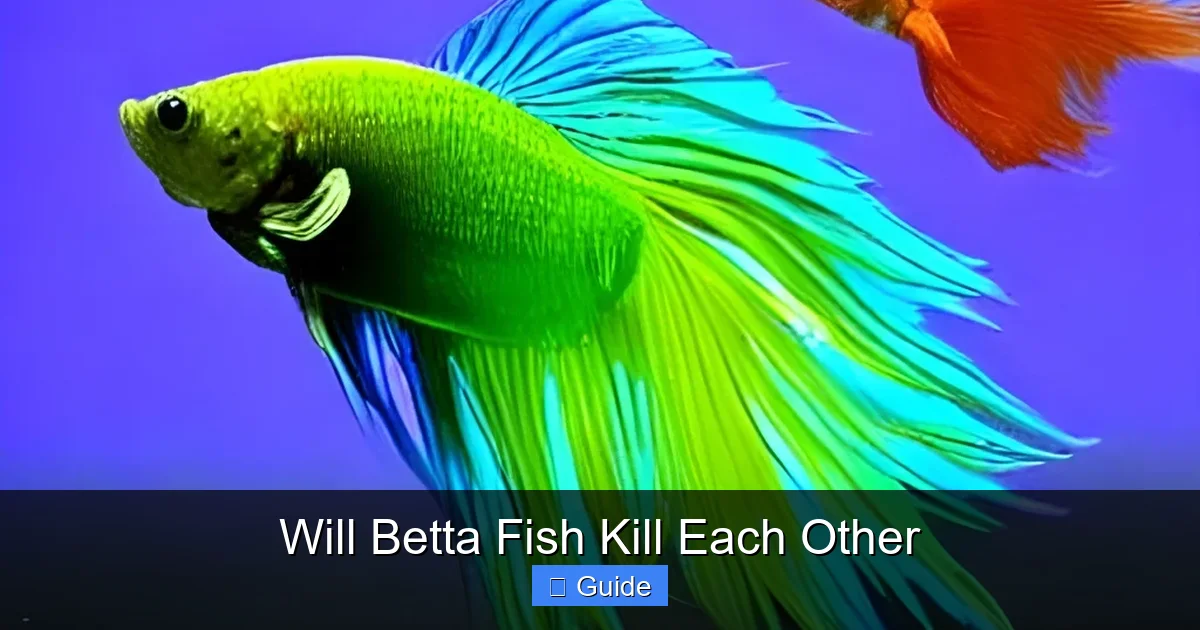
Visual guide about Will Betta Fish Kill Each Other
Image source: bettafishworld.com
The Inherent Risk of Male Cohabitation
Two male bettas in the same tank is a recipe for disaster. Their entire biology is geared towards recognizing another male as a direct threat to their territory and reproductive success. The moment they see each other, they will flare (spread their gills and fins to appear larger), charge, and bite. These fights are not symbolic; they are brutal, fast, and designed to inflict damage. Fins are torn, scales are lost, and the resulting stress and physical trauma can quickly lead to death, either from injury, infection, or exhaustion. There is no “getting used to each other.” They do not form friendships. The dominant fish will relentlessly pursue and harm the weaker one until it dies or is removed.
The “Fighting Fish” Myth vs. Modern Pet Bettas
It’s important to distinguish between historic fighting strains and modern pet bettas. While all bettas share the same species (Betta splendens), generations of selective breeding for the aquarium trade have, in many lines, reduced the extreme aggression of their fighting ancestors. A randomly selected pet store betta may be less intensely aggressive than a purpose-bred fighting fish. However, the genetic potential for lethal territorial defense is always present. You cannot rely on a “nice” personality. The safe, ethical, and universally recommended practice is to never house two male bettas together.
The Single Male Tank: A Kingdom of His Own
A solitary male betta in a properly cared-for tank is often a peaceful, interactive pet. His “kingdom” is defined by the boundaries of his aquarium. He will patrol his domain, build bubble nests at the surface if conditions are right, and interact with his owner. The key is that this kingdom must be his alone with no perceived male rivals. This is why the classic “betta in a vase” or tiny bowl is a profound misunderstanding of his needs. In a minuscule space, there is no territory to defend—the entire volume is his territory, and any intruder (including his own reflection) is an immediate, inescapable threat, causing chronic, deadly stress. A spacious, well-decorated tank provides zones—open swimming areas and secluded hiding spots—which actually helps reduce stress by allowing him to feel secure in his control of the space.
Female Bettas: The Sorority Possibility
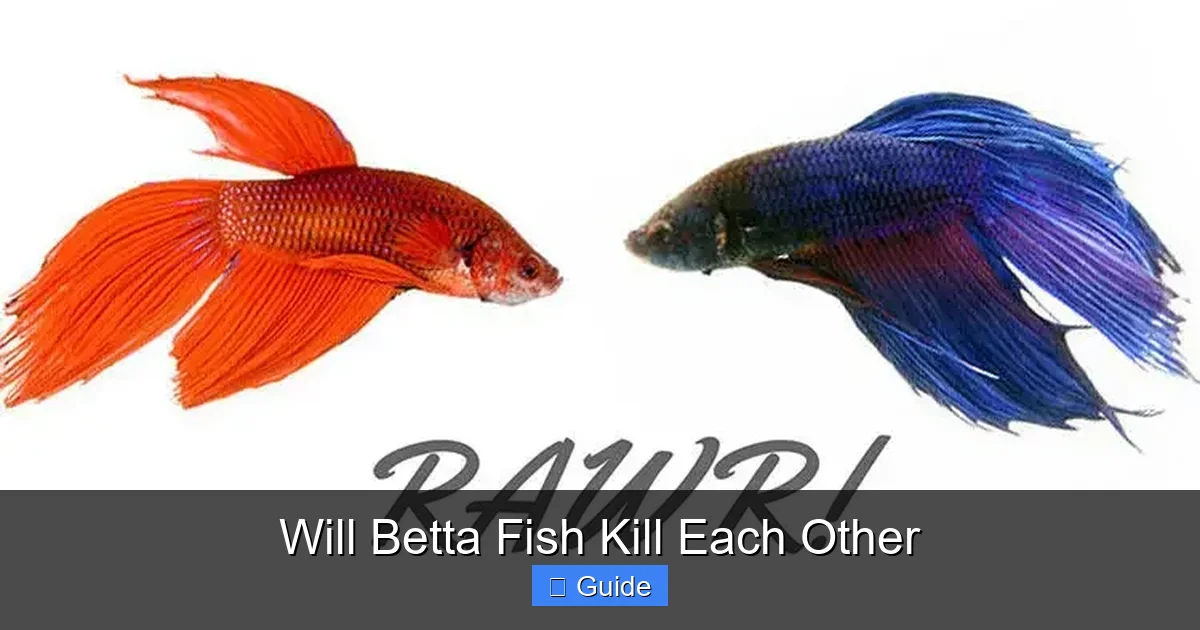
The question will betta fish kill each other becomes more complex when we discuss females. Female bettas, while still possessing territorial instincts, are generally less intensely aggressive than males. They have shorter fins and in the wild, live in loose groups. This has led to the popular practice of creating “betta sororities”—groups of females living together.
Visual guide about Will Betta Fish Kill Each Other
Image source: bettafishworld.com
How Sororities Work (In Theory)
A successful sorority is built on a hierarchy. In a large enough environment with abundant resources and hiding places, a group of 4-6 females will establish a pecking order through displays and minor chases. The dominant female gets the best spots, but the others have enough space and cover to avoid constant conflict. This is not a peaceful, egalitarian community; it’s a tense but stable social structure that requires specific conditions to prevent it from breaking down into lethal warfare.
The Critical Requirements for a Female Sorority
Attempting a sorority in anything less than a 20-gallon long tank is almost certainly doomed. The extra horizontal space is vital. The tank must be heavily planted—both live plants (like java fern, anubias, cryptocorynes) and artificial plants—to break lines of sight and provide countless hiding spots and resting places. Decorations, driftwood, and caves are essential. There must be multiple heaters and filter outflows to prevent one female from monopolizing warm or calm water spots. Water parameters must be pristine, as stress from poor water quality fuels aggression. All females must be introduced simultaneously to an empty, prepared tank; adding a new female to an established group is a guaranteed death sentence for the newcomer.
The High Risk and Constant Vigilance
Even with perfect setup, sororities can implode. A sudden change in water parameters, the death of a dominant female leading to a power vacuum, or simply incompatible personalities can cause a flashpoint. Daily observation is mandatory. You must be prepared to separate any injured or relentlessly targeted fish immediately into a hospital tank. Female sororities are not beginner projects. They are for experienced aquarists who understand betta behavior, have ample space and equipment for backup tanks, and are willing to accept that the group may need to be disbanded at any time. For a first-time betta owner, a single female in a 5+ gallon tank is the only responsible choice.
Tank Setup & Environment: The Foundation of Peace
If you’re asking will betta fish kill each other, the answer is often found in the tank’s design. The environment is the single most powerful tool you have to manage betta aggression. A poorly set up tank forces confrontation; a well-designed one encourages avoidance and reduces stress.
Visual guide about Will Betta Fish Kill Each Other
Image source: tankofish.com
The Absolute Minimum: Size and Shape
Forget the myths. A betta does not belong in a vase, a jar, or a 1-gallon “nano tank.” The absolute minimum for a single betta (male or female) is a 5-gallon tank. This provides enough horizontal distance for the fish to establish a personal territory with a clear “front” (where he patrols) and “back” (where he rests). A long, shallow tank is better than a tall, narrow one, as bettas are labyrinth fish that frequently gulp air from the surface and prefer the top and middle water columns. More space is always better. For a sorority or a community tank with a betta, start at 20 gallons and go up.
The Power of Visual Barriers
The goal is to prevent constant, stressful line-of-sight contact between a betta and any other fish (or its own reflection). Use tall, leafy plants like Amazon swords, vallisneria, or bunches of java moss to create dense walls of green. Position driftwood and rock caves to partition the tank into different zones. A betta should be able to swim from one end of the tank to the other without necessarily seeing what’s on the other side. This reduces the feeling that his entire domain is under constant invasion.
Heater, Filter, and Water Quality
Bettas are tropical fish from Thailand. They require a stable temperature between 78°F and 80°F (25.5°C – 26.5°C). A cold, sluggish betta is a stressed betta, and stress lowers aggression thresholds. Use a reliable aquarium heater. Filtration is crucial for clean water, but choose a filter with a gentle flow or baffle the output with a sponge, as strong currents exhaust bettas and damage their long fins. Poor water quality (high ammonia/nitrite) burns their gills and causes immense suffering, making any fish more irritable and prone to fighting. A cycled, filtered tank with regular water changes is a baseline requirement for any peaceful community.
Recognizing the Warning Signs: From Flare to Fatal
Aggression doesn’t usually start with a killing bite. It escalates. Knowing the early warning signs is critical to intervene before will betta fish kill each other becomes a reality.
The Display: Flaring and Posturing
The first sign is flaring. A betta will extend its gill covers (opercula) wide, often making its head look larger and more menacing. It will also flare its fins dramatically. This is a clear “back off” signal. It may be directed at another fish, at its own reflection, or even at you during tank maintenance. A single flare is normal; constant, frantic flaring at a tank mate indicates severe, unresolved territorial stress.
Active Pursuit: Chasing and Nipping
If flaring is ignored, the betta will escalate to active pursuit. It will chase the other fish at high speed around the tank. This is exhausting for the victim and incredibly stressful. The next step is nipping. You’ll see the betta dart in and take a quick bite out of the other fish’s fins or body. Look for torn, shredded, or ragged fins on the victim. These are injuries that can quickly become infected in poor water.
The Point of No Return: Locked Jaws and Tearing
At the most severe level, bettas will lock jaws and wrestle, rolling and tearing at each other. They will target fins first, but can also bite the body. This is a fight to the dominance (and often to the death). At this stage, the betta is in a predatory frenzy. Separation is urgent but must be done carefully to avoid you getting bitten. Use a net or cup to remove one fish immediately. Do not try to intervene with your hands.
Stress Indicators in the Victim
The fish being targeted will show signs of extreme stress: hiding constantly in the back of the tank, clamped fins (held tightly against the body), loss of color, rapid breathing, lethargy, and refusal to eat. These are signs that the stress is already compromising its health and immune system, making death from the fighting or subsequent disease very likely.
Choosing Compatible Tank Mates: A Delicate Balance
Can a betta live with other fish? Yes, but with extreme caution and the right choices. The goal is to choose tank mates that are not perceived as threats or rivals.
The “Do Not” List: Inviting Disaster
Avoid any fish with long, flowing, bright fins that resemble a betta (guppies, fancy guppies, some mollies, male paradise fish). The betta will see them as a male rival and attack. Avoid brightly colored, active fish that swim in the same middle-level territory (some barbs, some tetras). Avoid aggressive or semi-aggressive fish that might nip the betta’s fins first (some tiger barbs, some cichlids). Avoid slow, long-finned fish that are easy targets (some goldfish, fancy varieties). Avoid other labyrinth fish like gouramis, as they have similar body shapes and territorial behaviors.
The “Safe” List: Peaceful, Fast, and Bottom-Dwelling
Ideal tank mates are peaceful, fast-moving (to escape if chased), and occupy different tank levels. For the top/middle level with a betta, consider schools of small, active fish like neon tetras, ember tetras, harlequin rasboras, or celestial pearl danios (CPD). Their speed and schooling behavior often confuse a betta, and they stay higher in the water column. For the bottom level, excellent choices are corydoras catfish, kuhli loaches, or bristlenose plecos. These are armored, bottom-feeders that generally ignore the betta above them and help clean the tank. Shrimp and snails can also be good additions, though large shrimp like Amano shrimp are safer from being eaten than smaller cherry shrimp.
The Introduction Protocol: A Slow, Observed Process
Never just drop a new fish into a betta’s established tank. Use a divider in the tank for a few weeks to let them see but not touch each other. Observe for extreme flaring. If the betta constantly flares at the divider and tries to attack, the pairing is likely a failure. If reactions are mild or non-existent, you can try a supervised introduction in a neutral container or by adding the new fish to the tank while the betta is distracted (e.g., during a feeding). Have a backup plan—a separate tank or a breeder net—ready to house one fish immediately if aggression begins. The betta’s tank is his territory; introducing an intruder is always a high-risk maneuver.
The Hard Truth: When Prevention Fails
Despite our best efforts, sometimes aggression erupts. Understanding what to do in that moment is vital for animal welfare.
Immediate Separation is the Only Option
The moment you see sustained chasing, fin-nipping, or physical contact, you must separate the fish. There is no “letting them fight it out.” This is not how it works in the wild, where the loser can flee into a vast, complex habitat. In a confined tank, there is no escape. Have a hospital tank or a large breeder net ready. Use a net to carefully remove the aggressor or the victim, depending on who is most injured. The aggressor should go into a separate, bare tank to calm down. The victim needs a quiet hospital tank with clean, warm water to recover.
Treating Injuries and Preventing Infection
Fin rot is a common secondary infection from fighting injuries. For the injured fish, perform daily 25% water changes in the hospital tank with dechlorinated water at the same temperature. Add a stress-coat product to help heal the slime coat. In severe cases, a mild antibiotic like Maracyn or Furan-2 may be necessary, but always follow dosing instructions carefully. Keep the water pristine. Do not reintroduce the injured fish to the aggressor. The original tank setup has proven to be insufficient for peaceful cohabitation.
Learning and Re-evaluating
A failed cohabitation is not a failure of the fish; it’s a failure of the setup or species pairing. Re-evaluate everything: Was the tank truly large enough? Were there enough visual barriers? Was the chosen tank mate fundamentally incompatible? Did a sudden external stressor (temperature drop, new decoration) trigger the aggression? Use this experience to make better decisions in the future. The safest and most common outcome after a fight is permanent separation. The betta will live out his life as a solitary king, which is a perfectly acceptable and often happiest arrangement for these complex fish.
Conclusion: Respect the Instinct, Master the Environment
So, will betta fish kill each other? The unequivocal answer is yes, they possess the capability and the instinct to do so. But this truth is not a sentence of violence; it is a blueprint for success. The betta’s aggression is a predictable, manageable trait rooted in territorial defense. By respecting this fundamental aspect of their nature, we can create environments that mitigate conflict. This means providing a single male with a spacious, enriched kingdom of his own. It means understanding that female sororities are complex, high-stakes endeavors requiring expert-level resources. It means meticulously selecting peaceful tank mates and designing an aquarium with visual barriers, hiding spots, and pristine water. It means being a vigilant observer, ready to intervene at the first sign of a flare or chase.
Ultimately, the question shifts from “will they kill?” to “am I providing the conditions where they don’t feel the need to?” A betta is not a disposable decoration or a simple starter pet. It is a living creature with a fierce spirit and specific, non-negotiable needs. Your success as a betta keeper is measured not by forcing cohabitation, but by understanding and accommodating the wild heart that beats within that beautiful, flowing form. Choose peace through preparation, not through hope. That is the only way to ensure your betta’s vibrant life is also a long and healthy one.
Frequently Asked Questions
Can betta fish live with other fish at all?
Yes, but with extreme caution. A single male or female betta can sometimes live with peaceful, fast-moving, short-finned community fish (like certain tetras, rasboras, or corydoras) in a tank of 20 gallons or more. The tank must be heavily planted with visual barriers. Always have a backup plan to separate them if aggression occurs. Never house two male bettas together.
How do I stop my betta fish from fighting?
Immediately separate the fighting fish using a net into separate, prepared tanks. Do not wait to see if they stop. Then, critically evaluate the tank setup: is it large enough (minimum 5 gallons for one betta)? Are there ample hiding spots and visual barriers? Is water quality pristine? If cohabitation was attempted, it likely needs to be permanent separation. The aggressor should not be reintroduced to the former tank mate.
What are the signs that my betta is stressed or about to fight?
Key signs include constant, frantic flaring (gills and fins spread wide) directed at another fish, relentless chasing, and fin-nipping. General stress signs are clamped fins, hiding, loss of color, lethargy, and rapid breathing. If you see sustained flaring and chasing, this is a pre-fight warning; separation is needed immediately to prevent injury.
What is the ideal tank size to prevent betta fish from killing each other?
For a single betta (male or female), the absolute minimum is a 5-gallon tank, but 10 gallons is significantly better. For a female sorority, a minimum of 20 gallons is required, with more space being even safer. For a betta in a community tank, start at 20 gallons and provide extensive planting and decor to break lines of sight. More space is always the primary tool to reduce territorial aggression.
Are female betta fish less aggressive than males?
Generally, yes. Female bettas have shorter fins and in the wild live in loose groups, so they are more capable of forming stable hierarchies in very large, heavily planted tanks (sororities). However, they are still territorial and can be aggressive, especially if space is limited. A single female in a 5+ gallon tank is the safest and most recommended approach for beginners. Sororities are advanced and can still result in fatal fights.
What should I do if my betta has been injured in a fight?
Immediately move the injured betta to a clean, quiet hospital tank with warm, pristine water (78-80°F). Perform daily 25% water changes with dechlorinated water. Add a stress-coat or aquarium salt (if appropriate for the species) to aid healing. Monitor for signs of fin rot (white, fuzzy edges on torn fins). Keep the water exceptionally clean. Do not return the injured fish to the tank with the aggressor. The fight has proven the two fish cannot coexist safely.