Can You Train a Betta Fish
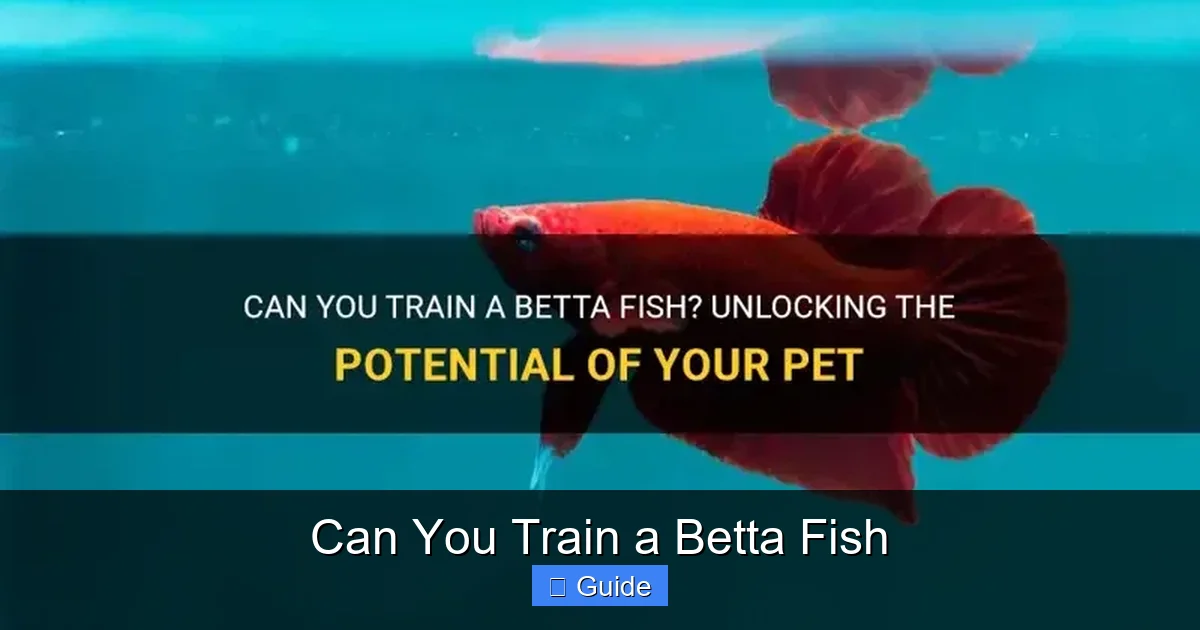
Yes, you can train a betta fish! While they won’t fetch a stick like a dog, bettas are remarkably intelligent and can learn a variety of tricks through positive reinforcement. Training is less about obedience and more about providing crucial mental stimulation, strengthening your bond, and showcasing their natural problem-solving abilities. With patience, consistency, and the right techniques, you can teach your betta to follow a target, jump on command, navigate obstacles, and even recognize you.
Key Takeaways
- Bettas are trainable: Despite the “dumb fish” stereotype, bettas possess decent memories and can learn through association, making them excellent candidates for training.
- It’s about enrichment, not obedience: The primary goal is to combat boredom, reduce stress, and provide vital mental exercise for your pet, improving its overall welfare.
- Positive reinforcement is the only method: Success relies entirely on rewarding desired behaviors with high-value food immediately. Never punish a betta; they won’t understand.
- Start simple and be patient: Begin with foundational skills like target training. Sessions must be short (1-2 minutes), fun, and ended on a positive note to prevent frustration.
- You are part of the environment: Your betta will learn to associate *you* with food and positive experiences, which can reduce its aggression towards your hand and build trust.
📑 Table of Contents
- Can You Train a Betta Fish? The Surprising Truth
- Understanding the Betta Mind: How They Learn
- The Foundation: Target Training Your Betta
- Beyond the Target: Fun Tricks You Can Teach
- Troubleshooting and Essential Tips for Success
- The Real Reward: Bonding and Deeper Understanding
- Conclusion: A Journey Worth Taking
Can You Train a Betta Fish? The Surprising Truth
Let’s be honest: when we think of training an animal, we picture a dog sitting on command or a dolphin jumping through a hoop. The idea of training a betta fish seems, well, a little far-fetched. Aren’t they just decorative, solitary fish with a short attention span and a big attitude? It’s time to dismantle that myth. The answer is a resounding, fascinating yes.
Training a betta fish isn’t about making it perform for an audience. It’s a profound form of enrichment that taps into their natural curiosity and intelligence. In the wild, a betta’s survival depends on hunting, exploring its territory, and solving simple problems. In a small tank, those instincts have nowhere to go. Training provides an outlet. It turns passive observation into active engagement, both for you and your fish. You’re not just teaching tricks; you’re having a conversation, building a relationship, and significantly enhancing the quality of life for your aquatic companion.
Understanding the Betta Mind: How They Learn
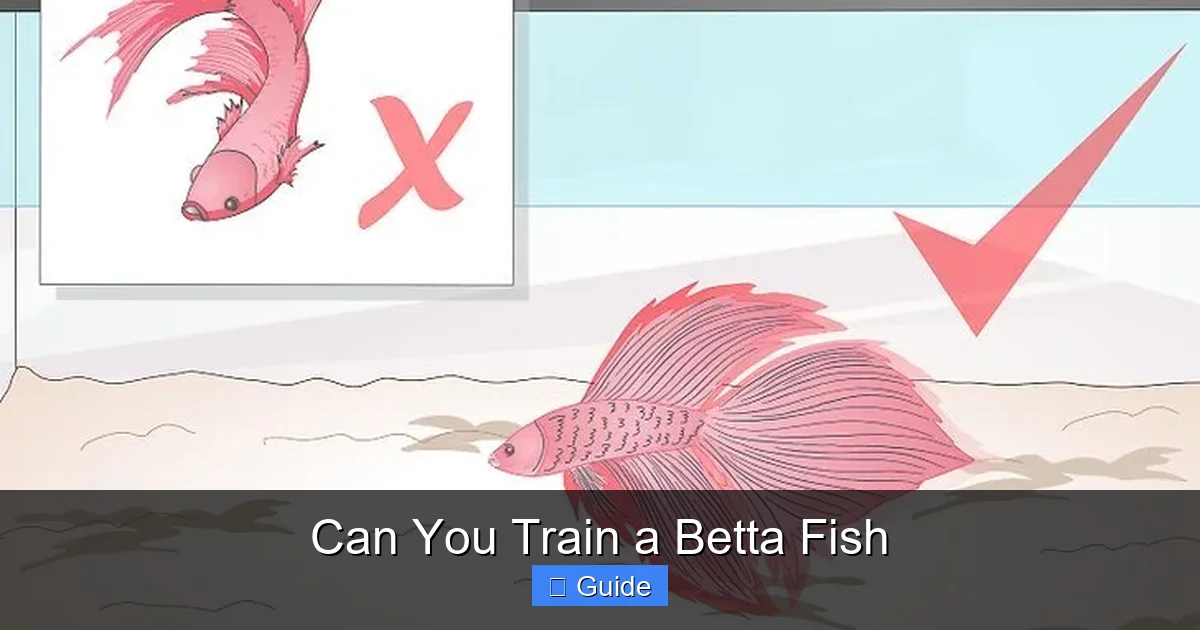
Before you grab a target stick, it helps to understand what’s going on in that little betta brain. Bettas (Betta splendens) are more cognitively complex than many realize. They can recognize individual humans, remember trained behaviors for months, and even exhibit personality traits like shyness or boldness. Their learning is primarily based on operant conditioning, specifically positive reinforcement.
Visual guide about Can You Train a Betta Fish
Image source: wikihow.com
The Power of Association
At its core, betta learning is about making connections. “When I swim to that red dot, I get a yummy treat.” The “red dot” (the target) becomes a conditioned stimulus. The food (the unconditioned stimulus) naturally creates a positive response. Through repeated pairings, the betta begins to work *for* the target because it predicts the reward. This is the same principle used in training all animals, from rats to dolphins.
Motivation is Everything
Your betta’s motivation is food. Period. To be successful, you must identify a high-value food reward. Standard pellets might not cut it, especially if your betta gets them daily. You need something special that your fish will actively work for. Excellent options include:
- Live or frozen foods: Daphnia, bloodworms, or brine shrimp are like steak for a betta.
- Special treats: A small piece of boiled egg yolk (use sparingly) or a high-quality gel food.
- Different pellets: A new brand or flavor of premium pellet can be exciting.
Experiment to find what your individual betta craves most. This special treat should only be used during training sessions to maintain its value and prevent overfeeding.
The Foundation: Target Training Your Betta
Every trick, from a simple follow to a complex hoop jump, begins with one fundamental skill: target training. This teaches your betta to touch an object (the target) with its nose or body in exchange for a reward. It is the building block of all communication. Once your betta understands “touch that, get food,” you can move that target anywhere to guide its movements.
Visual guide about Can You Train a Betta Fish
Image source: wikihow.com
What You’ll Need
- The Target: A small, non-toxic object. A plastic golf ball with a suction cup attached, a colored ping pong ball, or even a clean chopstick with a bright eraser tip works perfectly. The key is that it’s distinct from everything else in the tank.
- The Reward: Your chosen high-value food, prepared and ready in a small container or on a spoon.
- A Marker (Optional but helpful): A clicker or a consistent verbal marker like “Yes!” or “Good!” used the *exact instant* the betta touches the target. This bridges the gap between the action and the reward.
Step-by-Step Target Training
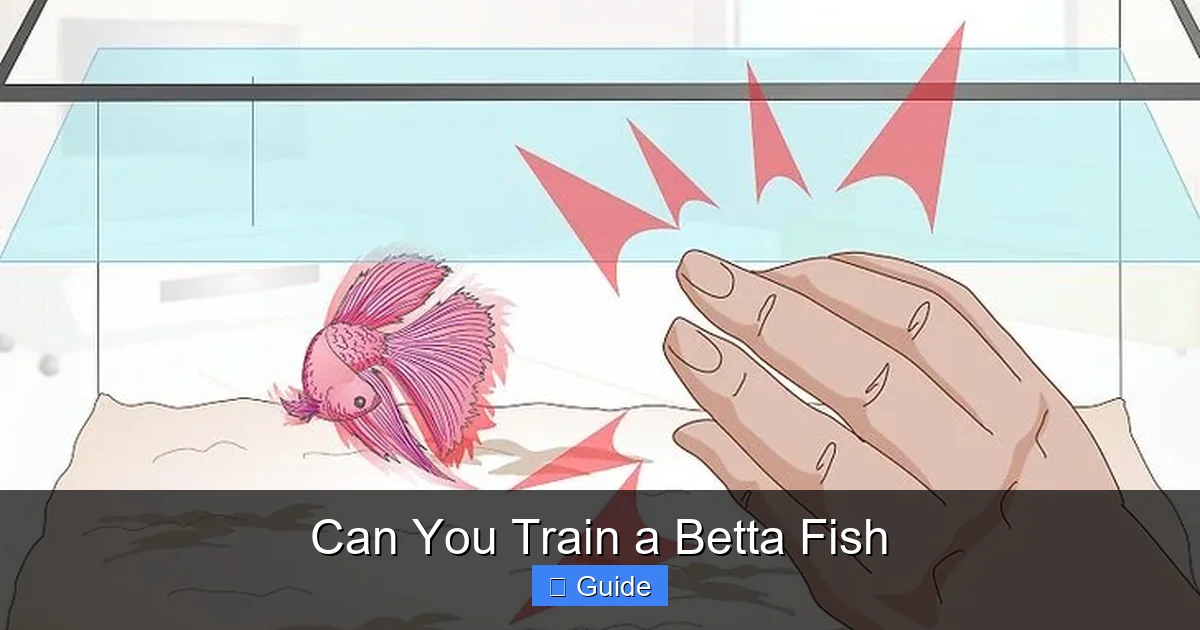
- Introduce the Target: With the tank lights on and your betta active, gently place the target just inside the water near the front of the tank. Hold it still. Your betta will likely investigate out of curiosity.
- Mark and Reward: The very moment your betta’s nose or body makes contact with the target, use your marker (click or say “Yes!”) and immediately drop a single piece of the high-value food reward into the water right next to the target. Timing is critical.
- Repeat and Fade: Do this 5-10 times per session, keeping sessions to 1-2 minutes max. Once your betta reliably swims to and touches the target the moment you present it, you can start to *move* the target slightly. Hold it a half-inch away. If it follows and touches, mark and reward. Gradually increase the distance you want it to follow.
- Build Duration: Eventually, you can ask for a “hold” by not marking/rewarding the instant it touches, but waiting a fraction of a second longer. This teaches it to maintain contact.
This process can take days or weeks. Some bettas “get it” in a session; others are more cautious. The mantra is: go slow, end positive. Always finish a session before your betta loses interest, and always end on a successful touch and reward.
Beyond the Target: Fun Tricks You Can Teach
Once your betta has mastered the target, a world of possibilities opens up. The target becomes your remote control for your fish’s body. Here are some popular and impressive tricks to work toward.
Visual guide about Can You Train a Betta Fish
Image source: wikihow.com
Follow the Leader
This is the natural extension of target training. Simply move the target slowly along the side of the tank. Your betta, having learned that touching it brings food, will follow. You can guide it in circles, figure-eights, or from one end of the tank to the other. This is a fantastic first “real” trick to showcase.
The Aggressive Flare (On Cue)
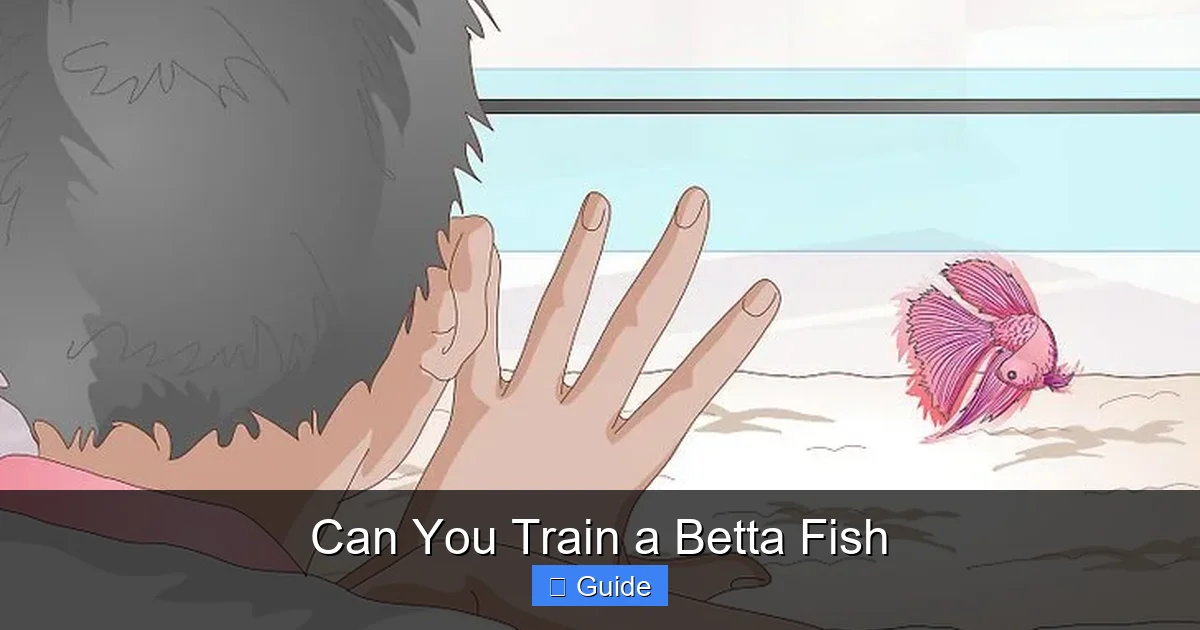
Bettas naturally flare—spreading their gills and fins—to appear larger when threatened or excited. You can teach them to do this on command, which is not only cool but also provides good exercise. The method is simple: hold your hand (or a brightly colored object) near the tank. When your betta flares in response, immediately mark and reward. Soon, it will flare at the mere sight of your hand approaching the glass, thinking a reward is coming. Note: Never provoke aggression for fun; this method simply captures a natural behavior.
The Jump
Many bettas will naturally jump at the water’s surface for food. You can refine this into a “jump on command” trick. Hold a treat *just above* the waterline. When your betta jumps for it, mark and reward, letting the treat drop into the water. Over time, you can add a cue (like tapping the glass or a specific word) just before you present the treat above the water. Caution: Ensure your tank has a secure lid, as a trained jumping betta may try to escape if the lid is left open!
Obstacle Course / Hoop Jump
This is for the advanced trainer. Using a lightweight, aquarium-safe hoop (a pipe cleaner bent into a circle works well), you can guide your betta through it with the target. Start by placing the hoop on the tank bottom and rewarding your betta for swimming through it to get to the target on the other side. Gradually raise the hoop off the bottom. It requires patience and a betta with good confidence.
Troubleshooting and Essential Tips for Success
Training doesn’t always go perfectly. Here’s how to navigate common challenges and set yourself up for long-term success.
The Betta Isn’t Interested
First, assess your reward. Is it truly high-value? Try something different. Second, check your timing. Are you marking and rewarding within a second of the behavior? Third, check the environment. Is the tank too bright, too noisy, or are there other fish causing stress? A calm, quiet environment is essential. Finally, your betta might just not be food-motivated at that moment. Try again later.
My Betta is Stressed or Aggressive
If your betta flares violently at your hand or the target and hides, you are moving too fast. Go back to the very beginning. Just present the target without asking for a touch, and reward any calm investigation. The goal is to make the target a positive, non-threatening object. Never force interaction. For a particularly aggressive betta, you might start by simply dropping a treat near the target without moving it, building a positive association over days.
Golden Rules for a Happy, Trained Betta
- Keep sessions ultra-short: 1-2 minutes, 1-2 times a day. Bettas have short attention spans. It’s better to have five successful 30-second sessions than one frustrating 5-minute one.
- Always end on success: Get your betta to perform the last behavior correctly, then reward generously and stop. This leaves it with a positive feeling about training.
- Never withhold food: Training is supplemental. Your betta should still receive its regular, balanced diet. Use training treats sparingly to avoid overfeeding and water quality issues.
- Use a feeding ring: To prevent food from sinking and polluting the water, use a small feeding ring or clip the treat to a magnet on the outside of the tank for precise delivery.
- Be consistent: Use the same target, the same marker, and similar timing each session. Consistency helps your betta learn faster.
The Real Reward: Bonding and Deeper Understanding
While teaching your betta to jump through a hoop is undeniably cool, the most significant outcome of training a betta fish is the shift in your relationship. Before training, your betta likely sees your hand as a threat (the net!) or an annoyance (the glass cleaner). Through consistent, positive interactions, your hand becomes a predictor of good things. Your betta will begin to swim to the front of the tank when it sees you, not just in anticipation of food, but in recognition of its interactive playmate.
This process allows you to truly observe your betta’s unique personality. Is it a cautious thinker who weighs every move? Is it an eager, impulsive jumper? Is it stubborn but clever? You’ll learn its preferences, its limits, and its moods. This level of understanding is impossible with passive observation. You move from being a caretaker to being an engaging part of its world. You’re providing not just food and clean water, but a stimulating, interactive life. That is the ultimate goal of any pet ownership, and it’s beautifully achievable with a betta fish.
Conclusion: A Journey Worth Taking
So, can you train a betta fish? Yes, you can. It requires ditching old assumptions about fish intelligence, arming yourself with patience and high-value rewards, and embracing the slow, rewarding process of positive reinforcement. Start with target training. Master the basics. Then, let your creativity—and your betta’s personality—guide you to new tricks.
Remember, the destination isn’t a trophy or a viral video. The destination is a healthier, more engaged betta with a significantly enriched life. It’s the quiet moment when your betta swims up to your finger on the glass, not in aggression, but in expectation of a game. It’s the satisfaction of communicating with another species in a language of touch and reward. Pick up that target stick, prepare a special treat, and begin the conversation. Your betta is smarter and more capable than you think.
Frequently Asked Questions
Is it cruel to train a betta fish?
No, when done correctly with positive reinforcement, training is a form of enrichment, not cruelty. It provides vital mental stimulation, reduces stress from boredom, and can strengthen the bond between fish and keeper. The key is to keep sessions short, fun, and never force the fish.
How long does it take to train a betta fish?
It varies greatly by individual. Some bettas may learn to touch a target in a single 5-minute session, while others may take several days of short, consistent sessions. Patience is crucial. Always end sessions on a positive note, even if progress is slow.
What is the best food to use for training?
Use a high-value food that is different from its regular diet. Excellent choices are frozen or live daphnia, bloodworms, or brine shrimp. The goal is to use something so desirable that the betta will actively work for it. Use training treats sparingly to avoid overfeeding.
Can all betta fish be trained?
Most bettas can learn basic target training, as it taps into their natural curiosity. However, individual personality plays a role. A chronically stressed, ill, or extremely old betta may be less receptive. A healthy, curious betta in a stable, well-maintained tank is the ideal candidate.
Will training make my betta more aggressive?
Proper training typically reduces stress-related aggression because the fish is mentally engaged. However, you must be careful not to accidentally reinforce aggressive flaring. You should only reward calm interaction with the target, not frantic, territorial flaring at your hand. Training builds trust, not frustration.
Do I need special equipment to train my betta?
No special equipment is necessary. You can start with a simple, brightly colored object as a target (like a cleaned bottle cap or a chopstick with an eraser tip) and a small amount of a special treat. The most important “tools” are patience, consistency, and good observation skills.