How Can I Tell If My Betta Fish Is Sick
Betta fish hide illness until it’s severe. Key red flags include extreme lethargy, loss of appetite, clamped or torn fins, visible spots/sores, labored breathing, and abnormal swimming. Immediate action—checking water quality and isolating the fish—is critical for treatment and survival.
You bought your betta fish for its stunning, flowing fins and vibrant personality. You set up a beautiful tank, picked the perfect name, and enjoy watching it flare at its reflection. Then, one day, you notice it’s just… different. Maybe it’s lying listlessly at the bottom, not coming up for food, or its fins look ragged. A knot of worry forms in your stomach. How can I tell if my betta fish is sick? This is one of the most critical questions every betta owner must know the answer to, because these magnificent fish are masters of disguise. In the wild, showing weakness means becoming prey. That instinct doesn’t fade in captivity. By the time your betta looks obviously ill, it’s often been struggling for days or even weeks. Your ability to decode the subtle clues—the slight change in posture, the faint discoloration, the missed meal—is the single most important skill for keeping your betta alive and thriving. This guide will turn you into a betta health detective, covering every symptom, its likely cause, and the immediate steps you must take.
Key Takeaways
- Behavioral changes are the earliest warning: Lethargy (resting at the bottom or top), lack of response to you, and loss of appetite are the most common first signs of a problem.
- Inspect your betta’s body and fins daily: Look for clamping (fins held tight), fading/ruined colors, tears, fuzzy or cotton-like growths, raised scales (pineconing), and any spots, ulcers, or bumps.
- Breathing and swimming are major indicators: Gasping at the surface, rapid gill movement, or struggling to swim (flopping, sinking, swimming upside down) point to severe water quality issues or neurological diseases.
- Water quality is the #1 cause of sickness: Poor parameters (ammonia, nitrite, nitrate, pH) stress bettas, suppress their immune system, and directly cause diseases like fin rot and velvet. Always test first!
- Isolation (hospital tank) is non-negotiable for treatment: You cannot effectively medicate a sick fish in a main tank with live plants and a biofilter. A simple, bare hospital tank is essential.
- Never self-diagnose with “cure-all” medications: Using the wrong medicine can kill your betta. Identify the specific symptom cluster first (e.g., white spots = likely ich; fuzzy white = likely fungus).
- Prevention is everything: A properly cycled tank, weekly water changes, stable temperature (78-80°F), and a high-quality diet are the best defenses against illness.
📑 Table of Contents
- The Silent Crisis: Why Bettas Hide Sickness
- Section 1: Behavioral Red Flags – What Your Betta’s Actions Are Screaming
- Section 2: The Physical Examination – From Fins to Scales
- Section 3: Breathing and Swimming – The Dance of Distress
- Section 4: Spotting the Culprits – Common Betta Diseases Decoded
- Section 5: The Emergency Protocol – What to Do the Moment You Suspect Sickness
- Conclusion: The Proactive Betta Keeper
The Silent Crisis: Why Bettas Hide Sickness
Before we dive into symptoms, you must understand this fundamental truth: a healthy betta is an active, curious, and interactive fish. It will swim gracefully through all levels of its tank, flare at your finger or a new object, and eagerly anticipate feeding time. Any consistent deviation from this baseline is a red flag. Bettas are also labyrinth fish, meaning they breathe atmospheric air from the surface. This adaptation makes them somewhat tolerant of poor water quality compared to other fish, but it’s a double-edged sword; they can survive in bad conditions long enough to develop chronic, untreatable illnesses. Their “toughness” is a myth that often leads to neglect. A betta living in a tiny, unheated bowl is not “fine”—it’s slowly being poisoned by its own waste and suffering from chronic stress, a immunosuppressant. Therefore, the first question when you suspect sickness is always: What is the water quality?
The Golden Rule: Test Your Water First
Before you even look at your fish, you must test your aquarium water. A liquid test kit (like API Freshwater Master Test Kit) is an absolute essential tool for any betta owner. You are not just looking for “clean” water; you are looking for specific, invisible toxins:
- Ammonia (NH3/NH4+): Zero. Any detectable ammonia (0.25 ppm or higher) is poisoning your fish, burning its gills and skin. It is the most common killer in new and neglected tanks.
- Nitrite (NO2-): Zero. Nitrite binds to hemoglobin in the blood, preventing oxygen transport, essentially causing the fish to suffocate.
- Nitrate (NO3-): Should be below 20 ppm. While less immediately toxic, high nitrate (40+ ppm) causes chronic stress, suppresses the immune system, and leads to long-term health problems.
- pH: Should be stable between 6.5 and 7.5. Drastic swings are more harmful than a slightly “off” but stable pH.
If any of these parameters are out of range, you have identified the primary problem. No medication can cure a fish poisoned by its own environment. Your first and most urgent action is a series of water changes to dilute toxins, followed by identifying and fixing the cause (usually an uncycled tank, overstocking, overfeeding, or inadequate filtration/maintenance).
Section 1: Behavioral Red Flags – What Your Betta’s Actions Are Screaming
Behavior is the most sensitive indicator of health. It changes before physical symptoms become apparent. You need to become intimately familiar with your betta’s “normal” personality. Is it a lazy lounger or a zooming maniac? Does it greet you? Knowing this baseline is your diagnostic foundation.

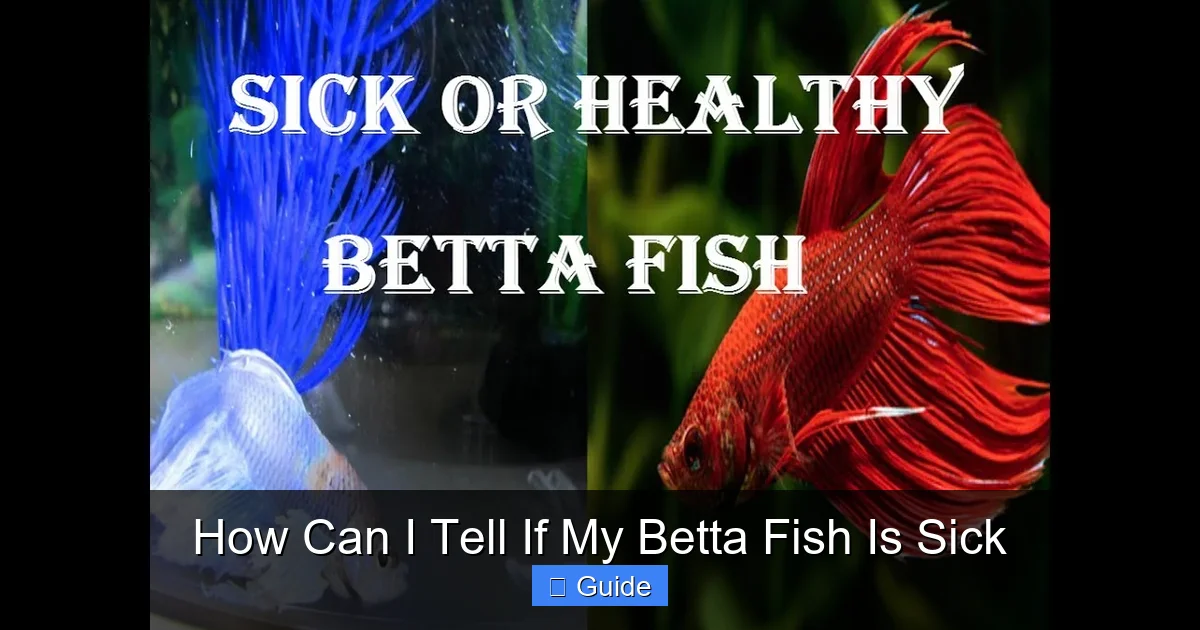
Visual guide about How Can I Tell If My Betta Fish Is Sick
Image source: wikihow.com
Extreme Lethargy and Listlessness
This is the most common and earliest sign. We’re not talking about a betta resting on a leaf or the tank bottom (which is normal). We’re talking about profound, unresponsive inactivity. Your betta is:
- Lying on its side at the very bottom or very top of the tank for hours, not moving even when you approach.
- Floating upside down or listing to one side, unable to maintain orientation.
- Drifting aimlessly, bumping into decorations, and showing no interest in food or its surroundings.
- Likely Causes: Severe water poisoning (ammonia/nitrite), advanced internal bacterial infection (like dropsy), swim bladder disorder, or extreme temperature stress (too cold).
Loss of Appetite and Ignoring Food
A betta that doesn’t eat for a day or two isn’t necessarily sick (they can be picky). But a betta that consistently ignores food, especially its favorite treats like bloodworms, is signaling distress.
- Food sinks to the bottom and is ignored.
- The betta may look at food but not move to eat it.
- Likely Causes: Almost any illness will cause inappetence. It’s a systemic response. Stress from poor water, parasites, constipation, or internal organ disease can all shut down the digestive system.
Hiding and Avoiding Interaction
While some bettas are naturally shy, a previously social fish that suddenly spends all day hidden behind plants, inside a cave, or buried in the substrate is feeling unwell or stressed. It’s conserving energy and trying to protect itself.
- Likely Causes: Water quality issues, bullying from tankmates (if in a community tank), sudden environmental change, or the onset of disease.
Excessive Gasping at the Surface
Bettas *must* gulp air from the surface. But if your betta is constantly at the surface, rapidly opening and closing its mouth, and seems to be struggling, it’s a respiratory emergency. Its gills are damaged or it cannot extract enough oxygen from the water.
- Likely Causes: Poor water quality (especially ammonia/nitrite burning gills), gill flukes (parasites), advanced fungal or bacterial infection on the gills, or very high water temperature (which holds less oxygen).
Section 2: The Physical Examination – From Fins to Scales
Now, gently observe your fish’s body. You may need to use a net to carefully corral it for a closer look if it’s lethargic. Be gentle and brief. Look for these physical manifestations of disease.
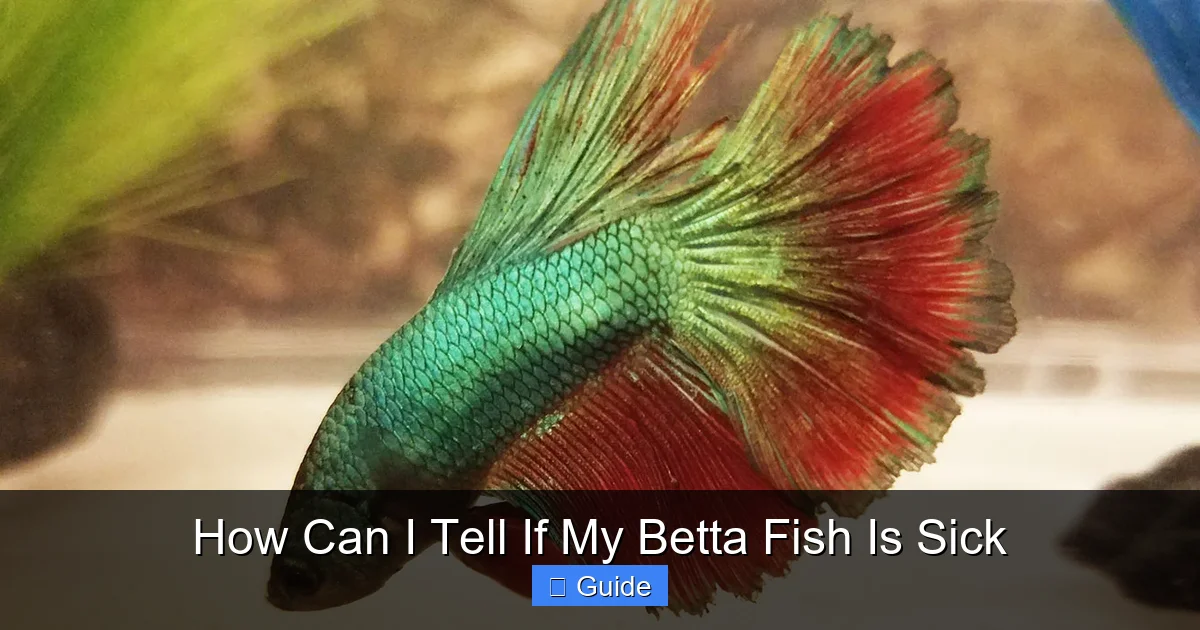
Visual guide about How Can I Tell If My Betta Fish Is Sick
Image source: bettafish.org
Fins: The Canary in the Coal Mine
Betta fins are delicate and often the first place problems appear.
- Fin Clamping: The fins are held tightly against the body, like a closed umbrella. This is a classic sign of severe stress, pain, or illness. A healthy betta’s fins are usually semi-open and flowing.
- Fin Rot: Look for fraying, splitting, or a “chewed” appearance along the edges. The fin tissue may be white, black, or red at the edges and appear to be disintegrating. It’s often a secondary bacterial infection stemming from poor water, but can also be primary.
- Torn or Shredded Fins: Can be from fin nipping (by tankmates or itself if bored), getting caught on sharp decorations, or the early stages of fin rot.
- Fuzzy or Cottony Growth on Fins/Body: This is almost certainly a fungal infection. It appears as white, fluffy patches, like cotton balls, typically on damaged tissue or eggs.
Body and Scale Issues
- Fading or Ruined Colors: Bettas can temporarily pale when stressed (e.g., during a water change). But persistent, significant color loss—especially if the vibrant reds, blues, or metallics turn dull gray or brown—indicates chronic stress or illness. A betta’s color is a direct reflection of its health.
- Raised, Pinecone-Like Scales (Dropsy): This is a dire symptom. Scales, particularly on the belly and near the head, stand upright, resembling a pinecone. This is not a disease itself but a severe symptom of a systemic bacterial infection causing fluid buildup (edema). It is often fatal if not caught extremely early.
- Bumps, Warts, or Sores: Any raised lump, open sore, or ulcer on the body is concerning. Small white bumps could be tumor-like growths (pimples) or early signs of internal issues. Red, raw sores are often bacterial infections.
- Swollen Abdomen (Not Always Dropsy): A visibly swollen, bloated belly can be constipation (often from overfeeding or poor diet), a internal tumor/cyst, or the fluid buildup of dropsy. Constipation is common and treatable; dropsy is a grave prognosis.
Gills and Eyes
- Red, Inflamed, or Pale Gills: Gills should be a healthy deep red. If they are bright scarlet, inflamed, or covered in white/gray fuzz, the gills are infected or damaged by poor water.
- Bulging Eyes (Exophthalmia): One or both eyes are protruded. This is usually a sign of a severe internal bacterial infection (often the same cause as dropsy) or a specific parasite. It requires aggressive treatment.
- Cloudy or Milky Eyes: Can indicate fungal infection, bacterial infection, or very poor water quality.
Section 3: Breathing and Swimming – The Dance of Distress
How your betta moves and breathes is a window into its neurological and cardiovascular health. Abnormal swimming is rarely subtle.

Visual guide about How Can I Tell If My Betta Fish Is Sick
Image source: a-z-animals.com
Labored or Erratic Breathing
We touched on gasping, but also watch for:
- Rapid Gill Movement: Count the gill beats. A healthy betta’s gills move slowly and rhythmically. If they are fluttering rapidly, even when the fish is resting, it’s struggling to get oxygen.
- Scraping Against Objects: If your betta is rubbing its sides or head against rocks, plants, or the tank glass, it is likely experiencing severe irritation. The most common cause is external parasites like flukes or ich.
Swimming Abnormalities and Balance Issues
This is a hallmark of swim bladder disorder (SBD) or neurological damage, but can also be a symptom of severe dropsy or advanced internal infection.
- Floating and Sinking: The betta floats to the top and cannot descend, or sinks to the bottom and cannot rise. It may swim in frantic circles trying to correct its position.
- Swimming Upside Down or Sideways: Complete loss of buoyancy control. The fish may try to “walk” on the surface or bottom with its nose pointed down.
- Floating Head Down or Tail Down: A classic “head down” posture where the fish points its nose toward the substrate and swims in that awkward position.
- Jerky, Uncontrolled Movements: Sudden, spasmodic twitching or darting without purpose.
- Likely Causes: Constipation (most common and treatable cause of SBD), bacterial infection affecting the swim bladder, genetic defects, or physical injury.
Section 4: Spotting the Culprits – Common Betta Diseases Decoded
With your observation skills honed, you can start matching symptom clusters to probable diseases. Remember, these are educated guesses; water quality is still the root suspect.
Ich (White Spot Disease)
- Symptoms: The classic sign is tiny, salt-like white dots all over the body and fins. The fish will also scratch against objects (flashing), become lethargic, and its fins may be clamped. It looks like it’s been sprinkled with glitter.
- Cause: A parasitic protozoan (Ichthyophthirius multifiliis). It’s highly contagious and often triggered by stress/fluctuating temperatures.
- Immediate Action: Raise the temperature slowly to 82-84°F to speed up the parasite’s lifecycle. Begin treatment with a formalin or malachite green-based medication in a hospital tank. Copper-based medications are NOT safe for bettas.
Velvet (Oodinium)
- Symptoms: A fine, gold or rust-colored dust that makes the fish look like it’s been dipped in metallic powder. It’s often harder to see than ich. The fish will scratch, clamp fins, and become lethargic. Gills may be affected first, causing rapid breathing.
- Cause: A parasitic dinoflagellate. Thrives in cooler water (below 78°F).
- Immediate Action: Raise temperature to 82-84°F. Treat with copper sulfate (very carefully, as bettas are sensitive) or formalin in a hospital tank. Increase aeration.
Fin Rot (Bacterial)
- Symptoms: As described: fraying, melting, black or red edging on fins. It can start as a small tear and spread rapidly. The fin edges may look “chewed” or “burned.”
- Cause: Usually poor water quality allowing opportunistic bacteria (Aeromonas, Pseudomonas) to attack. Can be primary if water is very bad.
- Immediate Action: Massive water change and impeccable water quality are the primary treatment. In a hospital tank, use a broad-spectrum antibacterial medication like Methylene Blue (for external use) or Kanamycin. Salt (aquarium salt, not table salt) can be added to the hospital tank (1 tsp per gallon) to help reduce stress and osmoregulate, but do not use salt with freshwater fish that absorb it through their skin (like catfish).
Fungal Infection
- Symptoms: White, fluffy, cotton-like growths, typically on damaged fins, sores, or eggs. It can spread rapidly over dead tissue.
- Cause: Fungal spores are everywhere but only attack compromised tissue (from injury, fin rot, etc.) in poor water conditions.
- Immediate Action: Methylene Blue is an excellent antifungal. Treat in a hospital tank. Salt can also help. The key is to remove the source of the damage (fix water, treat fin rot).
Dropsy (Symptoms, Not a Disease)
- Symptoms: The telltale pineconing scales, severe bloating, lethargy, and often bulging eyes. The fish looks like a pinecone or a balloon.
- Cause: Almost always a systemic bacterial infection (often Mycobacterium) that has caused organ failure and massive fluid retention. It is usually a death sentence by the time pineconing is visible.
- Immediate Action: Isolate immediately. You can try a strong antibiotic like Kanamycin or Neomycin in a hospital tank, combined with Epsom salt (magnesium sulfate, 1/4 tsp per gallon) to help reduce swelling. Prognosis is extremely poor. Many owners choose humane euthanasia at this stage to end suffering.
Section 5: The Emergency Protocol – What to Do the Moment You Suspect Sickness
Do not panic. Do not randomly add medication to your main tank. Follow this exact sequence:
Step 1: The Water Change & Test
Immediately perform a 25-50% water change with dechlorinated water that matches the temperature of your tank. Then, test your water. If ammonia or nitrite is present, you must do another 25% change in a few hours. Your goal is to get ammonia and nitrite to 0 ppm and nitrate below 20 ppm. This alone can save your fish if the cause is water quality.
Step 2: The Hospital Tank Setup
You cannot treat effectively in the display tank. You need a simple, sterile quarantine tank.
- A 1-5 gallon tank or large clean container.
- No substrate, no decorations, no live plants. A single, smooth ceramic pot or PVC pipe for hiding is enough.
- Use the water from your main tank (after a water change) or treated, temperature-matched tap water.
- NO FILTER (or a tiny sponge filter on minimal flow). Filters can absorb medications and stress a weak fish. You will do daily 100% water changes in this tank.
- A small, adjustable heater to maintain 80-82°F (unless the disease is temperature-sensitive like velvet, where you’d keep it warmer).
- A secure lid (bettas jump!).
Step 3: Isolate and Observe
Gently net your sick betta and place it in the hospital tank. Observe it closely for 15-30 minutes. Does it breathe easier? Is it more active? This can confirm if the main tank’s water was the primary issue. Now, you can begin to match symptoms to a likely disease and select a targeted treatment.
Step 4: Medication Protocol (The “Less is More” Rule)
- Always medicate in the hospital tank only.
- Read the medication label fully. Dosages for bettas are often half of what’s listed for “tropical fish” due to their sensitivity and labyrinth organ.
- Start with the mildest treatment first. Often, pristine water + salt + elevated temperature is enough for minor issues like mild fin rot or constipation.
- Never mix medications unless the label explicitly says it’s safe. You can kill your fish with combination therapy.
- Finish the full course of treatment (usually 5-7 days), even if the fish seems better after 2 days, to prevent recurrence.
- Remove carbon from any filter in the hospital tank, as it will absorb the medication.
Conclusion: The Proactive Betta Keeper
Knowing how to tell if your betta fish is sick is not about becoming a paranoid worrier; it’s about becoming a proactive, observant caregiver. Your betta’s health is a direct reflection of its environment and your diligence. The single greatest tool in your arsenal is not any medication—it’s a reliable test kit and the habit of weekly 25-50% water changes. A well-maintained tank with stable parameters will prevent 90% of betta illnesses. When you do spot a problem—a clamped fin, a missed meal, a strange swim—you now have the roadmap. Test the water, isolate the fish, diagnose the symptom, and treat precisely. By moving swiftly and intelligently, you give your betta the fighting chance it deserves. Remember, that vibrant, curious fish in your tank is counting on you to be its interpreter and its healer. The more you watch and learn its normal behaviors, the sooner you’ll catch the whisper of illness before it becomes a shout, ensuring your betta lives its full, glorious 3-5 years (or more!) by your side.
Frequently Asked Questions
Can I use human antibiotics or medications for my sick betta?
No. Human medications are dosed for much larger bodies and contain fillers and compounds toxic to fish. Always use medications specifically formulated for aquarium fish, and follow the dosage instructions for bettas or small tropical fish precisely.
My betta’s fins are torn but there’s no rot. What is it?
Torn fins without rot are often caused by physical damage—sharp tank decorations, getting sucked into a filter intake, or boredom leading to self-biting. First, remove any hazards, provide silk plants to reduce stress, and optimize water quality. The torn fins should heal on their own if the water is pristine. If rot develops, then treat for fin rot.
Is constipation really a common cause of swim bladder problems?
Yes, it’s one of the most common causes in bettas. Overfeeding, especially of dry foods that expand in the gut, or a lack of fiber can cause severe constipation that presses against the swim bladder. Fast the fish for 3-5 days, then feed a small, cooked, skinned pea (blanched) to act as a laxative. This resolves most SBD cases related to diet.
My betta is bloated but its scales aren’t pineconing. Is it dropsy?
Not necessarily. A bloated betta with smooth scales is much more likely to be constipated or suffering from a internal tumor/cyst. Dropsy is defined by the raised, pinecone-like scales. Try the fasting and pea treatment first. If the bloating does not reduce in a week and the fish becomes lethargic, dropsy or a severe internal infection becomes more likely.
Can I treat a sick betta in its main tank with live plants?
It is strongly discouraged. Most medications (especially antibiotics and copper) will harm or kill live plants, beneficial bacteria in your biofilter, and any invertebrate tankmates (shrimp, snails). A hospital tank is sterile, allows for 100% daily water changes to remove waste and medication residue, and prevents harming your established ecosystem.
My betta has a single white spot. Is it ich?
A single spot is unlikely to be ich, which typically covers the body in many spots. A single raised white spot could be a harmless “pimple” or tumor, a wound becoming infected, or the very beginning of a fungal infection. Monitor closely. If it multiplies or the fish’s behavior changes, then consider ich or velvet. Ich spots are uniform, like salt grains, and the fish will scratch. Velvet has a finer, dusty appearance.