How Many Pellets Betta Fish

Feeding your betta the correct pellet amount is critical for its long-term health and the tank’s ecosystem. Most bettas thrive on just 2-4 high-quality pellets per feeding, once or twice daily. Overfeeding is the #1 mistake, leading to obesity, constipation, swim bladder disease, and toxic water conditions. Always adjust portions based on your specific fish’s size, age, and activity level, and promptly remove any uneaten food.
Have you ever found yourself hovering over your betta’s tank, pellet container in hand, thinking, “How many pellets exactly should I give this little guy?” You’re staring into those mesmerizing fins, wanting to provide the best, but the conflicting advice online is enough to make anyone’s head spin. One source says “a pinch,” another says “five,” and a third swears by “as much as he can eat in two minutes.” The truth is, the question of “how many pellets betta fish” need is one of the most critical—and most commonly answered wrong—aspects of betta care. Getting it wrong doesn’t just mean a chubby fish; it can lead to painful digestive diseases, severe water toxicity, and a drastically shortened lifespan. This guide will cut through the noise. We’ll move beyond vague suggestions to give you a precise, actionable formula for determining the perfect pellet portion for your unique betta, ensuring it lives a long, active, and colorful life.
Key Takeaways
- Portion Size is Tiny: A typical adult betta needs only 2-4 standard-sized pellets per meal. Its stomach is roughly the size of its eye.
- Frequency Matters: Feed adult bettas once daily; younger, growing bettas may eat twice daily. Avoid feeding more frequently.
- Pellet Size Must Match: Use micro or small-sized pellets for bettas. Large pellets can cause digestive blockages and overfeeding.
- Overfeeding Pollutes Water: Uneaten pellets decay instantly, creating lethal ammonia and nitrite spikes, which are the primary cause of poor water quality.
- Watch for Health Signs: A healthy betta has a slight, streamlined abdomen. Constipation, fat rolls, or a bloated belly indicate overfeeding.
- Consistency is Key: Establish a strict feeding schedule. Betta fish thrive on routine, which reduces stress and regulates digestion.
- Quality Over Quantity: Invest in high-protein, betta-specific pellets with minimal fillers. Cheap food leads to more waste and nutritional deficiencies.
📑 Table of Contents
- Why Getting Pellet Quantity Wrong Is So Dangerous
- Understanding Betta Fish Nutrition: It’s Not Just About Calories
- The Golden Rule: How Many Pellets Per Feeding?
- Establishing the Perfect Feeding Schedule
- Pellet Quality and Preparation: Beyond the Count
- The Direct Link: Pellet Quantity and Water Quality
- Reading Your Betta: The Ultimate Feeding Guide
- Beyond Pellets: Dietary Variety and Treats
- Conclusion: The Art of Responsible Feeding
Why Getting Pellet Quantity Wrong Is So Dangerous
Before we dive into the “how many,” we must understand the “why.” Betta fish are often marketed as low-maintenance pets that can live in a tiny bowl, fed sporadically. This myth is incredibly harmful. In reality, bettas are intelligent, carnivorous fish with specific, delicate dietary and environmental needs. Their small, upturned mouths are designed for picking insects off the water’s surface in the rice paddies of Southeast Asia, not for processing large volumes of food. Their digestive tracts are short and inefficient at breaking down carbohydrates and plant matter, which are often used as cheap fillers in low-quality fish foods.
The Domino Effect of One Extra Pellet
Imagine a single, standard-sized betta pellet. Now, imagine it’s sitting at the bottom of your 5-gallon tank. Within an hour, that pellet begins to decompose. This process consumes oxygen and releases ammonia—a potent, colorless toxin that burns fish gills and damages internal organs. In a filtered, cycled tank, beneficial bacteria can handle the ammonia from your betta’s waste. But that one stray pellet can create an ammonia spike that overwhelms the bacteria colony. Your betta, swimming through its own toxic waste cloud, will become stressed, lethargic, and susceptible to disease. Now, multiply that by three or four uneaten pellets from an overfed meal. The damage is swift and severe. This is why the answer to “how many pellets” is always a conservative number, followed immediately by the instruction: “and remove anything not eaten within 2-3 minutes.”
Understanding Betta Fish Nutrition: It’s Not Just About Calories
To determine pellet count, we must first understand what a pellet *is*. Not all pellets are created equal. A betta’s natural diet is over 90% protein from insects, insect larvae, and zooplankton. Therefore, a quality betta pellet should list a whole protein source (like salmon, shrimp, or krill meal) as the first ingredient, with a crude protein content of at least 40%.

Visual guide about How Many Pellets Betta Fish
Image source: smartfishtanks.com
Decoding the Ingredient List
Turn the pellet container over. If the first three ingredients are “wheat flour,” “soybean meal,” or “corn gluten meal,” you are essentially feeding your carnivore bread. These fillers pass through the betta undigested, bulking up their stool and clouding the water. They provide zero nutritional value and increase the digestive load. A good pellet might have “whole dried shrimp,” “krill meal,” and “spirulina algae” near the top. Spirulina is a valuable supplement for color enhancement. The fewer the “meals” and “gluten” ingredients, the better. When you use a high-protein, highly digestible pellet, less of it is needed to meet your betta’s nutritional requirements, and less waste is produced. This directly impacts how many pellets you should feed.
The Golden Rule: How Many Pellets Per Feeding?
Now, for the formula you’ve been waiting for. There is no universal number because bettas, like people, come in different sizes and ages. However, a reliable starting point exists. The standard recommendation is to feed your adult betta a total of 2-4 standard-sized pellets per day. This is not per meal for most adults; it’s the daily total. For younger bettas (fry and juveniles under 6 months), who are growing rapidly and have higher metabolisms, you can offer 2-3 pellets twice daily, for a total of 4-6 pellets per day.
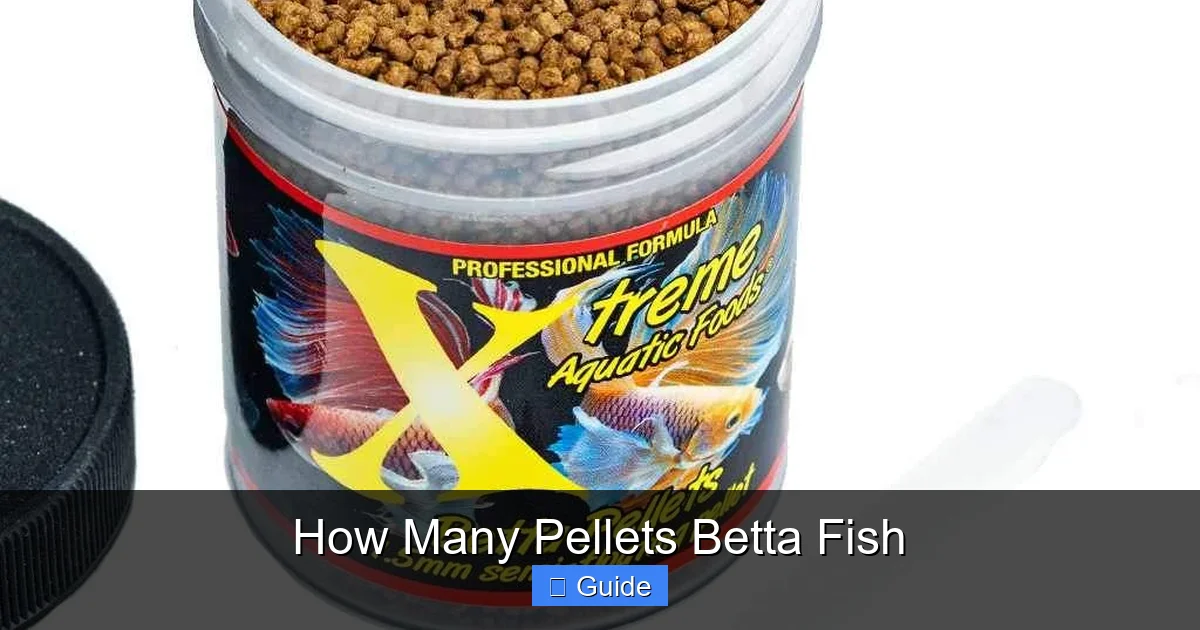
Visual guide about How Many Pellets Betta Fish
Image source: cdn.shopify.com
How to Measure: The “Eye-Size” Method
The most practical, fail-safe method for any betta owner is the “eye-size” rule. A betta’s stomach is approximately the size of its eye. Therefore, you should never feed an amount of food that, when combined, is larger than its eye. For a standard adult betta (2-3 inches in body length), this typically translates to:
- Micro Pellets (1mm): 4-6 pellets per day (if feeding once daily).
- Small Pellets (2mm): 2-3 pellets per day.
- Medium Pellets (3mm): 1-2 pellets per day (though medium is often too large for many bettas).
Practical Example: You have a vibrant, adult Halfmoon Betta that’s about 2.5 inches long. You’ve purchased a reputable brand of small (2mm) betta pellets. Your feeding regimen should be: Offer 2 pellets in the morning. Observe for 2-3 minutes. If both are eaten, the next day you might try 3 pellets. If there is any leftover, drop back to 2. The “if eaten” rule is crucial. You are not pre-allocating a set number regardless of appetite. You are offering a conservative amount and adjusting based on consumption.
Adjusting for Your Specific Betta
Several factors require you to tweak this baseline:
- Activity Level: A betta in a heavily planted, spacious 10-gallon tank with tank mates will be more active and may need that top end of the range (3-4 pellets). A betta in a minimalist 3-gallon tank will be less active and may only need 1-2.
- Body Condition: Is your betta sleek and athletic, or does it have a subtle “beer belly”? If it’s already showing signs of being overweight, immediately reduce to 1-2 pellets every other day until its profile straightens out.
- Temperature: Bettas are tropical fish. Their metabolism is directly tied to water temperature (ideal 78-80°F / 25.5-26.5°C). In a cooler tank (below 76°F), their digestion slows dramatically. Feed even less—perhaps 1-2 pellets every 48 hours—and consider a heater.
- Life Stage: As mentioned, growing juveniles need more frequent, smaller feedings. Senior bettas (over 3-4 years) often have slower metabolisms and should be fed on the lower end of the scale, possibly only once every 48 hours.
Establishing the Perfect Feeding Schedule
Knowing how many is only half the battle. Knowing when is equally important. A consistent schedule regulates your betta’s digestive system and reduces stress. In the wild, bettas are opportunistic surface feeders, snacking on insects that fall into the water throughout the day. However, in captivity, with a high-quality food, we can consolidate feeding.
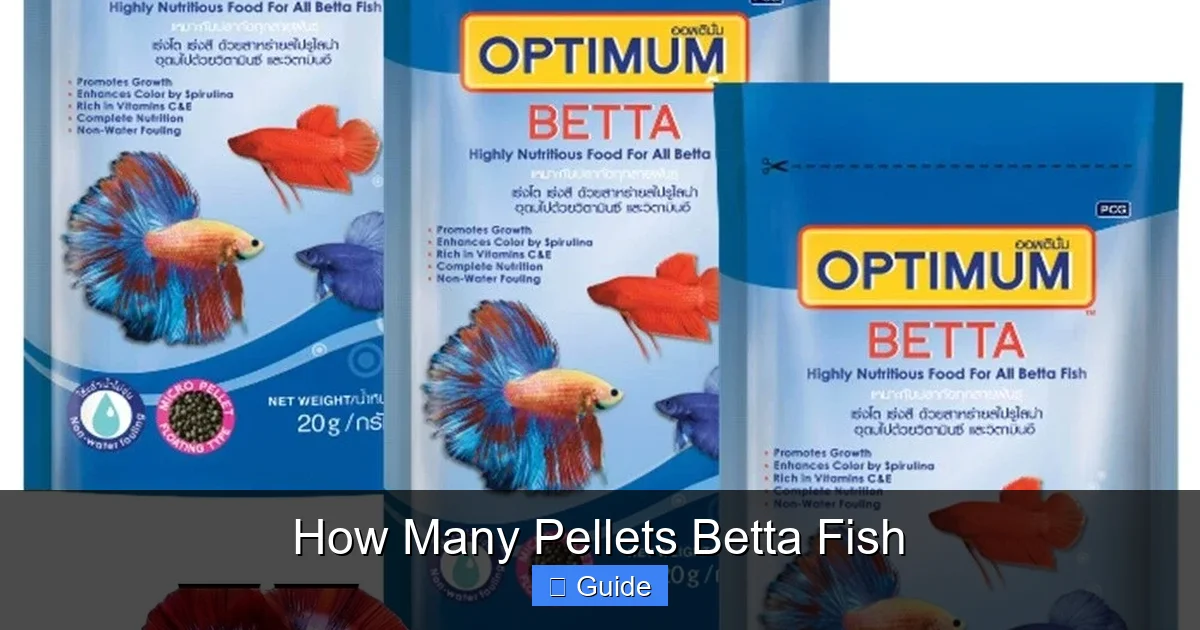
Visual guide about How Many Pellets Betta Fish
Image source: i.ebayimg.com
The Once-Daily vs. Twice-Daily Debate
For the vast majority of healthy adult bettas in a stable, warm aquarium, once-a-day feeding is sufficient and often preferable. It mimics natural periods of scarcity and gives their digestive system a full 24-hour rest. This daily fasting period is a powerful tool for preventing constipation and swim bladder disorder. Feed the same small portion (e.g., 2-3 pellets) at roughly the same time each day. This routine becomes a predictable event your betta can anticipate, which is mentally stimulating.
Twice-daily feeding is reserved for:
- Juvenile bettas (under 6 months) who need fuel for growth.
- Very old or underweight bettas needing extra calories (after a health issue has been ruled out by a vet).
- Bettas in unheated, cooler tanks where metabolism is sluggish, and a tiny meal twice daily might be better than one slightly larger meal.
If you choose twice-daily, the total daily pellet count should still not exceed the 2-4 pellet guideline. So, that would be 1-2 pellets in the morning and 1-2 pellets in the evening.
The Importance of a Weekly Fast
Consider implementing a 24-hour fast once a week, or even once every two weeks. This is not cruel; it is biologically beneficial. It thoroughly empties the digestive tract, gives the liver and kidneys a break, and can help clear up minor digestive backups. Many experienced betta keepers swear by this practice for maintaining long-term health. Simply skip your regular feeding day. Your betta will be fine and may even appear more vibrant and active afterward.
Pellet Quality and Preparation: Beyond the Count
The number of pellets you feed is meaningless if the pellets themselves are poor quality. Let’s talk about what to buy and how to prepare it.
Choosing the Right Pellet for Your Betta
Stick to brands that market specifically for bettas or “carnivorous tropical fish.” Avoid “community” or “tropical” flakes and pellets, as these are loaded with plant-based fillers. Look for:
- High Protein (40%+): The primary energy source.
- Small Size: Micro or small pellets (1-2mm). Betta mouths are small.
- Floating or Sinking: Bettas are surface feeders. Floating pellets are ideal as they stay at the top where your betta can easily find them. If you use slow-sinking pellets, be prepared to watch closely and remove any that sink too quickly.
- Natural Color Enhancers: Ingredients like krill, astaxanthin, and spirulina help maintain and intensify your betta’s brilliant colors.
Reputable brands include Hikari Betta Bio-Gold, New Life Spectrum Betta, and Fluval Bug Bites (micro).
To Soak or Not to Soak? That is the Question.
There is a longstanding debate about soaking dry pellets before feeding. The argument for soaking is that it softens the pellet, making it easier to digest and reducing the risk of constipation and swim bladder issues caused by dry, expandable food in the gut. The argument against is that it leaches nutrients into the water and creates more mess. The balanced, practical approach is this: If you are feeding a high-quality, highly digestible pellet (like Hikari Bio-Gold), you do not need to soak it. These pellets are formulated to digest quickly. However, if you notice your betta consistently gets constipated (stringy feces, swollen abdomen), or if you are using a slightly harder pellet, a quick 30-second soak in a separate cup of tank water is a simple, effective preventative measure. Never use tap water for soaking due to chlorine/chloramines.
The Direct Link: Pellet Quantity and Water Quality
This section cannot be overstated. Your filter’s job is to process fish waste (ammonia -> nitrite -> nitrate). It is not designed to handle food waste. Every pellet that is not eaten and is left to decay adds to the biological load. In a cycled tank, the bacteria will eventually convert the ammonia from the decomposing pellet, but this process takes time. During that time, your betta is exposed to toxic ammonia.
Calculating the Impact
Think of your tank as a fragile chemical balance. A fully cycled 5-gallon tank can typically handle the ammonia output of one small betta. Adding one extra decomposing pellet is like adding the waste output of an extra fish. In a small, unfiltered bowl, the effect is catastrophic and immediate. This is why the mantra “feed less, not more” is the cornerstone of aquarium husbandry. The number of pellets you decide to offer directly dictates how much waste you are introducing. By sticking to the 2-4 pellet maximum and being religious about removing uneaten food with a turkey baster or net within 3 minutes, you are performing the single most important water maintenance task there is: preventing pollution at the source.
The Role of Filtration and Water Changes
Even with perfect feeding, you need a filter with sufficient biological capacity (like a sponge filter or a hang-on-back with a large bio-media bed) and regular water changes (25-50% weekly). However, if you overfeed, no amount of filtration or water changes can keep up. You will constantly be fighting algae blooms, cloudy water, and sick fish. Correct pellet quantity makes your entire aquarium maintenance routine easier and more effective.
Reading Your Betta: The Ultimate Feeding Guide
Numbers and rules are guides, but your betta is the final authority. You must learn to read its body language and behavior around feeding time.
Signs of a Properly Fed Betta
- Eager but Not Frenzied: A healthy betta will recognize feeding time and come to the front. It will eat its offered pellets promptly but without desperate, gasping aggression.
- Sleek Profile: When viewed from above, the body should be streamlined, like a torpedo. There should be no visible fat deposits along the belly or behind the gills.
- Regular, Slightly Stringy Feces: Normal betta poop is short, dark, and slightly stringy, trailing behind as they swim. It should not be long, white, and mucus-like (a sign of constipation or internal infection).
- High Energy: After eating, a well-fed betta will be active, flaring, exploring, and building bubble nests (males). It should not be lethargic or spending all day at the bottom.
Signs of Overfeeding (The Most Common Problem)
- Constipation: A swollen, round abdomen that is firm to the touch. Feces may be long, white, and stringy. This is often the first stage of swim bladder disease.
- Swim Bladder Disorder: The fish floats upside down, sinks and can’t rise, or swims erratically in circles. This is a direct result of digestive pressure from overfeeding or constipation pressing on the swim bladder organ.
- Obesity: A visibly fat, rounded body with fat folds, especially noticeable from the side. This strains the internal organs and shortens lifespan.
- Poor Water Quality: Constant cloudiness, algae blooms, and detectable ammonia/nitrite levels despite regular maintenance.
- Leftover Food: Any pellets remaining after 3 minutes is a clear sign you offered too much.
What to do if you see these signs: Immediately stop feeding for 24-48 hours. This allows the digestive system to clear. On the third day, offer a single, pre-soaked, cooked pea (shelled) to act as a laxative. After a normal bowel movement, resume feeding with a drastically reduced pellet count (1 pellet every other day for a week) and reassess your routine.
Beyond Pellets: Dietary Variety and Treats
While high-quality pellets should form the staple of your betta’s diet (about 80-90%), variety is the spice of life—and health. Live or frozen foods provide essential nutrients and stimulate natural hunting instincts.
Safe Treats and Their Portions
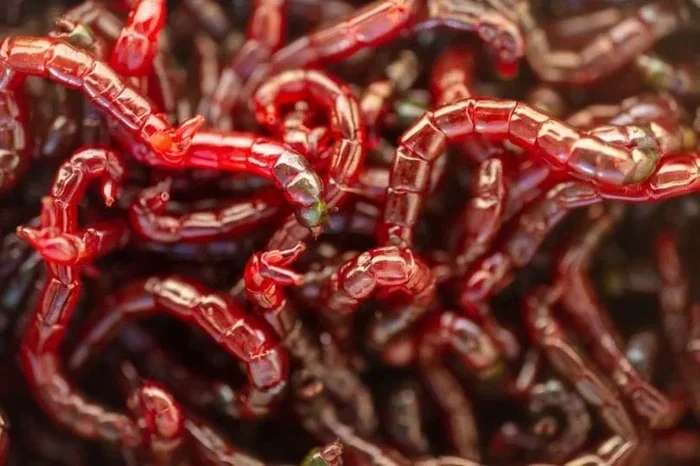
Appropriate treats include daphnia, brine shrimp, mysis shrimp, and bloodworms (feed sparingly, as they can cause constipation). The rule for treats is the same: a tiny amount. For a large adult betta, this means 1-2 individual brine shrimp or a tiny pinch of daphnia. Think of treats as a supplement, not a replacement. They should be offered no more than 1-2 times per week, and never on the same day as a pellet meal. If you give a treat, skip the pellets that day. The calorie and protein load from even a small amount of rich, fatty live food is significant.
Conclusion: The Art of Responsible Feeding
So, how many pellets betta fish? The definitive, responsible answer is: Start with 2-3 small, high-quality pellets for an adult, once per day. Observe consumption within 3 minutes. Adjust up or down by one pellet based on your betta’s specific size, age, and body condition. When in doubt, feed less. This approach requires you to be an observer, not just a dispenser. It transforms feeding from a mindless daily chore into a vital health check. You are not just providing sustenance; you are managing a delicate internal and external ecosystem. Your betta’s vibrant colors, energetic flares, and long, healthy life are the direct reward for this mindful, minimalist approach to one of the most deceptively simple questions in fishkeeping. Remember, in the world of betta care, less is almost always more.
Frequently Asked Questions
How many pellets should I feed my betta fish per day?
For a typical adult betta, start with 2-3 small-sized pellets once per day. You can offer up to 4 pellets only if your betta is very large, active, and in a warm, spacious tank. The key is to offer a small amount and ensure it’s eaten within 2-3 minutes. Juveniles may eat 2-3 pellets twice daily.
What happens if I overfeed my betta fish?
Overfeeding is the most common cause of betta health problems. It directly leads to constipation and swim bladder disorder, causing erratic swimming. More importantly, uneaten pellets decay and spike toxic ammonia levels in the water, leading to stress, illness, and potentially death. It also causes obesity and organ strain.
Should I soak betta pellets before feeding?
It’s not strictly necessary with high-quality, highly digestible pellets. However, if your betta has a history of constipation or swim bladder issues, a quick 30-second soak in a separate cup of tank water can help soften the food and aid digestion. Avoid soaking in tap water.
My betta doesn’t eat all the pellets I give. What should I do?
This is a clear sign you are feeding too much. The next day, reduce the number of pellets you offer. You should always remove any uneaten food with a net or turkey baster within 3 minutes to prevent water pollution. Your betta’s appetite can also vary slightly day-to-day based on temperature and mood.
Can I feed my betta pellets only, or do they need other food?
High-quality betta pellets formulated as a complete diet are sufficient as a staple. However, offering a small variety—like a tiny portion of frozen daphnia or brine shrimp 1-2 times per week—provides additional nutrients and mental stimulation. Treats should be given in extremely small quantities and can sometimes replace a pellet meal.
How long can a betta fish go without food?
A healthy adult betta in a properly heated tank can easily go 7-10 days without food. In fact, a weekly 24-hour fast is beneficial for digestive health. If you are going on vacation, it is safer to leave your betta unfed for a week than to use an automatic feeder with perishable food that will foul the water.