Does Keeping the Skin on Fish When Filleting Taste Better

Keeping the skin on fish during cooking is widely considered to taste better for most people. The skin creates a crispy, flavorful exterior that protects the delicate flesh, keeping it moist and infusing it with rich, fatty notes. It also adds valuable nutrients and offers unparalleled versatility in the kitchen. While personal preference and fish type matter, the skin-on method is a gold standard for achieving optimal texture and depth of flavor in many preparations.
Key Takeaways
- Texture Revolution: Properly cooked fish skin becomes incredibly crispy and shatters pleasantly, providing a crucial textural contrast to the flaky, tender flesh underneath.
- Moisture Guardian: The skin acts as a natural barrier, shielding the flesh from direct, intense heat and preventing moisture loss, resulting in juicier, more succulent fish.
- Nutrient Boost: Fish skin is rich in collagen, omega-3 fatty acids, and fat-soluble vitamins (like vitamin D), making your meal more nutritious when consumed.
- Flavor Amplifier: The skin contains concentrated fish oils and fats that render during cooking, basting the flesh from the outside and imparting a deeper, more savory, “ocean-y” flavor.
- Cooking Versatility: Skin-on fillets are more forgiving to cook, as the skin helps prevent sticking and allows for high-heat methods like pan-searing and grilling without the flesh falling apart.
- Myth of “Fishy” Taste: Properly prepared, fresh fish skin does not make the dish taste “fishy.” Instead, it adds complexity. A “fishy” flavor typically indicates lower-quality or less-fresh fish.
- Personal & Species Dependent: While excellent for fatty fish (salmon, trout, mackerel) and medium-fat fish (sea bass, snapper), very delicate white fish (like sole or flounder) may be better skinless for certain presentations.
📑 Table of Contents
- The Great Debate: To Skin or Not to Skin?
- The Skin-On Advantage: Texture and Mouthfeel
- Locking in Moisture: The Cooking Science
- Nutritional Powerhouse: Don’t Toss the Treasure
- Flavor Carrier: The Essence of the Sea
- Versatility in the Kitchen: A Cook’s Best Friend
- Debunking Myths: Addressing Common Concerns
- The Personal Preference Factor: When to Go Skinless
- Conclusion: Embrace the Skin
The Great Debate: To Skin or Not to Skin?
Walk into any high-end seafood restaurant, and you’ll likely find a beautifully seared piece of salmon or a grilled whole trout on the menu, skin proudly intact. Yet, in many home kitchens, that precious layer of scales and fat is often the first thing to hit the cutting board. The question, does keeping the skin on fish when filleting taste better? isn’t just a culinary curiosity—it’s a fundamental technique that can transform your cooking from good to extraordinary. The short answer, supported by chefs and food scientists alike, is a resounding yes for the vast majority of cases. But the “why” is a delicious journey into the worlds of texture, science, and flavor chemistry.
This isn’t about a arbitrary rule; it’s about harnessing one of nature’s most perfect cooking tools. Fish skin is a multi-functional package. It’s a shield, a flavor conduit, and a textural element all in one. Removing it before cooking isn’t just discarding a byproduct; it’s actively removing a key component that contributes to a superior final dish. Let’s dive deep into the layers of this debate and uncover why embracing the skin is one of the easiest ways to elevate your seafood repertoire.
The Skin-On Advantage: Texture and Mouthfeel
Crispy vs. Chewy: Achieving the Perfect Contrast
Texture is half the battle in great cooking. A perfectly cooked piece of fish offers a delightful contrast: the fragile, flaky, almost creamy flesh against a crisp, shattering element. That crisp element is almost always the skin. When rendered correctly, fish skin undergoes a magical transformation. The moisture evaporates, the fat melts, and the collagen and proteins contract and crisp into a layer that crackles satisfyingly under your fork or tooth.
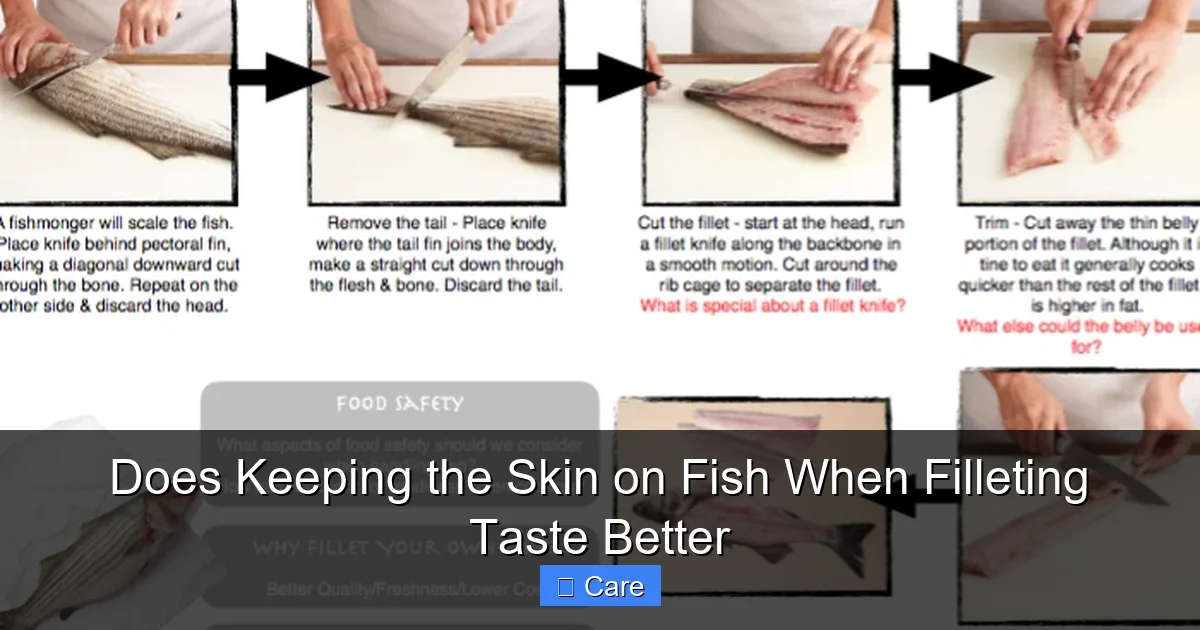
Visual guide about Does Keeping the Skin on Fish When Filleting Taste Better
Image source: d1e4pidl3fu268.cloudfront.net
This contrast is crucial. Without it, a skinless fillet can sometimes feel one-dimensional—soft, perhaps even mushy if overcooked, and lacking that initial “bite.” Think of the difference between a potato chip and a boiled potato; both are potato, but the textural experience is worlds apart. The crispy skin provides that essential, craveable first sensation that makes you want to take another bite. It’s the culinary equivalent of adding a crunchy topping to a creamy soup.
The “Protective Layer” Effect on Flesh Texture
Beyond its own texture, the skin serves as a protective armor for the delicate flesh beneath. During high-heat cooking methods like pan-searing or grilling, the direct contact between the flesh and the hot surface can cause proteins to contract rapidly and squeeze out moisture, leading to a tough, dry texture. The skin absorbs and distributes the initial blast of heat more evenly. It slowly renders its fat, creating a thin layer of insulation. This allows the heat to penetrate to the flesh more gently, cooking it more evenly from the outside in and preserving that tender, flaky, “just-cooked” perfection that is the hallmark of excellent fish preparation.
Locking in Moisture: The Cooking Science
The Barrier Against Evaporation
At its core, cooking fish is a battle against moisture loss. Fish muscle is structured differently than land animal muscle; it has shorter protein strands and less connective tissue, which means it can go from perfect to dry in seconds. The skin is your first line of defense. It creates a physical barrier that significantly slows the evaporation of the fish’s internal juices. As the skin heats, it contracts slightly, sealing the edges of the fillet. The rendered fat then creates a slick, humid microenvironment between the skin and the flesh, further preventing dehydration.

Visual guide about Does Keeping the Skin on Fish When Filleting Taste Better
Image source: cdn.shopify.com
This is why a skin-on fillet is far more forgiving for novice cooks. You can achieve a deep, golden-brown crust on the skin without instantly overcooking the flesh. The skin buys you precious seconds and degrees of temperature control. A skinless fillet, by contrast, has no such buffer. You must be infinitely more precise with your heat and timing to avoid a dry result. For the home cook, this alone makes keeping the skin on fish when filleting a smarter choice for consistently juicy outcomes.
Self-Basting with Rendered Fat
The magic doesn’t stop at just blocking evaporation. As the skin cooks, it slowly renders its own fat. This fat is not greasy waste; it’s liquid gold. It pools around the fillet, continuously bathing the edges and the bottom in hot, flavorful fat. This process is a form of natural, continuous basting. The hot fat transfers heat efficiently while also moisturizing the surface of the flesh. This self-basting action contributes to a uniformly cooked piece of fish that is moist from edge to center. It’s a closed-loop system of flavor and moisture that you simply cannot replicate with a skinless piece, no matter how much oil you add to the pan.
Nutritional Powerhouse: Don’t Toss the Treasure
Concentrated Healthy Fats and Collagen
If you’re discarding fish skin for health reasons, you might be throwing away some of the most nutritious parts. The skin, especially from fatty fish like salmon, mackerel, and trout, is where a huge concentration of omega-3 fatty acids (EPA and DHA) resides. These essential fats are celebrated for their heart, brain, and anti-inflammatory benefits. By removing the skin, you are removing a significant portion of these powerful nutrients.

Visual guide about Does Keeping the Skin on Fish When Filleting Taste Better
Image source: tastingtable.com
Furthermore, fish skin is an excellent source of collagen. Collagen is the protein that gives structure to our skin, bones, and connective tissues. Consuming collagen-rich foods may support skin elasticity, joint health, and gut lining integrity. When cooked down, the collagen in the skin breaks down into gelatin, which contributes to that luxurious, unctuous mouthfeel we associate with well-cooked fish. Eating the skin allows you to consume these beneficial compounds directly, making your meal more whole and nutrient-dense.
Fat-Soluble Vitamin Vault
Many of the vitamins our bodies need are “fat-soluble,” meaning they require dietary fat to be absorbed properly. Vitamins A, D, E, and K fall into this category. Fish skin, particularly from species that swim in cold, oily waters, is a natural repository for these vitamins, especially vitamin D. Vitamin D is crucial for bone health, immune function, and mood regulation, yet deficiency is common. By consuming the skin along with the flesh, you ensure that the fat present helps your body efficiently absorb these vital nutrients. It’s a perfect nutritional pairing that nature designed.
Flavor Carrier: The Essence of the Sea
Where the “Fishy” Flavor Lives (And How to Control It)
Here’s a critical point: the most concentrated flavor compounds in fish, including the compounds that give fish its characteristic “sea” taste (not the unpleasant “off” or rancid “fishy” taste), are located in the skin and the fat just beneath it. This is where the oils are. When you cook skin-on, these flavorful compounds render out and mingle with the flesh, creating a more complex, savory, and complete seafood flavor profile. A skinless fillet can sometimes taste cleaner but also blander, like a boiled chicken breast compared to one with crispy, seasoned skin.
The fear of a “fishy” taste is often the reason people remove skin. However, a strong, unpleasant “fishy” flavor is almost always a sign of poor handling or lack of freshness—it comes from the breakdown of trimethylamine oxide (TMAO) into trimethylamine (TMA). Fresh, high-quality fish should smell like the ocean, not like a fish market at noon. Cooking the skin properly (scoring it, starting skin-side down in a hot pan) actually helps manage these flavors by quickly rendering the fat and creating a flavorful crust that encapsulates the delicate flesh, preventing any volatile compounds from overwhelming the palate.
Umami and Mouthfeel Enhancement
The rendered fat from the skin is rich in compounds that trigger umami—our fifth taste, associated with savoriness and depth. This fat coats the palate, carrying flavor and creating a longer, more satisfying finish. It adds a richness that can make a leaner fish like halibut or cod taste more luxurious. This is why chefs often score the skin before cooking; it allows fat to render evenly and creates more surface area for that beautiful Maillard reaction (the chemical browning that creates complex flavors), amplifying the savory notes. The skin doesn’t just add its own flavor; it acts as a catalyst, enhancing the perception of flavor in the entire bite.
Versatility in the Kitchen: A Cook’s Best Friend
Pan-Searing and Sautéing: The Non-Stick Champion
For the stovetop hero, skin-on is non-negotiable. When you place a fillet skin-side down in a hot pan with a little oil, the skin does three things: it prevents sticking, it protects the flesh, and it creates the perfect crust. You can move the fillet with confidence. You can achieve that coveted golden-brown, crispy skin that looks as good as it tastes. Trying to flip a delicate, skinless fillet too early is a recipe for tearing. The skin provides structural integrity. Tip: Always start the fillet skin-side down and only flip once, when the skin is fully crisp and the flesh is mostly cooked through. The residual heat will finish the top.
Grilling and Broiling: The High-Heat Hero
On the grill or under the broiler, the stakes are higher. Direct, intense radiant heat can instantly cook and toughen the exposed flesh of a skinless fillet. A skin-on fillet is a warrior here. You grill it skin-side down first, using the skin as a heat shield. The fat renders, the skin crisps, and the flesh cooks gently from the bottom up. You can then finish it quickly flesh-side down for grill marks if desired, or serve it skin-side up, with the crispy skin crowning the dish. The skin also helps the fillet hold together, preventing it from falling through the grill grates—a common and frustrating mishap.
Baking and Roasting: Even Heat Distribution
Even in the oven, the skin plays a role. It helps conduct heat more evenly into the fillet, reducing the chance of a dry, overcooked edge while the center remains raw. For a simple, foolproof method, bake or roast skin-on fillets on a parchment-lined sheet pan. The skin will crisp at the edges while the flesh steams gently in its own moisture, protected by the skin. It’s a hands-off method that yields consistently excellent results.
Debunking Myths: Addressing Common Concerns
“Fish Skin is Slimy or Unpleasant”
This is almost always a preparation issue, not an inherent flaw. Slimy skin usually indicates the fish was not scaled properly or was not dried thoroughly before cooking. Proper preparation is key: Use a descaling tool or the back of a knife to firmly scrape the skin from tail to head, removing every last scale. Then, pat the skin completely dry with paper towels. A dry surface is essential for crispness. A little flour or cornstarch dusted on the dry skin can also help absorb residual moisture and promote extra crispiness.
“It’s Too Fatty/Unhealthy”
The fat in fish skin is predominantly unsaturated, including those beneficial omega-3s. It is not the saturated fat associated with negative health outcomes. In fact, incorporating these healthy fats into your diet is actively encouraged by nutritionists. The caloric difference between a skin-on and skinless fillet is minimal for a typical serving size. The nutritional benefits—the omega-3s, collagen, and vitamins—far outweigh any trivial calorie increase. You are eating a more complete food.
“It’s Difficult to Eat”
Crispy, well-rendered fish skin is not chewy or rubbery; it’s crisp and shatters. It should be eaten along with the flesh. If the skin is chewy, it means it was either not cooked long enough, the heat was too low (it steamed instead of crisped), or the fish was very old and the skin had lost its elasticity. With the right technique (hot pan, dry skin, patience), it becomes a delight to eat. For those who simply prefer not to eat it, you can still cook it skin-on for all the benefits (moisture, flavor) and easily slip the crispy skin off after cooking before serving, having reaped the rewards during the cooking process.
The Personal Preference Factor: When to Go Skinless
While the evidence heavily favors skin-on, there are a few scenarios where skinless might be preferable:
- Very Delicate, Thin Fillets: For fish like sole, flounder, or Dover sole, which are paper-thin and incredibly delicate, the skin can be a bit tough and may overpower the subtle, sweet flavor. These are often prepared “meunière” (dusted in flour, sautéed in butter) skinless.
- Certain Cured or Raw Preparations: For ceviche, gravlax, or other cured dishes where the fish is not cooked, the skin is typically removed as it can be unpleasantly chewy and doesn’t absorb the curing agents well.
- Specific Textural Goals: If you are making a very smooth fish mousse, terrine, or a chowder where you want the flesh to break down completely, skinless is the obvious choice.
- Personal Taste: Ultimately, you are the cook and the eater. If you genuinely dislike the texture of crispy skin, there is no culinary police force. However, we encourage you to try it prepared perfectly (see tips below) before making a final judgment.
For the overwhelming majority of cooking methods—pan-searing, grilling, roasting, broiling—and for the most popular species like salmon, trout, sea bass, snapper, and mackerel, keeping the skin on when filleting and cooking is the superior choice for taste, texture, and nutrition.
Conclusion: Embrace the Skin
The question, does keeping the skin on fish when filleting taste better? leads us down a path of culinary science, nutrition, and practical kitchen wisdom. The conclusion is clear and compelling. Fish skin is not waste; it is a value-added component. It is the secret weapon for achieving a restaurant-quality crisp, a moist and succulent interior, and a deeply flavorful bite. It protects the flesh, bastes it in its own healthy fats, and delivers a satisfying textural contrast that defines great seafood.
To dismiss the skin is to dismiss a fundamental tool for enhancing your cooking. It requires a small investment in proper preparation—a good scaling and a thorough drying—but the payoff is immense. It makes you a more confident cook, as the skin provides a forgiving buffer against common mistakes. It makes your meal more nutritious, packing in essential omega-3s and collagen. And above all, it makes your fish taste better. So next time you fillet a beautiful piece of fish, consider leaving that skin on. Treat it with respect, cook it with care, and discover the profound difference it makes. Your taste buds—and your dinner plate—will thank you.
Frequently Asked Questions
Is it safe to eat fish skin?
Yes, it is perfectly safe to eat fish skin from properly handled, fresh, and edible fish species. The primary safety concern is ensuring the fish is sourced from clean waters to avoid contaminants that can accumulate in fatty tissues. Cooking the skin thoroughly also eliminates any potential pathogens.
How do I get fish skin extra crispy?
The three golden rules are: 1) Pat the skin bone-dry with paper towels. 2) Lightly dust the skin with flour or cornstarch to absorb residual moisture. 3) Use a hot pan with enough oil, and start cooking skin-side down without moving it for several minutes until it’s fully released and golden brown. Do not flip too early.
Does eating fish skin add significant calories or fat?
It adds some, but the fat is primarily healthy, unsaturated omega-3 fatty acids. The caloric increase for a typical serving is modest (roughly 50-100 calories depending on the fish). The nutritional benefits of consuming those omega-3s and collagen make it a worthwhile trade-off for most health-conscious eaters.
Which types of fish have the best skin for eating?
> Fatty fish like salmon, trout, mackerel, and sardines have the most flavorful and crispable skin due to their higher oil content. Medium-fat fish like sea bass, snapper, grouper, and branzino also have excellent, crispable skin. Very lean fish like cod or haddock can crisp up but are less flavorful from the skin itself.
Can I cook fish skin-on and then remove it before serving?
Absolutely. Cooking skin-on still imparts moisture and flavor to the flesh. Once cooked, you can easily slide a spatula between the skin and the flesh to remove it. This gives you a moist, flavorful fillet without having to eat the skin if you prefer not to. You’ve still captured the cooking benefits.
What’s the biggest mistake people make when cooking skin-on fish?
The most common mistake is not drying the skin sufficiently before cooking. Any moisture on the surface will steam the skin, making it soggy and rubbery instead of crispy. Always take the time to pat it completely dry with paper towels right before it hits the pan. A second mistake is placing the fillet skin-side down in a pan that isn’t hot enough, which leads to sticking and slow, uneven cooking.