Can Male Betta Fish Live with Female
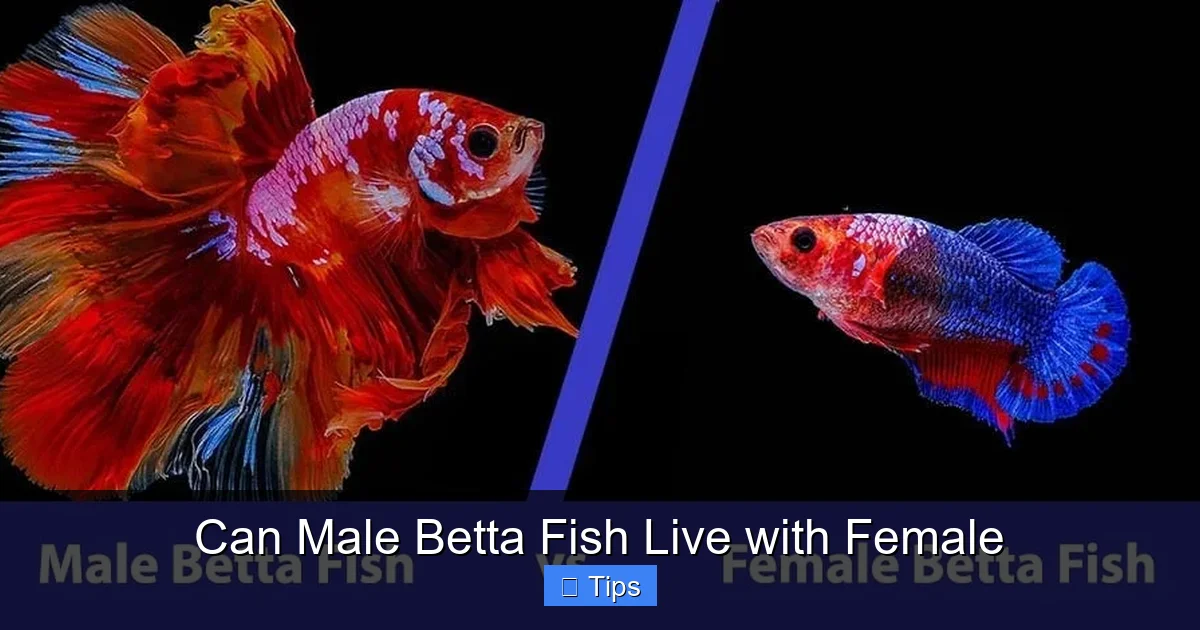
Generally, no—male betta fish should not live long-term with female bettas. Their aggressive and territorial nature, especially in males, makes sustained peaceful cohabitation extremely difficult and often dangerous. While temporary housing for breeding or in massive, expertly planted tanks is possible, it requires meticulous planning, constant supervision, and a readiness to separate them immediately. For most hobbyists, keeping male bettas solitary or with carefully selected, non-threatening tankmates is the safest and most humane approach. The risks of severe injury or death to the female are simply too high for casual attempts.
Key Takeaways
- Aggression is the primary rule: Male bettas are genetically wired to be territorial and will often see a female as an intruder or threat, leading to chasing, biting, and fatal injuries.
- Tank size is non-negotiable: The absolute minimum for considering a pair is a 20-gallon long tank, heavily planted to break lines of sight, but even this is high-risk.
- Female sororities are a different scenario: Groups of 4+ female bettas *can* sometimes coexist in a large, well-decorated tank, but this is not the same as a male-female pair.
- Breeding is a temporary, supervised event: The only “safe” time a male and female are together is during a controlled breeding session, after which the female must be removed immediately.
- Signs of stress are immediate and critical: Flared gills, relentless chasing, torn fins, and hiding are clear signals to separate the fish within hours, not days.
- There are no guarantees: Even with perfect conditions, a male betta’s temperament is individual. What works for one fish may be a death sentence for another.
- Alternative tankmates are safer: Peaceful, fast-swimming fish like neon tetras (in a proper school) or corydoras catfish are far more compatible companions for a male betta.
📑 Table of Contents
- The Allure and the Reality of Betta Fish
- Understanding Betta Behavior: It’s in Their DNA
- The Reality of a Male and Female Betta Living Together
- Tank Setup Essentials (If You Are Determined to Try)
- The Step-by-Step Introduction Process (A High-Risk Protocol)
- Safer, Proven Alternatives for a Happy Betta
- Common Mistakes and Final Verdict
The Allure and the Reality of Betta Fish
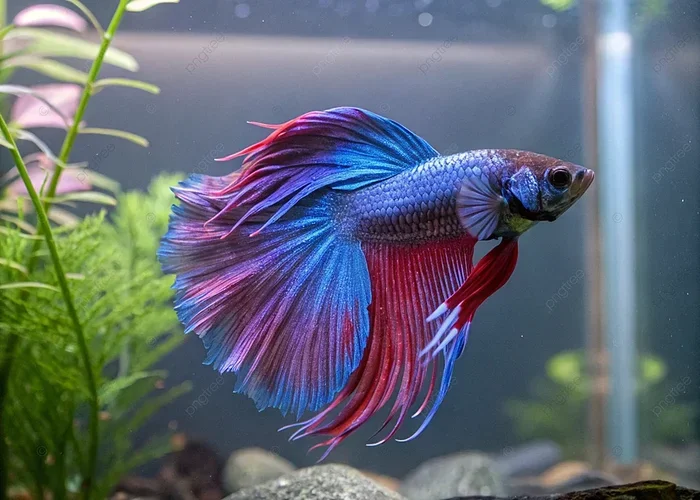
Let’s be honest. The first thing that draws us to betta fish, often called Siamese fighting fish, is their breathtaking beauty. The flowing, silk-like fins of a male Halfmoon, the shimmering scales of a Koi, the vibrant reds and blues—they’re living jewels in a glass box. You stare at your stunning male betta, a solitary king in his domain, and a thought inevitably creeps in: “He’s so beautiful. He seems lonely. Could he live with a female? Wouldn’t that be a beautiful pair?” It’s a natural, compassionate question. The answer, however, is one of the most critical and cautionary tales in the freshwater aquarium hobby. The short, stark answer is that permanently housing a male betta with a female betta is almost always a terrible, dangerous idea. The long answer explains why, and more importantly, what your actual, safe options are.
This isn’t about being mean or denying your fish companionship. It’s about respecting the animal’s innate biology. Centuries of selective breeding for aggression in Southeast Asia’s fighting pits have hardwired male bettas for one thing: defending their territory with extreme prejudice. A female betta, while generally less aggressive than a male, still possesses the same betta spirit and will not back down from a challenge. Introducing them is like putting two highly territorial, armed individuals in a studio apartment and hoping they’ll be roommates. It’s a recipe for disaster. But the story has nuances, exceptions that require expert-level aquascaping and monitoring, and absolutely safe alternatives that will give your betta a thriving life. Let’s dive deep into the why, the how (if you must), and the much better ways to create a peaceful community.
Understanding Betta Behavior: It’s in Their DNA
To grasp why male-female cohabitation is so fraught, you must first understand the betta’s natural behavior. This isn’t about your specific fish being “mean”; it’s about millions of years of evolution and hundreds of years of selective breeding.
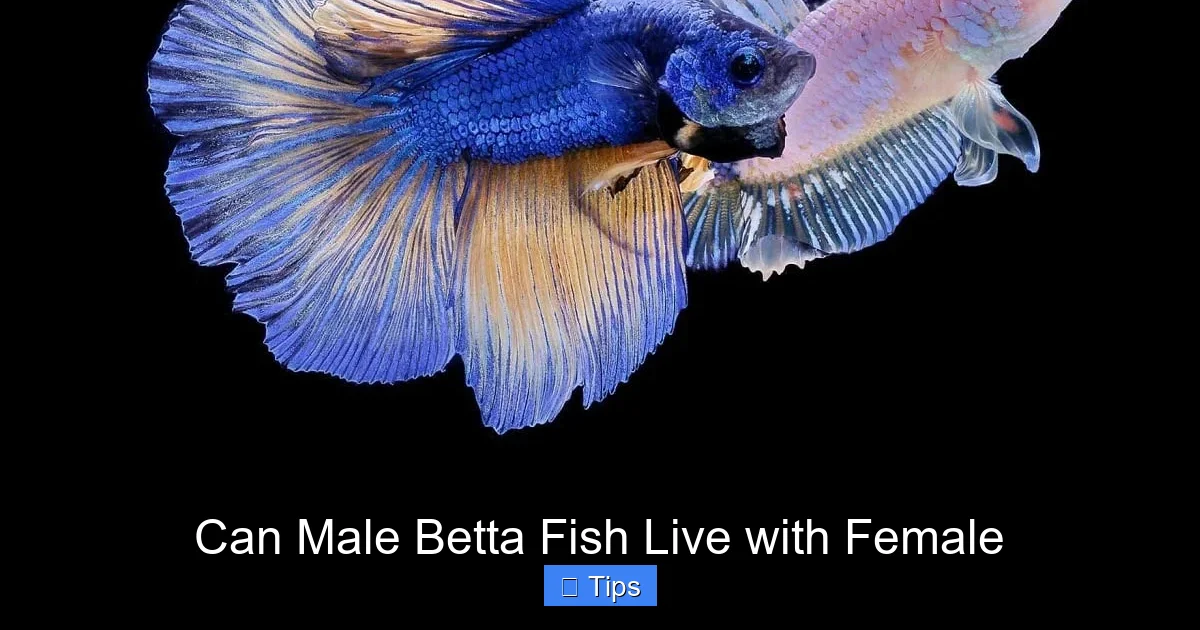
Visual guide about Can Male Betta Fish Live with Female
Image source: fishlab.com
The Male’s Kingdom: A One-Fish Territory
In the wild, a male betta builds a bubble nest at the water’s surface and fiercely guards a small territory around it—a clump of plants or a quiet backwater. Any other fish that enters this bubble-zone is perceived as a rival, a threat to his nesting site and his potential offspring. This instinct is not diluted in captivity; it is intensified. That beautiful, flowing fin? It’s a target. In a confined tank, the entire aquarium *is* his territory. A female betta, regardless of her demeanor, is an intruder. The male’s response is programmed: flare his gills to appear larger, chase the intruder away, and if the intruder doesn’t flee, escalate to biting. A single nip on a long, delicate fin can lead to fatal infections like fin rot.
Female Dynamics: Sororities vs. Pairs
Female bettas, while lacking the extreme finnage of males, are far from docile. In the wild, females maintain their own smaller territories and only come together with a male for spawning. However, in the aquarium hobby, a well-executed sorority—a group of 4 or more females in a large, heavily planted tank—can sometimes work. The key is numbers and space. With four or more, aggression is diffused; no single female can dominate, and others have places to hide. This social structure is fundamentally different from pairing one male with one female. In that dynamic, the male is the undisputed, hyper-territorial ruler. The female has no peer group for balance; she is solely the target. The power imbalance is absolute and dangerous.
The Reality of a Male and Female Betta Living Together
So, can it ever be done? The honest answer is: it’s a high-stakes gamble with a very low probability of long-term success. The scenarios where it’s attempted fall into two categories: the well-intentioned but misinformed hobbyist, and the advanced aquarist testing limits.
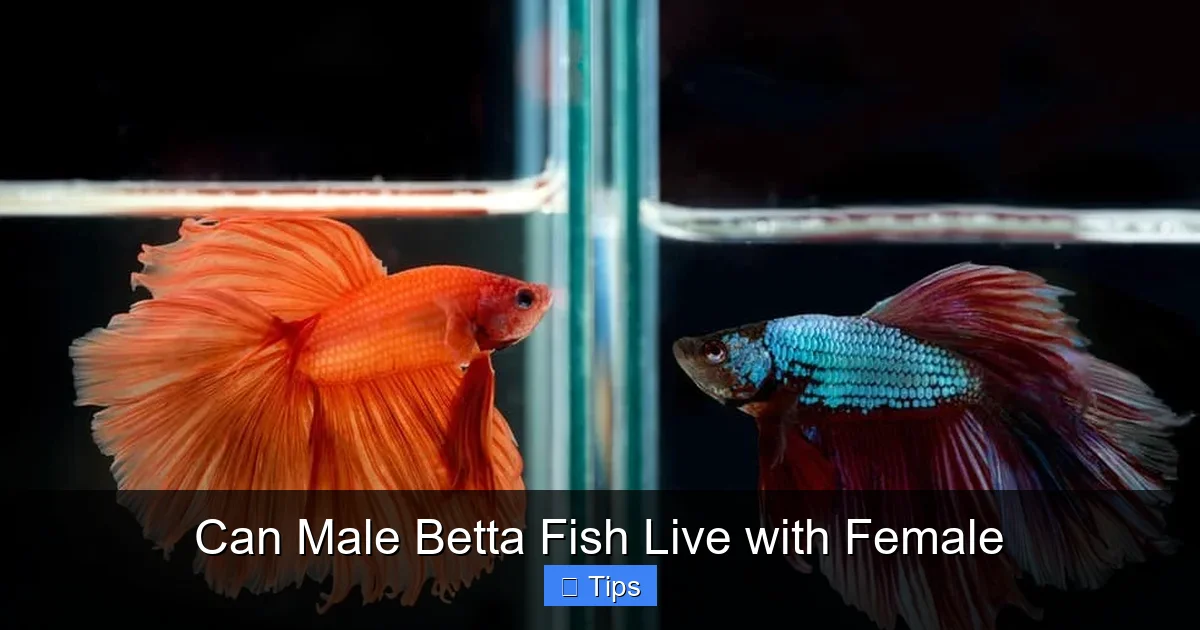
Visual guide about Can Male Betta Fish Live with Female
Image source: fishtankmaster.com
The Breeding Tank: The Only “Acceptable” Pairing
The one universally accepted time a male and female betta share water is for the explicit purpose of breeding. This is a controlled, temporary event. The process requires a dedicated 10-20 gallon breeding tank, densely planted with floating plants for the male’s bubble nest, and a clear divider. The fish are conditioned separately, then introduced under close supervision. The male may flare and chase, but if he accepts the female, she will approach his bubble nest, they will embrace, and eggs are released. At the first sign of aggression after spawning, or once eggs are laid, the female must be netted out immediately. The male will guard the nest, and the female is a threat to both him and the eggs. This is a minutes-to-hours-long event, not a permanent living arrangement.
The “Community Tank” Gamble: Why It Fails
What about a large, beautiful community tank? A 40-gallon breeder with a forest of live plants, driftwood, and a school of neon tetras? Could a male betta and a female betta both be part of that? The theory is that the elaborate aquascape provides so many hiding spots and broken sight lines that they might ignore each other. In practice, this is a ticking time bomb. The male’s territory will eventually encompass the entire tank. The female, even if she initially hides, will need to come out to eat and explore. The moment she swims into the male’s perceived “core” zone—often the top half of the tank where he patrols—the chase begins. Stress from constant harassment weakens the female’s immune system, making her susceptible to disease. Fin nipping can occur in an instant, and once blood is in the water, it can trigger a predatory response. There is no peaceful coexistence in this scenario; there is only a period of tense waiting for the inevitable conflict.
Tank Setup Essentials (If You Are Determined to Try)
If, after understanding the severe risks, you are still considering attempting to house a pair (perhaps you have a particularly docile male and a bold female from a reputable breeder, and you are prepared to separate them at a moment’s notice), the tank setup is your only possible tool for success. Think of it not as creating a home, but as building a conflict-minimization warzone.
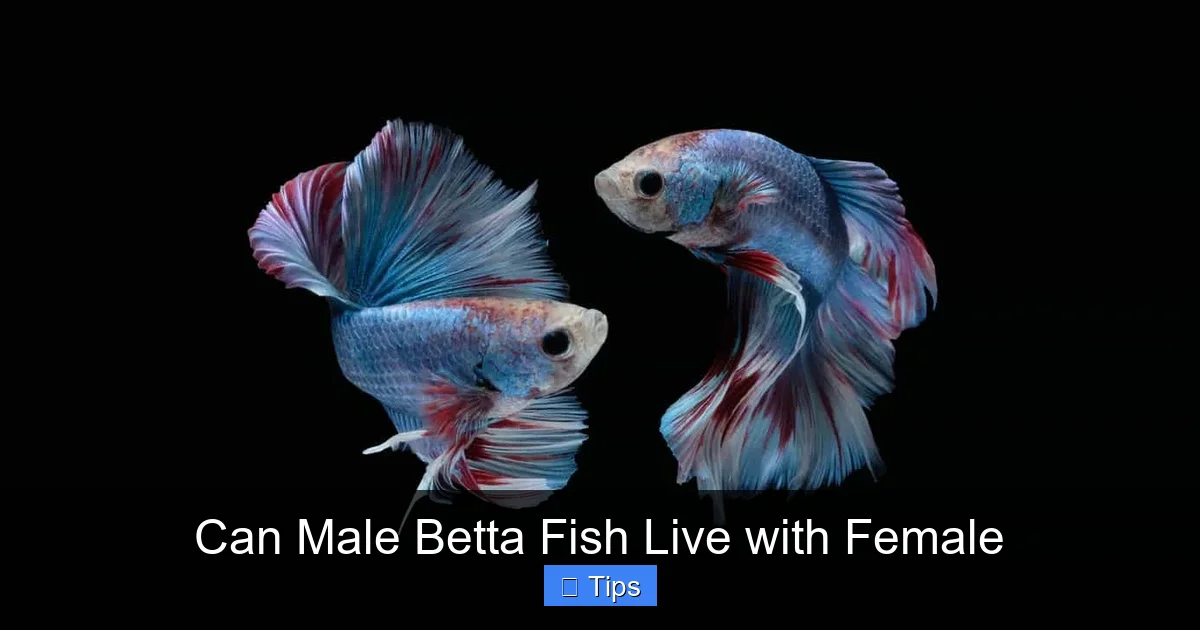
Visual guide about Can Male Betta Fish Live with Female
Image source: fishkeepingadvice.com
The Absolute Minimum: Size and Dimensions
Forget anything under 20 gallons. A 20-gallon long (30” x 12” x 13”) is the bare, bare minimum. The length is critical. It provides more horizontal space for the female to flee and establish her own temporary, out-of-sight zone. A tall 20-gallon high tank is worse; it concentrates aggression in a smaller surface area. Ideally, aim for 30 gallons or more. More water volume dilutes aggression’s impact and provides more complex geography.
The Art of Aquascaping: Hiding Places Are Everything
Your goal is to eliminate open sight lines. The tank must look like a dense jungle, not an open arena.
- Live Plants are Non-Negotiable: Use fast-growing stem plants like hornwort, water sprite, or anacharis to create a thick floating canopy that breaks the surface view. Plant the back and sides densely with Java fern, Anubias, cryptocorynes, and vallisneria. Mosses like Java moss or moss balls provide tiny hiding nooks.
- Hardscape for Barriers: Use large, smooth river stones, chunks of driftwood (like Malaysian or mopani), and ceramic pots or caves to create physical barriers. These should be arranged to create multiple “rooms” and dead-end corridors where the female can be out of view.
- Limit Open Swimming Space: The central, open area of the tank should be minimal. The fish should rarely have an unobstructed view of each other across the tank.
Tankmates: A Double-Edged Sword
Adding other fish can sometimes help by distracting the male’s attention, but it can also add stress. The best choices are fast, peaceful, schooling fish that occupy the middle and lower levels and are too quick to be caught. A school of 8-10 neon tetras, harlequin rasboras, or a small group of corydoras catfish can work. They must be added to the tank before the bettas to establish the territory as a community, not a betta-only domain. Avoid anything with long, flowing fins (like guppies or fancy goldfish) as the male will perceive them as rival bettas and attack. Also avoid slow, peaceful fish that may be bullied by an aggressive male.
The Step-by-Step Introduction Process (A High-Risk Protocol)
If you have the tank set up as described and have decided to proceed, the introduction is the most critical, nerve-wracking phase. This is not a “drop them in and see” situation.
Step 1: The Separate Acclimation
Both fish must be added to the empty, fully set-up tank separately and given at least 24-48 hours to explore and establish their own micro-territories behind the plants and decorations. Use tank dividers or a breeder box inside the main tank to hold one fish initially. This allows them to see each other through the mesh without physical contact, reducing initial shock.
Step 2: The First Visual Contact
After the separate acclimation, remove the divider. Observe from a distance for at least an hour. You are looking for specific behaviors. Flaring (gills puffed, fins spread, body stretched) is normal initial posturing. Brief, investigative chases that end when one fish finds a hiding spot can be okay. What you don’t want is relentless, full-tank chasing where one fish is clearly the aggressor and the other is terrified and cannot escape. If this happens, re-divide immediately. You may need to try again in a few days.
Step 3: The Critical First 72 Hours
If the initial contact seems calm (they may ignore each other completely, which is the goal), you must watch them constantly for the next three days. Feed them in opposite corners of the tank to avoid food aggression. Watch for subtle signs: the female staying permanently hidden, the male patrolling a specific area and chasing her if she ventures out. Any sign of fin nipping, even a tiny piece missing, means immediate separation. The first 72 hours are the most dangerous period when territories are being finalized.
Safer, Proven Alternatives for a Happy Betta
Given the extreme risks, you are far better off exploring these alternatives. They provide your betta with mental stimulation and a dynamic environment without the life-threatening stress of a same-species rival.
The Male Betta’s Ideal Community
A solitary male betta in a 5+ gallon tank is perfectly happy. To enrich his environment, add peaceful, fast-swimming fish that occupy different tank levels. A school of 6-8 small tetras (like ember tetras or neons), harlequin rasboras, or danios (like zebra danios) in a 15+ gallon tank is a classic, successful combination. These fish are too quick to be caught and don’t flash long fins. Bottom-dwellers like a small group of corydoras catfish or kuhli loaches are excellent, as they clean the substrate and occupy a space the betta rarely patrols. Always add these community fish first, let the tank cycle and establish, then add the betta last so he sees it as an established community, not his personal property to defend.
The Female Betta Sorority
If you love the idea of multiple bettas, consider a female sorority. This is only for a 20+ gallon long tank, heavily planted, with a group of 4-6 young females introduced together. They establish a loose pecking order, and with enough space and hiding places, serious injuries are rare (though some sparring is normal). Never add a single new female to an established group. This is a fascinating social setup, but it’s for females only—never introduce a male to this group.
Tankmates to Absolutely Avoid
Never house a betta with: other anabantoids (gouramis, paradise fish—they look too similar), fish with long, flowing fins (fancy guppies, angelfish), or slow-moving fish (fancy goldfish, some catfish). Also avoid fin-nippers like tiger barbs or serpae tetras, which will turn the betta’s fins into a target.
Common Mistakes and Final Verdict
The path to a failed betta pairing is paved with good intentions. The most common mistake is underestimating tank size and overestimating a fish’s personality. “He’s so calm!” is a phrase uttered just before a fatal chase begins. Another mistake is using a divider that allows fin-nipping through the gaps. Or, failing to have a second, fully cycled hospital tank ready to instantly remove a victim.
The Final, Clear Verdict
For 99% of aquarium hobbyists, the answer to “Can male betta fish live with female?” is a resounding no. The risks of severe injury, chronic stress, and death far outweigh any perceived benefit of companionship. Bettas are not social fish in the way schooling fish are. They are solitary by nature. Your role as a caretaker is to provide the best, safest environment for that solitary nature to flourish. That means a properly sized, heated, filtered, and decorated tank, with enrichment from peaceful tankmates if you choose, or simply as a stunning solo exhibit. If you want to witness the fascinating betta breeding behavior, do it as a short, supervised, temporary event in a dedicated tank, with a plan to separate them immediately after. Do not gamble with their lives for the sake of a pretty tank picture. Choose safety, choose science, and enjoy the majestic, solitary beauty of your betta fish for the wonderful, long-lived pet it is meant to be.
Frequently Asked Questions
Can a male and female betta ever be friends?
No. They do not form friendships. At best, they might achieve a tense, temporary tolerance in a massive, heavily planted tank where they can avoid each other completely. This is not friendship; it is stress-minimized coexistence and can collapse at any moment.
What is the absolute smallest tank I could possibly try this in?
There is no safe small tank. The absolute minimum is a 20-gallon long (30 inches in length) with dense planting. Anything smaller, like a 10-gallon, dramatically increases aggression and gives the female no escape route, making it inhumane to attempt.
Is it okay to put a male and female together if I want to breed them?
Yes, but only for the brief breeding process in a dedicated setup. They are introduced, allowed to spawn under your direct supervision, and then the female is removed immediately afterward. They should never be left together long-term after spawning, as the male will see her as a threat to his eggs.
What about keeping only female bettas together?
A sorority of 4-6 young female bettas in a 20+ gallon long, heavily planted tank can sometimes work. They establish a hierarchy. This is the only same-species group housing that has a reasonable chance of success, but it still requires careful monitoring and a plan to separate any seriously injured fish.
What are the first signs that my male and female bettas are fighting?
Look for the male flaring his gills and relentlessly chasing the female around the tank. If the female is constantly hiding and not coming out to eat, that is a severe stress sign. The most critical sign is physical: torn, shredded fins on either fish, or visible bites. If you see any of these, separate them immediately.
If I already put them together and they seem okay after a week, is it safe?
Not necessarily. Betta aggression can be triggered by changes in the environment, water parameters, or simply the fish’s mood. A week of peace does not guarantee a lifetime of peace. You must remain vigilant forever. The moment aggression starts, you must be prepared to separate them, which means having a second tank ready. For most, the constant stress of this vigilance outweighs any benefit.