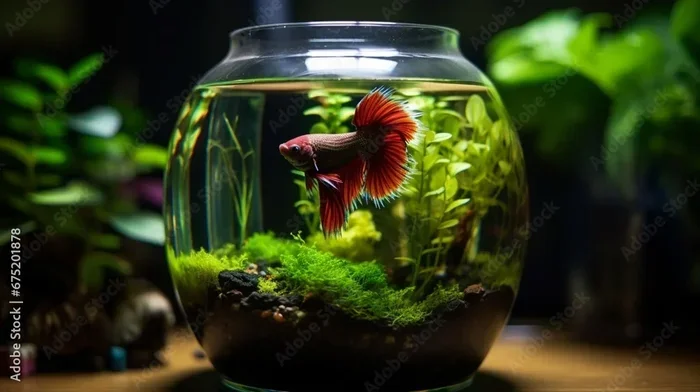
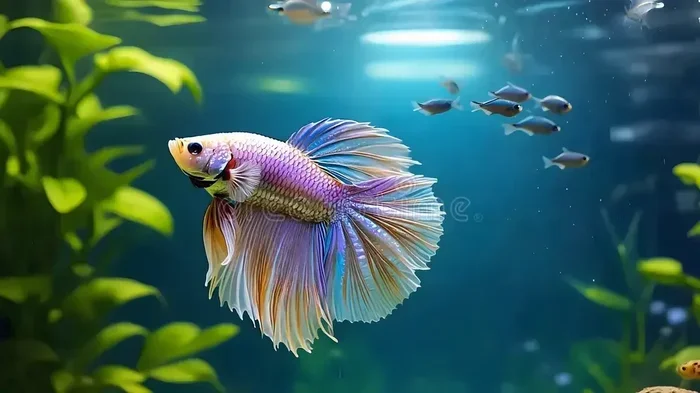
Do Betta Fish Have Bones

Betta fish do have bones; they are vertebrates with a complete skeletal system, including a backbone and ribs. Their internal bone structure provides essential support for their delicate fins and active swimming, debunking the myth that they are all fin and no frame.
Key Takeaways
- Point 1: Betta fish possess a complete bony skeleton typical of vertebrates.
- Point 2: Feed a balanced diet rich in calcium to support bone strength.
- Point 3: Their lightweight bones enhance swimming efficiency and buoyancy.
- Point 4: Prevent injuries by avoiding sharp tank decorations.
- Point 5: The labyrinth organ requires specialized skull bone structure.
- Point 6: Monitor for skeletal deformities indicating poor health.
- Point 7: Maintain optimal water conditions for overall bone health.
📑 Table of Contents
- The Surprising Truth: Bettas and Their Hidden Framework
- Anatomy 101: The Building Blocks of a Betta
- A Closer Look: Betta Skeletal Structure Compared
- What Their Bones Mean for Your Betta’s Care
- Busting Betta Bone Myths Once and For All
- Evolution’s Masterpiece: Why Bettas Are Built This Way
- Conclusion: Seeing Your Betta in a Whole New Light
The Surprising Truth: Bettas and Their Hidden Framework
Have you ever watched your betta fish, that flamboyant little dancer in its tank, and wondered what’s going on under all those glorious, flowing fins? I know I did. For years, I operated under a vague assumption that my betta, King Bubbles, was somehow… squishy. Like a living water balloon with a dramatic attitude. Then, a clumsy moment with a tank decoration changed everything. I saw a tiny, almost imperceptible tear in his fin and the faintest hint of something pale and rigid beneath. It was a lightbulb moment. Do betta fish have bones? The answer is a fascinating, definitive yes—but their skeletal story is anything but ordinary. It’s a tale of evolutionary genius, delicate strength, and something every betta owner absolutely needs to understand.
This isn’t just a trivia question. Knowing about your betta’s bones is the key to unlocking why they behave the way they do, why their tanks need specific setups, and how to be the best possible guardian for a creature that’s both incredibly resilient and surprisingly fragile. So, let’s dive deep, past the scales and the silk-like fins, to meet the real King Bubbles: the bony architecture that makes him who he is.
Anatomy 101: The Building Blocks of a Betta
To answer “do betta fish have bones,” we first have to define what a “bone” means in the fish world. Bettas, like all fish, are vertebrates. This means they have a backbone, or vertebral column, which is the central pillar of their skeleton. But fish bones aren’t like the solid, weight-bearing bones of mammals. They’re part of a system designed for one primary purpose: life in water. Think of it as a lightweight, flexible internal scaffolding.
Visual guide about Do Betta Fish Have Bones
Image source: bettafish.org
The Vertebral Column: The Flexible Spine
The betta’s spine is made up of a series of small, individual bones called vertebrae. These aren’t the thick, chunky blocks you might picture; they’re more like tiny, stacked rings or links in a chain. This design is pure brilliance for an aquatic life. It provides essential support for the muscles and protects the delicate spinal cord running through its center, but it also allows for the incredible S-shaped body bends bettas use to dart, turn, and display. That mesmerizing, slow drift? It’s a controlled undulation of the spine. That explosive lunge at a worm? That’s spinal power in action.
Fins: Not Just for Show, But Supported by Rays
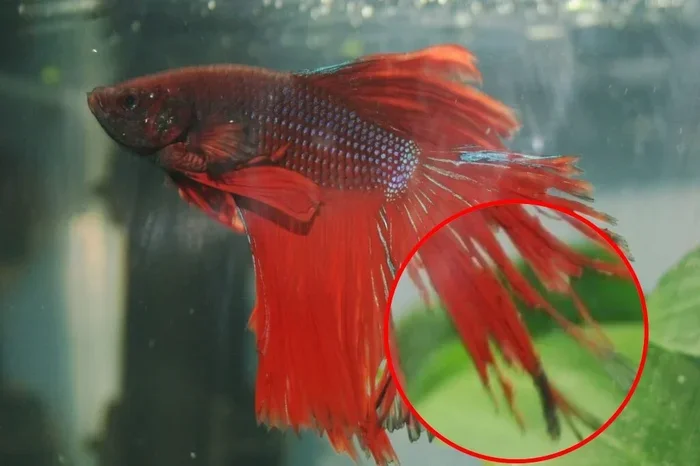
This is where things get visually obvious. Those stunning, elaborate fins—the flowing caudal (tail), the dramatic dorsal, the elegant anal fin—aren’t just flaps of skin. They are supported and shaped by bony structures called fin rays. If you could look at a betta fin under a microscope, you’d see a delicate, feathery network of tiny, needle-like bones. These rays are segmented and can be stiff or flexible depending on their location. The long, flowing fin rays in a Halfmoon betta are incredibly delicate. They provide the spectacular shape but offer little protection against snagging. This is why sharp tank plants or rough filter intakes are such a hazard.
Skull and Jaw: The Bony Helmet
The betta’s skull is a solid, bony case that protects its brain and sensory organs. It’s fused in many places for strength. Its most famous feature, the upturned mouth, is also a bony structure. This isn’t just for looks; it’s a specialized tool for their natural lifestyle as surface feeders, allowing them to easily grab insects and food particles from the water’s surface. The jawbones have small, fine teeth—not for chewing, but for gripping and scraping.
Ribs and Internal Support
Yes, bettas have ribs! They are small, slender bones that curve from the spine downwards. They help protect the internal organs—the heart, liver, and swim bladder—which are packed into the body cavity. The swim bladder, that gas-filled sac that lets them hover effortlessly, is literally held in place by these bony supports and surrounding tissues. A damaged rib or internal injury can directly impact buoyancy, which you’d see as your betta listing to one side or struggling to stay upright.
So, in short: do betta fish have bones? Absolutely. They have a complete, integrated skeletal system of a spine, skull, fin rays, ribs, and girdles (bones that anchor the fins). It’s a system built for flexibility, protection, and precise movement in a dense liquid environment.
A Closer Look: Betta Skeletal Structure Compared
Understanding betta bones is easier when we see them in context. Not all fish skeletons are created equal. A betta’s build is a direct result of its natural habitat and behavior. Let’s compare our little fighter to some aquatic cousins.

Visual guide about Do Betta Fish Have Bones
Image source: bettafish.org
| Fish Type | Primary Bone Composition | Skeletal Flexibility | Common Injury Points |
|---|---|---|---|
| Betta Fish (Siamese Fighting Fish) | Fine, numerous, lightweight ossified bones and fin rays | Very High (esp. in spine & long fins) | Fin rays (tears, frays), spinal injury from falls/jumps |
| Goldfish | More robust, heavier ossification; some cartilaginous parts | Moderate (less agile than bettas) | Swim bladder disorders (often linked to bony structure/body shape), spinal compression from obesity |
| Freshwater Angelfish | Compressed, disk-like body with strong central spine | Moderate to High (for quick turns) | Spinal deformities from poor water quality/genetics, fin nipping |
| Shark (Cartilaginous Fish) | Primarily cartilage, not true bone | Extremely High | Cartilage damage, jaw injuries |
As the table shows, the betta’s skeleton is specialized for agility and display. Their “ray-finned” (Actinopterygii) classification means their fins are supported by these bony or horny rays. Compare this to a shark, which is cartilaginous—its entire framework is more flexible but less protective. The betta sits in a middle ground: a bony fish with a skeleton fine-tuned for a life of lazy surface floating punctuated by explosive, territorial bursts.
The “Labyrinth” Organ: A Non-Bony Marvel
Here’s a critical point that often causes confusion. Bettas have a special organ called the labyrinth organ, which allows them to breathe atmospheric air. This organ is made of folded, bony plates (hence “labyrinth”) that are highly vascularized. It’s located in a chamber above the gills. So, while it’s supported by bone, the organ itself is soft tissue. This adaptation is why bettas must have access to the water’s surface. Their bony labyrinth organ is a survival tool, not part of their main structural skeleton.
What Their Bones Mean for Your Betta’s Care
Knowing the answer to “do betta fish have bones” transforms from academic curiosity to a practical care manual. Their delicate bony framework dictates everything about their environment. Let’s turn anatomy into action.

Visual guide about Do Betta Fish Have Bones
Image source: bettafish.org
Tank Setup: Safety First for Fragile Frames
That long, flowing fin is a direct extension of fin rays. A single snag on a sharp plastic plant edge can cause a tear that may never fully heal, or worse, lead to a fungal infection. Practical Tip: Always smooth any sharp edges on decorations with aquarium-safe silicone. When buying plants, opt for soft, silk varieties or live plants with gentle leaves like Java fern or Anubias. Avoid any ornament with tight holes or rough textures that a curious betta could squeeze through and scrape.
Filter choice is another bone-related issue. A strong filter current doesn’t just stress your betta; it can physically push them against tank walls or decor. A betta’s small, lightweight bones aren’t built for constant hydro-pressure resistance. Practical Tip: Use a sponge filter or a hang-on-back filter with a spray bar or baffle to diffuse the flow. The water should be still enough that your betta can swim effortlessly without being blown around.
Handling and Housing: Preventing Spinal Trauma
Betta spines are flexible but not indestructible. A fall from even a small height onto a hard surface can cause a spinal fracture or internal injury. This is why never to use a net to scoop a betta—the pressure can damage fins and spine. Practical Tip: Use a soft, clean cup or your hands (wet and soap-free) to move them. Always cover your tank. Bettas are notorious jumpers, and a leap onto a table or floor is often fatal due to the impact on their internal structure.
Diet and Nutrition: Building Strong Bones
Fish bones, like ours, require certain minerals to stay healthy. Calcium and phosphorus are vital for maintaining bone density and strength. A poor diet can contribute to skeletal issues over time, though this is less common than other betta ailments. Practical Tip: Feed a high-quality, varied diet. Include a premium pellet or flake as a staple, supplemented with frozen or live foods like brine shrimp, daphnia, or bloodworms. These foods are rich in natural minerals and chitin, which aids digestion and nutrient absorption. Avoid overfeeding, as obesity puts unnatural strain on the entire skeletal and organ system.
Recognizing Skeletal Problems
What should you look for? Beyond obvious fin tears, watch for:
- Lethargy and inability to maintain depth: Could indicate swim bladder issues, which may be linked to internal organ pressure on the bony supports.
- A visible lump, bend, or kink in the spine: This is a serious sign of possible fracture, abscess, or severe spinal deformity. It is often untreatable and a cause for humane euthanasia consideration.
- Constant rubbing or scraping against objects: Could be a sign of external parasites (like anchor worms) attached near fin rays or bones, causing pain.
- Asymmetrical body shape: One side looking bloated or different could signal an internal tumor pressing on the skeletal structure.
Busting Betta Bone Myths Once and For All
The betta fish world is rife with old wives’ tales. Let’s use our new bony knowledge to smash some myths.
Myth 1: “Bettas are so hardy, they can live in a tiny vase.”
The Bony Truth: This is the most dangerous myth. A tiny vase provides no room for the natural S-spine bends and turns. It forces constant contact with walls, stressing the fin rays and skin. More importantly, poor water quality in a small volume leads to ammonia poisoning, which damages gills and can lead to internal organ failure. Their bones need a spacious, clean environment to function without constant stress.
Myth 2: “Those big fins are just for fighting and looking pretty.”
The Bony Truth: The fins are absolutely supported by fin rays, but their primary evolutionary purpose for wild bettas (Betta splendens) is display for mating and intimidation. The long, flowing fins we bred for are a double-edged sword. They are spectacular but are composed of the most fragile, easily torn fin rays. In the wild, shorter fins are more practical for navigating dense vegetation.
Myth 3: “If a betta’s fin is torn, it will always grow back perfectly.”
The Bony Truth: Fin rays can regenerate, but it’s a slow process. The new fin tissue (the “membrane”) will often grow back, but the supporting fin rays themselves may not regenerate to their original exact structure. This can lead to a slightly misshapen or weaker fin that is prone to future damage. Clean water and pristine conditions are non-negotiable for proper healing.
Myth 4: “Bettas don’t need much space because they’re lazy.”
The Bony Truth: Their lazy drift is an energy-saving tactic. In a proper tank (minimum 5 gallons), you will see bursts of activity—exploring, flaring, patrolling. These movements require full use of their flexible spine. Confinement leads to muscle atrophy and joint stiffness, even in a fish.
Evolution’s Masterpiece: Why Bettas Are Built This Way
Finally, let’s appreciate the “why.” The betta’s bony design is a perfect adaptation for its native shallow, warm, often oxygen-poor rice paddies and streams of Southeast Asia.
The Labyrinth Organ and the Air-Breathing Skeleton
The development of the bony labyrinth organ allowed bettas to survive in stagnant water. This freed them from relying solely on gills. Their entire skeletal and muscular system is thus adapted for a dual life: efficient swimming and the ability to gulp air and hang just below the surface. Their center of gravity is slightly forward, aiding this surface-dwelling behavior.
Fragile Fins for a Fragile World
In their natural habitat, the water is often clear and filled with soft vegetation. The long fins of the wild-type betta (shorter than our modern varieties) are enough for display without constant snagging. Our breeding for extreme fin length has outpaced the natural resilience of their fin rays. We’ve created a beauty that requires our intervention to protect its very bones.
A Predator’s Skeleton
Don’t let their beauty fool you. That flexible spine and powerful jaw are built for one thing: being an apex micro-predator. The quick lunge to snatch an insect is all about explosive spinal contraction. The strong jaw bones and tiny teeth are for gripping slippery prey. Their skeleton is a weapon system, finely tuned for ambush.
Conclusion: Seeing Your Betta in a Whole New Light
So, do betta fish have bones? After this deep dive, the answer is a resounding yes, and it’s a knowledge that forever changes how you see that shimmering presence in your tank. You’re not just looking at a pretty face with a big personality; you’re looking at a marvel of evolutionary engineering—a lightweight, flexible, and surprisingly strong bony framework that supports a labyrinth organ, powers explosive movements, and holds up those breathtaking fins.
This understanding is your superpower as a caretaker. It tells you why a smooth tank is non-negotiable. It explains the caution needed when handling. It highlights the importance of nutrition for their internal scaffolding. It helps you read the subtle signs of distress that might originate from a stressed skeletal or muscular system.
My moment with King Bubbles and that tiny fin tear was a turning point. I stopped seeing a “hardy” fish and started seeing a beautifully delicate creature whose bones demanded respect. I upgraded his tank, swapped the plastic plants for soft silk and live foliage, and installed a gentle sponge filter. His fins grew fuller, his colors brighter, and his movements more confident. He wasn’t just surviving; he was thriving in a home designed for the magnificent, bony being he truly is.
The next time you gaze at your betta, picture that intricate, tiny skeleton beneath the surface—the vertebrae allowing its graceful dance, the fin rays holding its royal robes, the skull housing its fierce intelligence. By honoring their bony truth, you don’t just keep a fish. You preserve a living work of art, built bone by incredible bone.
Frequently Asked Questions
Do betta fish have bones?
Yes, betta fish do have bones. Like most fish, they possess an internal skeleton made of both bone and cartilage that provides structure and support for their body.
What kind of skeleton do betta fish have?
Betta fish have a bony skeleton, meaning their internal structure includes ossified bone. However, parts of their skeleton, particularly in areas needing flexibility like the spine, contain more cartilage than in some other fish.
How can betta fish bend so easily if they have bones?
Betta fish can bend easily because their vertebral column (spine) is not fully ossified into solid bone. It contains a significant amount of flexible cartilage, allowing for the fluid, S-shaped movements they use to swim.
Are betta fish related to sharks and rays, which have no bones?
No, betta fish are not related to sharks and rays. Sharks and rays are cartilaginous fish with skeletons made entirely of cartilage. Bettas are bony fish (Osteichthyes), a separate class with skeletons primarily made of true bone.
Can a betta fish break its spine or bones?
Yes, a betta fish can suffer spinal injuries or fractures, often from physical trauma like being dropped or caught in filter suction. A damaged spine can lead to a permanent curved or bent posture, a condition sometimes called “spine kink.”
Do betta fish have more or fewer bones than other pet fish?
Betta fish have a typical number of bones for a small bony fish. Their skeleton isn’t unusually simple or complex compared to other common aquarium fish like guppies or goldfish, though their flexible spine gives them a unique range of motion.