Why Is My Betta Fish Water Cloudy

Cloudy betta tank water is usually a bacterial bloom from an unbalanced ecosystem, often triggered by overfeeding, inadequate filtration, or a new tank cycle. It’s rarely immediately harmful but signals poor water quality that stresses your fish. Fix it with consistent partial water changes, proper feeding, and ensuring your filter is cycled and suitable for a betta’s needs. Prevention through regular maintenance is always the best cure.
Key Takeaways
- Cloudy water is typically a bacterial bloom: It’s a natural, microscopic population explosion in response to excess organic waste (uneaten food, fish waste, decaying matter) in an unbalanced aquarium.
- Overfeeding is the #1 culprit: Betta stomachs are tiny (size of their eye). Any excess food immediately decays, feeding the bacteria that cause cloudiness.
- New Tank Syndrome is common: A “cycle” is the process of establishing beneficial bacteria. Cloudiness in a new tank is a normal, temporary phase as this colony develops.
- Filtration is non-negotiable: A betta needs a gentle, constant water flow through filter media that traps debris and houses good bacteria. No filter guarantees poor water quality.
- It’s a water quality issue, not a fish disease: The cloud itself isn’t sickening your betta, but the underlying poor water parameters (high ammonia/nitrite) that cause it are severely stressful and toxic.
- Fix it with water changes, not chemicals: “Water clarifiers” are a temporary band-aid. The only permanent solution is removing the waste source via partial water changes and correcting maintenance habits.
- Prevention is simple and critical: Feed sparingly (2-3 pellets, once daily), perform weekly 25-50% water changes, and never fully clean or replace all filter media at once.
📑 Table of Contents
- The Mysterious Milkshake: Understanding Your Cloudy Betta Tank
- The Usual Suspects: Top Causes of Cloudy Betta Tank Water
- Step-by-Step Diagnosis: What’s *Really* Happening in Your Tank?
- The Cure: How to Clear Cloudy Betta Water (Safely & Permanently)
- Prevention: The Crystal-Clear Maintenance Routine
- Conclusion: Clarity is a Symptom of Health
The Mysterious Milkshake: Understanding Your Cloudy Betta Tank
You gaze at your betta’s home, expecting to see a vibrant, crystal-clear window into his world. Instead, you’re met with a hazy, milky, or even greenish soup. Your heart sinks. “Why is my betta fish water cloudy?” is one of the most common questions new and experienced betta owners ask. The good news? This is almost always a water quality issue, not a direct fish disease, and it’s very fixable. The cloudiness is usually a visible sign of an invisible microbial party—a bacterial bloom—having a field day with excess waste in your tank. Think of it as your aquarium’s way of waving a red flag and saying, “Hey, there’s too much stuff here for me to process efficiently!” Ignoring it is like ignoring a smoke alarm; the underlying problem will worsen, leading to stress, illness, and potentially tragedy for your beautiful betta. This guide will walk you through every possible cause, from beginner mistakes to subtle oversights, and give you the exact, actionable steps to restore that prized clarity and, more importantly, a healthy environment for your fish.
The Usual Suspects: Top Causes of Cloudy Betta Tank Water
Before you can solve the problem, you must play detective. Cloudiness doesn’t appear in a vacuum. It’s the direct result of an imbalance in your aquarium’s miniature ecosystem. Here are the primary culprits, ranked from most to least likely.
Visual guide about Why Is My Betta Fish Water Cloudy
Image source: fishkeepingsecrets.com
1. The Bacterial Bloom (The Most Common Cause)
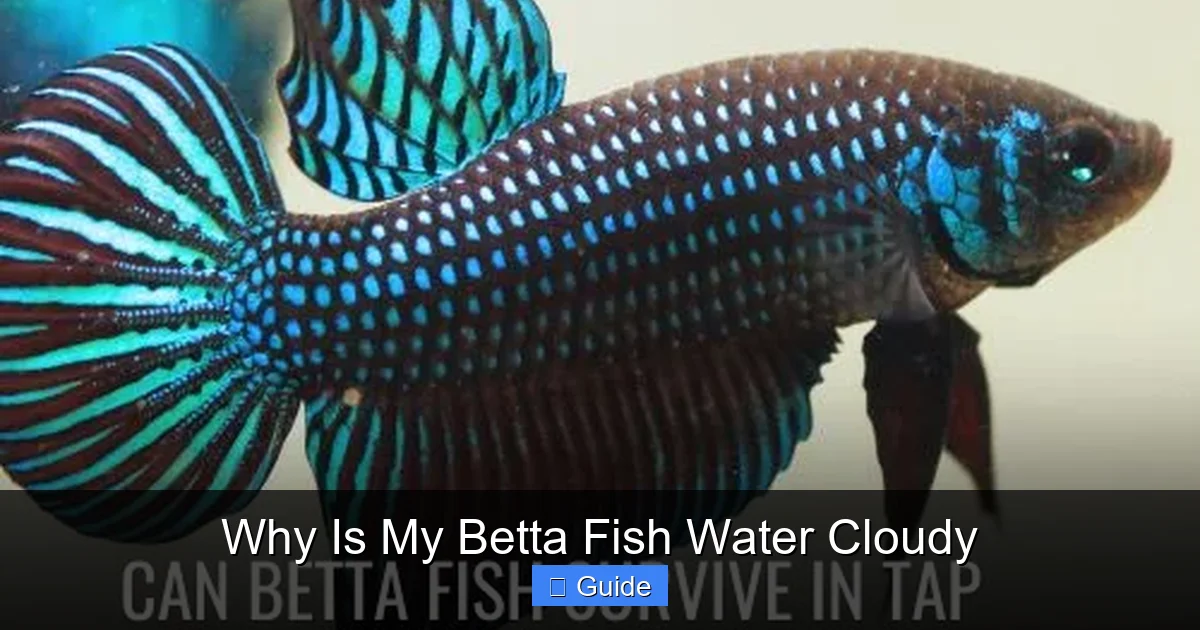
This is the classic “new tank syndrome” cloudiness. When you first set up a tank, you have no beneficial bacteria (the good guys that convert toxic fish waste). As you add your betta and begin feeding, ammonia from his waste and uneaten food spikes. A specific type of free-floating bacteria explodes in population to consume this ammonia, turning the water cloudy, often with a milky or greyish hue. This is a normal part of the cycling process and will clear on its own as the bacteria population stabilizes and settles into your filter media and substrate. However, a bacterial bloom can also happen in an established tank if you suddenly add a huge amount of waste (like overfeeding for a week) or disturb the filter media (washing it in tap water kills the good bacteria).
2. Overfeeding: The Silent Killer
This is the #1 cause of recurring cloudiness in betta tanks. Bettas are opportunistic feeders in the wild and will eat until they burst in captivity. Their digestive systems are tiny—a betta’s stomach is roughly the size of one of his eyes. Any food beyond 2-3 high-quality pellets (or a few bloodworms) per day is excess. That uneaten food sinks, decays, and becomes a feast for bacteria, causing a bloom. It also breaks down into ammonia. If you’re feeding more than once a day or using low-quality food that dissolves quickly, you are directly fueling the cloud.
3. Inadequate or Improper Filtration
A betta’s flowing fins require gentle filtration, but that doesn’t mean no filtration. A filter does three critical jobs: 1) Physically removes debris (like food particles), 2) Provides massive surface area for beneficial bacteria to grow (biological filtration), and 3) Oxygenates the water. A filter that is too weak for your tank size, turned off, or using exhausted media will not process waste efficiently, leading to bacterial blooms. Conversely, a filter with a current too strong for your betta can stress him, but that’s a separate issue. The wrong filter media (e.g., using only carbon without bio-media) can also fail to establish a stable bacterial colony.
4. A Dirty Substrate or Decaying Organic Matter
That pretty gravel at the bottom is a waste repository. Fish poo, dead plant leaves, and bits of food sift down and settle. If you never vacuum your substrate during water changes, this waste accumulates and decomposes, leaching ammonia and feeding bacteria. A greenish-yellow cloudiness can sometimes be a “green water” bloom from free-floating algae, often caused by too much light or nutrient imbalance, but in a betta tank (which is often lightly planted), bacterial bloom is far more common.
5. Using Untreated Tap Water & Overuse of Chemicals
Tap water contains chlorine and chloramines, which are deadly to fish and beneficial bacteria. If you don’t use a proper water conditioner/dechlorinator with every water change, you can shock and kill your bacterial colony. A massive die-off of bacteria releases all the nutrients they were holding, causing a sudden, intense bloom. Similarly, overusing medications or “algae fix” chemicals can disrupt the biological balance and cause die-offs leading to cloudiness.
6. A Sudden Spike in the Nitrogen Cycle
Even in a cycled tank, adding a new fish (or a betta that was recently sick and medicated) can cause a mini-cycle. The sudden increase in bioload (fish waste) overwhelms the existing bacteria, causing a temporary spike in ammonia/nitrite and a corresponding bacterial bloom as the colony tries to catch up.
Step-by-Step Diagnosis: What’s *Really* Happening in Your Tank?
Don’t just guess. Use your senses and basic testing to pinpoint the cause.
Visual guide about Why Is My Betta Fish Water Cloudy
Image source: petshun.com
The Smell Test
Stick your nose near the water (but don’t inhale deeply!). A healthy, cycled tank has a very faint, almost earthy smell, or no smell at all. A tank with a bacterial bloom or decaying matter will have a distinct, unpleasant odor—often described as musty, like old socks, or like rotting food. A strong ammonia smell (pungent, like cat urine or nail polish remover) is a critical emergency indicating toxic ammonia levels.
The Visual Clues
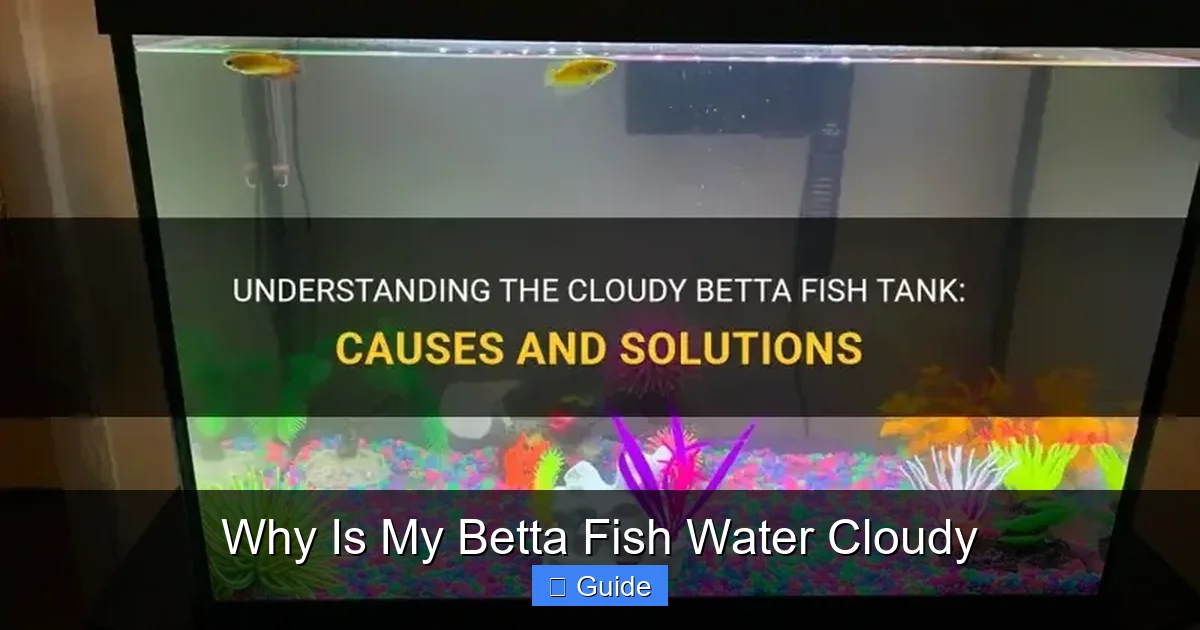
- Milky/Grey/White Cloud: Classic bacterial bloom. Common in new tanks or after overfeeding.
- Green Water: Suspended algae bloom. Caused by excess light and nutrients (nitrates/phosphates from overfeeding or decaying matter).
- Yellow/Brown Tint: “Tannins” from driftwood or Indian almond leaves. This is not harmful and is actually beneficial for bettas, mimicking their natural blackwater habitat. It will gradually clear on its own or with activated carbon.
- Cloudiness Only After Cleaning: If you thoroughly clean your filter and substrate in tap water, you’ve likely killed your bacterial colony. The tank is now “un-cycled” and will re-cycle, causing a bloom.
The Essential Test: Water Parameters
If you don’t have a liquid test kit (like the API Freshwater Master Test Kit), get one immediately. It’s the single most important tool for a betta keeper. Test for:
- Ammonia (NH3/NH4+): Should be 0 ppm. Any reading is toxic and the primary cause of stress.
- Nitrite (NO2-): Should be 0 ppm. Highly toxic.
- Nitrate (NO3-): Should be <20 ppm, ideally below 10 ppm in a betta tank. High nitrates contribute to algae and stress.
- pH: Bettas prefer slightly acidic to neutral (6.5-7.5), but stability is more important than a precise number.
If your ammonia or nitrite is elevated, you have a serious cycling problem that needs immediate action via water changes.
The Cure: How to Clear Cloudy Betta Water (Safely & Permanently)
Now for the action plan. Forget quick-fix “clarifiers” that just clump particles for your filter to catch. They don’t solve the root cause. You need to remove the waste and restore balance.

Visual guide about Why Is My Betta Fish Water Cloudy
Image source: fishkeepingsecrets.com
1. Immediate Action: The Partial Water Change (PWC)
This is your most powerful tool. Do a 25-50% water change immediately. Use a gravel vacuum to suck debris from the substrate. This physically removes the source of the problem—the decomposing food and waste. Replace with properly conditioned water (treated with a dechlorinator like Seachem Prime). Do not change 100% of the water, as this can shock the fish and further disrupt the bacterial balance. For severe cloudiness, you can perform 25% changes daily for 2-3 days until clarity improves.
2. Stop Overfeeding—Right Now
Implement the “fasting rule.” Stop feeding your betta for 24-48 hours. This gives his digestive system a rest and immediately eliminates new waste input. After the fast, resume feeding no more than 2-3 pellets, once per day. Use high-quality, sinking or slow-sinking pellets that won’t dissolve instantly. Remove any uneaten food after 5 minutes with a net or turkey baster. Consider fasting one day a week as a healthy practice.
3. Audit and Optimize Your Filtration
Ensure your filter is running 24/7. Check that the flow isn’t too strong (you shouldn’t see your betta struggling). The magic is in the media. You need biological media (ceramic rings, bio-balls, porous sponge) to house beneficial bacteria. If you have a hang-on-back (HOB) filter, replace the cartridge only when it’s disintegrating. Instead, rinse it in old tank water (not tap water!) during a water change to preserve bacteria. If your filter is too strong, add a pre-filter sponge over the intake or baffle the outflow with a sponge.
4. Deep Clean the Substrate (Carefully)
During your PWCs, really work the gravel vacuum into the substrate. Push it down and stir it gently to lift trapped debris. For bare-bottom tanks, wipe the glass with an algae pad (not from another tank!) and siphon any visible gunk. Avoid using soap or chemicals.
5. Be Patient with a New Tank
If your tank is less than 4-6 weeks old, the cloudiness is likely the cycling process. Continue with daily 25% water changes to keep ammonia/nitrite levels down for your betta’s safety. Test your water daily. The bloom will clear as the cycle completes (ammonia and nitrite drop to 0, nitrates rise). Do not do a full reset or use bacteria-in-a-bottle as a crutch; it often delays the natural process.
6. What NOT To Do
- Don’t use “water clarifiers” as a primary solution. They are a temporary cosmetic fix that masks the real problem.
- Don’t wash your filter media in tap water. You’ll annihilate your bacterial colony.
- Don’t overstock. A betta should be in a minimum 5-gallon tank alone. More fish = more waste = more cloudiness.
- Don’t change 100% of the water unless it’s a dire emergency (like chemical spill). It shocks the system.
Prevention: The Crystal-Clear Maintenance Routine
Once you’ve cleared the cloud, your goal is to never see it again. A simple, consistent routine is all it takes.
The Weekly 25-50% Water Change
This is non-negotiable. Set a specific day (e.g., every Sunday). Use a gravel vacuum. Replace 25-50% of the water with conditioned water matching the tank’s temperature. This dilutes nitrates and removes solid waste before it decays.
The “Less is More” Feeding Philosophy
Feed your betta like a snake—sparingly. A good rule: if he doesn’t eat all his food in 2-3 minutes, you’ve fed too much. High-quality food means less waste. Occasional treats (blanched pea, daphnia) are great for digestion but count as a meal.
Filter Maintenance Done Right
Once a month (or as needed), rinse your mechanical filter media (sponges, floss) in old tank water during a water change. Replace biological media (ceramic rings) only once a year, and only half at a time. Never replace all filter media at once.
Monitor with a Test Kit
Test your water weekly after the initial cycle. If ammonia or nitrite ever spikes, you know something is wrong (overfeeding, dead fish, filter failure). Test after any major change (adding a plant, new fish).
Control the Light
Bettas don’t need intense lighting. 8-10 hours of light per day is plenty. More light encourages algae and can contribute to green water. Use a timer for consistency.
Conclusion: Clarity is a Symptom of Health
Cloudy betta fish water is your aquarium’s most obvious cry for help. It’s not an aesthetic problem; it’s a fundamental indicator that the biological processes keeping your fish alive are out of whack. The solution is never a magic bottle, but a return to the basics: less food, more water changes, and a properly functioning filter with a healthy bacterial colony. By understanding the causes—from the inevitable bacterial bloom of a new cycle to the preventable disaster of overfeeding—you move from a worried observer to a confident caretaker. A clear tank is more than just pretty to look at; it’s a visible sign of a stable, low-stress environment where your betta’s magnificent fins can flare, his bubble nest can thrive, and he can live his full, vibrant life. Start with a partial water change today, assess your feeding habits, and commit to a weekly maintenance schedule. Your betta’s health—and your own peace of mind—depends on it.
Frequently Asked Questions
Will the cloudy water hurt my betta fish?
The cloudiness itself (bacteria) is not directly harmful, but it is a glaring symptom of poor water quality. The underlying causes—high ammonia, nitrite, or stress from unstable conditions—are severely toxic and will compromise your betta’s immune system, leading to diseases like fin rot or dropsy.
How long does it take for cloudy water to clear up?
It depends on the cause. For a bacterial bloom in a new tank, it can take 2-6 weeks for the cycle to complete and the water to clear. For cloudiness caused by overfeeding or a dirty substrate, you should see significant improvement within 24-72 hours of starting consistent partial water changes and stopping feeding.
Is it okay to use a water clarifier or flocculant to clear the water quickly?
You can use them as a last resort for instant cosmetic improvement, but they do not fix the root problem. They clump particles for your filter to catch, but if you don’t remove the waste source (uneaten food, debris), the cloud will return. Focus on water changes and feeding control first.
My tank is cycled and I haven’t overfed, why is it still cloudy?
Consider if you recently cleaned your filter media in tap water (killing bacteria), added a new decoration or substrate that is leaching particles, or if a fish (even a betta) died and decomposed in the tank. Also, check your tap water—extremely high mineral content (hard water) can sometimes cause temporary cloudiness when added.
Can a sponge filter clear cloudy water?
A sponge filter is excellent for biological filtration and gentle water movement for a betta. Its fine pores provide great surface area for bacteria. However, its mechanical filtration (trapping debris) is less efficient than a HOB filter with floss. It will help with bacterial blooms over time but may not catch large particles as quickly. It’s a great tool in the fight for clarity when used correctly.
Should I do a full tank cleaning to fix the cloudiness?
Never. A full tear-down (cleaning everything with soap, replacing all substrate, washing all decorations) will destroy your biological filter and reset your cycle, causing a worse and longer-lasting bacterial bloom. Only clean what’s necessary: the glass, and vacuum the substrate. Never wash filter media in tap water.