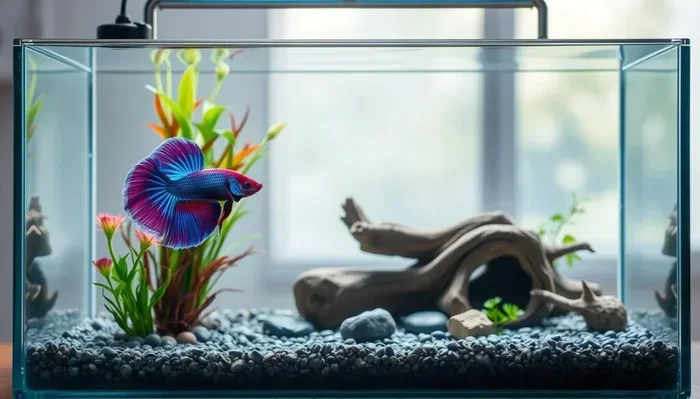
Can You Put Betta Fish in Tap Water

Yes, you can use tap water for a betta fish, but only after properly treating it. Untreated tap water contains chlorine, chloramines, and heavy metals that are lethal to bettas. You must use a reliable water conditioner to neutralize these chemicals. Furthermore, the water must be fully cycled to establish a safe biological filter, and its parameters (temperature, pH, hardness) must be stable and within the betta’s preferred range. Skipping these steps is a common cause of illness and death. Proper preparation transforms ordinary tap water into a safe, healthy home for your fish.
So you’ve brought home a beautiful betta fish with its flowing fins and vibrant colors. You’ve picked out a tank, some decorations, and maybe even a little castle. You’re ready to fill it up and introduce your new pet to its home. You reach for the tap, but then a crucial question stops you: can you put betta fish in tap water? The short, urgent answer is: you can, but you absolutely cannot put a betta fish into untreated tap water. Doing so is a fast track to a sick or dead fish. However, with the right knowledge and preparation, your municipal tap water can become a perfectly suitable, even ideal, home for your betta. This guide will walk you through everything you need to know, from the dangers lurking in your tap to the exact steps to make it safe.
Think of your betta not as a fish, but as a living, breathing creature with very specific and sensitive needs. Its natural habitat is the warm, shallow, slow-moving waters of Thailand’s rice paddies and streams. Those environments are soft, slightly acidic, and free of harsh chemicals. The water that comes out of your kitchen faucet is a completely different story. It’s treated to be safe for human consumption, which means it contains disinfectants that are toxic to fish. Our job is to reverse that treatment and recreate the stable, gentle conditions your betta evolved to thrive in. Let’s dive in.
Key Takeaways
- Never use untreated tap water: Chlorine and chloramines in municipal water supplies will burn a betta’s gills and poison it rapidly.
- Water conditioner is non-negotiable: A quality dechlorinator (like Seachem Prime) is the first and most critical step in making tap water safe.
- The nitrogen cycle is essential: A cycled tank with beneficial bacteria is required to process toxic fish waste (ammonia and nitrite) over the long term.
- Test your water: Use an aquarium test kit to confirm chlorine is gone and that ammonia/nitrite are at 0ppm before adding your betta.
- Match parameters, not just chemistry: Betta-specific needs include warm water (76-82°F), neutral to slightly acidic pH (6.5-7.5), and low water flow.
- Consistency is key: Sudden changes in temperature or chemistry from water changes are more dangerous than stable, slightly imperfect parameters.
- Consider your source: If your tap water has extreme pH or hardness, or high nitrate levels, you may need to blend it with RO/DI water or use alternative sources.
📑 Table of Contents
- Why Your Straight-From-the-Tap Water is a Toxic Soup for Betta Fish
- The Essential First Step: Dechlorination with a Water Conditioner
- The Nitrogen Cycle: The Invisible Guardian of Your Betta’s Health
- Fine-Tuning the Other Water Parameters for Betta Bliss
- A Step-by-Step Guide: From Faucet to Betta Tank
- Common Mistakes and Myths About Tap Water and Bettas
- Conclusion: Yes, But Only With Respect and Preparation
Why Your Straight-From-the-Tap Water is a Toxic Soup for Betta Fish
Before we learn how to fix it, we must understand what we’re dealing with. Your local water treatment plant adds specific chemicals to the water supply to kill pathogens and prevent bacterial growth in the pipes. These are lifesavers for us, but they are silent killers for your aquatic pet.
The Chlorine & Chloramine Menace
The primary villains are chlorine and chloramine. Chlorine is a gas dissolved into the water. It’s highly effective and volatile, meaning it will naturally evaporate if you let water sit out for 24-48 hours. However, many modern water systems now use chloramine, which is a more stable compound formed by combining chlorine and ammonia. Chloramine does not evaporate on its own. It will persist in your aquarium indefinitely unless you use a chemical treatment to break the bond. Both chemicals are devastating to a betta’s delicate gill tissues and slime coat, causing burns, respiratory distress, and systemic poisoning.
You cannot tell by smell or sight if your water has chlorine or chloramine. A strong “pool” smell might indicate chlorine, but its absence doesn’t mean it’s safe. You must assume your tap water contains one or both and treat it accordingly.
Heavy Metals and Other Additives
Beyond disinfectants, tap water can contain traces of heavy metals like copper, lead, or zinc from old pipes. These are toxic to fish even at low concentrations and can damage their nervous systems and kidneys. Additionally, fluoride (added for dental health) and other treatment byproducts are present in quantities that are safe for humans but can stress a small betta in a confined tank volume.
The Temperature Shock Factor
This isn’t a chemical, but it’s just as dangerous. Tap water from your cold water line is often far below the 76-82°F (24-28°C) tropical range bettas need. Pouring cold tap water into a warm tank, or adding warm tap water to a cooler tank, causes thermal shock. This stresses the fish’s metabolism, suppresses its immune system, and can lead to immediate illness like swim bladder disorder or long-term susceptibility to diseases like velvet or fin rot.
The Essential First Step: Dechlorination with a Water Conditioner
This is the single most important rule of betta (and all fish) keeping: always, always, always use a water conditioner/dechlorinator on every single drop of water that goes into your aquarium. No exceptions. Not for initial fills, not for water changes, not for top-offs.

Visual guide about Can You Put Betta Fish in Tap Water
Image source: petshun.com
How Water Conditioners Work
Quality water conditioners, like the industry-standard Seachem Prime, perform two critical functions. First, they instantly neutralize chlorine and chloramine, rendering them harmless. Second, they bind to and detoxify ammonia, nitrite, and nitrate for up to 48 hours. This second function is a lifesaver during the cycling process or if your cycle has a temporary hiccup, as it gives the beneficial bacteria time to catch up without poisoning your fish.
Choosing and Using Your Conditioner
When shopping, read the label. You want a product that explicitly states it removes both chlorine and chloramine. Follow the dosage instructions precisely based on the volume of water you’re treating. It’s impossible to overdose Prime safely—it will simply continue to detoxify. For a standard 5-gallon betta tank, you’ll typically add a few drops per gallon. The key is to add the conditioner to the new water you are adding to the tank, or to the entire tank volume if you are doing a full water change, before the water comes into contact with your fish. A common best practice is to treat the new water in a separate bucket or container first, then slowly add it to the aquarium.
Practical Example: You’re doing a 50% water change on a 5-gallon betta tank. You fill a clean 2.5-gallon bucket with tap water. You add the correct dose of Prime to that bucket (e.g., 5-10 drops, depending on the product). You swirl it. Now that water is safe. You slowly pour it into the tank or use a siphon to add it. Your fish is never exposed to the raw tap water.
The Nitrogen Cycle: The Invisible Guardian of Your Betta’s Health
Here’s where many new betta owners get confused. Making tap water chemically safe from chlorine is Step 1. Step 2 is making it biologically safe. This is the nitrogen cycle, a natural process where beneficial bacteria colonies consume fish waste.
Visual guide about Can You Put Betta Fish in Tap Water
Image source: marketgit.com
The Toxic Triangle: Ammonia & Nitrite
When your betta eats, it produces ammonia in its waste and through its gills. Ammonia is extremely toxic. In a cycled tank, a bacteria called Nitrosomonas converts ammonia into nitrite. Nitrite is also highly toxic—it binds to a fish’s blood cells, preventing oxygen transport and causing “brown blood disease.” A second bacteria, Nitrobacter, then converts nitrite into nitrate. Nitrate is much less toxic and is removed by water changes and plants.
Cycling Your Tank Before the Betta Arrives
You must establish these bacterial colonies before adding your betta. This process, called “cycling,” takes 4-6 weeks. You start with your conditioned tap water in the tank, add a source of ammonia (like fish food, pure ammonia, or a bacteria starter), and let the bacteria grow on your filter media, substrate, and decorations. You test the water daily with an aquarium test kit (like the API Freshwater Master Test Kit). You’ll see ammonia spike, then fall as nitrite rises. Then nitrite falls as nitrate appears. Only when the test shows 0ppm ammonia and 0ppm nitrite, with some nitrate present, is the tank safe for your betta.
Important: The cycle does not happen in the water itself; it happens on surfaces, primarily in your filter. Never wash your filter media in untreated tap water, as you will kill the bacteria.
Fine-Tuning the Other Water Parameters for Betta Bliss
Once chlorine is gone and the cycle is established, you need to ensure the water’s other characteristics match a betta’s preferences. Consistency here is more important than hitting an exact number.
Visual guide about Can You Put Betta Fish in Tap Water
Image source: aquariumpub.com
Temperature: The Golden Rule
Bettas are tropical fish. Their ideal range is 76-82°F (24-28°C). Use a reliable aquarium heater (a 25-watt adjustable heater is perfect for a 5-gallon tank) and a stick-on thermometer to monitor. Do not rely on the heater’s built-in thermostat alone. Cold water slows metabolism and digestion, leading to constipation and swim bladder issues. It also suppresses the immune system. Always acclimate your betta to the tank’s temperature by floating its bag in the tank for 15-20 minutes before release.
pH: Stability Over Perfection
Bettas prefer a slightly acidic to neutral pH, around 6.5 to 7.5. The key is stability. A stable pH of 7.8 is better for a betta than a rapidly fluctuating pH between 7.0 and 6.5. Your tap water’s pH will likely be in a safe range. If it’s very hard (high pH) or very soft (low pH), you can make slow adjustments using natural materials like Indian Almond Leaves (which gently lower pH and tint the water) or crushed coral (which raises pH), but this should be done with research and patience. Never use chemical pH adjusters as they cause violent swings.
Water Hardness (GH/KH): The “Mineral Content”
General Hardness (GH) measures calcium and magnesium. Bettas come from soft water, so a GH of 3-4 dGH (50-70 ppm) is ideal. However, they are quite adaptable. Carbonate Hardness (KH) is your water’s buffering capacity, which helps stabilize pH. A KH of 3-5 dKH (50-90 ppm) is good. If your tap water is very hard (high GH), it can be stressful long-term. In this case, some betta keepers blend their tap water with reverse osmosis (RO) or distilled water to dilute the mineral content. For most people with moderately hard tap water, it’s not a critical issue if other parameters are stable.
A Step-by-Step Guide: From Faucet to Betta Tank
Let’s put it all together into a fail-safe routine for filling and maintaining your betta’s tank with tap water.
For the Initial Tank Fill (The First Time)
- Clean everything with plain water (no soap!). Rinse substrate, decorations, and the filter thoroughly.
- Place the tank on a stable, level surface away from direct sunlight and drafts.
- Add dechlorinator to the empty tank according to the tank’s total volume. For example, for a 5-gallon tank, dose for 5 gallons.
- Fill the tank with tap water. Pour it over a plate or your hand to avoid disturbing the substrate. Add water until it’s about an inch from the top.
- Set up and start your filter and heater. Set the heater to 78-80°F. Let everything run.
- Begin the cycling process. Add a source of ammonia (a pinch of fish food daily, or a commercial ammonia source). Add a bacterial starter supplement if desired. Do not add your betta.
- Test daily. Wait for 0ppm ammonia and 0ppm nitrite. This takes 4-6 weeks. Only then is it time for your betta.
For Routine Water Changes (The Ongoing Habit)
- Prepare new water. Fill a clean bucket with tap water. Add the correct dose of water conditioner for the amount you’ll be changing (e.g., for a 2-gallon change in a 5-gallon tank, dose for 2 gallons).
- Match temperature. Use your aquarium thermometer to check the tank’s temperature. Heat or cool the new water in the bucket (using a separate small heater or by adding a little warm water from the tap) until it matches the tank temperature exactly. A difference of more than 1-2°F is dangerous.
- Remove old water. Use a gravel vacuum/siphon to remove the desired amount of water (usually 25-50% weekly) from the tank, cleaning the substrate as you go.
- Add new water slowly. Gently pour the conditioned, temperature-matched new water back into the tank. A slow pour prevents shocking the fish and disturbing the tank layout.
- Never overfill. Leave the water line an inch below the tank rim to allow for evaporation and surface tension without spills.
Common Mistakes and Myths About Tap Water and Bettas
Even with the best intentions, it’s easy to slip up. Here are the most frequent pitfalls.
Myth: “Letting Tap Water Sit Out for 24 Hours is Enough”
This is the most pervasive and dangerous myth. It might work for chlorine if your water utility uses only chlorine (which is rare). It does absolutely nothing for chloramine. You are gambling with your fish’s life. Always use a conditioner.
Mistake: Changing Too Much Water, Too Often
While weekly 25-50% changes are ideal, a massive 100% water change is a shock to the system. It resets all water parameters, removes beneficial bacteria from the water column, and stresses the fish. Stick to partial changes. The only exception is a true emergency, like a chemical spill, but even then, you must match temperature and chemistry as closely as possible.
Mistake: Ignoring the Source Water’s Own Quirks
Some municipal water has very high nitrates (from agricultural runoff) or extreme pH. While conditioner handles chlorine, it doesn’t remove nitrates. If your tap water tests at 20-40ppm nitrate before it even touches the tank, you need to address that source issue, perhaps by using a nitrate remover in your filter or blending with RO water. Get a baseline test of your untreated tap water to know what you’re working with.
Mistake: Using “Spring” or “Drinking” Water Without Testing
Bottled water is not automatically safe. Some brands have high mineral content (hardness) or added minerals for taste that can alter pH unpredictably. Always test any alternative water source before using it. Often, properly treated tap water is more consistent and cost-effective.
Conclusion: Yes, But Only With Respect and Preparation
So, can you put betta fish in tap water? The definitive answer is yes, tap water is a perfectly acceptable and common water source for betta fish, provided you treat it as the sensitive, chemical-laden substance it is. Your tap water is not a ready-made product; it is a raw material. Your job as a responsible betta owner is to be the processor. You must neutralize the chlorine and chloramine with a dedicated water conditioner. You must ensure the tank is fully cycled to handle the biological waste. You must stabilize the temperature and monitor other parameters like pH and hardness.
This process isn’t complicated, but it is deliberate. It transforms a potentially lethal liquid into a life-supporting environment. The moment you see your betta flare at its reflection, build a bubble nest, or glide gracefully through plants in clear, warm, stable water, you’ll know the effort was worth it. You’ve not just filled a tank; you’ve engineered a tiny, self-sustaining ecosystem. Start with the conditioner, commit to the cycle, and enjoy the rewarding journey of betta ownership.
Frequently Asked Questions
How long should I let tap water sit before putting my betta in it?
You should not rely on sitting tap water at all. While 24-48 hours can allow chlorine to evaporate, it does nothing for chloramine, which is present in most modern water supplies. The only safe method is to treat the water with a chemical water conditioner every single time.
Is bottled spring water better than tap water for my betta?
Not necessarily. Bottled spring water varies wildly in mineral content (hardness) and pH. Some is too hard, some is too soft. It’s also expensive and environmentally unfriendly. Properly conditioned and cycled tap water is usually more consistent and cost-effective. If your tap water is extremely poor, blending it with RO/DI water is a better solution than relying on inconsistent bottled water.
What are the signs that my tap water is harming my betta?
Look for rapid breathing (gasping at the surface), clamped fins, lethargy, loss of appetite, faded colors, and visible damage to fins or gills (red streaks, fraying). These are signs of poisoning from chlorine/chloramine or ammonia/nitrite spikes, often caused by untreated tap water or an uncycled tank.
Can I use a Brita or other filter pitcher to prepare betta water?
No. Pitcher filters are designed for taste and remove some chlorine, but they are not reliable for removing chloramine or heavy metals to a safe level for fish. They also do nothing for the nitrogen cycle. Always use a dedicated aquarium water conditioner.
My tap water smells like chlorine. Is that bad for my betta?
A strong chlorine smell indicates a higher level of disinfectant, making it even more critical to use a conditioner. The smell itself is a good warning sign that your water definitely needs treatment before any fish is exposed to it.
What if I accidentally added untreated tap water to my tank?
Act immediately. Perform a 50% water change with water that has been properly conditioned. Add a double dose of water conditioner to the entire tank (it’s safe). Increase aeration with an air stone. Monitor your betta closely for signs of stress for the next 24-48 hours. If it shows distress, you may need to move it to a hospital tank with fully conditioned water.