Can You Put Snails in with Betta Fish
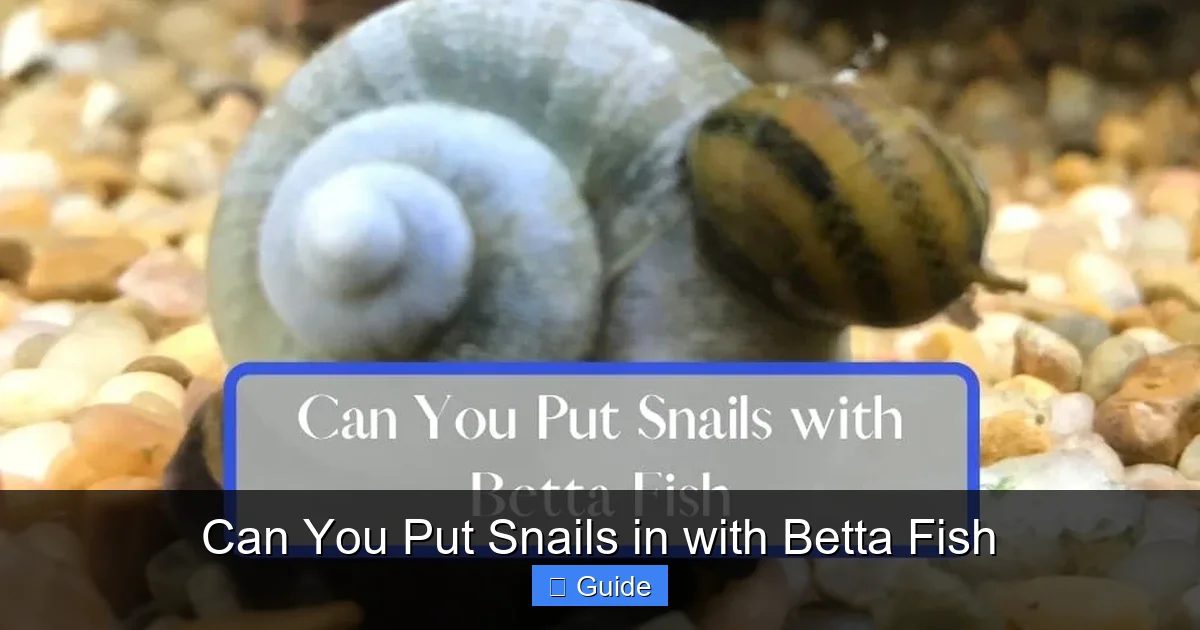
Yes, you can often successfully keep snails with betta fish, but it requires careful species selection and proper tank management. Snails are excellent, peaceful cleanup crew members that help control algae and consume detritus, while bettas are typically not interested in eating a healthy, shelled snail. The key is choosing the right snail, providing ample space and hiding spots, and monitoring their initial interactions to ensure a harmonious aquatic environment for both.
So, you’ve got a beautiful, flowing-finned betta fish, the jewel of your aquarium. You’ve set up the perfect heater, chosen some vibrant plants, and maybe even added a few peaceful schooling fish. But the glass is looking a little algae-streaked, and you’re thinking about a natural cleanup crew. The big question pops into your head: can you put snails in with betta fish? It’s a common query for betta owners, and the answer is a hopeful, “usually, yes!” But as with any aquatic community, the devil is in the details. Bettas have a reputation—the “Siamese Fighting Fish”—that precedes them. This reputation can make tank mate selection feel like navigating a minefield. However, snails are often one of the safest and most beneficial additions you can make to a betta’s home, provided you go about it the right way. This guide will walk you through everything you need to know, from understanding your betta’s personality to selecting the perfect snail and creating a tank where both can thrive peacefully.
Key Takeaways
- Compatibility is not guaranteed but highly possible: It depends on your individual betta’s temperament and the specific snail species chosen.
- Snails provide significant benefits: They are natural algae grazers and help break down waste, contributing to a cleaner tank with minimal effort.
- Primary risks involve betta aggression or snail overpopulation: A curious or aggressive betta may nip at a snail’s tentacles, while some snail species can breed rapidly under ideal conditions.
- Ideal snail species include Nerite, Mystery, and Ramshorn snails: These are peaceful, have shells too large for most bettas to eat, and serve distinct cleaning roles.
- Tank setup is crucial: A minimum of 5 gallons, abundant live plants or decorations for hiding, and stable, clean water parameters are non-negotiable for success.
- Introduction and monitoring are key steps: Acclimate snails properly and observe interactions for the first 24-48 hours, being prepared to separate them if necessary.
- Snails are not a substitute for tank maintenance: They are a supplement to your regular water changes and filter cleaning routine, not a replacement.
📑 Table of Contents
- Understanding Your Betta: Beyond the “Fighting Fish” Label
- Snails as Tank Mates: The Peaceful Cleanup Crew
- Best Snail Species for a Betta Tank: Your Top Contenders
- Creating the Ideal Tank Environment for Betta & Snail Harmony
- The Introduction Process: A Delicate First Meeting
- Troubleshooting: Solving Common Co-Habitation Problems
- Conclusion: A Rewarding Addition with the Right Approach
Understanding Your Betta: Beyond the “Fighting Fish” Label
Before we even think about snails, we need to unpack the betta’s notorious reputation. The moniker “Siamese Fighting Fish” comes from their historical use in staged fights in Southeast Asia. This has painted them as universally aggressive, territorial bullies. But this is an oversimplification. Modern bettas, bred for color and finnage over generations, exhibit a wide spectrum of personalities. Some are indeed feisty and will flare at their own reflection. Others are docile, curious, and largely indifferent to tank mates.
The Myth of the Constant Aggressor
It’s a myth that every betta is a tank-dominating tyrant. Many bettas live successfully in well-planned community tanks with a variety of fish. Their aggression is typically directed towards other male bettas or fish that resemble them—long, flowing fins and bright colors can trigger a territorial response. Snails, with their hard shells, slow movements, and completely different body plan, usually fall outside this trigger zone. They are not seen as a sexual rival or a threat to territory in the same way another fish might be. Instead, a betta is more likely to view a snail as a curious piece of living decor—something to investigate, maybe nudge gently with its nose, but not something to expend significant energy attacking. That said, you must know your individual fish. A betta that constantly flares at every movement outside the tank is a higher risk for harassing a new tank mate than one that calmly observes its world.
What Triggers Betta Aggression?
Even a generally peaceful betta can have its limits. Understanding these triggers helps you design a tank that minimizes stress for everyone.
- Space: A cramped tank is the number one cause of aggression. A betta in a 2.5-gallon bowl has no room to avoid a perceived intruder. In a spacious 10-gallon or larger tank, a betta can establish a personal area and simply swim away from a snail if it’s feeling annoyed.
- Resources: While snails don’t compete for the same food as bettas (betta pellets vs. algae wafers/veg), a lack of overall resources can make any creature cranky. Ensure your betta is well-fed with high-quality food so it doesn’t see a snail as a snack.
- Past Experiences: A betta that has previously been housed with aggressive tank mates or has been stressed may be more on edge and more likely to exhibit territorial behavior towards a new addition like a snail.
- Breeding Instincts: A male betta, even without a female present, may become possessive over a specific corner of the tank, especially if it’s building a bubble nest. Introducing a snail during this time might be seen as an intrusion into his “nesting” area.
Snails as Tank Mates: The Peaceful Cleanup Crew
Now that we’ve established that your betta’s aggression level is a variable, let’s talk about why snails are such fantastic candidates for cohabitation. They are the ultimate low-maintenance, high-reward tank mate for the right setup.
Visual guide about Can You Put Snails in with Betta Fish
Image source: fishtanko.com
The Multifaceted Benefits of Adding Snails
The primary reason most aquarists add snails is for their janitorial services. But their benefits extend beyond just algae eating.
- Algae Control: This is their superstar trait. Different snails specialize in different types of algae. Nerite snails are particularly famous for their voracious appetite for the stubborn, hard-to-remove brown diatoms and green spot algae that can plague betta tanks. They’ll meticulously scrape biofilm off the glass, leaves, and decorations.
- Detritus and Decaying Matter: Snails are scavengers. They’ll happily munch on uneaten food particles, dead plant leaves, and other organic waste that sinks to the substrate. This helps break down waste faster and keeps the tank cleaner between water changes.
- Biological Filtration: By consuming waste, snails contribute to the nitrogen cycle. Their activity helps convert harmful ammonia and nitrites, though their overall impact is minor compared to a robust filter.
- Environmental Enrichment: For your betta! A moving, living snail provides visual stimulation. Your betta may watch it crawl around, investigate its trail, and interact with it. This can reduce boredom, which is a real cause of stress and lethargy in bettas.
- Zero Competition: Snails and bettas have completely different dietary needs and occupy different niches in the tank. You feed your betta its pellets in the water column; you offer the snail a algae wafer or a slice of zucchini on the substrate. There’s no food fight.
Common Misconceptions About Snails
Before you get too excited, let’s clear up a few myths. Snails are not magical, self-sustaining cleaning machines.
- “They will eat all my fish waste.” This is false. Snails primarily eat algae and decaying matter on surfaces. They do not actively hunt for fish feces sinking in the water column. They are a supplement to cleaning, not a replacement for your gravel vacuum.
- “They will overrun my tank instantly.” Not if you choose the right species. Many popular freshwater snails do not reproduce in freshwater or require specific conditions to breed. For those that do, population control is manageable with simple practices.
- “They are completely harmless to my plants.” Most common cleanup snails are plant-safe. However, some species, like the Pond Snail, can sometimes nibble on delicate plant leaves if they are starving. A well-fed snail is less likely to turn to your live plants.
- “I never need to feed them; the algae is enough.” While algae is a primary food source, it’s often not sufficient in a typical betta tank, which may not have massive algae blooms. Supplementing with high-quality algae wafers, blanched vegetables (zucchini, cucumber, spinach), or even a piece of fish food is necessary for their long-term health and shell growth.
Best Snail Species for a Betta Tank: Your Top Contenders
Choosing the right snail is the most critical decision you’ll make in this process. You want a species that is peaceful, effective, and manageable. Here are the top three recommendations, along with one to generally avoid.
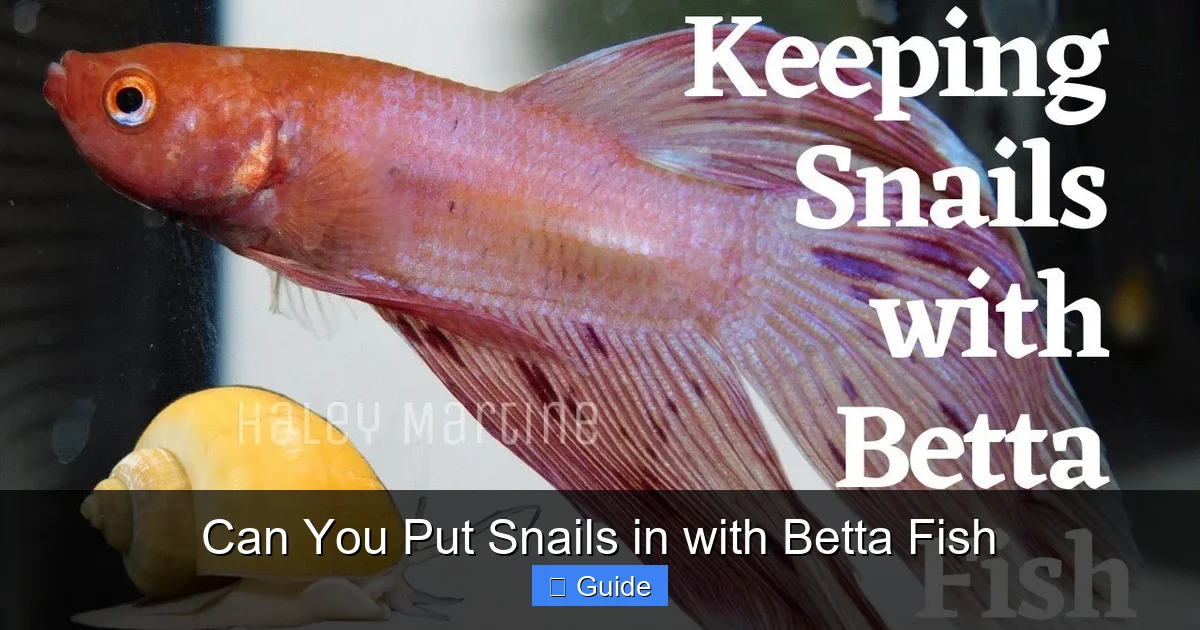
Visual guide about Can You Put Snails in with Betta Fish
Image source: i.ytimg.com
1. The Nerite Snail (Neritina spp.)
The Nerite snail is arguably the gold standard for betta tank mates. They are algae-eating powerhouses, specifically targeting the pesky types that other snails ignore.
- Pros: Incredible at cleaning glass and decorations. They come in beautiful, patterned varieties (Zebra, Tiger, Olive). Most importantly, they will not reproduce in a standard freshwater aquarium. Their eggs require brackish (slightly salty) water to hatch, so you will never have a population explosion.
- Cons: They are escape artists! If your tank lid has any gaps, they may try to climb out. They also have a shorter lifespan (about 1 year) compared to other snails. They are active grazers and may move around a lot, which some bettas might find intriguing (or annoying).
- Verdict: The #1 choice for algae control in a betta tank. Perfect for a 5-gallon or larger setup.
2. The Mystery Snail (Pomacea bridgesii)
These are the large, charismatic snails often sold as “apple snails” (though true apple snails are a different, problematic species). They are peaceful giants.
- Pros: Big size (up to 2 inches) makes them impossible for a betta to eat. They are very active and interesting to watch, often climbing the glass or exploring plants. They come in stunning colors—blue, gold, black, ivory. They are excellent at cleaning leftover food from the substrate.
- Cons: They are not specialized algae eaters like Nerites. They prefer decaying matter and veggies. They can reproduce in freshwater, but they lay large, conspicuous egg clutches above the waterline that are easy to spot and remove if you want to control numbers. They are also heavy waste producers, requiring slightly more diligent water changes.
- Verdict: A fantastic, visible, and safe companion. Great for bettas that might be a little more curious or nippy, as the snail is simply too big to bother.
3. The Ramshorn Snail (Planorbidae family)
These are the small, spiral-shaped snails that are often considered “pests” in some tanks but can be perfectly controlled in a betta setup.
- Pros: Very small (about the size of a dime), so they add minimal bioload. They are excellent at cleaning glass and plant leaves. They are very affordable and easy to find. They reproduce but at a moderate, controllable rate in a well-maintained tank.
- Cons: Their small size means a very large, determined betta could potentially try to eat one, though the shell usually protects it. Their population can grow if you overfeed, as they thrive on excess food.
- Verdict: A great, low-cost option for smaller betta tanks (5 gallons) if you are diligent about not overfeeding. They are the most “natural” cleanup crew.
Snail to Generally Avoid: The True Apple Snail (Pomacea canaliculata)
While often sold as “giant mystery snails,” true Apple Snails are a different beast. They are massive (often baseball-sized), have an insatiable appetite for live plants (they will devour your prized java fern or anubias), and produce an enormous amount of waste. They are also known to carry parasites. They are completely unsuitable for a typical betta community tank and are often illegal to own in some regions due to their invasive potential if released. Steer clear.
Creating the Ideal Tank Environment for Betta & Snail Harmony
You’ve chosen your snail. Now you need to build the stage where your betta and its new roommate can coexist peacefully. The tank environment is 80% of the success equation.
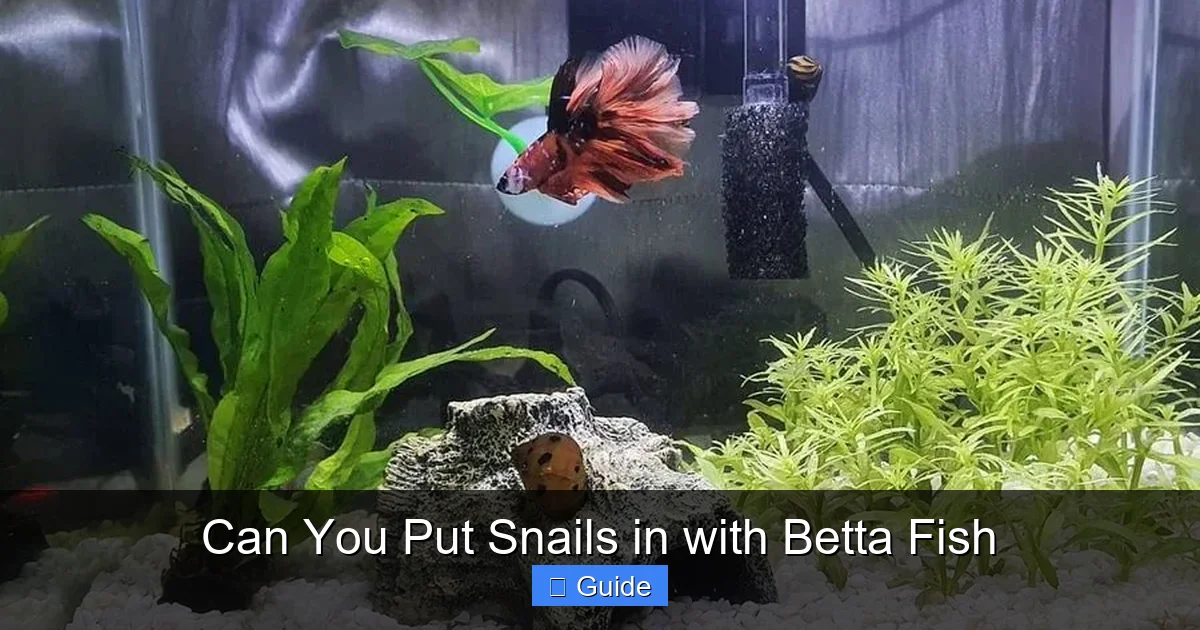
Visual guide about Can You Put Snails in with Betta Fish
Image source: ouraquariumlife.com
Tank Size and Layout: Space is Non-Negotiable
The absolute minimum tank size for a betta, with or without a snail, is 5 gallons. However, for a community including a snail, bigger is always better. A 10-gallon tank provides ample space for the betta to establish a territory and for the snail to have its own grazing routes without constant overlap. A larger volume of water also means more stable water parameters, which is critical for both bettas and snails.
- Hiding Spots are Essential: Your snail needs places to feel secure, especially when it’s resting or during its molting process (snails shed their shell opening as they grow). Use live plants (like java moss, anubias, java fern), driftwood, and smooth rocks to create nooks and crannies. This also gives your betta places to retreat if it feels stressed by the new addition.
- Open Swimming Space: Bettas need room to flare and display. Ensure there is a clear area in the mid to upper water column for your betta to swim.
- Substrate: Sand or fine gravel is best. Avoid sharp, jagged gravel that can damage a snail’s delicate foot as it moves.
- Cover: Bettas are labyrinth fish and need access to the air. Ensure the water level is at least 2-3 inches below the tank lid. A secure lid is also crucial to prevent snail escapes (especially Nerites).
Water Parameters: The Common Ground
Both bettas and common freshwater snails thrive in similar, stable water conditions. This is one reason they are such good matches.
- Temperature: Bettas are tropical fish, requiring 76-82°F (24-28°C). Most common snails are comfortable in this range as well. Use a reliable heater and a thermometer to maintain a stable temperature. Avoid sudden drops, which can stress both inhabitants.
- pH and Hardness: Aim for a pH of 7.0-7.5 and a moderate water hardness (GH 8-12). Snails, in particular, need minerals like calcium and magnesium from the water to build and maintain their strong shells. In very soft, acidic water, snail shells can become pitted and weak. You can use a product like Seachem Equilibrium or add a piece of cuttlebone (for reptiles) to the filter to boost minerals if your tap water is very soft.
- Water Quality: This is paramount. Both bettas and snails are sensitive to ammonia and nitrite. A fully cycled tank with a functioning filter is essential. Perform regular water changes (25-30% weekly) to keep nitrate levels low. Snails are more sensitive to copper, which is found in some medications and tap water. Always check water conditioner labels and use products that remove heavy metals. If you need to medicate the betta, you will likely need to move the snail to a separate hospital tank, as many fish medications (especially copper-based ones) are lethal to invertebrates.
The Introduction Process: A Delicate First Meeting
You cannot just drop a snail into the tank and hope for the best. A careful, staged introduction dramatically increases your chances of success.
Step 1: Quarantine and Acclimate
Never introduce a new snail directly from the pet store into your main tank. Store-bought snails can carry parasites, pests (like hydra), or snail eggs on their shells.
- Quarantine: Place the snail in a separate, bare hospital tank or a large breeder box with clean, dechlorinated water for at least 2-3 weeks. Observe it for any signs of illness, lethargy, or parasites. During this time, you can also treat it with a mild antiparasitic dip if you’re concerned (research safe methods for invertebrates first).
- Acclimation: Once the quarantine period is over, acclimate the snail to your main tank’s water temperature and chemistry. Float the sealed bag or container in your tank for 15-20 minutes. Then, slowly add small amounts of your tank water to the bag/container over another 20-30 minutes. Finally, use a net to gently transfer the snail to the tank, discarding the store water (which may contain contaminants).
Step 2: The First 48 Hours of Observation
This is the critical monitoring period.
- Initial Reaction: Your betta will almost certainly investigate the new snail. It may flare, circle it, and gently bump it with its nose. This is normal curiosity. Watch to see if this curiosity escalates into persistent chasing, nipping at the snail’s tentacles or foot, or trying to flip the snail over. A snail on its back is extremely vulnerable and cannot right itself easily.
- Snail Behavior: A healthy snail should begin to move and explore within a few hours. If it remains retracted in its shell for more than 24 hours, it is likely severely stressed or sick. It may also be trying to adjust.
- Intervention: If your betta is relentlessly chasing and harassing the snail to the point where the snail is constantly hiding or not moving, you have a problem. Be prepared to use a tank divider or a breeder box to physically separate them for a few days. Sometimes, simply adding more plants and hiding spots after the initial introduction can diffuse the tension. Rearranging the tank decor can also help by breaking up established territories and making the environment “new” for both animals, forcing them to re-establish boundaries without focusing solely on each other.
Troubleshooting: Solving Common Co-Habitation Problems
Even with the best planning, issues can arise. Here’s how to handle the most common challenges.
Problem: My Betta is Constanty Chasing or Nipping the Snail
Solution: First, assess the severity. Occasional curiosity is fine; constant, high-speed chase is not. Immediately ensure the snail has ample hiding places (add more plants, caves, or a piece of PVC pipe). If the behavior persists for more than a day or two, separate them using a divider. A betta’s personality rarely changes, so if it shows strong predatory or territorial instincts towards the snail, they may need to live separately for the snail’s safety and stress levels.
Problem: My Snail Population is Exploding!
Solution: This is almost always a result of overfeeding. Snails breed when there is an excess of food. The solution is to be ruthless with feeding. Feed your betta only what it can consume in 2-3 minutes, once or twice a day. Remove any uneaten pellets immediately. For the snail, supplement with a tiny piece of algae wafer or blanched veggie 2-3 times a week, not daily. You can also manually remove egg clutches (the gelatinous strands above the waterline for Mystery/Ramshorn snails) as you see them. Introduce a snail-eating fish? No, that’s a terrible idea in a betta tank. Control is done through food management.
Problem: The Snail Seems Inactive or is Dying
Solution: Inactivity can be caused by poor water quality (test for ammonia/nitrite/nitrate), incorrect water parameters (especially low calcium/minerals leading to shell erosion), or lack of food. Check your water parameters first. Ensure you are offering a varied diet. If the snail’s shell is deteriorating (pitted, white, crumbling), it’s a severe mineral deficiency. Add mineral supplements to the water immediately. Also, some snails become inactive after laying eggs or during cold spells. Ensure your heater is functioning properly.
Conclusion: A Rewarding Addition with the Right Approach
So, can you put snails in with betta fish? The comprehensive answer is yes, you absolutely can, and you often should! Snails are one of the most compatible, beneficial, and fascinating tank mates you can choose for a solitary betta or a betta community. They bring the invaluable service of algae cleanup, add a dynamic element to the aquascape, and require minimal care beyond what your betta already needs.
The formula for success is simple, but it requires diligence: choose a suitable, peaceful snail species like a Nerite, Mystery, or Ramshorn; house them in a properly sized, well-planted tank with stable water parameters; introduce them slowly and monitor their interactions closely; and maintain excellent water quality through regular changes. By respecting the needs of both your betta and your snail, you create a miniature, balanced ecosystem that is a joy to watch and maintain. You move beyond the stereotype of the aggressive, lonely betta and create a thriving aquatic community where your flamboyant fish and its humble, shelled companion coexist in harmony. Start with the right snail, set up the perfect environment, and enjoy the peaceful, clean aquarium you’ve worked to achieve.
Frequently Asked Questions
Will my betta fish try to eat my snail?
Most bettas will not eat a healthy snail with a hard shell, as it’s not worth the effort and they can’t digest the shell. However, a very curious, aggressive, or food-motivated betta may nip at the snail’s soft tentacles or foot. Choosing a larger snail like a Mystery snail makes this virtually impossible.
What is the absolute best snail for a betta tank?
The Nerite snail is widely considered the best for algae control, as they are specialists and will not reproduce in freshwater, preventing overpopulation. For a more active, visible snail, the Mystery snail is an excellent, peaceful choice. Both are safe for most bettas.
Do snails really clean the tank, or is it a myth?
It’s true! Snails are excellent at grazing on algae that grows on glass, rocks, and plant leaves. They also consume decaying plant matter and uneaten food from the substrate. However, they are a supplement to, not a replacement for, your regular filter maintenance and water changes.
How do I stop snails from taking over my betta tank?
Overpopulation is almost always caused by overfeeding. Feed your betta only what it eats in 2-3 minutes, and remove any excess. For snails that lay visible egg clutches (like Mystery or Ramshorn), simply remove the clutches as you see them above the waterline. Choosing a species that doesn’t breed in freshwater, like the Nerite snail, eliminates this problem entirely.
What water parameters do snails need compared to bettas?
They are very similar! Both thrive in warm water (76-82°F) and a pH around 7.0-7.5. The key difference is that snails require minerals (calcium) in the water to maintain strong shell growth. If your tap water is very soft, you may need to add a mineral supplement.
What should I do if my betta is relentlessly attacking the snail?
First, ensure the snail has plenty of immediate hiding places. If the harassment continues non-stop for more than a day, you must separate them for the snail’s safety. Use a tank divider or move the snail to a separate “hospital” tank. Some bettas simply have too strong a prey drive to live with invertebrates, and that’s okay—the snail’s well-being comes first.