Can You Use Bottled Water for a Betta Fish
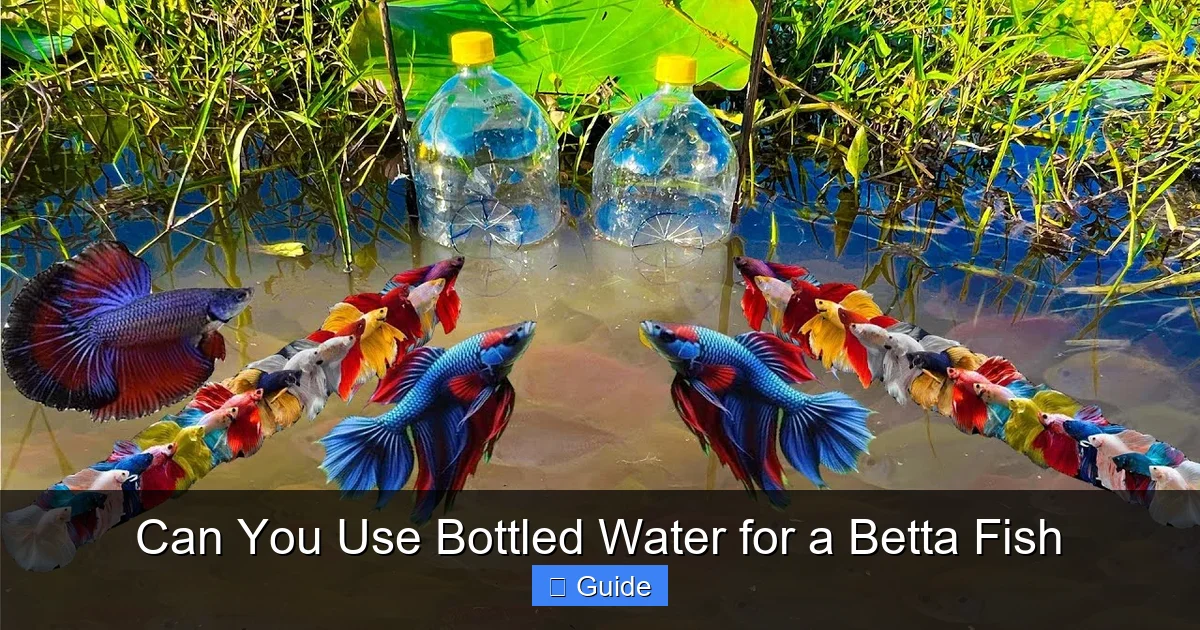
Using bottled water for a betta fish is possible, but it’s not as simple as just pouring any bottle into the tank. The right type—typically natural spring water without additives—can be an excellent, consistent water source. However, many bottled waters (like distilled, purified, or mineral-enhanced) lack essential minerals or contain harmful additives that can stress or poison your betta. You must still treat it with a water conditioner to neutralize chlorine/chloramine and carefully monitor water parameters. The goal is to replicate the stable, mineral-rich conditions of your betta’s natural habitat, regardless of your water source.
Key Takeaways
- Not All Bottled Water is Equal: Natural spring water is generally the best bottled choice, while distilled, purified, and mineral-added waters are often unsuitable or dangerous.
- Water Conditioner is Non-Negotiable: Even “pure” bottled water can contain trace chlorine or chloramine from processing; always use a quality dechlorinator.
- Consistency Trumps “Purity”: A stable, mineral-balanced water source (like a trusted spring water brand) is far better than frequently changing between different bottled types.
- Test Your Water: Use a liquid test kit to check pH, hardness (GH), and carbonate hardness (KH) of your chosen bottled water to ensure it’s within the betta’s preferred range.
- Bottled Water is a Tool, Not a Cure-All: It solves specific tap water problems (high chlorine, heavy metals, extreme pH) but requires the same diligent maintenance and cycling as any other water source.
- Avoid “Enhanced” or “Vitamin” Waters: Any bottled water with added flavors, electrolytes, vitamins, or oxygen is toxic to fish and must never be used.
- Cost and Environmental Impact: Using bottled water long-term is expensive and generates plastic waste; it’s best suited for emergencies, small tanks, or when tap water is irredeemably poor.
📑 Table of Contents
- Can You Use Bottled Water for a Betta Fish? The Complete Truth
- Understanding Your Betta’s Natural Habitat: The Blueprint for Water
- The Bottled Water Aisle Decoded: What’s Really in the Bottle?
- The Tap Water Problem: Why Bottled Water Even Seems Appealing
- The Step-by-Step Guide: How to Use Bottled Water Correctly for Your Betta
- Common Mistakes and Pitfalls to Avoid
- The Bottom Line: Is Bottled Water Right for Your Betta?
Can You Use Bottled Water for a Betta Fish? The Complete Truth
So, you’ve got your beautiful betta fish, a stunning tank setup, and you’re ready to do everything right. Then you stare at your tap water, or perhaps you’re setting up in a dorm or an RV, and a simple question bubbles up: Can I just use bottled water? It seems pure, clean, and safe for humans—it must be good for my fish, right?
The answer is a firm “It depends.” Using bottled water for a betta is a path many aquarists consider, but it’s fraught with misconceptions. The reality is that bottled water is not a one-size-fits-all solution. In fact, some types are actively harmful. This guide will cut through the marketing and myths. We’ll explore the biology of the betta, dissect the different types of bottled water on the shelf, and give you a clear, actionable protocol for using bottled water successfully—if you choose to. Your betta’s health depends on stable, appropriate water chemistry, and we’re here to help you achieve that, no matter your water source.
Understanding Your Betta’s Natural Habitat: The Blueprint for Water
Before we judge any water—bottled or tap—we must first understand what a betta fish (Betta splendens) actually needs. Bettas are native to the shallow, slow-moving waters of Thailand’s rice paddies, canals, and floodplains. These are not pristine, distilled spring sources. They are warm, often tea-colored (from tannins), and rich in organic material. The key characteristics of this habitat are:

Visual guide about Can You Use Bottled Water for a Betta Fish
Image source: petshun.com
Warmth and Stability
Bettas are tropical fish. They thrive in temperatures between 76°F and 82°F (24°C – 28°C). More importantly, they are extremely sensitive to sudden temperature swings. The shallow nature of their wild home means the water temperature is very stable, heated consistently by the tropical sun.
Soft, Slightly Acidic Water
The water in their native range is typically soft (low in dissolved minerals like calcium and magnesium) and has a pH that ranges from slightly acidic to neutral (approximately 6.5 to 7.5). The tannins from decaying leaves and vegetation contribute to this lower pH.
Minimal Current
Bettas have evolved to live in almost stagnant water. Their famous labyrinth organ allows them to breathe atmospheric air, an adaptation for low-oxygen environments. Strong filtration currents can stress them, so gentle flow is key.
The takeaway: Your goal is to replicate this stable, warm, soft, and slightly acidic environment. The water you choose—whether from your faucet, a well, or a bottle—must be manipulated to fit this blueprint. “Pure” water, in the chemical sense, is often not “good” water for a betta.
The Bottled Water Aisle Decoded: What’s Really in the Bottle?
Walking down the bottled water aisle is like entering a chemical laboratory disguised as a refreshment stand. The labels are full of claims: “Spring!” “Purified!” “Distilled!” “Mineral-Enhanced!” Let’s break down what each of these means for your betta.

Visual guide about Can You Use Bottled Water for a Betta Fish
Image source: petshun.com
Natural Spring Water
This is water that comes from an underground source (an aquifer) where it flows naturally to the surface. It must be collected at the spring or via a well tapping the underground formation. It contains natural minerals like calcium, magnesium, and potassium absorbed from the rocks it filters through. This is often the best bottled water choice for a betta tank. It provides essential trace minerals that help with osmoregulation (the fish’s ability to balance fluids and salts) and stabilizes pH. However, you must read the label carefully. Some “spring water” brands are actually treated municipal water. Look for language like “from a natural spring source” and check the water analysis report on the company’s website. Brands like Evian, Fiji Water, or local spring water brands are common examples, but always verify.
Purified Water / Reverse Osmosis (RO) Water
This is water that has been processed to remove all impurities. This is typically done through reverse osmosis, deionization, distillation, or a combination. The result is H₂O in its purest form—devoid of minerals, salts, and contaminants. This is a dangerous choice for a betta if used alone. Pure water is “hungry” water; it will leach essential minerals and electrolytes directly out of your betta’s body through a process called osmosis, causing severe physiological stress and potentially death. It also has zero buffering capacity, meaning the pH can crash violently with even minor acids (like fish waste). RO water can be used, but only if you meticulously re-mineralize it with a commercial betta/RO water additive or a precise mix of minerals to achieve the correct GH and KH.
Distilled Water
Distilled water is created by boiling water into steam and then condensing it back into liquid, leaving virtually all minerals and contaminants behind. It is functionally identical to purified/RO water in its effects on fish. It is not safe for bettas to drink (or swim in) without complete re-mineralization. The myth that distilled water is “clean” and therefore “good” is one of the most persistent and harmful in the aquarium hobby.
Mineral-Enhanced, Vitamin, or Electrolyte Waters
These are the absolute worst choices. Waters like Propel, Vitaminwater, or any with added flavors, sugars, electrolytes (for humans), or vitamins are highly toxic to fish. The additives are formulated for human physiology and will poison your betta almost immediately. Never, under any circumstances, use these.
Artesian Water
This is a type of spring water that comes from a well tapping a confined aquifer where the water is under pressure. It is naturally filtered and often mineral-rich. It can be a good option, similar to spring water, but again, check the label for added minerals or processing.
Practical Tip: When you buy a bottle, don’t just grab the cheapest or the one with the prettiest mountain picture. Read the label. Look for “100% Natural Spring Water” or “Artesian Water.” Avoid any that say “Purified,” “Distilled,” “Demineralized,” or list added ingredients. When in doubt, check the brand’s website for a full water quality report (WQR).
The Tap Water Problem: Why Bottled Water Even Seems Appealing
Many betta keepers first consider bottled water because their tap water is problematic. Understanding these common tap water issues clarifies why bottled water can be a valid alternative.
Visual guide about Can You Use Bottled Water for a Betta Fish
Image source: thebeloveddog.com
Chlorine and Chloramine
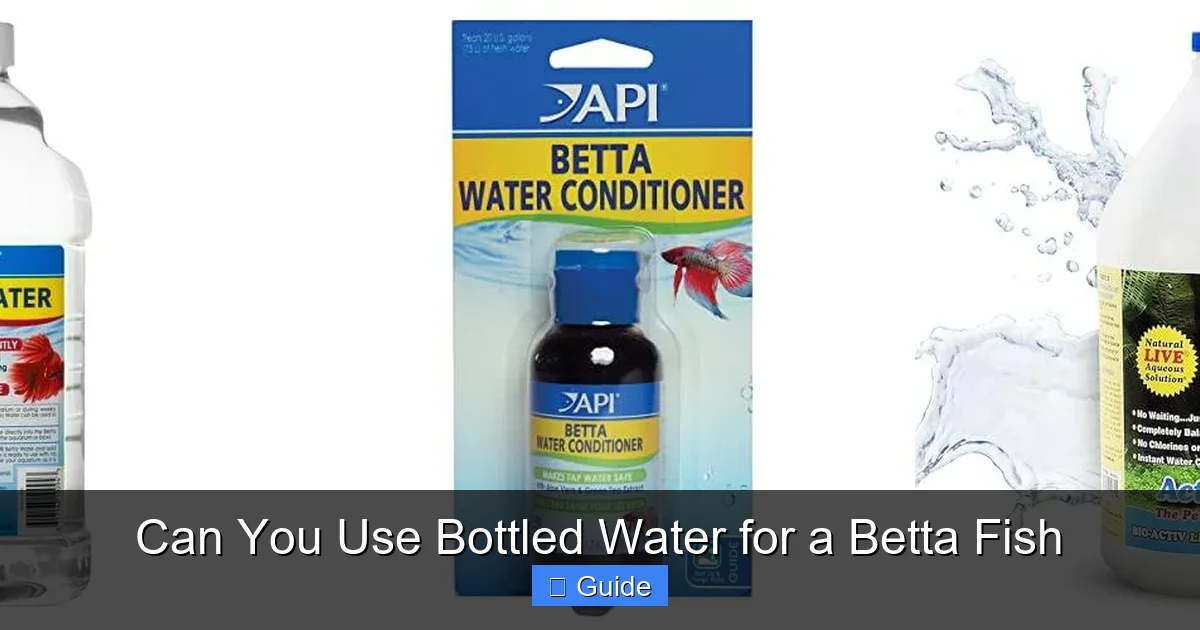
Municipal water is treated with chlorine or the more stable chloramine to kill pathogens. These are lethal to fish, damaging gills and entering the bloodstream. A water conditioner (dechlorinator) is always required, regardless of your source. Some conditioners also detoxify ammonia and heavy metals.
Heavy Metals and Pharmaceuticals
Tap water can contain traces of heavy metals (lead, copper, zinc from old pipes) and even minute amounts of pharmaceuticals (birth control pills, antidepressants) that pass through treatment plants. These can disrupt your betta’s endocrine system over time. High-quality bottled spring water is typically very low in these contaminants.
Extreme or Unstable pH
Some regions have very hard, alkaline water (high pH) or very soft, acidic water. Bettas prefer a stable, slightly acidic to neutral pH. If your tap water pH is consistently above 7.8 or below 6.0, it can cause long-term stress. Bottled spring water often has a more stable, neutral pH, but you must check the specific brand’s report.
High Hardness (GH)
General Hardness (GH) measures calcium and magnesium. Very hard water (GH > 15 dGH) can be stressful for bettas over time and lead to mineral buildup. Very soft water (GH < 4 dGH) lacks essential minerals. The ideal range for bettas is around 4-8 dGH (soft to slightly moderately hard). Many spring waters fall nicely in this range.
The Verdict: If your tap water is consistently within the ideal parameters (pH 6.5-7.5, GH 4-8 dGH, KH 3-5 dKH) after conditioning, it is almost always a better, cheaper, and more eco-friendly choice than bottled water. Use a reliable test kit (like API or Salifert) to know your tap water’s baseline. Bottled water becomes a smart option only when your tap water is irredeemably bad (e.g., high chloramine with no conditioner that detoxifies it, extreme hardness/pH that is difficult to adjust, or known heavy metal contamination).
The Step-by-Step Guide: How to Use Bottled Water Correctly for Your Betta
Assuming you’ve determined bottled water is necessary for your situation, here is the precise protocol to follow. Skipping any of these steps risks your fish’s health.
Step 1: Select the Right Brand
As established, choose a 100% Natural Spring Water or Artesian Water with no added minerals or flavors. Purchase a single bottle and find its official water quality report online. You need to see the numbers for:
- pH: Should be between 6.5 and 7.8 ideally.
- Total Dissolved Solids (TDS): Should be under 500 ppm, ideally 150-300 ppm. Very high TDS indicates high mineral content.
- Calcium (Ca) & Magnesium (Mg): These make up GH. You want a combined reading that gives a GH of roughly 4-8 dGH. Some reports list these in ppm; you can convert to dGH (1 dGH = 17.86 ppm Ca/Mg).
- Alkalinity (HCO3-): This is your KH buffer. A reading of 50-150 ppm (roughly 3-8 dKH) is good.
If the report isn’t public, contact the company. If they won’t provide it, choose another brand. For a 5-gallon betta tank, you’ll need about 5-10 bottles for a full water change, so buy in bulk once you’ve vetted a brand.
Step 2: Condition It Unconditionally
Do not skip this. Pour the bottled water into a clean, dedicated water bucket or container. Add the correct dosage of a reputable water conditioner (like Seachem Prime, API Stress Coat+, or Fritz Aquatics Complete). Follow the label. This neutralizes any chlorine/chloramine that may be present from the bottling process or your local water system (some bottling plants use municipal water). Prime also detoxifies ammonia for 48 hours, which is a critical safety net. Let the treated water sit for 15-30 minutes to reach room temperature and allow the conditioner to work.
Step 3: Match Temperature Precisely
Bettas can go into shock from a temperature change of even 2-3 degrees. Use an in-tank thermometer and a thermometer for your bucket. The new bottled water must be within 1°F (0.5°C) of your existing tank temperature. You may need to use a small aquarium heater in the bucket or add warm (not hot) tap water to the bottled water to achieve this match. Never add cold bottled water directly to a warm tank.
Step 4: Perform a Partial Water Change
Unless you are starting a new, fully cycled tank, you should never replace 100% of the water at once. This wipes out beneficial bacteria and causes massive parameter shifts. For a betta in a filtered, cycled tank, replace 25-50% of the water weekly. Use a gravel vacuum to remove debris from the substrate during the change. Slowly add the new, conditioned, temperature-matched bottled water to the tank to avoid disturbing the substrate and causing a sudden spike in ammonia from trapped waste.
Step 5: Test and Monitor
After your first few water changes with the new bottled source, test your tank water (not the new bottled water) with a liquid test kit. Check pH, ammonia, nitrite, and nitrate. You should see stable, healthy parameters (0 ammonia, 0 nitrite, low nitrate). If you notice a pH crash or a spike in ammonia/nitrite, your source water may be too pure (low KH) or you may be disrupting the cycle with too large of a change. Adjust your change volume (e.g., 25% instead of 50%) or consider adding a mineral buffer to increase KH stability.
Common Mistakes and Pitfalls to Avoid
Even with the best intentions, it’s easy to make a critical error when switching to bottled water. Here are the most frequent—and dangerous—mistakes.
Mistake 1: Using Distilled or Purified Water Without Re-Mineralizing
This is the #1 killer. Pure water will pull essential salts from your betta’s cells. If you absolutely must use RO/DI water (e.g., for a very specific breeding project), you must add a commercial re-mineralizer like Seachem Equilibrium (for GH) and Alkaline Buffer (for KH) according to precise dosing instructions. For the average betta keeper, this is unnecessary complexity. Stick to spring water.
Mistake 2: Forgetting the Water Conditioner
The assumption that “bottled = safe” leads people to skip conditioner. Chloramine, in particular, is very stable and can be present in bottled water if the source is municipal. Always, always condition.
Mistake 3: Inconsistent Brand Switching
One week you buy Brand A spring water (pH 7.2, GH 6), the next week Brand B (pH 7.8, GH 10). This drastic shift in water chemistry is a massive stressor. Your betta’s internal systems work to balance with the external water. Constant change forces them to constantly readjust, weakening their immune system. Commit to one trusted brand and stick with it.
Mistake 4: Ignoring Temperature
Grabbing cold bottles from the fridge and pouring them in is a classic shock-inducing move. Always pre-heat the new water to match the tank.
Mistake 5: Using Bottled Water for a “New Tank” Without Cycling
A cycled tank has a population of beneficial bacteria that convert toxic fish waste (ammonia) into less harmful nitrate. This cycle takes 4-6 weeks to establish. Starting a new tank with bottled water does not skip this step. You must still “cycle” the tank with a source of ammonia (fishless cycle) or with hardy “pilot” fish before adding your betta. Bottled water does not contain bacteria.
Mistake 6: Overlooking the Nitrogen Cycle Impact
Some very pure spring waters have very low KH (carbonate hardness). KH acts as a pH buffer. If your KH is too low (e.g., 1-2 dKH), the biological activity in your tank (which produces acids) can cause the pH to drop (“crash”) dangerously low overnight. If you test your source water and find KH below 3 dKH, you may need to add a commercial buffer or consider a different water source to maintain stability.
The Bottom Line: Is Bottled Water Right for Your Betta?
Let’s bring it all home. The question wasn’t just “can you,” but “should you.”
Yes, you can use bottled water for a betta fish, but only if you follow a strict, informed protocol. The ideal candidate for bottled water use is:
- An owner with extremely poor tap water (high chloramine that standard conditioners struggle with, severe heavy metal issues, or wildly fluctuating pH/hardness).
- Someone keeping a very small tank (under 3 gallons) where water changes are frequent and tap water inconsistencies have a magnified effect.
- A betta keeper in a temporary situation (hotel, dorm, RV) where tap water quality is unknown or unsuitable.
- An individual willing to test, research, and commit to a single, vetted spring water brand.
For the vast majority of betta owners with decent municipal tap water, bottled water is an unnecessary expense and environmental burden. A simple dechlorinator and a stable tap water source, monitored with a test kit, is a superior long-term strategy. The healthiest betta lives in a tank with stable, clean, warm, mineral-appropriate water. The source of that water—tap or bottle—is secondary to achieving and maintaining those parameters consistently.
Your betta doesn’t care if the water came from a spring in the mountains or a pipe under the street. It cares that the water is the right temperature, free of toxins, has the proper mineral balance, and doesn’t change drastically from one day to the next. If bottled water helps you achieve that unwavering stability, then it’s a good choice. If it introduces inconsistency, cost, or hidden dangers, it’s the wrong tool for the job. Know your water, know your fish, and make the choice that leads to a thriving, flaring, bubble-nesting betta.
Frequently Asked Questions
Can I use any brand of natural spring water for my betta?
No. You must check the specific brand’s water quality report. Look for a pH between 6.5-7.8 and a GH around 4-8 dGH. Some spring waters can be too alkaline or too hard for long-term betta health. Always vet one bottle before committing to a brand.
Why is distilled water so bad for bettas if it’s “pure”?
Distilled water has zero dissolved minerals. This makes it “hypotonic” to the betta’s internal fluids. Through osmosis, it will leach essential electrolytes and minerals directly out of the fish’s cells and gills, causing severe osmotic shock, organ failure, and death. It also provides no pH buffer, leading to dangerous crashes.
Do I still need a water conditioner if I use bottled spring water?
Absolutely yes. Bottling facilities may use municipal water treated with chlorine/chloramine. More importantly, conditioner detoxifies ammonia and heavy metals that can be present in any water source and protects your betta’s sensitive gills during water changes. It is a mandatory safety step.
How often should I change the water if I’m using bottled water?
With a properly cycled, filtered tank, perform a 25-50% water change weekly, just as you would with tap water. The frequency does not change based on the water source. The goal is to dilute waste products (nitrates) and replenish trace minerals. Consistency in the water source is more important than the change percentage.
Is using bottled water cost-effective for a betta tank?
No, for long-term use it is significantly more expensive than tap water. For a standard 5-gallon tank with 50% weekly changes, you could go through 2-3 gallons of bottled water per week. Over a year, this costs hundreds of dollars and generates a large amount of plastic waste. It is best reserved for specific, necessary situations.
My tap water is very hard (high GH). Is bottled spring water a good alternative?
It can be, but you must check the GH of the specific spring water. Some spring waters are also quite hard. You may find a spring water with a softer profile suitable for bettas. Alternatively, you can mix your hard tap water with a pure water source (like RO/DI, properly re-mineralized) to dilute the hardness to a target range of 4-8 dGH, which is a more flexible and cost-effective approach than full bottled water reliance.