Can You Put Any Fish with a Betta
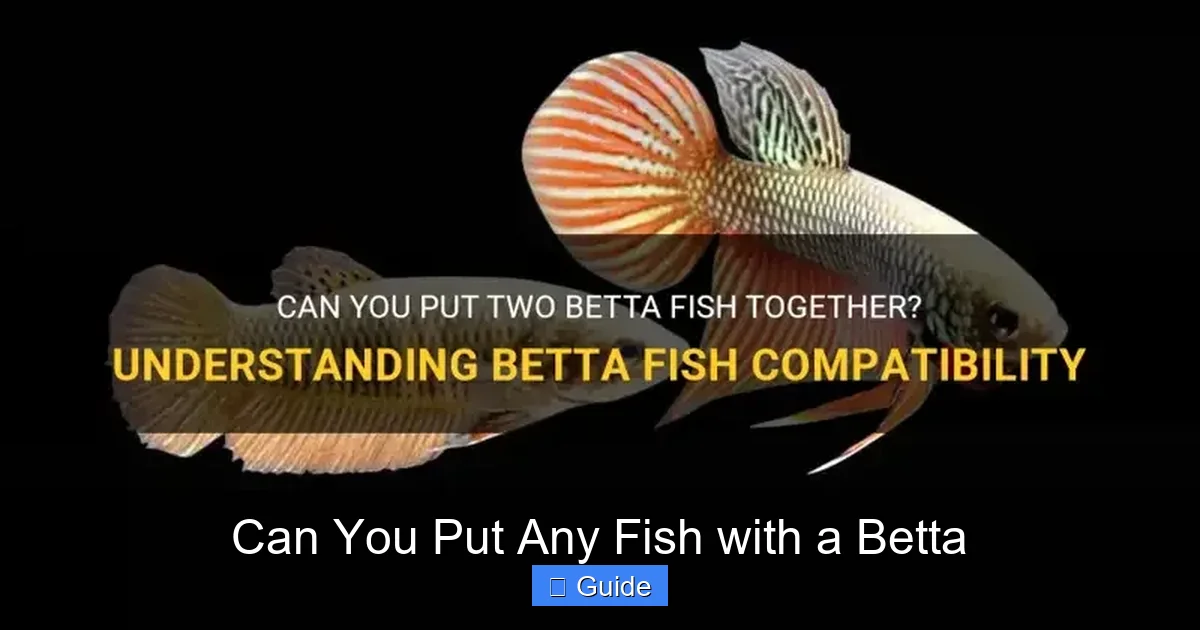
No, you cannot put just any fish with a betta. Betta splendens, or Siamese fighting fish, are famously territorial and aggressive, especially males. Success depends on selecting peaceful, fast, or non-fin-nipping species, providing a spacious and well-decorated tank, and following a careful introduction process. Each betta has a unique personality, so there are no absolute guarantees, but with the right approach, a harmonious community tank is possible.
Key Takeaways
- Bettas are individuals: Their temperament varies widely; a peaceful betta in one tank may be aggressive in another.
- Tank size is non-negotiable: A minimum of 10 gallons is strongly recommended for any community setup with a betta.
- Avoid fin-nippers and flashy fish: Species with long, flowing fins (like fancy guppies) or bright colors often trigger a betta’s aggression.
- Prioritize bottom-dwellers and fast swimmers: Fish that occupy different tank layers (like corydoras or harlequin rasboras) are often the safest bets.
- The introduction process is critical: Using a divider or quarantine tank for initial observation can prevent immediate conflict and stress.
- Plants and hiding spots are essential: Live or silk plants, driftwood, and caves break line-of-sight and provide escape territories for all fish.
- Always have a backup plan: Be prepared to separate fish immediately if aggression occurs, with a spare tank or divider on hand.
📑 Table of Contents
- Understanding the Betta: More Than Just a “Fighting Fish”
- Ideal Tank Conditions: The Foundation for Success
- The “Yes” List: Top Compatible Tank Mates for Your Betta
- The “No” List: Fish to Avoid with Your Betta
- The Step-by-Step Introduction Process: Patience is Everything
- Long-Term Maintenance and Recognizing Problems
- Conclusion: A Thoughtful Approach Yields the Best Results
Understanding the Betta: More Than Just a “Fighting Fish”
To answer the question “can you put any fish with a betta?” we must first understand the animal at the center of the question. The Betta splendens, with its glorious fins and vibrant colors, is one of the most popular aquarium fish in the world. Yet, its historical nickname, the “Siamese fighting fish,” casts a long shadow. This moniker comes from centuries of selective breeding for aggression in its native Southeast Asia, where bets were placed on fights between males. While modern pet store bettas are generally less aggressive than their wild, battle-hardened ancestors, that instinct is never fully extinguished.
A betta’s aggression is primarily territorial and directed towards other fish that resemble it—think long, flowing fins and bright colors. In the wild, a male betta defends a small patch of reeds or surface plants where it builds its bubble nest. This instinct translates directly to the aquarium. Your betta will patrol its domain, flaring its gills and fins at any intruder it perceives as a rival or a threat. It’s crucial to remember that a betta’s personality is as unique as a human’s. Some are laid-back and tolerate a wide range of tank mates, while others will attempt to fight their reflection in the glass. This variability is the first and most important reason why there is no universal “yes” or “no” to the question of tank mates.
The Myth of the Solitary Betta
For decades, the standard advice was to keep bettas alone in a “betta bowl.” This outdated practice is harmful on multiple levels. A 1-gallon bowl provides no space for proper swimming, no stable nitrogen cycle, and no environmental enrichment. A lonely betta in a barren tank can become bored, depressed, and lethargic, often developing stress-related illnesses. A well-planted community tank, with appropriate and carefully chosen companions, can provide stimulation, reduce boredom, and even lead to a more active and healthier betta. The goal is not to force companionship but to thoughtfully curate an environment where the betta’s territorial needs are respected while other fish occupy different ecological niches.
Ideal Tank Conditions: The Foundation for Success
Before you even consider a tank mate, your betta’s environment must be perfect. You cannot build a peaceful community on a shaky foundation. The most critical factor is tank size. The absolute minimum for any community tank with a betta is 10 gallons. A 5-gallon tank is the bare minimum for a *solo* betta to thrive. In a 10-gallon tank, you have enough horizontal swimming space and, more importantly, enough vertical and territorial space to allow different fish to establish their own zones. In a larger tank (20+ gallons), your success rate with compatible tank mates increases dramatically because the betta’s territory becomes a smaller percentage of the total water volume, diluting its perceived threat.
Visual guide about Can You Put Any Fish with a Betta
Image source: petshun.com
Aquascaping for Harmony
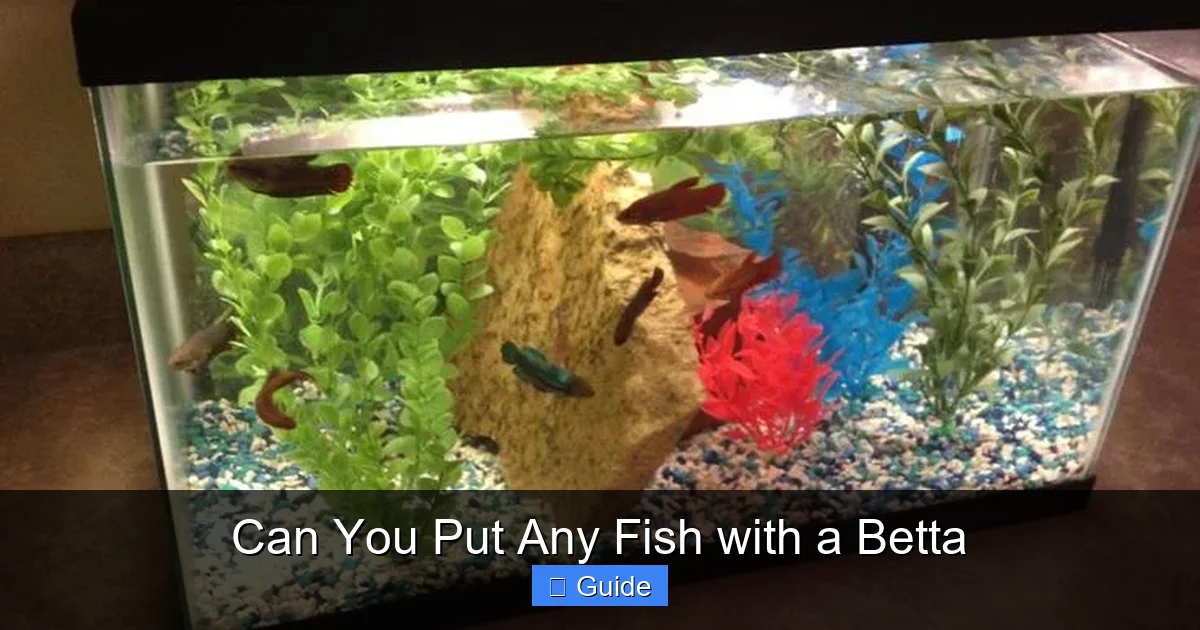
How you decorate the tank is just as important as its size. The primary goal is to break the line of sight. If your betta can see another fish from one end of the tank to the other, it will perceive it as an intruder in its territory. Use a dense forest of live or silk plants (avoid plastic plants with sharp edges that can damage delicate fins). Floating plants like hornwort or water lettuce are fantastic, as they occupy the top layer where bettas prefer to rest and build bubble nests, providing cover and a sense of security. Add driftwood, rocks, and ceramic caves to create a complex, three-dimensional landscape. This isn’t just for aesthetics; it’s a strategic tool for conflict prevention, giving smaller fish places to dart into and creating visual barriers for the betta.
Water Parameters and Cycling
All tank inhabitants must share compatible water parameters. Bettas are tropical fish, preferring a stable temperature between 76°F and 82°F (24°C – 28°C). The pH should be neutral to slightly acidic (6.5-7.5). Most importantly, the tank must be fully cycled before adding any fish. A cycled tank has established beneficial bacteria that convert toxic fish waste (ammonia and nitrite) into less harmful nitrate. An uncycled tank is a chemical minefield that will stress and potentially kill any fish, exacerbating aggression and disease. Cycle the tank for at least 4-6 weeks before considering adding your betta and any future tank mates.
The “Yes” List: Top Compatible Tank Mates for Your Betta
Now we get to the heart of the matter. Which fish are most likely to succeed as betta tank mates? The safest candidates share common traits: they are peaceful, do not have flashy fins that mimic a rival betta, are fast and agile to evade any chase, and occupy a different level of the water column. Never base your decision solely on a list. Always research the specific needs of each species and observe your individual betta’s reaction during a quarantine period.
Visual guide about Can You Put Any Fish with a Betta
Image source: i.pinimg.com
The Gold Standard: Corydoras Catfish
Corydoras, or “cory cats,” are arguably the best and most popular tank mate for a betta. These small, armored catfish are peaceful, social, and active bottom-dwellers. They sift through the substrate for food, completely ignoring the betta that patrols the upper levels. Their spiny fins are not long and flowing, so they don’t trigger aggression. They are also hardy and can tolerate the same warm water parameters. Keep them in groups of at least 5-6, as they are schooling fish. A group of pygmy corydoras in a well-planted 10-gallon tank with a betta is a classic, beautiful, and usually successful combination. Their constant, gentle activity is fascinating to watch and adds great dynamic to the tank.
Fast and Flashy (But Not Too Flashy): Rasboras and Tetras
Small, schooling fish from the rasbora and tetra families can work, but with a crucial caveat: they must be fast and numerous. The “safety in numbers” principle is key. A lone neon tetra is an easy target for a curious or aggressive betta. A school of 8-10, however, moves as a confusing, darting cloud that the betta can’t single out. Excellent choices include the Harlequin Rasbora ( Trigonostigma heteromorpha ), which has a distinctive triangle patch but not long fins, and the Ember Tetra ( Hyphessobrycon amandae ), which is tiny, fiery orange, and incredibly active. Avoid larger, more boisterous tetras like black skirt tetras, which may fin-nip, and any with long, flowing fins like the rummy-nose tetra’s relatives.
The Algae Eaters: Snails and Shrimp
Invertebrates are often a fantastic, low-risk addition. Nerite Snails are the top choice. They have a hard, patterned shell, are completely algae-eating machines, and are impervious to a betta’s attacks. They cannot reproduce in freshwater, so you won’t have a snail explosion. Amano Shrimp ( Caridina multidentata ) are larger, robust shrimp that are excellent at cleaning the tank and are often fast enough to evade a betta’s notice. Ghost Shrimp or Cherry Shrimp can work with a very peaceful betta, but there is a significant risk they will be eaten, especially smaller or more colorful cherry shrimp. Think of shrimp as a potential snack with a side of cleanup duty. Always provide ample hiding places (dense moss, hollowed-out cacao pods) if you add shrimp.
The “No” List: Fish to Avoid with Your Betta
Knowing what to avoid is even more critical than knowing what to try. The following categories of fish are almost universally incompatible with bettas and should be considered red flags.
Fin-Nippers and Aggressive Fish
This is the most dangerous group. Fish with a natural instinct to nip at the long, flowing fins of other fish will see your betta as a moving target. This causes immense stress and physical injury to the betta, leading to infections and death. Absolute avoidances include: Tiger Barbs, Serpae Tetras, Black skirt Tetras, and most Danios (especially zebrafish, which are notorious fin-nippers when not in a large school). Similarly, fish with their own aggressive tendencies, like many African cichlids, Oscars, or Jack Dempseys, will lead to constant fighting and likely the death of one or both fish.
Other “Fighting” Fish and Look-Alikes
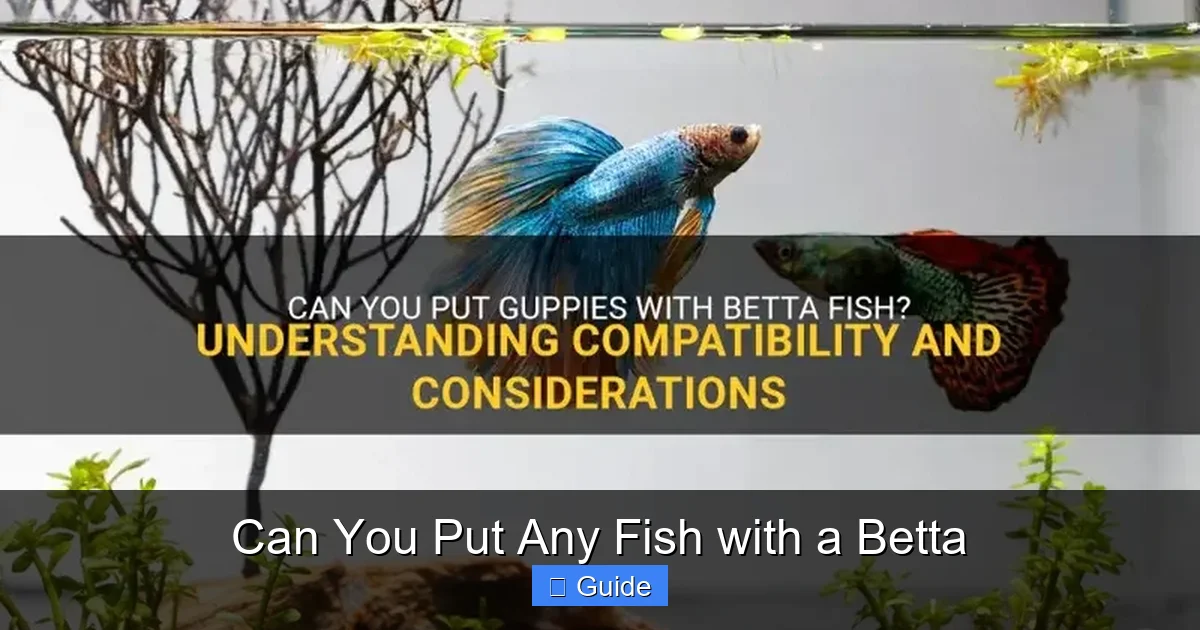
Do not house your betta with any other fish that has a similar body shape, large fins, or bright coloration. This includes: Fancy Guppies (males have huge, flowing tails that look like rival betta fins), Gouramis (they are closely related to bettas and will often fight), Paradise Fish (another aggressive gourami relative), and even other Bettas. Two male bettas will fight to the death. A male and female betta should only be placed together temporarily for breeding under expert supervision, as the male may harass or kill the female. Female bettas can sometimes be kept in sororities (groups of 4-6) in a large, heavily planted tank, but this is an advanced setup with high risks of bullying and death.
Slow, Long-Finned, or Delicate Fish
Fish that are slow-moving, have elaborate fins, or are very small and delicate are easy prey for a betta’s hunting instinct. This includes: Fancy Goldfish (different temperature needs, slow, messy), Angelfish (can be aggressive, long fins), Siamese Algae Eaters (can become large and boisterous), and most Fancy varieties of any common species. If the fish looks like a “slow, pretty decoration,” your betta will likely see it as such.
The Step-by-Step Introduction Process: Patience is Everything
You have a cycled, planted 10+ gallon tank. You’ve selected a peaceful school of ember tetras and a group of corydoras. Your betta is healthy and living alone in the tank. Now what? Rushing the introduction is the single biggest cause of failure. You must follow a gradual, observation-based process.

Visual guide about Can You Put Any Fish with a Betta
Image source: petshun.com
Step 1: The Quarantine and Observation Tank
Before any new fish enter your betta’s permanent home, they must be quarantined for 4-6 weeks in a separate tank. This is to ensure they are not carrying diseases or parasites that could infect your established betta. During this quarantine period, you can also use the quarantine tank for the next step: the divided introduction. Place a clear, sealed divider in the quarantine tank. Put your betta on one side and the new school of fish on the other. They can see each other but cannot interact. Observe your betta’s behavior for 24-48 hours. Does it flare its gills constantly and chase the divider? That’s a strong sign of high aggression. Does it occasionally glance over but mostly ignore them? That’s a promising sign. If aggression is extreme, you may need to reconsider the tank mate choice.
Step 2: The Rearrangement Trick
When you are ready to move the new fish into the main tank, first rearrange all the decorations, plants, and rocks. This disrupts the betta’s established territory and “resets” the tank’s visual layout. The betta will then be exploring the new layout rather than immediately defending a known perimeter. Add the new fish to the tank while the betta is distracted or, ideally, at night with the lights off. Use a net to transfer them gently.
Step 3: The Critical First Week of Monitoring
For the first 72 hours, you must be a vigilant observer. Watch for signs of aggression from the betta: relentless chasing, flaring, and biting. Also watch for signs of stress in the new fish: hiding constantly, not eating, swimming erratically, or having torn fins. Have a backup plan ready. This means having a second tank, a large breeder net, or a spare divider on hand to immediately separate any fish that are being bullied or are bullying. Sometimes, a betta may be fine with a school of fish but will relentlessly chase a single individual. Be prepared to remove the “problem” fish if necessary. After a week of peaceful coexistence, you can generally consider the introduction successful.
Long-Term Maintenance and Recognizing Problems
A successful introduction is not the end of the story. Maintaining peace in a community tank with a betta requires ongoing attention to tank conditions and fish behavior.
Feeding Strategies to Reduce Competition
Bettas are surface feeders, preferring floating pellets or live foods like daphnia. Many of their tank mates are mid-level or bottom feeders. To prevent food competition and ensure the betta doesn’t become possessive over food, use two strategies: feed at different levels and use a pipette or straw. Target-feed your betta its food at the surface with a pipette so it doesn’t gulp down all the food meant for the tetras. Then, sprinkle sinking pellets or wafers for the corydoras. This ensures everyone gets enough to eat and prevents the betta from associating the other fish with a food theft threat.
Environmental Enrichment
Keep the environment interesting to prevent boredom-induced aggression. Rotate decorations every few months. Add new plants (potted or floating). Use a feeding ring for the betta’s food. A bored betta with nothing to do but patrol its territory is more likely to pick on tank mates. A complex, ever-changing environment keeps its mind occupied.
When to Intervene: Signs of Chronic Stress and Aggression
Not all aggression is a full-blown chase. Watch for subtle signs: the betta constantly “patrolling” the perimeter with raised fins, the new fish spending 95% of their time hiding in one corner, faded colors in the betta or the tank mates, torn or shredded fins on any fish, or fish hiding behind filter outflows. These are signs of chronic stress that weaken immune systems and lead to disease. If these behaviors persist beyond the initial adjustment period (2-3 weeks), you must intervene. This may mean permanently separating the betta using a divider within the same tank or moving one party to a different tank. The well-being of all fish is the priority, not the ideal of a “community tank.”
Conclusion: A Thoughtful Approach Yields the Best Results
So, can you put any fish with a betta? The definitive answer is no. You cannot simply pair a betta with any attractive fish from the store and expect harmony. The betta’s complex temperament demands respect and careful management. Success is a product of three pillars: proper environment (a spacious, heavily planted, cycled tank), wise selection (choosing peaceful, fast, non-threatening species from different water layers), and patient introduction (using dividers, rearranging decor, and vigilant observation). By following this guide, you move from hoping for compatibility to engineering a stable, peaceful, and breathtaking aquatic community. Your betta, once a solitary fish in a small cup, can become the majestic centerpiece of a thriving ecosystem. Start with a solid foundation, choose your companions wisely, and always be prepared to adapt. The reward is a dynamic, beautiful tank that showcases the betta’s true glory without compromising the well-being of its neighbors.
Frequently Asked Questions
Can I put two male bettas together?
No. Two male bettas will fight aggressively, often to the death. They are highly territorial and view each other as immediate rivals. The only exception is using a solid, permanent divider in a large tank to house two males separately in the same water system, but they must never see or interact with each other.
What about putting a male and female betta together?
This is not recommended for a permanent community tank. A male betta may constantly harass a female, causing her severe stress, injury, or death. They should only be placed together temporarily for breeding under controlled conditions, with the breeder ready to separate them immediately after spawning.
Are shrimp and snails safe tank mates for bettas?
Generally, yes, with caveats. Snails like Nerite or Mystery snails are excellent, as their shells protect them. Shrimp like Amano shrimp are usually safe due to their size and speed. However, small or brightly colored shrimp (like Cherry Shrimp) are often seen as food by bettas and may be eaten. Always provide dense hiding places for shrimp.
My betta flares at its reflection. Will it flare at tank mates too?
Not necessarily. Flaring at a reflection is often a response to a perceived rival that never backs down—a mirror image. A real fish that recognizes the betta’s dominance and retreats may not trigger the same prolonged aggression. However, a betta that constantly flares at its own reflection is likely more territorial and may be a higher risk for aggression towards tank mates. Proceed with extreme caution and a larger tank.
Can I keep a betta with a goldfish?
No, this is a poor combination. Goldfish are cold-water fish (preferring 68°F or lower), while bettas are tropical (76°F+). The temperature difference alone stresses both. Goldfish are also messy, producing high ammonia levels that can harm a betta, and their slow, flowing fins may invite fin-nipping from an active betta.
My betta is chasing my new fish. What should I do?
Act immediately. If the chasing is relentless and the new fish is showing signs of stress (hiding, clamped fins), you must separate them. Have a backup tank or a large divider ready. Place the new fish in the separate tank to recover. Sometimes, a brief chase is an initial “get to know you,” but sustained aggression means they are incompatible. Do not hope they will “work it out.” The stress will likely lead to illness or death for one of the fish.