Putting tadpoles in a betta fish tank is strongly discouraged and almost always ends in tragedy. Betta fish are naturally aggressive, territorial predators who will see slow-moving, vulnerable tadpoles as food or irritants. Beyond predation, their core environmental needs—like water temperature, flow, and chemistry—are fundamentally at odds with what most tadpoles require to survive and develop. The stress of a betta’s presence alone can stunt or kill tadpoles, while shared water risks deadly disease transmission. For the safety and health of both creatures, they should always be kept in completely separate, species-appropriate setups.
So you’ve got a beautiful, flowing betta fish in a planted tank, and you’ve just collected some fascinating tadpoles from a local pond. The idea of creating a little ecosystem where the betta swims gracefully above the tiny, wriggling tadpoles below is a charming one, isn’t it? It feels like something out of a nature documentary—a peaceful pond in a glass box. Unfortunately, this is one of those aquarium daydreams that almost invariably turns into a nightmare. The short, brutal answer to the question “Can tadpoles live with betta fish?” is a resounding no. It’s not just a bad idea; it’s a recipe for stress, injury, disease, and death for the tadpoles, and potentially poor health for the betta. Let’s dive deep into the why, exploring the biology, behavior, and environmental science that makes this combination so incompatible.
Key Takeaways
- Betta aggression is the primary threat: Bettas are instinctual hunters and will nip at, chase, and eat tadpoles, causing fatal stress or direct predation.
- Water parameter needs conflict: Bettas require warm (78-80°F), still water, while many tadpoles need cooler temperatures and gentle water flow for oxygenation.
- Tadpoles are extremely vulnerable: Their slow movements, delicate skin, and gills make them easy targets; they lack defenses against a determined betta.
- Disease transmission is a hidden danger: Bettas can carry pathogens like *Aeromonas* or parasites (e.g., anchor worms) that are lethal to sensitive amphibians.
- “Peaceful” bettas are still unpredictable: Even a seemingly calm betta can react to a tadpole’s sudden movement, and stress can trigger latent aggression.
- Separate housing is the only safe option: Use dedicated tanks, a secure divided system with no water flow between compartments, or postpone tadpole projects until the betta is rehoused.
- Consider ethical and practical goals: Raising tadpoles to frogs/toads often requires land, which a betta tank cannot provide, making the setup fundamentally unsuitable long-term.
📑 Table of Contents
- The Betta’s Nature: A Lethal Combination of Instinct and Personality
- Tadpole Biology: Delicate and Demanding
- Water Parameter Clash: The Invisible War
- Disease and Parasite Transmission: A One-Way Street
- The Illusion of the “Peaceful” Betta and Size Arguments
- Expert-Recommended Alternatives and Safe Practices
- Conclusion: Ethics Over Aesthetics
The Betta’s Nature: A Lethal Combination of Instinct and Personality
To understand why a betta and tadpoles are a disastrous match, you must first understand the betta fish (Betta splendens). This isn’t about a “mean” fish; it’s about millions of years of evolution. Bettas are anabantoids from the shallow, stagnant rice paddies and slow-moving streams of Southeast Asia. In these cramped, resource-scarce habitats, they developed into fierce territorial defenders and opportunistic predators. Their long, flowing fins are not just for show; they are weapons and displays used to intimidate rivals and attract mates. Their mouth is designed for grabbing small, moving prey—insects, larvae, and crustaceans.
The Instinctual Hunter
A tadpole, to a betta, is a perfect target. It’s small, it moves with undulating wiggles that trigger a predatory response, and it lacks any meaningful defense. Bettas have excellent eyesight and are constantly scanning their environment for movement. That little black tail flicking in the substrate? It’s a dinner bell. Even if your betta has never shown aggression toward tank mates before, the introduction of a novel, worm-like creature in its space can flip a switch. This isn’t malice; it’s hardwired biology. You cannot breed or train this instinct out of them.
The Stress of the Unknown
Even if your particular betta is unusually docile (some individuals are less aggressive), the presence of tadpoles will cause it chronic stress. Bettas are creatures of routine and defined territory. A new, mobile object in their space is an intrusion. This stress weakens their immune system, making them susceptible to diseases like dropsy or fin rot. For the tadpoles, the stress is even more profound. They are prey animals. The constant shadow of a large, flashy predator hovering above them triggers a perpetual fight-or-flight response. They will hide constantly, stop feeding properly, and expend all their energy on survival instead of growth. This chronic stress often leads to stunted development, increased susceptibility to infection, and eventual death, even without a single nip.
Fin Nipping and Irritation
Bettas are notorious fin nippers, especially with anything that has long, flowing appendages. While tadpoles don’t have fins like another betta, their tails are long and ribbon-like as they develop. A curious or irritated betta may take a test bite. For a tadpole, a torn tail or damaged skin is a death sentence. Their skin is permeable and vital for respiration. An open wound is a direct pathway for fatal bacterial or fungal infections in the water.
Tadpole Biology: Delicate and Demanding
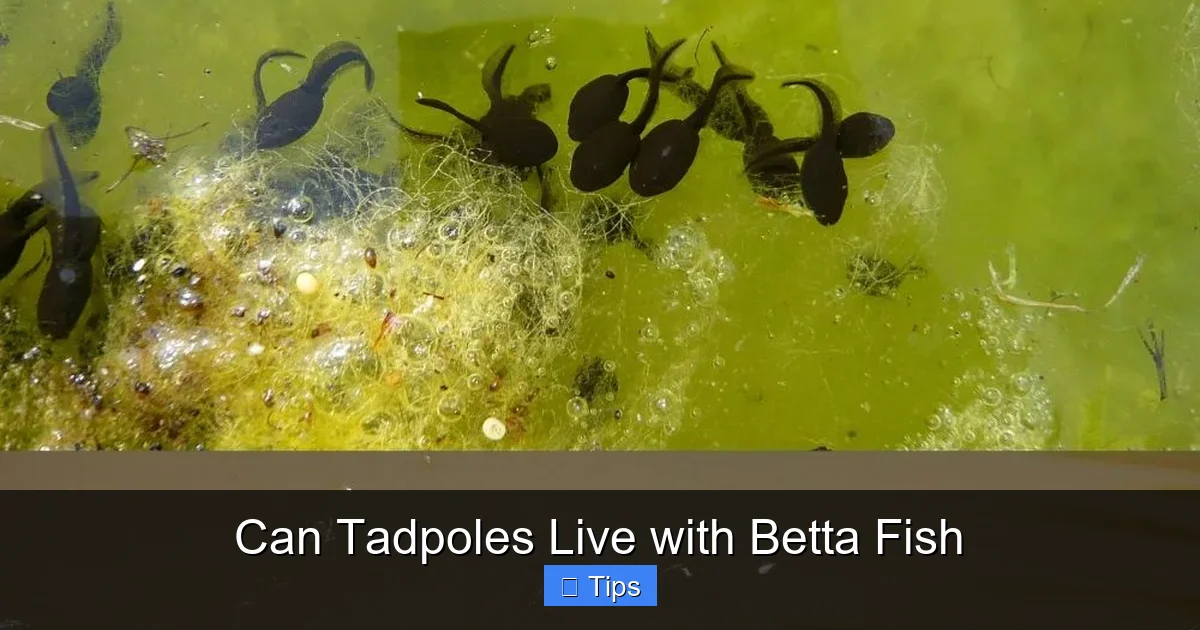
We often think of tadpoles as simple, hardy little things that can live in any puddle. The reality is far more complex and species-dependent. A tadpole is not a finished product; it’s a larval stage undergoing one of the most dramatic metamorphoses in the animal kingdom. Its needs are specific, fragile, and utterly mismatched with a betta’s world.
Visual guide about Can Tadpoles Live with Betta Fish
Image source: i.pinimg.com
Species-Specific Requirements
First, not all tadpoles are created equal. A common American Toad (Anaxyrus americanus) tadpole is a hardy, algae-scraping vegetarian that prefers cooler water (65-75°F). A Green Frog (Lithobates clamitans) tadpole is more omnivorous and can tolerate slightly warmer temps. A Cane Toad (Rhinella marina) tadpole is toxic, and its skin secretions could harm or even kill a betta. You must know the exact species to understand its needs. But universally, tadpoles require:
- Appropriate Temperature: Most temperate species need water significantly cooler than a betta’s ideal 78-80°F. Keeping them in warm betta water accelerates their metabolism unsustainably, leading to developmental problems or death.
- Gentle Filtration/Aeration: Tadpoles are weak swimmers. They thrive in still or very gently moving water. Strong filtration, which is often needed for a betta’s bioload, will suck them against intake sponges or exhaust them as they fight the current.
- Specific Diet: Early-stage tadpoles are often herbivores or filter feeders, needing spirulina, algae wafers, or finely boiled lettuce. As they develop, many become omnivores or carnivores, needing insect larvae or high-protein pellets. A betta’s high-protein pelleted food is unsuitable and will foul the water quickly if left uneaten by the tadpoles.
- Space and Structure: They need open swimming area but also plants or décor to hide from predators (like, you know, a betta).
The Metamorphosis Challenge
The ultimate incompatibility becomes glaringly obvious when you consider the end goal: metamorphosis. As tadpoles develop hind legs, then forelegs, their needs change drastically. They require emergent surfaces—rocks, logs, or plants reaching above the waterline—to climb out of the water as they become froglets or toadlets. A standard betta tank, especially a decorative one with a tight lid, offers none of this. A froglet trapped in deep water will drown. This isn’t a temporary cohabitation problem; it’s a permanent, unsolvable housing crisis that guarantees the death of the amphibian at the final stage of its life cycle.
Water Parameter Clash: The Invisible War
Even if we magically solved the aggression and predation issues, the water itself would become a battleground. The chemical and physical properties of the water in a healthy betta tank are toxic to most tadpoles over time.
Visual guide about Can Tadpoles Live with Betta Fish
Image source: petshun.com
Temperature: The Silent Killer
As mentioned, bettas are tropical fish. Their immune systems and metabolism function optimally at 78-80°F (25.5-26.5°C). Most common North American and European tadpoles are adapted to spring and summer pond temperatures that peak around 72-76°F (22-24°C) and are often cooler at night. Sustained exposure to 80°F water is like a human running a fever constantly. It speeds up their development abnormally, causes organ stress, and shortens their lifespan. The warmer water also holds less dissolved oxygen, which is critical for tadpoles breathing through their gills and skin.
Water Flow and Oxygenation
Bettas prefer very still water. Their labyrinth organ allows them to breathe atmospheric air, so they don’t need highly oxygenated water. In fact, strong water flow stresses them. Tadpoles, however, rely entirely on dissolved oxygen in the water through their gills and skin. They need gentle water movement to circulate oxygenated water to them. A filter strong enough to keep a betta tank clean (betta waste is surprisingly potent) will create a current too strong for tadpoles. Turning the filter down to a “tadpole-safe” level will result in ammonia and nitrite spikes from the decomposing tadpole waste and uneaten food, poisoning both animals.
pH and Water Chemistry
Betta setups often aim for a slightly acidic to neutral pH (6.5-7.5), which is fine. However, the process of cycling a tank for a betta involves establishing a robust colony of nitrifying bacteria to convert toxic ammonia (from fish waste) to nitrite and then to less harmful nitrate. Tadpoles produce a different waste profile and are more sensitive to ammonia and nitrite than many fish. A “cycled” betta tank may still have ammonia and nitrite levels that are subclinical for the betta but are acutely toxic to a tadpole’s permeable skin and gills. Furthermore, tadpoles often prefer slightly softer water, while bettas are adaptable.
Disease and Parasite Transmission: A One-Way Street
This is perhaps the most insidious risk. Bettas and amphibians are susceptible to different, but sometimes overlapping, pathogens. The problem is a matter of immune system compatibility and treatment options.
The Amphibian Chytrid Fungus (Batrachochytrium dendrobatidis)
This devastating fungus has caused global amphibian declines. While not typically a problem in isolated home aquariums, it can be introduced via wild-caught tadpoles. If your tadpoles are carriers (they often show no signs), the stress of cohabitation could allow the fungus to proliferate. The chytrid fungus infects the keratinized skin of amphibians, disrupting their electrolyte balance and leading to cardiac arrest. There is no safe, effective treatment for chytrid in a community tank setting. Once in a system, it can persist and potentially threaten any future amphibians you might keep.
Bacterial Infections (Aeromonas, Pseudomonas)
These bacteria are common in all aquatic environments. A healthy betta with a strong immune system can often resist them. A stressed tadpole cannot. An open wound from a betta nip is an instant invitation for lethal bacterial septicemia. Conversely, a tadpole carrying a strain of bacteria to which the betta has no immunity could introduce a new pathogen. Treating bacterial infections in a mixed-species tank is a nightmare. Antibiotics safe for fish (like kanamycin) are often toxic to amphibians, and vice-versa. You would be forced to choose which animal to treat, or risk killing both with the wrong medication.
Parasites: Anchor Worms and Flukes
Wild-caught tadpoles can carry external parasites like anchor worms (Lernaea) or flukes. These attach to the skin or gills. A betta might pick at an irritated area, spreading the parasite or causing a secondary infection. Internal parasites are also a risk. Quarantine is absolutely essential for any wild-caught animal, but even a 30-day quarantine may not catch all parasites. Introducing a potentially parasitized animal into a closed betta system is a huge gamble.
The Illusion of the “Peaceful” Betta and Size Arguments
You might be thinking: “But my betta is so sweet! He lives with shrimp and snails without issue. Tadpoles are small, maybe he won’t see them as food.” This is a dangerous line of reasoning that leads to many avoidable losses.
Visual guide about Can Tadpoles Live with Betta Fish
Image source: bettacarefishguide.com
Shrimp and Snails Are Not Tadpoles
Shrimp have hard exoskeletons and quick, darting escapes. Snails have shells and are mostly stationary. They are not recognized as “prey” in the same way a soft-bodied, squirming, tail-flicking tadpole is. The behavioral trigger is completely different. A betta might ignore a shrimp that is actively cleaning the glass, but a tadpole’s movement pattern is a direct mirror of the tiny insects he eats in the wild.
The “Small Tadpole” Fallacy
“But the tadpoles are tinier than his food pellets!” Size is irrelevant to a predator’s instinct. Bettas in the wild consume microorganisms and insect larvae smaller than these tadpoles. If it moves and is within striking distance, it’s fair game. Furthermore, as the tadpoles grow, they become even more tempting—a larger, more substantial meal.
Personality is Not Predictability
Yes, bettas have individual personalities. Some are more curious, some more skittish. But you cannot reliably predict how any individual will react to a new, moving stimulus in its territory. The one thing you can predict with near-certainty is that a betta *will* investigate. That investigation will involve rapid darting, flaring of gills, and likely a test bite. You are rolling the dice with the lives of living creatures for the sake of a “cool idea.” It is not ethical.
Expert-Recommended Alternatives and Safe Practices
If you are passionate about both bettas and amphibians, all is not lost. You can be a keeper of both, but you must be a keeper of separate. Here are safe, responsible alternatives that allow you to enjoy both hobbies without risking lives.
The Dedicated, Species-Appropriate Tank
This is the gold standard. Set up a proper tank for your tadpoles. For a few common species, a 10-gallon long tank is perfect. It provides stable water volume, allows for gentle filtration (a sponge filter is ideal), and offers space for plants and eventual land. You can keep the tadpoles here until they complete metamorphosis and are released (if native and legal) or re-homed. Your betta remains in its own, stable, optimized 5-gallon (minimum) heated and filtered tank. You can place these tanks near each other for aesthetic enjoyment, but they are completely separate biological systems.
The Secure Divided System
If space or budget is a constraint, you can use a large tank (20+ gallons) with a solid, watertight divider. The divider must go from the bottom to the top, with no gaps at the substrate or water surface. You will need separate filtration and heating systems on each side, as water parameters will differ. The betta side can have a gentle filter and heater set to 78°F. The tadpole side can have a sponge filter and a heater set to a lower temperature, or no heater if the room is warm enough. This is an advanced setup that requires careful monitoring to ensure no water leaks between compartments and that each side’s equipment is adequate. It is a compromise, but a safe one if executed perfectly.
Choosing the Right “Tank Mates” for Bettas
If your goal is a community tank for your betta, stick to proven, compatible species that share similar water parameters and can hold their own. Excellent choices include:
- Small, schooling fish: Neon tetras, ember tetras, harlequin rasboras (in a 20+ gallon tank). They are fast and stay in the upper/mid levels, away from the betta’s bottom-level territory.
- Peaceful bottom dwellers: Kuhli loaches, small corydoras catfish. They are nocturnal or occupy a different niche.
- Invertebrates: Amano shrimp, ghost shrimp, cherry shrimp (larger species may be eaten), and nerite snails. These are the safest and most common additions.
Always introduce tank mates after the betta is established in a fully cycled tank, and always have a backup plan (a separate “hospital” tank) to remove any animal that is bullied or stressed.
Postponement and Focus
Perhaps the simplest solution is sequential hobbying. Enjoy your betta for its brilliant colors and personality. When you are ready for a new project, rehome your betta (to a good home) and convert its tank, after a full strip-down and disinfection, into a beautiful, functional tadpole rearing tank. This allows you to give 100% of your focus and resources to each project, ensuring the highest welfare for the animals in your care.
Conclusion: Ethics Over Aesthetics
The desire to create a beautiful, diverse underwater world is the heart of the aquarium hobby. But that beauty must be built on a foundation of understanding and respect for the animals’ innate needs. The pairing of a betta fish and tadpoles fails on every conceivable level: it ignores predatory instinct, violates thermal and chemical requirements, guarantees chronic stress, and introduces unacceptable disease risks. The tadpoles will suffer and die. The betta will live in a state of agitation. The “community tank” you envisioned will be a scene of quiet (or not-so-quiet) desperation.
True success in this hobby comes from research, patience, and the willingness to say “no” to an appealing but fundamentally flawed idea. It comes from providing each creature with an environment that allows it to thrive, not just survive. So, please, keep your betta and your tadpoles apart. Give the betta the warm, serene, plant-filled palace it deserves. Give the tadpoles the cool, gentle, spacious nursery they need to grow into remarkable amphibians. In doing so, you become not just a keeper of pets, but a responsible steward of two very different, fascinating forms of life. Their survival depends on your choice.
Frequently Asked Questions
Will a betta fish definitely eat my tadpoles?
Almost certainly, yes. While a betta might not eat a tadpole immediately, it will almost certainly chase, nip, and stress it to death. The betta’s predatory instinct is triggered by the tadpole’s movement and shape. Even if it doesn’t consume it, the stress of constant harassment is fatal to the vulnerable tadpole.
What if I use a very large tank to give the tadpoles space to escape?
A larger tank does not solve the core incompatibilities. The water parameters (temperature, flow, chemistry) will still be wrong for the tadpoles. The betta will still patrol the entire tank as its territory. The tadpoles will spend their entire lives hiding in corners, severely stressed, and will still be at risk whenever they venture out to feed. The size only dilutes, not eliminates, the problem.
Are there any tadpole species that are safe with bettas?
No. There is no known tadpole species that has compatible environmental needs with a betta and is also immune to a betta’s predatory behavior. Some tropical tadpoles (from very warm climates) might tolerate the temperature, but they would still be viewed as prey by the betta. Toxicity is also a concern (e.g., Cane Toad tadpoles are poisonous to fish). None are considered safe.
Can I use a tank divider to keep them together in the same aquarium?
Yes, but it must be a perfectly sealed, watertight divider that extends from the bottom to the top with no gaps. You need separate, appropriately sized filters and heaters on each side. This is a complex setup that is prone to failure if not done meticulously. It is not a beginner solution and requires constant monitoring to ensure the divider remains secure and water parameters are correct on both sides.
What about using a mesh or grate instead of a solid divider?
Absolutely not. A mesh or grate would allow water flow, which would equalize temperature and chemistry, dooming the tadpoles to the betta’s preferred warm water. It would also allow the betta to see and stress the tadpoles constantly, and the tadpoles could potentially squeeze through larger gaps. A physical barrier must be solid and complete.
I have a female betta, which are supposedly less aggressive. Could that work?
Female bettas are generally less intensely aggressive than males, but they are still bettas. They can be territorial and will still see tadpoles as food or intruders. While a very calm female might ignore a shrimp, the instinct to hunt a soft-bodied, moving tadpole is strong in all bettas. It is an unacceptably high-risk experiment that will likely end in the tadpoles being eaten or dying from stress.