Can Tadpoles Live with Betta Fish
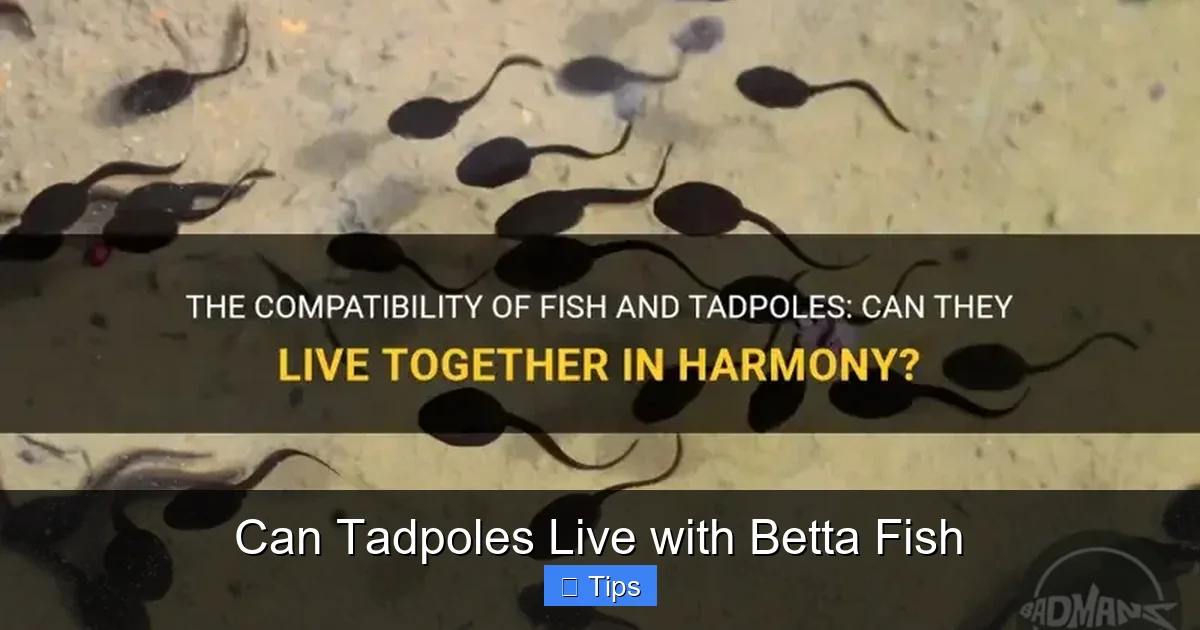
Mixing tadpoles and betta fish is highly discouraged and usually ends in tragedy. Betta fish are naturally aggressive, territorial predators who will see slow-moving tadpoles as food. Tadpoles also require different, often cooler water conditions than the warm tropical environment bettas need. The combination of predation, stress, and conflicting water parameters makes successful cohabitation extremely unlikely and unethical. Always house these species separately for their health and safety.
So, you’ve got a beautiful, flowing betta fish in a tank, and you’ve found some fascinating tadpoles in a pond or from a local store. A little voice in your head wonders: Can I just put them together? It would be such a cool, natural-looking tank! It’s a common thought, born from a desire to create a diverse, mini-ecosystem. Unfortunately, the short, hard answer is almost always no. The combination of a betta fish’s fierce, territorial nature and a tadpole’s delicate, vulnerable biology is one of the riskiest pairings in the freshwater aquarium hobby. This isn’t just about them not being friends; it’s about fundamental, incompatible needs that put the tadpole’s life in immediate danger and cause chronic stress for the betta. Let’s break down exactly why this is such a problematic idea and explore what you can do instead.
Key Takeaways
- Betta aggression is a primary threat: Bettas are instinctive hunters; tadpoles trigger their predatory drive, leading to injury or death.
- Water parameter conflicts are fundamental: Bettas need warm, still water (78-80°F), while many tadpoles require cooler temperatures and better oxygenation.
- Tadpoles are extremely vulnerable: Their slow movements, delicate skin, and different body composition make them easy, stress-prone targets.
- Disease and parasite risks are high: Mixing amphibians and fish can introduce pathogens harmful to one or both species.
- “Successful” cohabitation is rare and risky: Stories that exist often involve specific, hardy tadpole species in massive, heavily planted tanks with a particularly passive betta—not a reliable setup.
- Separate, tailored habitats are always best: Providing each species with its ideal environment ensures optimal health, growth, and longevity.
- Consider ethical alternatives: If you want both, set up two separate, appropriately sized aquariums or consider a species-only community tank for your betta.
📑 Table of Contents
- Understanding the Betta Fish: A Born Predator
- Tadpole Biology: Fragile and Demanding
- Direct Risks of Cohabitation: A List of Dangers
- Water Parameter Warfare: The Incompatible Environment
- Disease and Parasite Transmission: A Two-Way Street
- Are There Any Exceptions? The “What If” Scenarios
- Ethical and Practical Alternatives to Co-habitation
Understanding the Betta Fish: A Born Predator
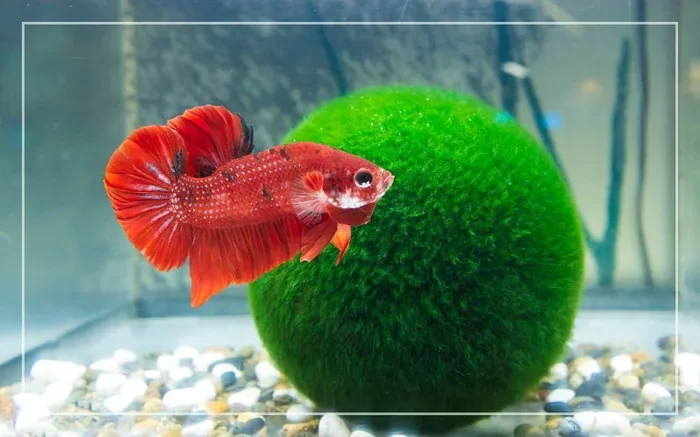
Before we even talk about tadpoles, we must understand the betta fish (Betta splendens). This is not a peaceful community fish by any stretch. Bred for centuries for their fighting aggression, modern bettas retain strong territorial and predatory instincts. In the wild, they are opportunistic feeders, eating insect larvae, small crustaceans, and any other small creature that fits in their mouth. Their hunting method is a slow, deliberate stalk followed by a lightning-fast lunge.
The Betta’s “Fight or Flight” Response
Bettas have a specialized breathing organ called a labyrinth, allowing them to gulp air from the surface. This makes them less dependent on highly oxygenated water but also means they are constantly surveying the water’s surface for food and intruders. Any slow-moving, wiggly object near the top or mid-water—which is exactly where most tadpoles hang out—will be investigated as potential prey. Even a well-fed betta may strike out of instinct. Their long, flowing fins are also a major trigger; they are often perceived by other fish (and in this case, a tadpole’s movements) as a rival or a threat, provoking a chase.
Consider this: a betta will often flare ( puff out its gills and spread its fins) at its own reflection. A tadpole, clumsily swimming and creating subtle ripples, is far more provocative than a static mirror image. The betta’s world is one of constant territorial assertion. Introducing a new, strange, slow-moving creature into that space is like walking into a lion’s den holding a steak.
Individual Personality Matters… But Not Enough
Yes, bettas have personalities. Some are more docile than others. You might hear anecdotes about a “super chill” betta that lived with shrimp or snails. However, these are the exceptions, not the rule, and they involve species with hard shells, quick escape speeds, or other defenses. Tadpoles have none. A docile betta might ignore a fast, adult frog, but a tadpole is a different story. Its entire existence is one of soft, slow growth. Relying on your betta’s temperament is a gamble with a living creature’s life. The risk is simply not worth it.
Tadpole Biology: Fragile and Demanding
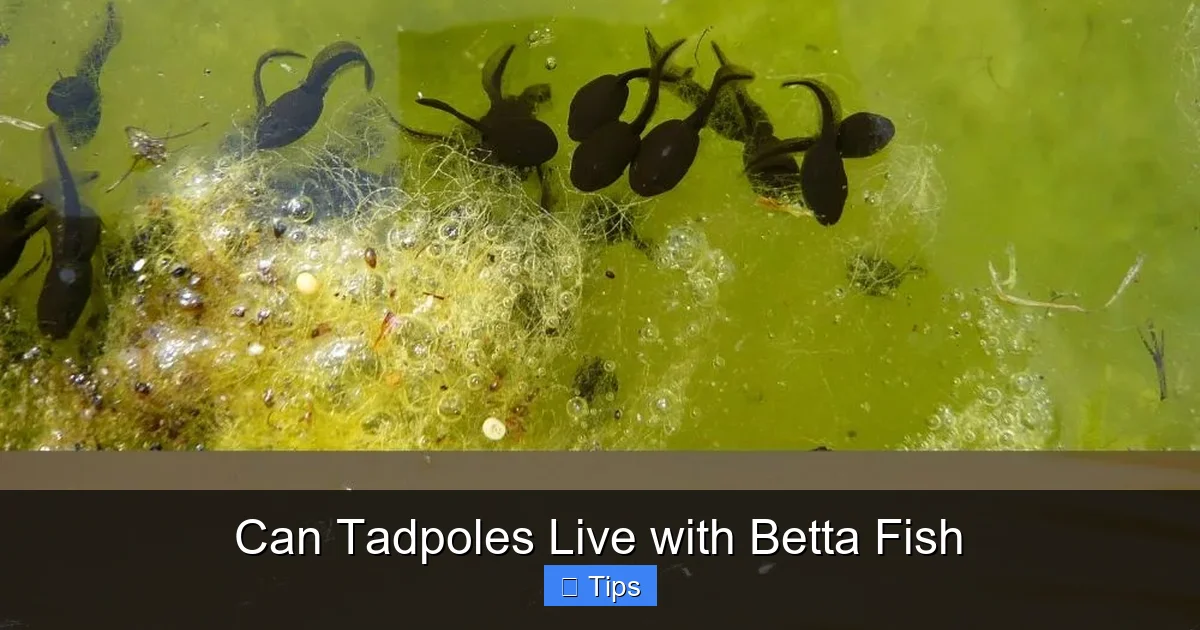
Tadpoles are not just “baby frogs.” They are a completely different life stage with specific, often demanding, requirements that clash violently with betta needs. Their physiology is built for an aquatic, herbivorous/omnivorous life in ponds and slow streams, not the warm, often stagnant, predator-filled world of a betta tank.
Visual guide about Can Tadpoles Live with Betta Fish
Image source: i.pinimg.com
Temperature and Oxygen Needs
This is the first and most critical incompatibility. Tropical bettas thrive in water between 78°F and 80°F (25.5-27°C). This warm temperature holds less dissolved oxygen. Most common tadpoles (like those of American Bullfrogs, Green Frogs, or even many toads) develop in cooler spring and summer ponds, often in the 68°F to 75°F (20-24°C) range. Some species, like those from higher elevations or northern climates, need even colder water. Keeping tadpoles in a betta’s warm water stresses them immensely, suppresses their immune system, and can slow or deform their development. Furthermore, tadpoles are often more active and require better water flow and oxygenation than a betta tank typically provides.
Diet and Feeding Frenzy
Bettas are carnivores. Their food is protein-based: pellets, frozen or live foods like brine shrimp or bloodworms. Tadpoles, depending on the species, are often primarily herbivores or omnivores, scraping algae and biofilm off surfaces or eating decaying plant matter. Their food (algae wafers, boiled lettuce, special tadpole pellets) is not something a betta would recognize as food, but the act of feeding creates chaos. The betta will see the frantic, wiggling tadpoles swarming at the food as a massive, moving buffet. It will attempt to eat the tadpoles themselves, not just the food. You cannot feed them separately in the same tank without causing extreme stress and predatory response.
Growth and Development Vulnerability
Tadpoles are in a constant state of flux. They are soft-bodied, with gills and a tail that is prime target material. A single nip from a betta can shred their tail fin, leading to fatal infection. Even if not eaten outright, the chronic stress of being chased and harassed 24/7 will stunt their growth, weaken their immune system, and likely kill them. Their “frog” instincts—like the ability to leap out of water—aren’t developed yet, so they have no escape mechanism within the tank confines.
Direct Risks of Cohabitation: A List of Dangers
Putting these two together isn’t just a “maybe they’ll get along” scenario. It’s a cascade of almost certain negative outcomes. Let’s enumerate the specific, direct risks.
Visual guide about Can Tadpoles Live with Betta Fish
Image source: petshun.com
Predation and Injury
This is the most obvious and immediate risk. The betta will hunt. The tadpoles will be chased, nipped, and likely consumed. Even a small nibble can be fatal due to the tadpole’s delicate skin and susceptibility to infection. You will come home to missing or dismembered tadpoles. There is no “training” a betta not to see a wiggly, protein-rich morsel as food.
Chronic Stress and Its Consequences
For the tadpoles that aren’t immediately eaten, life is a nightmare. The constant presence of a large, flaring, chasing predator causes severe, unrelenting stress. In amphibians, stress hormones can completely halt metamorphosis. Tadpoles may remain tiny, “neotenic” (retaining larval features), or develop severe deformities. Their immune system collapses, making them susceptible to diseases like Batrachochytrium dendrobatidis (chytrid fungus) or bacterial infections, which can then spread.
Water Quality Degradation
A stressed, injured, or dying tadpole fouls the water quickly. Their waste products and any decaying matter from injuries create a spike in ammonia and nitrites. Bettas are sensitive to poor water quality, and this spike can lead to ammonia poisoning, causing gill damage and lethargy. Conversely, the betta’s own waste, in a tank not cycled for the higher bioload of multiple tadpoles, can create toxic conditions for the amphibians. You are creating a cycle of pollution that harms both.
Aggravation of Fin Rot and Other Diseases
The betta’s long, flowing fins are a liability. In the chaos of chasing tadpoles, the betta can easily damage its own fins on tank decorations, plants, or even by nipping at the glass in frustration. A torn fin is an open invitation for fin rot, a bacterial infection that is notoriously difficult to treat in bettas. The stress weakens the betta’s immune system, making it more susceptible to its own suite of diseases (like velvet or dropsy).
Water Parameter Warfare: The Incompatible Environment
Even if, by some miracle, the betta ignored the tadpoles (which it won’t), you still cannot provide a single water chemistry that meets both their needs optimally. This is a silent, long-term killer.
Visual guide about Can Tadpoles Live with Betta Fish
Image source: bettacarefishguide.com
The Temperature Divide
As stated, bettas need 78-80°F. Many tadpoles need 68-75°F. There is no safe middle ground. A temperature of 76°F is too cold for a betta’s long-term metabolic health (leading to lethargy and constipation) and too warm for many tadpoles (causing stress and oxygen deprivation). You would be slowly harming one or both animals just by maintaining the tank temperature.
pH and Hardness Preferences
Bettas are adaptable but prefer slightly acidic to neutral pH (6.5-7.5) and soft to moderately hard water. Tadpoles from different habitats have varying needs. Pond-dwelling tadpoles often tolerate a wider range but thrive in neutral to slightly alkaline, harder water that supports algae growth (their food source). You cannot optimize for both. You will be forcing one to live in suboptimal conditions, weakening it.
Filtration and Flow
Bettas have weak swimming abilities and hate strong current. Their tanks often use sponge filters or gentle hang-on-back filters. Tadpoles, especially as they grow and develop legs, often benefit from gentle water movement to simulate a stream or pond environment and improve oxygenation. A filter strong enough for tadpoles might stress the betta; one gentle enough for the betta might not keep the water clean enough for the sensitive tadpoles, leading to ammonia buildup.
Disease and Parasite Transmission: A Two-Way Street
Mixing fish and amphibians is notoriously risky for disease. They can carry pathogens to which the other species has no immunity.
pathogens Unique to Amphibians
Tadpoles and frogs can carry chytrid fungus (Batrachochytrium dendrobatidis and B. salamandrivorans), a devastating skin disease that has caused global amphibian declines. While tadpoles may be asymptomatic carriers, the fungus can persist in the water and on surfaces. Fish are not typically affected by this specific fungus, but the stress of its presence and the general bio-load can compromise their health. More commonly, tadpoles can carry Aeromonas and Pseudomonas bacteria, which can cause hemorrhagic septicemia in fish.
pathogens Unique to Fish
Betta-specific parasites like Ichthyophthirius multifiliis (Ich) or Oodinium (Velvet) can be lethal to amphibians. Their life cycles and treatments (like copper-based medications) are highly toxic to frogs and tadpoles. If your betta contracts a common fish disease, treating the tank will almost certainly kill the tadpoles. You would be forced to choose which pet to save.
The Stress-Immunity Cycle
As mentioned, stress is the great immunosuppressor. The inherent stress of cohabitation weakens the immune defenses of both animals, making them more susceptible to opportunistic infections that might not otherwise take hold. You are creating a perfect storm for a disease outbreak that could wipe out all your livestock.
Are There Any Exceptions? The “What If” Scenarios
In the aquarium hobby, we often say “nothing is impossible,” but we should follow it with “just because it’s possible doesn’t mean it’s advisable.” There are extremely narrow, heavily managed scenarios where people claim success. Understanding them is key to seeing why they are not a blueprint for the average aquarist.
The Species-Specific Caveat
The most commonly cited “successful” pairings involve the tadpoles of African Dwarf Frogs (Hymenochirus spp.). These are fully aquatic frogs, and their tadpoles are also fully aquatic and somewhat more robust. However, even here, cohabitation is risky. African Dwarf Frog tadpoles are still slow and can be eaten. They also have a different temperature preference (72-78°F) that overlaps slightly with bettas, but a betta’s preferred 80°F is still on the high end for the frogs. This is not a recommended or easy pairing; it requires a massive, heavily planted tank (50+ gallons), a very passive betta, and constant, vigilant observation.
The Extreme Setup
Theoretical successful setups involve:
- Tank Size: A 75-gallon (or larger) long tank, not a standard 5- or 10-gallon betta tank. This provides space for the tadpoles to flee and establish territories away from the betta’s “patrol” area.
- Impeccable Hiding: Dense, tall plants (real or silk), piles of slate, large pieces of driftwood with crevices, and PVC pipes. The goal is to visually break the line of sight and provide constant, immediate cover. The betta should never have a clear, unobstructed view of a tadpole.
- Perfect Water Parameters: You must choose a compromise temperature that is at the very lowest acceptable end for the betta (78°F) and highest for the tadpoles. This is a stressor for both.
- Abundant, Spread-Out Feeding: Feeding the betta in one corner with a target feeder, while simultaneously sprinkling tadpole food in the opposite corner to distract.
Even with all this, the betta’s innate curiosity will lead it to investigate hiding spots. A tadpole that ventures out for a moment is dead. This is a high-stress, high-maintenance “experiment,” not a stable, ethical community.
The Reality Check
For every one story of “success,” there are hundreds of stories of tadpoles disappearing within days. The people who post success stories often don’t realize the tadpoles are being eaten because they vanish without a trace, or they mistake a stressed, stunted tadpole for a “healthy” one. The ethical aquarist prioritizes the species’ natural needs over a novel tankscape. The risk of suffering and death for the tadpoles is unacceptably high.
Ethical and Practical Alternatives to Co-habitation
So you love both bettas and tadpoles? Fantastic! You have two great options that are far more rewarding, humane, and successful than forcing them together.
Option 1: The Separate Tank Solution (The Gold Standard)
This is the best, most responsible approach. Set up two appropriate habitats.
- For the Betta: A minimum 5-gallon heated, filtered tank with a secure lid (bettas jump!). Provide plants, caves, and soft substrate. This is its stress-free kingdom.
- For the Tadpoles: A dedicated “frog nursery.” This can be a simple 10-gallon long tank with a gentle sponge filter (to avoid sucking them in), cooler water if needed, and masses of live plants like hornwort or water lettuce for grazing and hiding. You can even keep this in a cooler room. As they metamorphose into froglets, you’ll need to provide land areas (rocks, floating platforms) and switch their diet to small insects.
This way, you can observe the fascinating metamorphosis of the tadpoles without fear, and your betta can display its beautiful, stress-free behavior. You become a competent caretaker for two distinct life cycles.
Option 2: A Betta-Safe Community (If You Must Mix)
If your heart is set on a community tank with your betta, choose species that are proven, compatible, and have defenses. Forget tadpoles. Consider:
- Invertebrates: Large Amano shrimp, ghost shrimp, or mystery snails. Snails have shells; shrimp are fast and stay at the bottom. Always monitor closely.
- Small, Fast, Schooling Fish: In a large, heavily planted tank, a school of neon tetras, ember tetras, or harlequin rasboras can sometimes work. They occupy different tank levels and are too fast to be singled out by a non-aggressive betta. Never put other fish with a known aggressive betta.
- African Dwarf Frogs (ADFs): As adults, they are fully aquatic, peaceful, and occupy the bottom. They can sometimes work with a very calm betta in a 20+ gallon tank, but it’s still a risk. Never mix ADFs with bettas in small tanks.
The key is species that are not slow, not long-finned, and not vulnerable. Tadpoles check every box on the “do not mix” list.
Frequently Asked Questions
Can any species of tadpole survive with a betta fish?
No. While African Dwarf Frog tadpoles are sometimes cited due to their fully aquatic nature, they are still slow-moving, vulnerable, and have different temperature needs. No tadpole species has natural defenses against a predatory fish like a betta. Survival would be accidental, not guaranteed, and would require an extremely large, complex setup that is not suitable for beginners.
What about keeping tadpoles and a betta in a giant, heavily planted tank?
Even in a 75+ gallon tank with dense vegetation, the betta’s innate curiosity and predatory drive will lead it to investigate every corner and plant. A tadpole that strays from its hiding spot for a second becomes a target. The sheer size does not eliminate the fundamental behavioral and water parameter conflicts; it just gives the tadpoles slightly more room to be stressed and hunted. It is a high-risk, high-maintenance “experiment,” not a viable, ethical community tank.
Will the betta eat the tadpoles or just chase them?
It will almost certainly do both. The initial response is investigative chasing, driven by territorial aggression and curiosity. This chasing itself is lethal stress for the tadpoles. The betta will then attempt to nip at the tadpole’s tail or body. Given the tadpole’s soft anatomy, a single successful nip is often fatal, either from physical injury or subsequent infection. Consumption is the likely outcome.
Can I use a tank divider to separate them?
A solid divider is the only way to physically prevent the betta from eating the tadpoles if they must share the same water system (e.g., for filtration convenience). However, the divider must be completely sealed so neither animal can get past it. You must still address the incompatible water parameters (temperature, pH, flow) as both sides of the divider share the same water. This setup is complex and defeats the purpose of a “community” tank, as they have no interaction.
What are the signs that my tadpoles are stressed by a betta’s presence?
Signs include: lethargy (hanging motionless at the bottom or top), clamped fins (for tadpoles, this means a tightly curled tail), loss of appetite, frantic darting and hiding at any movement, and fading or discoloration. Chronic stress will cause stunted growth and developmental issues. If you see any of these, separate them immediately. The most common “sign” is simply that tadpoles start disappearing without a trace.
What should I do if I already put tadpoles in with my betta?
Separate them immediately. Do not wait to see what happens. Get a clean container (like a large bucket or a new tank) and fill it with dechlorinated water at the appropriate temperature for the tadpoles (usually cooler). Gently net the tadpoles and move them. Observe your betta for signs of stress from the disruption, but its primary need is a stable, appropriate environment. Use this as a learning experience and commit to providing each species with its own proper home.