Can My Betta Fish Live in Tap Water

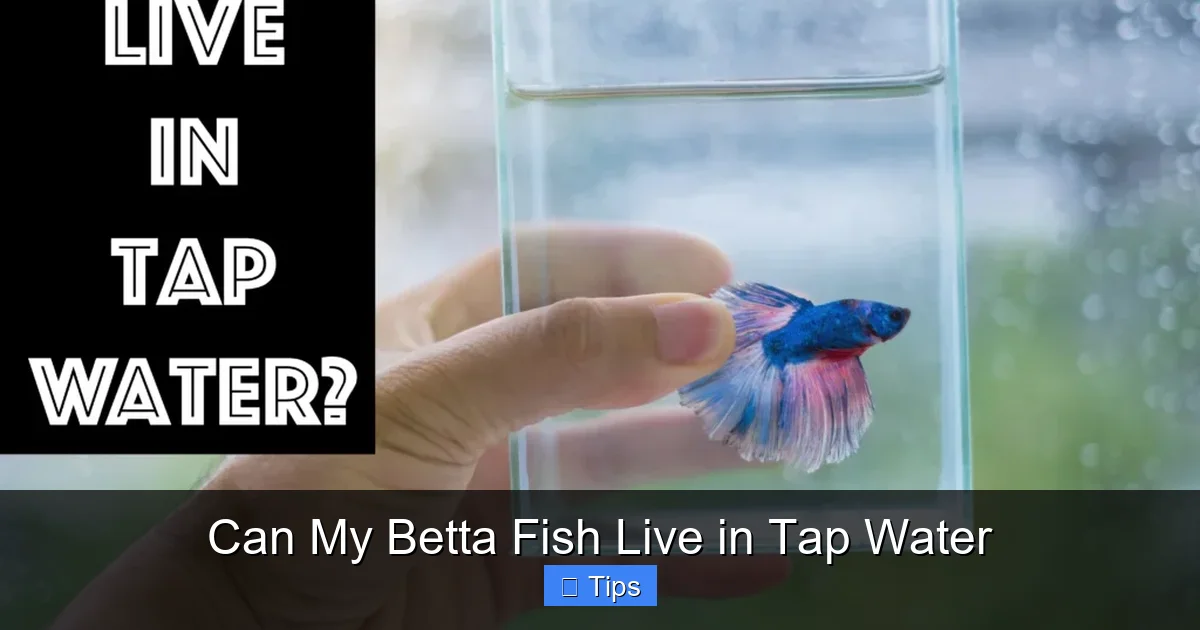
No, your betta fish cannot safely live in untreated tap water. Standard municipal tap water contains chlorine, chloramine, and heavy metals that are lethal to bettas. However, with proper treatment using a reliable water conditioner and careful parameter monitoring, safely conditioned tap water is the most common and recommended water source for a healthy betta tank. The key is understanding what’s in your tap and neutralizing it before your fish is exposed.
Key Takeaways
- Untreated tap water is toxic: Chlorine and chloramine are added to kill bacteria but will destroy a betta’s gills and slime coat, leading to rapid illness or death.
- Water conditioner is non-negotiable: You must use a quality dechlorinator that neutralizes both chlorine AND chloramine (the more persistent compound) for every water change and tank fill.
- Test your water parameters: Even treated tap water can have unsuitable pH, hardness (GH/KH), or temperature. Use a liquid test kit to ensure parameters are stable and within the betta’s preferred range.
- Conditioner doesn’t cycle a tank: Treated tap water is safe from chemicals, but a new tank still lacks beneficial bacteria. You must fully cycle the aquarium (4-6 weeks) before adding your betta to prevent toxic ammonia/nitrite spikes.
- Letting water sit is insufficient: The old method of “letting tap water sit out” only removes chlorine gas, not chloramine. It is not a safe or reliable treatment method for modern water supplies.
- Temperature matching is critical: Always match the temperature of the new conditioned water to your existing tank water (within 1-2°F) during water changes to avoid dangerous thermal shock.
- Bottled/RO water requires remineralization: Pure distilled or reverse osmosis water lacks essential minerals. If used, it must be carefully remineralized with a proper supplement to support your betta’s osmoregulation.
📑 Table of Contents
- Can My Betta Fish Live in Tap Water? The Short, Critical Answer
- What’s Hiding in Your Tap Water? The Toxic Trio
- How to Make Tap Water Safe for Your Betta: The Essential Protocol
- The Nitrogen Cycle: Why “Safe” Tap Water Isn’t Enough
- When Tap Water Parameters Need Adjustment: Softening & pH
- Alternative Water Sources: Are They Better Than Tap?
- Common Mistakes & Deadly Misconceptions
- Conclusion: Your Betta’s Health Starts at the Faucet
Can My Betta Fish Live in Tap Water? The Short, Critical Answer
This is one of the most important questions a new betta owner can ask. The short, life-or-death answer is: your betta fish cannot live in untreated tap water. The tap water that comes perfectly safe from your faucet for human consumption is a chemical minefield for your delicate tropical fish. But here’s the crucial nuance: with proper, consistent treatment, conditioned tap water is not only safe—it’s the standard, recommended, and most practical water source for a thriving betta aquarium.
The confusion often stems from seeing bettas sold in small cups of water at pet stores. Those are temporary, stressful holding conditions, not a permanent home. The goal is to replicate the stable, warm, soft, acidic waters of Southeast Asian rice paddies and slow-moving streams—not dump your fish into a chlorinated tap water bath. Let’s break down exactly what’s in your tap, why it’s harmful, and precisely how to make it betta-safe.
What’s Hiding in Your Tap Water? The Toxic Trio
Municipal water treatment facilities add specific chemicals to protect public health. While essential for us, these compounds are devastating to aquatic life, especially the sensitive labyrinth organ and gill structures of a betta fish. The three primary culprits are chlorine, chloramine, and heavy metals.
Visual guide about Can My Betta Fish Live in Tap Water
Image source: fishtanksetups.com
Chlorine: The Evaporating Killer
Chlorine (Cl₂) is a gas dissolved into water to disinfect it. It’s highly effective at killing pathogens but also burns fish gills and damages their protective slime coat. The good news? Chlorine is volatile and will naturally evaporate from water if left to sit uncovered for 24-48 hours. This is the origin of the outdated “let water sit out” advice. However, relying on this method is risky and unreliable for two major reasons.
- Time-Consuming & Inconvenient: You cannot perform an emergency water change if you haven’t pre-treated and sitting water for days. It makes regular maintenance a logistical nightmare.
- It Doesn’t Address Chloramine: Most modern water treatment plants now use chloramine (a compound of chlorine and ammonia) because it persists longer in distribution pipes. Chloramine does NOT evaporate. Simply letting water sit does nothing to neutralize it, leaving your betta exposed to this potent toxin.
Chloramine: The Persistent Poison
Chloramine (NH₂Cl) is formed by combining chlorine with ammonia. It’s far more stable than chlorine alone, meaning it stays in the water all the way to your tap. It is just as toxic to fish as chlorine, if not more so, because it is a double-edged sword: it delivers both chlorine and ammonia into your aquarium. Ammonia is the single most toxic compound in a fish tank, and a chloramine molecule will break down inside the tank, releasing that ammonia directly into the water column. This is why a water conditioner that specifically states it neutralizes chloramine is absolutely mandatory. Standard dechlorinators that only handle chlorine will fail you.
Heavy Metals: The Silent Stressor
Tap water can also contain traces of heavy metals like copper, lead, zinc, and iron. These can leach from old pipes or be present naturally in the source water. While municipal levels are regulated for human safety (parts per billion), even these low concentrations can be chronically stressful and toxic to fish over time. Copper, in particular, is extremely toxic to invertebrates but also harmful to fish gills. A good quality water conditioner will also include agents that chelate (bind to) and neutralize these heavy metals, rendering them harmless.
How to Make Tap Water Safe for Your Betta: The Essential Protocol
Now that we know the enemies, let’s focus on the solution. The process is simple but must be followed with discipline every single time you add water to the tank.

Visual guide about Can My Betta Fish Live in Tap Water
Image source: thegoldfishtank.com
Step 1: Choose the Right Water Conditioner
This is your most important piece of equipment. Do not skip this step. When shopping, read the label carefully. You need a product that:
- Neutralizes BOTH chlorine and chloramine. This is the single most critical feature.
- Detoxifies heavy metals. Most reputable brands include this.
- Contains a slime coat protectant. This is a bonus that helps soothe your betta’s skin and gills during the stress of a water change (e.g., products like Seachem Prime, API Stress Coat+, or Tetra AquaSafe).
Practical Tip: Buy conditioner in the largest bottle you can afford per ounce. It’s cheaper in the long run, and you’ll use it frequently. Store it in a cool, dark place.
Step 2: The Proper Water Change Technique
Here is the fail-safe method for a safe water change:
- Prepare the new water: Fill a clean bucket (dedicated solely to aquarium use) with the amount of tap water you’ll be replacing. Never add conditioner directly to the tank.
- Temperature match: Use an aquarium thermometer to ensure the new tap water is within 1-2°F (0.5-1°C) of your tank’s current temperature. A small aquarium heater in the bucket is the best way to achieve this. Thermal shock is a common killer.
- Dose the conditioner: Add the correct amount of water conditioner to the bucket of new water, according to the product’s dosage instructions for the volume of water. Stir gently.
- Wait a moment: Let the conditioned water sit for 5-10 minutes to ensure full chemical reaction. This is not for evaporation, but for complete neutralization.
- Perform the change: Slowly siphon out the old tank water (using a gravel vacuum if cleaning substrate) and slowly pour or pump the new conditioned water back in. Avoid disturbing the substrate and stressing your betta.
Example: For a 5-gallon betta tank, a 25% (1.25 gallon) water change once or twice a week is ideal. Prepare 1.5 gallons of conditioned, temperature-matched water in a bucket. Remove 1.25 gallons from the tank, then slowly add the new water.
Step 3: Test, Don’t Guess
Conditioning your tap water solves the chlorine/chloramine problem. But what about pH? What about hardness? Your tap water’s baseline parameters matter. Bettas prefer:
- pH: 6.5 – 7.5 (slightly acidic to neutral)
- Temperature: 78°F – 80°F (25.5°C – 26.5°C)
- GH (General Hardness): 3-4 dGH (50-70 ppm) – soft to slightly soft water
- KH (Carbonate Hardness): 3-5 dKH (50-90 ppm) – provides pH stability
You must test your tap water’s parameters before adding conditioner. Use a liquid test kit (like the API Master Test Kit) for accuracy, not test strips. If your tap water has a pH of 8.2 and is very hard (GH 12+), simply conditioning it won’t make it ideal. You’ll need to manage that over time (see Section 4).
The Nitrogen Cycle: Why “Safe” Tap Water Isn’t Enough
Here is a catastrophic mistake many beginners make: they treat their tap water perfectly, fill a new tank, and immediately add the betta. They think the water is “safe” because it’s dechlorinated. This is a fatal error. A new tank is a “sterile” environment with no beneficial bacteria. The moment your betta excretes waste or uneaten food decays, toxic ammonia (NH₃/NH₄⁺) begins to build up. In a few days, this ammonia will poison and kill your fish.
Visual guide about Can My Betta Fish Live in Tap Water
Image source: thegoldfishtank.com
The nitrogen cycle is the process of establishing a colony of nitrifying bacteria that convert toxic ammonia → nitrite (also toxic) → nitrate (much less toxic, removed by water changes). This process takes 4-6 weeks in a new tank. You cannot shortcut it with water changes or conditioner. While you are cycling a tank with your betta inside (called a “fish-in cycle”), you must perform very frequent, small water changes (25-50% daily) to keep ammonia and nitrite at 0 ppm, which is incredibly stressful and risky for the fish.
The Golden Rule: Fully cycle the aquarium with a source of ammonia (like pure ammonia or fish food) and test kits monitoring ammonia, nitrite, and nitrate, BEFORE introducing your betta. Only then will your “safe” conditioned tap water be part of a truly safe, balanced ecosystem.
When Tap Water Parameters Need Adjustment: Softening & pH
What if your tap water is naturally very hard (high GH/KH) or alkaline (high pH)? This is common in areas with limestone bedrock. While bettas can tolerate a range, consistently poor parameters cause chronic stress, weaken their immune system, and shorten their lifespan. You must become a water chemist.
Managing High pH (Alkaline Water)
Do not use chemical pH down products in a betta tank. They cause violent swings that shock fish. Instead:
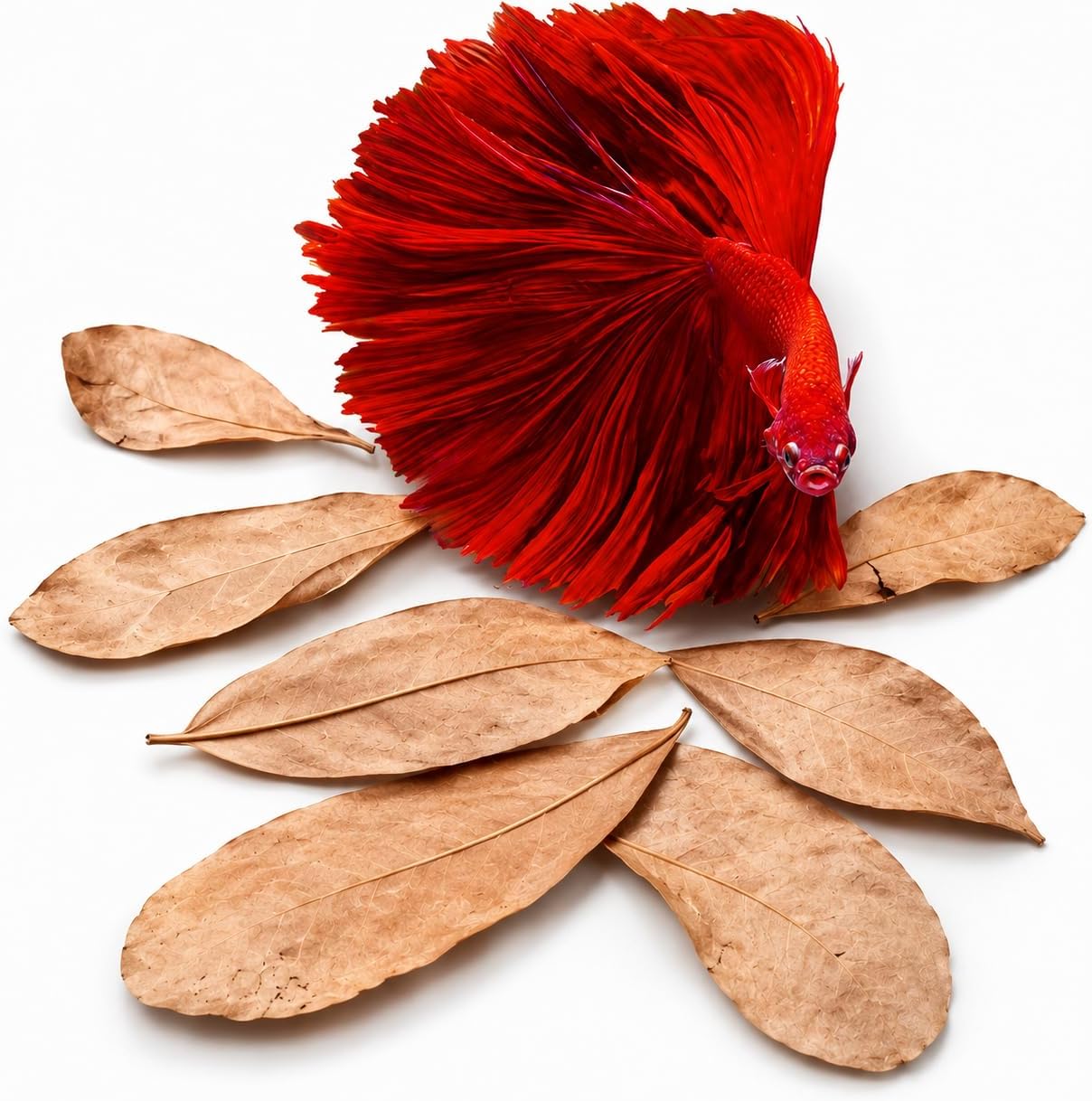
- Use natural driftwood: Indian Almond (Catappa) leaves or driftwood release tannins that gently lower pH and soften water, mimicking a betta’s natural blackwater habitat. This is the best, most natural method.
- Increase live plants: Healthy plants absorb carbonates (KH) during photosynthesis, which can slowly lower pH, especially at night. This is a subtle but effective long-term strategy.
- Use reverse osmosis (RO) water mixed with tap: For severe cases, mixing RO water (which has 0 GH/KH) with your tap water dilutes the hardness and buffers. You must then remineralize the mix to a safe level (see below).
Managing High Hardness (GH)
Hard water means high mineral content (calcium, magnesium).
- RO/DI Water is the Solution: For consistently very hard tap water (GH > 12 dGH), the only reliable way to achieve soft water is to use a reverse osmosis/deionized (RO/DI) system. This strips all minerals.
- CRITICAL: Remineralize RO Water! You cannot use pure RO water. It will leach minerals from your fish’s body. You must add a commercial remineralizer (like Seachem Equilibrium for GH, or Seachem Alkaline Buffer for KH) or a specially formulated betta buffer to bring the GH and KH up to the ideal soft water range (3-4 dGH, 3-5 dKH).
- Peat filtration: Peat moss in a filter bag can soften water slowly by exchanging ions, but it also lowers pH and stains water brown. Use cautiously and monitor parameters.
Key Principle: Stability is more important than hitting an exact number. A stable pH of 7.8 is better than a wildly fluctuating pH trying to hit 7.0. Make all changes slowly, over the course of weeks, and test daily.
Alternative Water Sources: Are They Better Than Tap?
Given the work sometimes required to adjust tap water, you might wonder about other sources.
Bottled Spring Water
This is a popular but flawed choice. Spring water varies wildly in mineral content and pH between brands and even batches. You have no control or knowledge of its parameters. It can be too hard, too soft, too acidic, or too alkaline. It’s also expensive and environmentally problematic due to plastic waste. Not recommended.
Distilled Water / Reverse Osmosis (RO) Water
As mentioned, this is pure H₂O with zero minerals. It is lethal to fish if used alone because it will cause osmotic shock, sucking essential electrolytes from the fish’s body. It must always be remineralized with a proper supplement to a specific GH/KH target before use. This is an advanced method for people with extremely poor tap water quality who are willing to test and dose meticulously.
Rainwater
Highly unpredictable and often contaminated with atmospheric pollutants, bacteria, and debris. Not a safe or reliable source.
Verdict: For 95% of betta keepers, properly conditioned and, if necessary, adjusted tap water is the simplest, most cost-effective, and most reliable option. Master your tap water first.
Common Mistakes & Deadly Misconceptions
Let’s debunk some dangerous myths that have cost many bettas their lives.
“I Let My Tap Water Sit Out for 24 Hours, So It’s Safe.”
As established, this only removes chlorine, not chloramine. If your water utility uses chloramine (most do), this method leaves your betta exposed to a combination of chlorine and ammonia. It is not safe. Use conditioner every time.
“My Betta Came in a Cup, So He’s Used to Bad Water.”
This is a tragic misunderstanding. Bettas in cups are in a state of severe stress and slow poisoning. Their immune systems are suppressed. That does not mean they are “hardy” or adapted to poor water. It means they are dying slowly. You must provide pristine water to allow recovery and long-term health.
“I Only Need to Condition the Water When I Do a Full Tank Change.”
Wrong. Any time you add new water to the tank—whether it’s a 10% top-off for evaporation or a 50% water change—that new water must be conditioned. The toxins in tap water are immediate. They don’t need to “build up.” One drop of untreated water in a 5-gallon tank introduces chlorine/chloramine that can harm your fish.
“I Use a Water Filter, So I Don’t Need Conditioner.”
Standard aquarium filters (mechanical, biological, chemical) do not remove chlorine or chloramine. Some specialized filters (like certain catalytic carbon media) can adsorb them, but this is not their primary function and capacity is limited. Conditioner at the source (the bucket) is instant, guaranteed, and foolproof. Never rely on your filter to dechlorinate.
“My Tap Water Smells Fine/Looks Clear, So It’s Safe.”
Chlorine and chloramine are odorless at treatment levels. You cannot see, smell, or taste them. Your senses are useless here. The only way to know what’s in your water is to read your local water utility’s annual water quality report (available online) and use test kits. Assume your tap water is toxic until treated.
Conclusion: Your Betta’s Health Starts at the Faucet
The question “Can my betta fish live in tap water?” ultimately hinges on one word: treatment. The water flowing from your kitchen sink is a hostile environment for your betta. But with the disciplined application of a quality water conditioner for every single drop added to the tank, you transform that tap water into a life-sustaining home. From there, your focus shifts to the pillars of aquarium stability: a fully cycled tank, perfect temperature, and stable parameters matched to your betta’s needs. Remember, your betta’s world is just a few gallons of water. You are the sole creator and maintainer of that world. By mastering your tap water, you remove the most fundamental threat and give your vibrant, curious betta the foundation for a healthy, active, and long life—often spanning three to five years or more. It all starts with that simple, non-negotiable step: treating the water.
Frequently Asked Questions
How long should I let tap water sit before adding it to my betta tank?
If you are using a water conditioner that neutralizes both chlorine and chloramine, you do not need to let the water sit at all. You can dose the conditioner in the bucket, stir, and add it to the tank immediately after temperature matching. The old advice to let water sit for 24 hours only removes chlorine gas and is ineffective against chloramine.
What is the best water conditioner for betta fish?
The best conditioner is one that explicitly states it neutralizes both chlorine AND chloramine. Top-rated, reliable options include Seachem Prime, API Stress Coat+, and Tetra AquaSafe. Seachem Prime is highly concentrated and also detoxifies ammonia for 48 hours, which is helpful during a fish-in cycle. Always follow the dosage instructions on the bottle for your specific water volume.
How often should I test my tap water parameters?
Test your tap water parameters (pH, GH, KH) at least once a month, or whenever you notice a change in your tank’s stability. More frequent testing (weekly) is wise when you are first setting up or if you are trying to adjust your water chemistry. Use a liquid test kit for accuracy. Also, test your tank water (ammonia, nitrite, nitrate) weekly to monitor the cycle and overall health.
Can I use bottled spring water for my betta tank instead of tap?
It is not recommended. Bottled spring water has inconsistent and unknown mineral content and pH, which can lead to unstable water conditions. It is also expensive and environmentally unfriendly. Conditioned tap water, once you understand its baseline parameters, is a more reliable and controllable choice.
My tap water pH is 8.0. Is that too high for my betta?
A pH of 8.0 is at the upper end of the acceptable range (6.5-7.5) but not immediately lethal. The greater concern is stability. A stable pH of 8.0 is better than a pH that swings trying to lower it. To gently lower pH over time, add natural Indian Almond leaves or driftwood to the tank. Avoid chemical pH adjusters, which cause dangerous fluctuations. Monitor your betta for signs of stress (clamped fins, lethargy).
What are the signs that my betta is suffering from poor water quality?
Look for: clamped or torn fins, faded or darkening color, lethargy (resting at the bottom or top of the tank), loss of appetite, frequent gasping at the surface (indicating gill damage from ammonia/chlorine), excessive mucus production, or visible spots/sores (fungal/bacterial infections). These are often direct results of ammonia/nitrite spikes or chemical exposure from untreated water. Immediate, large water changes with properly conditioned water are the first response.