Can Two Female Betta Fish Be Together
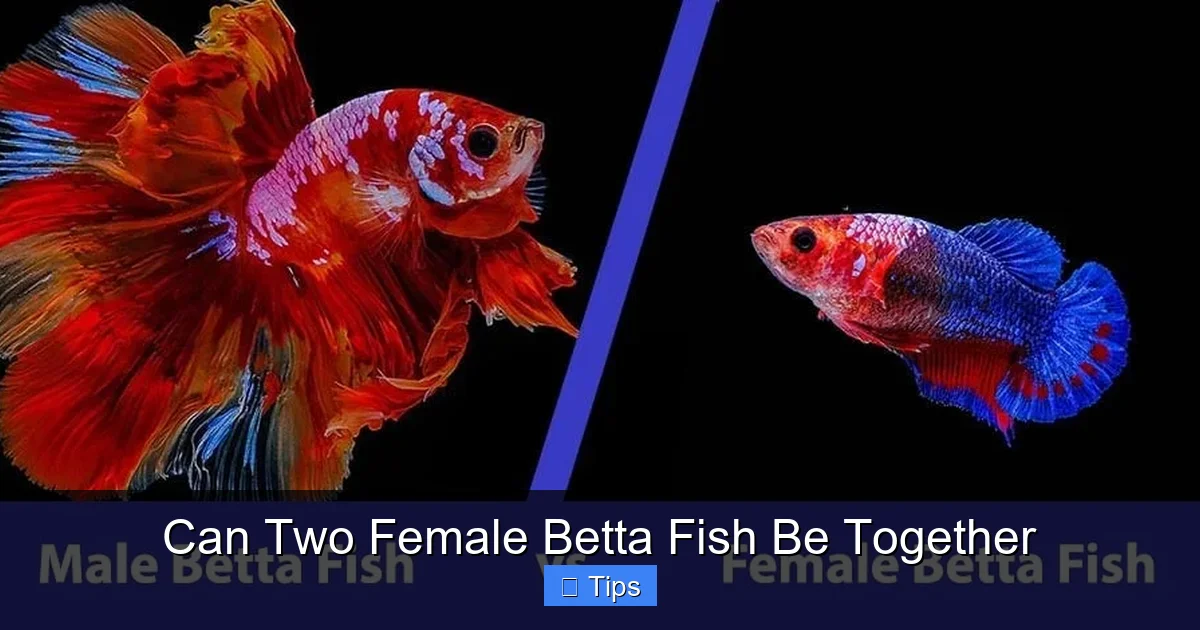
Yes, two or more female betta fish can be housed together, but it’s not a simple or guaranteed peaceful arrangement. This practice, known as a “sorority,” requires significant expertise, a large and meticulously planned tank (minimum 20 gallons), and careful selection and introduction of fish. It is not recommended for beginners due to the high risk of aggression, injury, and stress. Success depends on providing abundant visual barriers, maintaining a proper group size (typically 5+), and committing to daily observation to intervene at the first sign of conflict.
So you’ve got that stunning, flowing half-moon female betta. She’s the queen of her 5-gallon nano tank, flaring at her own reflection with regal authority. You love her personality, but you can’t shake the feeling… wouldn’t she be less lonely with a friend? The internet is full of beautiful photos of “betta sororities”—tanks brimming with multiple vibrant females swimming peacefully together. It looks like a betta paradise. But before you rush out to buy a second (or third, or fourth) female, you need to understand the complex, nuanced, and often challenging reality of housing female betta fish together. The short answer is: yes, it can be done, but it is an advanced aquarist endeavor, not a casual project. This guide will pull back the curtain on the betta sorority, separating the dream from the dangerous reality, and giving you the concrete, actionable knowledge to decide if it’s right for you—and how to do it correctly if you choose to proceed.
Key Takeaways
- Tank Size is Non-Negotiable: A successful sorority requires a minimum of 20 gallons, with 29+ gallons being far safer. Smaller tanks guarantee conflict.
- Group Size Matters: Keeping a single female with one other is a recipe for disaster. A proper sorority needs a group of 5 or more to diffuse aggression.
- Introduction is a Delicate Process: All fish must be added to a new, empty tank simultaneously or through a carefully managed drip acclimation in a new setup. Never add a new female to an established sorority.
- Hiding Spots Are Essential: The tank must be heavily planted (live or silk) and decorated with rocks, wood, and other decor to break lines of sight and provide escape routes.
- Aggression is Inevitable (Briefly): Some initial flaring and chasing is normal during the first 24-48 hours. Persistent, injurious fighting requires immediate separation.
- Feeding Requires Strategy: Use multiple feeding stations and possibly a target feeding ring to ensure all fish eat and reduce food-based competition.
- Have a Backup Plan: Always have a separate, cycled “hospital” tank ready to isolate and treat any injured or overly aggressive fish immediately.
📑 Table of Contents
- The Truth About Female Betta Behavior: It’s Not Just “Nice Girls”
- Creating the Perfect Sorority Tank: Environment is Everything
- Selecting & Introducing Your Sorority: The Most Critical Phase
- Feeding Strategies for a Peaceful (and Full) Sorority
- Daily Monitoring and Intervention: Your New Routine
- The Reality Check: When Sororities Fail (And They Do)
- Conclusion: Is a Sorority For You?
The Truth About Female Betta Behavior: It’s Not Just “Nice Girls”
Let’s start by debunking the biggest myth: that female betta fish are naturally peaceful community fish. This misconception stems from the fact that in the wild, Siamese fighting fish (Betta splendens) are solitary, territorial creatures. They only come together for brief mating periods. Decades of selective breeding for aggression in males has created the iconic, flare-happy fighter we know. Females, while often slightly less dramatically flared, are not docile by nature. They possess the same territorial instincts and aggression as their male counterparts, just packaged differently. In a confined space, a female betta will view another female as an intruder in her territory, a rival for resources, and a threat to her safety. The goal of a sorority isn’t to eliminate this instinct—that’s impossible—but to manage it through environmental engineering and group dynamics.
The Pecking Order: Why Group Size is Critical
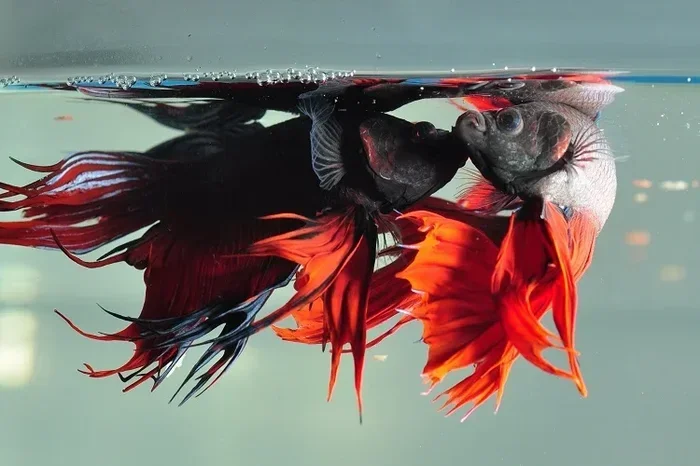
In nature, bettas avoid each other through vast territories. In a tank, they can’t. When you place multiple females together, a strict, often violent, dominance hierarchy—a pecking order—must be established. This process involves chasing, flaring, and occasional nipping. In a tank with only two females, this hierarchy is a brutal, 50/50 showdown. There is no dilution of aggression. One will almost inevitably become the perpetual, stressed victim, or they will injure each other seriously. With a group of 5 or more (experts often recommend 6-8 in a very large tank), the aggression is distributed. The dominant female asserts her rank over the group, and the others establish their own sub-ranks amongst themselves. The attacks are spread out, no single fish is targeted relentlessly, and the overall stress level can be lower because no one fish feels she is the sole focus of all the aggression. Think of it like a crowded room versus a private duel—the crowd diffuses the tension.
Individual Personalities Trump Gender
Just like people, every betta has a unique personality. Some females are laid-back, curious, and less prone to flaring. Others are genetically wired to be feisty, territorial “divas” who will attack anything that moves, including their own reflection. You cannot predict this with 100% accuracy. A seemingly calm female in a store cup might transform into a tyrant in a sorority tank. This inherent unpredictability is a core reason sororities carry risk. You are working with living, feeling animals whose instincts you cannot fully override.
Creating the Perfect Sorority Tank: Environment is Everything
If you’ve decided to move forward, your tank setup is 90% of the battle. The goal is to create an environment where fish can avoid each other, establish their own micro-territories, and feel secure. A bare or sparsely decorated tank is a boxing ring with no corners to hide in. It’s an act of cruelty.
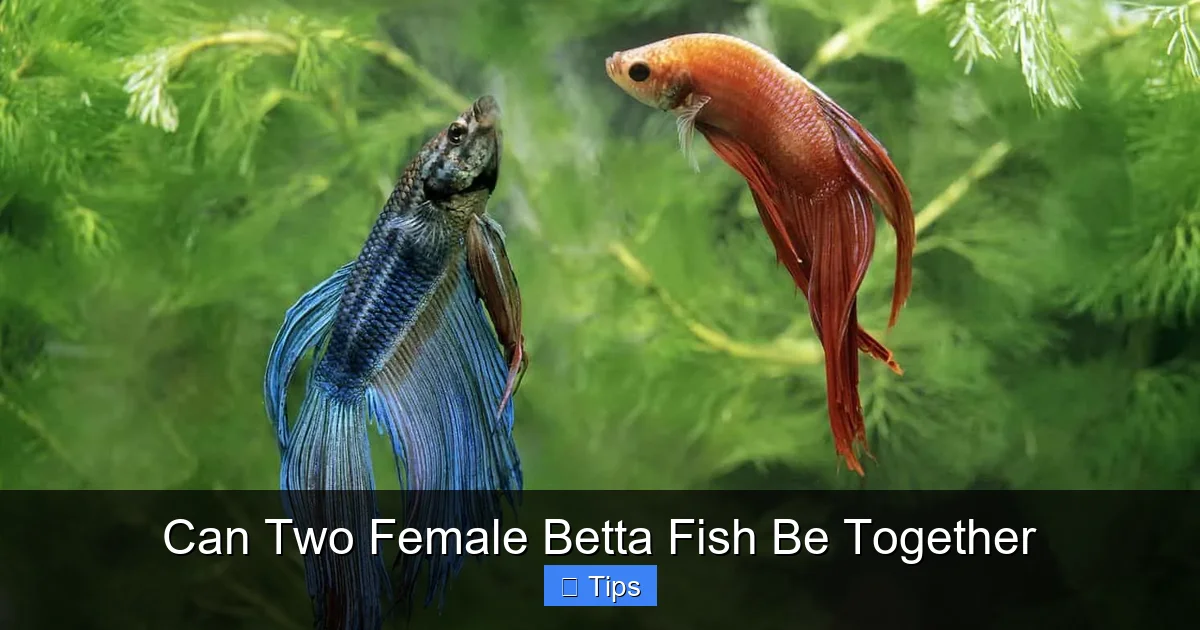
Visual guide about Can Two Female Betta Fish Be Together
Image source: bettasource.com
Tank Dimensions: Bigger is Not Just Better, It’s Mandatory
Let’s be unequivocal: a 10-gallon tank is too small for a betta sorority. A 20-gallon long (30″ x 12″ x 12″) is the absolute, bare-minimum starting point for 5-6 females. Why the emphasis on “long”? Horizontal swimming space is more important than height. Bettas are labyrinth fish that gulp air, but they are still active swimmers who patrol territories horizontally. A 29-gallon or 40-gallon breeder tank (36″+ in length) is a much safer and more manageable starting point. The increased footprint allows for more distinct territories, more hiding spots, and a greater dilution of aggression. In a larger volume, water parameters are also more stable, which is crucial for stressed fish.
The Art of Aquascaping: Building a Betta City
Your aquascaping must be dense and complex. The rule of thumb: you should not be able to see from one end of the tank to the other at any point. Use a combination of:
- Live Plants (The Gold Standard): Fast-growing stem plants like Rotala, Ludwigia, and Water Wisteria create a lush, bushy forest. Floating plants like Salvinia or Duckweed are fantastic for covering the surface, which reduces jumpiness and provides a sense of security. Rooted plants like Amazon Swords or Cryptocorynes offer mid-ground and foreground structure.
- High-Quality Silk Plants: If you’re not ready for live plants, use soft, flowing silk plants. Avoid plastic plants with stiff, sharp edges—they can damage a betta’s delicate fins during a chase.
- Hardscape & Decor: Driftwood (mopani, Malaysian), large river stones, and ceramic pots (with smooth edges, holes plugged) create caves, arches, and tunnels. These are critical. Each betta should be able to claim a “fortress” where she can retreat. Position these decor pieces to create a maze, not a clear path.
The substrate should be soft (sand or fine gravel) to protect fins if a fish is briefly cornered on the bottom.
Selecting & Introducing Your Sorority: The Most Critical Phase
How you acquire and introduce your females is arguably more important than the tank itself. A poor introduction can doom a sorority from day one.
Visual guide about Can Two Female Betta Fish Be Together
Image source: aquariumpub.com
Sourcing: Where to Find Sorority-Ready Fish
Never, ever take females from separate store cups and dump them into your prepared sorority tank. This is a guaranteed bloodbath. You have two primary, responsible methods:
- The “All-At-Once” Method (Ideal): Purchase 5-6 females from the same trusted source (a reputable local breeder or a store that keeps their females together in a community tank). They should already be accustomed to each other’s presence. Acclimate all of them together to your new, fully cycled, and decorated sorority tank. They will establish their hierarchy in a neutral space.
- The Drip Acclimation in a New Tank Method (For Solo Fish): If you have a single female already in a separate tank, you cannot add new ones to her. Instead, you must set up a brand new, identical sorority tank. Place your original female and any new females you acquire directly into this new, empty (except for decor) tank at the same time, after a very slow (2-3 hour) drip acclimation. The “newness” of the environment for all fish helps reset territorial claims.
Never add a new female to an established, peaceful sorority. She will be attacked as an intrider and likely killed.
What to Look For: Temperament Screening
When selecting females, observe them in the store. Avoid any that are:
- Flaring aggressively at every other fish in the cup.
- Chasing and nipping tankmates relentlessly.
- Missing significant finnage (a sign of prior fighting).
- Looking pale, clamped, or severely stressed.
Look for fish that are alert but calm, perhaps flaring briefly at a reflection but then resuming normal activity. A slightly plump body (not bloated) is a sign of good health.
Feeding Strategies for a Peaceful (and Full) Sorority
Food is a major source of competition and aggression in a sorority. The dominant female will try to claim all the food, leaving the subordinates malnourished and stressed, which weakens them and invites further attacks.
Visual guide about Can Two Female Betta Fish Be Together
Image source: petaquariums.com
Scatter Feeding & Multiple Stations
Never drip food in one spot. Use high-quality, small pellet or micro-pellet food. Scatter the food across a wide area of the tank surface and mid-water column. You can also use a feeding ring (a floating circle) to corral food in one area, but place it in an open space with multiple escape routes. For frozen or live foods like daphnia or brine shrimp, use a turkey baster to squirt small clouds of food in different locations. The goal is to make it impossible for one fish to guard every morsel.
The Importance of a Varied Diet
Beyond staple pellets, provide variety 2-3 times a week with high-protein treats: frozen bloodworms (a tiny piece), daphnia (great for digestion), or chopped blanched zucchini. A nutritious diet reduces stress and improves overall health and resilience. Observe during feeding: all fish should get some food. If you see one or two consistently being chased away, you may need to intervene by distracting the aggressor with a pipette of food or consider that the sorority may not be stable.
Daily Monitoring and Intervention: Your New Routine
Owning a sorority is not a “set it and forget it” hobby. It requires active, daily management.
The First 72 Hours: The Critical Window
The first three days are the most tense. Watch for:
- Chasing: One fish pursuing another across the tank. Occasional chasing is normal; relentless, multiple-fish ganging up on one is not.
- Flaring: Gills and fins extended. Brief flaring is communication; prolonged flaring with body angled is a precursor to attack.
- Nipping: Any removal of fin tissue. This is a major red flag.
- Hiding: One or more fish spending 90% of time under plants or in caves, not coming out to eat. This is a sign of extreme stress and victimization.
Some squabbling is expected, but if a fish is visibly injured (ragged fins, blood, missing scales), or if one fish is being relentlessly targeted by the group, you must act.
When and How to Intervene
If injuries occur or a clear victim emerges, you have two choices:
- Separate the Aggressor: Use a breeding box/net divider within the main tank to isolate the primary bully for 24-48 hours. This can reset the hierarchy. Sometimes, reintroducing her after a “time-out” changes the dynamic.
- Remove the Victim (Most Common & Safest): Have a cycled hospital tank (5+ gallons) ready. Immediately net the injured or perpetually stressed fish and move her to this separate tank. This is not a failure; it’s responsible fishkeeping. She can live a long, happy, stress-free life alone. The remaining sorority may then stabilize.
Never put a severely injured fish back into the main tank to be attacked again. Clean any wounds with a drop of aquarium salt (follow dosage carefully) in the hospital tank.
The Reality Check: When Sororities Fail (And They Do)
Despite your best efforts, a sorority can fail. It’s important to recognize this possibility and plan for it emotionally and logistically.
Signs of a Failed Sorority
Chronic stress signs across the group: faded colors, clamped fins, lethargy, loss of appetite, frequent hiding. Persistent, daily fighting that results in new injuries. A fish dying from stress or injury. If you see these, the tank is not working.
The Ethical Decision: Rehoming or Solitary Housing
If a sorority collapses, you must have a plan. Your options are:
- Individual Tanks: The safest and most humane outcome. Each female gets her own 5+ gallon, planted tank. This is often the best quality of life for a betta.
- Rehoming: Find responsible, single-fish homes for each female through local fish clubs or dedicated online forums.
- Mixing with Other Species (With Extreme Caution): A *single* female betta from a failed sorority might work as a community fish with very peaceful, fast-moving, non-flashy species like harlequin rasboras, corydoras catfish, or Kuhli loaches in a *heavily* planted tank of 20+ gallons. But she is now a known “bully” or “victim,” so extreme caution is needed. Never house a known aggressive female with other bettas or flashy fish like guppies.
Remember, the goal is the health and safety of the fish, not the aesthetic of a sorority tank. A beautiful single betta in a well-kept tank is a triumph. A stressed, injured betta in a “successful” sorority is a failure.
Conclusion: Is a Sorority For You?
Keeping female betta fish together is one of the most challenging and rewarding projects in the freshwater aquarium hobby. It is a dynamic, living experiment in ethology (animal behavior) that requires research, investment, space, and a calm, observant hand. It is not a casual “two bettas in a 10-gallon” idea. If you are a beginner, your path is clear: enjoy the magnificent personality of a single betta in a properly sized, beautifully decorated tank. If you are an experienced aquarist with a 29+ gallon tank, a commitment to daily observation, and the resources for backup tanks, you can explore the sorority. Go in with your eyes open, prioritize the fish’s welfare over the Instagram picture, and be prepared to separate individuals at the first sign of trouble. The reward is a stunning, active, and complex community that showcases the true, fascinating nature of these incredible fish. The risk is high, but for the prepared, the journey is worth it.
Frequently Asked Questions
What is the absolute minimum tank size for a female betta sorority?
The absolute minimum is a 20-gallon long tank for a group of 5-6 females. However, a 29-gallon or larger is strongly recommended to provide enough horizontal space and territorial breaks to significantly reduce aggression and stress.
How can I tell if my sorority is working or if I need to separate fish?
Watch for persistent, injurious fighting (nipped fins, chasing to exhaustion) and clear “victim” fish that are constantly hiding, not eating, or have faded colors. Some initial flaring and chasing for 24-48 hours is normal. If injuries occur or one fish is being relentlessly targeted, separate the aggressor or victim immediately.
Can I mix male and female betta fish together in a community tank?
No, you should never house male and female bettas together except for a brief, supervised breeding session in a dedicated tank. Males are extremely aggressive toward females and will kill them. Females can also be aggressive toward males. They are solitary, territorial fish.
What is the ideal number of female bettas for a sorority?
The ideal starting group is 5 to 6 females in a properly sized and decorated tank. This number allows for a stable pecking order to form where aggression is diffused. Keeping just 2 or 3 is highly likely to result in severe bullying and injury.
Should I get a betta sorority or keep my females separately?
For 99% of hobbyists, keeping female bettas separately in their own 5+ gallon tanks is the safer, more ethical, and less stressful choice. Sororities are an advanced, high-risk endeavor suitable only for experienced aquarists with ample space, time, and backup equipment.
What should I do immediately if I see my bettas fighting in the sorority tank?
>First, assess for injuries. If a fish is bleeding or has torn fins, immediately net the injured fish (or the primary aggressor) and place it in a separate, cycled hospital tank. Do not return an injured fish to the main tank. If there’s only flaring with no contact, monitor closely for the next few hours. Persistent, contact aggression requires separation.