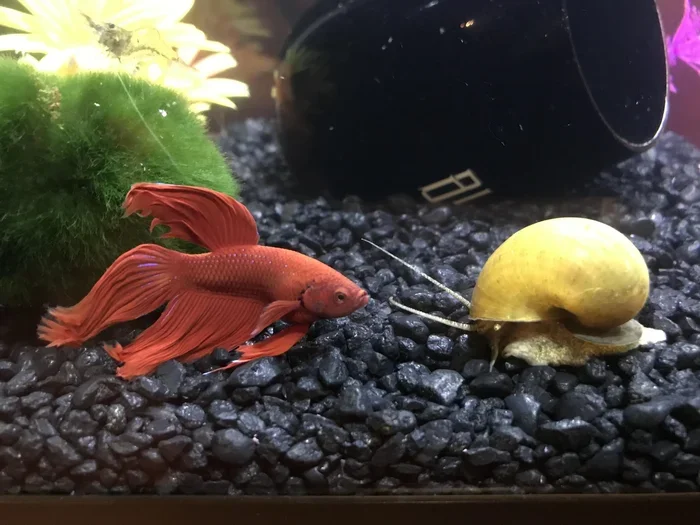
Can I Use Filtered Water for My Betta Fish

Yes, you can often use properly conditioned filtered tap water for your betta fish, but it’s not as simple as just pouring it in. The key is understanding what your filter removes and what it leaves behind. Reverse osmosis (RO) water is generally unsafe without extensive remineralization, and many “filtered” bottled waters lack essential minerals. For most betta keepers, using a reliable tap water conditioner with dechlorinator and detoxifier on your local tap water is the simplest, most consistent path to a thriving tank.
So you’ve got your beautiful, flowing-finned betta splashing in his new home. You’ve got the heater, the gentle filter, the silk plants, and maybe even a little cave. You’re ready to be the best betta parent ever. Then it hits you: “What on earth do I fill this tank with?” You’ve heard tap water is bad, but is filtered water the magic solution? The short answer is: it can be, but only if you understand exactly what’s in it and what your betta needs. Let’s dive deep into the clear, confusing world of water for your Siamese fighting fish.
Key Takeaways
- Filtered Tap Water is Usually Safe: Standard carbon filters (like Brita/PUR) remove chlorine, chloramine, and some heavy metals, making conditioned filtered tap a good option.
- RO/DI Water is Dangerous Without Help: Reverse osmosis water is pure but devoid of all minerals; it will leach electrolytes from your fish and destabilize pH. It must be remineralized.
- “Filtered” Bottled Water is a Gamble: Many brands are just purified tap water with minerals removed. Always check the label for “added minerals” and avoid distilled water entirely.
- Conditioner is Non-Negotiable: Even filtered water can contain trace chloramines or heavy metals. A quality water conditioner that detoxifies ammonia, nitrite, and heavy metals is essential.
- Test Your Water: Use a liquid test kit to check pH, KH (carbonate hardness), and GH (general hardness) after conditioning. Betta thrive in pH 6.5-7.5 and moderate GH/KH.
- Consistency Trumps Perfection: A stable, cycled tank with consistent water parameters from your tap source is far better than constantly switching between different water sources.
- The Cycle is Paramount: No water source matters if your tank isn’t fully cycled. A stable biological filter that processes ammonia is the single most important factor for betta health.
📑 Table of Contents
- Understanding Your Betta’s Natural Habitat & Water Needs
- Decoding “Filtered Water”: What Does Your Filter Actually Do?
- The Non-Negotiable Step: Water Conditioning
- Filtered Tap vs. Conditioned Tap: The Practical Comparison
- A Step-by-Step Guide to Preparing Any Water for Your Betta
- Common Mistakes & Myths Debunked
- Conclusion: The Simple, Stress-Free Path
Understanding Your Betta’s Natural Habitat & Water Needs
Before we talk filters, we need to talk about Thailand. Your betta hails from the shallow, slow-moving rice paddies, floodplains, and sluggish streams of Southeast Asia. This is crucial. These waters are:
- Warm: Often 75-85°F (24-29°C).
- Soft to Moderately Hard: Low in dissolved minerals like calcium and magnesium (low GH).
- Slightly Acidic to Neutral: pH typically ranges from 6.0 to 7.2, influenced by decaying plant matter and tannins from leaf litter.
- Full of Tannins: The water is often stained a tea-color from decomposing vegetation, which has natural antibacterial and antifungal properties.
Your tap water, filtered water, or bottled water is nothing like this. It’s a chemical cocktail compared to a betta’s native home. Our job is to make our tap water as close as possible to that soft, warm, stable environment. This means managing three key things: chlorine/chloramine, pH, and mineral content (hardness).
The Silent Killers: Chlorine and Chloramine
Municipal water treatment plants add chlorine or chloramine to kill bacteria and pathogens. These are lethal to fish. Chlorine evaporates relatively quickly if you let water sit out for 24-48 hours. Chloramine, a more stable compound of chlorine and ammonia, does not evaporate. It requires a chemical water conditioner to neutralize. You must know what your local water authority uses. A simple call to their office or a check online will tell you. Assume it’s chloramine until proven otherwise—it’s the safer bet.
The pH Puzzle: Stability Over Perfection
Betta are adaptable. A pH of 7.5 is fine if it’s stable. A pH that swings wildly from 6.5 to 8.0 over a few days will stress and kill your fish, regardless of the number. The goal is a stable pH within the 6.5-7.5 range. Trying to aggressively lower your tap water’s pH from 8.2 to 6.5 with chemicals often leads to dangerous crashes. It’s better to choose fish and plants suited to your tap water’s natural pH and focus on stability.
Hardness: The Forgotten Parameter
General Hardness (GH) measures calcium and magnesium. Carbonate Hardness (KH) measures bicarbonate and carbonate, which buffers pH. Betta prefer softer water (GH 3-10 dGH, KH 3-8 dKH). Very hard water (high GH) can stress bettas over time, potentially leading to issues like swim bladder problems. Very soft water (low KH) has little pH buffer, making swings more likely. This is where the source of your water becomes critical.
Decoding “Filtered Water”: What Does Your Filter Actually Do?
This is the core of your question. “Filtered water” isn’t one thing. It’s a spectrum. We need to break it down into the most common types you might be considering.
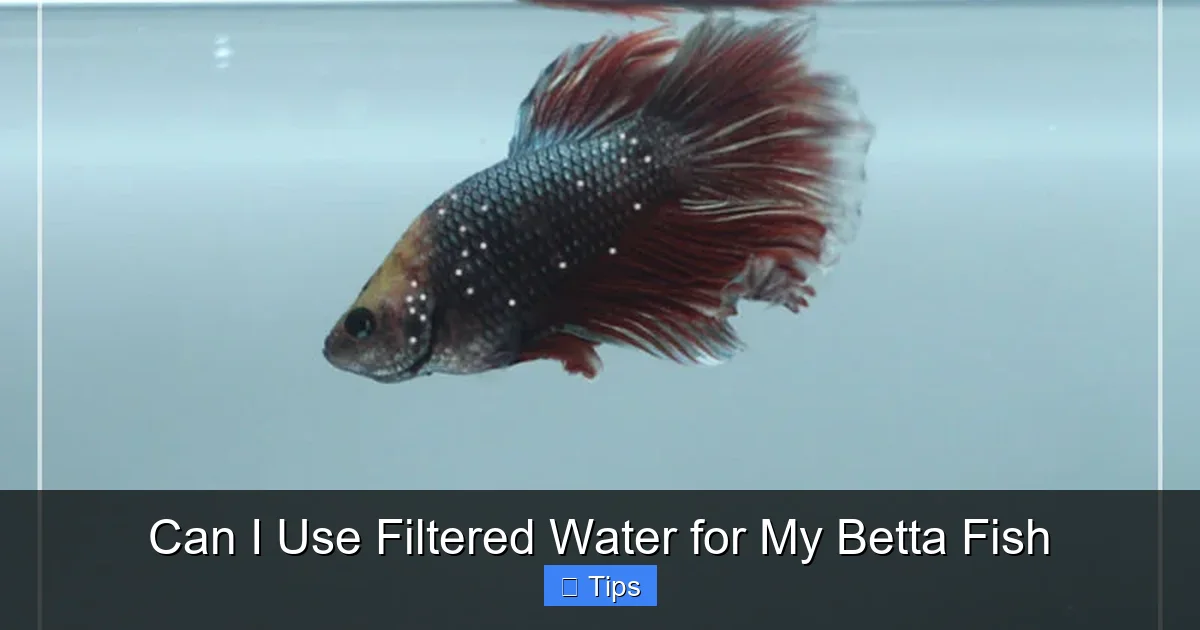
Visual guide about Can I Use Filtered Water for My Betta Fish
Image source: smartaquariumguide.com
1. Filtered Tap Water (Pitcher/Countertop Filters: Brita, PUR, etc.)
These are the most common household filters. They typically use:
- Activated Carbon: Excellent at removing chlorine, some chloramine (but not all), organic compounds, and improving taste/odor.
- Ion-Exchange Resins: These swap hard minerals (calcium, magnesium) for sodium or potassium, softening the water and lowering GH.
- Sediment Filters: Remove particulates like rust and silt.
Verdict: This is often a very good starting point for a betta tank. It removes the worst of chlorine/chloramine (though a conditioner is still a non-negotiable backup) and can lower hardness, bringing it closer to a betta’s preference. The main drawback is that it doesn’t remove all chloramine, and it may add a tiny amount of sodium from the ion-exchange process, which is generally negligible for freshwater fish.
2. Reverse Osmosis (RO) / Deionized (DI) Water
This is the “purest” water you can buy or make. RO systems force water through a semi-permeable membrane under pressure, removing 95-99% of all contaminants: chlorine, chloramine, heavy metals, minerals, bacteria, viruses. DI uses resin to remove the last bits of ions.
Verdict: DANGEROUS for direct use. This water is “empty.” It has no minerals, no KH, no GH. Its pH will be unstable and acidic (around 5-6). When added to your tank, it will aggressively leach minerals from your fish’s body and any substrate/decor, causing osmotic shock. RO/DI water MUST be remineralized with a commercial RO remineralizer or precise additions of calcium carbonate, magnesium sulfate, etc., to achieve a stable GH and KH. This is a process for advanced aquarists with heavily planted tanks or extremely hard tap water, not for a beginner betta keeper.
3. “Filtered” or “Purified” Bottled Water
Read the label carefully! Terms are misleading.
- Spring Water: Bottled at the source. Contains natural minerals. Can be a good option if you test it first and its parameters (pH, GH) fit your betta’s needs. Brands vary wildly.
- Purified Water / Distilled Water: These are essentially RO/DI water. Avoid. They have no minerals and will cause the same problems as RO water. Distilled water is especially dangerous due to its extreme purity.
- Artesian Water / Mineral Water: Has added minerals. Often has high, unpredictable GH and pH. Not ideal.
Verdict: Unreliable and expensive. You’re at the mercy of the bottler’s source and process. You must test every single bottle you buy, which is impractical. Not a recommended long-term solution.
The Non-Negotiable Step: Water Conditioning
Let’s be absolutely clear: No matter what water source you choose—filtered tap, straight tap, RO, or spring water—you must use a water conditioner/dechlorinator. Here’s why and what to look for.
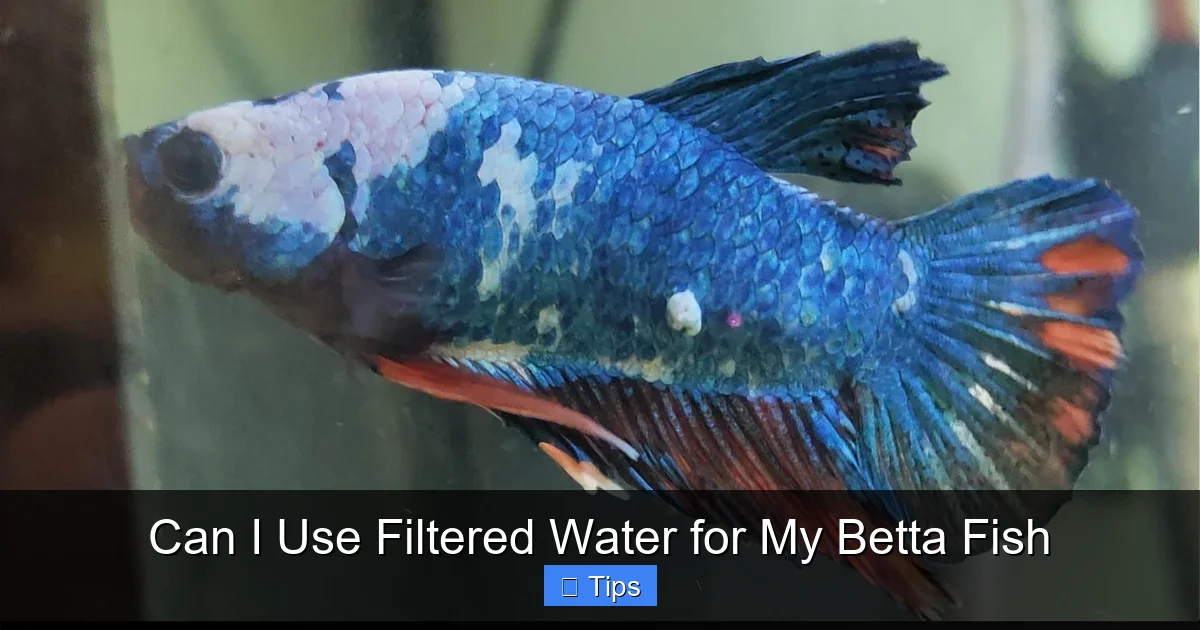
Visual guide about Can I Use Filtered Water for My Betta Fish
Image source: buildyouraquarium.com
What a Good Conditioner Does (Beyond Chlorine)
The old-school thinking was “conditioner removes chlorine.” That’s the bare minimum. A modern, quality conditioner for a betta tank must:
- Neutralize Chlorine & Chloramine: Instantly and completely.
- Detoxify Ammonia, Nitrite, and Nitrate: These can come from your source water (rare but possible) or, more importantly, from the nitrogen cycle in your tank during a fish-in cycle or if your filter crashes. This is a lifesaver feature.
- Detoxify Heavy Metals: Copper, lead, zinc from pipes can be present even in filtered water and are toxic.
- Promote Slime Coat: Some conditioners include aloe vera or polymers to help heal and protect your betta’s delicate skin and fins.
Recommended brands: Seachem Prime (the gold standard, detoxifies ammonia/nitrite), API Stress Coat+, Fritz Aquatics Complete.
How to Use Conditioner Correctly
Always follow the bottle instructions, but the rule is: dose for the volume of new water you’re adding, not the entire tank volume. Example: You’re doing a 25% water change on a 5-gallon tank (1.25 gallons of new water). You dose the conditioner for 1.25 gallons. Add the conditioner to the bucket of new water before adding it to the tank, or add it directly to the tank’s water stream as you pour in the new water. Never add conditioner directly onto a fish.
Filtered Tap vs. Conditioned Tap: The Practical Comparison
This is the real-world decision most betta owners face. Let’s compare the two most sensible approaches.
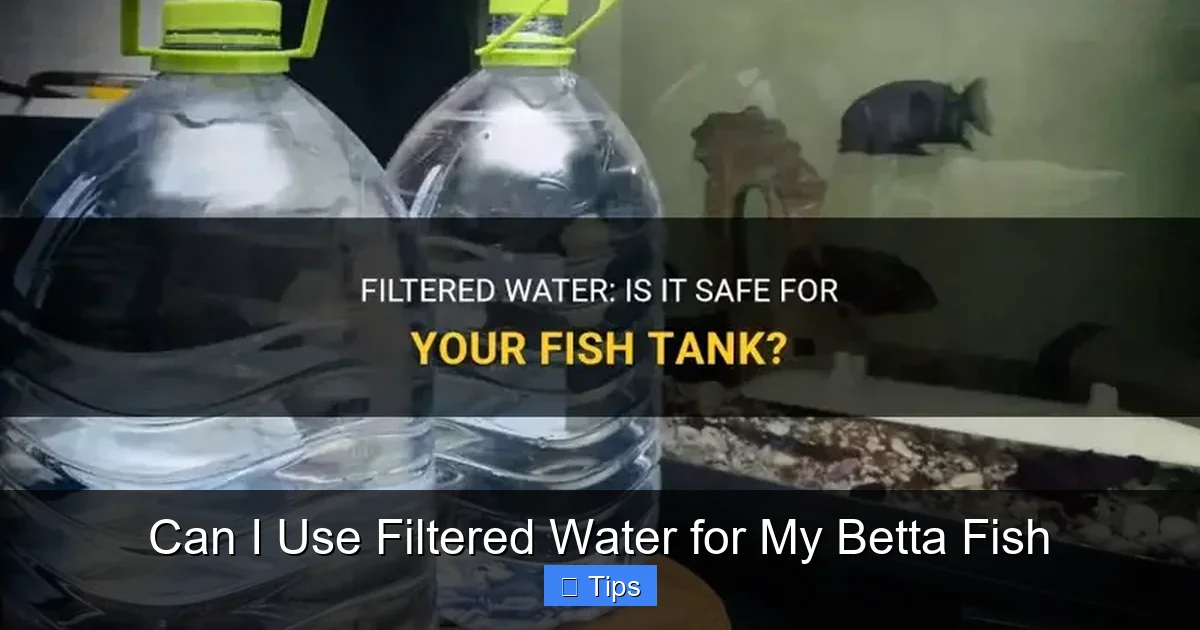
Visual guide about Can I Use Filtered Water for My Betta Fish
Image source: petshun.com
Scenario A: Filtered Tap Water + Conditioner
Process: Run tap water through your Brita/PUR filter into a clean bucket. Let it sit for 30 minutes to reach room temperature (or use a heater in the bucket). Add your quality conditioner. Test parameters. Add to tank.
Pros:
- Reduces chlorine/chloramine load (conditioner handles the rest).
- Lowers hardness (GH) compared to straight tap, which can be beneficial.
- Removes sediment and some heavy metals.
- Simple, inexpensive, and consistent.
Cons:
- Filter cartridges need regular replacement (every 2-3 months).
- Does not remove all chloramine (conditioner is still essential).
- May add trace sodium from ion-exchange (generally harmless).
- You are dependent on the filter’s performance.
Scenario B: Straight Tap Water + Conditioner
Process: Run cold tap water into a clean bucket. Let it sit for 30 minutes to reach temperature. Add your quality conditioner. Test parameters. Add to tank.
Pros:
- No filter maintenance or cost.
- 100% consistent—your tap water parameters are stable (once you know them).
- No risk of a filter failing and letting untreated water through.
- Conditioner handles all chemical toxins.
Cons:
- Hardness (GH) and pH are exactly as your municipality provides. If your tap is very hard (GH > 15 dGH), it’s not ideal long-term.
- May contain more sediment or trace metals than filtered water.
The Verdict & My Recommendation
For 90% of betta keepers, Scenario B (Conditioned Straight Tap) is the winner. Why? Because consistency is king. Your betta’s body adapts to the stable mineral profile of your tap water. Constantly using filtered water, which has a different and sometimes variable mineral content, can cause subtle stress. The most important thing is a reliable conditioner like Seachem Prime and a properly cycled tank. Use filtered water only if your tap water is extremely hard (>15 dGH) and you want to gently lower hardness over time. Always, always condition.
A Step-by-Step Guide to Preparing Any Water for Your Betta
Let’s make this foolproof. Here is the universal protocol, regardless of your source.
- Choose Your Source: Tap or filtered tap. Have your bucket dedicated only to aquarium use.
- Fill & Temperature Match: Fill your bucket. Use a heater (a small, cheap one) to bring the water to exactly the same temperature as your tank (78-80°F). This prevents thermal shock.
- Condition: Add the correct dose of your water conditioner (Prime, etc.) to the bucket. Stir well.
- Wait & Test: Let it sit for 15-30 minutes. Then, using a liquid test kit (API Master Test Kit is the standard), test your tank water and your new water. They should match closely on pH, GH, and KH. If they don’t, you have an instability problem to address.
- Add Slowly: Slowly add the new water to the tank over 30-60 minutes using a siphon or by pouring it against the glass. This prevents shocking the fish with sudden parameter changes.
Pro Tip: Keep a logbook! Record your tap water’s baseline parameters (pH, GH, KH) after conditioning. This is your control. If your tank’s parameters start to drift from this baseline, you know something is wrong with your cycle or maintenance routine.
Common Mistakes & Myths Debunked
Myth: “Bottled Spring Water is the Best, Most Natural Choice.”
False. It’s inconsistent. One brand of “Spring Water” might have a pH of 7.8 and GH of 12, another might be pH 6.5 and GH 4. You cannot manage a stable aquarium with a moving target. Tap water is consistent; that is its greatest strength.
Myth: “If I Use a Filter, I Don’t Need a Conditioner.”
False. Filters remove physical debris and house beneficial bacteria. They do not neutralize chlorine, chloramine, or heavy metals. That is the job of a chemical conditioner. A filter and conditioner work together.
Mistake: Using Distilled or RO Water Without Remineralizing.
This is a slow death sentence for your betta. The pure water will pull essential electrolytes from his body through osmosis, leading to organ failure. It will also cause your pH to plummet. Never do this.
Mistake: Changing Too Much Water at Once with a Different Source.
Even if your new water is “perfect,” replacing 50% or more of your tank water in one go causes massive parameter swings. Stick to 25-30% weekly changes.
Mistake: Ignoring the Cycle for Water Source Perfection.
You could have the most perfect, remineralized RO water on Earth, but if your tank isn’t cycled (meaning you have a population of beneficial bacteria that converts toxic ammonia to less toxic nitrate), your betta will die from ammonia poisoning. The nitrogen cycle is 100x more important than your water source.
Conclusion: The Simple, Stress-Free Path
So, can you use filtered water for your betta fish? Yes, conditioned filtered tap water is a safe and often beneficial option. But the simpler, more reliable path for most people is to use your local tap water, treated with a high-quality water conditioner like Seachem Prime. This combination provides consistency, removes all chemical toxins, and supports a stable, cycled environment—which is the true foundation of betta health.
Stop worrying about sourcing the mythical “perfect” water. Start worrying about:
- Having a fully cycled tank (test kit confirmation required).
- Using a reliable conditioner on every single water change.
- Performing regular 25% water changes with temperature-matched water.
- Testing your water weekly to ensure stability.
Get those four things right, and your betta will thrive in water that is perfectly suited to his needs—water that comes right from your tap. That’s not just acceptable; it’s excellent fishkeeping.
Frequently Asked Questions
Can I use Brita filtered water for my betta fish without conditioner?
No. While Brita filters remove a significant amount of chlorine and some chloramine, they are not 100% effective against all chloramine. You must still use a water conditioner to ensure all chlorine, chloramine, and heavy metals are neutralized before adding the water to your tank.
Is purified or distilled bottled water okay for bettas?
No. Purified and distilled waters have had all minerals removed. They are extremely soft and have an unstable, acidic pH. Adding this water to your tank will leach essential electrolytes from your betta’s body and crash your pH, leading to severe stress or death. Avoid these products entirely.
What about store-bought “spring water” for bettas?
It’s inconsistent and not recommended. Spring water brands vary wildly in their mineral content (GH) and pH. One bottle might be perfect, the next might be far too hard. For a stable aquarium, you need a consistent water source. Your conditioned tap water is far more reliable.
How often should I change my betta’s water if I use filtered water?
The frequency is the same regardless of your source. Perform a 25-30% water change once per week in a filtered, cycled tank. This removes waste products (nitrates) and replenishes minerals. More frequent, smaller changes are better than one large, infrequent change.
My tap water is very hard (white scale on everything). Should I use filtered water?
Yes, this is an excellent reason to use filtered tap water. The ion-exchange in pitcher filters will lower the General Hardness (GH), making the water softer and more suitable for your betta. Just remember to always condition the filtered water before use.
Can I mix RO water with tap water to soften it?
Technically yes, and this is a method used by advanced aquarists. However, it requires precise measurement and testing to achieve a stable, target GH and KH. For a beginner or intermediate betta keeper, using conditioned filtered tap water is a much simpler and less risky way to achieve softer water.