While the iconic fighting fish reputation is accurate, two betta fish can sometimes share a tank under very specific, carefully managed conditions. Success depends overwhelmingly on providing an exceptionally large, heavily planted tank, choosing compatible same-sex pairs, and meticulous monitoring. For most beginners, keeping bettas solitary is the safest and most humane choice to ensure their long-term health and vibrant display.
Key Takeaways
- Bettas are solitary and territorial by nature: Their aggressive instincts are real, and forcing cohabitation in a small tank is a primary cause of stress, injury, and death.
- Tank size is non-negotiable: A minimum of 20 gallons (75 liters) is the absolute starting point for considering a pair, with 29+ gallons (110+ liters) being far safer for long-term harmony.
- Aquascaping is your primary defense: Dense planting, tall decorations, and multiple visual barriers are essential to break lines of sight and provide escape routes.
- Same-sex pairs (sororities or brotherhoods) are more viable: Female bettas can sometimes form sororities in large, planted tanks. Male pairings are high-risk and generally not recommended.
- Introduction method is critical: Using a divider or separate tank for initial visual acclimation is a mandatory step that cannot be skipped.
- Constant observation is required: Even in a seemingly peaceful tank, you must watch for subtle signs of stress or aggression daily and have a backup plan to separate them immediately.
- There are always safer alternatives: A community tank with fast-moving, non-flighty tank mates or a single, beautifully decorated betta tank is often a more rewarding and reliable approach.
📑 Table of Contents
- The Truth About Betta Social Behavior
- Tank Size and Setup: The Non-Negotiable Foundation
- Same-Sex vs. Opposite-Sex Pairing: Understanding the Odds
- The Step-by-Step Introduction Process
- Reading the Signs: Compatibility vs. Conflict
- Safer Alternatives: The Path to a Thriving Aquarium
- Conclusion: A Decision of Ethics and Patience
The Truth About Betta Social Behavior
Let’s clear the water right away. The short, definitive answer is: no, two betta fish should not casually share a tank. The long, nuanced answer is: under a perfect storm of specific conditions, it’s sometimes possible. Betta splendens, the scientific name for the famous Siamese fighting fish, earned its moniker for a reason. For centuries, they were bred specifically for aggression, with males pitted against each other in fights that could last until one retreated or perished. This isn’t just a myth; it’s encoded in their DNA.
In their natural, slow-moving waters of Southeast Asia, bettas are solitary creatures. They establish and fiercely defend small territories—a patch of plants, a shaded root system. A male will flare his gills, spread his fins, and chase away any intruder that enters his space. This behavior doesn’t vanish in captivity; it intensifies. The confined space of a typical 1- or 5-gallon “betta kit” tank is not a territory; it’s a prison cell where there is no escape from an rival. Stress from constant aggression suppresses the immune system, leading to diseases like fin rot or dropsy. Physical fights result in torn, shredded fins, which can become fatal infections. Therefore, the default, safest, and most ethical advice for 99% of hobbyists is: one betta, one tank.
Why the Myth Persists
So why do so many people ask if two bettas can live together? The myth is perpetuated by stunning photos online of “betta sororities” (groups of females) or even rare, peaceful male pairs in massive, jungle-like aquariums. These setups are the result of expert-level aquascaping, immense tank volume, and countless hours of careful observation. They are the exception, not the rule. For every successful community betta tank you see, there are dozens of failed, tragic attempts where one fish was killed or died from stress. Our goal here is to educate you on what that “perfect storm” actually entails, so you can make an informed, responsible decision.
Tank Size and Setup: The Non-Negotiable Foundation
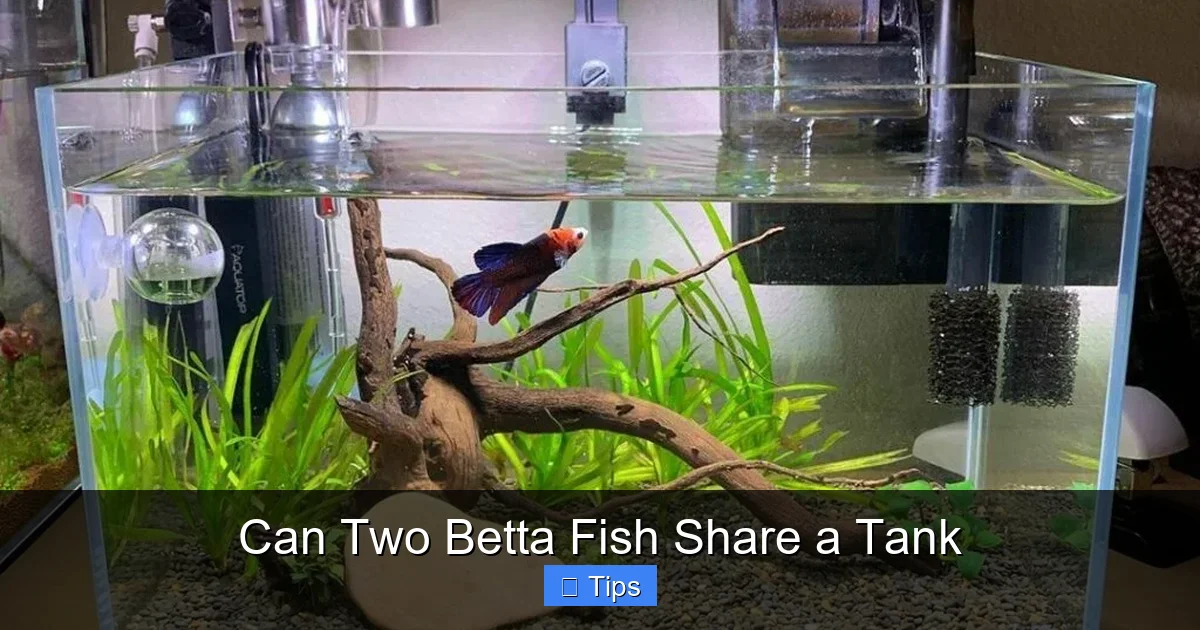
If you are seriously considering attempting to house two bettas together, tank size is the single most important factor. It is the foundation upon which any chance of success is built. The common advice of “a 5-gallon tank for each betta” is dangerously insufficient for cohabitation. That rule applies for *separate* tanks. For *shared* living, you need to think in terms of doubling or tripling that space to create distinct, non-overlapping territories.
Visual guide about Can Two Betta Fish Share a Tank
Image source: fishlab.com
The Absolute Minimum: 20 Gallons
The absolute bare minimum tank size for considering a betta pair (especially a sorority of females) is a 20-gallon long tank. Why “long”? Horizontal swimming space is more valuable than vertical height for breaking territories. A 20-gallon provides about 24 inches of length, which allows you to create two distinct ends of the tank, each with its own set of plants and decorations. A 29-gallon (30x12x18″) or 40-gallon breeder (36x18x16″) is a significantly better and safer starting point. The principle is simple: more water volume dilutes aggression. If a betta flares at its rival, the chased fish has more room to escape and find a hiding spot before the aggressor gives up. In a 5-gallon tank, there is nowhere to go.
The Art of Aquascaping for Peace
Once you have the space, you must fill it strategically. Your aquascape is not for decoration; it’s a functional tool for conflict prevention.
- Dense Planting: Use live plants like Java fern, Anubias, Cryptocorynes, and floating plants like water lettuce or frogbit. These create dense, three-dimensional forests. A betta can hide behind a leaf, and its rival cannot see it. Floating plants are especially crucial as they cover the top layer, breaking the line of sight at the surface where bettas often patrol.
- Hardscape Barriers: Use driftwood, large rocks, and ceramic castles to create physical walls. Place them so they segment the tank into different zones. A betta in one zone should not be able to see the entire tank from its perch.
- Multiple “Furniture” Sets: Don’t put one hammock leaf in the middle. Place several in different corners. Provide multiple caves, tunnels, and tall, thin plants (like Vallisneria) where a betta can retreat and feel secure.
- Open Swimming Space: Counterintuitively, you also need some open water. If the tank is 100% jam-packed, a fish may feel cornered with no escape route. Leave a central or side corridor for swimming, but ensure the perimeter is heavily fortified with territory markers.
Same-Sex vs. Opposite-Sex Pairing: Understanding the Odds
Gender is the next critical variable. The compatibility odds change dramatically based on whether you’re trying to house two males, two females, or a male and female.
Visual guide about Can Two Betta Fish Share a Tank
Image source: fishkeepingworld.com
Female Sororities: The More Feasible Option
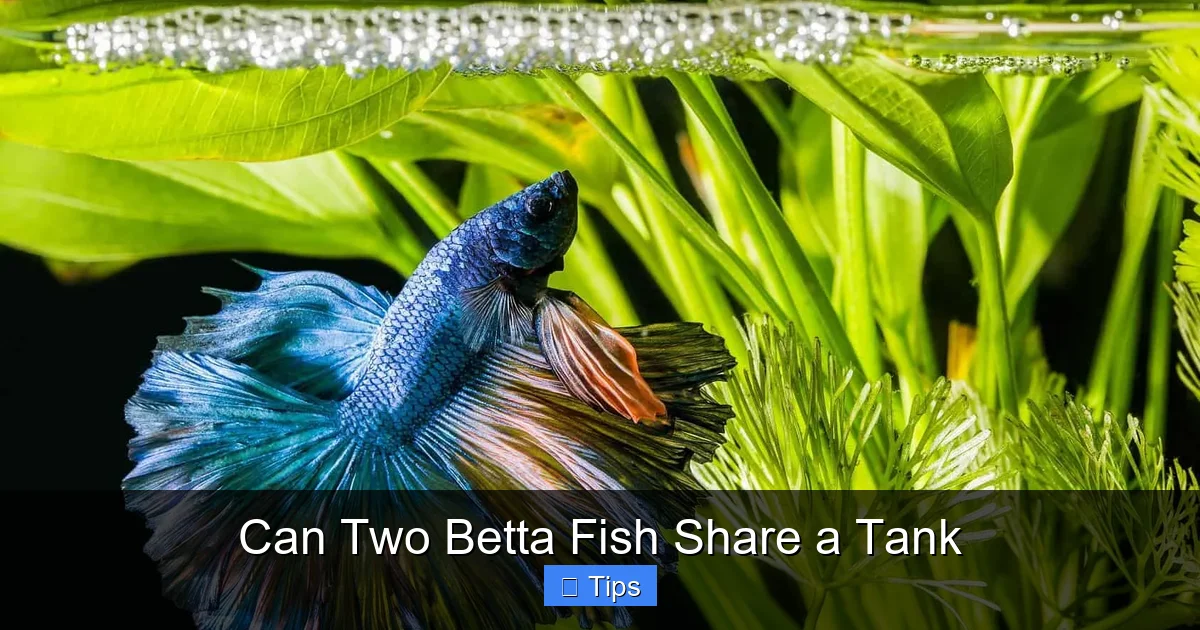
Groups of female bettas, known as sororities, are the most commonly attempted and have the highest success rate—but with major caveats. Female bettas are still territorial, but their aggression is less intense and more focused on establishing a pecking order rather than all-out warfare. A sorority requires the same massive, heavily planted 20+ gallon tank. You must introduce at least 4-5 females at once (never a pair, never adding a new one to an established group). With a group of 5, aggression is distributed. One dominant “alpha” female may flare, but the others can band together or simply avoid her. The hierarchy stabilizes after a few weeks of occasional chasing. If you only have two females, they will likely fight relentlessly as there is no dispersal of aggression. They will see each other as the sole competitor for the entire tank.
Male Pairings: High Risk, Low Reward
Housing two male bettas together is strongly discouraged and considered extremely high-risk. While there are legendary, anecdotal stories of bonded male betta pairs, these are the absolute outliers. Male bettas are the epitome of territorial aggression. Even in a 100-gallon tank, the instinct to eliminate a rival is profound. The only scenario where a male pair *might* work is if they were brothers raised together from fry in an immense, complex tank and have never known solitude—but even then, aggression can flare up with maturity. For 99.9% of aquarists, a second male betta is a guaranteed future funeral. Do not attempt it.
Male and Female: A Recipe for Disaster
Never, under any circumstances, house a male and female betta together long-term. The only exception is a temporary, supervised breeding tank with a divider removed for spawning and then immediately replaced. In a community setting, the male will see the female as an intruder in his territory and attack her. The female, if not receptive, will also be aggressive. Constant harassment will lead to severe stress and physical harm for the female. They are not compatible tank mates.
The Step-by-Step Introduction Process
Assuming you have a 29+ gallon, fortress-like aquascape and a group of 5+ female bettas (or are taking a monumental risk with males), the introduction process is a delicate, mandatory ritual. Rushing this is the fastest way to disaster.
Visual guide about Can Two Betta Fish Share a Tank
Image source: bettafish.org
Phase 1: The Visual Barrier Acclimation (2-4 Weeks)
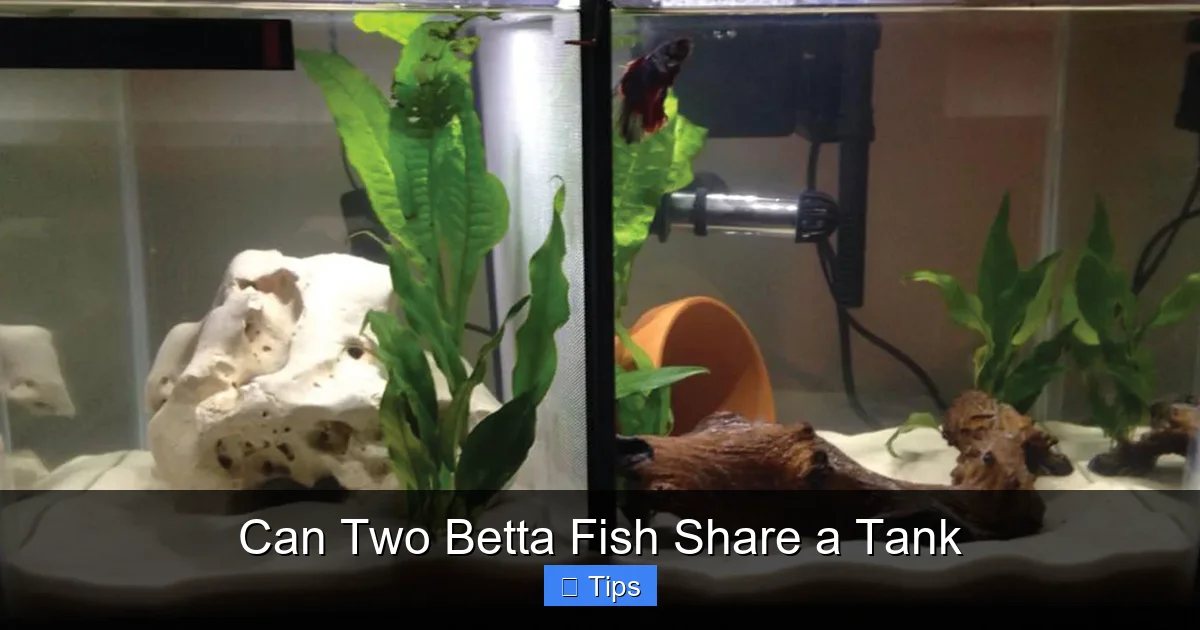
Before any physical contact, you must allow the bettas to see each other without being able to attack. Use a tank divider (a piece of acrylic with sealed edges or a commercial divider) to split your large tank into two sections. Place one betta on each side. This allows them to establish their territory on their side while observing the “other.” They will likely flare dramatically at first. This is normal. The goal is to wait until flaring becomes less frequent and intense—a sign of desensitization. This period can take several weeks. Do not rush it.
Phase 2: The Supervised Tank Swap
After the flaring subsides, you can begin tank swaps. Using a net or a small container, carefully move Betta A to the section where Betta B was, and Betta B to Betta A’s original section. Leave them there for 15-30 minutes. This allows each fish to explore the other’s territory and smell their scent without confrontation. It disrupts the strong territorial claim each has on its own space. Do this swap once or twice a day for a few days. Watch their behavior closely through the divider during swaps—are they flaring aggressively or just curious?
Phase 3: The Final Introduction (The Moment of Truth)
When the fish seem relatively calm during swaps (minimal flaring, no frantic trying to get through the divider), it’s time for the final test. Remove the divider completely. This must be done when you are present and can watch the tank uninterrupted for at least an hour. Have a large net and a backup tank (or a large container with cycled water) ready at your side. Observe their initial interactions. Some chasing and flaring is expected as they re-establish boundaries. The key is to watch for the chase to end. A chase that lasts more than 10-15 seconds without a break, or results in one fish being cornered and nipped, is a failure. If serious fighting begins—muscling, biting, locked jaws—you must separate them immediately. Even if they seem peaceful after 30 minutes, watch them closely for the next 24-48 hours. The first 72 hours are the most critical.
Reading the Signs: Compatibility vs. Conflict
Your ability to read betta body language is your most important skill. You must learn to distinguish between normal posturing and lethal aggression.
Signs of Potential Compatibility (The “Maybe” Zone)
- Flaring with Retreat: One fish flares, the other swims away. This establishes hierarchy without violence.
- Parallel Swimming: They swim calmly in the same general area, sometimes even in the same plant thicket, without interacting.
- Mutual Ignorance: They go about their business—exploring, resting, building bubble nests (males)—and largely ignore each other’s presence.
Signs of Lethal Aggression & Severe Stress (ACT IMMEDIATELY)
- Constant, Relentless Chasing: One fish is permanently on the run, with no safe zone. The aggressor patrols the entire tank.
- Nipping and Biting: You see physical contact with jaws. This leads to fin loss and infection.
- Fins Clamped Tight: A stressed or fearful betta will hold its fins close to its body instead of displaying them.
- Hiding 24/7: One fish is permanently under a rock or buried in plants, only darting out for food. It is living in terror.
- Loss of Appetite: A betta that is stressed or bullied will often stop eating.
- Fading Colors: Stress causes bettas to lose their brilliant hues, becoming pale and washed out.
- Vertical Hiding (Lethargy): The fish hangs listlessly at the top or bottom of the tank, not moving much. This is a late-stage sign of severe stress or illness.
If you see any of the severe signs, you must separate the fish. There is no “waiting to see if it gets better.” It won’t. The submissive fish is suffering and will likely die from stress or a subsequent infection.
Safer Alternatives: The Path to a Thriving Aquarium
Given the immense risks, complexities, and required resources, we must ask: is it worth it? For the vast majority of hobbyists, the answer is a resounding no. The stress and heartbreak of a failed cohabitation attempt are not worth the fleeting social media clout. There are far better, safer, and more rewarding paths.
The Solo Betta Tank Done Right
Embrace the single betta! Dedicate a 10-gallon (or larger) tank to one magnificent fish. With no rivals, you can create the ultimate personalized paradise. Use a soft, fine substrate. Plant it densely with live plants. Add a smooth cave, a piece of driftwood, and a broad-leafed plant for resting. Install a gentle filter with a flow he can swim against and a heater set to 78-80°F. Watch him build his bubble nest, explore every corner, and display his fins to his heart’s content. His colors will be brighter, his behavior more natural, and his lifespan longer. This is the single best thing you can do for a betta.
The Peaceful Community Tank
If you desire a community of fish, choose compatible, fast-moving, non-flighty species that occupy different tank levels. A well-planned community in a 20+ gallon tank is a dynamic, beautiful spectacle. Excellent betta-safe tank mates include:
- Schooling Fish: Harlequin rasboras, Lambchop rasboras, Ember tetras, Neon tetras (in a large enough school). They stay in the mid-level and move as a group, ignoring the betta.
- Bottom Dwellers: Kuhli loaches, small Corydoras catfish (like Pygmy or Habrosus), Bristlenose plecos (small, algae-eating varieties). They occupy the substrate and are largely invisible to the betta.
- Other: Snails (Nerite, Ramshorn), Shrimp (Amano, Ghost—though some bettas may eat smaller shrimp).
The key is a large tank, abundant plants for the other fish to hide in, and a school of at least 6 for the smaller fish to feel secure. Always introduce the betta last to a community tank so he doesn’t claim the entire thing as his territory from day one.
Conclusion: A Decision of Ethics and Patience
The question “Can two betta fish share a tank?” ultimately reveals more about the keeper’s goals than the fish’s nature. It exposes a desire for a more active, social tank, which is understandable. But the biological reality of Betta splendens is that they are not social animals. Their beauty is born from solitary dominance. To force them into cohabitation is to prioritize our aesthetic desires over their fundamental welfare. The path of the single betta in a spacious, planted sanctuary is the path of respect. It results in a healthier, more vibrant, and longer-lived pet. If you crave community, build one around a single betta king, not with him as a reluctant participant. Patience, research, and a commitment to the fish’s wellbeing over a trendy idea are the hallmarks of a true aquarist. Choose the tank setup that guarantees your betta will thrive, not just survive.
Frequently Asked Questions
What is the absolute minimum tank size for two female bettas?
The absolute minimum is a 20-gallon long tank, heavily aquascaped with plants and decorations. Even then, success is not guaranteed. A 29-gallon or larger is strongly recommended for a sorority of 5+ females.
Can two male betta fish ever live together peacefully?
While there are extremely rare, anecdotal exceptions, housing two male bettas together is considered high-risk and not recommended for any hobbyist. Their innate territorial aggression makes lethal conflict highly likely, regardless of tank size.
What are the first signs that two bettas are not getting along?
The first warning signs are constant, relentless chasing where one fish is permanently on the run, and fins being nipped or torn. A fish that is permanently hiding with clamped fins or has stopped eating is already suffering severe stress and must be separated immediately.
Is it easier to keep female bettas together than males?
Yes, a sorority of 5+ female bettas in a large, planted tank has a higher chance of stability than a pair of males. However, it still requires immense space, careful introduction, and constant monitoring. A pair of females is not advisable and will almost certainly fight.
What should I do if my bettas start fighting?
Separate them immediately. Have a backup cycled hospital tank ready. Use a net to quickly and safely remove the aggressor or the injured fish. Do not wait to “see if it blows over.” Fin damage can lead to deadly infections. Once separated, they should never be reintroduced.
What are the best tank mates for a single betta instead of another betta?
Peaceful, fast-moving schooling fish like harlequin rasboras or ember tetras (in a group of 6+), small Corydoras catfish, and nerite snails are excellent choices. Always introduce the betta last to a well-established community in a tank of 20 gallons or more.