Can Betta Fish Smell Their Food in a Large Tank
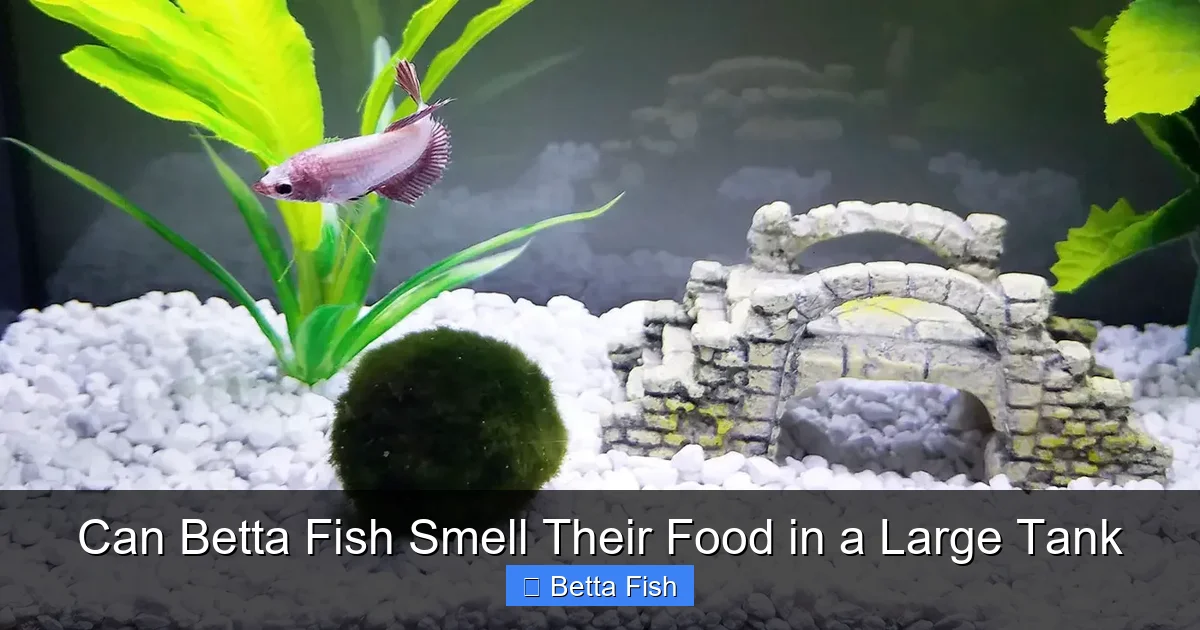
Yes, betta fish can smell their food in a large tank, but several factors can affect how quickly and easily they locate it. Their sense of smell is surprisingly powerful and plays a crucial role in finding food, even in spacious environments. Understanding how bettas use their olfactory senses will help you feed them properly and keep them healthy in any tank size.
Key Takeaways
- Betta fish have a strong sense of smell that helps them detect food particles dissolved in water, even in large tanks.
- Water flow and filtration can disperse food scents quickly, making it harder for bettas to track down food in bigger setups.
- Feeding location matters — dropping food in the same spot each time helps your betta learn where to find it.
- Overfeeding in large tanks can lead to water quality issues, so portion control is essential.
- Visual cues complement smell — bettas rely on both their eyes and olfactory senses to locate food effectively.
- Water temperature affects scent dispersion — warmer water can help spread food odors more quickly throughout the tank.
- Using the right food type makes a difference, as some foods release stronger scents than others.
📑 Table of Contents
- Can Betta Fish Smell Their Food in a Large Tank?
- How a Betta Fish’s Sense of Smell Actually Works
- Factors That Affect How Well Bettas Smell Food in Large Tanks
- Tips for Feeding Betta Fish in a Large Tank
- How Bettas Use Multiple Senses to Find Food
- Common Feeding Problems in Large Tanks and How to Solve Them
- Best Foods for Betta Fish in Large Tanks
- Conclusion
Can Betta Fish Smell Their Food in a Large Tank?
If you have ever watched your betta fish swim around a spacious aquarium, you might have wondered how they actually find their food. After all, a large tank is a big world for such a small fish. The short answer is yes — betta fish can smell their food in a large tank. But the full story is a lot more interesting than that. Their sense of smell is one of their most important survival tools, and understanding how it works can make you a much better betta keeper.
Bettas are naturally curious and resourceful fish. In the wild, they live in shallow rice paddies, slow-moving streams, and small ponds across Southeast Asia. Even in those environments, they need to detect food quickly before other creatures beat them to it. Over thousands of years, they have developed a keen olfactory system that allows them to pick up on chemical signals in the water. This ability does not disappear just because they are living in a 20-gallon tank instead of a paddy field.
That said, a large tank does present some unique challenges when it comes to feeding time. The bigger the volume of water, the more diluted food scents become. Water flow from filters and air pumps can push those scent particles around in unpredictable ways. But do not worry — with a few simple strategies, you can make sure your betta always finds its meal without any trouble.
How a Betta Fish’s Sense of Smell Actually Works
The Science Behind Betta Olfaction
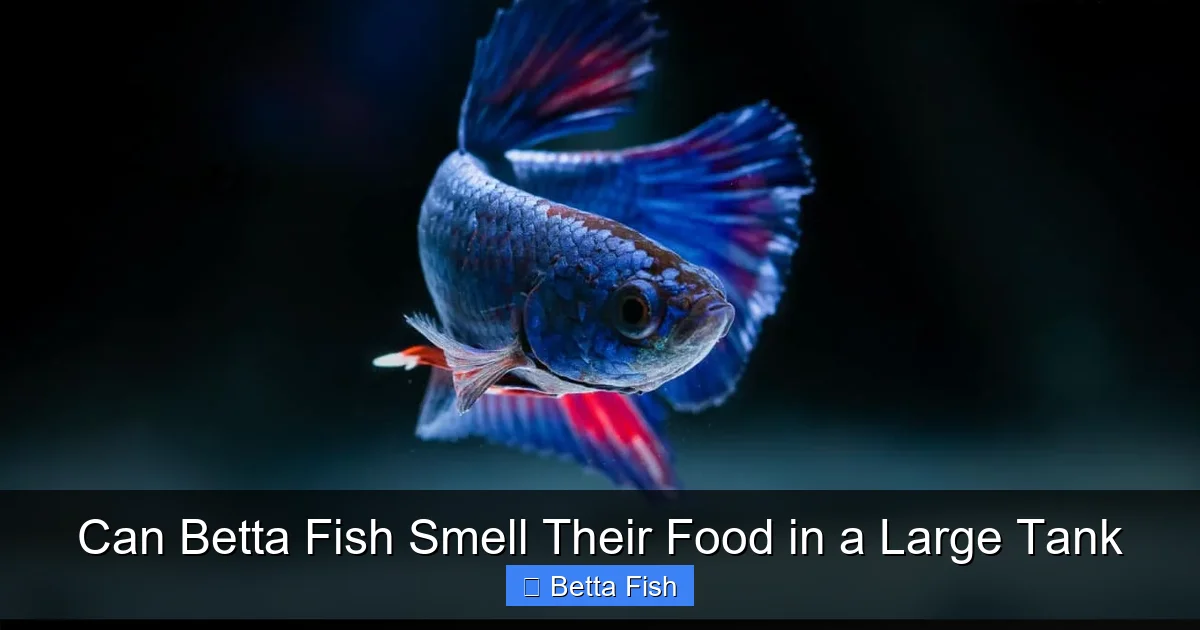
Betta fish have a highly developed olfactory system located in their nostrils, which are called nares. These are small openings on the front of their snout, just above their mouth. Water flows through these nares, and specialized sensory cells detect chemical molecules dissolved in the water. Think of it like a built-in chemical analyzer that is constantly sampling the surrounding environment.
Visual guide about Can Betta Fish Smell Their Food in a Large Tank
Image source: petshun.com
These sensory cells are incredibly sensitive. Research on freshwater fish has shown that some species can detect certain compounds at concentrations as low as parts per billion. While specific studies on betta fish olfaction are limited, their close relatives in the gourami family have demonstrated impressive scent-detection abilities. It is safe to say that your betta’s nose is far more powerful than you might expect from such a tiny creature.
Why Smell Matters More Than You Think
For betta fish, smell is not just about finding food. Their olfactory system helps them detect predators, identify potential mates, recognize their territory, and even sense changes in water quality. It is essentially their early warning system and their GPS rolled into one. When you drop a pellet into the tank, your betta is not just randomly swimming around hoping to bump into it. They are actively tracking the chemical trail that the food creates as it begins to dissolve.
This is especially important in a large tank where food might not be immediately visible. A betta could be on the complete opposite side of the aquarium and still detect the scent of a bloodworm or a pellet within seconds to minutes, depending on water conditions. Their brain processes these chemical signals and guides them toward the source with surprising accuracy.
Factors That Affect How Well Bettas Smell Food in Large Tanks
Water Flow and Filtration
One of the biggest factors that influences how well your betta can smell its food is water movement. In a large tank, you typically have a more powerful filter than you would in a small setup. While filtration is essential for maintaining water quality, it also disperses food scents rapidly throughout the entire water column. This can be both a blessing and a curse.
Visual guide about Can Betta Fish Smell Their Food in a Large Tank
Image source: buildyouraquarium.com
On one hand, strong water flow helps spread the scent of food across the tank faster, potentially alerting your betta to feeding time from a greater distance. On the other hand, it can make it harder for the fish to pinpoint the exact location of the food because the scent is coming from everywhere at once. If you notice your betta struggling to find food, consider turning off the filter briefly during feeding time. Just remember to turn it back on afterward.
Water Temperature
Temperature plays a subtle but important role in how scents travel through water. Warmer water molecules move faster, which means chemical compounds disperse more quickly. Since betta fish are tropical and require water temperatures between 76°F and 82°F, their tanks are usually warm enough to facilitate good scent dispersion.
However, if your tank is on the cooler end of that range, scent molecules will move more slowly. This could mean it takes a bit longer for your betta to detect food on the far side of a large aquarium. Keeping your tank at the optimal temperature does not just support your betta’s metabolism and immune system — it also helps them find their food more efficiently. If you are unsure about your setup, check out our guide on do betta fish need a heater in their tank for more details.
Tank Size and Food Dispersal
The sheer volume of water in a large tank means that food scents become more diluted. Imagine dropping a single drop of food coloring into a glass of water versus a bathtub. In the glass, the color spreads quickly and is easy to see. In the bathtub, it disperses and becomes much fainter. The same principle applies to food odors in your aquarium.
In a 5-gallon tank, a single pellet creates a relatively concentrated scent cloud that your betta can easily track. In a 30-gallon tank, that same pellet’s scent is spread across a much larger volume of water, making it less intense at any given point. This does not mean your betta cannot find it — it just means you might need to be a bit more intentional about how and where you feed.
Food Type and Scent Strength
Not all betta foods are created equal when it comes to smell. Some foods release much stronger scents than others, and this can make a real difference in a large tank. Freeze-dried and frozen foods like bloodworms, brine shrimp, and daphnia tend to have a much stronger odor than dry pellets. This is because they are closer to the betta’s natural diet and contain more organic compounds that dissolve into the water.
High-quality pellets are designed to be nutritionally complete, but some brands are better at releasing scent into the water than others. If you are feeding in a large tank and your betta seems slow to respond, try switching to a different brand or supplementing with frozen foods a few times a week. The stronger scent will help your betta locate its meal more quickly.
Tips for Feeding Betta Fish in a Large Tank
Create a Consistent Feeding Spot
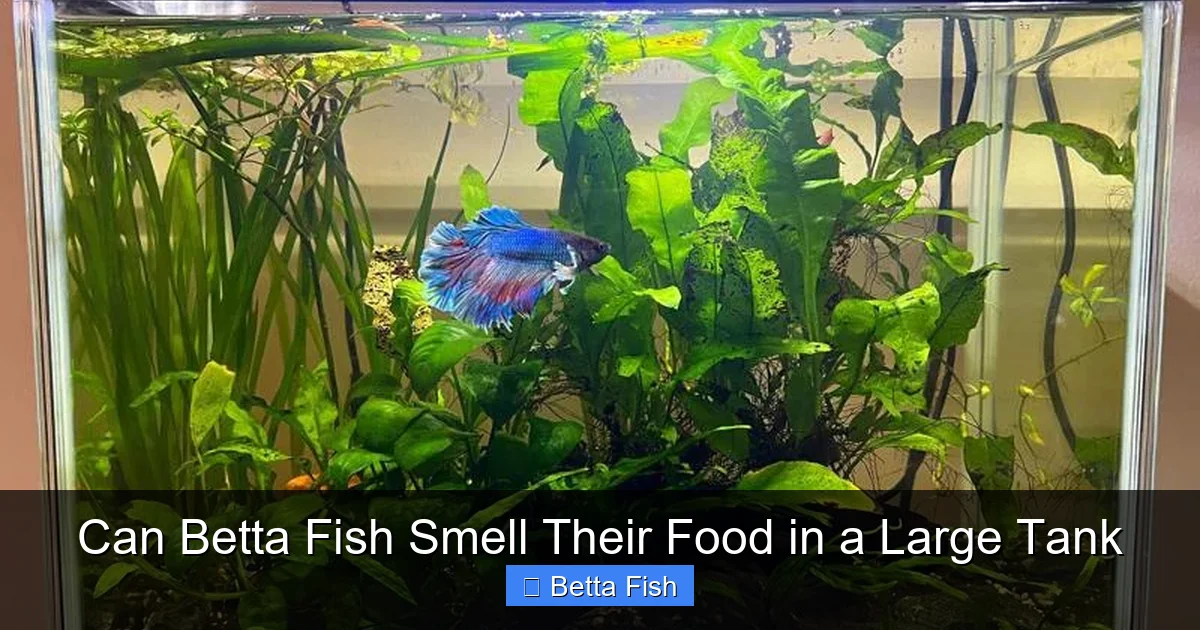
One of the simplest and most effective things you can do is always feed your betta in the same location. Bettas are intelligent fish that can learn routines and associate specific areas with food. Over time, your betta will start heading to that spot whenever it is feeding time, even before it smells the food.
Visual guide about Can Betta Fish Smell Their Food in a Large Tank
Image source: acaquarium.com
Choose a corner or a specific area of the tank that is easy for you to access and easy for your betta to find. Some owners use a small feeding ring — a floating plastic ring that contains the food in one spot and prevents it from drifting around the tank. This is especially helpful in large setups with strong water flow.
Turn Off the Filter During Feeding
As mentioned earlier, turning off your filter for a few minutes during feeding can make a big difference. Without the current pushing scent molecules around chaotically, the food creates a more concentrated and directional scent trail. Your betta can follow this trail directly to the source without getting confused.
Just be sure to turn the filter back on within five to ten minutes. You do not want to leave your biological filtration offline for too long, especially in a large tank where water quality can shift quickly. Set a timer on your phone if you tend to forget.
Use a Feeding Dish or Ring
A feeding dish or ring is a small investment that pays off big time in a large tank. These devices keep food contained in one area, preventing it from sinking into substrate or getting lost behind decorations. They also create a concentrated scent zone that your betta can easily detect.
Feeding dishes sit on the bottom of the tank, while feeding rings float on the surface. For bettas, who are top-feeders by nature, a floating ring is usually the better choice. It keeps pellets and freeze-dried foods at the surface where your betta naturally looks for food.
Do Not Overfeed
This is crucial in a large tank because uneaten food can be harder to spot and remove. What looks like a small amount of leftover food in a big aquarium can actually be a significant source of ammonia and other harmful compounds. Overfeeding is one of the most common mistakes betta owners make, and it is even easier to do in a large setup.
A good rule of thumb is to feed your betta only what it can consume in about two minutes. For most bettas, this means two to three pellets per feeding, once or twice a day. If you see food sinking to the bottom uneaten, you are feeding too much. Cut back gradually until there is no leftover food after each session.
Consider Tank Mates and Competition
If your large tank is home to other fish, feeding dynamics can change significantly. Faster or more aggressive eaters might get to the food before your betta has a chance to find it. This is especially true if your betta is shy or slow to respond to feeding cues.
If you have a community tank, you may want to feed in multiple locations simultaneously. Drop food for the other fish on one side and food for your betta on the other. This ensures your betta gets its fair share without having to compete. For ideas on suitable tank mates, check out our article on which fish can live with betta fish in a tank.
How Bettas Use Multiple Senses to Find Food
Vision and Smell Work Together
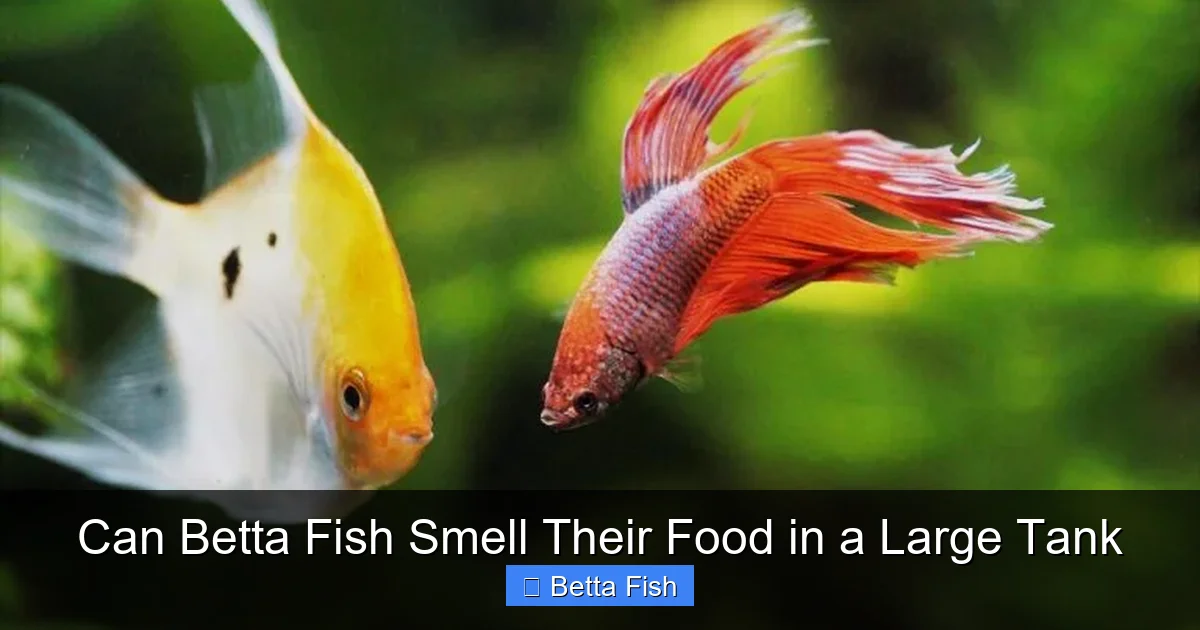
While smell is a primary tool for locating food, betta fish do not rely on it alone. Their eyesight is also quite good, and they use visual cues to complement the information their olfactory system provides. When a betta catches a faint scent of food, it will start swimming in the general direction of the source. As it gets closer, its eyes take over, helping it pinpoint the exact location of the pellet or worm.
Visual guide about Can Betta Fish Smell Their Food in a Large Tank
Image source: fishkeepingadvice.com
This is one reason why brightly colored foods can be easier for bettas to find in a large tank. A red or orange pellet stands out against a natural-colored substrate, giving your betta a visual target to aim for once the scent has guided it to the right area.
The Lateral Line System
Bettas also have a lateral line system — a series of sensory organs that run along the sides of their body. These organs detect vibrations and pressure changes in the water. When food hits the surface of the water, it creates tiny ripples and vibrations that the lateral line can pick up. This gives your betta yet another way to detect that feeding time has arrived.
In a large tank, the lateral line system is particularly useful because it can detect surface disturbances from a considerable distance. Even if the scent has not reached your betta yet, the vibration of a pellet hitting the water can alert it that something interesting is happening. This multi-sensory approach is what makes bettas such effective hunters in the wild.
Common Feeding Problems in Large Tanks and How to Solve Them
Problem: Betta Does Not Notice the Food
If your betta consistently misses food in a large tank, the scent may not be reaching it effectively. Try switching to a stronger-smelling food like frozen bloodworms. You can also try gently tapping the surface of the water before feeding to create vibrations that alert your betta. Over time, your betta will learn to associate the tap with food and come to the surface automatically.

Visual guide about Can Betta Fish Smell Their Food in a Large Tank
Image source: tamilaquadiary.com
Problem: Food Gets Lost in Decorations
Large tanks often have more decorations, plants, and hiding spots. While these are great for your betta’s mental health, they can also trap food in hard-to-reach places. Use a feeding ring to keep food in the open, and choose decorations with smooth surfaces that do not have tiny crevices where food can get stuck. For ideas on safe tank decorations, read our guide on what you can put in a betta fish tank.
Problem: Other Fish Eat the Betta’s Food
In a community tank, faster fish like tetras or danios might snatch food before your betta finds it. Try feeding your betta at one end of the tank and the other fish at the opposite end. You can also use a feeding tube — a simple plastic tube that delivers food directly to a specific spot in the tank, ideally near your betta’s favorite resting area.
Problem: Water Quality Drops After Feeding
If you notice your water parameters spiking after feeding sessions, you are likely overfeeding or leaving too much uneaten food in the tank. Reduce your portions and use a gravel vacuum to remove any debris after feeding. Regular water changes are also essential in a large tank to keep ammonia and nitrite levels in check. Learn more about how to change the water in a betta fish tank to maintain a healthy environment.
Best Foods for Betta Fish in Large Tanks
High-Quality Pellets
Pellets should form the foundation of your betta’s diet. Look for brands that list whole fish or fish meal as the first ingredient, and avoid products with excessive fillers like wheat or corn. Good pellets are nutrient-dense, so you need fewer of them, which means less waste in your tank.
Visual guide about Can Betta Fish Smell Their Food in a Large Tank
Image source: aquariadise.com
Some pellets are specifically designed to release scent into the water more effectively. These can be particularly helpful in large tanks where scent dispersion is a challenge. Brands like Northfin, New Life Spectrum, and Omega Sea are popular among betta enthusiasts for their quality and palatability.
Frozen and Freeze-Dried Foods
Frozen bloodworms, brine shrimp, and daphnia are excellent supplements to a pellet diet. They are closer to what bettas eat in the wild and release a strong scent that travels well through water. Freeze-dried versions are more convenient to store but should be soaked in tank water for a few minutes before feeding to prevent digestive issues.
Feed frozen or freeze-dried foods two to three times a week as treats or meal replacements. They provide variety and additional nutrients that support your betta’s color, energy, and overall health. Just remember that these foods can be messier than pellets, so remove any uneaten portions promptly.
Live Foods
If you really want to stimulate your betta’s natural hunting instincts, live foods are the way to go. Live brine shrimp, daphnia, and mosquito larvae are all excellent options. They create both scent trails and movement, giving your betta a full sensory experience. This can be especially enriching in a large tank where your betta has plenty of room to chase its prey.
However, live foods come with a small risk of introducing parasites or bacteria into your tank. Only purchase from reputable sources, and quarantine live foods if possible. For most betta owners, frozen foods offer a safer alternative with similar nutritional benefits.
Conclusion
So, can betta fish smell their food in a large tank? Absolutely. Their olfactory system is powerful, well-adapted, and designed to detect food even in spacious environments. While a large tank does present some unique challenges — like scent dilution and water flow interference — these are easily manageable with the right approach.
Visual guide about Can Betta Fish Smell Their Food in a Large Tank
Image source: pet-health-content-media.chewy.com
By feeding in a consistent location, using feeding rings, choosing strong-smelling foods, and being mindful of water flow, you can ensure your betta always finds its meals without any trouble. Remember that bettas use a combination of smell, sight, and their lateral line system to locate food, so creating an environment that supports all three senses will give your fish the best possible feeding experience.
At the end of the day, a large tank is a wonderful home for a betta fish. It gives them space to explore, exercise, and express their natural behaviors. With a little attention to how and where you feed, your betta will thrive in its spacious aquarium for years to come. Happy fish keeping!
Frequently Asked Questions
How far can a betta fish smell food in a tank?
A betta fish can detect food scents from several feet away, depending on water flow, temperature, and the type of food. In a large tank, it may take a minute or two for the scent to reach the betta, but their sensitive olfactory system will eventually pick it up.
Do betta fish rely more on smell or sight to find food?
Bettas use both smell and sight together to locate food. Smell helps them detect food from a distance, while vision helps them pinpoint the exact location once they get close. Their lateral line system also helps by detecting vibrations from food hitting the water surface.
Can betta fish find food if the filter is running?
Yes, but a running filter can scatter scent molecules and make it harder for your betta to track the food. Turning off the filter for a few minutes during feeding can help your betta find its meal more easily.
What is the best food for betta fish in a large tank?
High-quality pellets should be the staple food, supplemented with frozen or freeze-dried bloodworms and brine shrimp a few times a week. Foods that release stronger scents are easier for bettas to detect in large tanks.
How often should I feed my betta fish in a large tank?
Feed your betta once or twice a day, offering only what it can eat in about two minutes. Overfeeding is a common problem in large tanks because uneaten food can be harder to spot and remove, leading to water quality issues.
Will tank mates prevent my betta from finding food?
In a community tank, faster or more aggressive fish might eat the food before your betta finds it. To prevent this, feed your betta in a separate area of the tank or use a feeding tube to deliver food directly to your betta’s location.