Choosing tank mates for Betta fish requires careful planning due to their territorial and sometimes aggressive nature. Success depends on selecting peaceful, fast-moving, or bottom-dwelling species that won’t compete for the same space. A properly sized, well-planted tank with ample hiding spots is non-negotiable for a harmonious community. Always have a backup plan, as individual Betta personalities vary widely.
Key Takeaways
- Betta Temperament is Key: Your Betta’s individual personality is the biggest factor. Some are tolerant, others are highly aggressive to any fish.
- Tank Size is Foundational: A minimum of 20 gallons is strongly recommended for any community tank with a Betta to provide enough space and territorial boundaries.
- Choose the Right Species: Ideal mates are fast-moving schooling fish (like neon tetras), peaceful bottom dwellers (like corydoras), or invertebrates (like snails).
- Avoid Fins and Bright Colors: Steer clear of fish with long, flowing fins (guppies, fancy guppies) or similarly vibrant colors that may trigger a Betta’s aggression.
- Aquascaping is Crucial: Use live plants, driftwood, and caves to create visual barriers and break up line-of-sight, reducing constant confrontations.
- Introduction Order Matters: It’s often safer to add the Betta last to an established community, not first, to prevent it from claiming the entire tank as its territory.
- Constant Observation is Mandatory: Monitor all fish closely for the first 72 hours and be prepared to separate immediately if chasing or fin-nipping occurs.
📑 Table of Contents
- Introduction: The Solitary Beauty of the Betta
- Understanding the Betta: More Than Just a “Fighter”
- The Golden Rules of Betta Compatibility
- Top Tank Mate Candidates: Species by Category
- Setting Up and Stocking Your Community Tank
- Troubleshooting: What to Do When Things Go Wrong
- Conclusion: Patience, Observation, and Realistic Expectations
Introduction: The Solitary Beauty of the Betta
Betta fish, with their spectacular fins and vibrant personalities, are one of the most popular aquarium fish in the world. Often sold alone in tiny cups at pet stores, a common question for new and experienced hobbyists alike is: Can my Betta fish have friends? The answer is a qualified yes, but with many important caveats. The Betta, or Siamese fighting fish, earned its name from the intensely territorial and aggressive behavior males display towards each other. This aggression can extend to other fish, making tank mate selection a delicate process that requires research, patience, and the right setup.
This guide will walk you through everything you need to know about creating a peaceful community tank that includes a Betta fish. We’ll move beyond the simple “yes/no” lists to understand the why behind compatibility. You’ll learn about the critical factors that influence success, detailed profiles of the safest and most successful tank mates, how to set up and stock your aquarium for peace, and what to do if things go wrong. Our goal is to help you make an informed decision that ensures the safety and well-being of your Betta and any potential companions.
Understanding the Betta: More Than Just a “Fighter”
To successfully choose tank mates, you must first understand your Betta. While the species is known for aggression, individual temperaments vary dramatically. Some Betta fish are curious and relatively docile, while others will flare at their own reflection. Several factors influence this behavior.
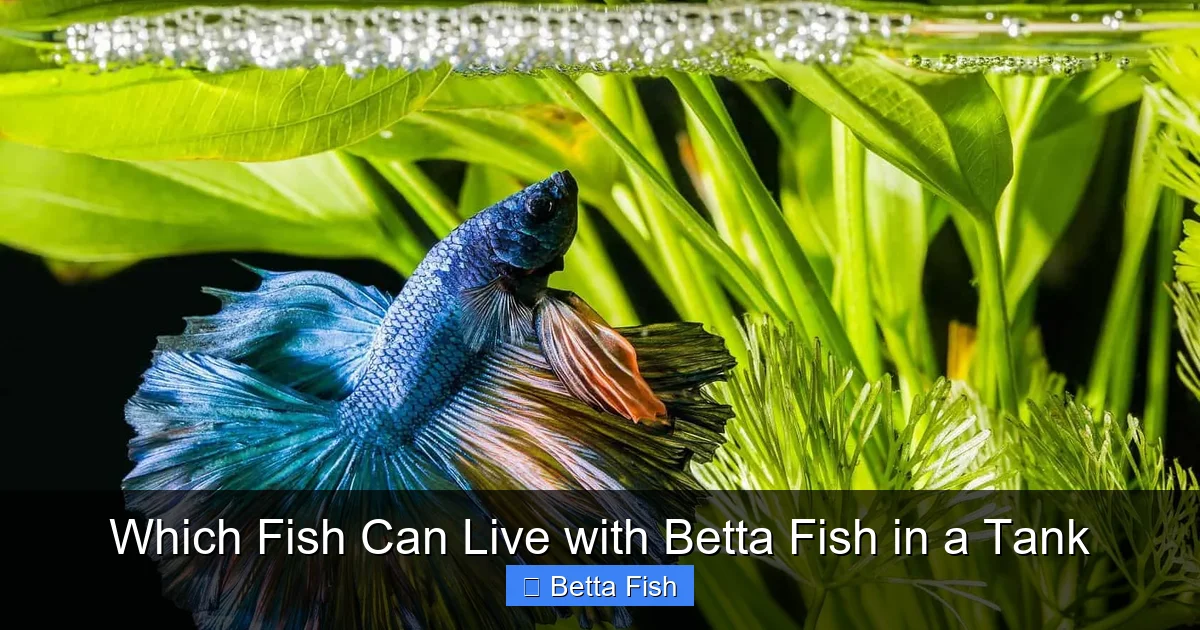
Visual guide about Which Fish Can Live with Betta Fish in a Tank
Image source: fishkeepingworld.com
The Role of Genetics and History
Bettas have been selectively bred for centuries, initially for fighting and now primarily for color and finnage. This intense selection can sometimes amplify aggressive or nervous traits. A Betta raised in a crowded, stressful environment (like a pet store cup) may be more skittish or defensive. Conversely, a Betta raised from a fry in a peaceful community tank may be remarkably tolerant. Always observe your specific fish’s behavior before introducing any new tank mates.
Male vs. Female Bettas
The classic image is of a male Betta. Males are almost always the ones sold in cups and are the most aggressive. Female Bettas, while less vibrantly colored and finned, can also be territorial, especially towards other females. They can sometimes be housed in small groups (called sororities) but this requires expert-level care and a large, heavily planted tank. For the purpose of this guide, we will primarily focus on housing a male Betta with other species, as this is the most common scenario.
Environmental Triggers
A Betta’s environment directly impacts its mood. A small, bare tank with no hiding spots will make any Betta more irritable and defensive. Poor water quality, incorrect temperature (Bettas need 76-82°F / 24-28°C), and improper lighting can all increase stress, making aggression more likely. A happy, healthy Betta in an optimal environment is a more stable candidate for a community tank.
The Golden Rules of Betta Compatibility
Before we dive into specific fish lists, there are non-negotiable principles that dramatically increase your chances of success. Think of these as the foundation of your community tank project.
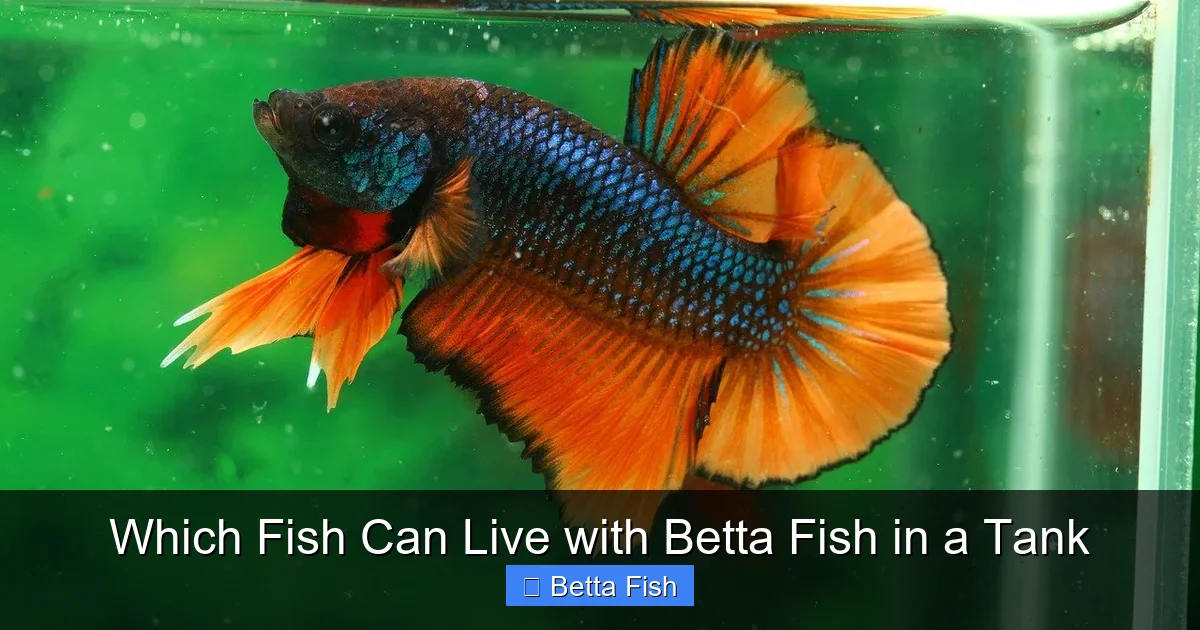
Visual guide about Which Fish Can Live with Betta Fish in a Tank
Image source: coralrealm.com
Rule #1: Tank Size is Everything
This is the single most important factor. The tiny “Betta cube” or 5-gallon kit tank is not suitable for tank mates. It offers no space for a Betta to establish a territory or for other fish to escape. The absolute minimum recommended tank size for a Betta with tank mates is 20 gallons (75 liters). A 29-gallon or larger is even better. This provides enough horizontal swimming space for schooling fish and vertical space for different water column layers (top, middle, bottom). In a larger tank, a Betta’s territory becomes a smaller percentage of the total area, reducing its need to defend every inch.
Rule #2: Understand the Water Column
Bettas are labyrinth fish, meaning they breathe atmospheric air from the surface. They are naturally top-dwellers, spending much of their time in the upper half of the water column, often resting near the surface. Therefore, the best tank mates are fish that occupy the middle and bottom levels. This reduces direct competition for space and minimizes encounters. Stocking the tank with other surface-dwelling fish is a recipe for constant conflict.
Rule #3: Peaceful Temperament & Speed
Your ideal tank mate should have a docile, peaceful disposition. More importantly, it should be a fast and agile swimmer. If a confrontation happens, a quick fish can dart away and hide before the Betta can catch it. Slow-moving fish with long fins (like some fancy goldfish or angelfish) are sitting ducks. They will be relentlessly chased and likely injured or killed.
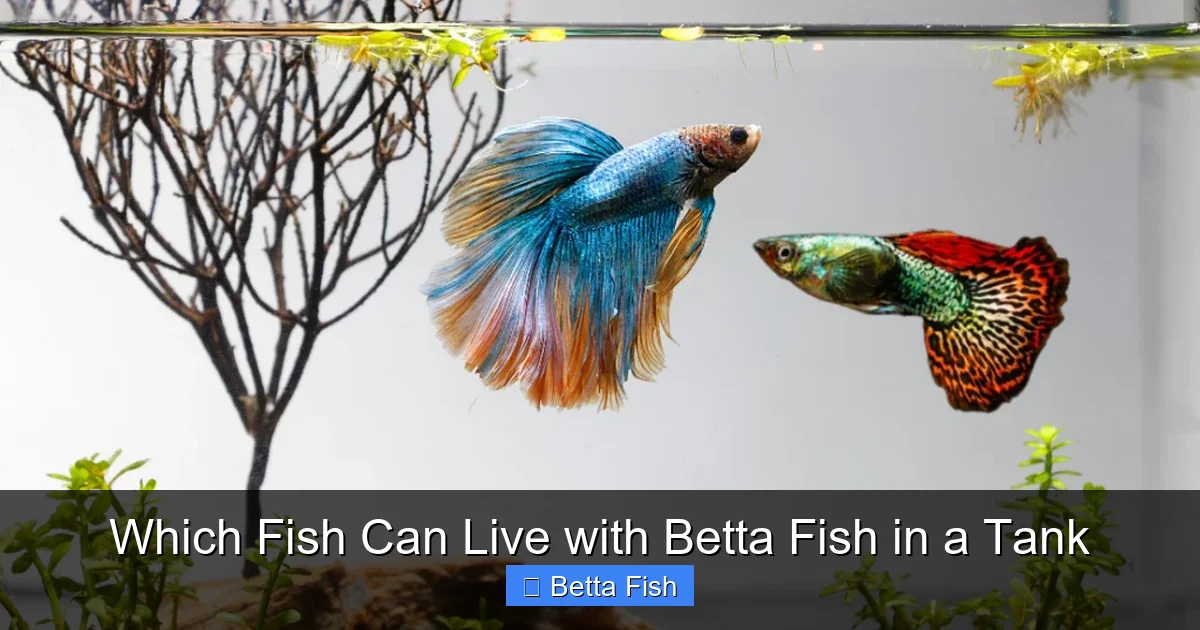
Rule #4: No Long, Flowing Fins
Betta fish are attracted to movement and may perceive the flowing fins of a male guppy or a fancy goldfish as a rival male Betta. This is a near-certain trigger for attack. Avoid any fish with prominent, flowing finnage. Also, avoid fish with extremely bright, similar colors (like some male guppies or swordtails) that may be seen as a competitor.
Rule #5: Aquascaping is Your Best Defense
You must design the tank to prevent constant line-of-sight between the Betta and its tank mates. Use a dense forest of live or silk plants (Java fern, Anubias, Vallisneria), driftwood, rocks, and ceramic caves. Create a complex, three-dimensional habitat. This allows other fish to have their own territories and hidden pathways, and it breaks up the Betta’s view, reducing its perception of “invaders” in its space.
Top Tank Mate Candidates: Species by Category
Armed with the rules above, let’s explore specific species that have a proven track record of success with Betta fish. Remember, these are guidelines, not guarantees. Always research the specific care requirements of any fish you consider to ensure they match your tank’s parameters (temperature, pH, hardness).
Visual guide about Which Fish Can Live with Betta Fish in a Tank
Image source: japanesefightingfish.org
The “Safest Bet” Category: Invertebrates
For the most risk-averse Betta owner, invertebrates are an excellent starting point. They occupy a different biological niche and are generally not seen as fish competitors.
- Nerite Snails: These are the #1 recommended tank mate. They are completely peaceful, have a hard shell for protection, and come in beautiful varieties (zebra, tiger, olive). They are excellent algae eaters and will not overpopulate your tank, as they require brackish water to breed. A Betta might investigate one, but it will quickly lose interest.
- Mystery/Apple Snails: Larger and more active than Nerites, these snails are also safe due to their size and shell. They are scavengers and will eat leftover food. Be aware they produce a lot of waste, so your filtration must be adequate for the bioload.
- Amano Shrimp: These are large, hardy freshwater shrimp (up to 2 inches). They are primarily algae eaters and are so focused on their job that they often ignore fish. Their size makes them less likely to be seen as food. They are excellent cleaners.
- Ghost Shrimp & Cherry Shrimp: These are smaller and can be at risk. A curious or hungry Betta may eat a small shrimp, especially a cherry shrimp with its bright red color. Ghost shrimp are more camouflaged and have a better chance. Success is not guaranteed, but many Betta owners have thriving colonies of ghost shrimp.
Peaceful Schooling Fish (Middle & Lower Levels)
These fish work best in groups of 6 or more. A school feels safer and will stick together, swimming as one unit that is harder for a Betta to single out.
- Harlequin Rasboras (Trigonostigma heteromorpha): A classic, time-tested companion. They are peaceful, active, and swim in the middle to upper levels. Their orange/red color is different enough from most Betta colors to not be a trigger. They need a school of 8+.
- Celestial Pearl Danios (Danio margaritatus): Also known as Galaxy Rasboras. These tiny, brilliant fish are active top-to-middle swimmers. Their spotted appearance is not threatening. They are hardy and do well in cooler water (down to 72°F), which can be a benefit if your Betta prefers the warmer end of the spectrum.
- Ember Tetras (Hyphessobrycon amandae): Perfect for a community with a Betta. They are tiny, fiery orange fish that school in the middle levels. Their small size and constant, swift movement make them difficult targets. A school of 10+ creates a beautiful, shimmering effect.
- Neon/Cardinal Tetras (Paracheirodon innesi/axelrodi): The iconic schooling fish. Their striking blue/red stripe is very different from a Betta’s coloration. They are fast and stay in the middle. Important: They must be in a large school (10+ for Neons, 15+ for Cardinals) to feel secure and reduce stress, which can lead to disease.
- Kuhli Loaches (Pangio kuhlii): These are fascinating, eel-like bottom dwellers that are nocturnal. They spend the day burrowed in the substrate or hiding under decorations. Because they are only active at night and occupy the very bottom, they almost never interact with a Betta. They need a soft, sandy substrate and should be kept in groups of 3+.
Peaceful Bottom Dwellers
These fish are excellent because they inhabit a space the Betta rarely visits.
- Corydoras Catfish (Cory Cats): The quintessential peaceful bottom feeder. They are social and should be kept in groups of 5-6 of the same species. They are armored, fast when needed, and constantly busily sifting the substrate for food. Species like Corydoras pygmaeus (Pygmy Cory) are small and active, while Corydoras aeneus (Bronze Cory) is a hardy, larger option. They are a fantastic choice.
- Bristlenose Plecos (Ancistrus sp.): A small, peaceful plecostomus. They are algae eaters that attach to surfaces. Their armored body and sucker mouth make them uninteresting to a Betta. They are nocturnal and need driftwood in their diet. The common “bristlenose” is a good size (4-5 inches) for a 20+ gallon tank.
- Otocinclus Catfish (Otocinclus affinis): The smallest and most dedicated algae eater. They are tiny, schooling fish that cling to glass and leaves. They are very peaceful and shy. They can be sensitive to water quality and require a tank with established algae growth or supplemental feeding with algae wafers. A group of 6+ is recommended.
Setting Up and Stocking Your Community Tank
You have your 20+ gallon tank, your Betta, and a list of potential mates. Now, the process matters as much as the species.
Tank Setup: Creating a World of Hiding Places
Before adding any fish, your aquascape must be complete. Use a dark substrate (sand or dark gravel) to reduce glare. Plant densely! A combination of tall background plants (like Amazon swords or Vallisneria), mid-ground plants (like Java fern on driftwood), and foreground carpets (like Monte Carlo) creates layers. Add driftwood, rock piles, and at least 5-7 ceramic or stone caves. Floating plants (like frogbit or dwarf water lettuce) are fantastic for breaking up the surface and giving fish a place to rest under the Betta’s domain. The goal is to make it impossible for the Betta to see the entire tank at once.
The Introduction Order: A Critical Strategy
The safest method is to add all the other fish first and let them establish their territories and social hierarchies for a week or two. Then, introduce the Betta last. A Betta added to an established community is less likely to see itself as the sole ruler of a new territory; it will have to navigate the existing structure of the tank. This is the opposite of the common “Betta first” approach, which often results in the Betta claiming every square inch and attacking any new addition.
How to Introduce the Betta: Float the Betta’s bag in the tank for 15-20 minutes to acclimate temperature. Then, use a divider (a mesh or acrylic tank divider sold for this purpose) in the tank, or use a clear acrylic box/breeder net inside the main tank. Place the Betta in this segregated area for 24-48 hours. This allows all fish to see each other without physical contact. Observe closely. If the Betta flares excessively and the other fish are visibly stressed, reconsider the pairing. If reactions are minimal (curiosity, not aggression), you can then carefully release the Betta into the main tank, preferably near some hiding spots, and monitor for several hours.
Feeding Strategies to Prevent Rivalry
Feed your tank mates first, scattering their food in the middle and bottom levels. Once they are occupied, feed your Betta its food at the surface. This prevents the Betta from seeing other fish rushing to the surface for food as a challenge. Use a Betta-specific pellet or frozen food (daphnia, brine shrimp) that sinks slowly, so the Betta can eat at the surface without competing directly.
Troubleshooting: What to Do When Things Go Wrong
Even with perfect planning, you may encounter issues. Early detection is critical.
Recognizing the Warning Signs
You must watch your tank, especially in the first 72 hours after introducing the Betta. Chasing is the most common sign. A Betta will rapidly pursue another fish. Flaring (gills and fins puffed out) directed at a specific fish is a clear threat display. Fin-nipping is a serious problem; you’ll see torn or shredded fins on the victim fish. Hiding 24/7 by a potential tank mate is a sign of extreme stress and fear. If you see any of these, you must act.
Immediate Action: Separation is Kindness
Do not wait to see if “they’ll work it out.” They won’t. Have a backup plan ready. This means having a hospital tank or a divider already set up and cycled. Immediately remove the victim fish to the hospital tank to recover. You also need to remove the Betta and place it back in its own solitary tank (or the divided section) to break the cycle of aggression. Rehoming one of the parties is often the only permanent solution. Never punish the Betta; this is its natural instinct. You simply have incompatible tank mates.
The “It Looks Fine, But…” Scenario
Sometimes, a Betta will ignore other fish for days, then suddenly decide a particular neon tetra is its nemesis. Bettas can be unpredictable. This is why constant, daily observation for the first two weeks is essential. Also, watch for subtle bullying where the Betta just patrols a section of the tank and the other fish learns to avoid it, living in a state of chronic stress. This is not a successful community. The goal is for all fish to exhibit normal, stress-free behaviors: active swimming, exploring, and eating.
Conclusion: Patience, Observation, and Realistic Expectations
Keeping a Betta fish in a community aquarium can be an incredibly rewarding experience, creating a dynamic and beautiful underwater world. However, it is a project that must be approached with respect for the Betta’s natural instincts and a commitment to providing an appropriate environment. Remember the pillars of success: a spacious, heavily planted tank of 20 gallons or more, the right species (fast, peaceful, middle/bottom dwellers), and meticulous planning in the order of introduction.
Start with the safest options—like a school of Harlequin Rasboras or a group of Corydoras—to build your confidence. Always have a Plan B. The joy of seeing your Betta peacefully cohabit with a school of tiny, shimmering tetras or a team of busy cory cats is worth the extra effort. But if your Betta proves to be a true solitary, there is no shame in keeping it as the sole star of a beautifully planted species tank. A happy, healthy Betta, whether alone or with friends, is the ultimate measure of success.
Frequently Asked Questions
Can female Betta fish live with other fish?
Yes, female Betta fish are generally less aggressive than males and can often be kept in community tanks with similar peaceful species. However, individual temperaments vary, and some females can still be territorial. The same rules of tank size, aquascaping, and careful species selection apply.
What is the absolute minimum tank size for a Betta with tank mates?
While some sources may list 10 gallons, the strongly recommended minimum is 20 gallons. A 10-gallon tank provides very little space for other fish to establish their own territories and escape a Betta’s attention, significantly increasing the risk of aggression and stress.
Can I keep two male Betta fish together if the tank is big enough?
No. Two male Bettas will fight, often to the death, regardless of tank size. Their aggression towards their own species is innate. The only exception is using a permanent, sealed divider that completely separates their water compartments.
Will a Betta eat my shrimp or snails?
It depends. Large snails with hard shells (Nerites, Mystery Snails) are generally safe. Large shrimp like Amano shrimp are often too big to be considered food. Small shrimp like Cherry Shrimp or baby ghost shrimp are at high risk of being eaten, especially by a curious or aggressive Betta.
Should I add the Betta to the tank first or last?
For the highest chance of success, add all the other fish first and let them settle for 1-2 weeks. Then, introduce the Betta last using a divider method. This prevents the Betta from establishing dominance over the entire empty tank from day one.
How long should I wait before deciding my Betta and tank mates are incompatible?
You should monitor closely for at least 72 hours after the final introduction. If you see persistent chasing, flaring, or fin-nipping during this period, you should separate the fish immediately. Some incompatibilities show up within hours, others over a few days. Do not wait weeks to see if it improves.


