Can Betta Fish Live in Ac Room

Yes, betta fish can live in an air-conditioned room, but it requires careful management. Their tropical nature demands warm, stable water between 78-80°F (25.5-26.5°C), which air conditioning can disrupt. The primary risk is rapid temperature drop and cold stress from cool air blowing directly on the tank or chilling the room. Success hinges on using an aquarium heater, preventing drafts, and constantly monitoring water temperature with a reliable thermometer to ensure a stable, warm environment despite the cool room air.
Key Takeaways
- Temperature is Critical: Bettas are tropical fish requiring a consistent water temperature of 78-80°F (25.5-26.5°C). AC can easily drop water temperature below this safe range.
- AC Creates Drafts & Rapid Cooling: The main danger isn’t the room’s ambient temperature but cold air currents from vents or drafts that chill the tank water quickly, causing stress and illness.
- A Heater is Non-Negotiable: In any room with AC, a reliable, fully-submersible aquarium heater with a thermostat is essential to maintain a stable temperature, regardless of room air temperature.
- Placement is Everything: Never place the tank in the direct path of an AC vent or draft. Position it away from windows, doors, and air conditioning units.
- Monitor Relentlessly: Use a separate, accurate digital aquarium thermometer (not the heater’s sticker) to check water temperature daily, especially during seasonal changes.
- AC Can Lower Humidity: Air conditioning dehumidifies the air, which can increase evaporation from the tank. Ensure a secure lid and monitor water levels more frequently.
- Watch for Stress Signs: Lethargy, loss of color, clamped fins, and reduced appetite are key indicators your betta is too cold due to AC effects.
📑 Table of Contents
- Can Betta Fish Live in an AC Room? The Tropical Truth
- The Betta’s Biological Blueprint: Why Warmth is Non-Negotiable
- The Air Conditioner’s Triple Threat: Drafts, Drying, and Drops
- The Heater vs. AC Debate: Why You Absolutely Need Both (But One Must Win)
- Tank Placement Strategy: Your First Line of Defense
- Beyond Temperature: Humidity and Air Quality Considerations
- Troubleshooting: Signs Your Betta is Struggling with the AC
- Conclusion: Harmony in the Home
Can Betta Fish Live in an AC Room? The Tropical Truth
So, you’ve got a beautiful, vibrant betta fish swimming gracefully in its tank, and you’re trying to create the perfect home for it. You love your air conditioner—it keeps you cool and comfortable during those hot summer months. But a nagging question pops into your head: can my betta fish live in an AC room? It’s a common concern for new and experienced betta owners alike, especially as temperatures rise. The short answer is: yes, they absolutely can, but it’s not as simple as just turning on the AC and forgetting about it. Your betta’s survival and thriving depend on you understanding its specific tropical needs and how to counteract the drying, cooling effects of air conditioning.
Think of your betta not as a pet in a bowl, but as a resident of a tiny, warm, steamy Southeast Asian rice paddy. They are native to the tropical regions of Thailand, Cambodia, and Vietnam, where water is consistently warm, often between 75-85°F (24-29°C). Their entire biology—from their metabolism to their immune system—is built for that warmth. An air conditioner, designed to remove heat and moisture from the air, directly challenges that natural habitat. The goal of this guide is to bridge that gap. We will dive deep into the science of betta temperature needs, the specific risks an AC room poses, and—most importantly—give you a clear, actionable plan to keep your betta healthy, active, and stunningly colorful, even with the AC blasting. This isn’t about avoiding AC; it’s about mastering its use around your aquatic pet.
The Betta’s Biological Blueprint: Why Warmth is Non-Negotiable
To understand how to care for a betta in an AC environment, we must first understand what we’re working with. The Siamese fighting fish, or betta splendens, is a member of the gourami family and a true tropical fish. Its physiology is a masterpiece of adaptation to warm, often low-oxygen waters. This biological blueprint tells us exactly why cold water is such a problem.
Visual guide about Can Betta Fish Live in Ac Room
Image source: acaquarium.com
Metabolism on a Leash: The Temperature-Energy Link
A fish’s metabolism is directly tied to the temperature of its environment. In warmer water, a betta’s metabolic rate increases. It’s more active, digests food more efficiently, and its immune system functions at its peak. When water temperature drops, everything slows down. Digestion grinds to a halt, making food sit in their gut and potentially causing constipation and swim bladder issues. Their immune cells become sluggish, leaving them vulnerable to opportunistic diseases like fin rot or velvet. An AC room, if not managed, can push a betta into a state of chronic, low-grade hypothermia. You might not see an immediate crisis, but over weeks, the fish’s vitality fades. It’s a silent drain on their health.
The Labyrinth Organ: A Lifeline That Needs Warm Air
The betta’s most famous feature is its labyrinth organ, a specialized structure that allows it to breathe atmospheric air. This is why they can survive in stagnant, oxygen-poor water. However, this organ has a critical requirement: the air it breathes must be warm. The labyrinth organ is lined with blood vessels that need to stay warm to facilitate efficient gas exchange. If the air above the tank (especially if there’s a gap in the lid) is chilled by AC, the betta is gulping down cold, dry air. This can shock the organ, reduce its efficiency, and contribute to respiratory stress. It’s a double-whammy: cold water slows the body, and cold air chills the specialized breathing system.
The 78-80°F Sweet Spot: Not Just a Suggestion
While bettas can survive brief dips into the mid-70s°F, their ideal, thriving range is a narrow band of 78-80°F (25.5-26.5°C). This is the Goldilocks zone. At this temperature, their colors are most vibrant, their finnage flows beautifully, they build bubble nests (a sign of health and contentment), and they are curious and interactive. Straying too far below this range for extended periods is the primary cause of “dropsy” (a symptom, not a disease), chronic fin rot, and a general decline. Your job as a caretaker in an AC room is to create a micro-environment within that tank that holds this temperature steady, 24 hours a day, 7 days a week, regardless of what the thermostat on your wall says.
The Air Conditioner’s Triple Threat: Drafts, Drying, and Drops
Now let’s look at the enemy—or rather, the environmental factor we must manage. An air conditioner isn’t inherently evil for your betta. It’s a tool. But it creates three specific conditions that are hazardous to a tropical fish’s health. Understanding these is the first step to mitigation.
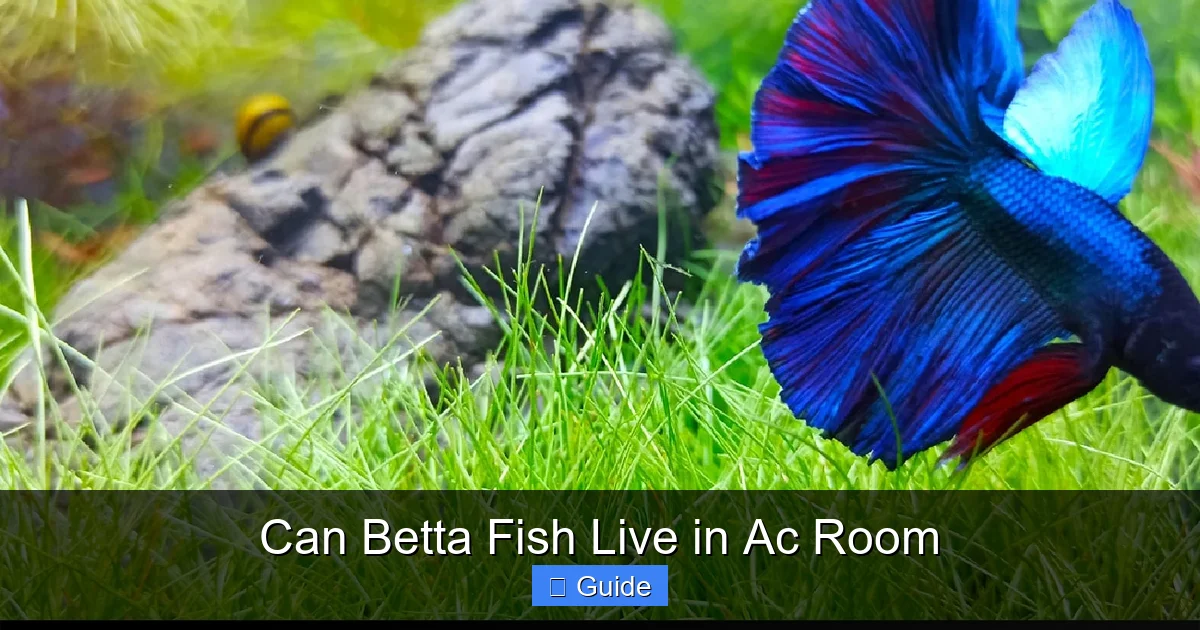
Visual guide about Can Betta Fish Live in Ac Room
Image source: buildyouraquarium.com
Threat #1: The Sinister Draft
This is the number one, immediate killer of bettas in AC rooms. A draft is a focused stream of cool air. It could be from a vent directly blowing toward the tank, a gap under a door, a window that doesn’t seal properly, or even a fan circulating air. Water holds heat much more effectively than air, but it’s not impervious. A constant stream of 65°F (18°C) air hitting the glass wall of a tank will pull heat out of the water in that specific area. The betta, being a curious creature, may hover in that cooler spot, leading to localized chilling. More insidiously, the entire water body’s temperature can drop several degrees in a matter of hours if the draft is strong enough. This rapid change is a massive shock to their system, often leading to immediate lethargy and, if severe, death. The key takeaway: no direct airflow on the tank, ever.
Threat #2: The Humidity Heist
Air conditioners are dehumidifiers. They pull moisture out of the air to create that dry, comfortable feel we associate with cooled indoor air. Your betta’s tank is a large, open surface of water constantly evaporating. In a dry AC room, this evaporation rate increases significantly. There are two main problems here. First, you’ll need to top off the tank with dechlorinated water more often to maintain the water level. Second, and more subtly, the increased evaporation can concentrate minerals and any dissolved waste products in the remaining water, slightly altering water chemistry. Furthermore, a betta’s prized long fins can be prone to drying and tearing at the edges in very low humidity, though this is a secondary concern to temperature.
Threat #3: The Ambient Temperature Drop
Even without a direct draft, an AC set to 72°F (22°C) will slowly but surely lower the temperature of your tank water. Room air is in constant contact with the tank’s glass walls and water surface. Over 24 hours, the tank will equilibrate to the room temperature, especially if there’s no heater fighting it. A room at 72°F is simply too cold for a betta’s long-term health. This isn’t a fast emergency like a draft, but a chronic stressor. The fish will be perpetually operating below its optimal metabolic function, making it more susceptible to disease and less vibrant.
The Heater vs. AC Debate: Why You Absolutely Need Both (But One Must Win)
This is the core of the entire discussion. Can you have an AC room without a heater? For a betta, absolutely not. The two appliances are in a constant, silent battle for control of your tank’s temperature. Your job is to make sure the heater wins, decisively and consistently.
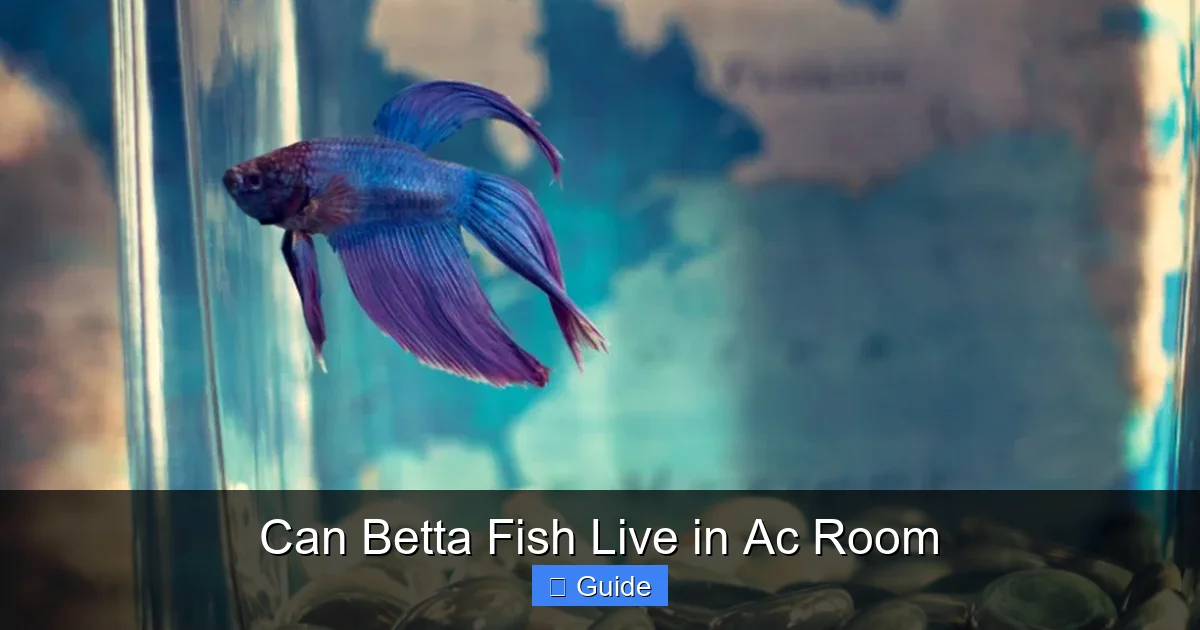
Visual guide about Can Betta Fish Live in Ac Room
Image source: japanesefightingfish.org
Choosing the Right Heater: It’s Not One-Size-Fits-All
For a standard betta tank (5-10 gallons), you need a fully-submersible heater with an adjustable thermostat. Avoid preset heaters that can’t be calibrated. A good rule of thumb is 5 watts per gallon. So for a 5-gallon tank, a 25-watt heater is sufficient; for a 10-gallon, a 50-watt heater is appropriate. Buy a reputable brand (Eheim, Fluval, Aqueon, Hygger are good starts). The heater must be fully submerged at all times to function correctly and not overheat. It should have an automatic shut-off when it reaches the set temperature, but it’s not a set-and-forget device. You must verify its accuracy.
Setting the Heater in an AC Room: The 2-Degree Buffer
Here’s the pro tip. If your target water temperature is 79°F, set your heater to 80-81°F. Why? Because the AC will cause minor fluctuations. The heater will kick on more frequently to maintain that higher set point, working against the cool room air. The slight excess heat will be lost to the room, but the net effect is a more stable 79°F in the tank. Setting it to exactly 79°F means the moment the AC causes a 0.5°F drop, the heater turns on, but it might struggle to keep up during the hottest parts of the day if the AC is running constantly. The small buffer gives you a safety margin. Use a separate digital thermometer to confirm the actual water temperature, not the sticker on the heater or its dial.
The “Heater Off” Myth: A Dangerous Gamble
Some online forums suggest turning the heater off during hot summers because the room is warm. This is extremely risky. First, your AC is likely running at night or during cooler parts of the day, causing rapid drops. Second, room temperature is not water temperature. A room at 78°F does not guarantee tank water at 78°F. Third, it creates wild swings. The only safe practice is to keep the heater plugged in and set to the correct temperature year-round. It will simply not turn on if the water is already warm enough, but it will be ready the moment the temperature dips. Unplugging it removes your primary defense against temperature instability.
Tank Placement Strategy: Your First Line of Defense
Before you even plug in the heater, you must place the tank correctly. This is the most impactful, cost-free thing you can do. A poorly placed tank will fight your heater every step of the way.
The “No-Fly Zone” for Bettas in an AC Home
Mark these spots with a big red X in your mind. Never place your betta tank:
- Directly under or in front of an AC vent or return. This is the fastest route to a draft and rapid cooling.
- On an exterior wall with poor insulation, especially if that wall has windows. These walls get coldest in air-conditioned rooms.
- Near exterior doors that are frequently opened, letting in bursts of warm, humid, or cool air.
- In a high-traffic hallway or near frequently used fans, where air currents are constant.
- On a cold tile or stone floor. The floor can act as a heat sink, drawing warmth from the tank. Use a tank stand or foam pad to create an insulating barrier.
The Prime Real Estate: Finding the Sanctuary Spot
Your ideal location is on an interior wall, away from all windows, doors, and vents. It should be in a room where the AC airflow is gentle and diffuse, not direct. A corner of a living room or bedroom, away from the main vent, is often perfect. The tank should be on a sturdy, level surface. Consider the view—betticas enjoy activity, so a spot where they can see you (but not be startled by sudden movements) is good. Also, ensure the location is convenient for you to perform water changes and check equipment. If you have to wrestle with furniture to service the tank, you’ll do it less often. Accessibility is key for consistent care.
The Power of Tank Covers and Hoods
A full hood or lid is your secret weapon against an AC room. It serves multiple purposes. First, it creates a layer of still air above the water surface, which acts as insulation, reducing heat loss from evaporation. Second, it prevents cold air from directly hitting the water surface. Third, it stops your betta from jumping out—a risk that increases if they are stressed by temperature fluctuations. Fourth, it helps retain humidity in that top layer of air, which is better for your betta’s labyrinth organ. If you have a tank without a lid, consider a glass canopy or even a breathable mesh cover to provide some of these insulating benefits while allowing gas exchange.
Beyond Temperature: Humidity and Air Quality Considerations
We’ve hammered the temperature point home, but the AC environment affects other subtle factors that contribute to overall betta health. Ignoring these can undermine your perfect temperature management.
The Dry Air Dilemma and Fin Care
As mentioned, AC dries the air. For a betta with large, flowing fins (like a Halfmoon or Rosetail), this can be a factor. Dry air can make fin edges more brittle and prone to tearing, especially if they brush against decorations. While not as critical as temperature, it’s a reason to ensure a secure lid to trap a bit more moisture. You can also gently mist the area around the tank (not into the water) with a spray bottle filled with dechlorinated water to locally raise humidity, but be cautious not to overdo it and cause condensation issues on electronics or walls.
Airborne Particles and Tank Cleanliness
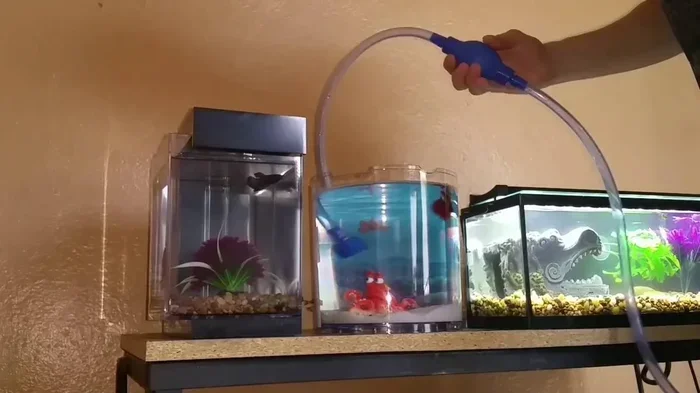
Air conditioners recirculate air through filters, but they can also blow around dust, fibers from carpets, and other fine particulates. These can settle on the water surface and eventually make their way into the tank. A covered tank helps block this. This reinforces the need for a consistent maintenance schedule: weekly water changes (25-50%), careful gravel vacuuming to remove detritus, and cleaning the glass walls. A clean tank is a healthier tank, and in an AC room with potentially more airborne dust, this weekly ritual is even more important.
The Stable Room, The Stable Tank
Try to avoid placing the tank in a room where the AC is turned on and off erratically, or where a window is constantly opened and closed. The goal is a stable ambient environment. If the room temperature swings wildly from 68°F at night to 78°F during the day with the AC cycling, your heater will be working overtime, and the tank temperature will fluctuate more. If possible, set your AC to a consistent, moderate temperature (like 75°F) rather than a very low temperature that causes big swings. This helps your heater maintain a more constant aquatic environment.
Troubleshooting: Signs Your Betta is Struggling with the AC
Even with the best preparation, you need to be a detective. Your betta cannot tell you “Mom, the draft from that vent is chilling my gills!” You must learn to read its behavior and physical condition. These are the red flags that your AC management strategy needs adjustment.
Behavioral Red Flags
The first signs are almost always behavioral. Lethargy is the most common. A betta that is usually zipping around, flaring at its reflection, or exploring will become listless, hovering near the bottom or top of the tank, often in one spot. It may seem “tired.” Loss of appetite is another big one. If your betta ignores food it normally devours, it’s a sign something is off. Clamped fins—where the fins are held tightly against the body instead of being flowing and open—is a classic sign of stress or illness, often temperature-related. Reduced activity and hiding more than usual are also indicators.
Physical Symptoms of Chronic Cold Stress
If the cold stress persists, physical symptoms appear. Faded or dull colors are a hallmark. Betttas are famous for their jewel-like brilliance; when stressed or unwell, they often turn pale or muddy. White, fuzzy patches (fungus) or red, raw areas (fin rot) can develop because a cold-stressed immune system cannot fight off common pathogens that are always present in the water. Swim bladder issues—where the fish floats upside down, sinks, or swims erratically—can be triggered by cold slowing digestion and causing constipation, which presses on the swim bladder.
The Immediate Action Plan
If you see these signs, act fast. First, check your water temperature immediately with your digital thermometer. Is it below 76°F? If so, that’s your culprit. Second, ensure your heater is functioning and set correctly. Gently feel the heater—is it warm? Is it fully submerged? Third, eliminate any drafts. Move the tank if necessary, even temporarily. Use cardboard or a towel to block a vent blowing towards the tank (as a short-term fix while you rearrange). Fourth, perform a 25% water change with water that is pre-heated to the tank’s target temperature (use a separate heater in the bucket). Finally, consider adding a stress coat water conditioner to help protect the fish’s slime coat. If symptoms are severe (like severe fin rot or prolonged inability to swim), consult a knowledgeable veterinarian or experienced aquarist, but temperature correction is always step one.
Conclusion: Harmony in the Home
So, can a betta fish live in an AC room? The answer is a confident yes, provided you become the architect of its microclimate. Your betta’s tank is not just a decoration; it’s a controlled ecosystem, and you are the climate control system. The air conditioner sets the challenge—cool, dry air. Your tools to meet that challenge are a reliable heater, a strategic tank location away from drafts, a secure lid, and a vigilant eye on the thermometer.
Think of it this way: you wouldn’t expect a person to thrive in an office with the AC set to 60°F without a sweater or heater. You’d provide them with a jacket. For your betta, the heater is that jacket, and the tank cover is the cozy hood. The draft-free placement is choosing a seat away from the vent. By providing these simple, non-negotiable elements—consistent 78-80°F water, no direct drafts, and stable humidity—you transform a potentially hazardous AC room into a perfectly acceptable, even ideal, home for your aquatic friend. You get to enjoy your comfort, and your betta gets to enjoy its tropical paradise, right on your desk or shelf. It’s a win-win built on understanding, preparation, and attentive care. Now, go check that thermometer.
Frequently Asked Questions
What happens if my betta’s water gets too cold from the AC?
A betta’s metabolism slows dramatically in cold water, leading to lethargy, loss of appetite, a weakened immune system, and increased susceptibility to diseases like fin rot. Prolonged exposure to temperatures below 76°F can be fatal.
Do I need a heater if my room is always warm from the AC being off?
Yes. Room air temperature and water temperature are different. Water holds heat differently and can still drop overnight or near windows. A heater with a thermostat ensures the water stays within the safe, stable 78-80°F range 24/7, which is critical for long-term health.
Can the low humidity from AC hurt my betta’s fins?
While not the primary concern, very low humidity can contribute to fin edges becoming dry and brittle, especially on long-finned varieties. Using a tank lid helps trap moisture above the water surface, and a stable, warm temperature from a heater is far more important for overall fin health.
Where is the worst place to put my betta tank in an AC room?
The absolute worst spot is directly in the line of fire from an AC vent or return. Also avoid exterior walls, near frequently opened doors or windows, and on cold floors. These locations guarantee drafts and rapid temperature loss.
How can I tell if my betta is cold from the AC?
Look for key signs: extreme lethargy (hovering at the bottom), clamped fins (held tightly to the body), significant loss of bright color, and a complete lack of interest in food. These are classic indicators of chronic cold stress.
Should I turn my betta’s heater off in the summer if I’m using AC?
Never. You should keep the heater plugged in and set to 78-80°F year-round. The AC will cause temperature fluctuations, especially at night. The heater’s job is to maintain a stable target temperature regardless of the room’s ambient air temperature. Turning it off removes your tank’s only defense against cooling.