Can Betta Fish Live with Other Betta
Generally, no—male betta fish should not live with other bettas due to extreme aggression. Female bettas *can* sometimes form sororities in large, heavily planted tanks, but this requires meticulous planning and monitoring. The success of any betta cohabitation hinges on tank size, environment, and individual personalities. Always prioritize the safety and well-being of your fish over the idea of a mixed-species tank.
You’ve seen them in their tiny, decorated cups at the pet store, their flowing fins and vibrant colors utterly captivating. The Betta splendens, or Siamese fighting fish, is arguably the most popular aquarium fish in the world. But a common question nags at new and experienced hobbyists alike: Can betta fish live with other betta? It’s a tempting thought—a beautiful community tank with multiple of these stunning fish swimming peacefully together. The answer, however, is one of the most nuanced in the aquarium hobby, fraught with risk and governed by genetics, environment, and a little bit of luck. Let’s dive deep into the complex social world of the betta fish.
Key Takeaways
- Male bettas are solitary: Housing two male bettas together is virtually always a recipe for severe injury or death due to their innate territorial aggression.
- Female sororities are possible but risky: Groups of 4-6 female bettas *can* coexist in a minimum 20-gallon tank with abundant hiding places, but hierarchy fights are common and fatalities occur.
- Tank size is non-negotiable: For any multi-betta setup, a 20-gallon long tank is the absolute starting point; larger is always safer and reduces tension.
- Environment is critical: Dense planting, driftwood, rock caves, and visual barriers are essential to break line-of-sight and provide escape routes, reducing aggression.
- Constant monitoring is required: Even in a seemingly stable sorority, you must watch daily for signs of bullying, stress, or injury and be prepared to separate fish immediately.
- Consider peaceful tank mates instead: A single male or female betta often thrives better with carefully chosen, non-aggressive community fish like small tetras or corydoras catfish.
- There are no guarantees: Betta temperament is highly individual; a fish that seems peaceful one day may become aggressive the next, so always have a backup isolation tank.
📑 Table of Contents
- Understanding the Betta’s Nature: More Than Just a “Fighting Fish”
- The Unyielding Rule: Male Betta Dynamics
- Female Betta Sororities: A Delicate Balance
- The Foundation of Success: Tank Setup & Environment
- Compatible Tank Mates: Choosing the Right Neighbors
- Alternatives to Cohabitation: Safe and Rewarding Options
- Conclusion: Prioritizing Welfare Over Aesthetics
Understanding the Betta’s Nature: More Than Just a “Fighting Fish”
To understand if bettas can live together, we must first understand what makes them tick. The betta’s reputation as a fighter isn’t just a colorful exaggeration; it’s written in their DNA. Originating from the shallow, hot, and often oxygen-poor rice paddies and stagnant streams of Thailand, these fish evolved with a fierce territorial instinct. In the wild, a male betta will aggressively defend a small patch of water—a prime spawning site with a bubble nest—from any rival male that enters his perceived domain. This instinct has been selectively amplified over centuries of Betta fighting (a cultural tradition in Southeast Asia), where males were bred specifically for aggression. The pet trade bettas we know today are descendants of these lines, though modern breeders also produce varieties for color and finnage.
The Labyrinth Organ and Its Role
Another key to the betta’s survival—and their suitability for cohabitation—is their labyrinth organ. This specialized structure allows them to breathe atmospheric air from the surface. It means they are not solely dependent on oxygen dissolved in the water and can survive in conditions that would suffocate other fish. However, this adaptation also ties them to the surface. In a community tank, a betta will often stake out the top layer as its personal territory. Any other fish, especially another surface-dwelling betta, is an immediate trespasser.
Triggers for Aggression
Betta aggression is typically triggered by:
- Visual contact: Seeing another betta, especially one with bright colors or large fins (which they perceive as a rival).
- Territory invasion: Another fish entering their claimed space, particularly near the surface or a chosen hideout.
- Resources: Competition for food, a preferred resting leaf, or a bubble nest (for males).
- Stress: Poor water quality, overcrowding, or a lack of hiding spots can make a normally passive betta irritable and more likely to lash out.
The Unyielding Rule: Male Betta Dynamics
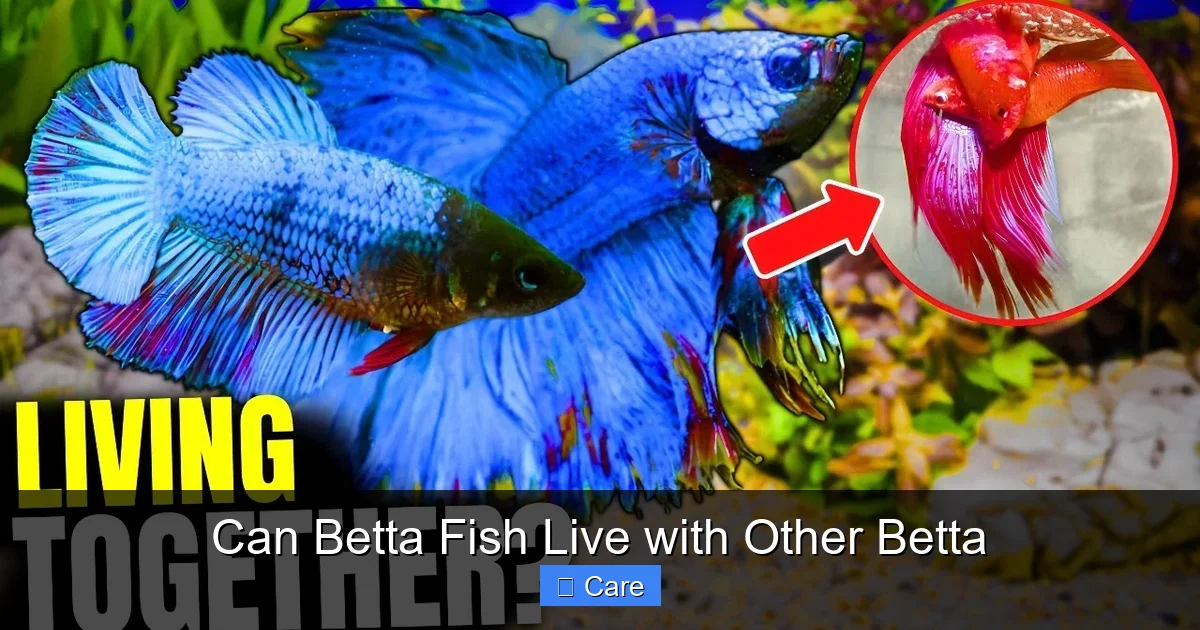
If you take away only one piece of information from this entire guide, let it be this: Two male betta fish should never be housed together in the same tank without a solid, permanent divider. There are no exceptions. Not even for “docile” varieties like halfmoon plakats or “dumbo” ear bettas. The instinct to fight is too deeply ingrained. A common myth is that keeping two males in a very large tank (like a 50-gallon) will allow them to establish separate territories and avoid conflict. This is a dangerous gamble. While space can sometimes delay a confrontation, the moment their paths cross—during feeding, exploring, or simply by chance—a vicious battle will erupt. Bettas are equipped with sharp teeth and can flare their gills to appear massive. Fights involve biting fins and scales, leading to torn, ragged fins (fin rot is a common secondary infection), severe physical injury, and often death for one or both fish. The stress of constant, low-level tension in a shared space also suppresses the immune system, making fish susceptible to disease.

Visual guide about Can Betta Fish Live with Other Betta
Image source: i.ytimg.com
The “Tank Split” or Divider Method
The only safe way to house multiple male bettas in one physical tank system is by using a solid, sealed divider. This is not true cohabitation but rather keeping two separate aquariums in one cabinet. The divider must be completely opaque (no clear plastic) and extend above the water line to prevent jumping or aerial aggression via flaring at the surface. Each side must have its own complete filtration, heating, and decor. Water parameters must be matched, but the fish never have direct or even clear visual contact. This is a setup for advanced hobbyists who want the aesthetic of one tank but understand the biological imperative of separation.
Female Betta Sororities: A Delicate Balance
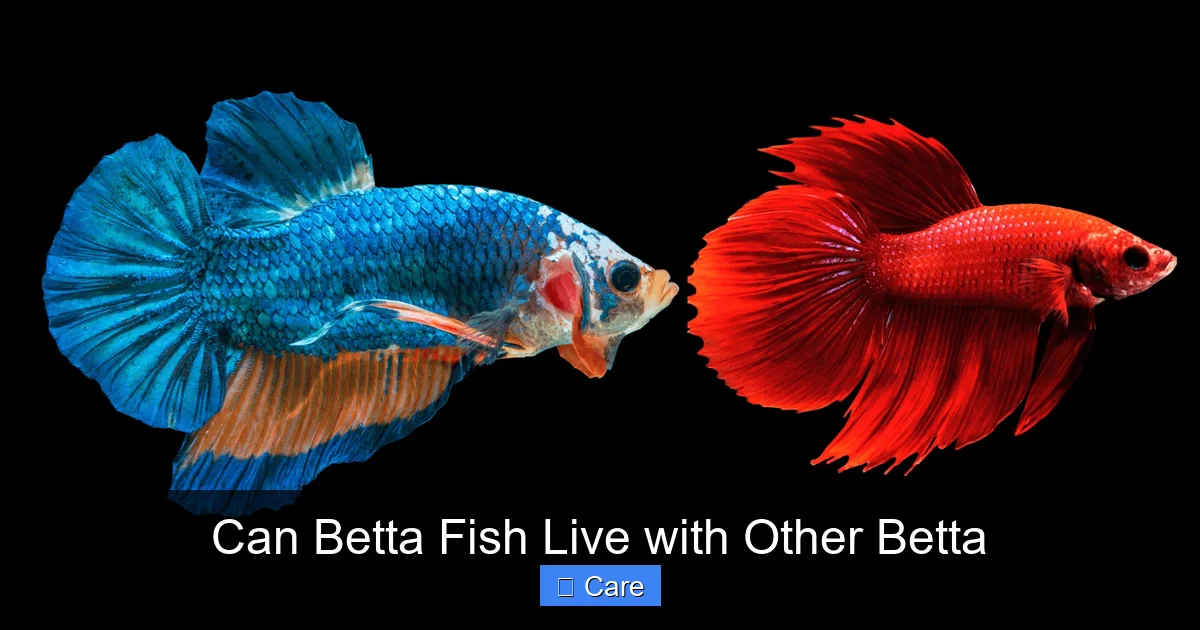
While male bettas are almost universally incompatible with their own gender, female bettas present a more complex scenario. In the wild, female bettas are not as aggressively territorial and can sometimes be found in loose groups. This has led to the practice of establishing “sororities”—groups of 4 or more female bettas living together. However, it is crucial to understand that a female betta sorority is not a natural, peaceful community; it is a carefully managed hierarchy that can collapse at any moment.
Visual guide about Can Betta Fish Live with Other Betta
Image source: aniimad.com
How a Sorority Works (or Doesn’t)
The goal is to establish a pecking order. When a new group is introduced, there will be chasing, flaring, and minor skirmishes as the hierarchy is sorted out. This initial period, lasting a few days to a couple of weeks, is the most dangerous. The key is to introduce all females at the same time into a brand-new, empty tank. Adding a new female to an established sorority is a guaranteed death sentence for the newcomer. A successful sorority requires:
- Minimum Group Size: 4-6 females. With fewer than 4, one fish will be relentlessly picked on and killed. A larger group (6+) helps disperse aggression.
- Massive Tank Size: The absolute minimum is a 20-gallon long tank (30” x 12” footprint). A 29-gallon or larger is strongly recommended. More horizontal swimming space is critical.
- Extreme Plant Density: The tank must be so thickly planted (with live plants like hornwort, water wisteria, or java moss, or silk decor) that a fish cannot see from one end to the other. This breaks line-of-sight and provides countless hiding spots.
- Abundant Hardscape: Driftwood, rock piles, and ceramic caves must be distributed throughout to create multiple territories.
The Inherent Risks and Constant Vigilance
Even in a perfect setup, a sorority is a ticking clock. A previously submissive fish may have a “bad day” and escalate a chase. A dominant female may suddenly target a previously ignored tankmate. Fin nipping can start slowly and then spiral. You must observe the tank for 15-20 minutes daily, looking for:
- One fish consistently hiding and not coming out for food.
- Chasing that results in one fish being cornered against the glass.
- Visible damage to fins or body.
- Gasping at the surface (a sign of stress and poor water quality from overstocking).
At the first sign of persistent bullying or injury, the victim must be removed to a separate hospital tank immediately. A sorority is a dynamic, unstable system. It is not a beginner’s project and is not recommended for your first betta tank.
The Foundation of Success: Tank Setup & Environment
Whether you’re attempting a sorority or planning a single betta in a community tank, the environment is your primary tool for managing aggression. A poorly set-up tank guarantees conflict. A well-designed one can mitigate it.
Visual guide about Can Betta Fish Live with Other Betta
Image source: i.ytimg.com
Tank Size: The Golden Rule
Forget the myth that bettas can live in bowls. A single betta deserves a minimum of a 5-gallon cycled tank, but for any cohabitation attempt, the size requirement skyrockets.
- Single Betta: 5 gallons (minimum), 10+ gallons ideal.
- Female Sorority: 20-gallon long (minimum), 29+ gallons strongly preferred.
- Betta with Community Fish: 10 gallons for very small, peaceful schools (like neon tetras) with one betta. 20+ gallons for more active or larger tank mates.
The “long” or “breeder” tank shape (wider, not taller) is always better, as it provides more horizontal territory, which is more important to bettas than vertical height.
Creating a Fortress: Plants, Hiding Spots, and Visual Barriers
Your tank must look like a jungle, not an empty arena. The goal is to eliminate uninterrupted sight lines.
- Floating Plants: Indian almond leaves, water lettuce, or dwarf water lettuce are perfect. They provide surface cover (betta’s favorite layer), diffuse light, and mimic their natural habitat. They also help with water quality.
- Dense Stem Plants: Plants like Rotala, Ludwigia, or Limnophilia can be planted thickly to create walls of greenery.
- Hardscape: Arrange driftwood and rocks to form caves, overhangs, and narrow passageways. A betta should be able to dart into a hiding spot from any direction.
- Silk or Live Plants: Avoid plastic plants with sharp edges that can tear delicate fins. Use soft silk plants or, even better, live plants which also improve water quality.
Filtration and Water Quality
A gentle filter is essential. A strong current will stress a betta, as they are not built for swimming against powerful flows. Use a sponge filter (excellent for sororities and fry) or a hang-on-back filter with a flow diffuser. Perform regular water changes (25% weekly) to keep ammonia and nitrite at zero. Stressed fish from poor water quality are far more likely to fight.
Compatible Tank Mates: Choosing the Right Neighbors
If the goal isn’t to house bettas with other bettas, but to create a peaceful community, this is often the most successful and rewarding path. A single betta (male or female) can be a wonderful centerpiece fish. The key is choosing tank mates that are:
- Non-aggressive and not territorial.
- Not brightly colored with long, flowing fins. (They will be mistaken for rival bettas).
- Not surface-dwellers. (They will compete for the betta’s prime space).
- Not fin-nippers. (They will attack the betta’s flowing fins).
- Active and fast enough to evade a sudden chase.
Excellent Community Candidates
- Small schooling tetras: Neon tetras, cardinal tetras, harlequin rasboras, ember tetras. They are fast, stay in the middle column, and are too busy schooling to bother a betta.
- Corydoras catfish: These adorable, armored bottom-feeders are peaceful, social (keep in groups of 5+), and occupy a completely different space than the betta.
- Otocinclus catfish: Great algae eaters that are shy and stay on the glass/plants.
- Kuhli loaches: Eel-like, nocturnal bottom dwellers that are fascinating and completely non-threatening.
- Snails: Nerite snails, mystery snails, and ramshorn snails are fantastic. They clean algae and are impervious to betta attacks (usually).
- Shrimp: This is a gamble. Larger, more aggressive shrimp like Amano shrimp often survive. Small cherry shrimp may be viewed as food. A heavily planted tank gives them a chance.
Dangerous and Avoidable Tank Mates
- Other gouramis: Including paradise fish, dwarf gouramis, and powder blue gouramis. They are related and will fight.
- Fancy guppies: Their long, colorful tails are an irresistible trigger for a betta.
- Long-finned fish: Like swordtails, lyretail mollies, or fancy goldfish.
- Aggressive cichlids or fin-nippers: Tiger barbs, serpae tetras, or any fish known for aggression.
- Other bettas: Yes, even a female betta with a male betta is a terrible idea outside of controlled, monitored breeding (which is its own high-risk endeavor).
The Introduction Protocol
Never just drop a new fish into the tank. Use a divider in the tank for a few days to let them see but not touch each other. Or, use a separate “quarantine” tank and introduce the new fish to the main tank during a lights-off period. Rearrange all the decor beforehand to eliminate established territories. Monitor closely for the first 48 hours. Have a backup plan (a separate tank) ready to remove either fish if aggression escalates.
Alternatives to Cohabitation: Safe and Rewarding Options
Given the high risks, what are the responsible alternatives for someone who loves bettas and wants more than one?
The “Iso-Tank” Method
This is the gold standard for safety. Set up multiple, smaller tanks (5-10 gallons each) in a rack or on a sturdy shelf. Each betta gets its own perfect, stress-free home. You can still create a beautiful display by using matching equipment and decor. This eliminates all risk of fighting and allows you to tailor the environment (water temperature, plants, flow) to each individual betta’s preference. It also makes health management (quarantine, treatment) vastly easier.
Divided Community Tank
As mentioned, a single large tank with solid dividers can house a betta on one side and a peaceful community on the other. This allows you to enjoy the betta’s beauty while also having a vibrant community tank, with zero interaction between the species.
Focus on Breeding (For the Dedicated)
If your goal is to work with bettas, consider dedicated breeding. This involves a separate spawning tank for a male and female, followed by immediate removal of the female after spawning (males will eat their own eggs/fry if given the chance). The male raises the bubble nest and fry alone. This is a complex, resource-intensive process that requires significant knowledge and space, and it is not a method for long-term cohabitation of adults.
Conclusion: Prioritizing Welfare Over Aesthetics
The question “Can betta fish live with other betta?” forces us to confront the difference between what we *want* to see and what is *biologically appropriate* for the animal. The romantic image of multiple flowing fins weaving through plants together is almost always a fantasy that ends in stress, injury, or death. The responsible answer for the vast majority of hobbyists is a resounding no for males, and a highly cautious, conditional maybe for females. Your betta’s quality of life is not measured by the number of tank mates it has, but by the security, space, and stability of its environment. A single betta in a beautifully planted, appropriately sized tank will display more vibrant colors, healthier fins, and more natural behaviors than a stressed, bullied betta in a crowded sorority or a constantly threatened community. Choose the path of least resistance and greatest safety. Give your betta the kingdom it deserves—even if it’s a kingdom of one.
Frequently Asked Questions
Can two male betta fish ever live together peacefully?
No. Two male bettas have an innate, genetically driven aggression toward each other. They will almost always fight to the death or cause severe, permanent injury. The only safe way to house them in the same tank system is with a solid, sealed divider that prevents all visual and physical contact.
What are the first signs that a female betta sorority is failing?
Look for one fish that is constantly hiding and not coming up for food, persistent chasing that corners a specific fish, visible tears or damage to fins (especially the tail), and a fish that is gasping for air at the surface due to stress. At the first sign of persistent bullying, the victim must be removed immediately.
What is the absolute minimum tank size for a female betta sorority?
The absolute minimum is a 20-gallon long tank (30 inches in length). A 29-gallon or larger is strongly recommended to provide enough horizontal space and territory for 4-6 females to establish a stable hierarchy with minimal conflict.
Can I put a male betta with a female betta?
No, not as permanent tank mates. A male will view a female as either a rival to attack or a potential mate to harass. The only time they should be together is in a carefully controlled breeding tank, and even then, the female must be removed immediately after spawning to prevent her from being killed or eaten by the male.
How do I know if my betta is stressed from tank mates?
Signs of stress include faded or clamped fins, loss of appetite, hiding constantly, frantic swimming or glass surfing, rapid gill movement, and the development of horizontal “stress stripes” (more common in females). A stressed betta is also far more likely to become aggressive.
What is the safest tank mate for a single male betta?
The safest tank mates are peaceful, fast-swimming, non-flashy fish that occupy different water levels. Excellent choices include small schools (6+) of neon tetras, ember tetras, or harlequin rasboras, and groups of 5+ corydoras catfish. Always introduce them carefully and monitor for aggression.